
Iliau (Wilkesia gymnoxiphium)
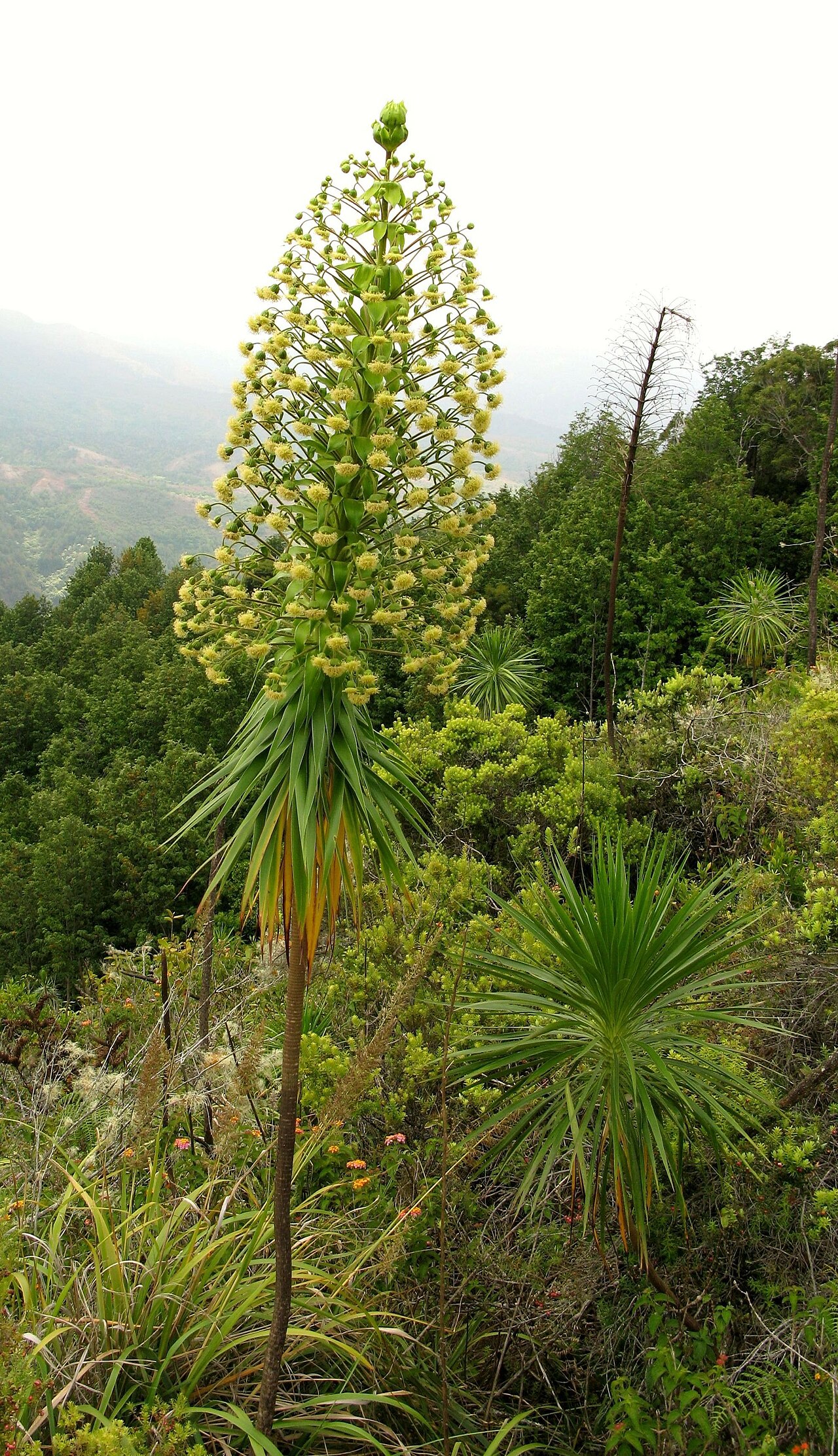
Wilkesia gymnoxiphium, the Iliau, is one of the strangest and most striking plants in Hawaiʻi. It looks like a small palm or yucca: a slender woody stem up to about 16 feet tall, topped by a fountain of narrow, sword-shaped leaves. After years of growth it sends up a tall spire covered with hundreds of yellowish flower heads, sets seed, and dies. It grows wild only on Kauaʻi, mostly on the dry slopes of Waimea Canyon.
Iliau is a member of the Hawaiian silversword alliance, a famous example of adaptive radiation. Iliau, the silverswords and greenswords (Argyroxiphium, including the ʻĀhinahina or Haleakalā silversword) and the varied Dubautia species all descend from a single ancestor related to the tarweeds of California, which reached Hawaiʻi millions of years ago. Few plant groups have changed shape so dramatically from such a recent common origin.
Iliau is ranked Endangered on the IUCN Red List, though it is not listed under the U.S. Endangered Species Act; its smaller relative, dwarf iliau (Wilkesia hobdyi), is federally Endangered. Iliau can be grown in suitable Hawaiian gardens, but it is not an easy or common nursery plant. This guide covers how to recognize it, where to see it, and what it takes to grow it.
Identification
Nothing else in Kauaʻi’s canyon country looks quite like a flowering iliau, but out of flower young plants can be mistaken for introduced yuccas, dracaenas or young palms.
Growth Habit
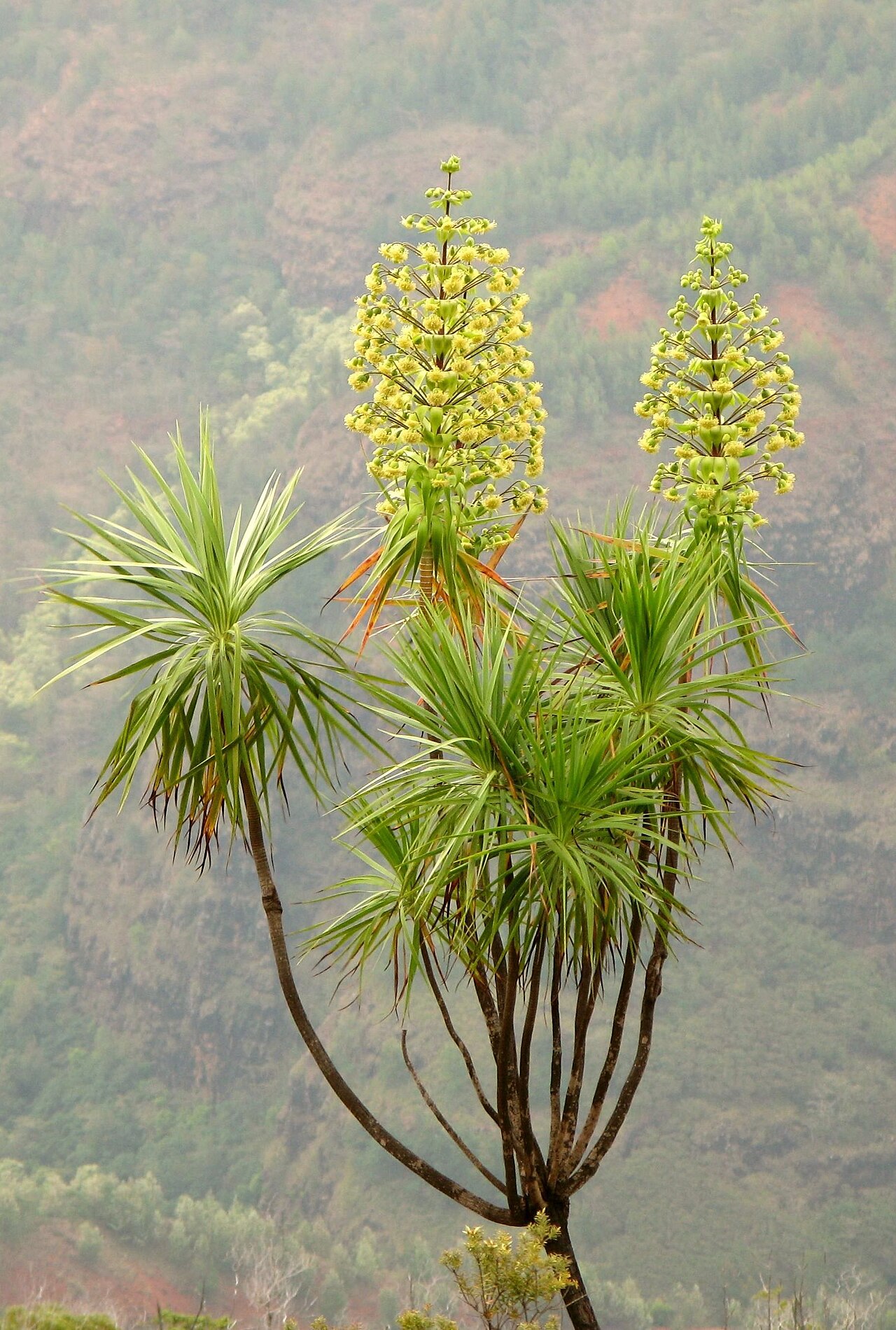
Iliau is a rosette shrub. A single, usually unbranched woody stem rises 5 to 16 feet (1.5 to 5 m), bare below and crowned by a dense rosette of leaves. Old leaves hang down and wither along the upper stem. Some plants branch, especially if the growing tip has been damaged, and then carry several rosettes.
Leaves
The leaves are long, narrow and stiff, often 8 to 20 inches long and well under an inch wide, with a pointed tip. They are arranged in whorls of 9 to 20, and their bases join to form a sheath around the stem, an unusual feature that separates Wilkesia from its relatives. The leaves are green, not silvery like a silversword’s.
Flowers
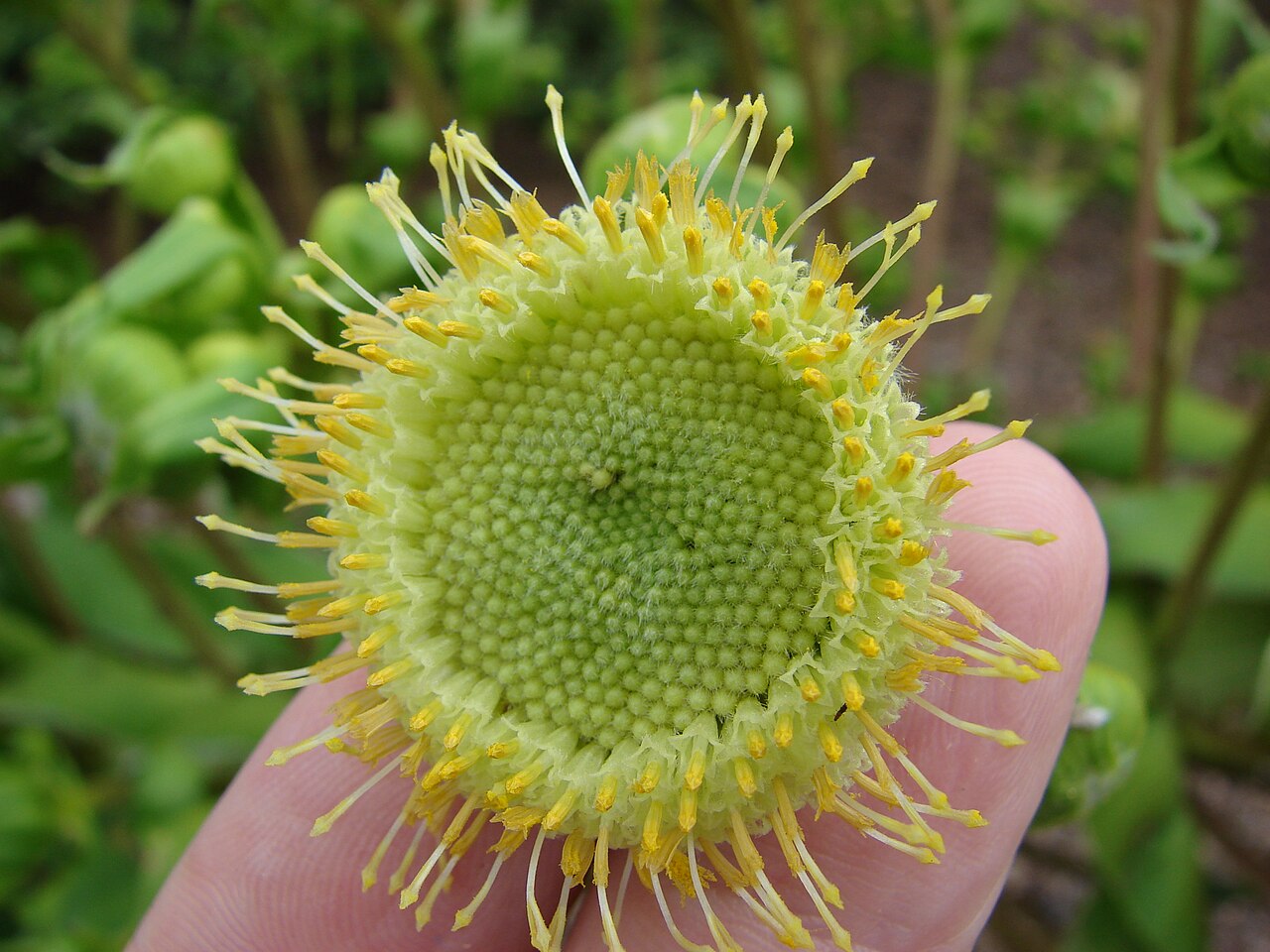
When a rosette is mature, it produces a tall flowering stalk, often several feet long, with many branched side stalks carrying hundreds of flower heads. The heads are about an inch across, cream to pale yellow, and have no petal-like ray florets, only a dense disk of small tubular florets with long protruding styles. Flowering happens mostly from May to July.
Life Cycle
Iliau is monocarpic: each rosette grows for many years, flowers once and then dies. An unbranched plant dies completely after flowering, while a branched plant can flower and die one rosette at a time. Seeds are small, dry achenes shed after flowering.
Similar Species
Dwarf iliau (Wilkesia hobdyi) is a much smaller, federally Endangered species of dry cliffs in northwestern Kauaʻi, with a short stem and a smaller rosette. Introduced yuccas and dracaenas have broader leaves and very different flowers, and lack the whorled, sheathing leaf bases.
Quick Facts
| Scientific Name | Wilkesia gymnoxiphium A. Gray |
| Family | Asteraceae (aster family) |
| Plant Type | Monocarpic rosette shrub; endemic to Kauaʻi |
| Mature Height | 5–16 ft (to about 5 m), plus flowering stalk |
| Mature Spread | 2–4 ft (rosette) |
| Growth Rate | Slow to moderate |
| Sun Exposure | Full sun |
| Water Needs | Low to medium; dry to mesic conditions |
| Soil Type | Very well-drained, rocky or gravelly volcanic soils |
| Soil pH | About 5.5–7.0 |
| Bloom Time | Mostly May–July, once per rosette |
| Flower Color | Cream to pale yellow |
| Fall Color | None; evergreen |
| Fruit | Small dry achenes |
| Deer Resistant | No; heavily browsed by feral goats |
| USDA Hardiness Zones | 10–12 (frost-free) |
Native Range
Iliau is endemic to the island of Kauaʻi. USDA PLANTS records it only from Hawaiʻi, and it grows nowhere else in the world. Most plants are found along the slopes and rim of Waimea Canyon and in the adjacent dry country on the leeward side of the island, toward Kōkeʻe.
It grows on dry ridges, cliffs and slopes and in dry to mesic forest and shrubland at elevations of about 1,400 to 3,600 feet (425 to 1,100 m), in places that receive roughly 31 to 79 inches (800 to 2,000 mm) of rain a year. It often grows with ʻaʻaliʻi, ʻōhiʻa, koa and native grasses on thin, rocky soil.
Feral goats graze iliau heavily in Waimea Canyon, so wild plants are now seen mostly on steep, inaccessible slopes. It is ranked Endangered by the IUCN but is not listed under the federal Endangered Species Act; check the USFWS ECOS database for current federal status. Fire, invasive plants and goats are the main threats, and fenced exclosures along the road to Kōkeʻe State Park protect a dense stand.
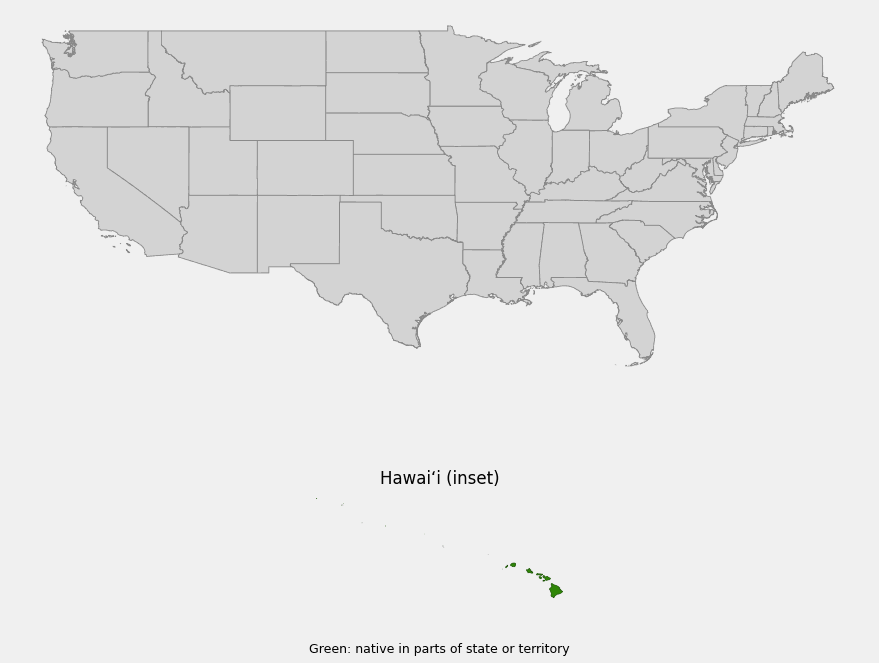
📋 Regional plant lists featuring Iliau: Hawaii
Growing & Care Guide
Iliau can be grown, but it is a challenging plant for collectors and native garden specialists rather than an everyday landscape shrub. It needs a frost-free, sunny site with sharp drainage and dry to mesic conditions, and it is grown at places like Limahuli Garden on Kauaʻi. Plants are only occasionally available. Buy nursery-propagated plants or seed from Hawaii native plant nurseries or botanical gardens, and never collect plants or seed from the wild. Remember that each rosette dies after flowering, so plan for replacement plants from seed.
Light
Give iliau full sun. In shade, the stem stretches and the plant weakens. In the wild it grows on open, sunny canyon slopes and ridges.
Soil & Water
Sharp drainage is the most important requirement. Plant in a gravelly or cinder-rich volcanic mix or on a slope or raised bed, and avoid heavy clay and low spots where water collects, because the roots rot easily. Water regularly while plants establish, then let the soil dry between deep waterings. Mature plants tolerate dry spells, but long droughts in containers can kill them.
Planting Tips
Iliau grows best in Hawaiian gardens between about 1,000 and 4,000 feet with warm days, cool nights and moderate rainfall, similar to its home in Waimea Canyon, though it has been grown at lower elevations with care. Plant in a sheltered spot, since tall stems can be broken by strong wind, and stake young plants if needed. Combine it with other dry-forest natives such as ʻaʻaliʻi and pili grass. Outside Hawaiʻi it is grown only rarely in frost-free climates, and Hawaiʻi restricts bringing plants in from other states.
Pruning & Maintenance
Remove only fully dead leaves; the hanging skirt of old leaves is natural. Do not cut the growing tip unless you want a branched plant. Keep slugs, snails and rodents away from seedlings, and protect plants from goats, deer and pigs in rural areas. After a rosette flowers and sets seed, collect the seed and cut out the dead stem.
Propagation
Iliau is grown from seed. Collect ripe achenes from cultivated plants after flowering, sow them on the surface of a gritty, well-drained mix, and keep them evenly moist in bright light. Many seeds may be empty, so sow generously. Seedlings grow slowly at first and should be moved to deeper pots before planting out. Like silverswords, iliau benefits from cross-pollination, so seed set is better when several plants flower together.
Landscape Uses
- Specimen planting: a dramatic accent plant for dry native gardens in Hawaiʻi
- Botanical and conservation gardens: a showpiece of the Hawaiian silversword alliance
- Dry-forest restoration: part of restoration plantings on leeward Kauaʻi
- Education: a living example of island evolution and adaptive radiation
- Pollinator plantings: hundreds of flower heads feed insects when it blooms
Wildlife & Ecological Value
A blooming iliau is a short-lived feast for insects, and the plant is part of the specialized dry-forest community that makes Waimea Canyon unique.
For Pollinators
The flower heads produce pollen and nectar and are visited by insects, including native bees. A single flowering stalk carries hundreds of heads, making a flowering iliau an important, if brief, food source.
For Birds
Small birds forage for insects among the flowers and leaves, and some eat the seeds. Native honeycreepers once foraged widely in the dry forests where iliau grows.
For Mammals
Hawaiʻi has only one native land mammal, the Hawaiian hoary bat, which hunts insects over the canyons. Introduced goats are iliau’s main mammal threat; they eat the leaves and young plants and have pushed wild iliau onto cliffs out of their reach.
Ecosystem Role
Iliau is a characteristic plant of Kauaʻi’s leeward dry and mesic shrublands. Its monocarpic life history means populations depend on regular seedling recruitment, which makes them vulnerable to grazing, fire and weeds that prevent young plants from establishing.
Cultural & Historical Uses
The genus Wilkesia was named by the botanist Asa Gray for Charles Wilkes, commander of the U.S. Exploring Expedition (1838–1842), which collected plants in Hawaiʻi. The species name gymnoxiphium means “naked sword,” a reference to its sword-like leaves on a bare stem.
To botanists, iliau is part of one of the best-known cases of adaptive radiation in the world. DNA studies show that the roughly 30 species of the Hawaiian silversword alliance, from rosette plants like iliau and silverswords to trees, shrubs and vines in Dubautia, all descend from a single tarweed-like ancestor from western North America.
Visitors to Kauaʻi can see iliau along the short Iliau Nature Loop and other overlooks off the road through Waimea Canyon toward Kōkeʻe State Park. Seeing a stand in full bloom in early summer is one of the island’s botanical highlights.
Frequently Asked Questions
Is iliau related to the silversword?
Yes. Iliau belongs to the Hawaiian silversword alliance, together with the silverswords and greenswords (Argyroxiphium) and the Dubautia species. All of them descend from a single tarweed-like ancestor that reached Hawaiʻi from North America.
Does iliau die after flowering?
Yes. Iliau is monocarpic. Each rosette grows for years, blooms once and dies. An unbranched plant dies completely, while a branched plant can flower one rosette at a time.
Where can I see iliau in the wild?
Iliau grows only on Kauaʻi, mainly in and around Waimea Canyon. The Iliau Nature Loop and roadside overlooks on the way to Kōkeʻe State Park are the easiest places to see it. Stay on trails and never collect plants or seeds.
Is iliau endangered?
It is ranked Endangered on the IUCN Red List but is not listed under the U.S. Endangered Species Act. Its relative, dwarf iliau (Wilkesia hobdyi), is federally Endangered.
Can I grow iliau in my garden?
In Hawaiʻi, yes, with full sun, sharp drainage and dry to mesic conditions, but plants are uncommon in the trade and each rosette dies after flowering. Buy nursery-propagated plants or seed from Hawaii native plant nurseries or botanical gardens.

Looking for a nursery that carries Iliau?
Browse our native plant nursery directory: Hawaii

