
ʻAkaʻakaʻawa (Hillebrandia sandwicensis)
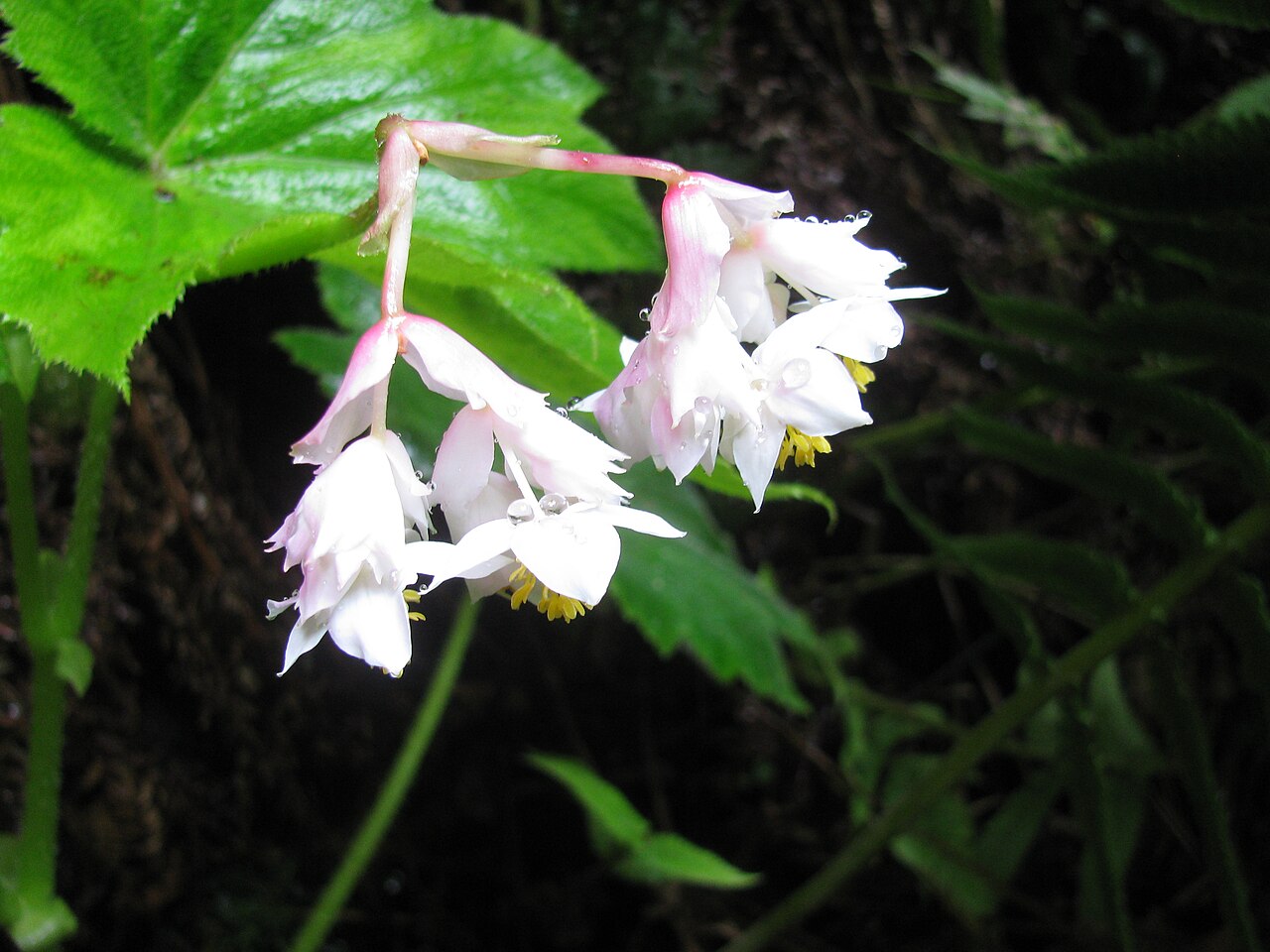
Hillebrandia sandwicensis, known in Hawaiian as ʻAkaʻakaʻawa or pua maka nui and in English as the Hawaiian begonia, is a rare herbaceous perennial found only in the wet mountain forests of the Hawaiian Islands. It grows from a tuber, sends up succulent stems with large, lobed leaves, and in spring carries drooping clusters of white flowers flushed with pink.
It is one of the botanical treasures of Hawaiʻi. Hillebrandia is the only genus in the begonia family other than Begonia itself, and it contains just this one species. DNA studies place it as the sister group to all of the roughly 1,900 other begonias, which makes this quiet plant of shady Hawaiian ravines a living link to the earliest history of the family.
ʻAkaʻakaʻawa grows on Kauaʻi, Molokaʻi and Maui, in cool, constantly moist gulches and along streams and waterfalls. It is uncommon and declining, and it is not an easy garden plant. This guide covers how to recognize it, where it grows, what it needs in cultivation, and why botanists value it so highly.
Identification
ʻAkaʻakaʻawa looks much like a large tuberous begonia, and it is the only member of the begonia family native to Hawaiʻi. Details of its flowers and fruit set it apart from true begonias.
Growth Habit
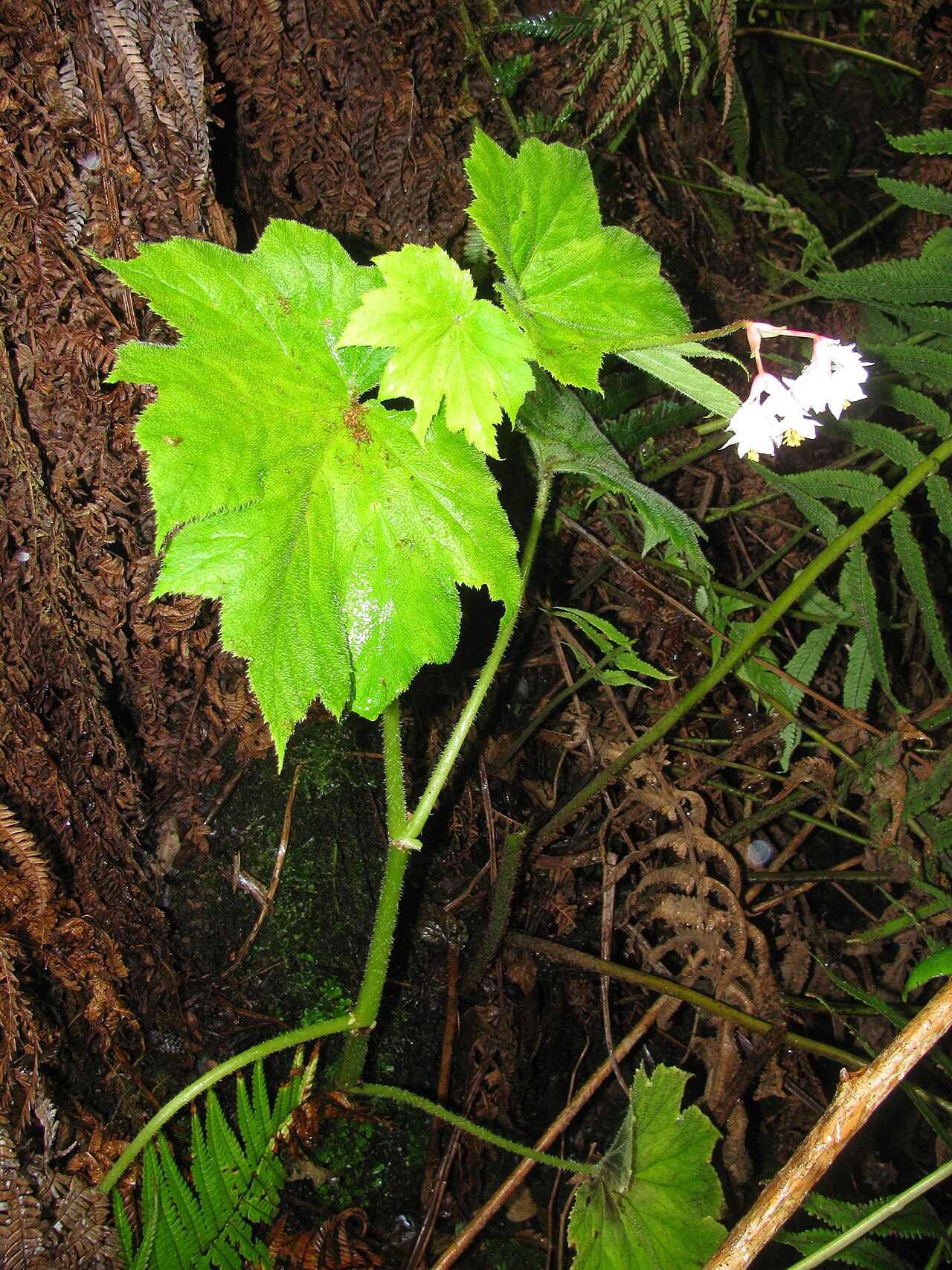
Plants are soft, succulent herbs about 1 to 3 feet tall, growing from an underground tuber. They are seasonal: new shoots appear in winter, plants flower in spring and early summer, and the above-ground parts die back to the tuber after the fruit ripens. The stems are thick, juicy and somewhat translucent, with swollen nodes.
Leaves
The leaves are large, often 4 to 10 inches across, roughly round to kidney-shaped in outline and palmately lobed, with sharply toothed margins. They are bright green, thin and slightly hairy, and they sit on long, fleshy stalks. The leaf base is slightly lopsided, like many begonia leaves.
Flowers
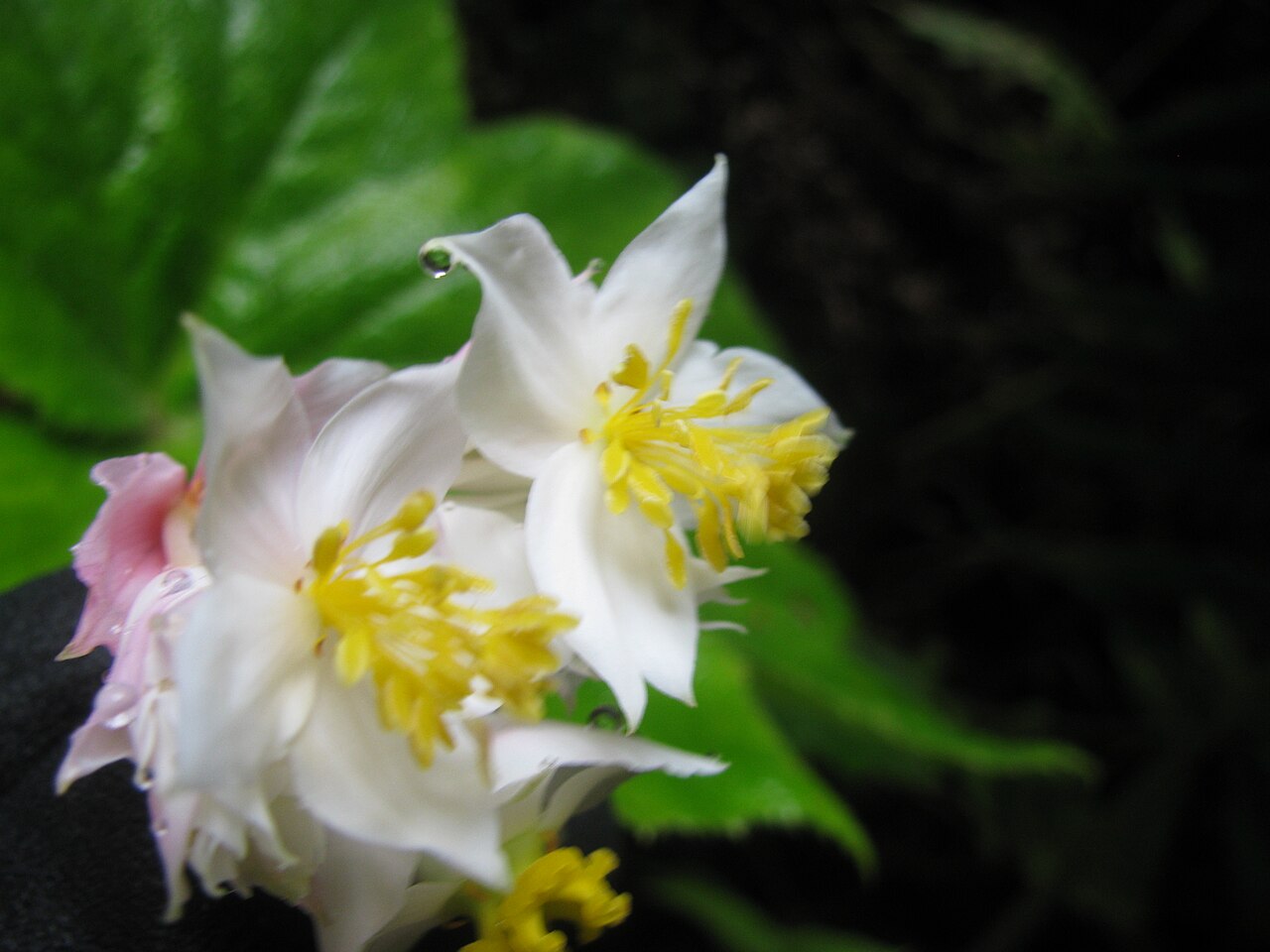
Flowers hang in loose, drooping clusters from the leaf axils, mainly from about February to June. They are about an inch across, white to pale pink, often with deeper pink on the outside. Male and female flowers are separate on the same plant. Male flowers show a dense tuft of bright yellow stamens. Unlike Begonia, Hillebrandia has five sepals and five smaller petals, and its ovary is only partly sunk below the flower.
Fruit
The fruit is a capsule that opens at the top, rather than the winged, splitting fruit of most begonias. It releases many dust-fine seeds, which are carried by water and wind through the wet ravines where the plant lives.
Similar Species
No other native Hawaiian plant closely resembles ʻakaʻakaʻawa. Introduced begonias, such as Begonia hirtella, have naturalized in some wet Hawaiian forests, but they are smaller plants with differently shaped flowers and the winged fruits typical of Begonia.
Quick Facts
| Scientific Name | Hillebrandia sandwicensis Oliv. |
| Family | Begoniaceae (begonia family) |
| Plant Type | Tuberous herbaceous perennial; endemic to Hawaiʻi |
| Mature Height | 1–3 ft |
| Mature Spread | 1–2 ft |
| Growth Rate | Fast in the growing season; dies back yearly |
| Sun Exposure | Part shade to full shade |
| Water Needs | High; constant moisture and humidity in growth |
| Soil Type | Moist, well-drained, humus-rich forest soil |
| Soil pH | About 5.0–6.5 |
| Bloom Time | February–June |
| Flower Color | White to pale pink, pink outside |
| Fall Color | None; dies back to the tuber after fruiting |
| Fruit | Small capsule opening at the top; dust-fine seeds |
| Deer Resistant | No; damaged by feral pigs, goats and slugs |
| USDA Hardiness Zones | 10–11 (cool, humid montane conditions) |
Native Range
ʻAkaʻakaʻawa is endemic to the Hawaiian Islands. Today it is known from Kauaʻi, Molokaʻi and Maui. It was once also found on Oʻahu but no longer grows wild there, and it has never been recorded on Hawaiʻi Island.
It grows in wet montane forest at about 3,000 to 6,000 feet, in steep, shaded gulches and ravines, along streambanks, on wet rock faces and near waterfalls, often in the shelter of tree ferns. These sites stay cool, misty and constantly moist. Despite plenty of apparently suitable habitat, the species is localized and uncommon.
ʻAkaʻakaʻawa is not listed under the federal Endangered Species Act, but the U.S. Fish and Wildlife Service has named it a species of concern, and it is ranked imperiled in Hawaiʻi. Its main threats are rooting by feral pigs, browsing by goats, slugs, landslides and invasive plants. Never dig or collect it from the wild.
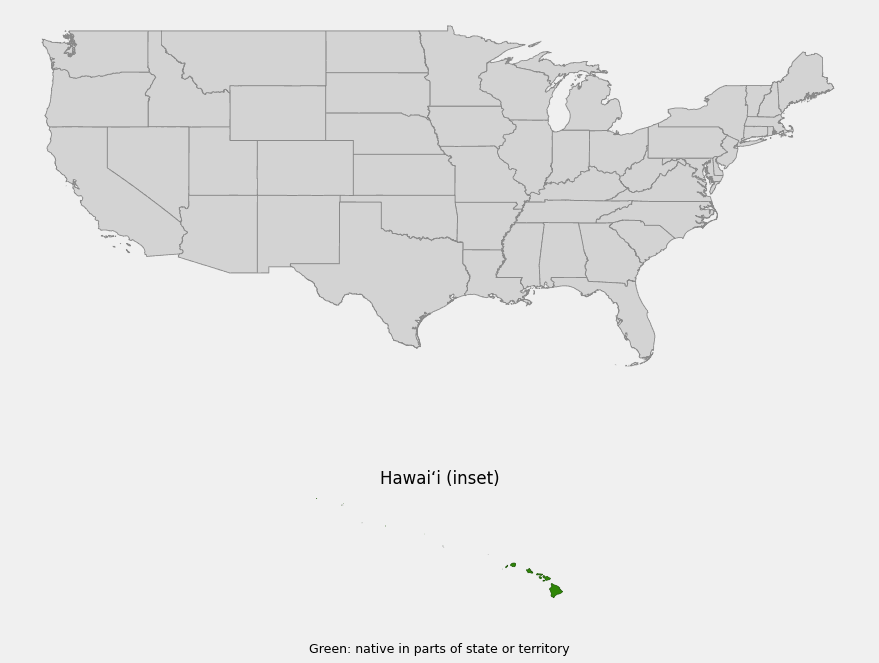
📋 Regional plant lists featuring ʻAkaʻakaʻawa: Hawaii
Growing & Care Guide
ʻAkaʻakaʻawa is a specialist’s plant. It needs the cool, shady, constantly humid conditions of Hawaiian mountain rainforest, and it struggles in hot lowland gardens. In Hawaiʻi it can be grown in shady, moist upland gardens (roughly above 2,000 feet) or in a cool shade house. Buy only nursery-propagated plants from Hawaiʻi native plant nurseries or botanical garden plant sales, and never collect plants or tubers from the wild. Hawaiʻi also restricts bringing plants in from other states.
Light
Grow it in bright shade to full shade. Direct sun scorches the thin leaves. A spot under tree ferns or on the north side of a building in a cool upland garden is ideal.
Soil & Water
Use a loose, well-drained, humus-rich mix, such as a begonia or fern mix with added bark and perlite. Keep the soil evenly moist and the air humid while the plant is in leaf, but never waterlogged, since the fleshy stems and tuber rot easily. When the plant dies back after fruiting, reduce watering so the dormant tuber stays barely moist.
Planting Tips
Plant tubers shallowly, with the top just at or below the soil surface. Shelter plants from wind and from slugs and snails, which can destroy new shoots overnight. Cool night temperatures help; plants grown in hot lowland conditions tend to collapse.
Pruning & Maintenance
Little pruning is needed. Remove yellowing leaves and spent flower clusters if you are not saving seed. Do not mistake the natural summer dieback for death; mark the spot and keep the tuber cool and lightly moist until new shoots emerge in winter.
Propagation
Plants are usually grown from seed. The seed is dust-fine and should be scattered on the surface of a fine, sterile mix, kept humid under cover in bright shade. Botanical gardens and conservation nurseries in Hawaiʻi have propagated it for reintroduction. Seedlings are delicate and need careful, consistent moisture.
Landscape Uses
- Shade gardens: a dramatic foliage and flower plant for cool, shady upland gardens in Hawaiʻi
- Fern gardens: grows naturally with tree ferns and other native ferns
- Conservation collections: grown by botanical gardens to safeguard a unique lineage
- Education: a striking example of an ancient plant lineage on young islands
- Wet-forest restoration: outplanted in protected, fenced native forest
Wildlife & Ecological Value
ʻAkaʻakaʻawa is a small part of the Hawaiian rainforest understory, but it is one of the most scientifically interesting plants in the islands.
For Pollinators
The flowers are visited by insects, and the separate male and female flowers depend on pollen being carried between them. Its native pollinators are not well documented.
For Birds
Native forest birds forage for insects in the understory where ʻakaʻakaʻawa grows, though the plant is not a known food source for them.
For Mammals
Hawaiʻi’s only native land mammal is the Hawaiian hoary bat. Introduced feral pigs and goats damage ʻakaʻakaʻawa by rooting and browsing, and they are among its main threats.
Ecosystem Role
ʻAkaʻakaʻawa is part of the herb layer of wet montane forest, sharing shady ravines with tree ferns, mosses and ferns. Its tubers and seasonal growth let it survive the dark, wet conditions of the gulch floor.
Cultural & Historical Uses
The genus honors William Hillebrand, the German physician and botanist who lived in Hawaiʻi from 1851 to 1871 and wrote Flora of the Hawaiian Islands, the first comprehensive account of the islands’ plants. The British botanist Daniel Oliver named the species in 1866.
Botanists have long debated how a plant lineage older than the current main Hawaiian Islands came to live there. One idea is that Hillebrandia island-hopped along the Hawaiian–Emperor seamount chain, colonizing each new island as older ones eroded and sank, with its dust-fine seeds carried by wind. Some newer studies suggest the lineage may be younger than first estimated.
Its Hawaiian names, ʻakaʻakaʻawa and pua maka nui, are recorded in Hawaiian plant lists. Today it is valued as a living link to the early evolution of the begonia family and as one of the many unusual plants of Hawaiʻi’s protected rainforests.
Frequently Asked Questions
Is ʻakaʻakaʻawa a real begonia?
It belongs to the begonia family, Begoniaceae, but it is not in the genus Begonia. It is the only species of Hillebrandia and the only member of the family other than Begonia. DNA studies show it is the sister group to all other begonias.
Where does ʻakaʻakaʻawa grow?
It is endemic to Hawaiʻi and grows in wet, shaded mountain ravines and streambanks on Kauaʻi, Molokaʻi and Maui, at about 3,000 to 6,000 feet. It no longer grows wild on Oʻahu.
Is ʻakaʻakaʻawa endangered?
It is not federally listed, but it is uncommon, declining and ranked imperiled in Hawaiʻi, and the U.S. Fish and Wildlife Service has named it a species of concern. Never collect it from the wild.
Can I grow ʻakaʻakaʻawa?
It can be grown, but it is challenging. It needs cool temperatures, shade, high humidity and constant moisture, so it suits upland gardens and shade houses in Hawaiʻi far better than hot lowland gardens. Buy only nursery-propagated plants.
Why did my plant die back in summer?
That is normal. ʻAkaʻakaʻawa dies back to its tuber after fruiting and regrows in winter. Keep the tuber cool and lightly moist while it is dormant.

Looking for a nursery that carries ʻAkaʻakaʻawa?
Browse our native plant nursery directory: Hawaii

