
Manyspike Flatsedge (Cyperus polystachyos)
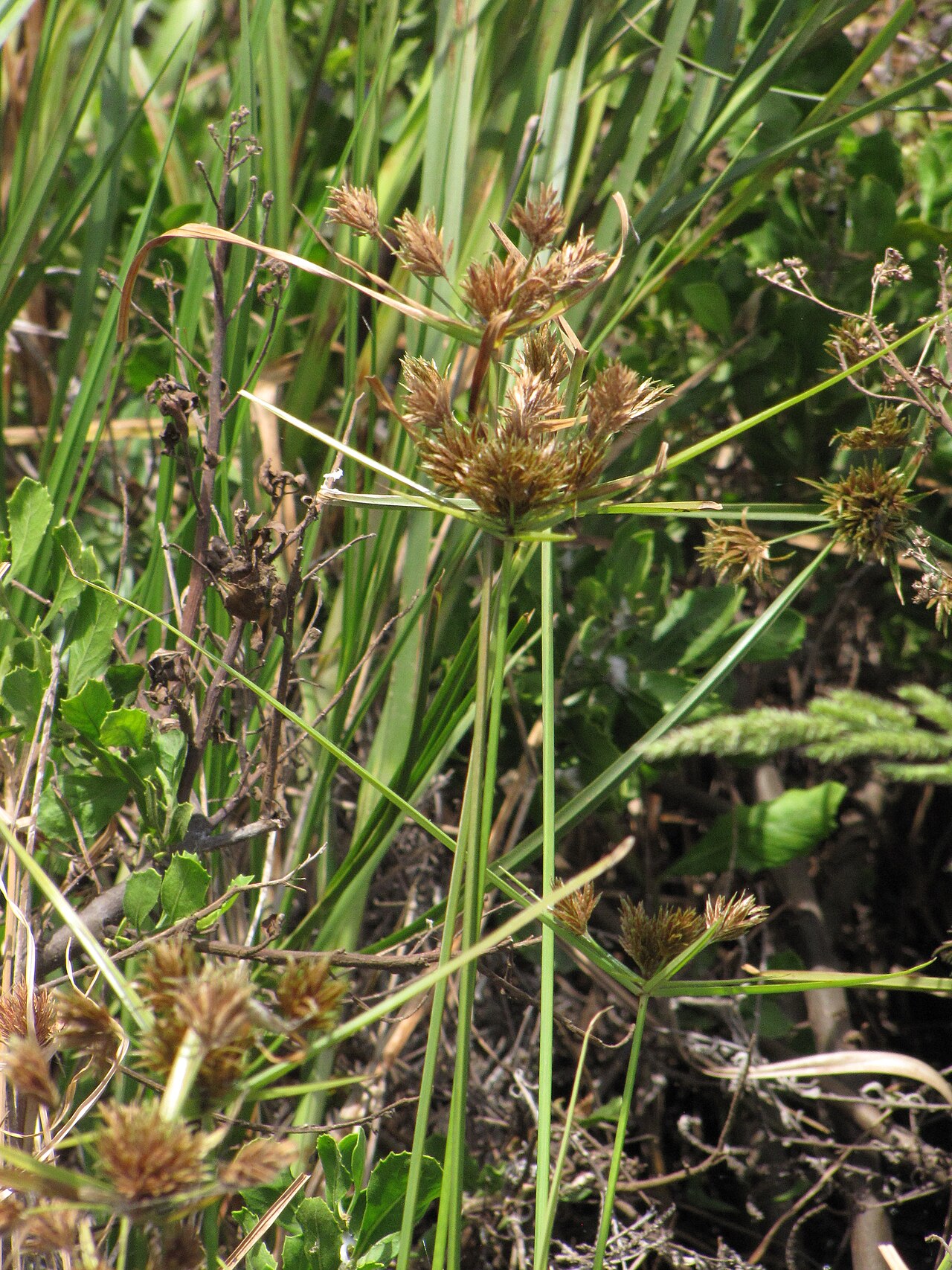
Cyperus polystachyos, manyspike flatsedge, is a small, tufted, grass-like sedge with dense, starburst heads of narrow, flattened, golden-brown to reddish-brown spikelets. It is one of the most widespread native sedges in the Hawaiian Islands, growing around ponds, seeps, streams, wet lawns and coastal wetlands from Kauaʻi and Oʻahu to Midway Atoll. It is also known as bunchy flat-sedge and coast flatsedge, and some botanists place it in the genus Pycreus as Pycreus polystachyos.
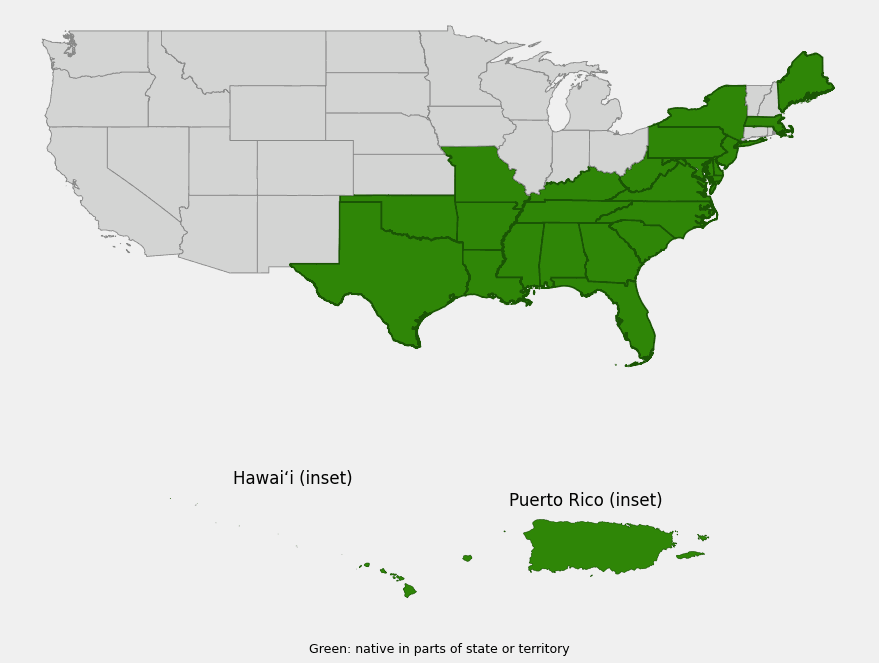
Manyspike flatsedge is indigenous to Hawaiʻi: it is native throughout the tropics and subtropics of the world, and Hawaiʻi’s plants arrived naturally, almost certainly as seeds carried by birds. In the United States, USDA PLANTS lists it as native in Hawaiʻi, Puerto Rico and the U.S. Virgin Islands and on the mainland from Texas and Oklahoma east to Florida and north along the Atlantic Coastal Plain to Maine. It is not federally listed.
This is a modest plant, but a useful one: it colonizes wet, open, sunny ground quickly, helps stabilize the muddy edges of ponds and wetlands, and is part of the habitat of endangered Hawaiian waterbirds. This guide covers how to identify it, where it grows, how to use it in rain gardens and wetland plantings, and its role in wildlife habitat.
Identification
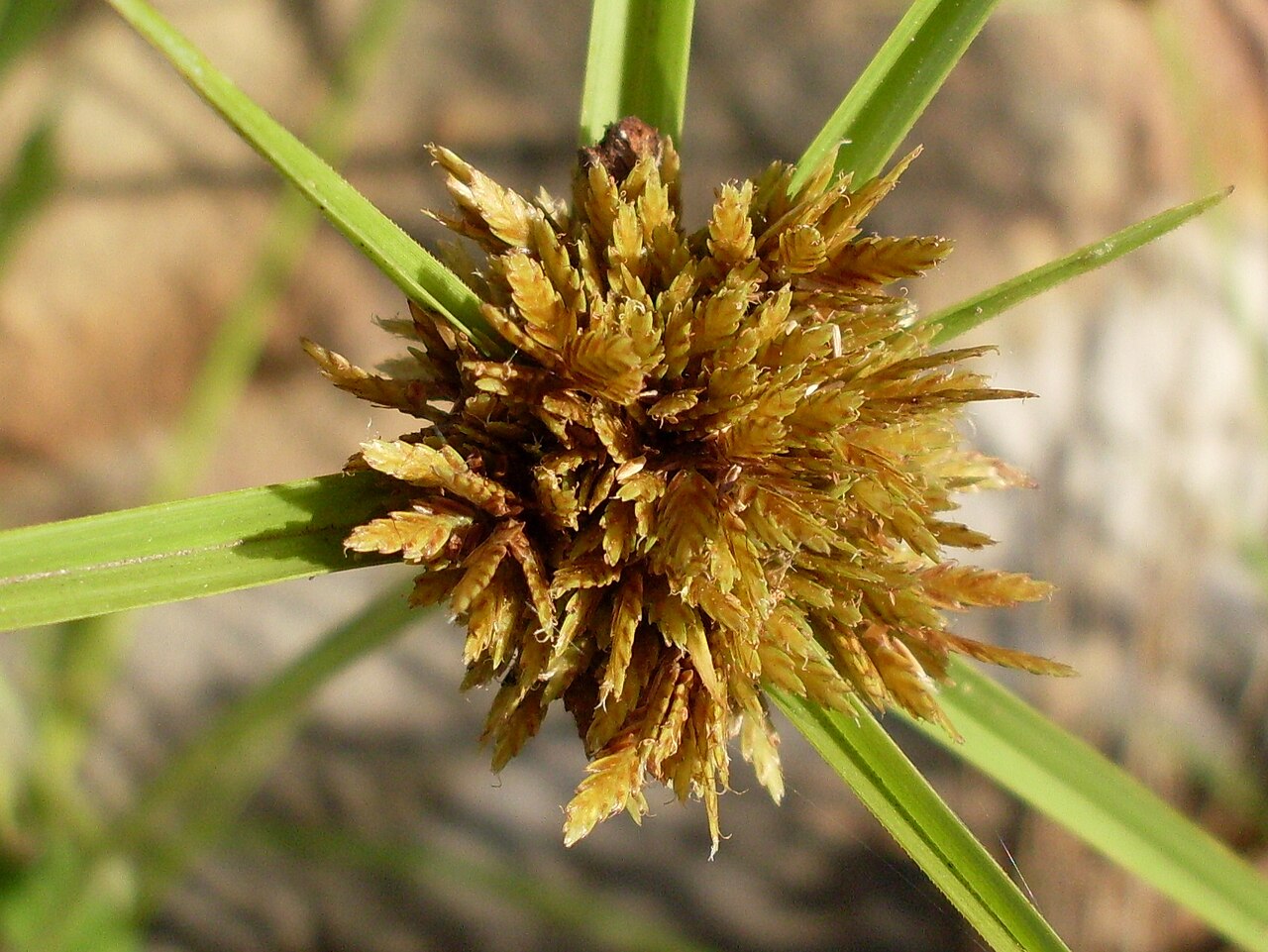
Many sedges look alike. Manyspike flatsedge is best known by its many narrow, strongly flattened spikelets packed into a rounded or fan-shaped head at the tip of a triangular stem, with several long, leafy bracts spreading beneath.
Growth Habit
A tufted annual or short-lived perennial, usually 6 inches to 2 feet tall, growing in clumps from short rhizomes or fibrous roots. The stems are smooth, stiff and triangular in cross-section, about ¹⁄₁₆ to ⅛ inch thick.
Leaves
The leaves are narrow and grass-like, about ¹⁄₃₂ to ⅛ inch wide, mostly crowded at the base of the plant. Below the flower head are three to six leaf-like bracts, some longer than the head, that spread outward like the spokes of a wheel.
Flowers & Spikelets
The flowers are tiny and wind-pollinated, arranged in two neat rows along narrow, flattened spikelets about ¼ to ¾ inch long. Dozens of spikelets crowd together in dense, often slightly branched heads that are green at first and turn golden-brown to reddish-brown as they mature. Each flower has two stigmas, a feature that separates this species and its Pycreus relatives from most other Cyperus, which have three.
Fruit & Look-alikes
The fruit is a tiny, lens-shaped, brown to black achene with one edge facing the spikelet axis. Smooth Flatsedge (Cyperus laevigatus), called makaloa in Hawaiʻi, has round, nearly leafless stems and small, compact heads. Weedy kyllinga species have small, round, greenish heads rather than many radiating, flattened spikelets.
Quick Facts
| Scientific Name | Cyperus polystachyos Rottb.; synonym Pycreus polystachyos (Rottb.) P. Beauv. |
| Family | Cyperaceae (sedge family) |
| Plant Type | Tufted annual or short-lived perennial sedge |
| Mature Height | 6 in–2 ft |
| Mature Spread | 6–12 in |
| Growth Rate | Fast |
| Sun Exposure | Full sun to partial shade |
| Water Needs | High; moist to wet soil, tolerates brief flooding |
| Soil Type | Sand, mud, silt or moist lawn soils; tolerates some salt |
| Soil pH | Acidic to slightly alkaline |
| Bloom Time | Most of the year in Hawaiʻi; summer to fall on the mainland |
| Flower Color | Green, maturing golden-brown to reddish-brown |
| Fall Color | Tan to brown as the plants mature |
| Fruit | Tiny, lens-shaped dark achene |
| Deer Resistant | Moderate |
| USDA Hardiness Zones | 7–13 |
Native Range
In Hawaiʻi, manyspike flatsedge is indigenous and widespread. It grows on all the main islands and on several of the Northwestern Hawaiian Islands, including Midway Atoll, mostly at low elevations. Look for it in wet, open places: pond and stream margins, coastal and inland marshes, seeps, ditches, wet lawns and roadsides, and damp, disturbed ground. It also occurs in brackish coastal wetlands such as Keālia Pond on Maui and Kīlauea Point on Kauaʻi.
In Puerto Rico and the U.S. Virgin Islands it grows in similar wet, open lowland places. On the mainland, USDA PLANTS records it as native from Texas, Oklahoma, Arkansas and Missouri east across the Gulf states and Florida, and north through the Southeast and the Atlantic Coastal Plain to New Jersey, New York, Massachusetts and Maine. Most mainland plants grow in sandy, moist to wet, open habitats such as wet pine savannas, pond shores, ditches and coastal swales; inland and northern records are scattered.
Worldwide it is one of the most widespread sedges, found across tropical and warm-temperate Asia, Africa, Australia, the Pacific Islands and the Americas, often in lawns and other disturbed wet ground as well as natural wetlands.
📋 Regional plant lists featuring Manyspike Flatsedge: Hawaii · Puerto Rico · North & South Florida · Alabama, Georgia & Mississippi · North & South Carolina · Maryland, Virginia & West Virginia · Kentucky & Tennessee · Arkansas, Louisiana, Eastern Oklahoma & Eastern Texas · South & West Texas · Illinois, Iowa & Missouri · New York, Pennsylvania & Northern New Jersey · Delaware, Southern New Jersey & Long Island · Connecticut, Massachusetts & Rhode Island · New Hampshire, Maine & Vermont
Growing & Care Guide
Manyspike flatsedge is easy to grow in any sunny, moist to wet spot. It is rarely sold as an ornamental, but native wetland nurseries sometimes carry it, and it often appears on its own in wet ground. In Hawaiʻi, use local seed or plants: the state restricts bringing plants and soil in from other states, and local stock is best suited to island conditions.
Light
Full sun is best. It tolerates light shade but becomes sparse in deep shade.
Soil & Water
Moist to wet soil of almost any texture, from sand to mud. It tolerates seasonal flooding, shallow standing water at the edges of ponds, and some salt in coastal wetlands. It does not tolerate long drought.
Planting Tips
Plant plugs about 8 to 12 inches apart along pond and stream edges, in rain gardens and bioswales, or in wet, low spots of a lawn. Mix it with other native sedges and rushes for a natural wetland edge. On the mainland, it is suited to the coastal plain and the warm South, roughly zones 7 to 10, and it grows year-round in zones 10 to 13.
Pruning & Maintenance
Little care is needed. Cut back old, browned stems if you want a tidy look. Plants may be short-lived, but they reseed readily in moist, open ground. Keep aggressive invasive grasses and sedges from crowding it out.
Propagation
Easy from seed sown on the surface of wet soil in warm weather, or by dividing established clumps.
Landscape Uses
- Rain gardens and bioswales: a fast-establishing native sedge for wet, sunny low spots
- Pond and stream edges: helps hold muddy banks and shorelines
- Wetland restoration: a pioneer sedge on open, wet, disturbed ground
- Waterbird habitat: part of the wetland edge used by native Hawaiian waterbirds
Wildlife & Ecological Value
Small as it is, manyspike flatsedge is part of the wet, open habitats that many native animals depend on.
For Pollinators
Like other sedges, it is wind-pollinated and offers little nectar, though bees sometimes collect its pollen.
For Birds
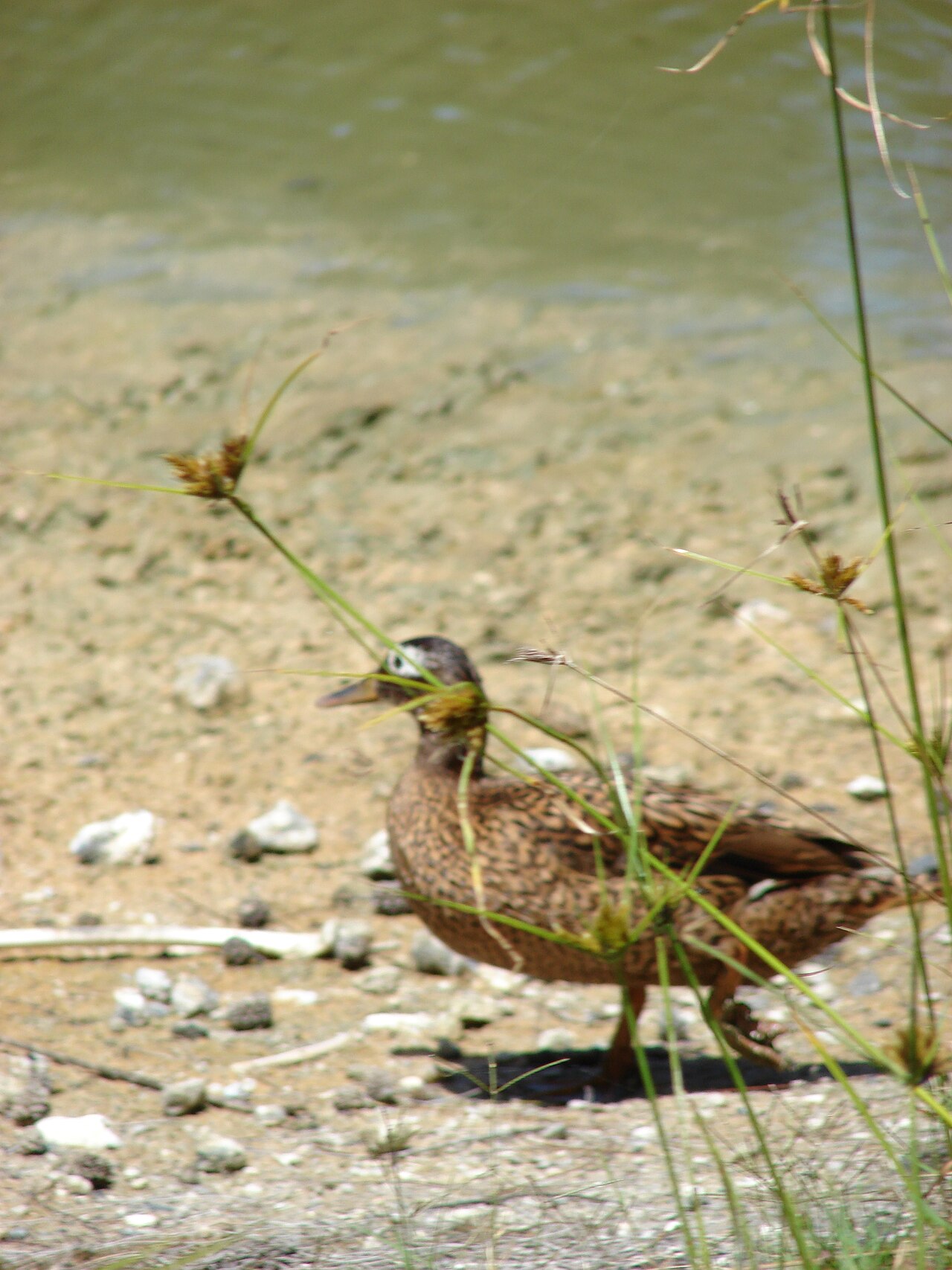
Its seeds are eaten by ducks and other waterbirds and by seed-eating songbirds. On Midway Atoll it grows around the seeps and ponds used by the endangered Laysan duck, which forages among the sedges, and in Hawaiian wetlands it is part of the cover used by native waterbirds such as the endangered aeʻo (Hawaiian stilt), ʻalae keʻokeʻo (Hawaiian coot) and koloa (Hawaiian duck).
For Mammals
Hawaiʻi’s only native land mammal is the Hawaiian hoary bat, which hunts insects over wetlands. On the mainland, small mammals eat the seeds, and deer and rabbits graze the foliage lightly.
Ecosystem Role
A fast-growing pioneer of wet, bare ground, it helps stabilize shorelines and muddy flats and provides shelter for aquatic insects and other small animals.
Cultural & Historical Uses
The Danish botanist Christen Friis Rottbøll described the species in 1773. The name polystachyos means “many spikes,” for its many spikelets. Botanists often separate the two-stigma flatsedges into the genus Pycreus, so you will also see this plant listed as Pycreus polystachyos.
In Hawaiʻi, several native sedges were important to Hawaiians, especially makaloa (Cyperus laevigatus), which was woven into fine mats, and ʻakaʻakai (Schoenoplectus tabernaemontani). Manyspike flatsedge itself has no well-documented traditional use.
Its role on Midway Atoll is a modern conservation story: after endangered Laysan ducks were moved from Laysan Island to Midway in the mid-2000s to create a second population, managers built and restored small seeps and ponds, where native sedges like this one provide cover and help support the insects the ducks eat.
Frequently Asked Questions
Is manyspike flatsedge native to Hawaiʻi?
Yes. It is indigenous, meaning it reached Hawaiʻi naturally and is also native elsewhere. It grows on all the main islands and in the Northwestern Hawaiian Islands, mostly in wet, open lowland places.
Where does it grow on the U.S. mainland?
USDA PLANTS lists it as native from Texas, Oklahoma and Missouri east to Florida and north along the Atlantic Coastal Plain to Maine, mostly in sandy, moist to wet, open habitats.
Is it a weed?
It sometimes appears in wet lawns, but it is a native sedge and a useful plant for rain gardens, pond edges and wetland restoration. It is easy to pull where it isn’t wanted.
How do I tell it from other sedges?
Look for a dense head of many narrow, flattened, golden-brown spikelets at the tip of a triangular stem, with several long, leafy bracts spreading below. Its flowers have two stigmas.
Can I grow it in a rain garden?
Yes. It thrives in full sun and moist to wet soil, tolerates brief flooding, and establishes quickly from seed or plugs.

Looking for a nursery that carries Manyspike Flatsedge?
Browse our native plant nursery directory: Alabama & Arkansas · Delaware, Florida, Georgia & Hawaii · Kentucky, Louisiana, Maine, Maryland, Massachusetts, Mississippi & Missouri · New Jersey, New York, North Carolina & Oklahoma · Pennsylvania, South Carolina, Tennessee, Texas & Virginia · West Virginia

