
Lapalapa (Cheirodendron platyphyllum)
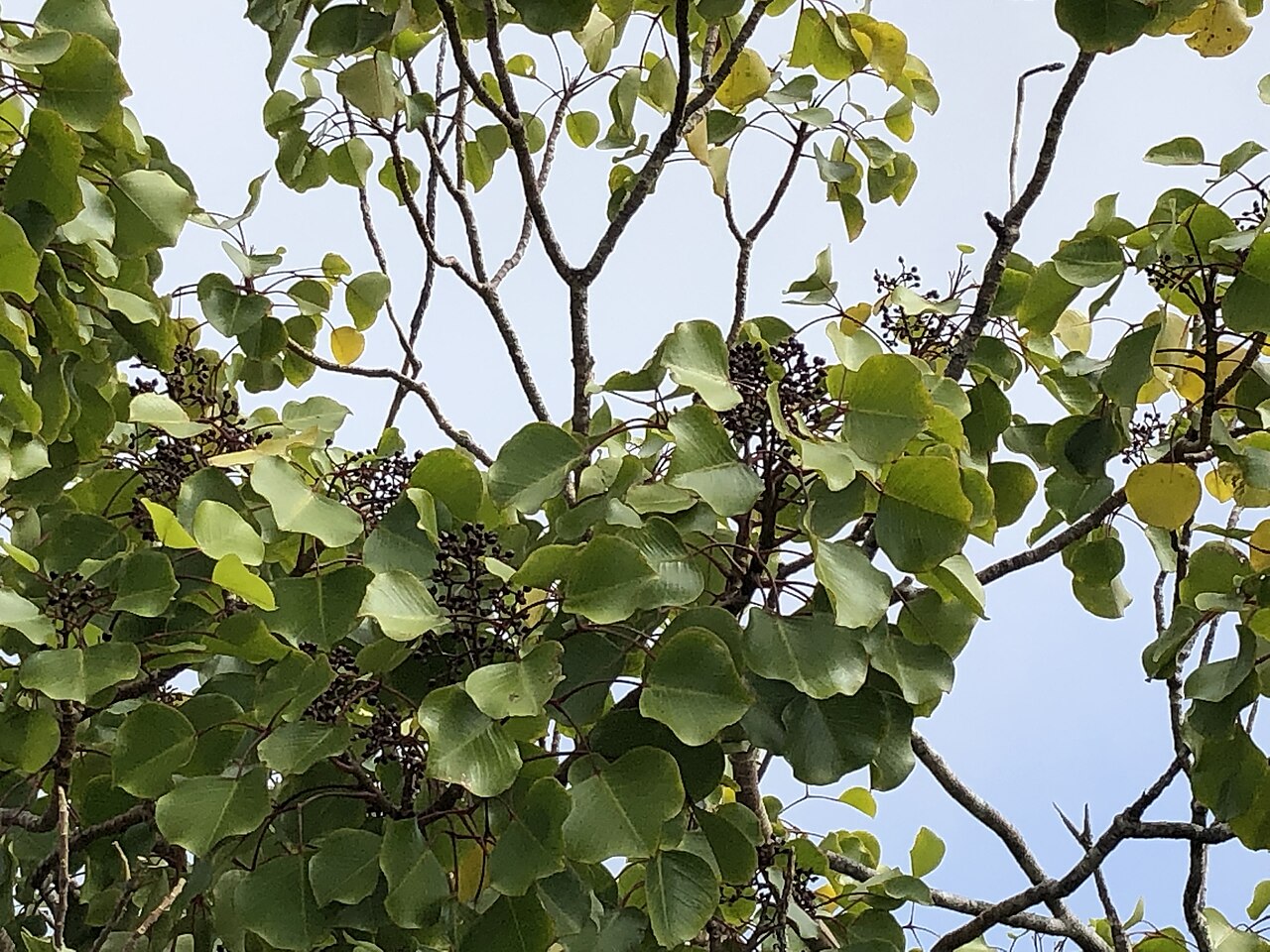
Cheirodendron platyphyllum, the Lapalapa, is a small tree of the wet, cloud-covered mountains of Kauaʻi and Oʻahu, and it grows nowhere else in the world. It belongs to the ginseng family (Araliaceae) and is a close relative of the more widespread ʻŌlapa (Cheirodendron trigynum). Its leaves are divided into three broad, nearly round leaflets on long, slender stalks, so they tremble and flutter in the lightest breeze, much like an aspen.
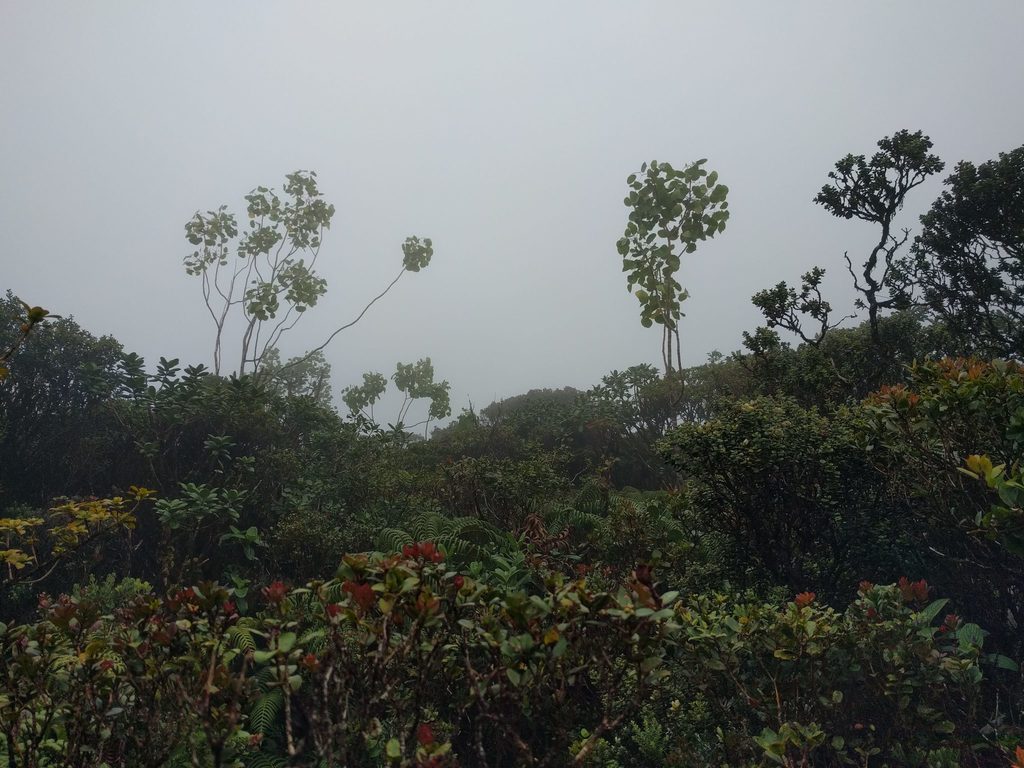
That constant motion is part of the plant’s identity in Hawaiian. Lapalapa and ʻōlapa are both associated with fluttering, dancing movement, and the trees are a memorable sight on misty summit ridges, where their pale green crowns shimmer above the low, windswept vegetation.
Lapalapa is uncommon and found only in wet forest and bog margins at middle to high elevations. It is not an easy garden plant, but it can be grown in cool, wet upland gardens in Hawaiʻi. This guide covers how to recognize it, where it grows, and what it needs in cultivation.
Identification
Two Cheirodendron species grow on Kauaʻi and Oʻahu, and lapalapa’s rounded leaflets are the key to telling them apart.
Growth Habit
Lapalapa is a small evergreen tree or large shrub, usually 10 to 26 feet tall (to about 8 m), with a trunk up to about 8 inches thick. On exposed summit ridges it may be shrubby and wind-pruned; in sheltered gulches it forms a rounded crown on a short trunk. The bark is smooth and grayish.
Leaves
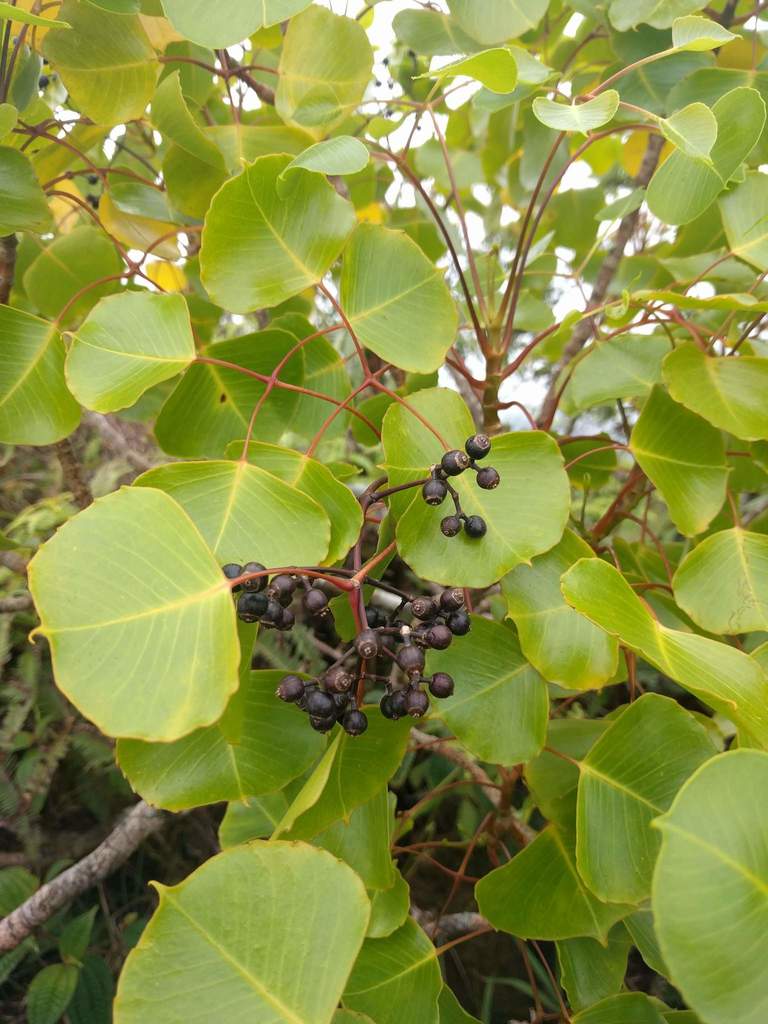
The leaves are palmately compound, usually with three leaflets (occasionally one to five) on a long, slender leaf stalk. The leaflets are broad and rounded, often nearly circular, roughly 2 to 4 inches long, thick and smooth, pale to bright green, with smooth or faintly toothed edges and their own distinct stalks. The long stalks let the leaflets tremble in the wind. Crushed leaves of Cheirodendron have a mild, resinous smell.
Flowers
The flowers are tiny and greenish, borne in branched clusters (umbels arranged in a larger panicle) near the branch tips. They are not showy, but they produce nectar and pollen for insects.
Fruit
The fruit is a small, round, fleshy drupe, roughly a quarter inch across, that ripens dark purple to black. It forms in hanging clusters and is eaten by birds.
Similar Species
ʻŌlapa (C. trigynum) grows on all the main islands and has narrower, more pointed, oval leaflets, usually three to five per leaf. Lapalapa’s broad, rounded leaflets on long stalks separate it. Young lapalapa can also be confused with introduced Schefflera seedlings, which have five or more long, pointed leaflets.
Quick Facts
| Scientific Name | Cheirodendron platyphyllum (Hook. & Arn.) Seem. |
| Family | Araliaceae (ginseng family) |
| Plant Type | Small evergreen tree; endemic to Hawaiʻi |
| Mature Height | 10–26 ft (to about 8 m) |
| Mature Spread | 8–15 ft |
| Growth Rate | Slow to moderate |
| Sun Exposure | Full sun to part shade, in cool, cloudy sites |
| Water Needs | High; constantly moist soil and humid air |
| Soil Type | Moist, acidic, organic soils; tolerates wet, boggy ground |
| Soil pH | Acidic, about 4.5–6.0 |
| Bloom Time | Irregular; small clusters at various times of year |
| Flower Color | Greenish |
| Fall Color | None; evergreen |
| Fruit | Small purple-black drupe in clusters |
| Deer Resistant | No; damaged by feral pigs and browsing animals |
| USDA Hardiness Zones | 10–12 (cool, wet upland conditions) |
Native Range
Lapalapa is endemic to Hawaiʻi and grows only on Kauaʻi and Oʻahu. USDA PLANTS records it only from Hawaiʻi. Botanists recognize two subspecies: subspecies kauaiense on Kauaʻi and subspecies platyphyllum on Oʻahu.
It grows in wet forest and on the margins of montane bogs at elevations of about 2,200 to 5,000 feet (670 to 1,520 m). On Kauaʻi it is found in the wet forests of the central plateau, including the Alakaʻi region and Kōkeʻe; on Oʻahu it grows near the summits of the Koʻolau Range and on Mount Kaʻala in the Waiʻanae Range. These are some of the wettest, cloudiest places in Hawaiʻi, where ʻōhiʻa, ʻōlapa and native ferns dominate.
Lapalapa is not federally listed, but it has a restricted range and conservation rankings treat it as imperiled to vulnerable. Feral pigs, invasive plants such as Koster’s curse (Clidemia) and strawberry guava, and changing rainfall patterns threaten its wet-forest habitat. Buy only nursery-propagated plants from Hawaii native plant nurseries and never collect from the wild.
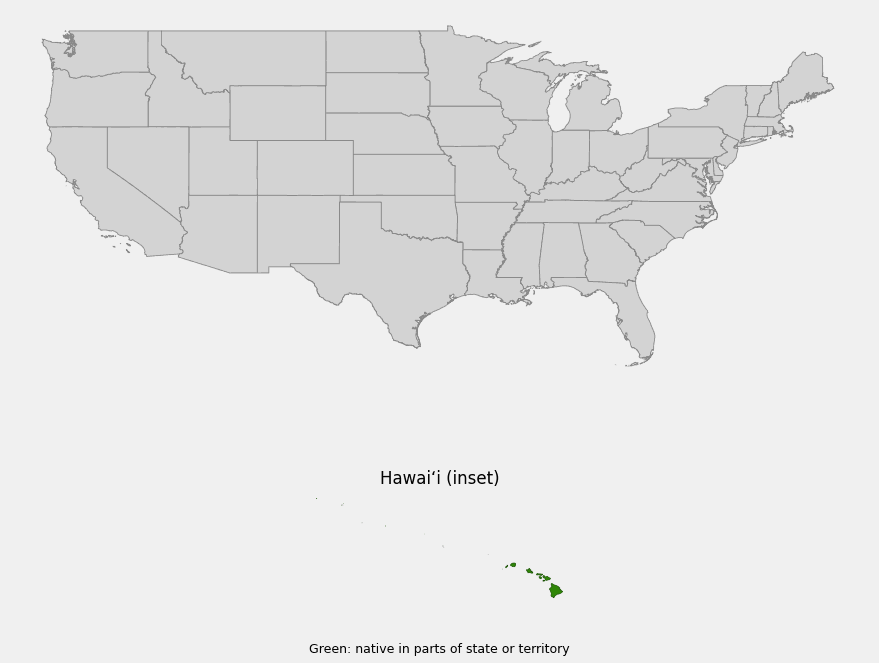
📋 Regional plant lists featuring Lapalapa: Hawaii
Growing & Care Guide
Lapalapa is a plant for cool, wet upland gardens and restoration projects in Hawaiʻi, ideally above about 1,500 to 2,000 feet with frequent cloud and rain. It is difficult in hot, dry lowland gardens, where it usually declines. Plants are only occasionally available; buy nursery-propagated plants from Hawaii native plant nurseries and never collect seedlings or cuttings from the wild.
Light
In its cloudy habitat lapalapa grows in full sun, but that sun is usually filtered by mist. In gardens with clearer skies, give it morning sun and afternoon shade or bright filtered light, especially while young.
Soil & Water
Plant in moist, acidic, organic-rich soil; a mix with plenty of compost, cinder and some peat or tree fern fiber works well. Keep the soil consistently moist and never let it dry out. Mulch heavily to keep the roots cool and damp. High humidity and regular rain are important, so it is best suited to wet windward and upland sites.
Planting Tips
Choose a site sheltered from hot, dry winds. Lapalapa combines well with ʻōhiʻa, ʻōlapa, hāpuʻu tree ferns and native ferns in a wet-forest garden. Protect young plants from slugs and, in rural areas, from feral pigs. Hawaiʻi restricts bringing plants in from other states, and lapalapa is not grown outside the islands, so source plants from Hawaiian nurseries.
Pruning & Maintenance
Lapalapa needs little pruning; remove dead or crossing branches as needed. Feed lightly with an acid-loving plant fertilizer if growth is pale. Watch for scale insects and keep invasive plants, especially strawberry guava and Clidemia, out of the planting.
Propagation
Lapalapa is usually grown from seed. Clean the pulp from ripe, dark fruits and sow the seeds fresh in a moist, well-drained, acidic mix; germination can take one to several months. Semi-hardwood cuttings and air layering have also been tried for Cheirodendron, with variable success.
Landscape Uses
- Wet upland native gardens: a fluttering small tree for cool, rainy sites
- Wet-forest restoration: part of native forest plantings on Kauaʻi and Oʻahu
- Bird plantings: fruit for native and other birds
- Specimen tree: pale green, trembling foliage for a misty garden
- Watershed plantings: helps rebuild the cloud forests that capture rain and fog
Wildlife & Ecological Value
Lapalapa is one of the native trees that give Hawaiian cloud forests their structure, and its fruit is an important food in those forests.
For Pollinators
The small greenish flowers produce nectar and pollen and are visited by insects, including native bees, flies and moths.
For Birds
The small dark fruits are eaten by birds, which spread the seeds. Cheirodendron fruits are eaten by native forest birds, and the trees host insects that honeycreepers glean from the foliage.
For Mammals
Hawaiʻi’s only native land mammal, the Hawaiian hoary bat, forages over the wet forests where lapalapa grows. Feral pigs damage the forest floor and seedlings, which is one reason fencing is important for its habitat.
Ecosystem Role
Lapalapa is a subcanopy and canopy tree on wet summit ridges and bog margins, helping to capture moisture from passing clouds and shade the ground for ferns, mosses and seedlings. Its fruit links it to the birds that disperse it and many other native plants.
Cultural & Historical Uses
In Hawaiian, lapalapa and the closely related ʻōlapa are associated with the fluttering movement of their leaves, which tremble even when the air seems still. The same image of quick, lively movement is linked with dance, and ʻōlapa in particular is a name connected with hula.
Hawaiian ethnobotanical records list lapalapa together with ʻōlapa, and note that Cheirodendron fruits were used to make a bluish-purple dye. Today the trees are valued mainly as part of the native cloud forest that protects Hawaiʻi’s watersheds.
The species was first described in the 1830s from Hawaiian specimens and later placed in Cheirodendron, a genus found only in Hawaiʻi and the Marquesas Islands. Its scientific name platyphyllum means “broad-leaved,” a good description of its rounded leaflets.
Frequently Asked Questions
Where does lapalapa grow?
Only on Kauaʻi and Oʻahu, in wet forests and on bog margins at about 2,200 to 5,000 feet. It is found on the wet central plateau of Kauaʻi and near the summits of the Koʻolau and Waiʻanae ranges on Oʻahu.
How is lapalapa different from ʻōlapa?
Both are Cheirodendron trees with compound leaves. Lapalapa has broad, nearly round leaflets on long stalks and grows only on Kauaʻi and Oʻahu; ʻōlapa (C. trigynum) has narrower, oval leaflets and grows on all the main islands.
Is lapalapa endangered?
It is not federally listed, but it has a small range and conservation rankings treat it as imperiled to vulnerable. Its wet-forest habitat is threatened by feral pigs and invasive plants.
Can I grow lapalapa in my garden?
Yes, if you live in a cool, rainy upland area of Hawaiʻi. It needs constantly moist, acidic soil and humid air and struggles in hot, dry lowland gardens. Buy nursery-propagated plants from Hawaii native plant nurseries.
Why do lapalapa leaves flutter?
Each leaflet sits on its own slender stalk at the end of a long leaf stalk, so even a light breeze sets the broad leaflets trembling, much like the leaves of aspens and cottonwoods.

Looking for a nursery that carries Lapalapa?
Browse our native plant nursery directory: Hawaii

