Best Compost Materials for California: Optimal Organic Choices for Local Gardens
Last updated: August 31, 2026
Composting in California takes a bit of know-how. Materials need to suit the state’s climate and the kinds of waste folks usually have on hand.
Gardeners and homeowners really benefit from knowing which organic things break down fast—especially in those warmer, drier California conditions.
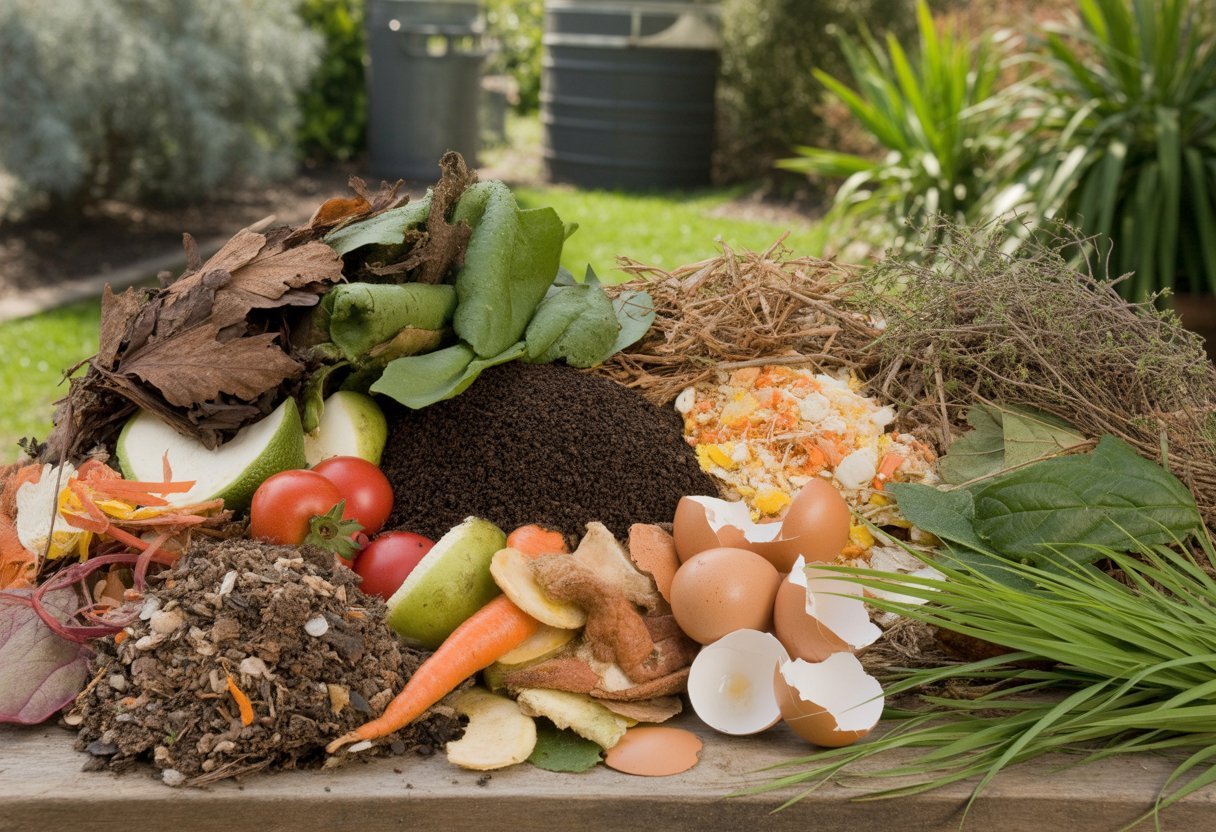
The best compost materials for California include green waste like veggie scraps and grass clippings, brown waste such as dry leaves and straw, and local options like avocado or citrus peels that break down well here. These ingredients make a balanced mix, which means faster decomposition and fewer headaches with odor or pests.
Choosing smart compost materials cuts down on landfill waste and gives California gardens richer, healthier soil.
Essential Compost Materials for California Gardens
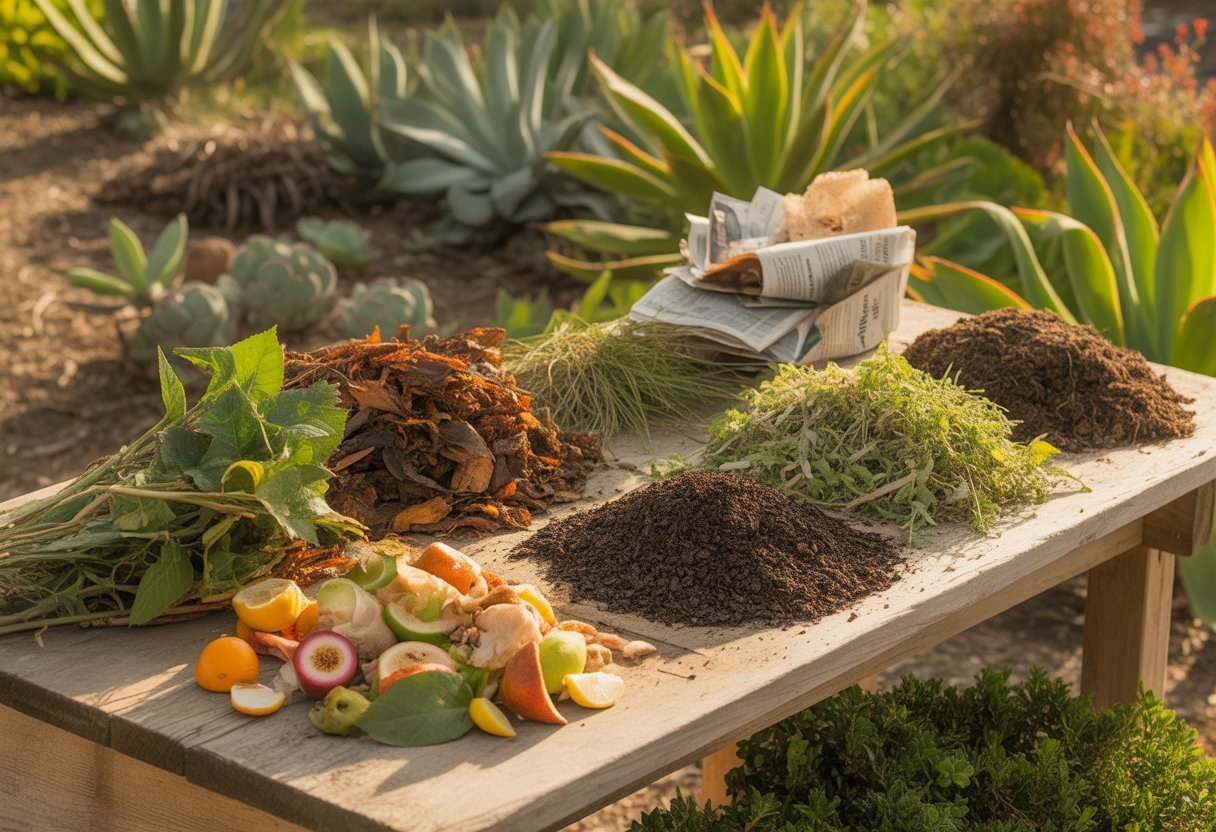
A good compost pile in California means balancing the right organic materials. This balance boosts soil organic matter, supports strong plants, and fits the local climate and what’s available.
Green Materials: Nitrogen-Rich Options
Green stuff brings nitrogen, a must-have for the microbes that do the heavy lifting in the composting process. In California, fresh grass clippings, kitchen veggie scraps, and coffee grounds are all common green feedstock.
These break down quickly and release that nitrogen, speeding up compost. Manure from goats, rabbits, or chickens also adds nitrogen, but it should be well-aged to dodge pathogens and strong smells.
Fresh green waste should make up about one-third of the pile, or you’ll end up with a soggy, smelly mess.
Brown Materials: Carbon Sources
Brown materials bring carbon, which keeps the compost energized and the nitrogen in check. In California, you’ll see dry leaves, straw, shredded paper, and small branches going into piles.
They take their sweet time breaking down but keep the pile airy and structured. A good rule of thumb: two parts brown for every part green, or you risk a slimy, compacted pile that no one wants to deal with.
Unique California-Friendly Inputs
Some local materials really shine in California compost. Eucalyptus leaves, while slow to break down, can be tossed in sparingly for carbon and a bit of aroma.
Citrus peels are everywhere, but keep them limited—they’re acidic and can attract pests if you go overboard. Palm fronds, grape pomace from vineyards, and avocado pits can all go in too, but they need extra shredding or a little pre-treatment to break down well.
These unique inputs offer nutrients and organic matter that California soils seem to love.
Optimizing Compost for Different California Soil Types
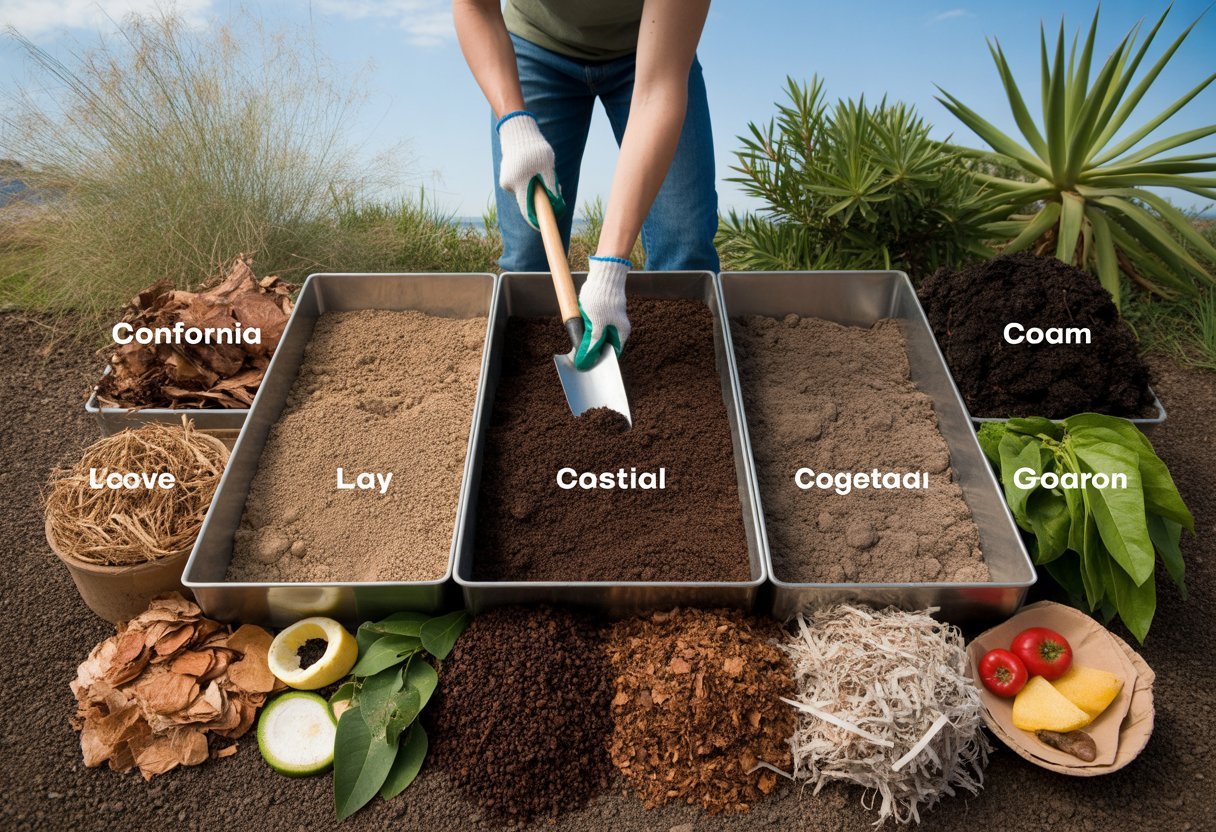
Soil across California varies a ton, so composting needs to adapt. Tweaking what you add helps with drainage, moisture, and other local challenges.
Improving Clay Soils with Bulk Materials
Clay soils here often clump up and hold way too much water. That makes roots struggle for air and space.
Mixing in bulky, coarse stuff like shredded leaves, straw, or wood chips creates air pockets and breaks up those dense clumps. This improves drainage and helps prevent waterlogging.
Blending in 20–30% bulky compost with your native soil works wonders for texture. Regularly adding organic matter also feeds soil microbes, which help break up sticky clay and boost fertility.
Enhancing Sandy Soils for Moisture Retention
Sandy soils let water run right through, so they dry out and lose nutrients fast. Compost rich in fine, broken-down organic matter helps these soils hold onto water.
Finely composted kitchen scraps, coffee grounds, or grass clippings add humus that binds sand together. This boosts moisture retention and keeps nutrients nearby for roots.
Spreading 3–5% high-quality compost each year can turn sandy soil into something a lot more plant-friendly. Compost also supports microbes, which is always a plus.
Blending Soil Amendments for Ideal Soil Structure
If you’ve got a mix of soils (or just aren’t sure), it’s smart to blend different compost types. Coarse materials boost drainage, while fine compost helps with moisture retention.
A solid blend could be:
- 15% chopped woody material for air
- 15% fine compost for holding water and nutrients
- 70% native soil
This combo prevents compaction but keeps enough moisture for roots and microbes to thrive.
Using Compost to Support California Plants
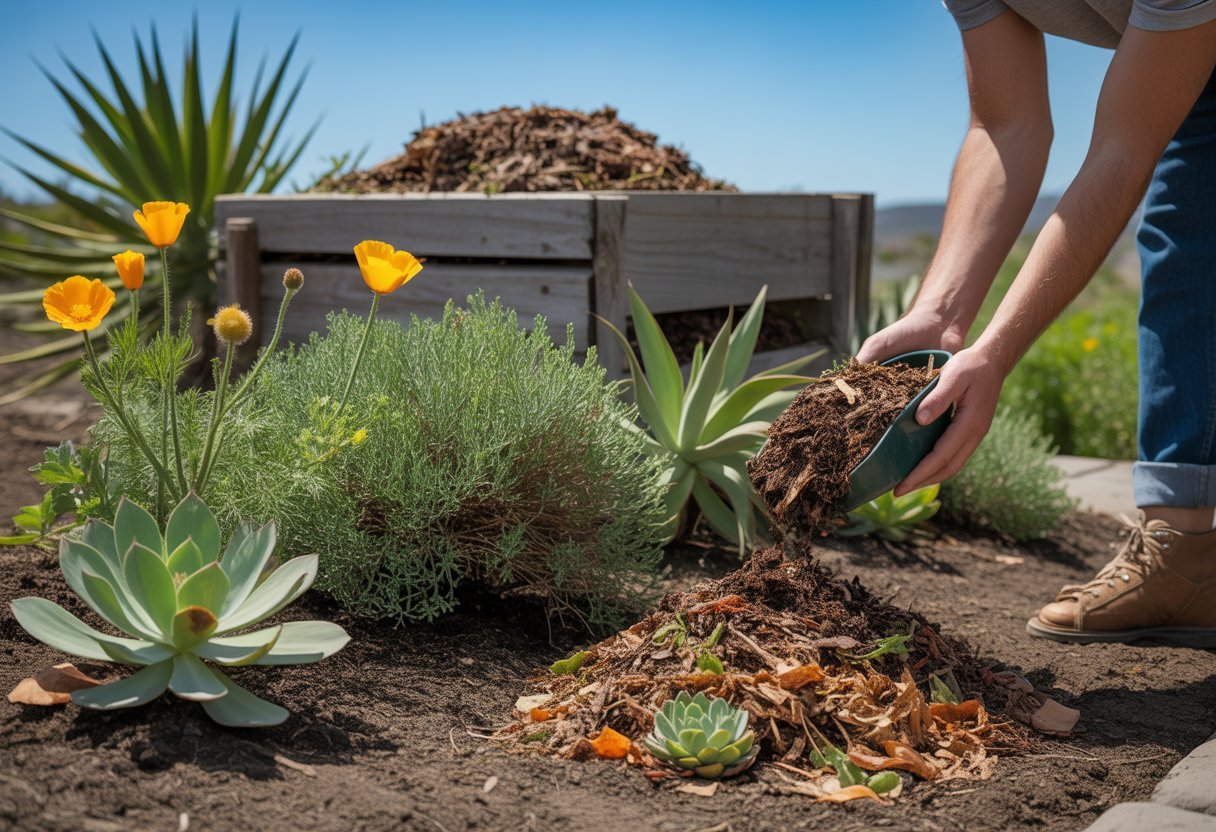
Compost makes soil better, boosts nutrient availability, and helps roots grow strong in all kinds of California gardens. But different plants need different compost tweaks.
Best Compost Materials for Native Trees and Shrubs
Native trees and shrubs here love compost packed with organic matter and balanced nutrients. Wood chips, shredded leaves, and aged manure mimic what you’d find on a forest floor—slow-release, gentle, and effective.
These materials keep soil loose and moist, which deep roots appreciate. Compost with a neutral to slightly acidic pH keeps microbes happy without messing up the soil’s natural chemistry.
Skip the high-nitrogen stuff, which can encourage invasive weeds. A 2–3 inch mulch layer of compost protects roots and locks in moisture.
Compost Strategies for Fruit and Vegetable Gardens
Fruit and veggie gardens in California crave nutrient-rich, well-draining compost. Kitchen scraps, grass clippings, and manure bring in nitrogen, phosphorus, and potassium.
Mixing compost into raised beds helps with drainage and lets roots dig deep. Spreading compost before planting boosts fertility and gets microbes working.
If soil tests point out missing nutrients, add some fertilizer. Good compost means more vigorous plants, better harvests, and fewer disease problems.
Special Considerations for Acid-Loving Plants
Some plants—think rhododendrons, blueberries, certain ferns—need soil that stays on the acidic side (pH 4.5 to 6). Compost made from pine needles, oak leaves, and peat moss keeps things acidic and brings in iron.
Don’t use lime or alkaline compost, or you’ll raise the pH and stress these plants out. Regular soil pH tests help you fine-tune your compost mix. Acidifying fertilizers with the right compost support healthy roots and bold foliage.
Compost Application and Yard Management in California
Timing is everything with compost in California. The right application keeps nutrients in the soil and helps gardens weather the state’s dry spells.
Seasonal Compost Application Best Practices
During the rainy winter months, apply compost in moderate layers—too much, and heavy rain will wash nutrients away. Adding 1–2 inches in late fall sets up the soil for the dry season.
In summer, go lighter with 0.5 to 1 inch. This helps hold water and keeps nutrients from running off. Spring composting is great for growth, but you’ll need to water to wake up those microbes.
Mixing in worm castings boosts nutrient release year-round. Just don’t add compost right before heavy irrigation or storms, or you’ll lose nutrients to runoff.
Managing Yard Trimmings and Compost Feedstock
Yard trimmings like grass clippings and small branches are compost gold. Shred or chop them up to speed things along.
Grass is full of nitrogen, so always balance it with carbon-rich stuff like dry leaves or wood chips. Turn the pile often to keep air moving and odors down.
Aim for 50–60% moisture in your compost pile. Too wet? You’ll get leaching and slow breakdown. Too dry, and the microbes go dormant—so keep an eye on it and adjust as needed.
Addressing Leaching and Nutrient Retention
Leaching nutrients—especially nitrogen—can be a real headache in California’s sandy soils or with heavy irrigation. If you spread compost as a top dressing instead of digging it in, nutrients tend to stick around the root zone longer.
Tossing in organic stuff like worm castings? That really helps soil clump together, so it hangs onto water and nutrients better. I’ve noticed that throwing some native plant debris on top as mulch cuts down on runoff, too.
Keep an eye on soil moisture, and poke some holes for aeration every so often. That wakes up the microbes, making them more efficient at locking nutrients in place. Try to time your watering after you add compost—don’t overdo it, or you’ll just wash everything away.