Best Soil for Foamflower Growth: Essential Tips for Healthy Plants
Last updated: August 31, 2026
Foamflower, or Tiarella if you want to sound fancy, does best in well-draining, organically rich soil. It needs to stay moist but not soggy—nobody likes wet feet, not even plants.
The ideal soil for foamflower growth is loamy, slightly acidic to neutral, and high in organic matter. That combo really gives roots room to stretch and helps foliage look its best.
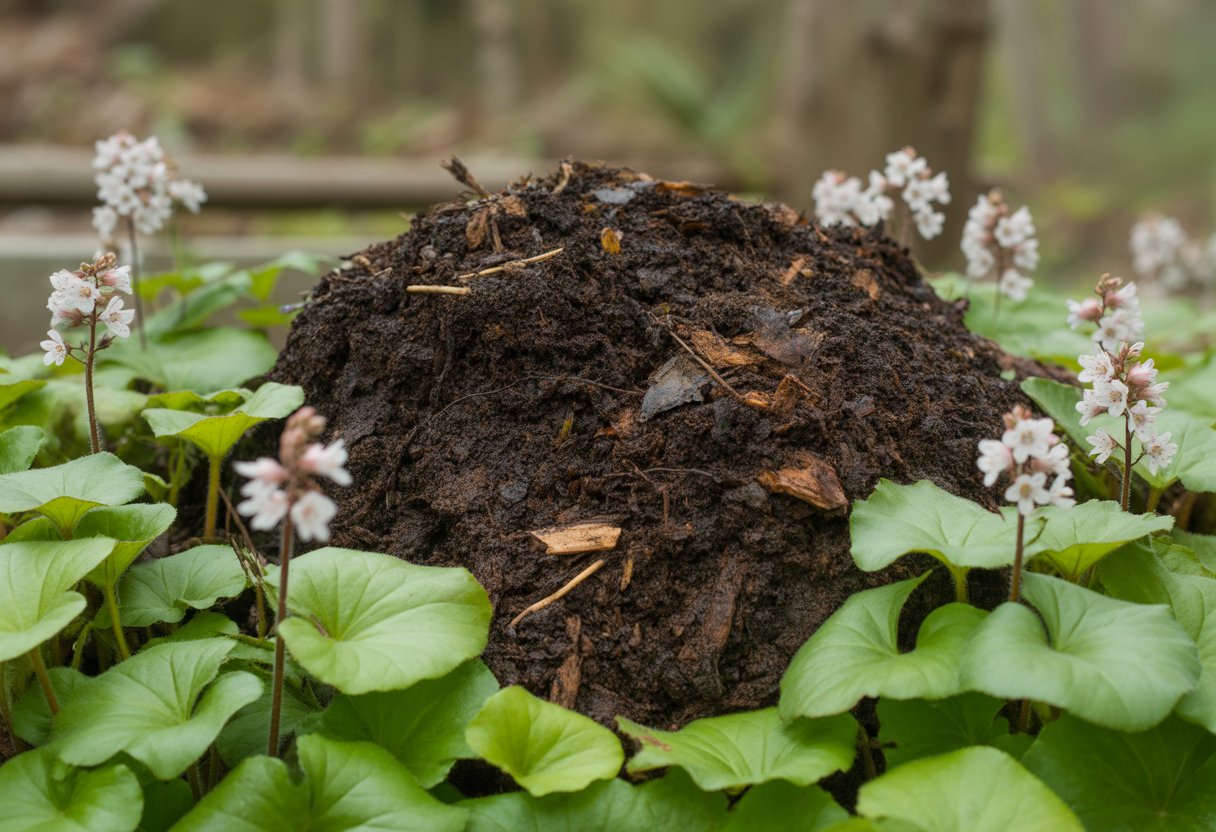
Shade gardens are where foamflower shines, but soil conditions can make or break it. It likes soil that feels like a woodland—cool, a little damp, fertile, and with enough air to keep roots from rotting.
Essential Soil Requirements for Thriving Foamflower
Foamflower (Tiarella cordifolia) really wants specific soil conditions if you want it to stick around. It needs a good mix of moisture, drainage, nutrients, and the right pH to stay happy in those shady garden spots.
Ideal Soil Type for Foamflower
Foamflower prefers rich, loamy garden soil that keeps moisture in but doesn’t drown the roots. The soil has to drain well or you’ll risk root rot.
Sandy or heavy clay soils don’t cut it—unless you seriously amend them. Tossing in compost or leaf mold makes a big difference, improving texture, drainage, and feeding the plant like it’s back in the forest.
Importance of Moisture and Drainage
Foamflower needs consistently moist soil to keep its foliage lush and flowers coming. Drought? Not its thing, so make sure the soil holds water but doesn’t turn to sludge.
If water pools around the roots after rain, that’s a red flag. Mulching helps hold moisture and keeps things cool, which foamflower loves.
In dry spells or hot climates, regular watering is a must. It’s all about mimicking those natural woodland vibes.
Optimizing Soil pH and Nutrient Content
Foamflower likes its soil slightly acidic to neutral, ideally between 5.5 and 7.0 on the pH scale. If the pH drifts too far, it struggles to take up nutrients.
You want the soil to be nutrient-rich, packed with organic material that breaks down slowly. Balanced, slow-release fertilizer or well-rotted compost works wonders.
Testing pH and nutrients before planting makes life easier. If you need to tweak things, add sulfur to lower pH or lime to bump it up.
Preparing and Amending Soil for Foamflowers
Getting the soil right is a big deal if you want foamflowers to thrive. It’s about making the structure better, locking in moisture, and feeding the plant with the right amendments.
Utilizing Compost and Organic Amendments
Mixing in compost boosts soil fertility and structure. It also helps drainage and moisture retention, which is great since foamflowers are a bit picky.
Aged leaf mold or well-rotted manure can work too. These organic fixes make sandy or clay soils friendlier by adding humus, which roots love.
Aim for 2-3 inches of compost mixed into the top 6 inches of soil before planting. That gives foamflower a loose, nutrient-rich start.
The Role of Mulching in Soil Health
Mulching keeps soil moisture steady and temperatures even around foamflower roots. A 2-3 inch layer of something like shredded bark, leaf mold, or pine needles also keeps weeds down.
As mulch breaks down, it feeds the soil and encourages good microbes. Plus, it helps prevent erosion and lets water soak in better.
Don’t pile mulch against the stems, though—leave a bit of space for airflow and to keep rot away.
Testing and Adjusting Existing Garden Soil
Before planting, check the soil’s pH and nutrients. Foamflowers want it slightly acidic to neutral, somewhere between 5.5 and 7.0.
Grab a soil test kit or go for a pro analysis to see what’s missing. You might need to add lime to raise pH or sulfur to drop it.
Use balanced slow-release fertilizers based on what the tests say. Make those changes a few weeks before planting so the soil can settle.
Planting and Growing Foamflower in the Right Soil
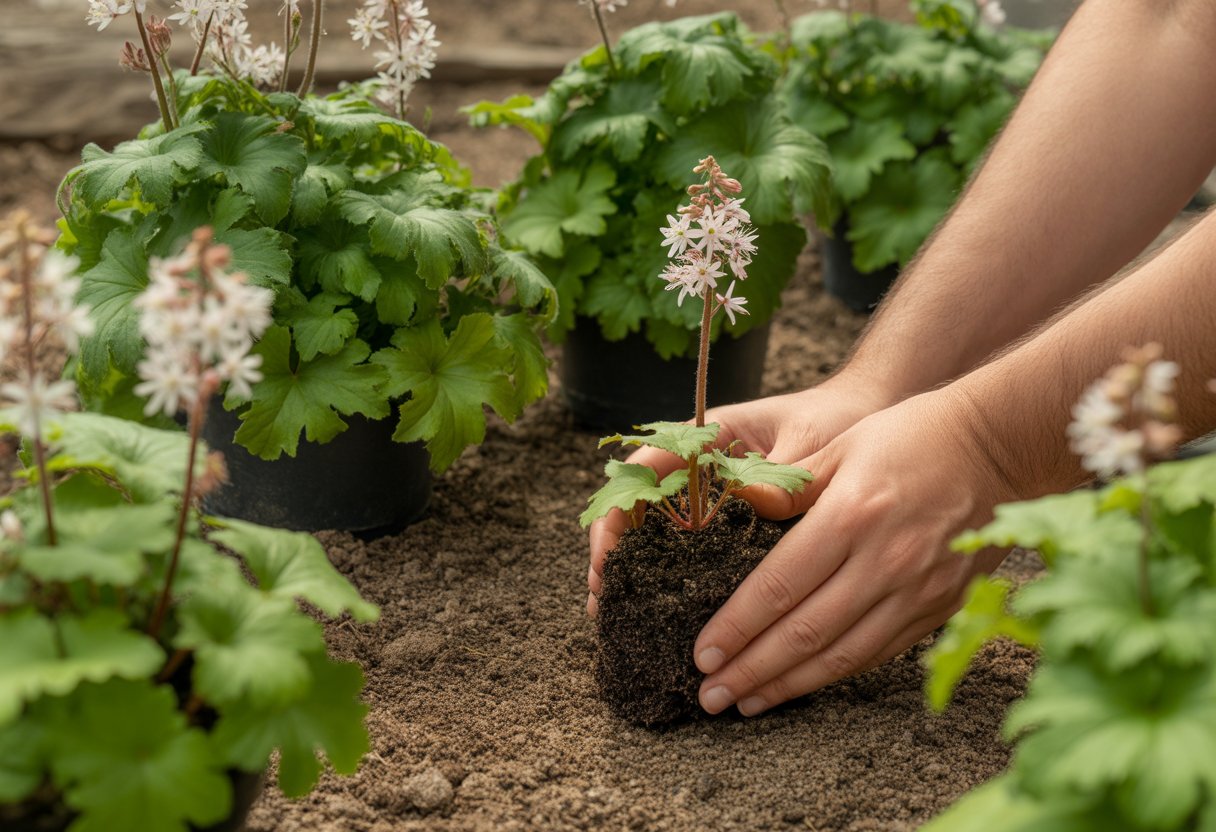
Foamflower needs well-drained, rich, organic soil that stays moist. How you plant and where you put it can make all the difference for long blooming and healthy growth.
Transplanting and Spacing Considerations
Transplant foamflower in early spring or fall to help it settle in without too much stress. Make sure the soil is moist but not soggy so roots can get established fast.
Give each plant about 12 to 18 inches of space. That’s enough for airflow and lets the plant spread—foamflower usually tops out at 8 to 12 inches tall.
Dig holes twice as wide as the root ball and keep the planting depth the same as the container. A mulch of leaf mold or compost helps keep roots cool and soil damp.
Tips for Woodland and Shade Gardens
Foamflower is a woodland native from the eastern U.S. and loves full shade or dappled sunlight. The soil in those spots is usually acidic to neutral and loaded with organic matter.
Mixing in leaf mold, pine needles, or compost brings your garden soil closer to what foamflower likes. That helps keep foliage healthy and blooming consistent.
Skip heavy clay or dry spots—roots won’t be happy and the plant won’t thrive. A little shelter from harsh afternoon sun also helps flowers last longer.
Achieving Long Blooming and Vigor
Keep soil moisture steady for the best blooms and growth. Water regularly during dry periods, but make sure excess water drains off.
A balanced, slow-release fertilizer in early spring gives foamflower a boost. Deadheading spent flowers can nudge it to bloom more.
A layer of organic mulch keeps soil cool and holds in nutrients. That’s how you get foamflower to look good all season.
Ongoing Soil Care and Potential Challenges
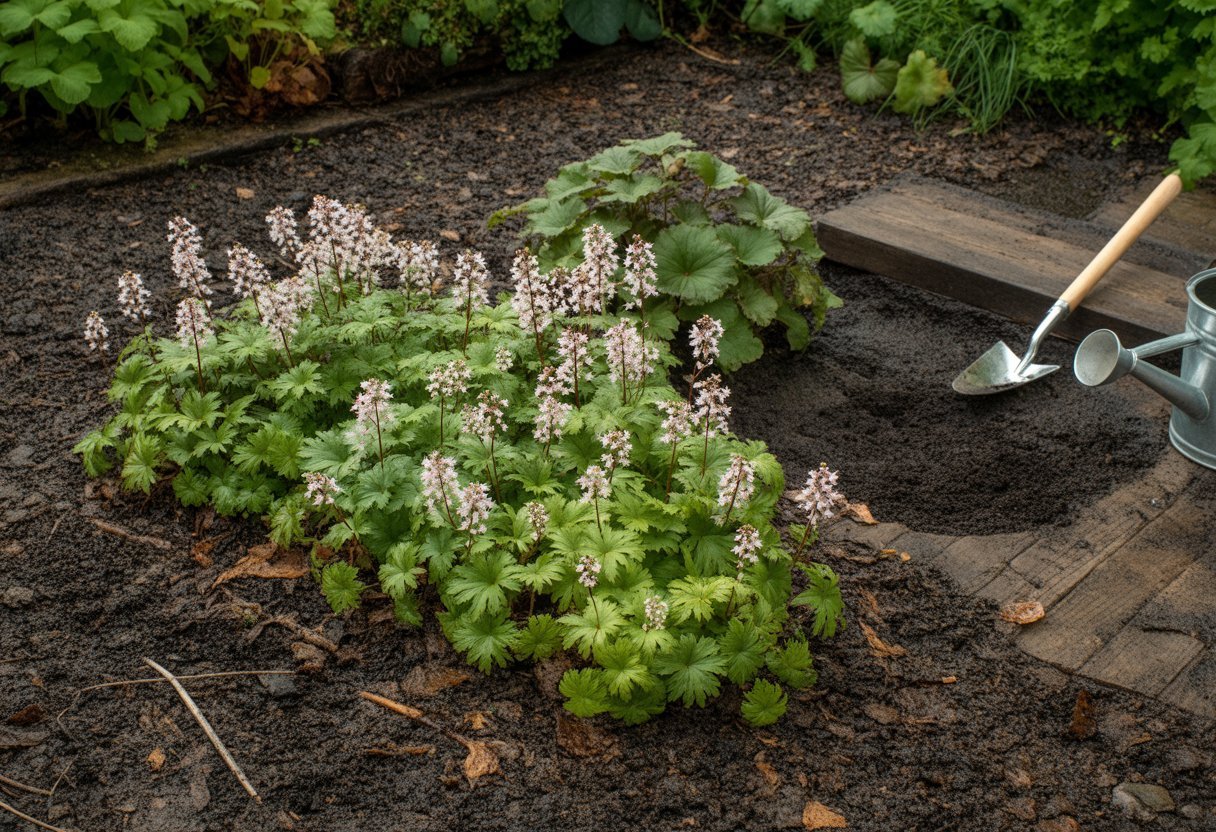
Foamflowers do best when the soil stays moist, drains well, and stays just a bit acidic. If you keep those in check, you’ll dodge most problems.
Maintaining Low-Maintenance and Healthy Conditions
Foamflowers like a pH between 5.5 and 6.5. Test the soil now and then to keep acidity in the sweet spot.
Adding organic matter like leaf mold or compost helps hold moisture and feeds the soil, but don’t go overboard. Mulching with shredded bark or pine needles keeps things steady and stops weeds from taking over.
Avoid heavy clay—too much water sticks around and roots can rot. Usually, a deep watering once a week is enough if the soil has plenty of organic content.
Managing Common Pests and Soil Issues
Spider mites and slugs love to go after foamflowers—especially when the soil gets too dry or packed down. If you keep the soil loose and a bit damp, you’ll make life harder for these pests.
Root fungal diseases like powdery mildew pop up when drainage just isn’t cutting it. You really want soil that’s well-aerated and never soggy.
Soil amendments with slow-release fertilizers can help your plants grow strong. Just don’t overdo it, since too much fertilizer can attract even more pests—especially for plants like heuchera and foamflowers, which honestly seem to prefer things on the moderate side.