Growing Lavender in Poor Soil: Expert Tips for Thriving Plants
Last updated: September 5, 2026
Lavender usually loves well-drained, sandy soil, but it’s honestly tougher than it looks—it can handle poor soil too. To get lavender to thrive in less-than-ideal dirt, you’ll want to focus on drainage and avoid piling on rich fertilizers. That’s how it grows naturally, and it keeps headaches like root rot at bay.
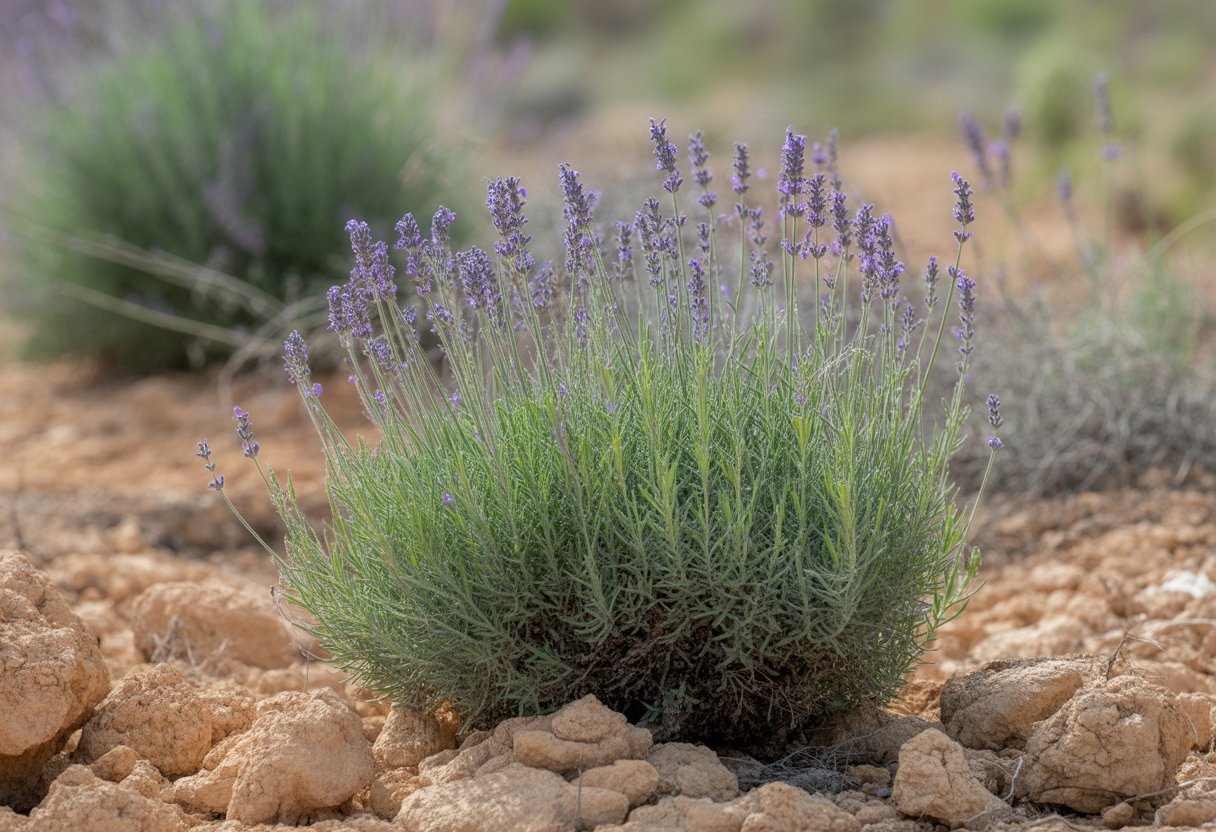
Lots of gardeners think poor soil means you’re doomed, but lavender often surprises people. It pushes down deep roots in rough, lean ground.
If you prep the soil well, even heavy clay or packed earth can support healthy lavender growth.
Focusing on texture and drainage—not just fertility—lets you grow lavender that still smells amazing and blooms like crazy, even when conditions aren’t perfect.
Understanding Lavender and Its Soil Needs
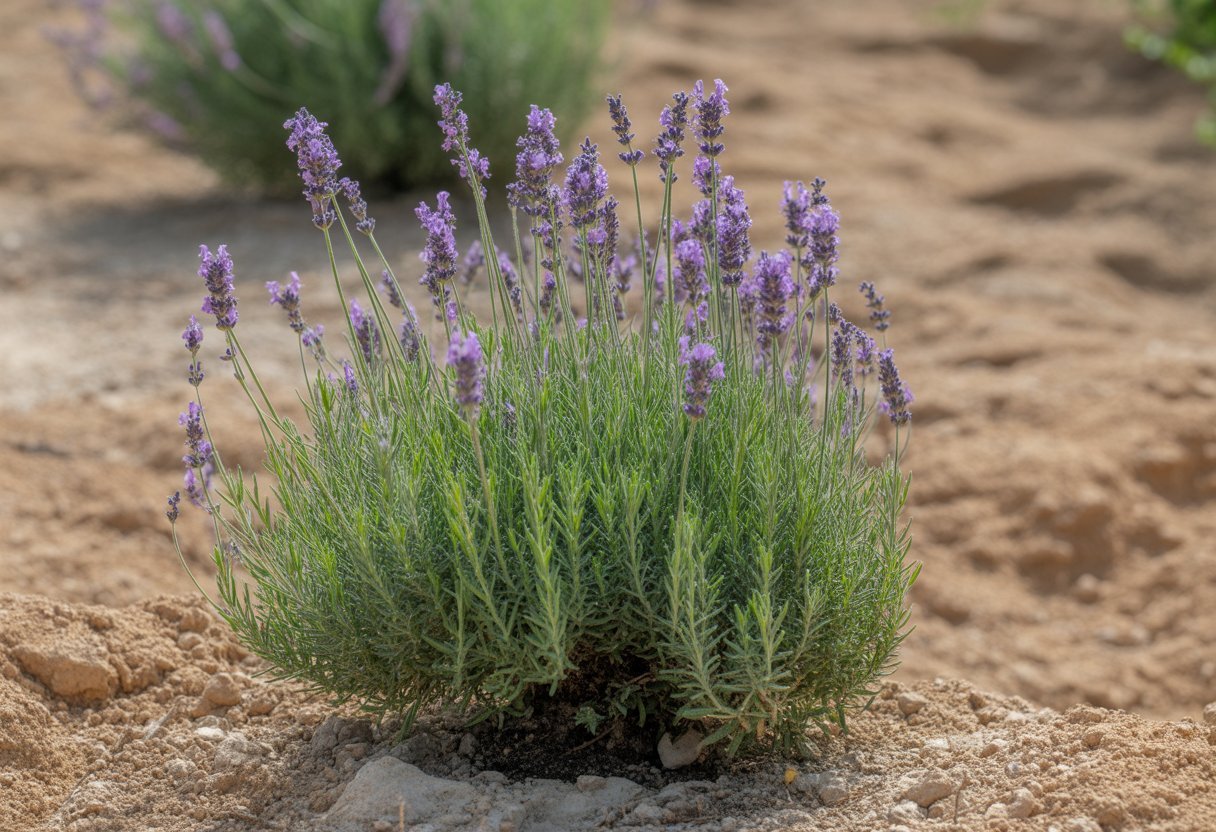
Lavender comes in a handful of species, each with their own quirks and favorite soils. While all lavenders handle drought well, not every type is equally chill about poor soil.
If you know what each species needs, you can tackle the challenges of growing lavender where nutrients are scarce.
Overview of Lavender Species
The Lavandula genus covers several favorites: Lavandula angustifolia (English lavender), Lavandula dentata (French lavender), Lavandula stoechas (Spanish or fringed lavender), and lavandin, a hybrid. English lavender is famous for its scent and ability to survive chilly winters.
French lavender prefers warmer, milder climates. Spanish and fringed lavenders stand out for their unique flowers and can take more drought, but they don’t love the cold.
Lavandin mixes traits from English and Spanish types, often making bigger flower spikes that commercial growers love for oil.
Each type handles moisture and tough conditions a bit differently, so it’s worth paying attention.
Soil Preferences for Lavender
Lavender likes its soil well-drained, a bit alkaline or neutral, and not too rich. Sandy or gravelly soil lets water move through fast, which keeps roots happy and healthy.
Most lavenders grow best with a pH between 6.5 and 7.5, though they’ll tolerate a little more alkalinity. Heavy, rich soil isn’t ideal—it can make the plant leafy but stingy with flowers.
Drainage really matters more than fertility. If you add sand or small gravel to rough soil, you’ll help aerate it and keep it loose.
Challenges of Growing Lavender in Poor Soil
Poor soil lacks nutrients and structure, so lavender may grow slower and flower less. Its drought tolerance helps it get by, but roots still need to breathe and avoid soggy spots.
Heavy clay or compacted dirt can trap water, causing root diseases. Low nutrients mean lavender takes its time, but as long as it drains well, it’ll keep plugging along.
Gardeners usually mix in coarse materials or a little limestone to bump up the pH and fight acidity. Keeping an eye on moisture and resisting the urge to overwater goes a long way.
Soil Preparation and Planting Lavender
Getting the soil right is the real secret. You’ll want to boost drainage and adjust the pH if needed.
Planting looks a little different depending on whether you’re working in the ground, pots, or raised beds.
Assessing and Amending Poor Soil
Start by testing your soil’s pH—lavender likes it alkaline to neutral, somewhere between 6.5 and 7.5. If you find it’s on the acidic side, try adding wood ash or lime gradually.
Poor soil is usually bad at draining. Mix in sandy soil or grit to break up clay or packed dirt and help water flow through.
Skip heavy doses of organic material; too much holds moisture, which lavender hates.
A little compost can help the texture, but don’t overdo it. You’re aiming for a loose, fast-draining mix that feels a bit like the Mediterranean hillsides lavender calls home.
Essential Soil Requirements
Lavender needs well-draining soil that dries out quickly after watering or rain. Sandy or gritty mixes work best.
Too much water leads to root rot and all sorts of headaches. The soil should feel light and fluffy, letting roots breathe.
Once lavender settles in, it barely needs fertilizer. Rich or soggy soil just holds it back.
Full sun makes a big difference—aim for 6-8 hours of direct sunlight every day. Air moving around the plants keeps fungus at bay, which is even more important in poor soils.
Planting Lavender in the Garden
Pick a sunny spot with soil that drains well. Dig a hole about twice as wide as the root ball and mix sand or grit into the dirt around it.
If you’re starting from seed, get them going indoors or in a sheltered area. Seeds can be slow to sprout, so don’t get discouraged if it takes a while.
Give each plant 12-18 inches of space so air can circulate. Mulch with gravel or sand instead of something organic to keep things dry. Water sparingly.
Growing Lavender in Containers and Raised Beds
Use a fast-draining potting mix—the kind made for succulents or cacti, usually with sand or perlite. Big containers help even out moisture swings.
Fill raised beds with a sandy, alkaline mix. The elevation keeps roots from sitting in water.
Pots dry out faster, so you might need to water more often, but you get more control. Always use containers with drainage holes.
If your soil’s heavy or just plain bad, containers and raised beds make it a lot easier to grow happy lavender.
Care and Maintenance for Healthy Lavender
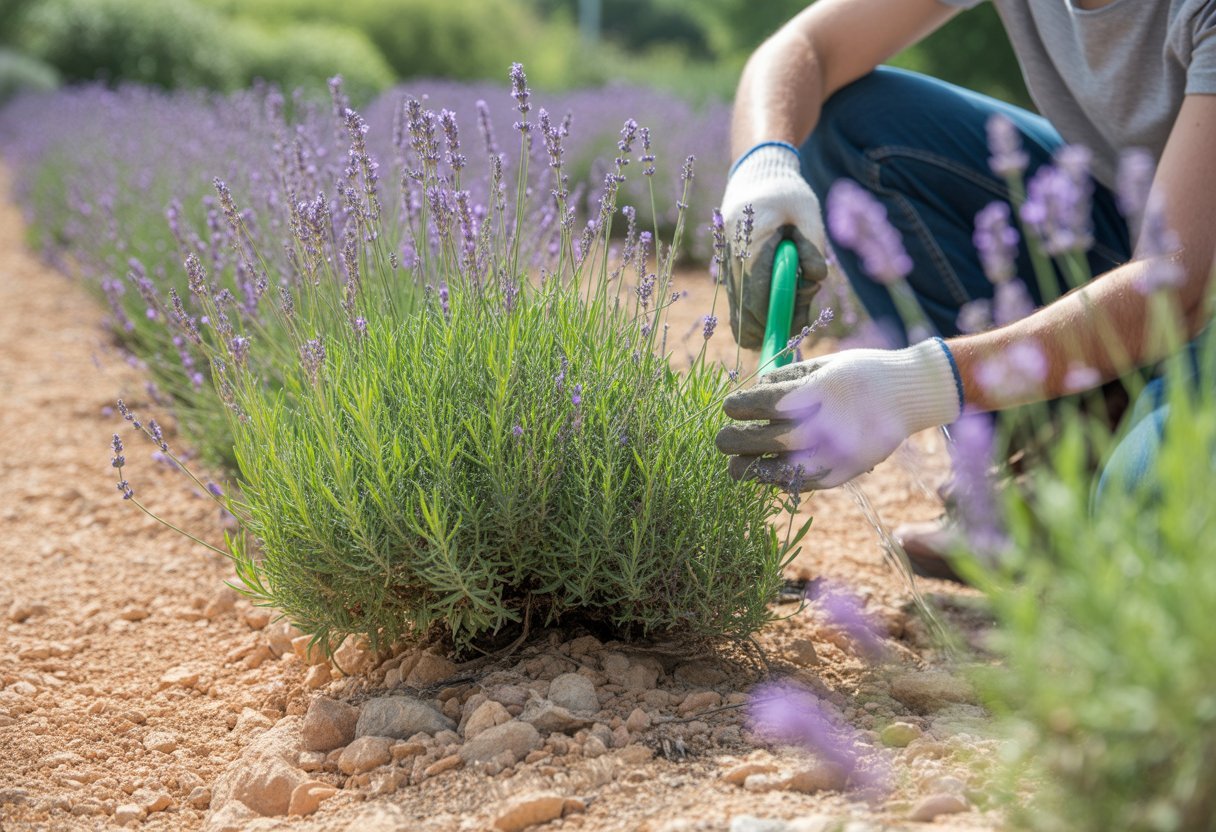
Lavender isn’t high-maintenance, but it does appreciate the right care. Watering, feeding, pruning, and a bit of seasonal protection all help keep it blooming and healthy, especially in rough soil.
Watering and Fertilizing Lavender
Lavender shrugs off drought, but young plants need regular water their first season. After that, water only when the top inch or two of soil feels dry.
Go easy on fertilizer. A little balanced, low-nitrogen feed in early spring and after the main bloom is plenty. Too much fertilizer just makes leaves, not flowers.
Let air circulate and don’t crowd your plants. Overwatering or dense patches can lead to fungus and fewer blooms.
Pruning and Deadheading Techniques
Pruning keeps lavender tidy and blooming well. After flowering, give plants a light trim to remove spent stems and shape them, but avoid cutting into the old, woody parts.
Deadheading—snipping off faded blooms—can encourage a second flush of flowers. Cut flower stalks right at the base to help the plant focus on new growth.
A yearly prune in early spring or late summer stops the plant from getting too woody. If you’re into propagation, take cuttings from non-flowering stems after pruning.
Overwintering and Seasonal Care
In cold areas, lavender needs a little winter protection. Pile straw or pine needles around the base to insulate the roots.
Cut back on watering in late fall to avoid fungus during dormancy. Keep things dry and breezy to prevent mold.
When spring rolls around, pull back the mulch slowly and prune any dead bits. Seasonal care like this keeps lavender going strong, even in tough soils.
Addressing Pests, Diseases, and Common Problems
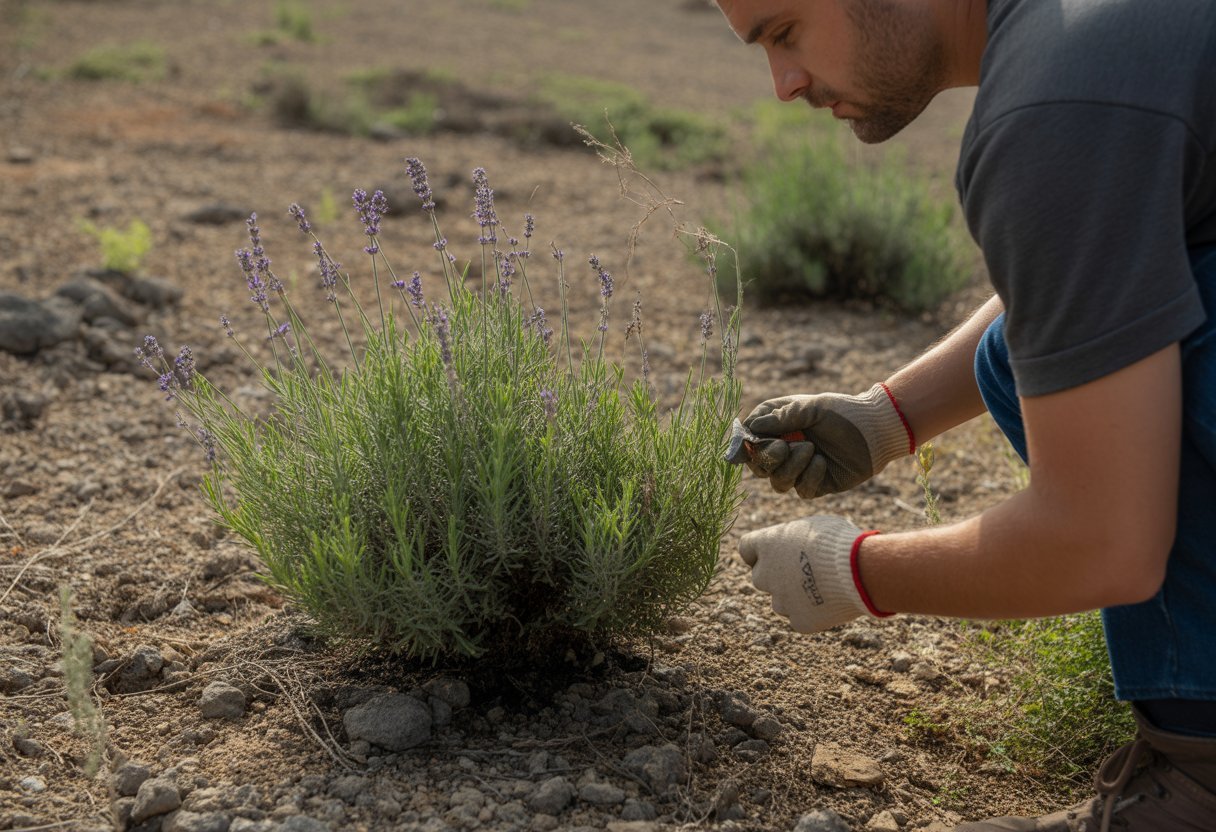
Lavender in poor soil can run into pests and diseases that mess with growth and flowering. Staying on top of watering, soil, and early signs of trouble makes a big difference.
Preventing and Treating Root Rot and Fungal Diseases
Root rot loves soggy, poorly drained soil. Make sure water moves through the soil easily—raised beds or extra grit can help.
Powdery mildew sometimes shows up as white spots on leaves, especially in humid, shady corners. Prune to open things up and skip overhead watering.
If you spot fungus, try sulfur or neem oil sprays—they’re usually safe for lavender. If roots turn black and mushy, trim away the bad parts or pull the plant if it’s too far gone. Don’t replant lavender in the same spot right away.
Protecting Lavender from Pests
Aphids, whiteflies, and spider mites sometimes show up. Aphids hang out on new shoots and suck the sap, which weakens the plant.
Blast them off with a hose or use insecticidal soap. Pollinators like bees love lavender and don’t cause harm, so skip broad-spectrum sprays.
Check your plants often for pests. Planting rosemary nearby can help keep bugs away, and sticky traps can catch flying insects before they settle in.
Maintaining Plant Health in Poor Soil
Lavender likes its soil alkaline and well-drained, with just enough nutrients to keep it going. If your soil’s too acidic, sprinkle in some lime to bump up the pH.
Compost helps with texture, but skip anything heavy or soggy. Too much moisture can really mess things up for lavender.
Try mulching with gravel or coarse sand. It keeps the soil warm and discourages excess moisture. Steer clear of mulches that trap water—they make fungal problems way more likely.
Prune regularly to boost airflow and cut out old wood. It’s not just about looks; it genuinely helps keep disease at bay.
If you’re into potpourri or sachets, harvest the flowers as soon as they’re ready. It’s a win-win for you and the plant.