How Many Native Plants Do You Need? Calculate Spacing and Bed Coverage
Last updated: November 7, 2026
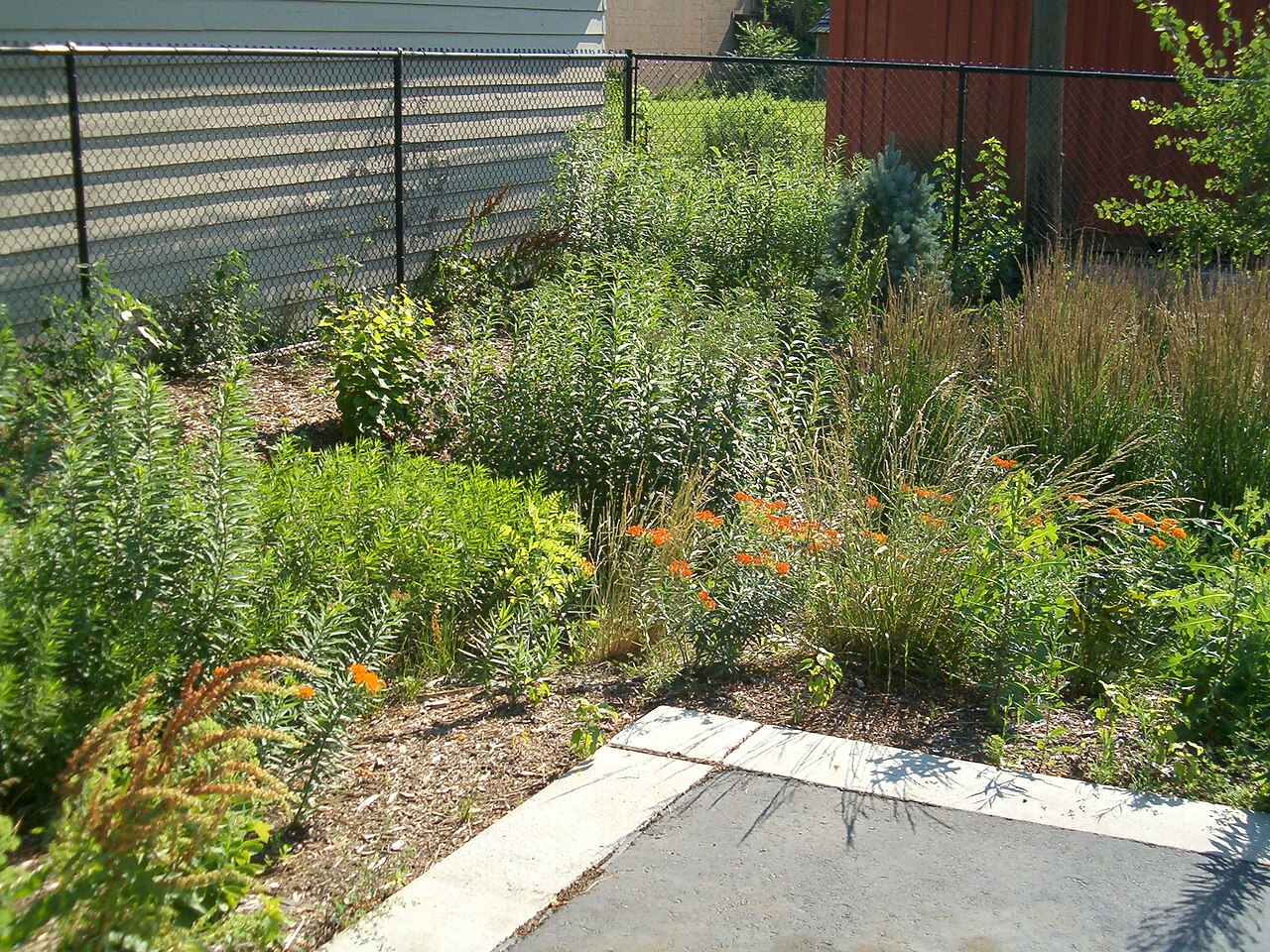
Most native plant orders go wrong in one of two ways. Some gardeners buy a dozen plants for a bed that needs sixty and spend three summers weeding bare soil. Others pack plugs so tightly that the bed is crowded by the second year.
The fix is a short calculation done before you shop. Measure the bed, decide how far apart each plant group should sit, and turn the spacing into a count per square foot.
This guide walks through that math, gives a worked example for a 200-square-foot bed converted from lawn, and explains when to plant denser or sparser than the numbers suggest.
Plan at a Glance
| Site | Any bed converted from lawn, from a 6-by-10-foot strip to a few hundred square feet |
| Size | The example uses a 10-by-20-foot bed (200 sq ft) |
| Sun | Full sun for the example palette; shade swaps listed below |
| Soil | Average, well-drained garden soil |
| Maintenance | Weeding until plants close over the soil, then a yearly cutback |
| Best regions | Example plants suit much of the eastern and central US; check your regional list before buying |
Start With the Bed Area, Not the Plant List
Measure length and width in feet and multiply. A 10-by-20-foot bed is 200 square feet. For curved or kidney-shaped beds, break the outline into rough rectangles and triangles, then add them together.
Subtract anything you will not plant. Stepping stones, a birdbath, a boulder, or a 2-foot strip kept clear for a path all take area out of the count.
Write the net planting area at the top of your plan. Every number after this point depends on it, and a 20 percent error here becomes a 20 percent error in your plant order.
How Plant Spacing Turns Into a Plant Count
Spacing is measured “on center,” meaning from the middle of one plant to the middle of the next. In a square grid, each plant gets a square of ground whose side equals the spacing.
That gives a simple formula: plants needed = area in square feet × 144 ÷ (spacing in inches × spacing in inches).
At 12 inches, each plant covers 1 square foot. At 18 inches, each covers 2.25 square feet. At 24 inches, each covers 4 square feet.
The University of Illinois Extension groundcover guide publishes the same numbers as a chart: 100 square feet takes 400 plants at 6 inches, 225 at 8 inches, 100 at 12 inches, and 45 at 18 inches.
Quick Coverage Chart
Square-grid counts from the formula above. Round up, and add a few spares for losses.
| Spacing on center | Area per plant | Plants per 100 sq ft | Plants for a 200 sq ft bed |
|---|---|---|---|
| 9 inches | 0.56 sq ft | 178 | 356 |
| 12 inches | 1 sq ft | 100 | 200 |
| 15 inches | 1.56 sq ft | 64 | 128 |
| 18 inches | 2.25 sq ft | 45 | 89 |
| 24 inches | 4 sq ft | 25 | 50 |
| 30 inches | 6.25 sq ft | 16 | 32 |
| 36 inches | 9 sq ft | 11 | 22 |
Illinois Extension recommends planting groundcovers in a staggered or diamond pattern rather than straight rows. Offsetting each row by half a space makes the bed look natural and closes gaps sooner.
A staggered (triangular) layout fits about 15 percent more plants into the same area at the same spacing. If you plan to stagger, multiply your square-grid count by about 1.15.
Choose Spacing From Mature Width
University of Maryland Extension’s general advice, given in an Ask Extension answer on native perennial spacing, is to space plants at their maximum growing width on center. A plant that matures 2 feet wide goes 2 feet from its neighbors.
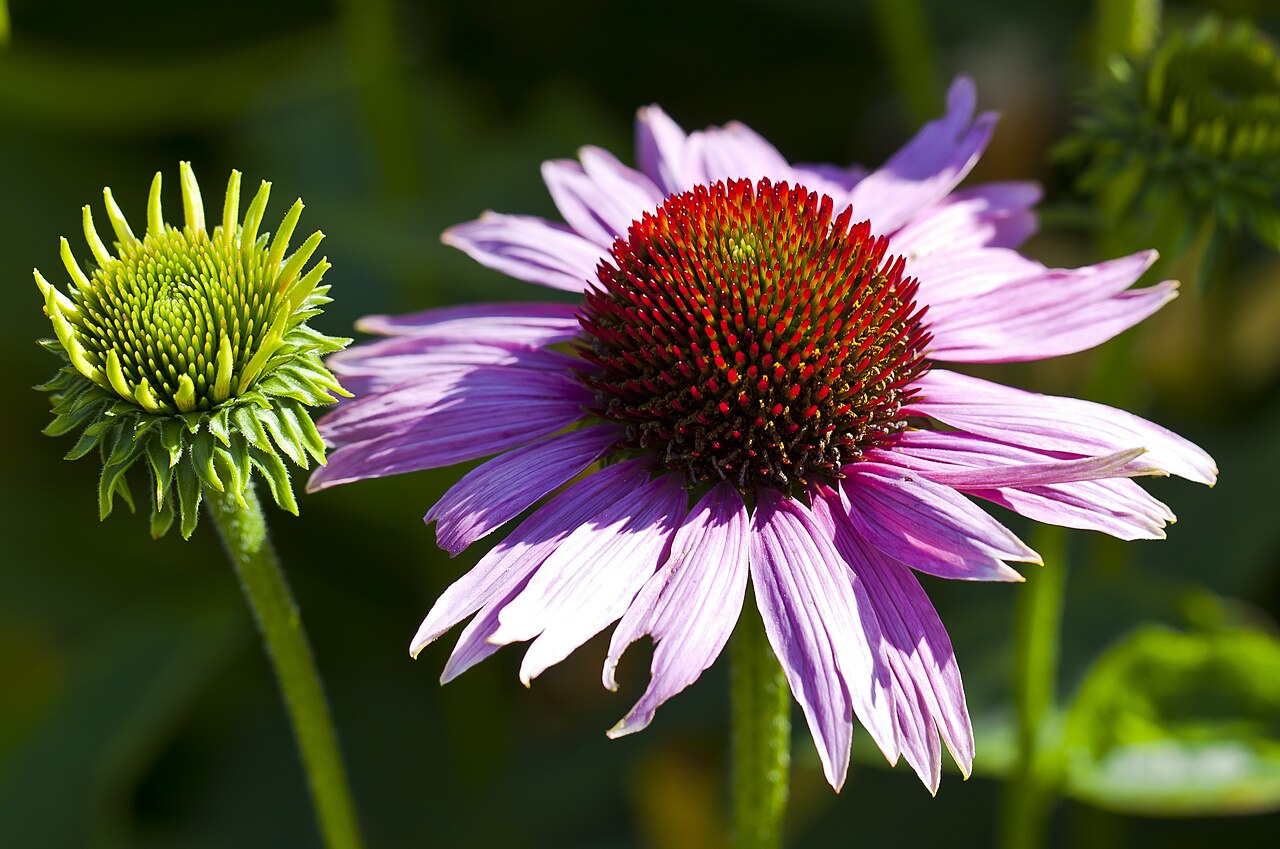
Plant tags and extension plant databases list mature width. The NC State Extension Gardener Plant Toolbox, for example, lists purple coneflower at 1 to 2 feet wide and wild bergamot at 2 to 3 feet wide.
Using the upper end of the width range gives a bed that fills in more slowly but needs less editing later. Using the lower end closes the soil sooner and costs more up front.
The One-Plug-Per-Square-Foot Shortcut
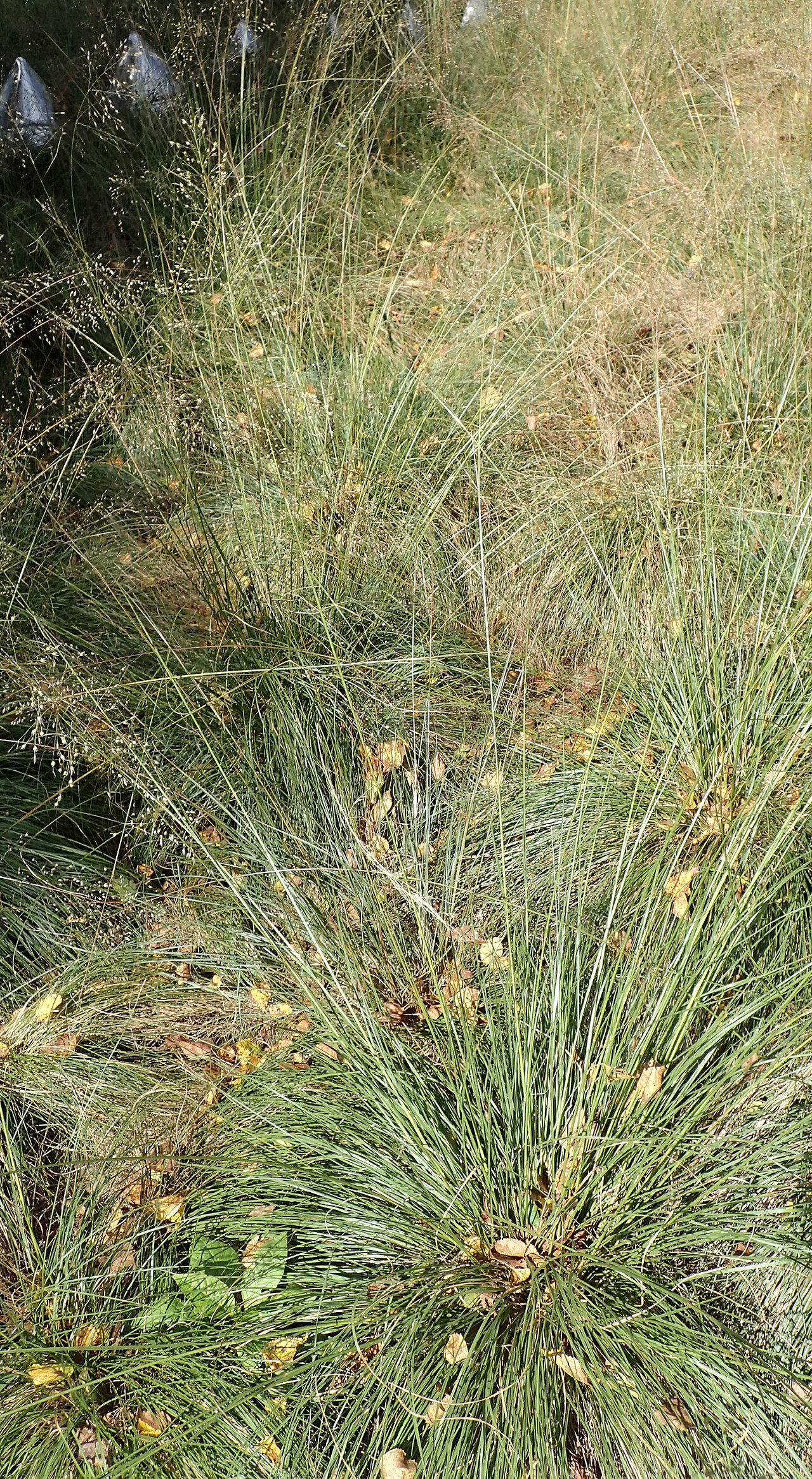
Plugs are small, young plants grown in deep cells. Because each one starts tiny, plug plantings use closer spacing than gallon pots.
The NOFA Organic Land Care Program’s guide to establishing native plugs gives a rule of thumb of one plug per square foot to get a dense stand within a year. For larger areas, it suggests a 12-inch grid.
The Maryland Extension answer notes the same 12-inch matrix approach among native plant designers. As plants grow, the weaker ones are crowded out or you remove the extras.
The trade-off is cost. A 200-square-foot bed at one plug per square foot is 200 plugs. The same bed planted at mature width with larger pots might need only 60 to 90 plants, but it will show bare soil and mulch for longer.
Design the Bed in Layers Before You Count
A single spacing rarely fits a whole bed. Wide grasses, upright flowers, and low edge plants each need their own spacing.
Split the net area into zones by role. A practical starting point for a sunny lawn-conversion bed is about half matrix plants (grasses or sedges that knit the bed together), a third upright flowering perennials, and the rest in low edging or accent plants.
Count each zone separately with its own spacing, then add the zones together. This is the step that keeps a bed from ending up with ten different plants scattered one at a time.
Repetition matters for the count too. Plan each flowering perennial in groups of three to seven, and repeat those groups across the bed, as described in our guide to repeating three native plants well.
Worked Example: A 200-Square-Foot Sunny Bed
Here is the full calculation for a 10-by-20-foot bed in full sun with average, well-drained soil, using container plants spaced near mature width.
- Matrix grass, 100 sq ft: Prairie dropseed at 24 inches (4 sq ft each) = 25 plants. In much of the East, swap in little bluestem at 18 to 24 inches.
- Upright flowers, 60 sq ft: Purple coneflower at 18 inches (2.25 sq ft each) = 27 plants, planted in groups of five.
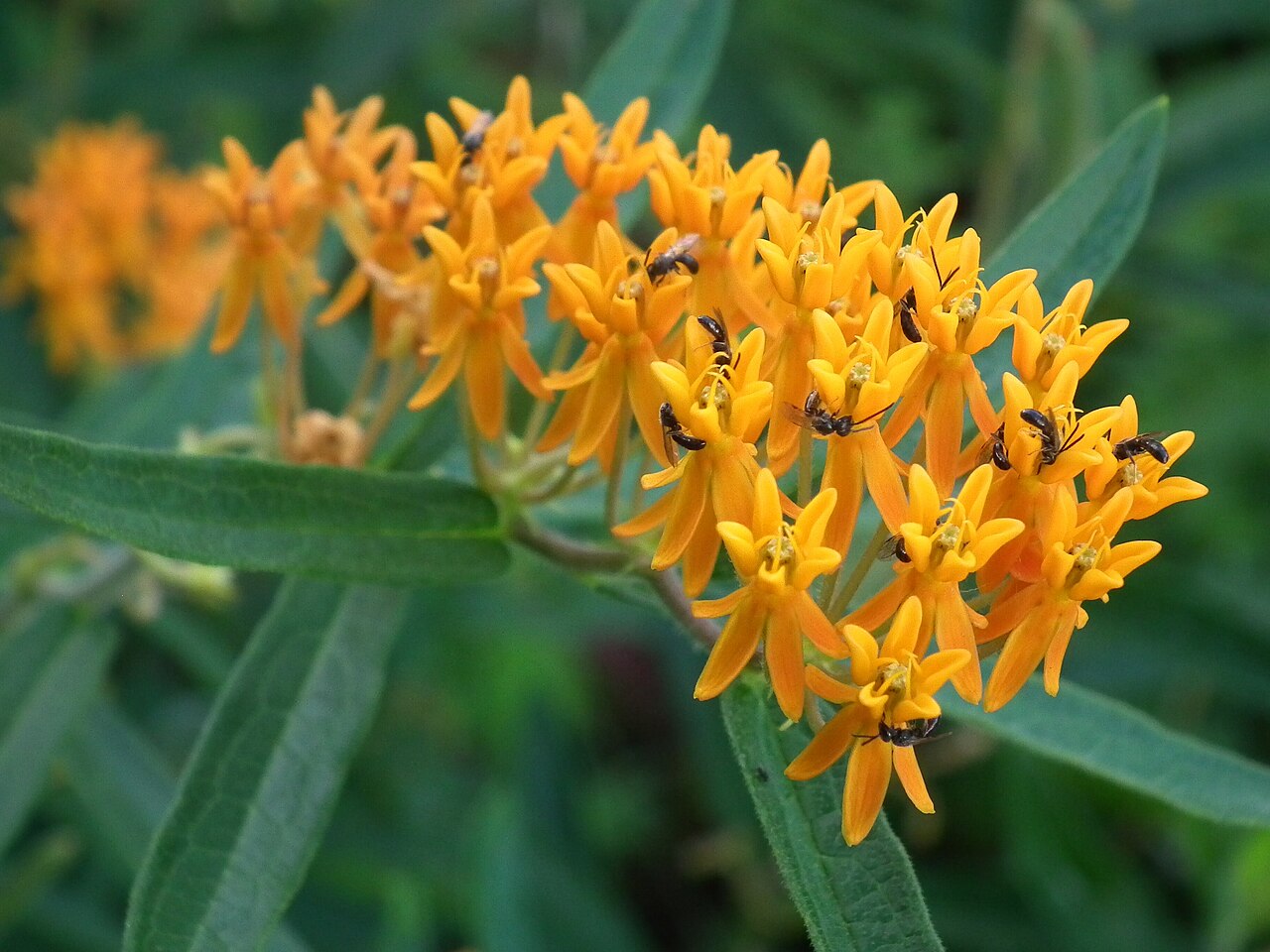
- Accent flowers, 25 sq ft: Butterfly weed at 18 inches = 11 plants, in two or three clusters.
- Late-season edge, 15 sq ft: Aromatic aster at 24 inches = 4 plants.
That totals about 67 plants, or roughly one plant for every 3 square feet. Add 5 to 10 percent for losses in the first year, so order about 72.
If you plant the same bed with plugs on a 12-inch grid instead, the count rises to 200. The plugs cost less each, but you will buy and plant three times as many.
Plant Palette
Example plants for a sunny bed, with spacing based on NC State width ranges. Confirm each one is native to your area.
| Plant | Role | Height | Width / spacing | Sun / moisture | Native range (LBJ) |
|---|---|---|---|---|---|
| Prairie dropseed | Matrix grass | 2–3 ft | 2–3 ft / 24 in | Sun to part shade; dry to medium | Que. to Sask., locally south to NC, KY, e. TX & CO |
| Little bluestem | Matrix grass | 2–4 ft | 1.5–3 ft / 18–24 in | Full sun; dry to medium | Most of the US east of the Rockies |
| Purple coneflower | Upright flower | 3–4 ft | 1–2 ft / 18 in | Sun to part shade; medium | GA to NE TX, north to NC, OH, IL & IA |
| Butterfly weed | Accent flower | 1–2 ft | 1–1.5 ft / 18 in | Sun; dry to medium | New England to FL, west to TX, north through CO to MN |
| Wild bergamot | Upright flower | 2–4 ft | 2–3 ft / 24–30 in | Sun to part shade; medium | Most of the US east of the Rockies |
| Aromatic aster | Fall edge | 1–3 ft | 1–3 ft / 24 in | Full sun; dry to medium | PA to NC, west to WY & TX |
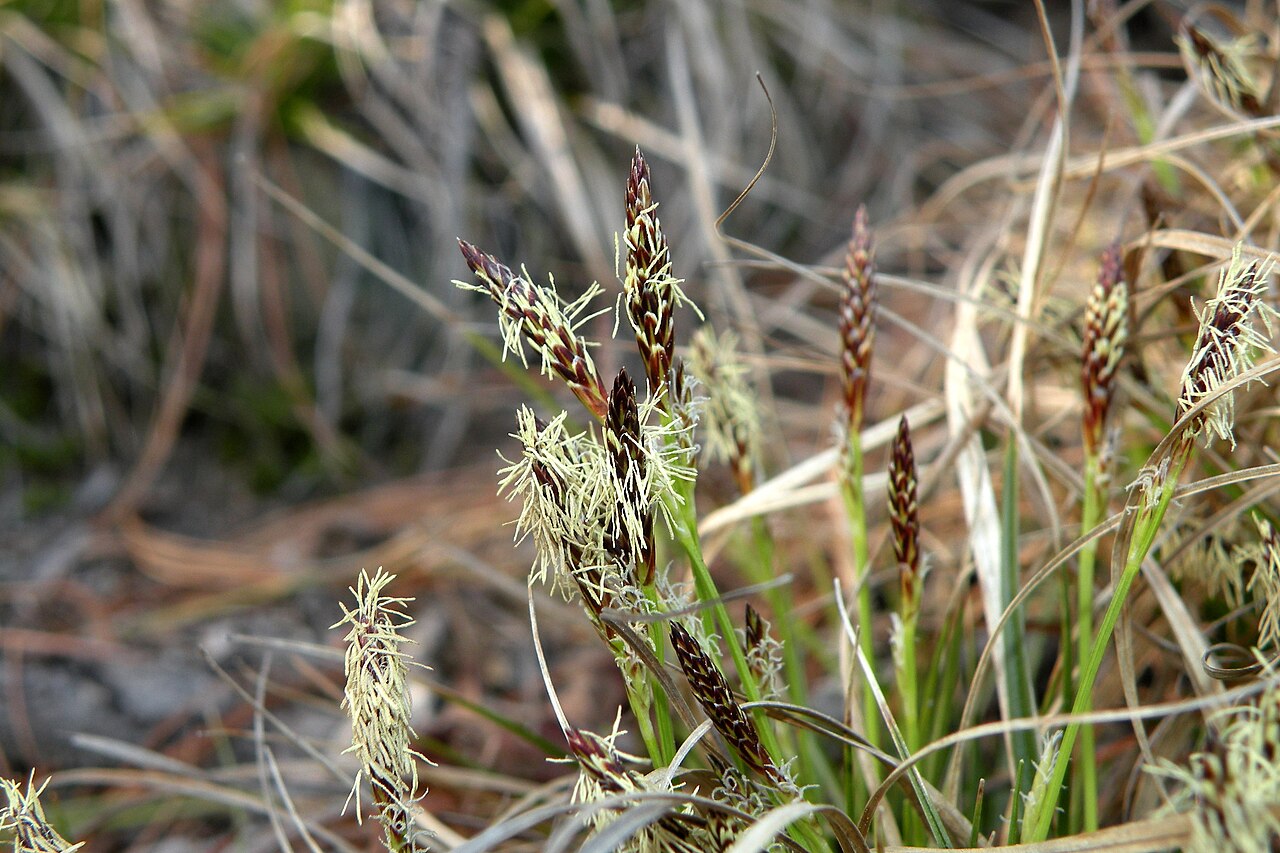
| Pennsylvania sedge | Shade matrix | Under 1 ft | Up to 1 ft / 9–12 in | Part shade to shade; dry to medium | S. Que. to ND & MT, south to GA, AR & WY |
Adjust the Count for Your Site
Spacing is a starting point, not a rule. Illinois Extension notes that groundcover spacing depends on the plant’s habit, its rate of growth, cost, and how fast you need the area covered, and that faster-growing plants can go farther apart.
Plant closer when weed pressure is high, when the bed is on a slope, or when you want a finished look in one season. Plant wider for spreading species, slow budgets, or sites where you will add plants grown from seed later.
Self-seeders and spreaders change the math. Wild bergamot and many asters spread over time, so wider spacing at planting often fills in on its own. Clump-formers like prairie dropseed stay put, so plant them at the spacing you want long-term.
Shade and Regional Swaps
For a part-shade bed under trees, use Pennsylvania sedge as the matrix at 9 to 12 inches, with woodland flowers such as wild geranium in groups. The count per square foot rises because the plants are smaller.
In the dry western Plains, blue grama can stand in for prairie dropseed. Its NC State listing gives a width of 1.5 to 2 feet, so 18-inch spacing is a fair start.
In the Southeast, butterfly weed is native region-wide, but the Wildflower Center’s range for purple coneflower stops at Georgia and does not include Florida. Check your state list before buying. Plants sold as “native” may come from a different part of the country.
Installation Steps
- Mark the bed outline with a hose or marking paint, then measure and record the net planting area.
- Remove or smother the lawn, following the method that suits your site and schedule.
- Divide the bed into role zones on paper and calculate each zone’s plant count.
- Lay out a string or chalk grid at your chosen spacing, offsetting alternate rows for a staggered pattern.
- Set every pot on its spot before digging a single hole. Adjust groups so each repeats across the bed.
- Plant, water deeply, and mulch between plants without burying the crowns.
- Keep spare plants in pots nearby to fill early losses in the first month.
First Three Years: What the Count Means Over Time
- Year one: Expect bare soil between container plants spaced at mature width. Weed every two to three weeks in the growing season and water during dry spells.
- Year two: Plants spread toward their full width. Fill any gaps left by losses, and note which species are spreading faster than planned.
- Year three: A well-spaced bed should be close to closed. Divide or remove extras from crowded zones and move them into gaps.
Mistakes to Avoid
- Counting from the gross bed size without subtracting paths and features.
- Spacing every plant at 12 inches, including clumps that mature 3 feet wide.
- Planting one of each species instead of repeated groups.
- Forgetting the spare plants needed to replace first-year losses.
- Buying plants for the region on the plant tag rather than your own.
For more on choosing showy plants for a design, see our guide to ornamental native plants for landscaping. For a bed already sized for you, our 6-by-10-foot front-yard bed plan and five-species prairie-style bed work through the counts.
📋 Before you place an order, confirm each plant on your regional list: Illinois, Iowa and Missouri, Kentucky and Tennessee, Michigan, Wisconsin and eastern Minnesota, or the Dakotas and western Minnesota.
Frequently Asked Questions
How many plants do I need per square foot?
At 12-inch spacing you need one plant per square foot. At 18 inches you need about one plant per 2.25 square feet, and at 24 inches one plant per 4 square feet.
Should I space native plants closer than the tag says?
Plugs are often planted on a 12-inch grid for faster cover. Larger container plants are usually spaced near their mature width so they do not crowd each other by year three.
Does a staggered layout need more plants?
Yes. A staggered layout fits about 15 percent more plants into the same area at the same spacing, so multiply a square-grid count by about 1.15.
How many extra plants should I buy?
Buying 5 to 10 percent extra is a common way to cover first-year losses. Keep the spares in pots in a shady spot and water them until you need them.
Can I plant less densely and let the plants fill in?
Yes, especially with spreading species, but you will weed and mulch the open soil for longer. Clump-forming grasses will not fill wide gaps on their own.
Sources
- University of Illinois Extension: Ground Covers (spacing chart and planting pattern)
- Ask Extension (University of Maryland Extension HGIC): Planting distances for native perennials
- NOFA Organic Land Care Program: How to Effectively Establish Native Plant Plugs
- NC State Extension Gardener Plant Toolbox: plant height and width listings
- Lady Bird Johnson Wildflower Center Native Plant Database: native distribution