A 6-by-10-Foot Native Front-Yard Bed: Choose Plants by Mature Size
Last updated: November 6, 2026
A 6-by-10-foot bed is about the most common front-yard project there is. It fits along a walk, under a front window, or beside a driveway, and it is small enough to plant in a weekend.
It is also the size where most native beds go wrong. Five or six attractive nursery pots look sparse on planting day, so people add more, and by the third summer the bed is a tangle of plants leaning over the sidewalk.
The fix is to choose plants by their mature size first and their flowers second. This plan shows how to do that math for a 60-square-foot bed, with a worked example for the Midwest and East and swaps for other regions. For the bigger picture of native front yards, see our guide to native landscaping for curb appeal.
Plan at a Glance
| Site | 6 × 10 ft front-yard bed (60 sq ft), along a walk, lawn edge, or house wall |
| Plant count | 12 plants of 5 species, spaced by mature width |
| Sun | full sun to part shade (at least half a day of direct sun) |
| Soil | average, well-drained; golden alexanders on the moister side |
| Maintenance | low; one spring cutback, occasional thinning of the aster |
| Best regions | Midwest, Great Lakes, mid-Atlantic and mid-South; swaps given for the Plains and other regions |
Measure the Site Before You Shop
Start with a tape measure, not a plant list. Mark the 6-by-10 outline with a hose or string and note what sits on each side: a walk, a driveway, a wall, a window, or open lawn.
Watch the sun for a full day. Every plant in this palette tolerates part shade, but most bloom best with at least half a day of direct sun.
Check drainage by digging a test hole and filling it with water. If water is still standing the next day, the bed is better suited to moisture-loving plants than to the dry-leaning palette below.
If the bed runs along the house, two extra rules apply. LSU AgCenter horticulturist Heather Kirk-Ballard recommends keeping wood mulch about 1 foot away from the foundation to help prevent termite problems, and planting small shrubs at least 3 to 4 feet from the house.
The Mature-Size Rule
Ask Extension’s experts give a simple starting point: space plants at their maximum growing width, measured center to center. A plant that will be 3 feet wide gets a 3-foot circle, even if it arrives in a 1-gallon pot.
That turns plant selection into a budget. A 6-by-10 bed has 60 square feet, so the mature footprints of everything you plant should add up to roughly that number.
Use the top of each plant’s width range, not the bottom. The plants grow to the space you give them, and it is far easier to fill a gap than to move an established shrub.
Some designers instead plant perennials on a tight grid, around 12 inches apart, and let the plants sort themselves out over time. Ask Extension notes that this works as long as you are willing to edit; this plan uses mature-width spacing because it suits a small bed that needs to look tidy from the street.
Clumpers versus spreaders
Mature size is not only width. Some natives stay in a clump, while others creep.
The Lady Bird Johnson Wildflower Center notes that aromatic aster slowly spreads by stolons and should be thinned regularly, so it gets a generous circle and a spot where it can be trimmed back easily. Nodding onion, by contrast, forms tight bulb clumps that the center suggests dividing about every third year.
Choose One Anchor Plant
In a bed this size, one woody plant is plenty. It gives the bed a shape in winter and something to plant around.
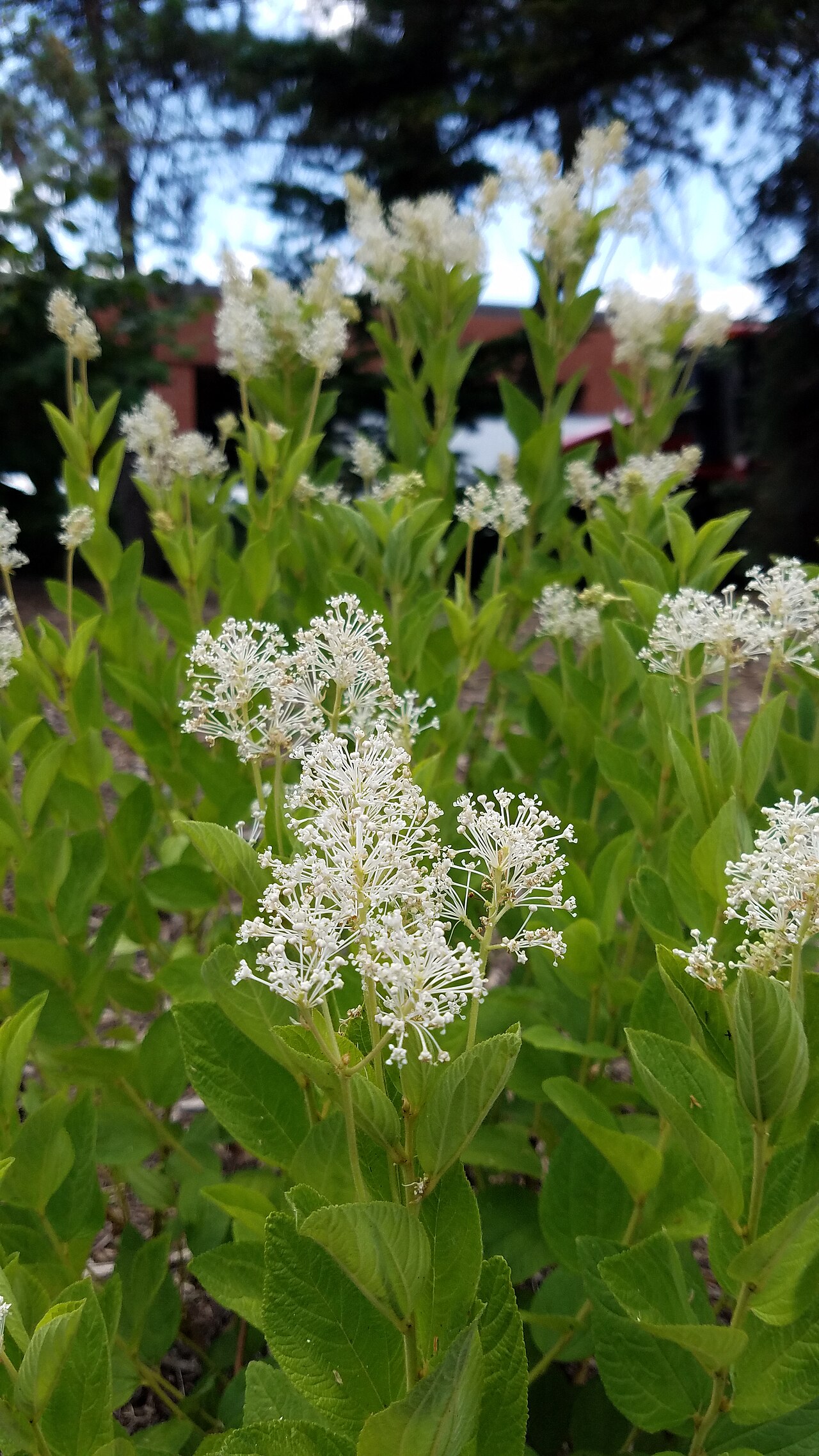
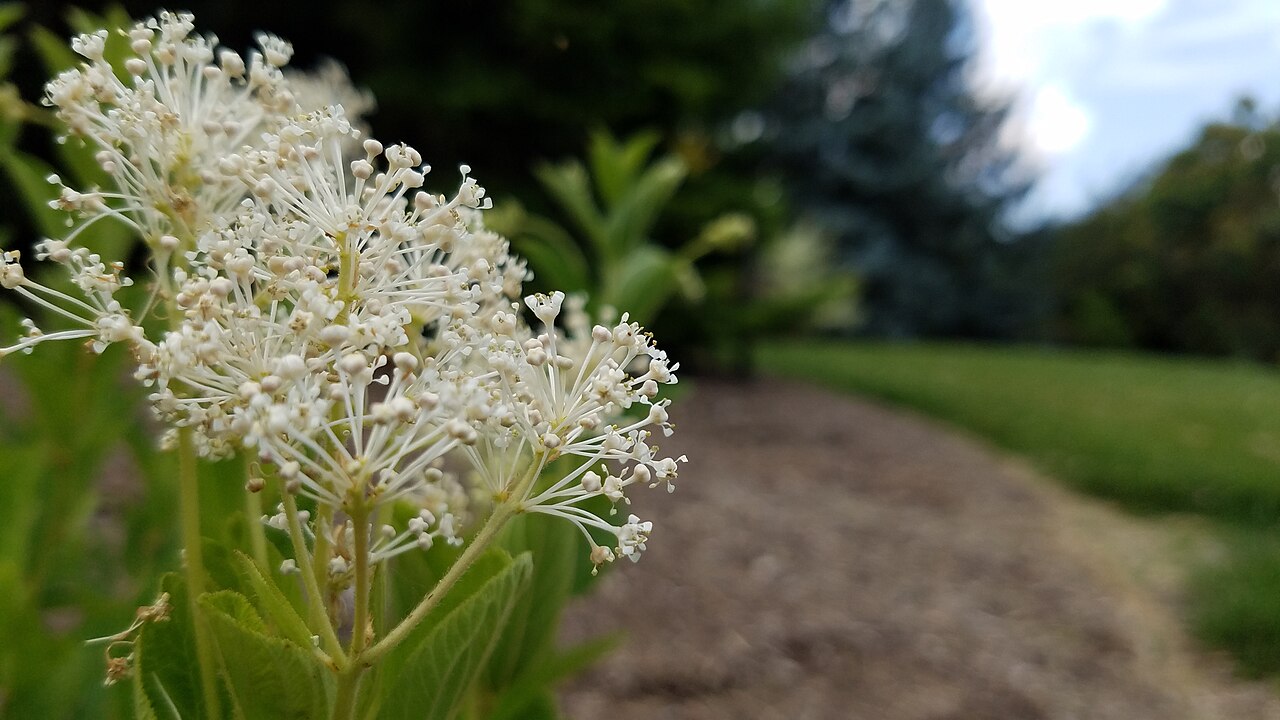
This plan uses New Jersey tea (Ceanothus americanus). NC State Extension lists it at 2 to 3 feet tall and 3 to 5 feet wide, and the Wildflower Center notes it is normally no more than 3 feet tall, though it can reach 5.
The Wildflower Center also describes massive, deep roots that help it survive tough conditions. That is good news for a dry front yard, but it means you should place it carefully, because a deep-rooted shrub is hard to move later.
Budget 25 square feet (a 5-by-5-foot square on your plan) for it. That single shrub uses about 40 percent of the bed, which is exactly the point: the anchor decides how much room is left.
Layout: Back, Middle, and Front
Picture the bed as a long rectangle viewed from the street or walk. Taller plants go toward the back, shorter ones toward the front, and the anchor sits in the middle of the back half.
- Back center: 1 New Jersey tea, centered about 2.5 feet from the back edge and 5 feet from either end.
- Back corners: 1 foxglove beardtongue in each corner, about 1 foot in from the back and side edges.
- Middle ends: 1 golden alexanders at each end, about 3 feet from the back edge.
- Front corners: 1 aromatic aster in each front corner, about 1.5 feet in from the front and side edges.
- Front center: a drift of 5 nodding onion bulbs in front of the shrub, about 9 inches apart.
The result is symmetrical without looking formal. The two ends mirror each other, and the shrub and onions give the center a focal point.
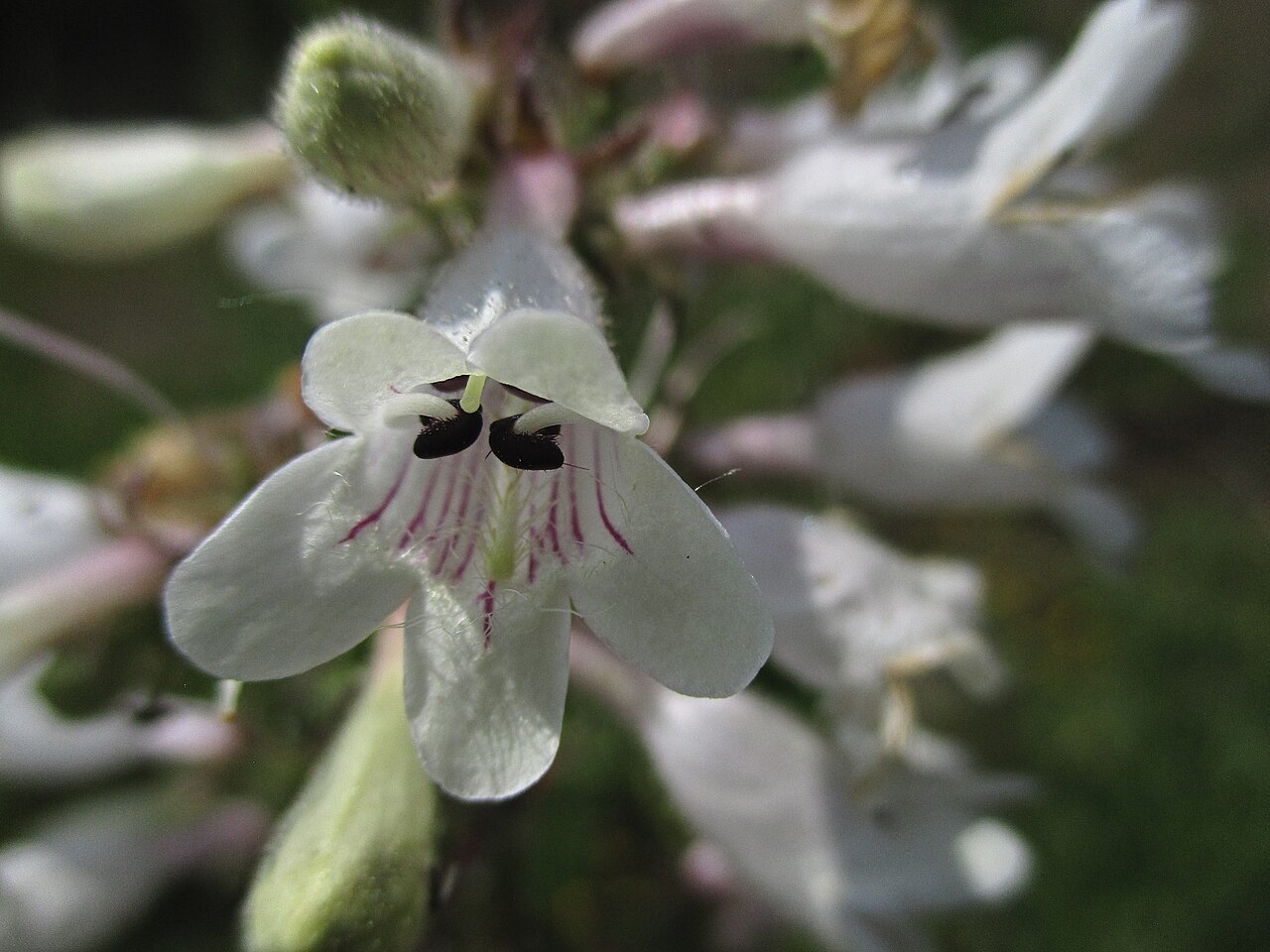
Foxglove beardtongue (Penstemon digitalis) goes in the back corners because it is the tallest perennial here. NC State lists it at 2 to 4 feet tall and 1.5 to 2 feet wide, and the Wildflower Center says it can reach about 5 feet.
The Wildflower Center calls it a great bloomer for clay loam with poor drainage and notes it is somewhat short-lived. Plan to let a few seedlings fill in or replace a plant every few years.
Plant Palette
Heights are NC State Extension listings (New Jersey tea’s upper figure is from the Wildflower Center); native ranges are from the Lady Bird Johnson Wildflower Center.
| Plant | Role | Height | Sun / moisture | Native range | |
|---|---|---|---|---|---|
| {{p:new-jersey-tea-ceanothus-americanus | New Jersey tea}} | Anchor shrub | 2–3 ft (to 5 ft) | Sun to part shade; dry to moist | Quebec to Florida, west to Minnesota, e. Kansas and Texas |
| {{p:beardtongue-penstemon-digitalis | Foxglove beardtongue}} | Back-corner height | 2–4 ft | Sun to part shade; dry to moist | Maine to South Dakota, south to Alabama and e. Texas |
| {{p:goldenalexanders-zizia-aurea | Golden alexanders}} | Spring color, mid-layer | 1–2 ft | Sun to part shade; moist | Quebec to Saskatchewan, south to Florida and Texas |
| {{p:aromatic-aster-symphyotrichum-oblongifolium | Aromatic aster}} | Fall color, front corners | 1–3 ft | Sun to part shade; dry to moist | Pennsylvania to North Carolina, west to Wyoming and Texas |
| {{p:nodding-wild-onion-allium-cernuum | Nodding onion}} | Summer edge | 0.5–2 ft | Sun to part shade; moist, well-drained | New York to British Columbia, south in mountains to Georgia and Arizona |
Footprint Budget for 60 Square Feet
Each footprint uses the top of NC State’s mature width range, squared.
| Plant | Mature width | Footprint each | Quantity | Total |
|---|---|---|---|---|
| New Jersey tea | 5 ft | 25 sq ft | 1 | 25 sq ft |
| Aromatic aster | 3 ft | 9 sq ft | 2 | 18 sq ft |
| Foxglove beardtongue | 2 ft | 4 sq ft | 2 | 8 sq ft |
| Golden alexanders | 2 ft | 4 sq ft | 2 | 8 sq ft |
| Nodding onion | 1 ft | 1 sq ft | 5 | 5 sq ft |
| Total | 12 plants | 64 sq ft |
The total runs slightly over 60 square feet. That is deliberate, because round plants in a rectangular bed leave corners, and a little overlap lets the planting close up without crowding.
Mid-Layer and Edge Plants
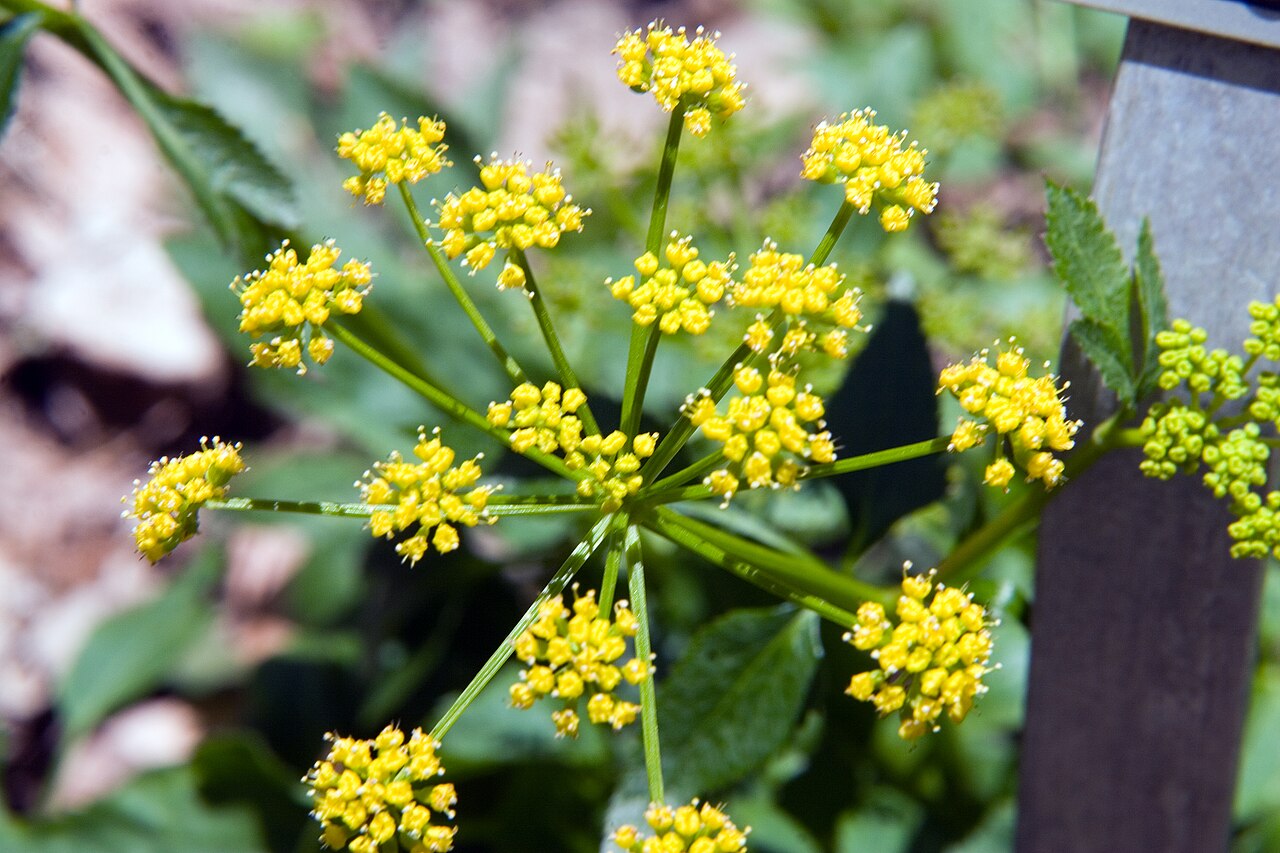
Golden alexanders (Zizia aurea) brings the first color of the year. The Wildflower Center lists bloom from April into summer, rates it moderately deer resistant, and notes it is a larval host for the black swallowtail butterfly.
It prefers moist soil, so put it at the end of the bed that stays damp longest, often the end nearest a downspout or lawn sprinkler. NC State lists it at 1 to 2 feet tall and wide.
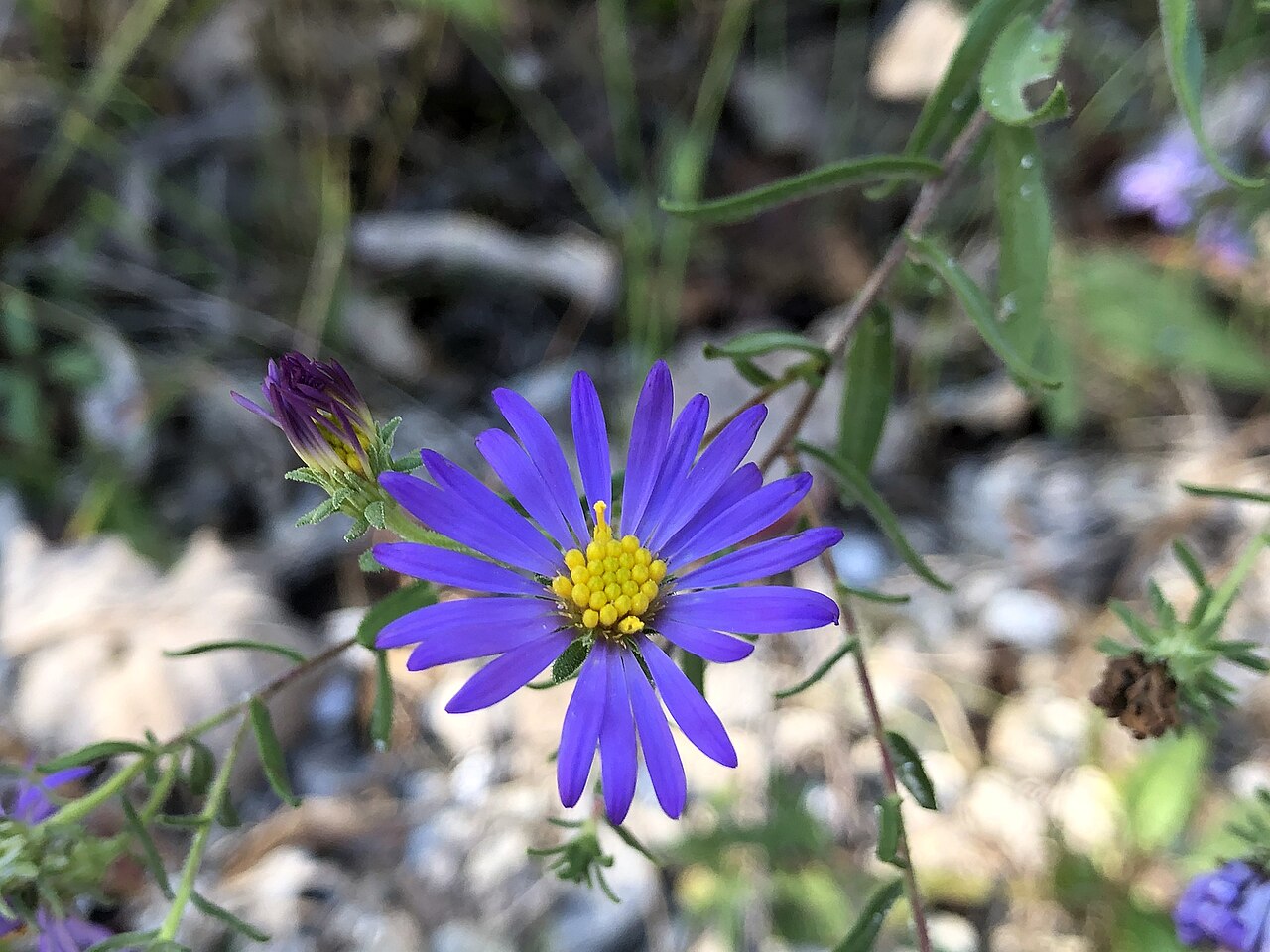
Aromatic aster (Symphyotrichum oblongifolium) holds the front corners and carries the bed through fall. The Wildflower Center lists bloom from September to November and recommends cutting it back by no more than half in June to keep it dense.
The front corners suit it because it is the plant you will trim and thin most. You can reach it from the walk or lawn without stepping into the bed.
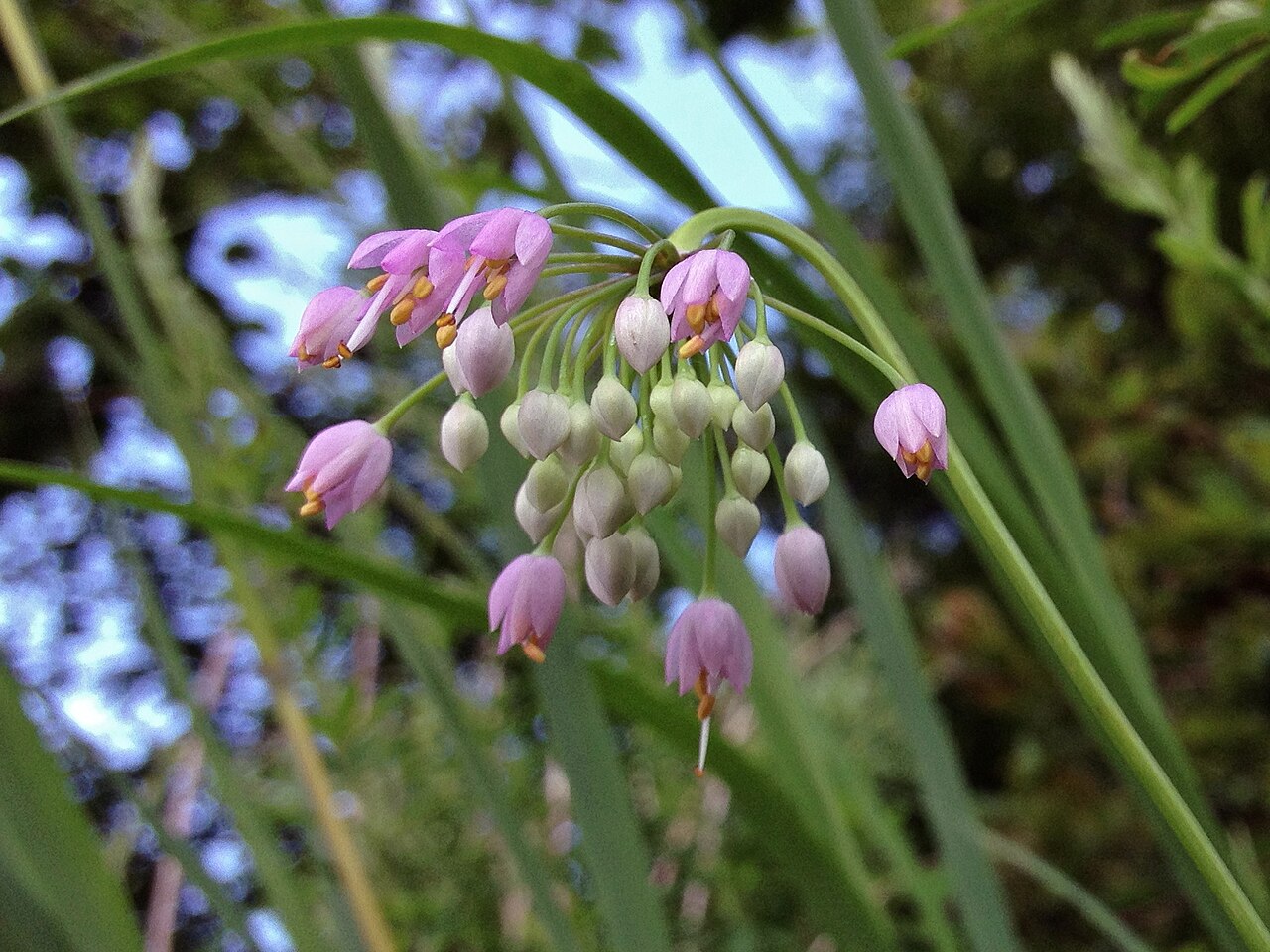
Nodding onion (Allium cernuum) is the narrowest plant in the palette, at 4 inches to 1 foot wide in NC State’s listing. The Wildflower Center says it is most effective in small groups, which is why five bulbs go in as one drift rather than spread out.
Regional Swaps
This palette works across much of the Midwest and the East, but no single list fits every state. Always check each plant against your state’s native range before buying.
- Plains and western prairie states: swap the New Jersey tea for leadplant (Amorpha canescens). The Wildflower Center gives its range as northern Indiana and southeast Michigan to Manitoba and Montana, southwest to Arkansas, Texas and New Mexico, and NC State lists it at 2 to 2.5 feet wide, which frees up space for more perennials.
- New England and the coastal Northeast: aromatic aster’s listed range starts in Pennsylvania, so replace it with an aster that is native in your state.
- Southeast: New Jersey tea’s range reaches Florida, but aromatic aster’s listed range stops at North Carolina, so check your state list for the aster.
- Mountain West and Pacific states: nodding onion is native in parts of the West, but use a state or regional list for the shrub and the other perennials.
Installation Steps
- Outline the bed and remove turf. Smothering it under cardboard and mulch for a season or cutting it out with a sod cutter both work.
- Loosen the soil but skip heavy amendment. These plants are adapted to average soils, so a soil test is a better guide than adding compost by default.
- Mark each plant’s mature circle on the ground with flour or flags before planting. Start with the shrub, then the corners, then the front.
- Plant in spring or early fall. Set each plant at the depth it grew in the pot.
- Mulch the open soil between plants with a modest layer of shredded wood or leaves, keeping it off the stems.
- Water deeply after planting, then whenever the soil dries out during the first season.
The First Three Years
- Year 1: The bed will look sparse. Keep it weeded, water during dry spells, and resist the urge to add more plants.
- Year 2: The perennials fill most of their circles. Pinch or cut back the aromatic aster by no more than half in June if it looks open.
- Year 3: The shrub approaches mature size. Thin aster runners that cross into the onion drift, and divide nodding onion if clumps get crowded.
- Every late winter or early spring: Cut last year’s perennial stems to a few inches, leaving them through winter for seed and shelter.
Mistakes to Avoid
- Spacing by pot size. A 1-gallon pot says nothing about a plant’s mature width; the tag or a reliable source does.
- Two shrubs in a 6-foot bed. Two 5-foot shrubs leave almost no room for anything else.
- Tall plants at the front. Beardtongue at the walk edge will lean over it by midsummer.
- Planting the anchor too close to the house. Keep shrubs 3 to 4 feet from the wall, or widen the bed.
- Ignoring native range. A plant native to the next region over may not suit your soil, climate, or local wildlife.
If you want a grass-based version of a front-yard bed, our plan for little bluestem in a front-yard border uses the same repetition idea at a larger scale. For beds under windows, see designing a native grass border without blocking windows or walkways.
📋 See which of these plants are native in your area: Illinois, Iowa and Missouri, Michigan, Wisconsin and eastern Minnesota, and Kentucky and Tennessee.
Frequently Asked Questions
How many plants do I need for a 6-by-10-foot bed?
With mature-width spacing, about 10 to 15 plants, depending on how many shrubs you use. One shrub with a 5-foot spread leaves room for roughly 10 perennials of average size.
Can I plant closer together for a fuller look sooner?
Yes, as long as you are prepared to edit. Ask Extension notes that some designers plant perennials about 12 inches apart and remove extras as the plants fill in.
What if my bed runs along the house?
Keep wood mulch about 1 foot from the foundation and set shrubs at least 3 to 4 feet from the wall, as LSU AgCenter recommends. In a 6-foot bed, that may mean choosing a narrower anchor such as leadplant.
Will this bed work in part shade?
All five plants tolerate part shade, but bloom will be lighter. In mostly shady sites, choose a woodland palette instead.
When should I plant?
Spring or early fall is best, so roots can establish before summer heat or winter cold.
Sources
- LSU AgCenter: Designing and planting foundation beds
- Ask Extension: Planting distances for native perennials
- Lady Bird Johnson Wildflower Center: Ceanothus americanus
- Lady Bird Johnson Wildflower Center: Penstemon digitalis
- Lady Bird Johnson Wildflower Center: Zizia aurea
- Lady Bird Johnson Wildflower Center: Symphyotrichum oblongifolium
- Lady Bird Johnson Wildflower Center: Allium cernuum
- Lady Bird Johnson Wildflower Center: Amorpha canescens
- NC State Extension Plant Toolbox: Ceanothus americanus
- NC State Extension Plant Toolbox: Penstemon digitalis
- NC State Extension Plant Toolbox: Zizia aurea
- NC State Extension Plant Toolbox: Symphyotrichum oblongifolium
- NC State Extension Plant Toolbox: Allium cernuum
- NC State Extension Plant Toolbox: Amorpha canescens