A Milkweed Patch That Fits Into a Designed Garden Bed
Last updated: November 6, 2026
Most milkweed advice stops at “plant milkweed for monarchs.” That is a good start, but it leaves out the part most gardeners struggle with: making a milkweed patch look like it belongs in a designed bed.
Milkweeds have quirks. Some spread by underground runners, some sulk if you move them, and all of them are meant to be eaten by caterpillars. Drop a few plants into a tidy border without a plan, and you get chewed leaves front and center and a clump wandering into the path.
This plan treats milkweed as one layer of a composed bed. You pick the right species for your soil, give it a frame of grasses and low flowers, and place it where chewed foliage and seed pods read as part of the design.
Plan at a Glance
| Site | An open, sunny bed in the front or side yard, at least 4 feet deep |
| Size | The sample plan is 6 by 12 feet; it scales up or down in 3-foot sections |
| Sun | Full sun; swamp milkweed and golden alexanders also accept part shade |
| Soil | Two versions: average-to-dry, well-drained soil, or moist-to-wet clay or loam |
| Maintenance | Low once established; spring cutback, edge checks, and leaving caterpillars alone |
| Best regions | Eastern and central North America for the main palette; western swaps are given below |
Why Milkweed Needs a Plan, Not Just a Spot
The main reason to grow milkweed is the monarch butterfly. The Lady Bird Johnson Wildflower Center lists every milkweed in this plan as a monarch larval host, which means the caterpillars eat the leaves. Butterfly weed and swamp milkweed are also listed as hosts for the queen butterfly.
That changes how you design. A host plant is meant to look chewed by midsummer. If milkweed sits at the front edge as the bed’s focal point, the damage is the first thing you see.
The second issue is growth habit. NC State Extension describes common milkweed as naturalizing and “taking up quite a bit of space,” with a wild, rangy form “not ideal for planting in borders.” Other species stay put as clumps. Choosing the right one matters more than any trick you use afterward.
Site Assessment
Check sun first
All the milkweeds here want sun. The Wildflower Center says common milkweed and showy milkweed are not shade tolerant. Swamp milkweed and whorled milkweed accept part shade, but plan on at least a half day of direct sun for good flowering.
Decide which soil version you have
Dig a hole about a foot deep, fill it with water, and see how fast it drains. If it empties within a few hours and the soil feels sandy or gravelly, build the dry version. If water lingers and the soil is sticky clay, build the moist version.
Swamp milkweed is the moist-soil choice. The Wildflower Center calls it “one of the few ornamentals that thrives in mucky clay soils,” and NC State adds that it adapts to drier sites with moist clay or loam. Butterfly weed is the opposite: the Wildflower Center says it prefers well-drained sandy soil and tolerates drought.
Note who uses the space
Milkweeds have toxic milky sap. The Wildflower Center lists cardiac glycosides and resinoids as the toxic principle, and NC State flags butterfly weed as a problem for dogs, cats, and horses.
Skip this bed beside a dog run or a play area where children might chew leaves. Wear gloves when you cut stems, and wash your hands afterward.
Choose the Right Milkweed for a Tidy Bed
Pick one or two clump-forming species for the bed itself. Keep the spreaders for a separate spot where they can roam.
Clump-formers for the bed
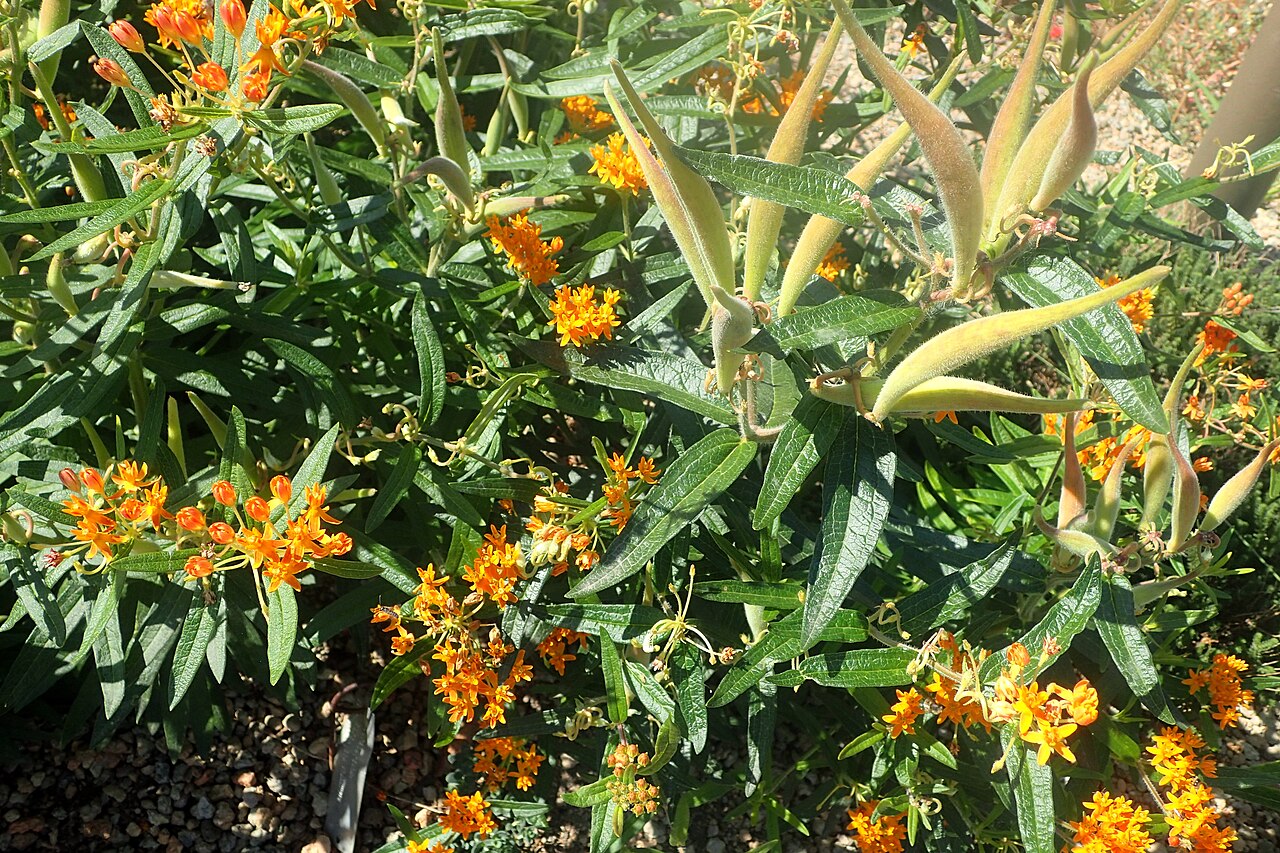
- Butterfly weed (Asclepias tuberosa): NC State lists it at 1 to 2 feet tall and up to 1.5 feet wide, with orange flowers. Its deep taproot means it “does not transplant well,” so place it once and leave it.
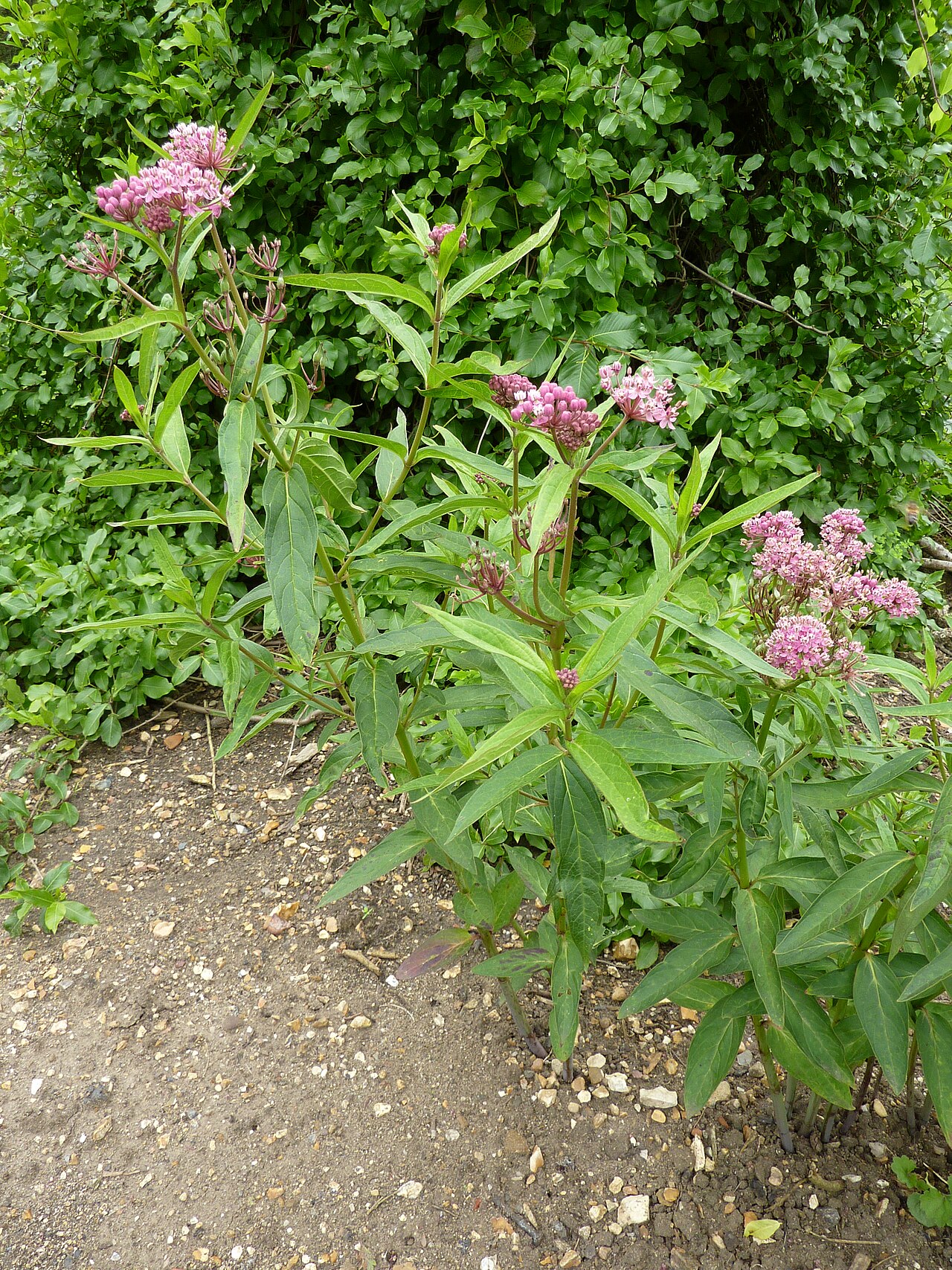
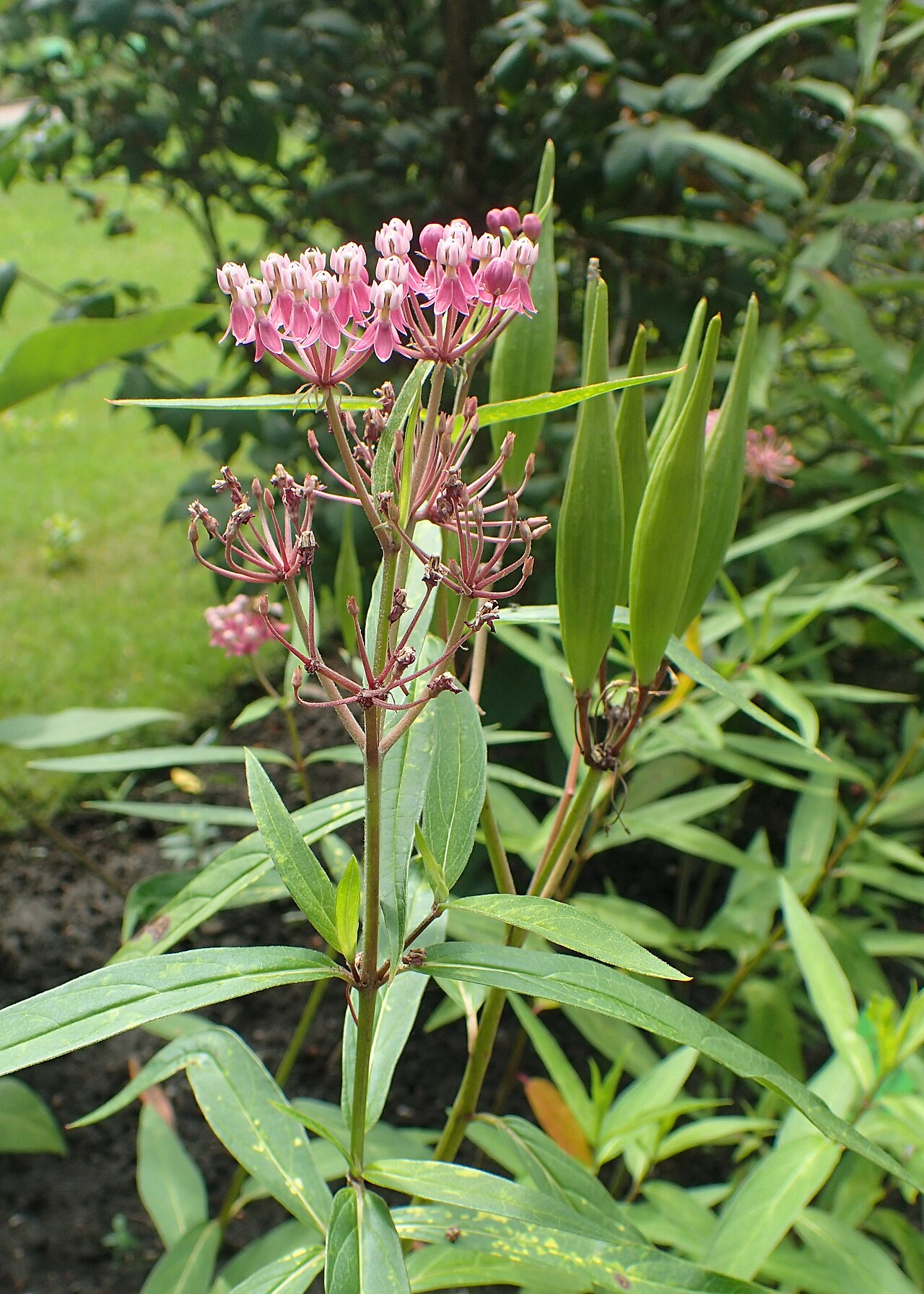
- Swamp milkweed (Asclepias incarnata): NC State gives 3 to 5 feet tall and 2 to 3 feet wide, with pink to rose-purple flowers. Monarch Watch notes that garden plants often live only two to five years, so let a few pods ripen or plan to add new plants.
Spreaders to use with care
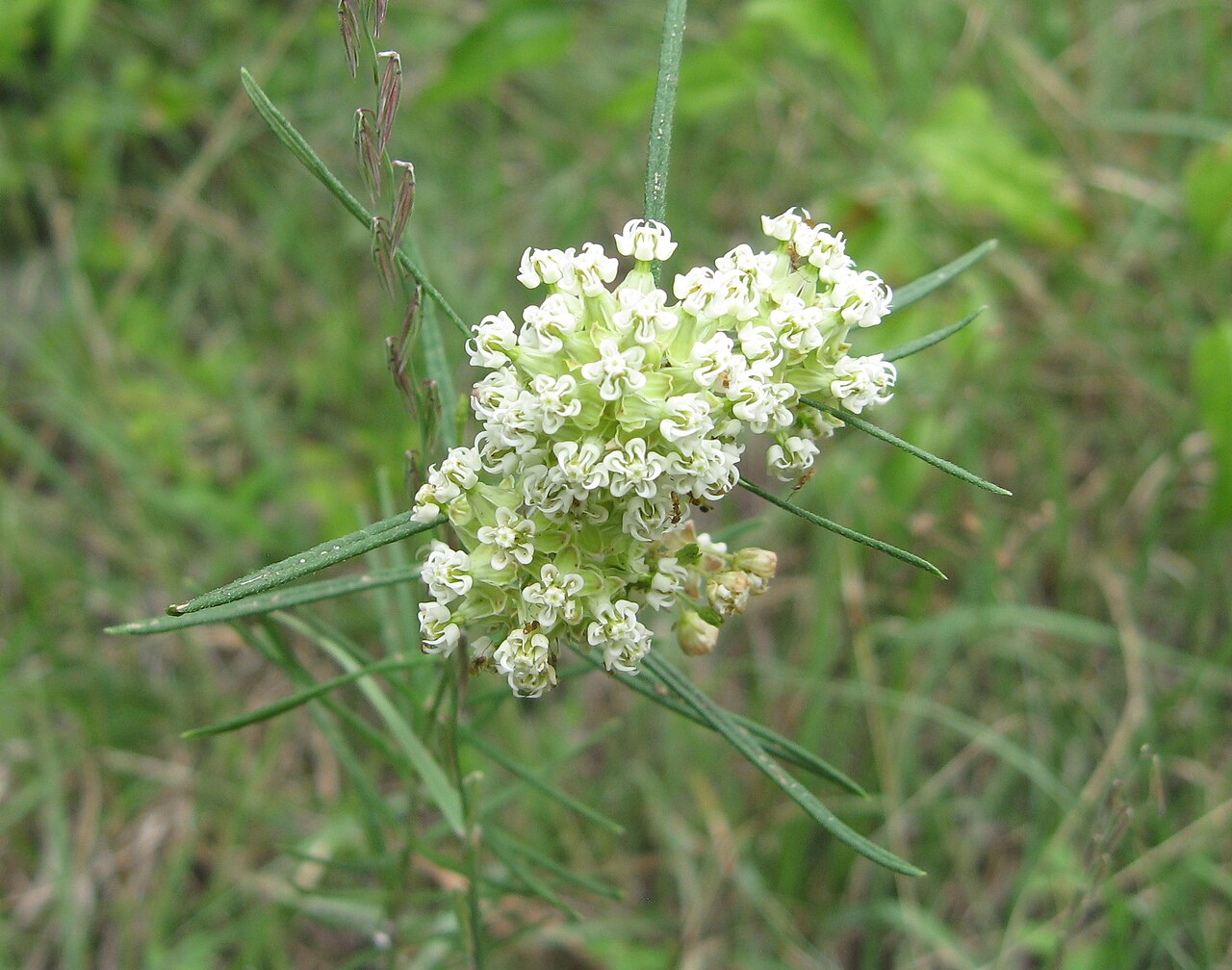
- Whorled milkweed (Asclepias verticillata): NC State lists it at 1 to 2.5 feet tall, with very fine leaves and white flowers. NC State says it spreads by seed and rhizomes, so it works best as a filler you can thin.
- Common milkweed (Asclepias syriaca): The Wildflower Center says it spreads by rhizomes and forms clones. Give it a meadow corner or a contained bay, not the middle of a border. Our guide to keeping common milkweed inside its bed covers the edging and pulling routine.
Skip tropical milkweed
Tropical milkweed (Asclepias curassavica) is not native to the United States or Canada. The Xerces Society explains that where it stays green through winter, a monarch parasite called OE can build up on the leaves. Native milkweeds die back each year, and the parasite dies with them.
Design the Layout
The trick is simple: put milkweed in the middle, not at the front. Surround it with plants that look good all season and hide the lower stems when caterpillars are feeding.
Three layers, front to back
- Front (first 18 inches): low, tidy plants that look neat all summer. Prairie dropseed or aromatic aster work in the dry version, and golden alexanders in the moist version.
- Middle (the milkweed band): milkweed in groups of three to five, with a grass clump between each group.
- Back or center: taller plants such as wild bergamot or little bluestem, which also hold the bed together in winter.
Repeat, don’t scatter
Use the same milkweed group two or three times along a 12-foot bed. Repetition makes the planting look intentional, and it gives caterpillars more than one plant to move to.
Frame it with grass
Clump grasses are the glue in this plan. Little bluestem grows 2 to 4 feet tall and prairie dropseed 2 to 3 feet, both per NC State. Their fine texture contrasts with milkweed’s broad leaves and keeps the bed looking full when the milkweed is chewed down.
Give it a crisp edge
A clean edge does more for a “designed” look than anything inside the bed. Use a mowed strip, steel edging, or a stone border. It also tells neighbors the planting is on purpose.
Plant Palette
Choose the dry or moist version, then match every plant to your region. Heights are from NC State Extension; ranges and moisture are from the Lady Bird Johnson Wildflower Center.
| Plant | Role | Height | Sun / moisture | Native range |
|---|---|---|---|---|
| Butterfly weed | Milkweed, dry version | 1–2 ft | Sun; dry to moist, well-drained | Ont. and New England to FL, west to TX, north through CO to MN |
| Swamp milkweed | Milkweed, moist version | 3–5 ft | Sun to part shade; moist to wet | Man. to N.S., south to GA, west to LA and TX, north to ND |
| Whorled milkweed | Fine-textured filler | 1–2.5 ft | Sun to part shade; dry | MA to MT, south to FL and e. TX |
| Little bluestem | Grass frame, winter structure | 2–4 ft | Sun to part shade; dry | Much of the U.S. east of the Rockies and s. Canada |
| Prairie dropseed | Front-edge grass | 2–3 ft | Sun; dry | Que. to Sask., locally to NC, KY, e. TX, CO |
| Aromatic aster | Fall flowers, front | 1–3 ft | Sun to part shade; dry to moist | PA to NC, west to WY and TX |
| Golden alexanders | Spring flowers, front | 1–2 ft | Sun to part shade; moist | Que. to Sask., south to New England, FL, TX |
| Wild bergamot | Summer flowers, back | 2–4 ft | Sun to part shade; dry to moist | Most of the U.S. and s. Canada east of the Rockies |
Sample 6 x 12 Foot Bed
Spacing roughly matches the mature widths NC State lists. Plants fill in over two to three seasons.
| Version | Milkweed | Grass | Flowers |
|---|---|---|---|
| Dry | 9 butterfly weed (three groups of 3), about 18 in apart | 5 little bluestem, 5 prairie dropseed, about 2 ft apart | 5 aromatic aster, 3 wild bergamot |
| Moist | 6 swamp milkweed (three groups of 2), about 2.5 ft apart | 5 little bluestem in the drier back corners | 7 golden alexanders, 3 wild bergamot |
Regional Swaps
The palette above is built for eastern and central North America. Check every plant against your state’s native range before you buy.
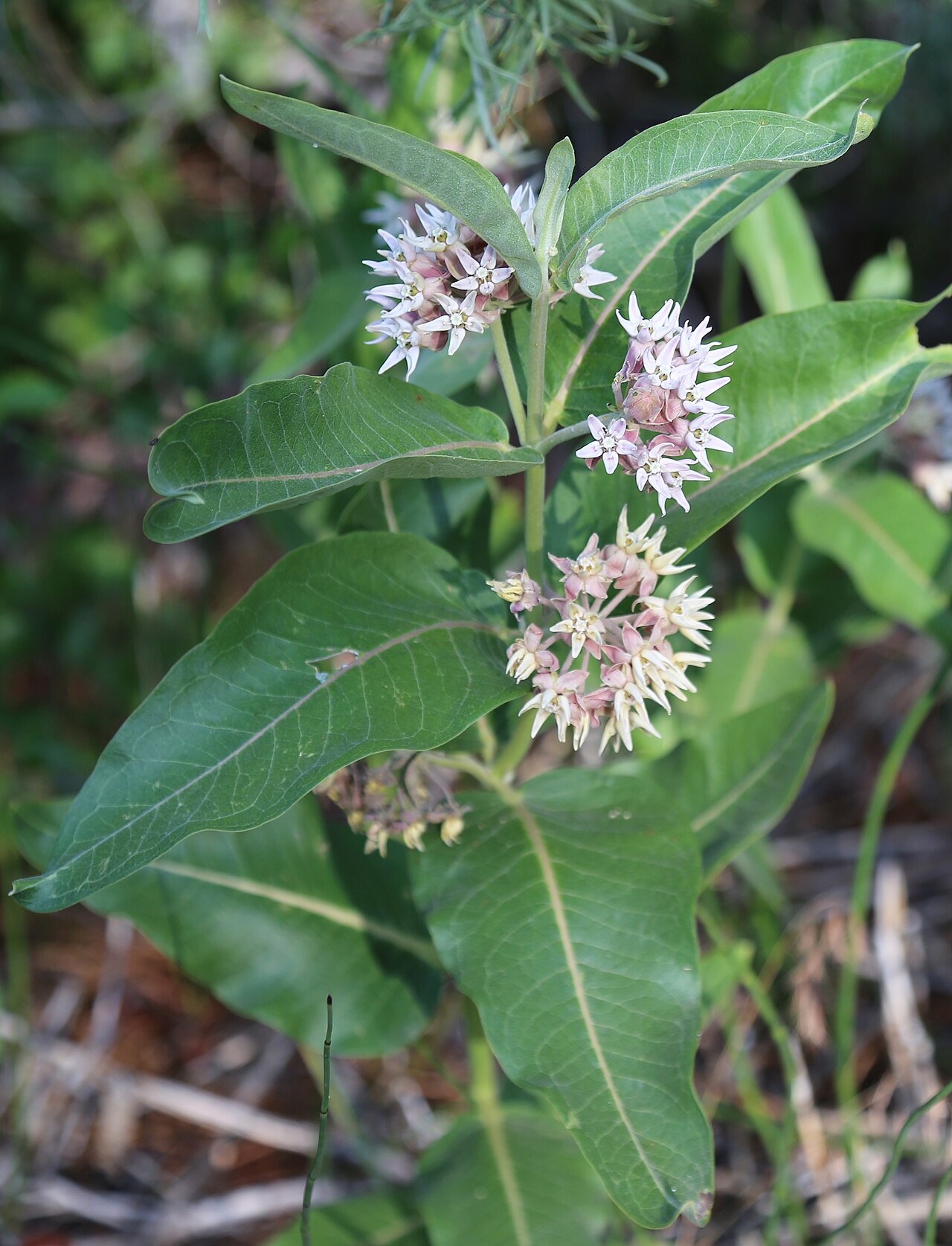
- Pacific Northwest and the interior West: Showy milkweed (Asclepias speciosa) is native from southern Manitoba and western Minnesota to British Columbia, south to Texas and California, according to the Wildflower Center. It wants open sun.
- Desert Southwest and Texas: look for regional species such as antelope horns (Asclepias asperula) or zizotes milkweed (Asclepias oenotheroides), and confirm they are native to your county.
- Northern Plains: whorled and showy milkweed both reach the Dakotas and Montana, per Wildflower Center range data.
Installation Steps
- Mark the bed in spring or fall. Lay out the shape with a hose, then set the edging before you plant.
- Clear the existing turf. Smother it with cardboard for a season, or strip it with a spade. Avoid deep tilling, which brings buried weed seed to the surface.
- Skip the amendments for the dry version. Butterfly weed and little bluestem like lean soil. For the moist version, a thin layer of compost is fine.
- Plant small. Use plugs or 1-quart pots. Butterfly weed is especially worth buying as a young plant, since its taproot resents moving.
- Lay out pots before digging. Set the milkweed groups first, then the grasses between them, then the front edge.
- Water in and mulch lightly. Use 1 to 2 inches of shredded leaves or fine bark, kept off the crowns.
- Label the milkweeds. A tag at each group stops you from digging into crowns before the shoots show in spring.
Living With Caterpillars, Aphids, and Pods
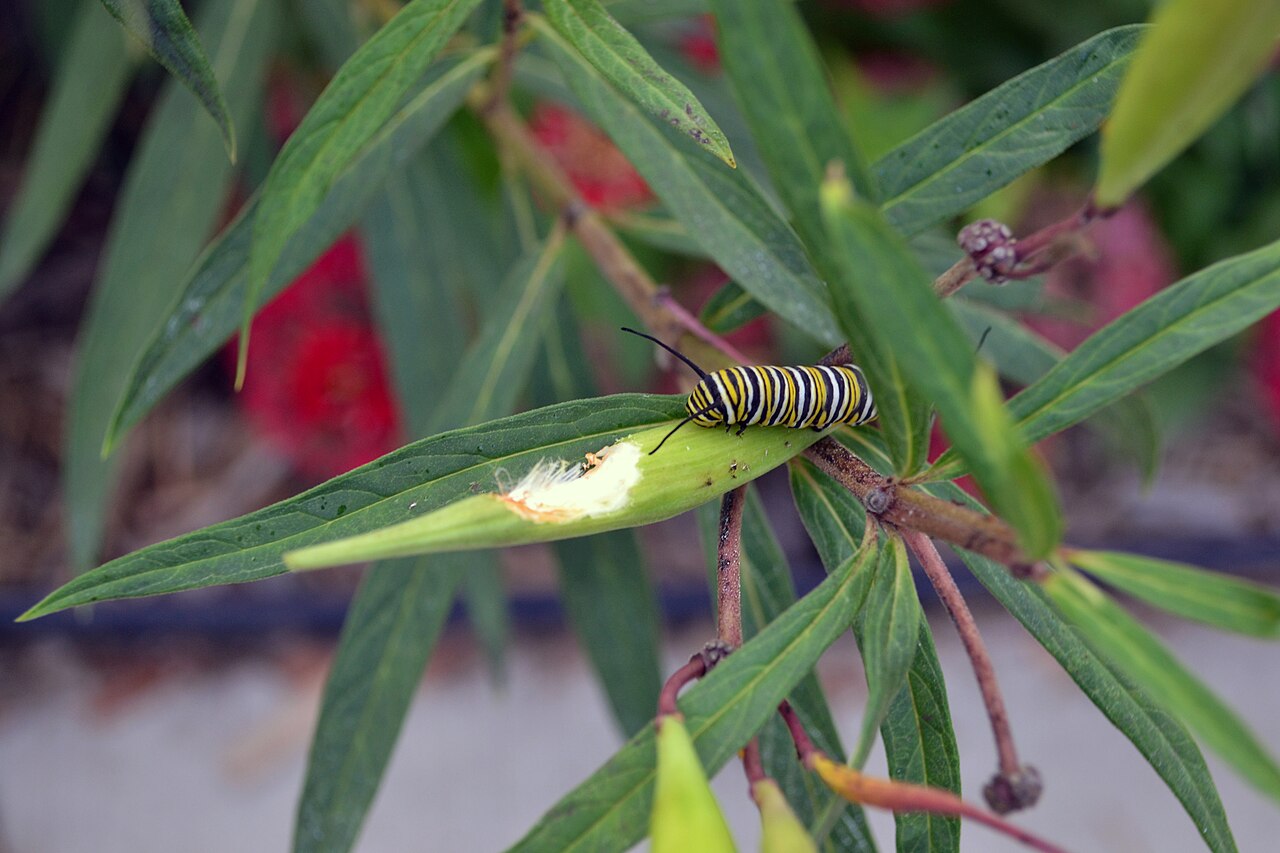
Caterpillar damage
Let caterpillars eat. This is why milkweed sits behind a front layer of grass and asters.
Aphids
NC State says milkweed aphids are common and can be left alone to draw in beneficial insects.
If they bother you, knock them off with a strong spray of water every two or three days. Avoid insecticides, which kill caterpillars too.
Seed pods
NC State notes that butterfly weed can self-seed freely if pods split open.
If you want a tidy bed, cut some pods while still green or slip a mesh bag over them. If you want more plants, let a few open. Our guide to milkweed that does not come back in spring explains how to check crowns before replacing plants.
First Three Years
- Year 1, spring: plant, water weekly through the first summer if rain is short, and pull weeds by hand. Expect little or no bloom from butterfly weed; NC State says seed-grown plants take two to three years to establish and flower.
- Year 1, fall: leave stems standing. Note any gaps for next spring.
- Year 2, spring: cut old stems to a few inches tall once new growth starts. Fill gaps. Check the edge for whorled milkweed runners.
- Year 2, summer: expect the first good bloom. Leave caterpillars and watch aphids.
- Year 3: the grasses close the gaps. Thin whorled milkweed if it spreads into the front layer. Replace short-lived swamp milkweed from seedlings or new plugs.
Mistakes to Avoid
- Putting milkweed at the front edge. Chewed leaves end up as the focal point.
- Planting common milkweed in a small border. It spreads by rhizomes and is hard to contain in a tight space.
- Moving butterfly weed. Its taproot rarely recovers; choose the spot carefully the first time.
- Using tropical milkweed. Stick with species native to your region.
- Spraying for aphids. You will kill the caterpillars you planted the bed for.
- Planting one of each species. Groups of three to five read as a design, while singles look like a collection.
For a larger patch with grasses and flowers combined, see our five-species prairie bed plan.
📋 Check your region’s native plant list before buying. Butterfly weed and swamp milkweed both appear on the Michigan, Wisconsin, and eastern Minnesota list; western gardeners can start with the western Oregon and Washington list, which includes showy milkweed.
Frequently Asked Questions
Which milkweed is best for a small, tidy garden bed?
Butterfly weed in dry, sunny beds, and swamp milkweed in moist ones; both grow as clumps. Common milkweed spreads by rhizomes and suits larger, looser plantings.
Will milkweed take over my flower bed?
It depends on the species. Common milkweed forms clones, and whorled milkweed spreads by seed and rhizomes, while butterfly weed and swamp milkweed stay in clumps but can self-seed if pods open.
How many milkweed plants do I need for monarchs?
There is no fixed number. Plant several plants in groups rather than one, so caterpillars have more than one plant to move between and the bed still looks full when some are chewed.
Is milkweed safe near pets?
Treat it with caution. The Wildflower Center lists milkweeds as poisonous, and NC State flags butterfly weed as a problem for dogs, cats, and horses, so keep it away from pets that chew plants.
Should I cut milkweed down in fall?
You can leave the stems through winter and cut them back in spring once new growth begins. Cut or bag pods first if you don’t want seedlings.
Sources
- Lady Bird Johnson Wildflower Center plant database: swamp milkweed, butterfly weed, common milkweed, whorled milkweed, showy milkweed, little bluestem, prairie dropseed, aromatic aster, golden alexanders, wild bergamot: native range, light, moisture, larval host and toxicity notes.
- NC State Extension Plant Toolbox: Asclepias tuberosa, Asclepias incarnata, Asclepias syriaca, Asclepias verticillata, Schizachyrium scoparium, Sporobolus heterolepis: height, width, taproot, spreading habit, aphid advice.
- Monarch Watch, Asclepias incarnata profile: garden life span.
- Xerces Society, Tropical Milkweed: A No-Grow: tropical milkweed and the OE parasite.