A Native Evening Garden: Plan Around Dusk-Blooming Flowers and Low Lighting
Last updated: November 6, 2026
Many people only see their garden properly after work. By then, the bright midday colors have faded into the dusk, and the garden can feel like a dark patch beside the patio.
An evening garden is planned for that hour. It uses native flowers that open late in the day, pale blooms and foliage that stay visible as light drops, and fragrance you notice when you sit outside.
It also uses less light, not more. This guide covers how to choose a spot, which natives to use in the East and the West, and how to light paths without flooding the garden and the insects that visit it after dark.
Plan at a Glance
| Site | A bed beside a patio, porch, deck or path you use in the evening |
| Size | Small; a 4 × 10-foot bed or a few large containers is enough |
| Sun | Mostly sun for the evening primroses; part shade for campion and summersweet |
| Soil | Dry and well drained for primroses; moist for the shrubs |
| Maintenance | Low to moderate: edit self-seeders, cut back in late winter |
| Best regions | East and Midwest for the core palette; Western alternates included |
Why Plant for Evening
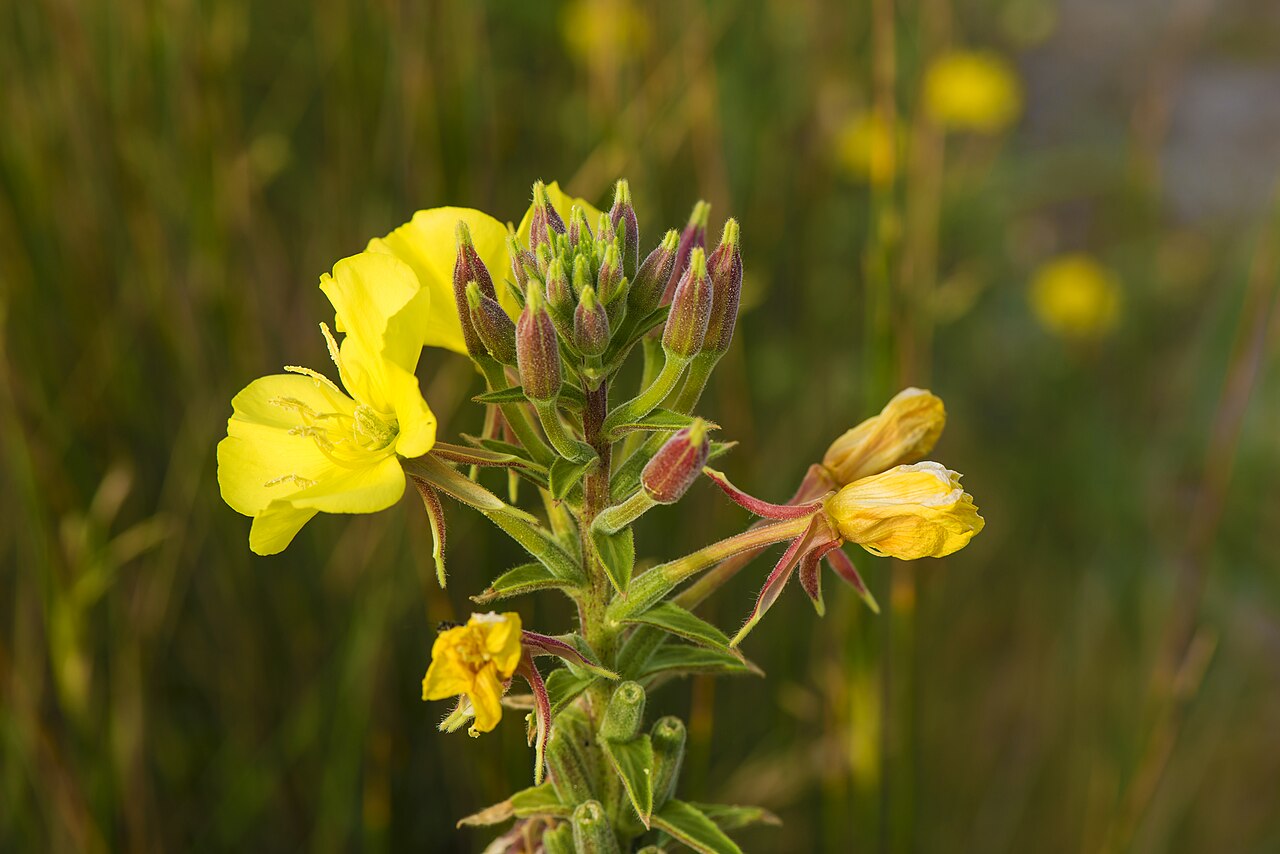
Some natives really do flower at dusk. The Lady Bird Johnson Wildflower Center describes common evening primrose as a night-flowering biennial whose fragrant flowers open in the evening and close by noon.
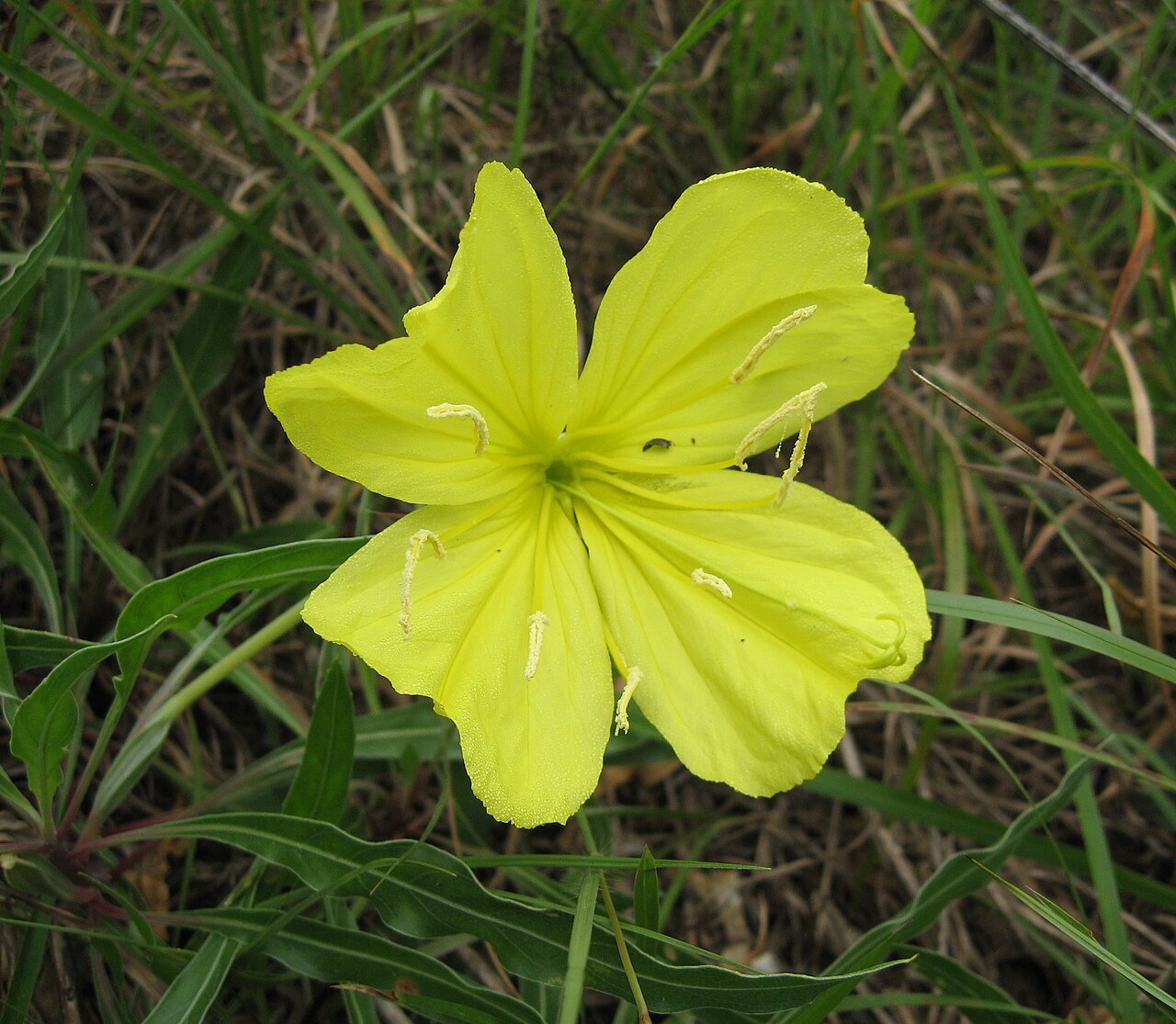
Missouri evening primrose has mostly nocturnal flowers, according to the Wildflower Center, and is pollinated primarily by hawk moths. In the West, tufted evening primrose opens its white flowers in late afternoon and closes them the next morning.
Other plants work in an evening garden simply because they show up in low light. White and pale yellow flowers, silvery leaves and fragrant shrubs all register long after reds and purples fade to gray.
Site Assessment
Start from where you sit
Pick the spot you actually use after dark: a back step, a bench, the edge of a deck. The bed should be within a few steps of it, so you see the pale flowers and catch the scent.
Check evening light, not midday light
Stand there at dusk in early summer. Note where the last light falls, where house lights spill and which areas go dark first. Pale plants placed where the last light lands will glow longest.
Map sun and soil for the day
Evening primroses still need daytime sun to grow. Note how many hours of direct sun the spot gets, and whether the soil is dry and sharp-draining or stays moist.
Note existing outdoor lights
Look at porch lights, floodlights and path lights near the bed. You may be able to switch, shield or remove some before adding anything new.
Design the Layout
Put the evening bloomers closest to the seat
Plant evening primroses and starry campion at the front, where you can see flowers open and smell them. These are the plants worth watching at dusk.
Use white and pale flowers as a frame
Behind them, use white-flowered natives such as rattlesnake master, summersweet or buttonbush. In fading light, their pale shapes outline the bed.
Add fragrance near paths
Summersweet and buttonbush both have fragrant flowers, per the Wildflower Center. Place them where you brush past or sit downwind, not at the far end of the yard.
Leave the bed a little open
Evening primrose is a biennial that self-sows. Leave a few gaps where seedlings can replace older plants, and pull extras in spring. Our guide to common evening primrose in a naturalistic garden covers planning around its two-year cycle.
The Core Plants
Common evening primrose grows up to about 6 feet. The Wildflower Center lists it for sun, part shade or shade and dry soil, and says its flowers attract a variety of moths. It forms a leafy rosette the first year and flowers the second.
Missouri evening primrose is a low plant, 8 to 10 inches tall, for full sun and dry, rocky or limestone soil. Its native range runs from southeastern Nebraska to Texas and east to Tennessee. The Wildflower Center notes it is introduced elsewhere, so check your state before planting.
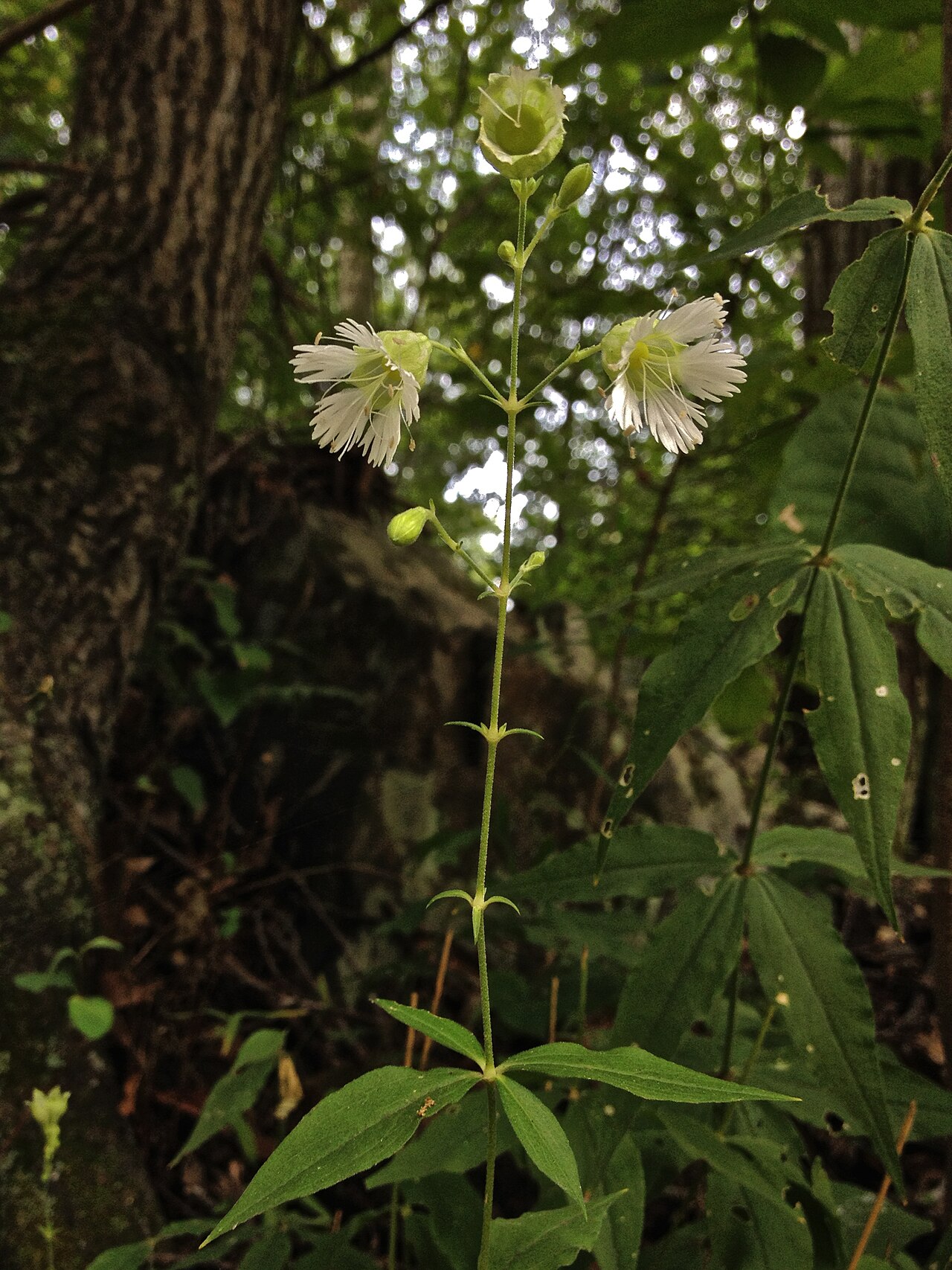
Starry campion brings fringed white flowers to part shade, on plants up to about 3 feet. The Wildflower Center says it is pollinated by butterflies and many kinds of moths.
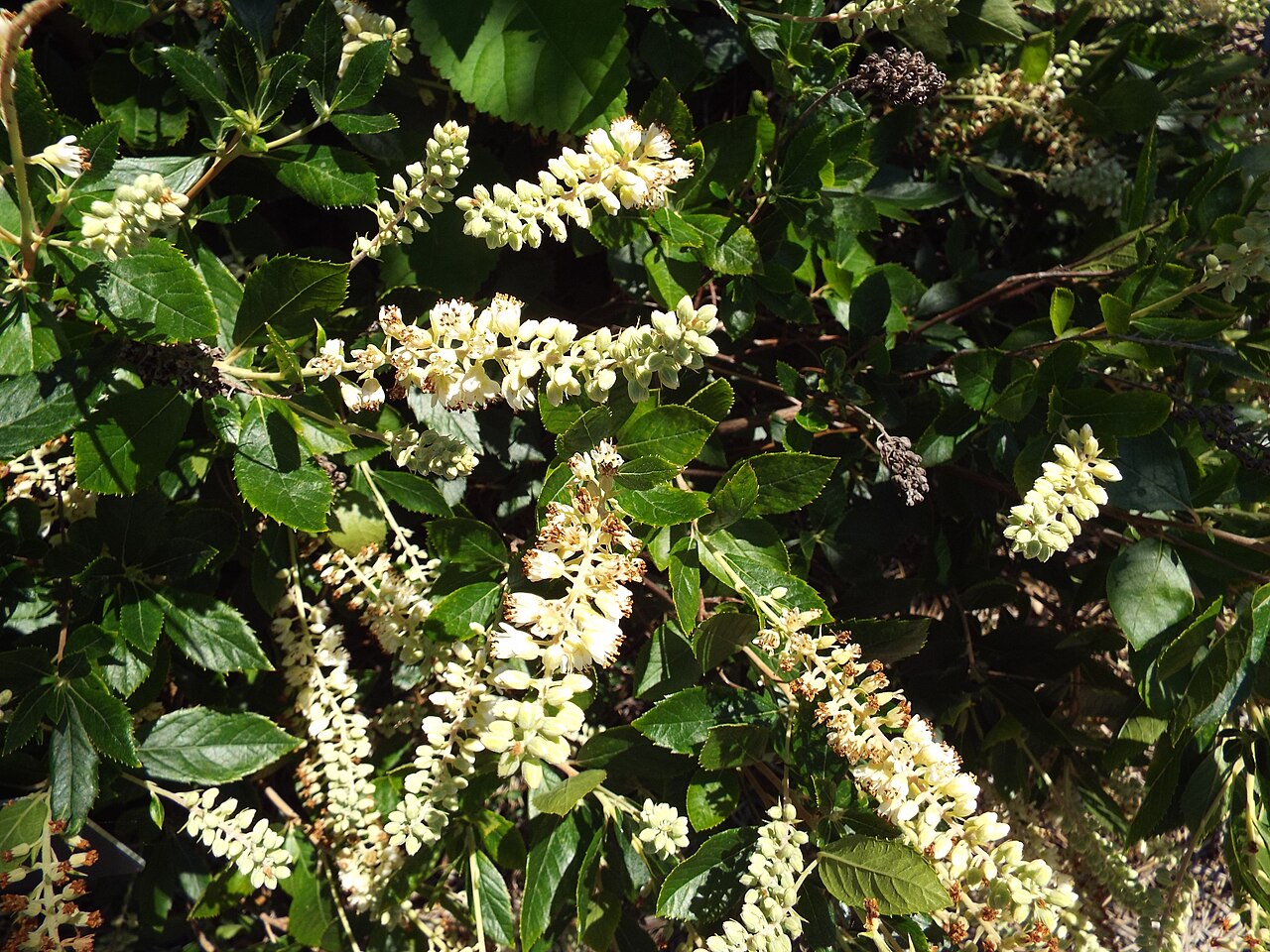
Summersweet is a shrub, normally 3 to 6 feet tall, with upright spikes of fragrant white flowers in July and August. It grows in sun to shade and moist to wet soil, from Mississippi and Florida north along the coast to southern Maine.
Rattlesnake master adds pale, globe-shaped flower heads and strap-like leaves in full sun. The Wildflower Center warns it can be an aggressive self-seeder, and suggests removing seed heads to keep it in check.
Buttonbush suits a wet corner, with fragrant white globes from June to September. It can reach about 12 feet, and the Wildflower Center notes its foliage is poisonous. For siting it, see our guide on where buttonbush fits in a rain garden.
Wild hydrangea is a shade-tolerant shrub with white flower clusters from May to August. Butterflies and Moths of North America lists it as a larval host for the hydrangea sphinx moth, per the Wildflower Center.
Plant Palette
Heights, conditions and ranges are from the Lady Bird Johnson Wildflower Center. Confirm each plant is native to your state.
| Plant | Role | Height | Sun / moisture | Native range |
|---|---|---|---|---|
| Common evening primrose (Oenothera biennis) | Evening-opening flowers | To ~6 ft | Sun–shade; dry | Nf. to se. Alberta, south to GA, LA & ne. TX |
| Missouri evening primrose (Oenothera macrocarpa) | Low evening flowers | 8–10 in. | Sun; dry | Se. NE to TX, east to TN |
| Starry campion (Silene stellata) | White flowers for shade | To ~3 ft | Part shade; moist | RI to MN, south to GA, AR, OK & e. TX |
| Summersweet (Clethra alnifolia) | Fragrant shrub | 3–6 ft, rarely to 12 | Sun–shade; moist–wet | MS to FL, north along the coast to s. ME |
| Rattlesnake master (Eryngium yuccifolium) | Pale globes, structure | To ~6 ft | Sun; well-drained | FL to TX, north to NJ, w. IN, s. MN & NE |
| Buttonbush (Cephalanthus occidentalis) | Fragrant wet-site shrub | To ~12 ft | Part shade–shade; moist–wet | N.B. & Que. to upper Mississippi Valley, e. NE & e. KS, south to FL & TX |
| Wild hydrangea (Hydrangea arborescens) | White shrub for shade | To ~10 ft, often shorter | Part shade; moist | S. NY to se. MO, south to FL, LA & OK |
Western and Southwestern Alternates
The core palette is eastern. In the West, use these plants as a starting point and confirm each one against your state list.
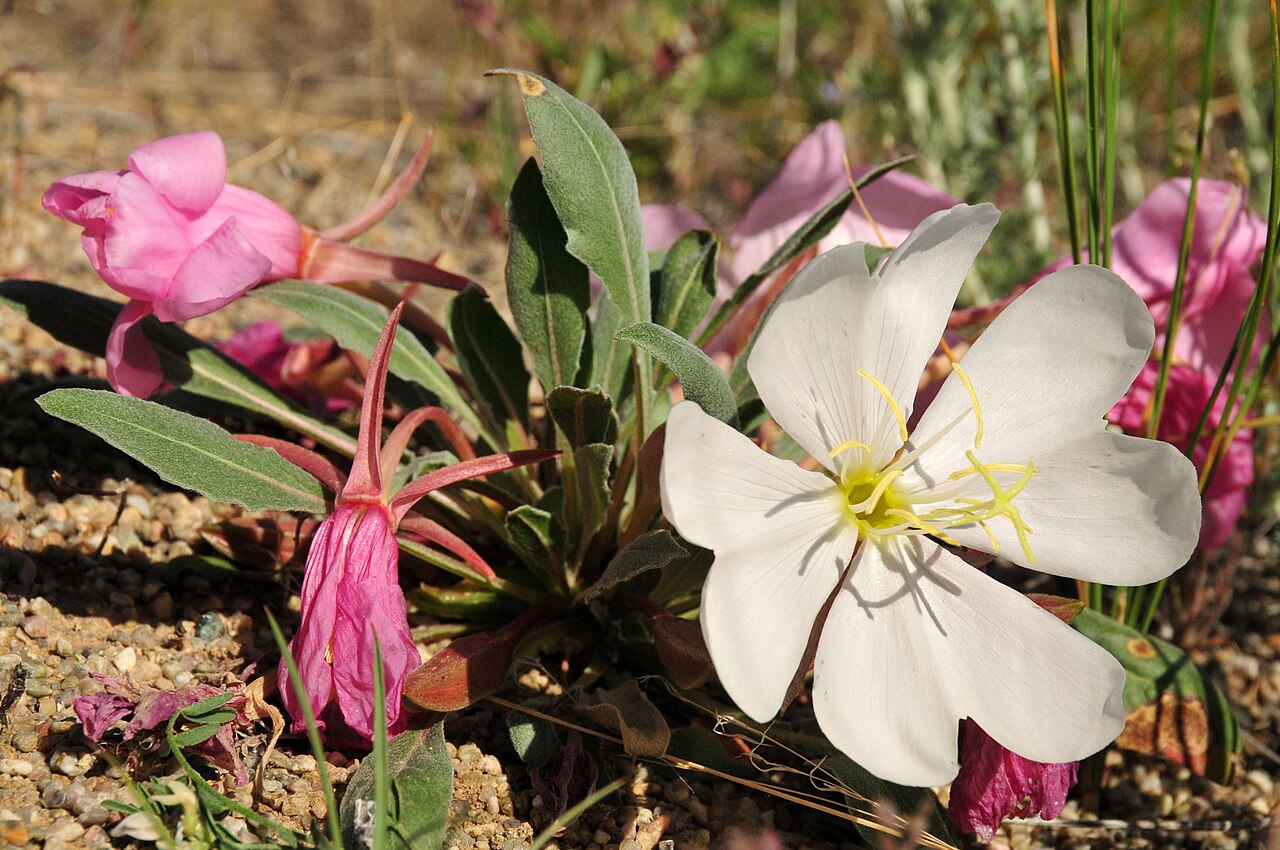
Tufted evening primrose grows up to about a foot tall on dry buttes and exposed hillsides from Washington to western North Dakota, south to southern California and New Mexico. Its large white flowers open in late afternoon and fade to pink or red-violet.
Colorado four o’clock opens fragrant magenta flowers in the afternoon. The Wildflower Center says hawk moths and other nocturnal insects visit it. Its range runs from southwestern Colorado and Utah into northern Mexico.
Sacred datura (Datura wrightii) has large white, fragrant flowers that open in the evening, and is native from central California to Texas. The Wildflower Center warns that all parts are poisonous to humans and animals. Leave it out of gardens used by children or pets.
Plan the Lighting
DarkSky International publishes five principles for responsible outdoor lighting. They translate directly to a garden.
Lighting Plan for an Evening Garden
Based on DarkSky International’s five lighting principles and UNH Extension’s advice on insect-friendlier lighting.
| Principle | In the garden |
|---|---|
| Useful | Light only what you need to see: steps, a path edge, the seat. Leave the planting itself dark. |
| Targeted | Use shielded fixtures aimed down so light does not spill into the bed or the sky. |
| Low level | Use the lowest brightness that lets you walk safely. Pale flowers show best when the light is dim. |
| Controlled | Put lights on timers or motion sensors so they are off when no one is outside. |
| Warm-colored | Choose warm or yellow bulbs and limit blue-white light. |
University of New Hampshire Extension recommends leaving outdoor lights off except when needed, using motion sensors, and choosing yellow bulbs. It notes that yellow light is not a cure-all, but you can expect far fewer insects drawn to it.
That matters in a garden planted for moths. A bright light beside the evening primroses can pull insects away from the flowers you planted for them.
Installation Steps
- Plant in spring or early fall. Cooler weather gives roots time to settle.
- Clear the bed. Remove turf and weeds so slow-starting seedlings have room.
- Plant by moisture. Put primroses and rattlesnake master in the driest, sunniest part; summersweet, buttonbush and wild hydrangea where soil stays moist.
- Sow or plant evening primrose in two years. Planting a second batch a year after the first gives you flowers every year from the start.
- Water deeply until established. Shrubs need regular water through their first summer.
- Fix the lighting last. Once the plants are in, walk the garden at dusk and adjust or shield lights.
First-Three-Years Maintenance Calendar
Year one
- Spring and summer: water new plants in dry spells; most evening primroses will be rosettes only.
- Summer evenings: note which plants show up best at dusk and where light spills in.
- Fall: leave seed heads standing over winter.
Year two
- Late winter: cut back last year’s perennial stems.
- Summer: the first evening primroses flower. Sit out at dusk and watch them open.
- Late summer: remove some rattlesnake master and primrose seed heads if you do not want many seedlings.
Year three
- Spring: thin primrose seedlings, keeping a few to replace plants that have finished.
- Summer: prune shrubs only lightly, after flowering, if needed for paths.
- Any time: review lights; add a timer or shield anywhere you still see glare.
Mistakes to Avoid
- Lighting the plants. Uplights and spotlights flatten pale flowers and draw insects away from them. Light paths, not beds.
- Using cool-white bulbs. Choose warm or yellow light, as DarkSky and UNH Extension advise.
- Planting only one batch of a biennial. Common evening primrose flowers in its second year, then dies. Stagger plantings.
- Siting the bed far from the seat. Evening flowers and fragrance only work at close range.
- Ignoring toxicity. Sacred datura is poisonous in all parts; buttonbush foliage is also listed as poisonous.
📋 Find plants for your region: start with the profiles linked above, then see our native plant lists for North Dakota, South Dakota & Western Minnesota and Nebraska, Kansas & Eastern Colorado, or the list for your own state. For pairing evening plants with daytime color, see our native bloom calendar.
Frequently Asked Questions
Which native flowers open in the evening?
Common evening primrose opens in the evening and closes by noon, per the Wildflower Center. Missouri evening primrose flowers mostly at night, and tufted evening primrose and Colorado four o’clock open in the late afternoon.
Do evening gardens attract moths?
Some of these plants are moth-pollinated. The Wildflower Center says Missouri evening primrose is pollinated primarily by hawk moths and that common evening primrose attracts a variety of moths. Visits are never guaranteed.
What color lights are best near an evening garden?
Warm or yellow light. DarkSky recommends limiting blue-violet light, and UNH Extension suggests yellow bulbs with as little lighting as possible.
Can I grow an evening garden in shade?
Partly. Starry campion and wild hydrangea grow in part shade, and summersweet tolerates shade. The evening primroses do best with more sun.
Is sacred datura safe to plant?
The Wildflower Center warns that all parts are poisonous to humans and animals. Skip it where children or pets play.
Sources
- DarkSky International, Five Principles for Responsible Outdoor Lighting: useful, targeted, low-level, controlled and warm-colored lighting.
- University of New Hampshire Extension, Bug Friendlier Outdoor Lighting: lights off when not needed, motion sensors, yellow bulbs.
- Lady Bird Johnson Wildflower Center plant database: common evening primrose, Missouri evening primrose, starry campion, summersweet, rattlesnake master, buttonbush, wild hydrangea, tufted evening primrose, Colorado four o’clock, sacred datura: flowering habit, pollinators, height, conditions, warnings and native range.