How to Plant Milkweed Seeds for Successful Butterfly Gardens
Last updated: September 30, 2026
Planting milkweed seeds is one of the best things you can do to support monarch butterflies. After all, milkweed is the only food their caterpillars will touch.
To get good results, you’ll need to cold stratify the seeds for a few weeks—basically, tricking them into thinking they’ve gone through winter. After that, plant them in well-drained soil with plenty of sunlight. This step really bumps up your chances of seeing those seeds sprout and grow into healthy plants.
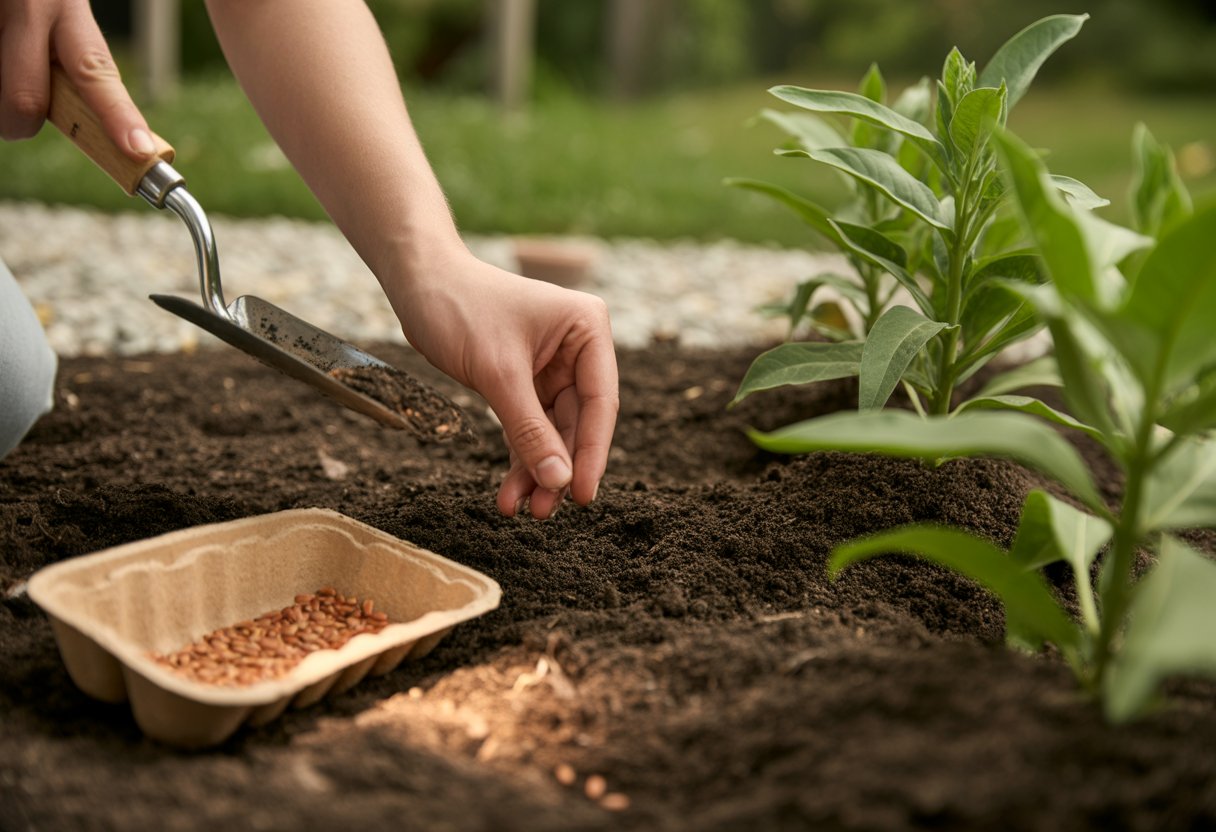
You can start milkweed seeds indoors or just sow them straight into the garden once the last frost has passed. Once these plants settle in, you’ll notice monarchs and other pollinators showing up—milkweed is a magnet for them.
Choosing the Right Milkweed Seeds
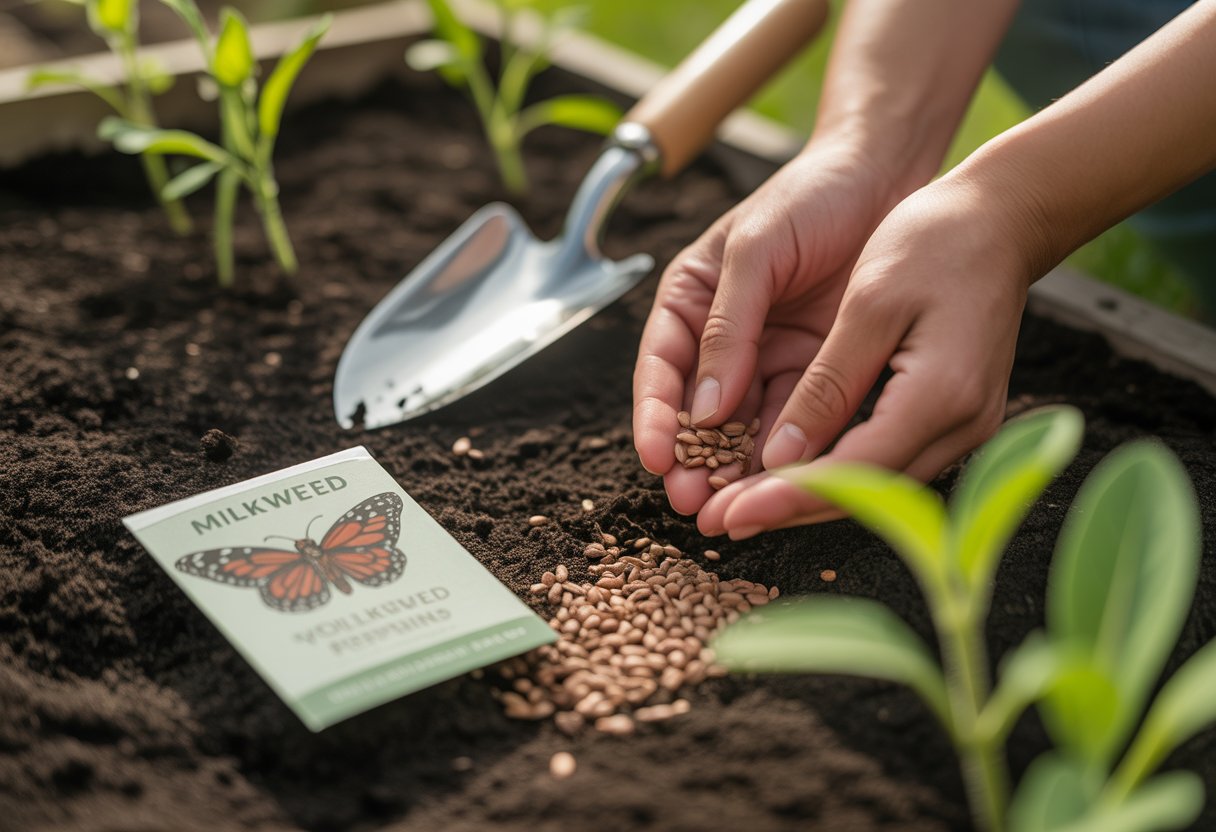
Picking the right milkweed seeds means thinking about which species work in your specific climate. Understanding USDA zones and local growing conditions makes a big difference.
Selecting Suitable Milkweed Species
Start by figuring out which milkweed species are native to your area. Native plants support local wildlife and usually grow better with less fuss.
Common milkweed (Asclepias syriaca) grows just about everywhere in North America and is tough as nails. Swamp milkweed likes wetter spots. Butterfly weed (Asclepias tuberosa) handles drought and puts out those wild orange blooms butterflies love.
Whorled milkweed (Asclepias verticillata) is a more delicate, slender plant for well-drained soils, while green milkweed (Asclepias viridis) is a favorite in the southern states.
Tropical milkweed gets a lot of attention, but it’s not the best pick for northern gardens since it’s not native and doesn’t die back in winter. It’s smarter to stick with species that fit your region and landscape goals.
Understanding USDA Zones and Growing Conditions
USDA zones help you figure out which milkweed will actually survive your winters. For example, Asclepias syriaca does well in zones 3-9, handling cold and loving full sun.
Swamp milkweed fits zones 3-9 too, but it wants moist soil—think near ponds or ditches. Butterfly weed is happy in zones 3-10, isn’t picky about soil, but does need good drainage.
When you pick seeds, consider your soil, how much moisture you get, and how much sun hits your garden. Most native milkweeds want full sun and anything from well-drained to moist soil, depending on the species.
Matching the right milkweed to your zone and garden conditions really pays off. You’ll get healthier plants and a better home for pollinators like monarchs.
Preparing for Planting
A good milkweed patch starts with the right prep. Treating the seeds right and picking a solid spot for planting can make all the difference.
Proper seed preparation gives you better germination, and the right soil and location help those seedlings get established.
Cold Stratification and Scarification Methods
Milkweed seeds usually need cold stratification to wake up. Stick them in a damp paper towel, seal them in a bag, and pop them in the fridge for 30 to 45 days.
Some milkweed seeds also have a tough outer shell. For those, you can gently nick or sand the seed coat—this lets water in and helps them sprout faster. Doing both scarification and cold stratification together often works best.
These steps help the seeds soak up water and kickstart their growth.
Soil and Location Preparation
Milkweed likes well-drained soil with a neutral to slightly acidic pH—around 6.0 to 7.0. Loosen the soil about 6-8 inches deep so roots can spread out. Pull out weeds so your seedlings don’t have to fight for space and nutrients.
Pick a spot that gets plenty of sun—at least six hours a day. Milkweed needs that direct sunlight to really thrive and bloom.
Stay away from shady or soggy areas, since poor drainage can stunt the seedlings.
Getting the soil and site ready gives your plants a head start.
Sowing and Caring for Milkweed
If you want strong milkweed plants, it’s all about the care you put in—especially early on. Paying attention to soil conditions, watering, and keeping an eye on those seedlings really helps.
How to Sow Milkweed Seeds
Don’t skip cold stratification—it’s key for good germination. Chill your seeds in a damp paper towel in the fridge for about a month before planting.
When you’re ready, sow the seeds right on the soil or cover them with just a quarter inch of dirt. Make sure the spot is sunny and the soil drains well. Give each seed or seedling at least a foot of space so they’re not crowded.
Watering and Maintenance
After planting, water gently and keep the soil moist—but not soggy. Once the seeds sprout, you can let the top layer of soil dry out a bit between waterings.
Keep your butterfly garden tidy by pulling weeds and checking for pests. Since milkweed attracts pollinators, skip the chemical pesticides—they do more harm than good. Mulch helps keep the soil moist and evens out the temperature, which is great for young plants.
Germination and Seedling Care
Milkweed usually sprouts in 7-21 days if conditions are right, though some species take longer. If your seedlings get crowded, thin them out so they each get enough light and nutrients.
If you started seeds indoors, transplant them carefully so you don’t mess up the roots. Once they’re established, milkweed can handle dry spells, but they’ll grow best with the occasional deep watering.
A little patience and care early on means you’ll have sturdy plants that support pollinators for years.
Harvesting, Wildlife Benefits, and Safety
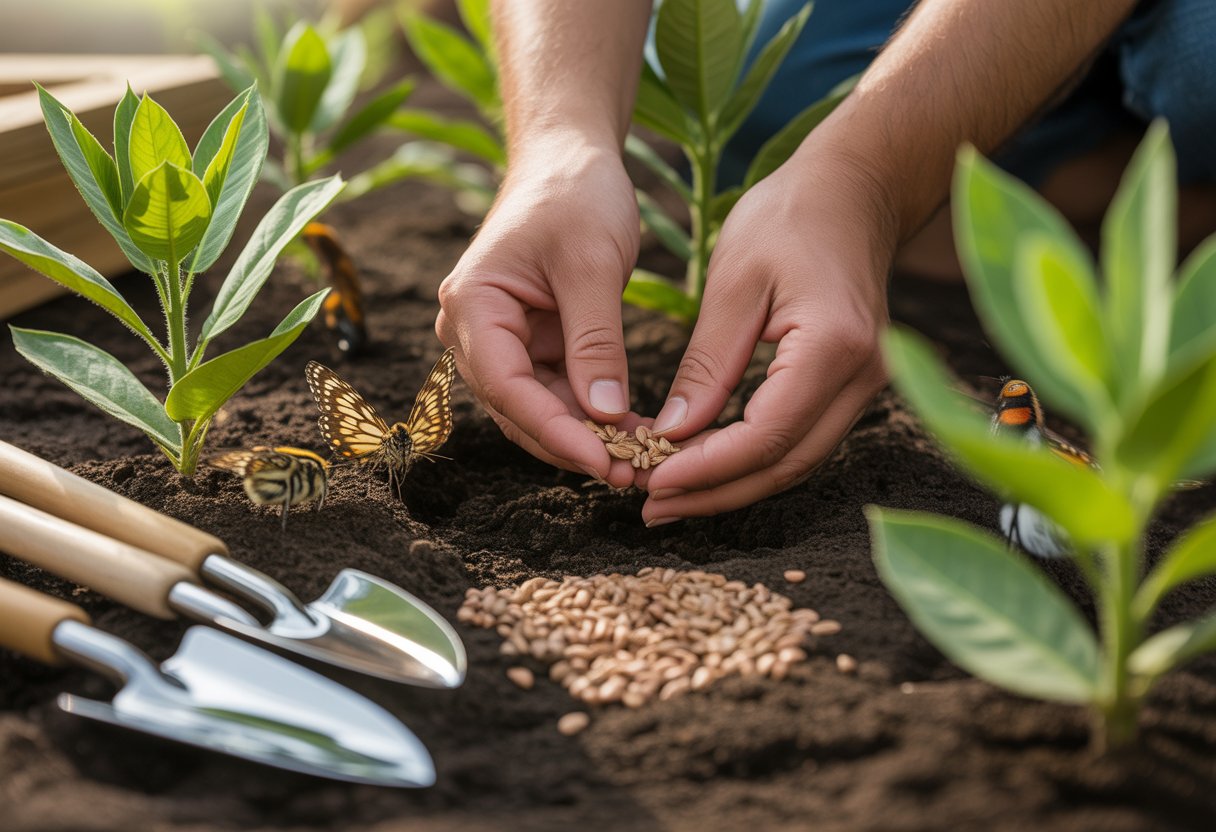
You’ll want to collect milkweed seeds after the pods dry out and start splitting open. Milkweed doesn’t just help monarchs; it also draws in bees and other pollinators. Just remember, the plant contains some toxic compounds, so handle with a bit of caution.
Harvesting Seeds and Propagation
Milkweed pods usually ripen and dry out by late summer or early fall. When they split naturally, the fuzzy seeds inside are ready to collect.
Spread the seeds out to dry before storing them.
You can plant seeds directly outside after they’ve had their cold stratification—about 30-60 days. Some folks also divide rhizomes in early spring to start new plants.
Attracting Monarch Butterflies and Other Pollinators
Milkweed flowers are loaded with nectar and pollen, so you’ll see monarchs, bees, and all sorts of pollinators flocking to them. Monarchs, in particular, depend on milkweed for their caterpillars.
Sure, plants like joe pye weed help pollinators too, but milkweed is still the backbone for monarchs. Adding it to your garden is a real boost for pollinator populations and local biodiversity.
Understanding Toxicity and Safe Handling
Milkweed has toxic compounds called cardenolides. If humans or pets eat it, they could get sick.
Some people get skin irritation from the sap. I’d suggest wearing gloves when you harvest or prune milkweed, just to be safe.
Because of its toxicity, most herbivores leave milkweed alone. Still, you should throw out plant debris carefully if you’re near livestock.
Knowing how to handle milkweed safely helps gardeners enjoy the plant without worry.