Crape Myrtle Suckers at the Base: Removal and Follow-Up Care
Last updated: November 6, 2026
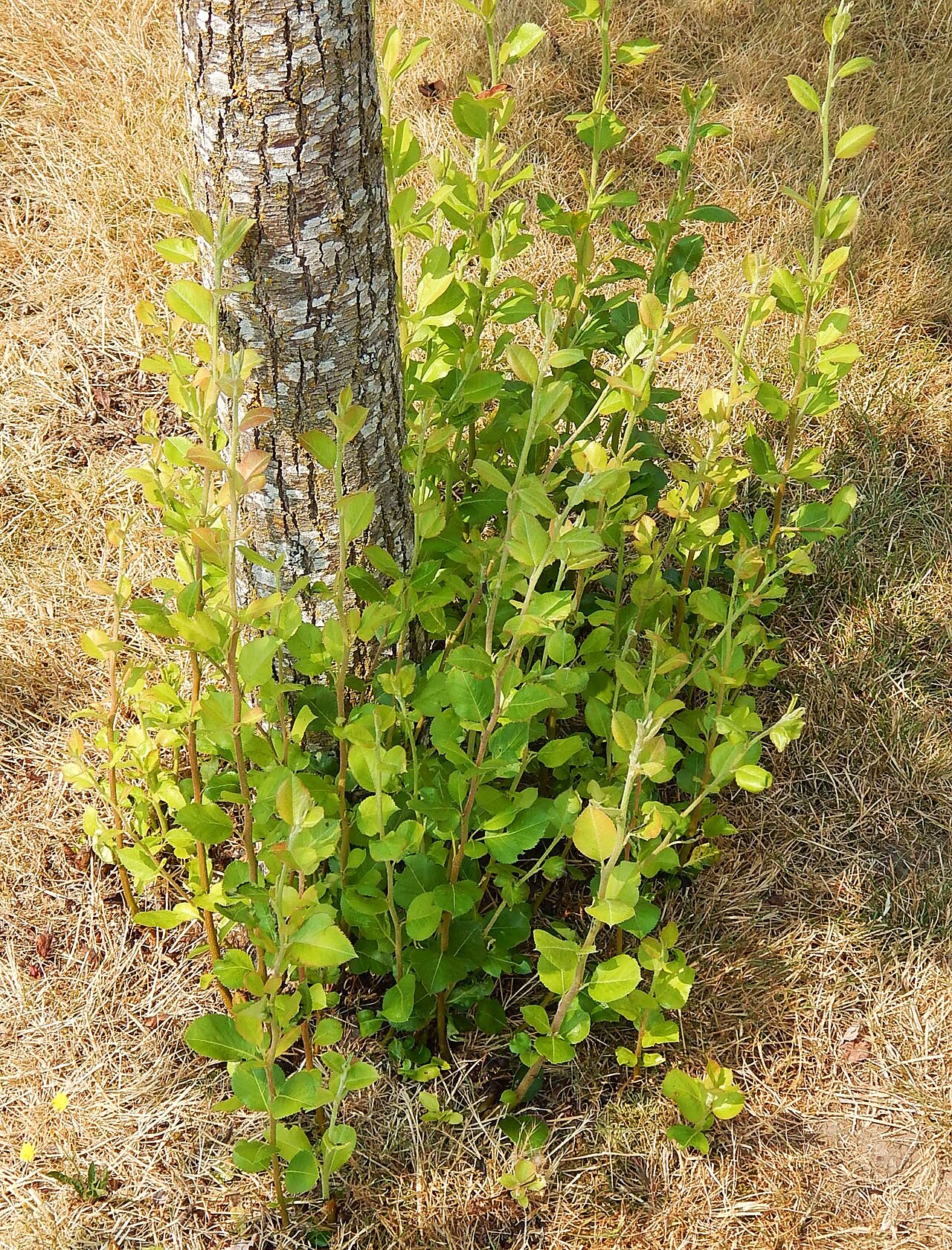
Every spring, a crop of skinny green shoots pops up around the base of your crape myrtle. You cut them off, and a few weeks later they’re back, sometimes thicker than before.
These shoots are suckers, also called basal sprouts. They’re common on crape myrtle, and removing them is routine maintenance, not a sign that the tree is failing.
The trick is removing them in a way that doesn’t invite more. This guide covers how to tell suckers from trunks worth keeping, the cleanest removal method, and the follow-up care that keeps them under control.
The Short Answer
- Remove suckers while they’re small and soft. Pull or rub them off at the base when you can; otherwise cut them flush.
- Check again every few weeks during the growing season, and do a full cleanup in late winter.
- Never spray suckers with weed killer. They’re connected to the tree.
- Reduce the triggers: skip heavy pruning and topping, avoid excess fertilizer, and keep mowers and trimmers off the trunks.
- Keep a few shoots only if you’re replacing a damaged trunk or regrowing a tree after cold dieback.
Why Crape Myrtles Send Up Suckers
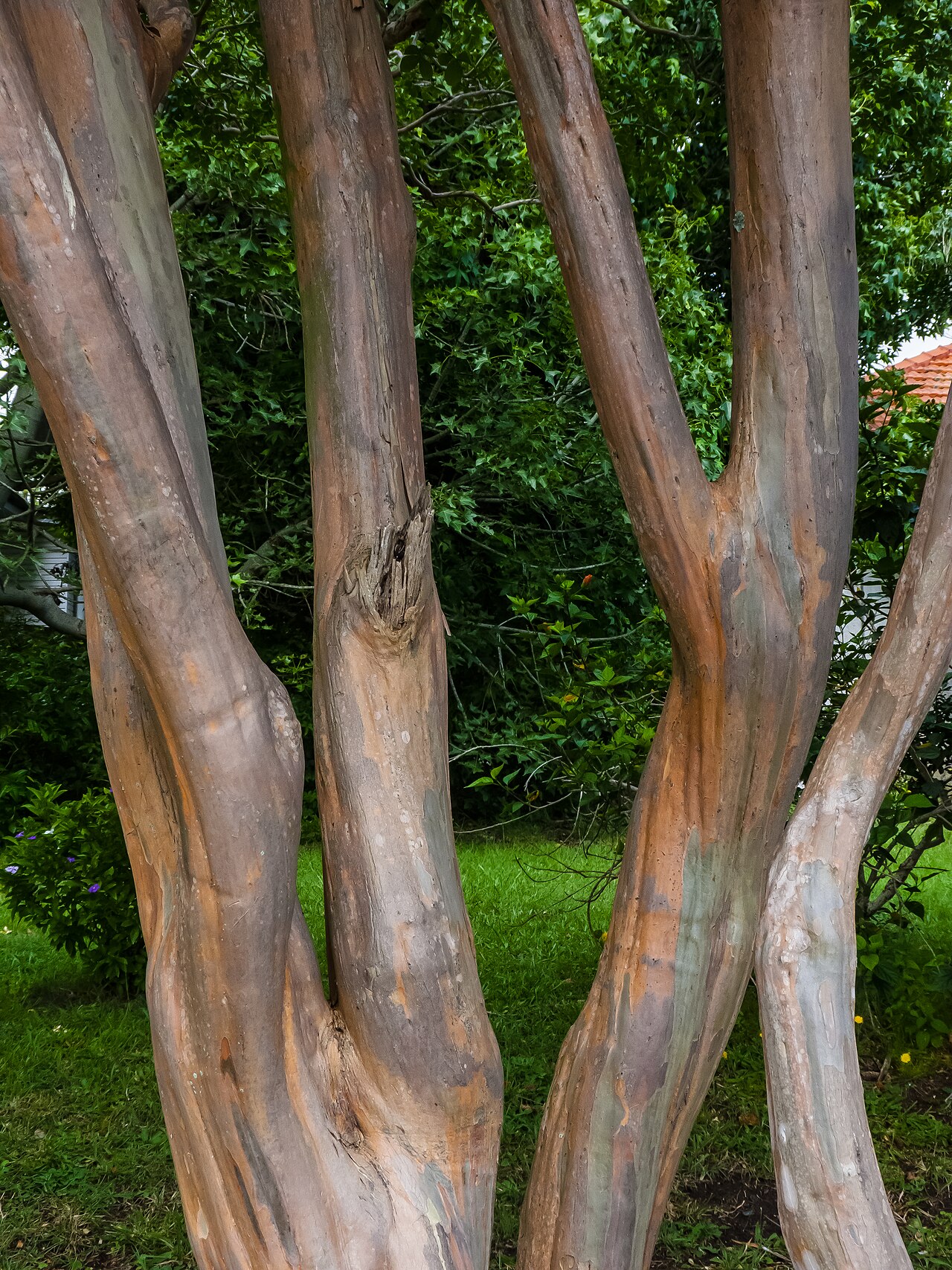
Crape myrtle naturally grows as a multi-stemmed shrub or small tree. Sprouting from the base is part of how it grows, so even a well-kept tree will push up some shoots.
Clemson’s Home & Garden Information Center says this basal sprouting may occur whether the tree has been pruned or not. On a tree-form crape myrtle, Clemson advises removing any new growth from the ground to keep the shape.
Some things make the problem worse:
- Topping and hard pruning. Virginia Cooperative Extension notes that crape myrtles wounded by topping often produce large numbers of basal suckers. UF/IFAS lists basal sprouting among the results of topping.
- Too much fertilizer. Virginia Tech warns that excessive fertilization can encourage sucker growth and reduce flowering.
- Stress and damage. Cold dieback, trunk injuries, and other stress can push the tree to grow new shoots from the base. Ask Extension notes that crape myrtles killed back in winter may resprout from the roots.
Sucker or Trunk? Decide What to Keep
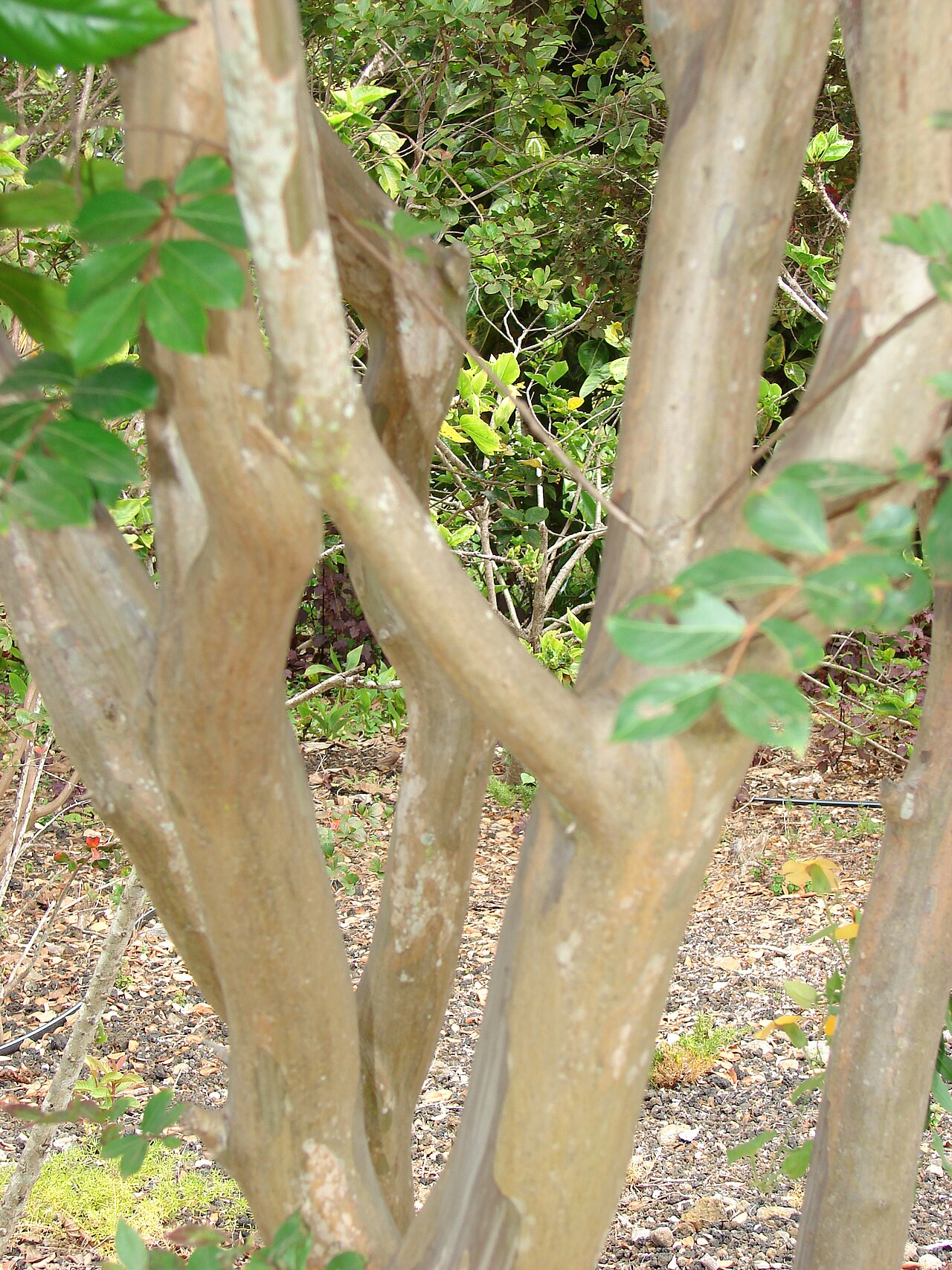
Before you cut, look at the whole plant. Clemson recommends that a tree-form crape myrtle keep three to five of the strongest trunks at ground level.
Count your main trunks. If you have three to five sturdy, well-spaced ones, everything else coming from the ground is a sucker.
There are two times to keep a shoot instead:
- Replacing a trunk. If one main trunk is badly damaged, decayed, or dead, let one strong, well-placed sucker grow as its replacement. Remove the old trunk once the new one is established.
- After a hard freeze or a cut to the ground. If the tree died back to the roots, the suckers are the new tree. Keep the best few and remove the rest.
If you grow your crape myrtle as a shrub rather than a tree, you can let more stems stay. Just remove weak, crowded, or crossing ones so air moves through the base.
Step 1: Pick the Right Time
The best time is as soon as you see them. Virginia Cooperative Extension advises rubbing suckers off while they’re young and succulent. Clemson agrees, recommending you pull sprouts while they’re still soft instead of cutting them, to keep a smoother, cleaner trunk base.
Plan a thorough cleanup once a year as well. LSU AgCenter recommends removing all suckers at the base of tree-form specimens each winter, and UF/IFAS lists sucker removal among the jobs best done in late winter.
In practice, that means a quick pass every few weeks in spring and summer and a full cleanup in late winter, when you’re doing any other pruning.
Step 2: Gather Simple Tools
For most suckers, you need:
- Gloves.
- Sharp, clean bypass hand pruners for shoots that have turned woody.
- A small hand trowel or weeding tool to pull back mulch and soil.
- Loppers only for an old sucker that’s grown thicker than your pruners can handle.
Skip the string trimmer. It’s tempting for a big flush of sprouts, but crape myrtle bark is thin, and Clemson notes it’s easily damaged by mechanical injury. A trimmer that grazes the trunks creates wounds, and wounded trees often sucker more.
Step 3: Expose Where Each Sucker Starts
Pull mulch away from the base so you can see where each shoot emerges. Some come from the trunk just at ground level. Others come from roots or the root flare a few inches away.
Removing a sucker at its point of origin matters. A stub left above that point carries dormant buds, and those buds can turn one sucker into several.
Step 4: Pull, Rub, or Cut
Soft, green shoots: grip the shoot near its base and pull or rub it off with a downward or sideways motion. This follows Clemson’s advice to pull sprouts while they’re still succulent.
Woody shoots: cut them as close to their origin as you can. Virginia Tech describes this as a thinning cut back to the main stem. Leave no stub, but don’t gouge into the trunk or root flare.
Old, thick suckers: treat them like a small branch. Cut flush at the base with loppers or a pruning saw. Don’t tear the bark.
Don’t paint or seal the cuts. Virginia Tech advises against applying pruning paint or other materials to crape myrtle cuts.
Step 5: Never Use Weed Killer on Suckers
Suckers are part of the tree. They share its roots and vascular system, so herbicide on a sucker can reach the trunk you’re trying to protect.
Montana State University Extension notes that glyphosate on aboveground growth such as root suckers can injure the tree. Penn State Extension warns that suckers connected to a tree’s vascular system should never be treated with glyphosate because it can damage or kill the tree.
Keep lawn and bed herbicides away from the base for the same reason. Hand removal is slower, but it’s the safe method.
Step 6: Clean Up and Re-Mulch
Rake up the removed shoots. Clemson notes that sprouts at the base are susceptible to powdery mildew and that once they’re infected, the disease can spread to the upper plant. Bag or compost healthy material, and bag any shoots with a white powdery coating. Not sure whether white material is mildew or something else? Our guide to white material on crape myrtle branches can help.
Pull the mulch back into a ring around the trunks. Keep it a few inches away from the bark so it doesn’t hold moisture against the trunks. Our mulch guide covers depth and materials.
Quick Reference
| Soft green sucker | Pull or rub off at the base. |
| Woody sucker | Thinning cut back to its origin. No stub, no sealant. |
| Damaged main trunk | Keep one strong sucker as a replacement. |
| Tree killed to the ground | Keep the best three to five shoots; remove the rest. |
| Suckers with white powder | Remove and bag. Powdery mildew can spread upward. |
| Weed killer | Never. It can injure the tree. |
Follow-Up Care: How to Get Fewer Suckers
You won’t stop suckers completely, but you can make them less frequent.
Stop topping. Hard cuts to the same height every year are among the biggest drivers of sucker growth. Virginia Tech recommends thinning cuts to a side branch or main stem instead, and choosing a cultivar whose mature size fits the space. If your tree was topped in the past, see our guide to repairing crape myrtle topping.
Go easy on fertilizer. Virginia Tech advises against fertilizing crape myrtles unless a soil test shows a need. A tree growing in a fertilized lawn may already get more nitrogen than it needs. Our soil testing tips explain how to sample.
Protect the trunks. A mulch ring keeps mowers and trimmers away from the bark. Fewer wounds mean less stress-driven sprouting.
Ask about growth regulators if suckers are relentless. Virginia Tech notes that re-suckering can sometimes be suppressed by applying naphthalene acetic acid (NAA) after pruning. This is a labeled product category, not a home remedy. If you use one, choose a product labeled for sucker control on ornamental trees and follow the label exactly.
When the Suckers Are the Tree
After a severe winter or a deliberate cut to the ground, a crape myrtle may come back entirely from the base. In that case, suckers aren’t the enemy; they’re the next generation of trunks.
Let the shoots grow for a few weeks so you can see which are strongest. Then keep three to five vigorous, well-spaced shoots and remove the rest. Clemson’s bark scale factsheet describes the same approach after cutting an infested plant to the ground: keep three equally spaced sprouts and prune out the others.
Continue removing new sprouts from the base as they appear. The kept shoots will thicken into trunks over the next few years.
A Season-by-Season Sucker Plan
- Late winter: full cleanup. Remove every sucker at its origin, do any structural pruning, and refresh the mulch ring.
- Spring: check every two to three weeks. Rub off new shoots while they’re soft.
- Summer: keep checking, especially after rain. Look for powdery mildew on any sprouts you’ve missed.
- Fall: light check only. Leave major pruning for late winter.
- Every year: skip topping, fertilize only on soil-test advice, and keep trimmers off the trunks.
For general care and planting, see our crape myrtle growing guide and our article on how to prune trees and shrubs. If heavy cutting or suckering has cost you flowers, our crape myrtle not blooming checklist can help. If you see peeling or damaged bark while you’re working at the base, our guide to crape myrtle bark peeling explains what’s normal.
Crape myrtle isn’t the only plant that suckers. If you’re managing sprouts on other shrubs, see our guides to lilac suckers and native black chokeberry suckers.
Frequently Asked Questions
Should I remove suckers from my crape myrtle?
On a tree-form crape myrtle, yes. Clemson and LSU AgCenter both recommend removing growth that comes up from the ground to keep the trunk structure clean. On a shrub-form plant, you can keep more stems but should thin weak and crowded ones.
Why do my crape myrtle suckers keep coming back?
Crape myrtles sprout from the base naturally, and topping, heavy pruning, excess fertilizer, and trunk wounds can all make it worse. Cutting above the point of origin also leaves buds that resprout.
Is it better to pull or cut crape myrtle suckers?
Pull or rub them off while they’re young and soft, as Clemson and Virginia Tech recommend. Once they turn woody, cut them flush at their origin with sharp pruners.
Can I spray crape myrtle suckers with Roundup?
No. Suckers are connected to the tree, and extension services warn that glyphosate on suckers can injure or kill the parent tree. Remove them by hand.
Can I grow a new crape myrtle from a sucker?
NC State Extension lists cuttings as a way to propagate crape myrtle. A sucker dug with some root attached may grow, but results vary. Remember that the new plant will be the same cultivar only if your tree isn’t grafted.
Sources
- Clemson Cooperative Extension HGIC, Crape Myrtle Pruning, Crape Myrtle Diseases & Insect Pests, Crapemyrtle Bark Scale and Crape Myrtle: basal sprouting, pulling sprouts while succulent, three to five trunks, powdery mildew on sprouts, thin bark.
- Virginia Cooperative Extension, Pruning Crapemyrtles: suckers after topping, fertilizer and suckering, rubbing off suckers, thinning cuts, NAA, no wound dressings.
- LSU AgCenter, Pub. 1466 Crape Myrtles: removing suckers each winter on tree forms.
- UF/IFAS Extension, Crape Myrtle Pruning: sucker removal, late-winter timing, basal sprouting after topping.
- Montana State University Extension, Herbicide Injury: Glyphosate, and Penn State Extension, Use Glyphosate With Care Near Trees: herbicide injury through suckers.
- Ask Extension, Dying crape myrtle: resprouting from roots after winter dieback.
- North Carolina Extension Gardener Plant Toolbox, Lagerstroemia indica: growth habit and propagation.