A Mid-Atlantic Rain Garden: Plant the Basin and Rim for Different Moisture Levels
Last updated: November 7, 2026
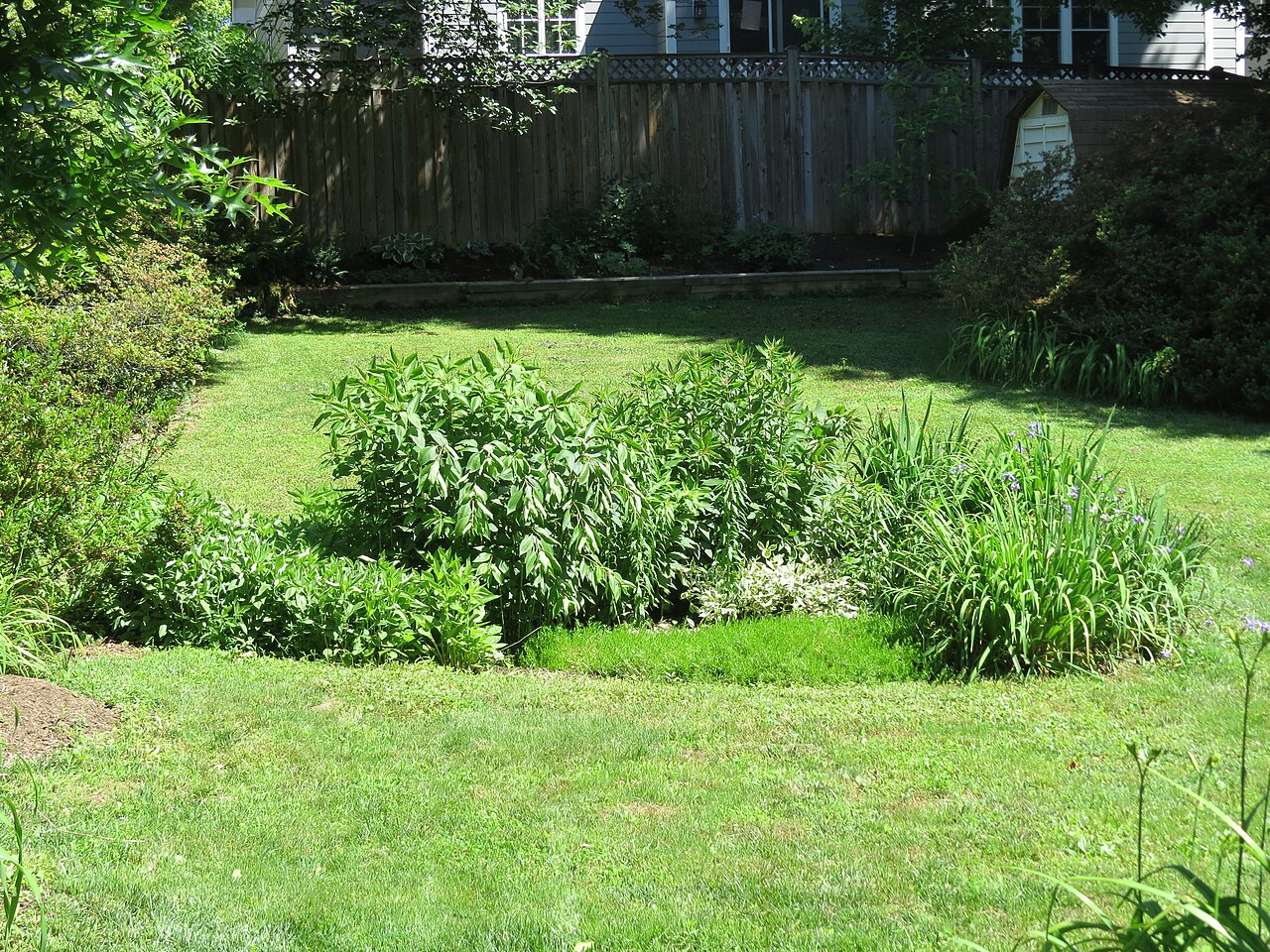
A rain garden is not one planting condition. Its center holds standing water after storms, its sloped sides get wet only now and then, and its outer rim can be as dry as any sunny bed in August.
Mid-Atlantic rain garden guides plan for this by splitting the garden into three zones. A guide from Blue Water Baltimore, published through Maryland’s Department of Natural Resources, describes the ponding area, the sloped perimeter and the edge or berm, each with different plant needs.
This plan follows those zones with plants native to Maryland, Virginia, Delaware, Pennsylvania, New Jersey and DC. It also shows where your exact location changes the plant choice, especially for blue flag iris.
Plan at a Glance
| Site | A gentle low spot at least 10 ft downhill from the house, receiving roof or driveway runoff |
| Size | Example: a 10 × 15 ft oval with about 6 in of ponding depth |
| Sun | Full sun to part sun; most rain garden plants here need at least half a day |
| Soil | Must pass a simple percolation test, or be dug deeper and refilled with a sandy mix |
| Maintenance | Moderate in year one (watering, weeding, mulch), low after that |
| Best regions | Mid-Atlantic: MD, VA, DE, DC, PA and NJ, Piedmont and Coastal Plain |
Site the Garden Before You Plan Plants
The University of Maryland Extension’s Watershed Stewards Academy Rainscaping Manual recommends keeping a rain garden at least 10 feet from the foundation if it sits downhill from the house. If it must be uphill, it calls for at least 25 feet plus an overflow that carries water away from the building.
The same manual says to keep rain gardens outside the drip line of existing trees, away from septic fields and at least 50 feet from a confined well. Call Maryland’s Miss Utility (or 811 elsewhere) at least two business days before you dig.
Blue Water Baltimore advises against sites with more than a 12% slope unless you add a retaining wall on the downhill side. The manual also rules out low spots that don’t drain well, since a rain garden should drain, not become a pond.
Test Drainage, Then Set the Depth
Blue Water Baltimore’s guide defines a rain garden as a bowl at least 6 inches lower than the surrounding ground, where water ponds for no more than 24 to 48 hours after a storm.
To check your soil, it describes a percolation test: dig a hole, fill it with water, refill after it drains, then time how long the last filling takes to soak in. If it drains within 24 hours, the soil passes.
If the soil passes, Blue Water Baltimore says to dig 3 inches below your planned ponding depth to leave room for mulch. If it fails, it calls for digging an additional 15 inches and refilling with a mix of 50% coarse sand, 30% compost and 20% low-clay topsoil.
How the Three Zones Work
Rain Garden Zones at a Glance
| Zone 1: basin | The flat bottom and most of the garden. Plants must tolerate 24 hours of standing water above the mulch and consistently damp soil. |
| Zone 2: side slope | The transition band. Plants must handle occasional standing water and drought. Make it 3 times as wide as the ponding depth: 18 in wide for 6 in of ponding. |
| Zone 3: rim and berm | The border, including any berm on the downhill side. Plants here need to tolerate drought. |
Zone definitions from Blue Water Baltimore’s Rain Gardens for Healthy Streams guide.
Choose each plant for the wettest condition it will face in its zone, not for the garden as a whole. A plant that loves wet feet will sulk on the dry berm, and a prairie plant will rot in the basin.
Zone 1: Plant the Basin for Standing Water
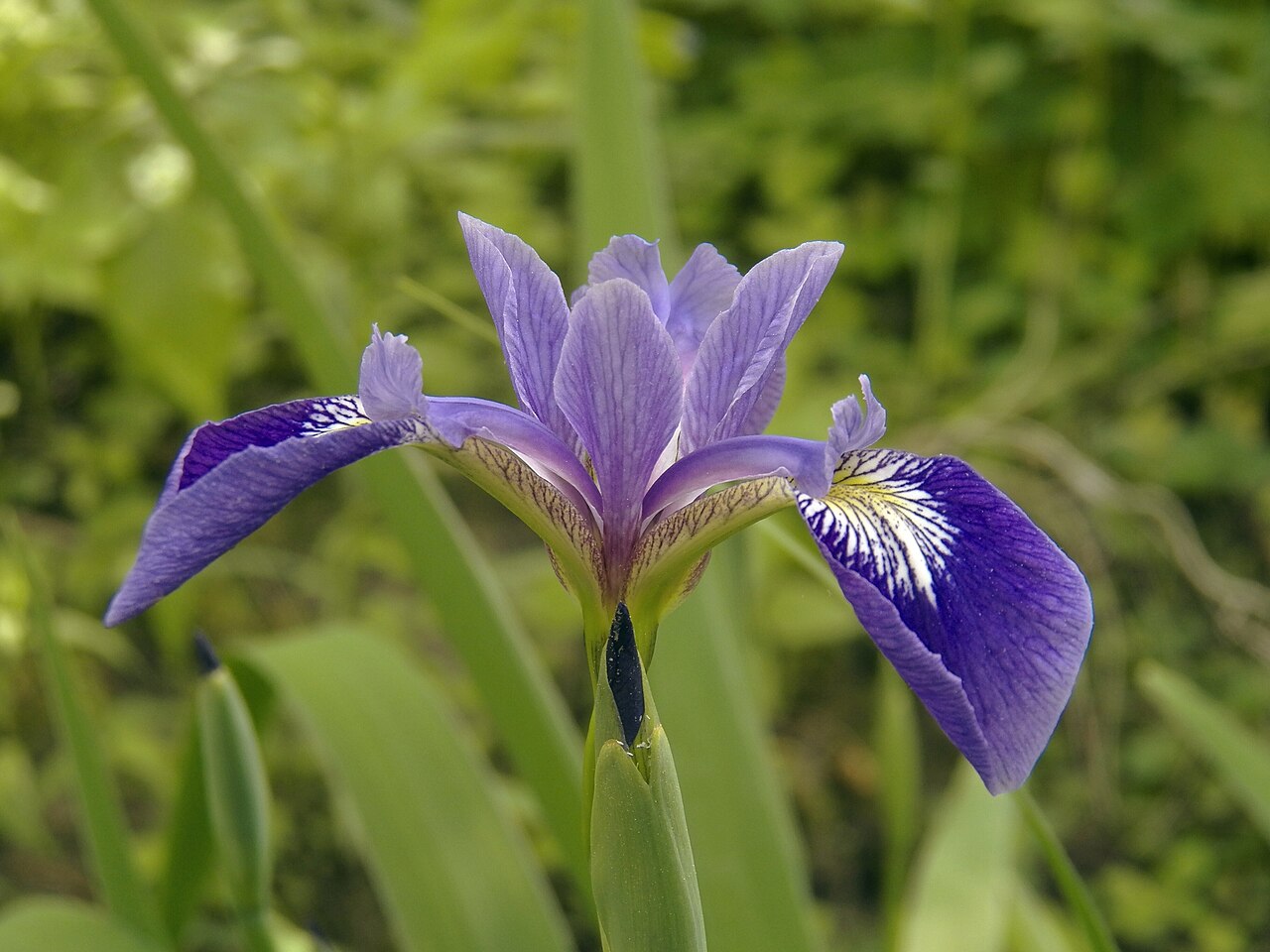
The basin needs plants that grow naturally in marshes, swamps and wet meadows. Use grass-like plants to cover the soil and flowering plants for color.
Soft rush and fox sedge form the base layer. The Wildflower Center lists soft rush in swamps and damp open ground and fox sedge in wet meadows and marshes, both in sun with moist to wet soil, up to about 4 feet and 40 inches tall.
Blue flag iris adds spring flowers, but pick the right species. The Wildflower Center gives the range of northern blue flag (Iris versicolor) as Labrador to Manitoba, south to western Virginia and northern Ohio, so it fits Pennsylvania, northern New Jersey and the mountains. Southern blue flag (Iris virginica) is described as a Coastal Plain plant from southeast Virginia to Texas.
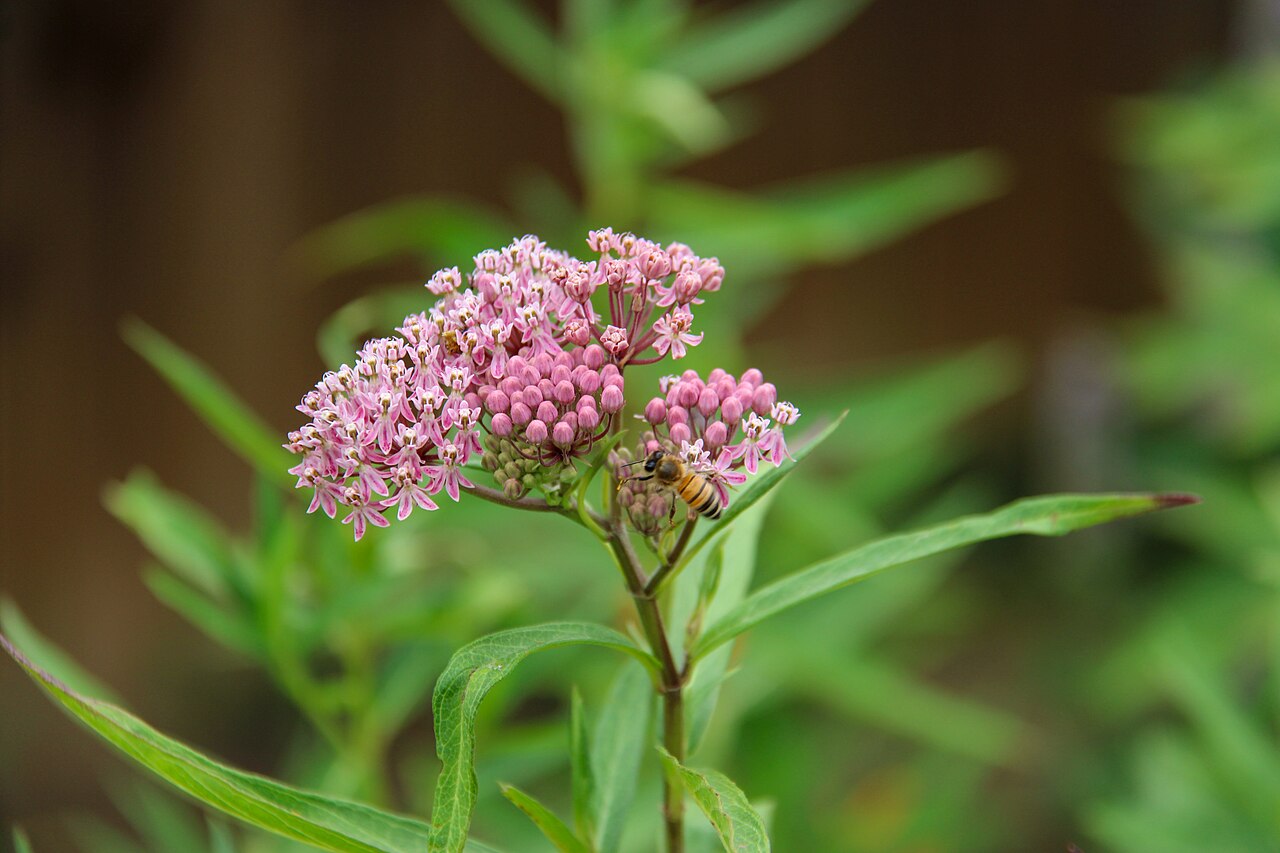
Swamp milkweed carries the basin through summer. The Wildflower Center lists it in wet meadows, swamps and marshes, most often on the margins of floodplains, up to 5 feet tall and blooming June into October.
Zone 2: The Side Slopes
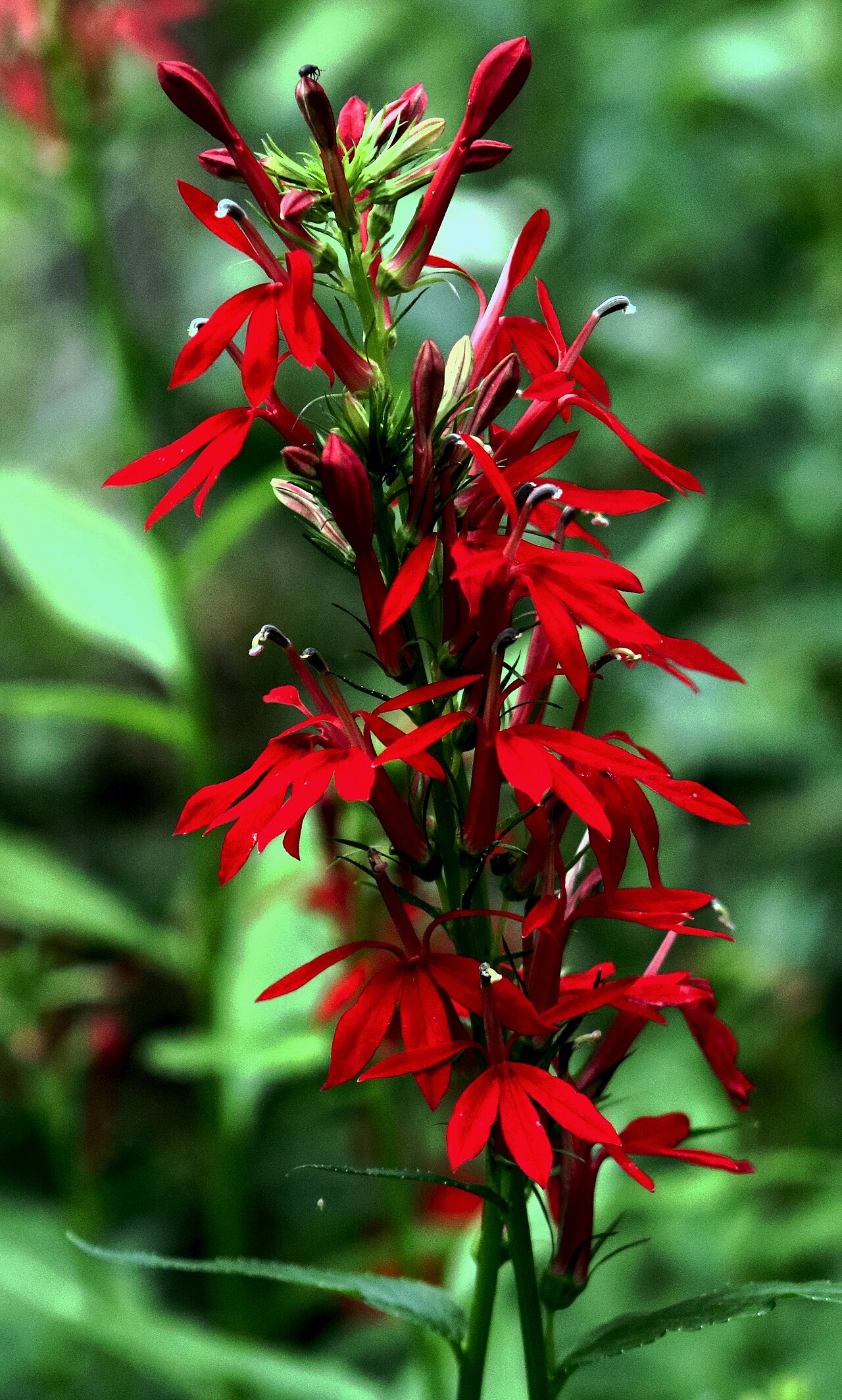
The slope stays wet for a shorter time than the basin, then dries between storms. Plants here need deep roots and tolerance for both conditions.
Cardinal flower belongs on the lower slope, where moisture lingers. The Wildflower Center lists ditches, depressions and stream banks among its habitats and records moist to wet soil in sun, part shade or shade.
Boneset holds the middle of the slope. The Wildflower Center lists damp prairies and alluvial woods as habitat and moist to wet soil, with flowers from June into October.
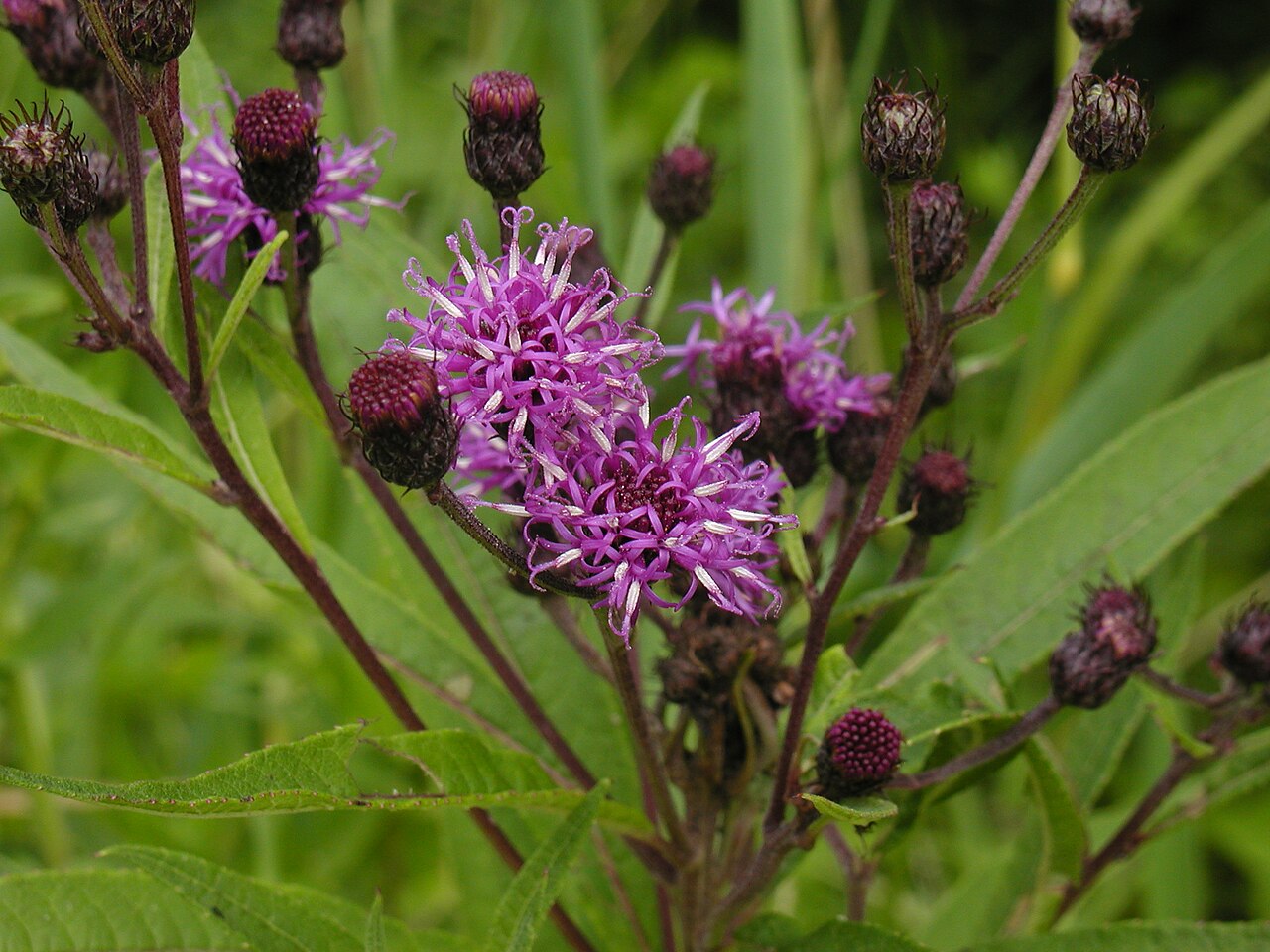
New York ironweed is the Mid-Atlantic signature plant for the upper slope. The Wildflower Center gives its range as Massachusetts to Ohio, south to Georgia and Mississippi, more common near the coast, with purple flowers in August and September on stems up to 7 feet tall.
For a shrub, use summersweet at one end of the slope. The Wildflower Center lists swamps and stream banks as habitat and describes it as an eastern coastal-states shrub normally 3 to 6 feet tall, flowering in July and August. Our buttonbush rain garden guide covers a larger shrub option for bigger basins.
Zone 3: The Rim and Berm
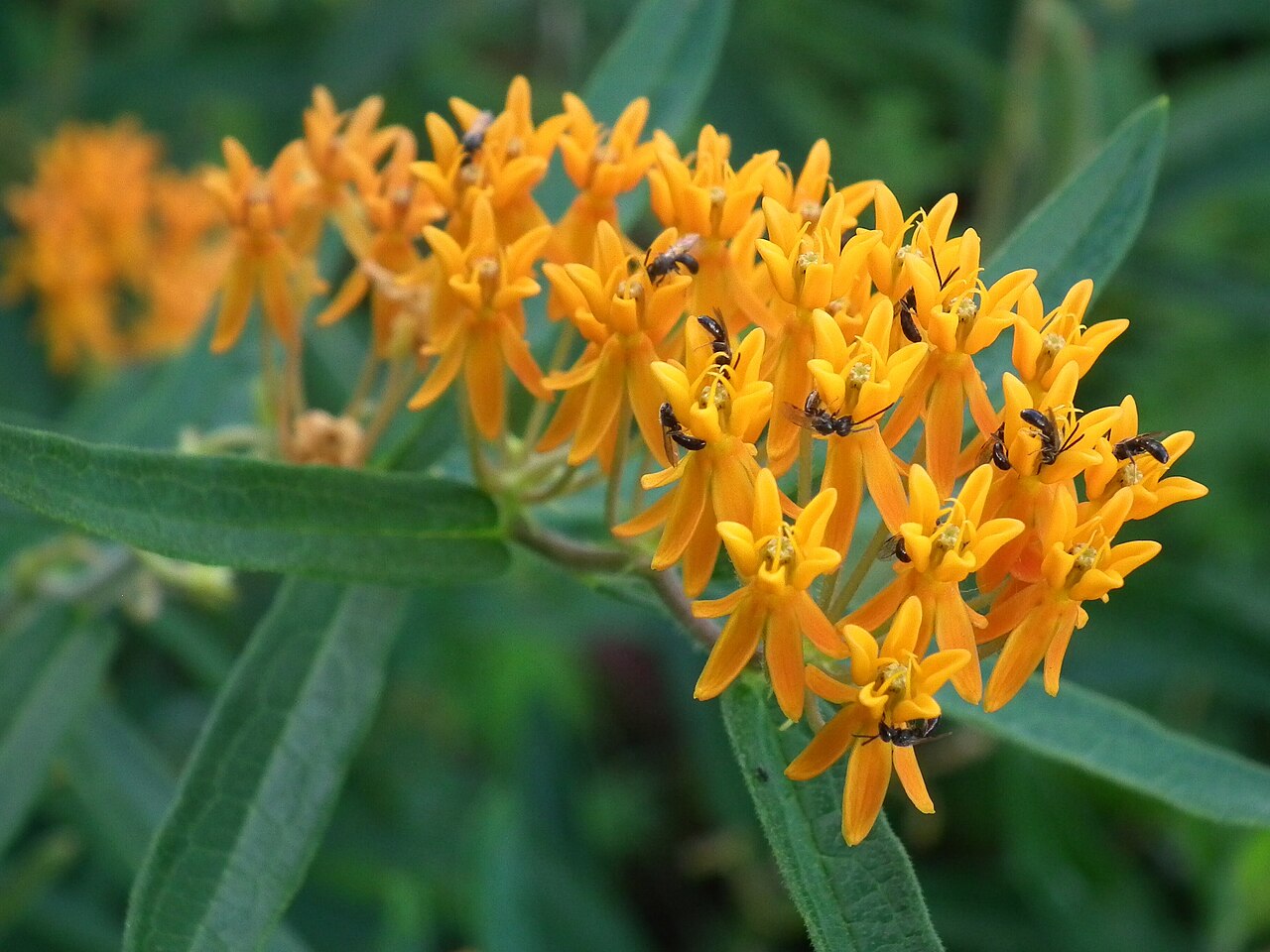
The rim catches only splash from big storms. Its plants should be drought-tolerant and short enough not to block the view into the garden.
Butterfly weed is the standout. The Wildflower Center lists sun, dry to moist soil and a height of 1 to 2 feet. Black-eyed Susan fills in next to it, listed for sun and dry to moist soil, up to about 3 feet.
Little bluestem holds the berm. The Wildflower Center says it turns from blue-green in late summer to golden with fluffy seedheads in winter, but will not tolerate wetlands or sub-irrigated sites, so keep it out of the basin. NC State gives a height of 2 to 4 feet.
Plant Palette
| Plant | Zone and role | Height | Sun / moisture | Native range |
|---|---|---|---|---|
| Soft rush | Zone 1: base cover | to 4 ft | Sun; moist to wet | Much of North America |
| Fox sedge | Zone 1: base cover | to 40 in | Sun; moist to wet | Most of the U.S. and s. Canada |
| Northern blue flag | Zone 1: spring flowers (PA, n. NJ, mountains) | to 3 ft | Sun to part shade; wet | Lab. to Man., south to w. VA and n. OH |
| Southern blue flag | Zone 1: spring flowers (Coastal Plain) | to 3 ft | Sun; wet | Coastal Plain SE VA to TX |
| Swamp milkweed | Zone 1: summer flowers | to 5 ft | Sun to part shade; moist to wet | New England to GA, west to TX and Man. |
| Cardinal flower | Zone 2: lower slope | to 6 ft, often less | Sun to shade; moist to wet | S. NB to SE MN, south to FL and TX |
| Boneset | Zone 2: mid slope | to 6 ft, often less | Sun to shade; moist to wet | E. Canada to FL, west to the e. Dakotas |
| New York ironweed | Zone 2: upper slope | to 7 ft | Sun; moist | MA to OH, south to GA and MS |
| Summersweet | Zone 2: shrub at one end | 3–6 ft | Sun to shade; moist to wet | Coastal states, s. ME to FL and MS |
| Butterfly weed | Zone 3: rim flowers | 1–2 ft | Sun; dry to moist | Ont. and New England to FL and TX |
| Black-eyed Susan | Zone 3: rim flowers | to 3 ft | Sun; dry to moist | W. MA to Man. and WY, south to FL and NM |
| Little bluestem | Zone 3: berm grass | 2–4 ft | Sun; dry | Que. and ME to AB, south through most of the U.S. |
Ranges, habitats and most heights from the Lady Bird Johnson Wildflower Center, whose records include every plant here in MD, VA, DE, PA and NJ (summersweet in all but DC). Little bluestem height from NC State.
Example Planting for a 10 × 15 ft Oval
| Zone 1 basin (about 60 sq ft) | 10 soft rush, 10 fox sedge, 6 blue flag iris, 5 swamp milkweed |
| Zone 2 slope (18 in band) | 5 cardinal flower on the low side, 5 boneset, 3 New York ironweed, 1 summersweet at one end |
| Zone 3 rim | 5 butterfly weed, 5 black-eyed Susan, 5 little bluestem along the berm |
| Spacing | Perennials 12 to 18 in on center, the minimum Blue Water Baltimore requires for its rebate |
| Shrubs | Subtract the perennials a shrub’s mature spread would replace; Blue Water Baltimore’s example is a 4-ft-wide shrub taking about 12 sq ft |
Installation Steps
- Mark and call. Outline the garden and have utilities marked first.
- Dig and level. Excavate to the planned depth and keep the basin floor as level as possible so water spreads evenly.
- Build the berm. Use excavated soil on the downhill side and add an overflow point so big storms exit safely.
- Plant by zone. Set the basin plants first, then the slope, then the rim.
- Mulch. Blue Water Baltimore calls for 2 to 3 inches of aged shredded hardwood mulch, kept off plant stems.
- Water deeply. Irrigate right after planting, then check that moisture reaches about 4 inches below the mulch.
The First Three Years
Year one: Water during dry spells until plants root in, even though the garden is built to collect water. The Rainscaping Manual says to expect up to 10% of plants to fail in the first year, so keep a few spares. Weed every few weeks.
Year two: Check the mulch after heavy storms and fill thin or washed-out spots, as Blue Water Baltimore advises. Replace losses with whichever plants are thriving in that zone.
Year three: Cut back dead stems in late winter or early spring, clear any sediment from the inlet and confirm the basin still drains within 24 to 48 hours. Use stepping stones for access so you don’t compact the soil.
Mistakes to Avoid
- One plant list for the whole garden. Basin plants and rim plants need opposite conditions.
- Skipping the percolation test. Heavy soil that fails it will hold water too long.
- Building against the foundation. Keep at least 10 ft downhill or 25 ft uphill.
- The wrong blue flag. Match northern or southern blue flag to your part of the region.
- Butterfly weed in the basin. It belongs on the dry rim.
- Letting mulch wash away. It’s the first filter, so top it up after storms.
📋 Find these plants in your region: see our native plant lists for Maryland, Virginia & West Virginia, Delaware, Southern New Jersey & Long Island and New York, Pennsylvania & Northern New Jersey. Each includes several of the rain garden plants above.
Frequently Asked Questions
How deep should a Mid-Atlantic rain garden be?
Blue Water Baltimore’s guide describes a typical residential ponding depth of 6 inches, with water draining within 24 to 48 hours. Dig about 3 inches deeper to allow for mulch.
What plants go in the bottom of a rain garden?
Plants that tolerate 24 hours of standing water, such as soft rush, fox sedge, blue flag iris and swamp milkweed.
How far should a rain garden be from my house?
The University of Maryland Rainscaping Manual recommends at least 10 feet if the garden is downhill from the house and at least 25 feet if it is uphill, with an overflow routed away.
Will a rain garden breed mosquitoes?
A properly built garden drains within 24 to 48 hours, which is the standard in Blue Water Baltimore’s guide. If yours holds water longer, check the soil and inlet.
Which blue flag iris is native where I live?
The Wildflower Center places northern blue flag south to western Virginia and southern blue flag on the Coastal Plain from southeast Virginia south. Check your state list before buying.
Sources
- Blue Water Baltimore, via Maryland Department of Natural Resources, Rain Gardens for Healthy Streams: three planting zones, ponding depth and drain time, slope limits, percolation test, soil mix, spacing, mulch and watering.
- University of Maryland Extension, Watershed Stewards Academy, Rainscaping Manual: Rain Gardens: foundation, well, tree and septic setbacks, utility marking, construction steps, first-year plant losses.
- Lady Bird Johnson Wildflower Center plant database: Juncus effusus, Carex vulpinoidea, Iris versicolor, Iris virginica, Asclepias incarnata, Lobelia cardinalis, Eupatorium perfoliatum, Vernonia noveboracensis, Clethra alnifolia, Asclepias tuberosa, Rudbeckia hirta, Schizachyrium scoparium: ranges, state records, habitats, light, moisture, heights and bloom times.
- NC State Extension Gardener Plant Toolbox, little bluestem: height.