A Native Grass Planting for Winter Interest: What to Leave Standing
Last updated: November 6, 2026
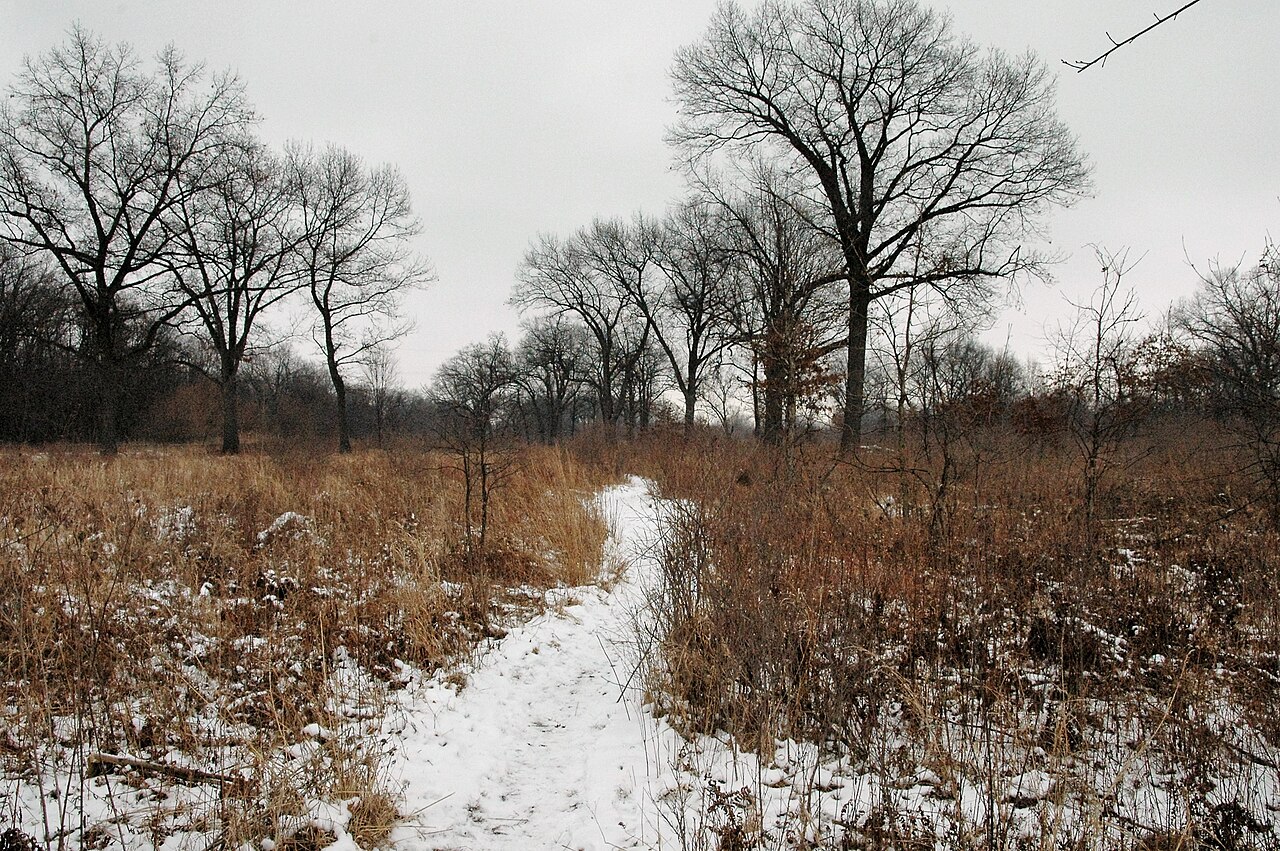
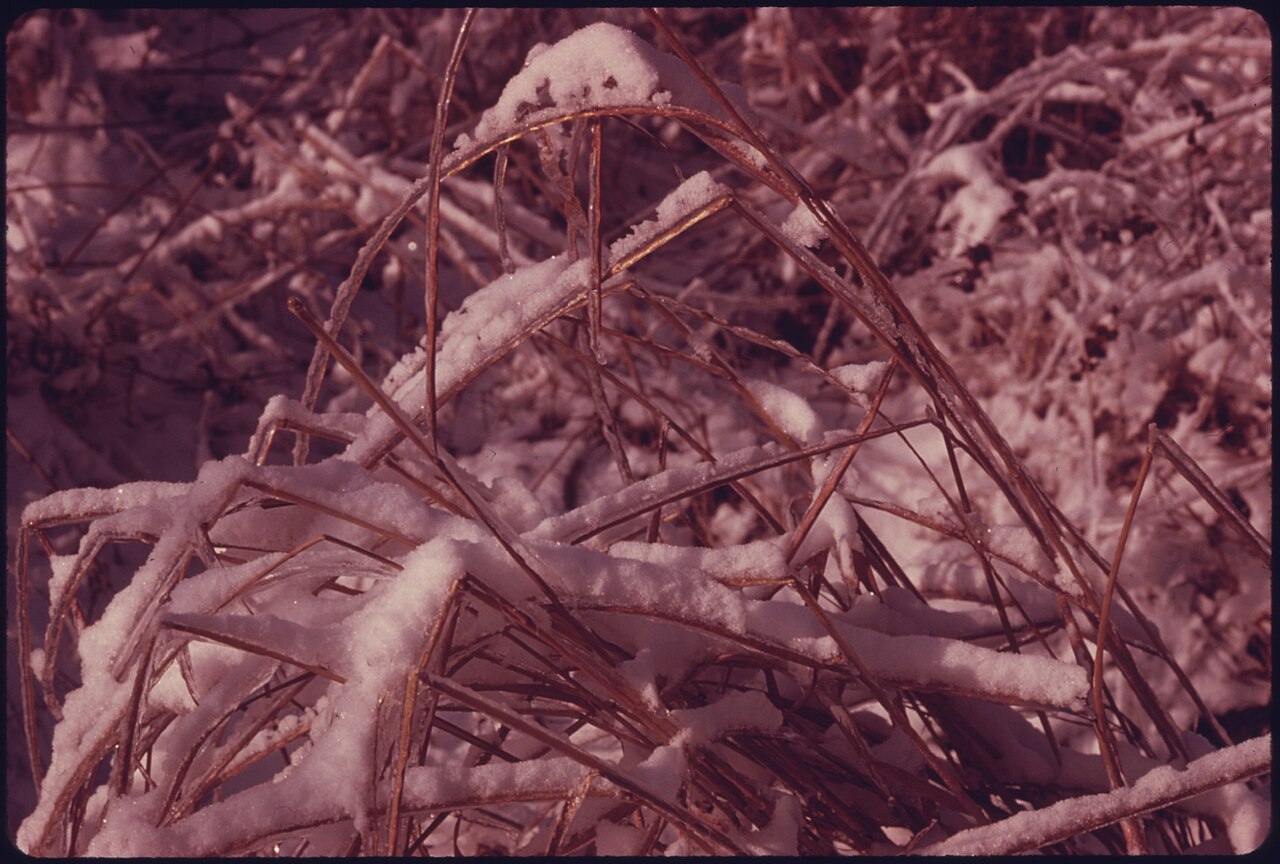
Native grasses earn much of their keep after the growing season ends. Little bluestem turns copper, prairie dropseed holds its fountain shape under snow, and the seed heads of coneflowers and rattlesnake master stand like sculpture against a gray sky.
The catch is that a winter planting only works if you leave it alone in fall. Cut everything back in October and you trade five months of structure, bird food and insect shelter for a bed of bare mulch.
This guide shows which native grasses and flowers stand up best in winter, how to arrange them so the view from the house holds up until spring, what you should remove anyway, and how to time the spring cutback so you don’t destroy the bees that moved in.
Plan at a Glance
| Site | A bed seen from a window, patio or front walk in winter |
| Size | Sample plan 10 × 20 feet; works larger or smaller |
| Sun | Full sun; grasses in shade grow loose and flop |
| Soil | Average to dry, well-drained, unamended |
| Maintenance | Leave standing in fall; trim flower stems to stubble in winter; cut grasses in late winter or early spring |
| Best regions | Eastern and central U.S. and the Plains; regional swaps below |
Read the Winter View First
A winter planting is designed for the view you actually have in December. Stand at the windows you use most and note where the eye lands.
- Sightline: Which part of the yard do you see from the kitchen, living room or front door?
- Light: Where does the low winter sun come from? Grasses lit from the side or behind glow in a way flat front light doesn’t give.
- Backdrop: A dark fence, hedge or evergreens behind the bed make tan and copper grasses stand out.
- Snow and paths: Note where you shovel or plow. Snow piled on a bed flattens plants, and stems leaning over a walk catch snow and block the way.
Also check exposure. A site open to strong winter wind will knock down weaker-stemmed plants sooner than a sheltered spot.
Grasses That Hold Up in Winter
Not every native grass stands well into spring. These are the ones extension and botanical sources single out for winter structure.
Little bluestem: winter color
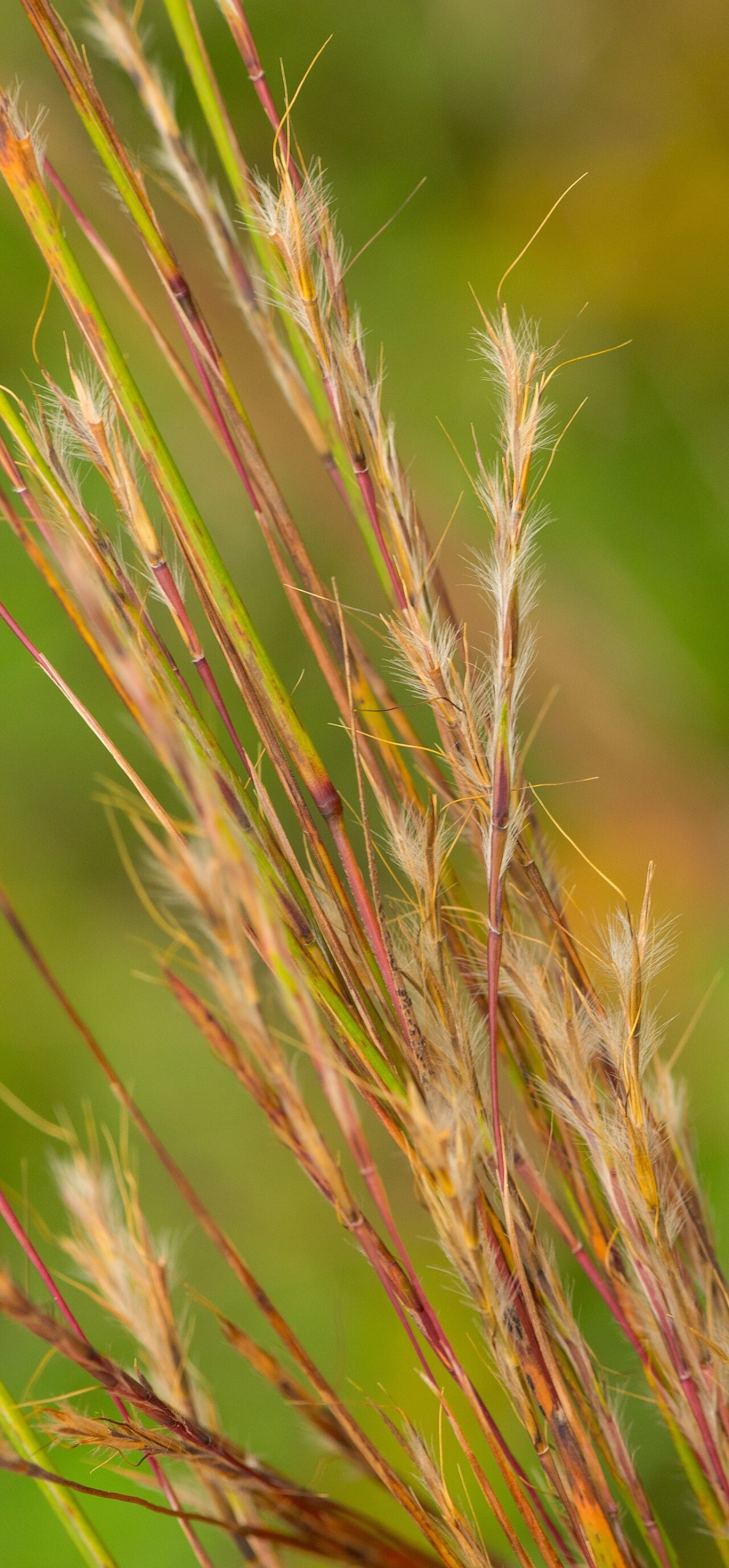
Little bluestem is the classic. NC State describes its fall color as a warm copper that does not fade through winter. The Wildflower Center notes the fuzzy white seeds are of particular value to small birds in winter.
One caution from the Wildflower Center: little bluestem reseeds readily. In a small bed, plan to pull a few seedlings each spring.
Prairie dropseed: the shape that survives snow
Prairie dropseed turns deep orange in late fall and fades to light copper, according to NC State. Both NC State and the Wildflower Center note that snow does not flatten it, so it stays visible even in winter. That makes it the most reliable grass for the front of a winter bed.
Switchgrass: height and persistence
Switchgrass gives a winter bed height. NC State notes its leaves turn yellow-orange in fall, then fade to light brown and persist through winter, and that leaving the plant up provides winter food for birds and small mammals. Give it full sun: NC State warns it grows looser and may flop in partial shade. If you are weighing it against a shorter grass, see little bluestem vs. switchgrass.
Big bluestem and Indiangrass: for larger spaces
Big bluestem turns russet in winter, per the Wildflower Center, but grows 4 to 8 feet tall. Indiangrass has a golden plume and, the Wildflower Center notes, needs tall companions to stay upright. Both suit the back of a large bed or a meadow, not a small border.
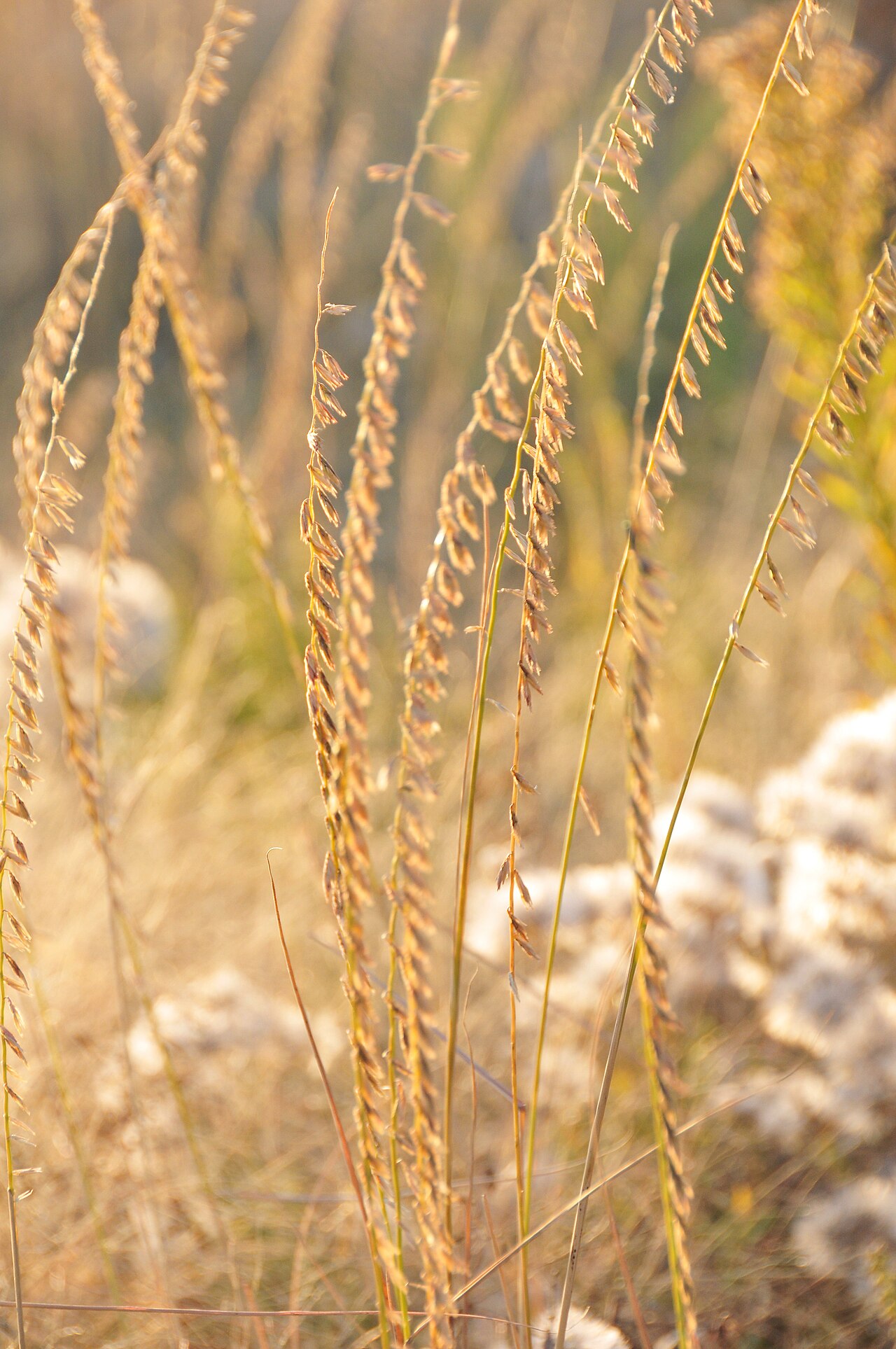
Sideoats grama: seed stalks for drier sites
Sideoats grama keeps its one-sided seed stalks into the cold months. The Wildflower Center says it may be cut back in winter, but this is not necessary.
Flowers Worth Leaving Standing
Grasses give the mass; flower seed heads give the detail. Choose plants with stiff stems and distinct seed heads.
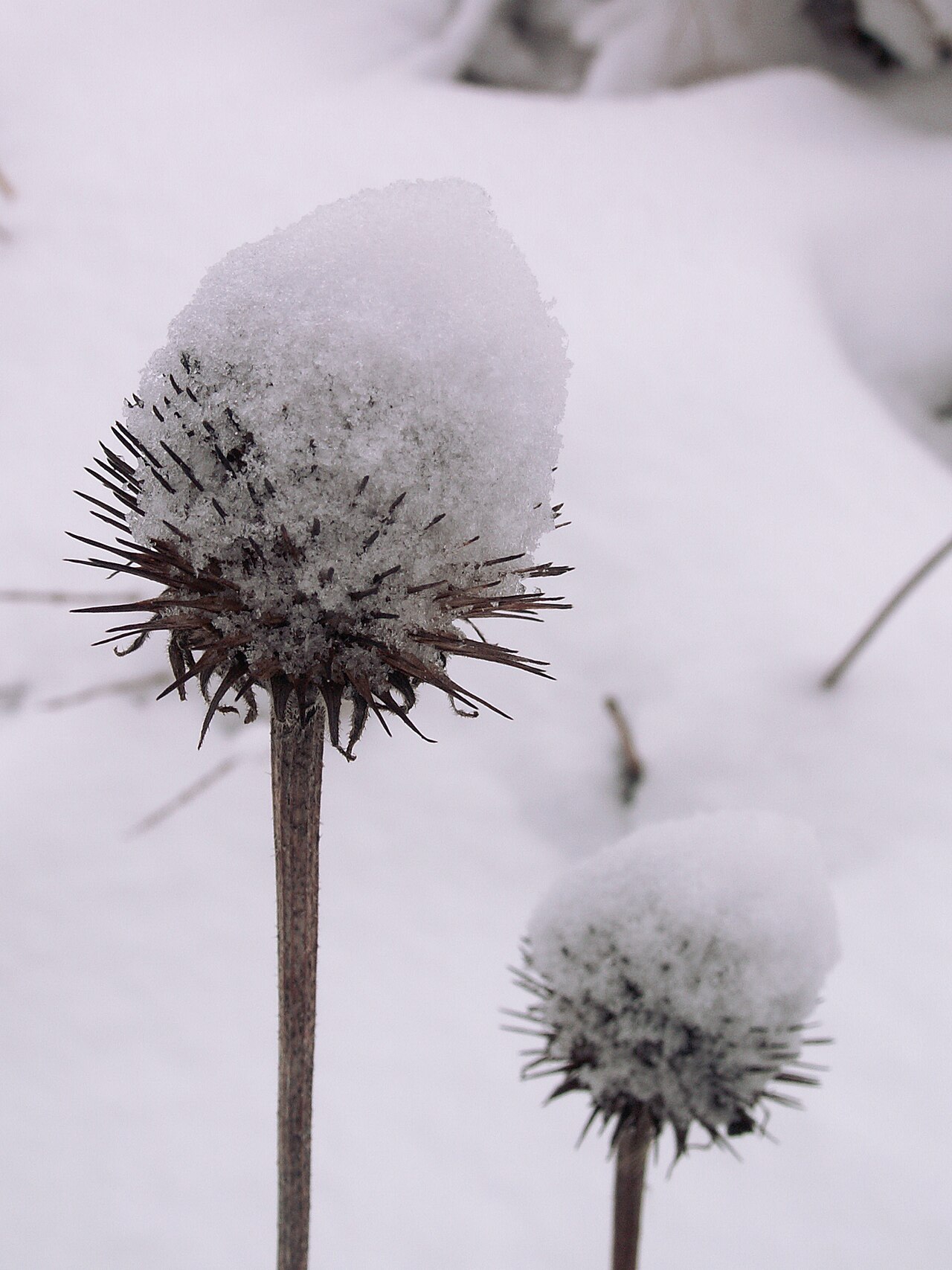
- Purple coneflower: dark, spiny cones that hold snow caps and feed goldfinches. NC State’s stem-nesting bee study found nests in its stems.
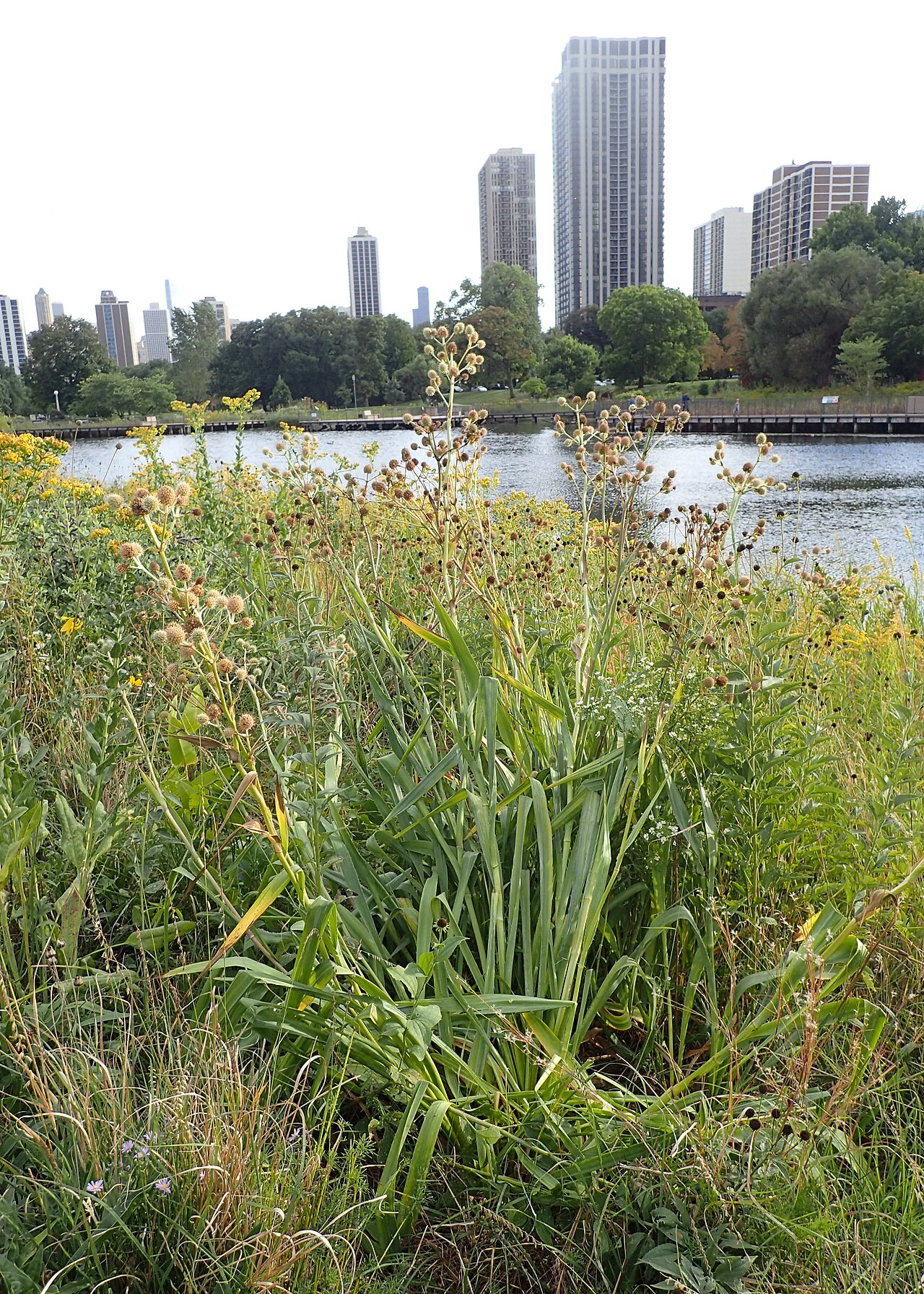
- Rattlesnake master: round, spiky heads on rigid stems. NC State Extension’s Debbie Roos shows it standing intact into early spring before being cut back.
- Blazing star, wild bergamot and aromatic aster: all are listed in the NC State study as plants whose stems held bee nests.
Plant Palette
Ranges from the Lady Bird Johnson Wildflower Center (LBJ); heights from NC State unless noted. Confirm each plant is native to your state.
| Plant | Winter role | Height | Sun / moisture | Native range |
|---|---|---|---|---|
| Prairie dropseed (Sporobolus heterolepis) | Front: holds shape under snow | 2–3 ft | Sun / dry | Que. to Sask., locally south to NC, KY, e. TX and CO |
| Little bluestem (Schizachyrium scoparium) | Middle: copper color | 2–4 ft | Sun / dry | Much of the U.S. east of the Rockies |
| Switchgrass (Panicum virgatum) | Back: height, persistent leaves | 3–7 ft | Sun / dry to moist | All but the westernmost U.S. |
| Sideoats grama (Bouteloua curtipendula) | Seed stalks, dry sites | 1–3 ft (LBJ) | Sun to part shade / dry to moist | South-central Canada and much of the U.S. |
| Purple coneflower (Echinacea purpurea) | Seed heads, bird food | 3–4 ft | Sun to part shade / dry to medium | GA to ne. TX, north to NC, OH, IL and IA |
| Rattlesnake master (Eryngium yuccifolium) | Rigid stems, round heads | 4–6 ft | Sun / average, well-drained | FL to TX, north to NJ, w. IN, s. MN and NE |
Layout: Arrange for the Window
Design the bed from the inside of the house looking out. Put the tallest grasses at the back, where they form a backdrop without blocking the view, and the shortest at the front edge nearest the window or walk.
- Back: switchgrass in a loose row or groups of three, spaced so each clump keeps its outline.
- Middle: drifts of little bluestem with rattlesnake master and coneflower set into them in groups.
- Front: a band of prairie dropseed, which keeps its shape in snow and gives a clean edge.
Repeat the same grasses across the bed rather than using one of each. In winter, when color is muted, repeated shapes are what make a planting look designed. For a bed that also balances summer flowers, see our five-species prairie-style bed.
Sample Plan: 10 × 20-Foot Winter Bed
- Back row: 6 switchgrass, about 3 feet apart.
- Middle: 14 little bluestem in two drifts, with 5 rattlesnake master and 9 purple coneflower in groups between them.
- Front: 10 prairie dropseed along the edge, about 2 feet apart.
- Total: about 44 plants, roughly 70 percent grasses for strong winter mass.
Spacing roughly matches NC State’s mature widths: switchgrass 2 to 3 feet, little bluestem 1½ to 3 feet, prairie dropseed 2 to 3 feet.
What to Remove Anyway
Leaving a planting standing doesn’t mean leaving everything. Take out:
- Stems blocking walks, steps and drives. Cut back anything that has fallen across a path where someone could trip, or where it blocks a driver’s view.
- Weed seed heads. Remove seed heads of weeds or invasive plants before they scatter.
- Plants crushed by plowed or shoveled snow. Clear these in spring, and move the snow pile somewhere else next year.
- Dry grass against buildings in fire-prone areas. NC State rates both switchgrass and Indiangrass as highly flammable. Where wildfire is a concern, follow local guidance and keep dry grass away from the house.
Timing the Cutback: Grasses vs. Flower Stems
Grasses and flower stems follow slightly different rules.
Grasses: NC State recommends cutting little bluestem back in late winter or early spring, and pruning switchgrass severely in late winter to early spring. Do it before new green shoots appear. For more detail on little bluestem, see when to cut back little bluestem.
Flower stems: An NC State Extension study of stem-nesting bees found that a perennial’s stems are not used by bees in their first winter. The researchers suggest leaving seed heads long enough to feed birds, then trimming the dead stems between the first fall frost and the last spring frost, leaving 12 to 24 inches of stubble.
Bees then nest in the cut stubble over the following year. Leave that stubble standing until it falls apart on its own; next year’s new growth will hide it. NC State also notes that any stems cut or deadheaded during the growing season may already hold nests, so don’t cut those again in winter.
Installation Steps
- Mark the view. From your main window, note the bed’s back line so tall grasses won’t block anything you want to see.
- Clear the bed. Remove turf and perennial weeds; skip compost and fertilizer.
- Plant in spring or early fall. Set the back row first, then the drifts, then the front band.
- Water through the first season. Water deeply during dry spells until the plants are established.
- Leave it standing that first winter. Even small first-year grasses add some structure.
The First Three Years
- Year 1: Weed regularly and water in dry spells. Expect modest growth and a thin first winter display.
- Year 2: In late winter, trim flower stems to 12 to 24 inches and cut grasses back before new growth. Pull extra little bluestem and coneflower seedlings in spring.
- Year 3: The bed should hold its full winter shape. Note which plants stood best and which collapsed early, and swap or move the weak performers.
- Every year after: Leave everything standing in fall, clear paths after storms, and repeat the late-winter routine.
If your winter bed sits where lawn meets meadow, our guide to planning a meadow transition shows how to grade heights from the lawn edge back.
Mistakes to Avoid
- Fall cleanup out of habit. It removes the winter display, bird food and insect shelter in one afternoon.
- Grasses in shade. They grow loose and fall over well before spring.
- Snow storage on the bed. Piled snow flattens even sturdy grasses.
- Cutting flower stems to the ground. Leave 12 to 24 inches for stem-nesting bees.
- Waiting too long in spring. Cutting grasses after new shoots appear damages the fresh growth.
📋 Find plants for your region: see our native plant lists for Maryland, Virginia & West Virginia, Delaware, Southern New Jersey & Long Island, Arkansas, Louisiana, Eastern Oklahoma & Eastern Texas, and North Dakota, South Dakota & Western Minnesota.
Frequently Asked Questions
Which native grass looks best in winter?
Little bluestem for color, since NC State says its copper fall color does not fade through winter, and prairie dropseed for shape, because snow does not flatten it.
Should I cut back ornamental grasses in fall?
No. Leave native grasses standing until late winter or early spring, and cut them before new growth starts.
How tall should I leave flower stems for bees?
NC State’s study suggests trimming dead stems to 12 to 24 inches between the first fall frost and the last spring frost, then leaving that stubble in place.
Do birds really eat grass seed in winter?
Yes. The Wildflower Center notes little bluestem seeds are of particular value to small birds in winter, and NC State says switchgrass left standing feeds birds and small mammals.
What if my grasses flop over before winter?
Usually the cause is shade or rich soil. Move them to full sun or stop fertilizing, and remove any stems lying across paths.
Sources
- Elsa Youngsteadt, Hannah Levenson and colleagues, Garden Cleanup for Pollinators: Trim Perennial Stems in Their First Winter, NC State Extension: stem-nesting timing, 12–24 inch stubble, plants used by bees.
- Debbie Roos, Provide Nesting Habitat for Native Bees Through Plant Stems in Your Garden, NC State Extension: rattlesnake master and spring cutback heights.
- NC State Extension Gardener Plant Toolbox: little bluestem, prairie dropseed, switchgrass, Indiangrass, purple coneflower, rattlesnake master: winter color, persistence, pruning time, sizes, flammability.
- Lady Bird Johnson Wildflower Center plant database: little bluestem, prairie dropseed, big bluestem, Indiangrass, sideoats grama, switchgrass, rattlesnake master: winter color, bird value, ranges and habit notes.