
‘Akoko (Euphorbia celastroides)
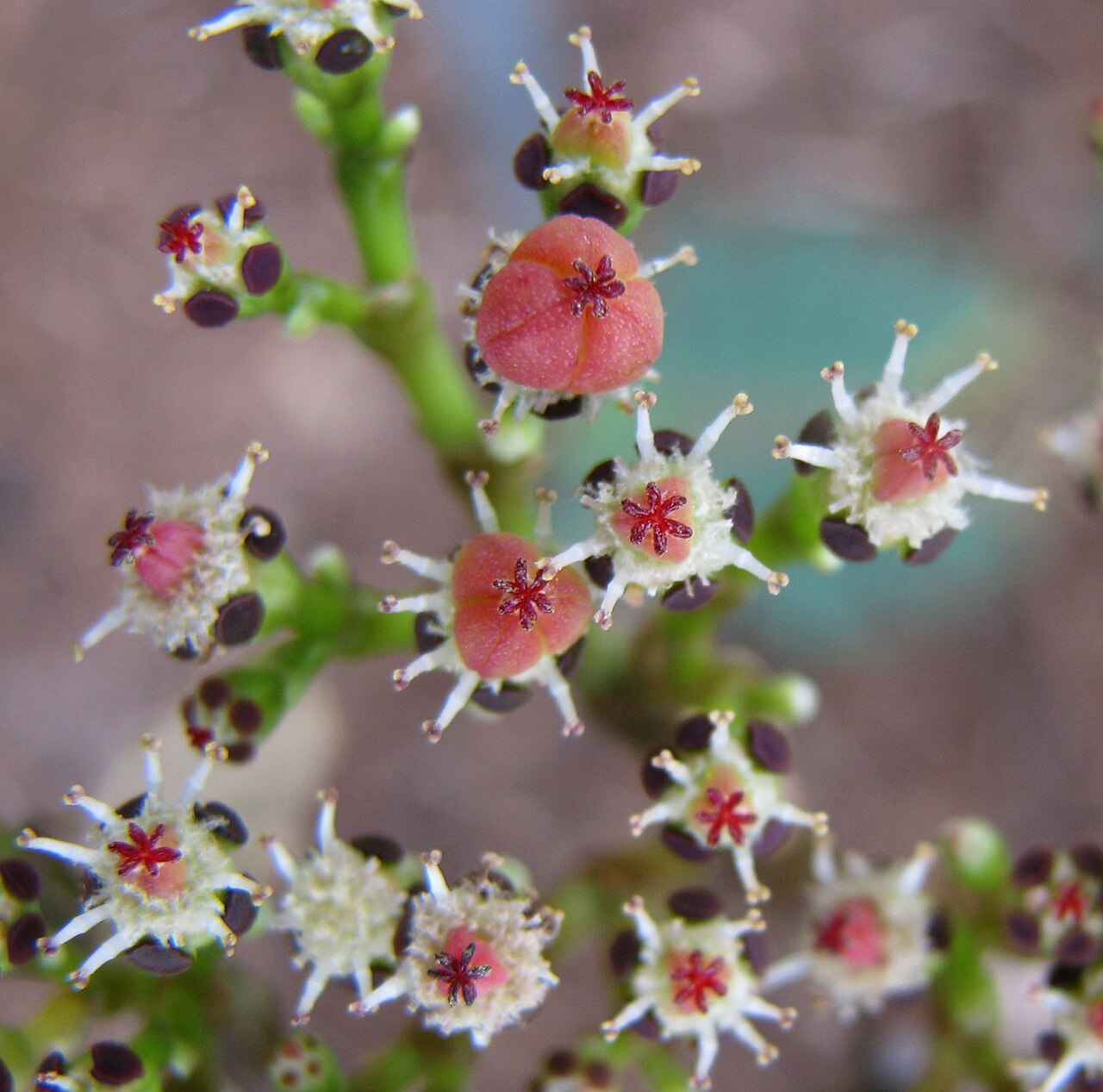
Euphorbia celastroides, known in Hawaiian as ‘akoko or ‘ekoko, is a native shrub of the spurge family (Euphorbiaceae) found only in the Hawaiian Islands. It is a close relative of the poinsettia and of the weedy sandmats, and is still often listed under its older name, Chamaesyce celastroides. Depending on where it grows, it may be a low, sprawling shrub hugging coastal lava or an upright shrub or small tree in dry forest.
‘Akoko has small, rounded leaves arranged in two neat rows along its stems, milky sap, and clusters of tiny flowers that are easy to overlook. Botanists recognize many varieties, each adapted to a particular island or habitat, from windswept coastal rocks to dry and mesic forests in the mountains.
It is one of the most widespread native ‘akoko, yet several of its varieties are rare, and the O’ahu variety kaenana is federally listed as endangered. Gardeners in Hawai’i grow it as a tough, drought-tolerant native for dry, sunny sites. This guide covers how to identify it, where it grows, and how to grow it outdoors in zones 10–12.
Identification
‘Akoko is best recognized by its combination of milky sap, small leaves set in two flat rows along the twigs, and tiny cup-like flower clusters typical of the spurge family.
Growth Habit
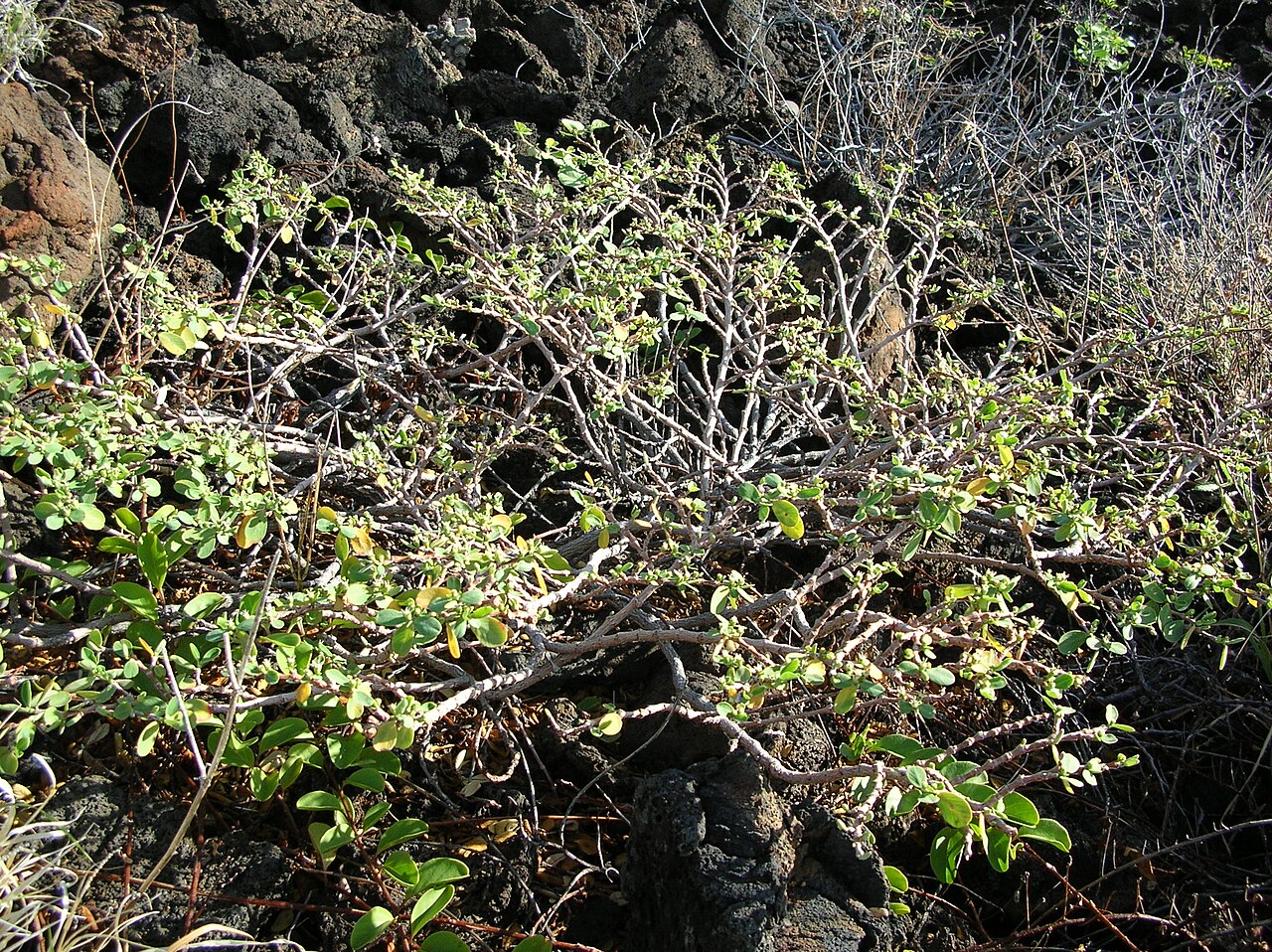
Highly variable. Coastal plants are often low and sprawling, forming mats or mounds less than 2 feet tall, while inland forms are upright shrubs or small trees up to about 10 feet. The branches are often knobby, and the bark is gray to reddish.
Leaves
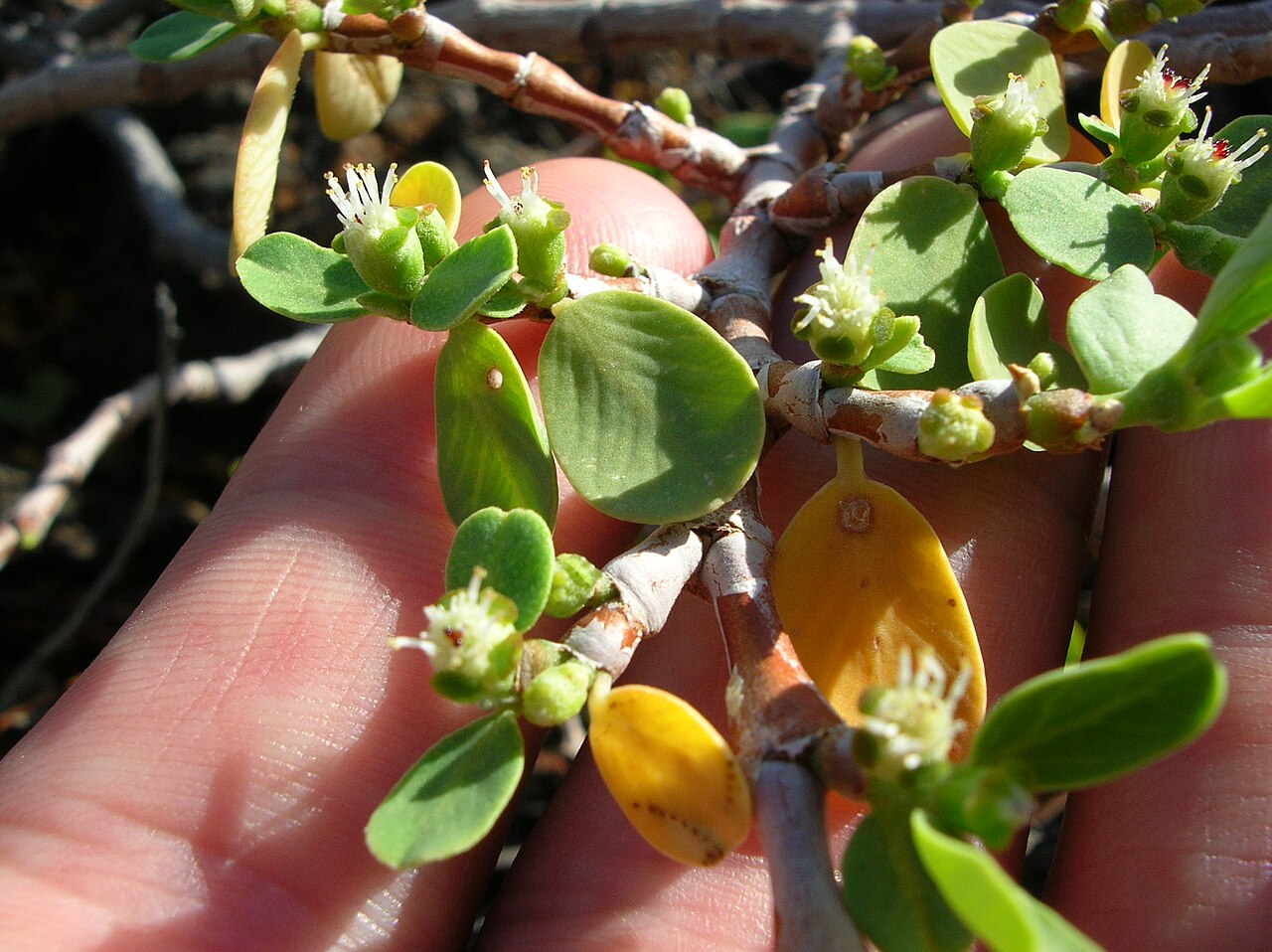
The leaves are opposite, arranged in two rows (distichous) so that twigs look flat, and are oblong to oval, usually about ½ to 2 inches long. They are smooth and sometimes coated with a whitish bloom. Older or drought-stressed leaves often turn yellow, orange or red before falling. All parts have milky white sap.
Flowers & Fruit
What look like single flowers are actually cyathia, small cups holding one female and several male flowers, with tiny white to pink petal-like appendages around the rim. They are borne singly in the leaf axils or in small clusters at the branch tips through much of the year. The fruit is a rounded, three-lobed capsule about ⅛ inch long that splits to release small gray-brown seeds.
Look-alikes
Other Hawaiian Euphorbia species are also called ‘akoko. The tree ‘akoko of Maui, Euphorbia olowaluana, is a larger tree of dry upland forests on Maui and Hawai’i Island. Weedy introduced sandmats are low annuals with tiny, often toothed leaves. Naio and ‘A’ali’i share its dry habitats but have no milky sap.
Quick Facts
| Scientific Name | Euphorbia celastroides (syn. Chamaesyce celastroides) |
| Family | Euphorbiaceae (spurge family) |
| Plant Type | Evergreen shrub or small tree (prostrate on coasts) |
| Mature Height | 1–10 ft (varies by variety) |
| Mature Spread | 2–8 ft |
| Growth Rate | Moderate |
| Sun Exposure | Full sun to light shade |
| Water Needs | Low; drought tolerant once established |
| Soil Type | Well-drained rocky, sandy, lava or coralline soils |
| Soil pH | Neutral to alkaline |
| Bloom Time | Much of the year |
| Flower Color | Tiny white to pinkish cyathia |
| Fall Color | Older leaves turn yellow, orange or red |
| Fruit | Small three-lobed capsule |
| Deer Resistant | Milky sap discourages most browsers |
| USDA Hardiness Zones | 10–12 |
Native Range
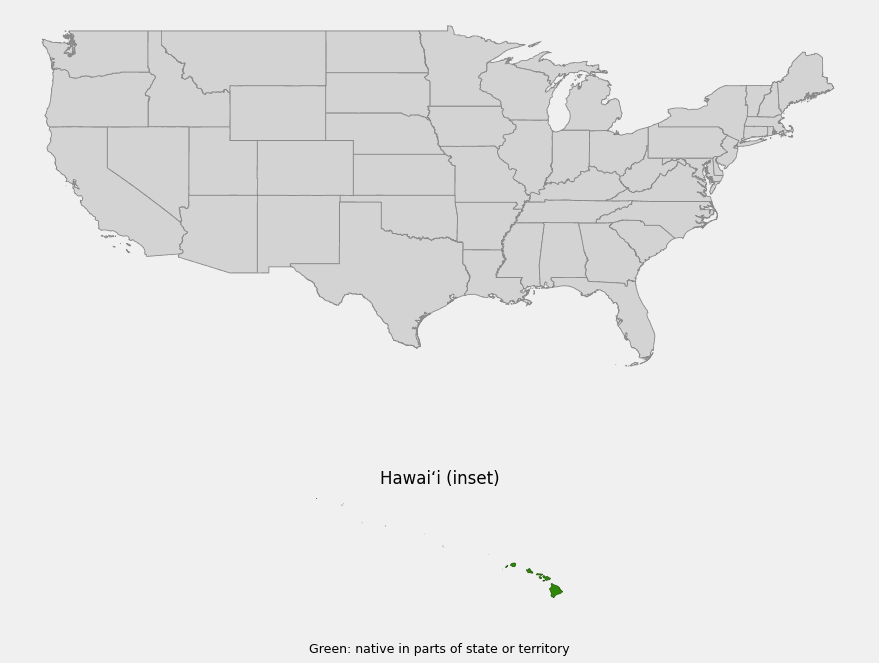
‘Akoko is endemic to the Hawaiian Islands, where its many varieties are spread across the main islands and the low northwestern island of Nihoa. Coastal forms grow on Kaua’i, Ni’ihau, O’ahu, Moloka’i, Lāna’i, Maui and Kaho’olawe, often on lava, sand or coral rubble just above the shoreline; other varieties grow inland in dry shrubland and in dry to mesic forest on ridges and slopes.
Its habitats are among the most altered in Hawai’i. Coastal and lowland dry areas have been reduced by development, fire, grazing animals and invasive grasses and shrubs, and off-road vehicles damage coastal plants. NatureServe ranks the species as vulnerable, and the O’ahu variety kaenana, known from Ka’ena Point and the Wai’anae Mountains, is federally listed as endangered.
On the mainland it is not native anywhere. As with other Hawaiian natives, buy only nursery-propagated plants, and never collect plants, cuttings or seeds from the wild, especially of rare varieties.
📋 Regional plant lists featuring ‘Akoko: Hawaii
Growing & Care Guide
‘Akoko is grown by native plant nurseries in Hawai’i and is a good choice for dry, sunny, low-water landscapes. Outdoors it needs a frost-free climate (zones 10–12); elsewhere it can be grown in a container in a bright, warm spot.
Light
Full sun is best, especially for coastal forms, which stay compact and colorful in strong light. Inland forms tolerate light shade.
Soil & Water
Plant in fast-draining soil: rocky, sandy or cinder mixes are ideal. Water regularly until established, then only during long dry spells. Overwatering and heavy, wet soils lead to root rot and fungal problems.
Planting Tips
Choose a form suited to your site: low coastal forms make good groundcovers in seaside and rock gardens, and upright forms work as small shrubs in dry gardens with ‘ilima, ‘a’ali’i and naio. It tolerates salt spray and wind. In containers, use a gritty cactus-type mix and a pot with drainage holes.
Pruning & Maintenance
Little pruning is needed. Trim lightly to shape or to remove dead twigs, wearing gloves because of the sap. Watch for scale insects and mealybugs, which sometimes attack it.
Propagation
‘Akoko grows from fresh seed, which germinates readily, and from cuttings, which root in a well-drained mix once the cut ends have dried. Let the sap stop flowing before inserting cuttings.
Landscape Uses
- Xeriscapes and dry gardens: low water use, drought tolerant
- Coastal landscapes: salt- and wind-tolerant groundcover forms
- Rock gardens and slopes: sprawling coastal forms over rocks
- Native Hawaiian plantings: restoration of coastal and dry forest habitats
Wildlife & Ecological Value
‘Akoko is part of Hawai’i’s native coastal and dry forest plant communities, which support many endemic insects.
For Pollinators
The small cyathia produce nectar that attracts flies, wasps and native Hawaiian bees, including yellow-faced bees (Hylaeus), which visit many coastal and dry-land native plants.
For Birds
Seed-eating birds may pick seeds from the split capsules, and the shrubs give shelter to small birds in open coastal and dry areas.
For Mammals
Hawai’i has no native land mammals other than a bat. Introduced goats and deer have damaged many ‘akoko populations, although the milky sap deters some browsing.
Ecosystem Role
Coastal forms help stabilize sand and lava rubble along the shore, and inland forms are part of the dry forest shrub layer. Its many island varieties are an example of how Hawaiian plants have diversified after arriving on the islands.
Cultural & Historical Uses
Hawaiian Euphorbia species are thought to descend from a single ancestor that reached the islands from North America. In Hawai’i they evolved into shrubs and trees, unusual for a group whose mainland relatives are mostly small herbs, and they use the C4 photosynthesis typical of their sandmat relatives.
The Hawaiian name ‘akoko (also ‘ekoko, koko or kōkōmālei) is shared by several native spurges. Botanists have described more than a dozen varieties of Euphorbia celastroides, many restricted to a single island or even a single coastline or ridge.
Safety note: Like other spurges, ‘akoko has milky sap that can irritate the skin and is especially painful in the eyes. Wear gloves when pruning or taking cuttings, keep sap away from your face, and do not let children or pets chew on the plant.
Frequently Asked Questions
Is ‘akoko the same as Chamaesyce celastroides?
Yes. Chamaesyce celastroides is an older name for Euphorbia celastroides; most botanists now include Chamaesyce within Euphorbia. The USDA PLANTS database still uses the Chamaesyce name.
Is ‘akoko endangered?
The species as a whole is ranked vulnerable by NatureServe, and one variety, kaenana from O’ahu, is federally listed as endangered. Other varieties are uncommon to rare. Buy only nursery-grown plants and never collect from the wild.
Can I grow ‘akoko outside Hawai’i?
Outdoors only in frost-free climates (zones 10–12) with well-drained soil. Elsewhere, it can be grown in a pot of gritty mix in a sunny, warm location and brought indoors before cold weather.
Is ‘akoko poisonous?
Its milky sap can irritate skin and is painful in the eyes, as with other spurges. Wear gloves when handling it and keep it away from children and pets that might chew on it.
How do I water ‘akoko?
Water regularly until it is established, then sparingly. It is drought tolerant and suffers more from too much water and poor drainage than from dry soil.

Looking for a nursery that carries ‘Akoko?
Browse our native plant nursery directory: Hawaii

