
Florida Tree Fern (Ctenitis sloanei)
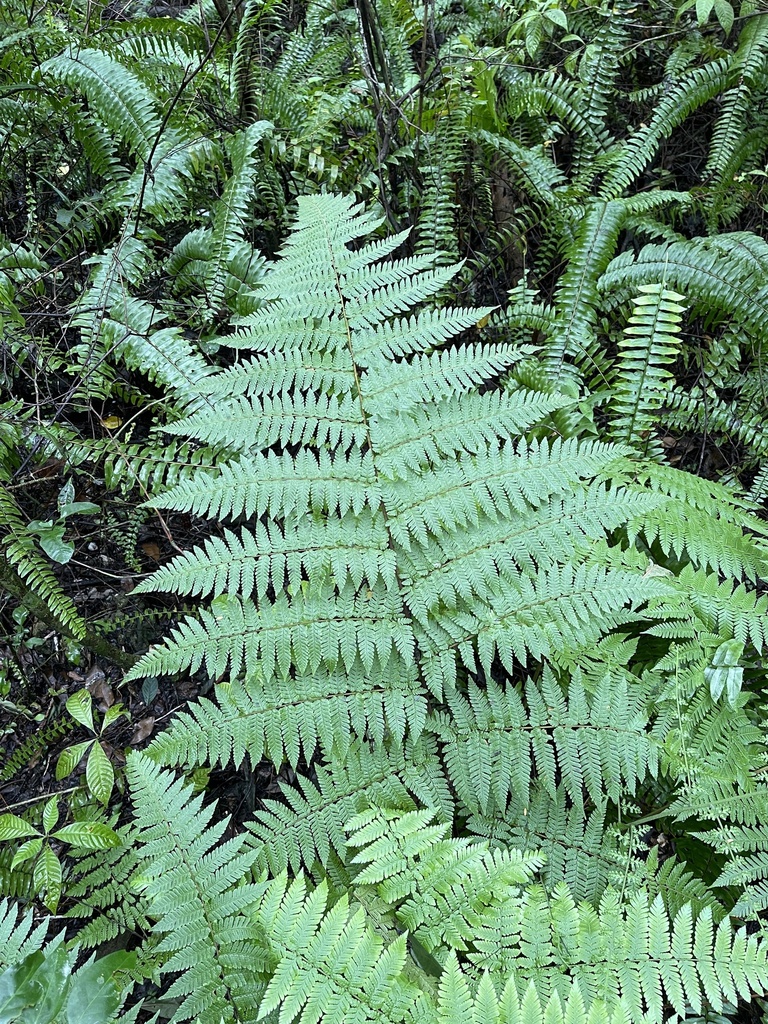
Ctenitis sloanei, the Florida Tree Fern (also called red-hair comb fern, Florida lacefern and Bermuda cave fern), is a large, tropical wood fern that reaches its northern limit in southern Florida. In the United States it grows only in a handful of humid tropical hardwood hammocks and limestone sinks in South Florida, while its wider range takes in Bermuda, the West Indies, Mexico, Central America and northern South America.
It is a striking plant, with a stout, erect rhizome densely clothed in reddish-brown, hair-like scales and a vase-shaped crown of finely divided, bright green fronds up to about 4 feet long. Older plants can raise their crowns on a short, trunk-like rhizome, which is why it is often called the only “tree fern” native to the continental United States, though botanically it is a wood fern, not a true tree fern.
The Florida tree fern is rare in Florida and is listed as Endangered by the State of Florida. Wild plants are protected and must never be dug up or collected. This guide covers how to identify it, where it grows, how to grow nursery-propagated plants and its place in South Florida hammocks.
Identification
Florida tree fern is a large, evergreen ground fern with a scaly, upright rhizome and broad, lacy, two- to three-times divided fronds.
Rhizome & Stipes
The rhizome is short, thick and erect, and on old plants it can form a stubby trunk up to about a foot tall. The rhizome and the lower leaf stalks (stipes) are densely covered with long, narrow, reddish-brown to rusty, hair-like scales, the feature behind the name red-hair comb fern.
Fronds
The evergreen fronds arise in a vase-shaped cluster and are usually 2 to 4 feet long. The blade is broadly triangular to oval, bipinnate-pinnatifid (divided twice, with the final segments deeply lobed), bright to medium green and somewhat soft. The axes are covered with short, fine hairs.
Sori
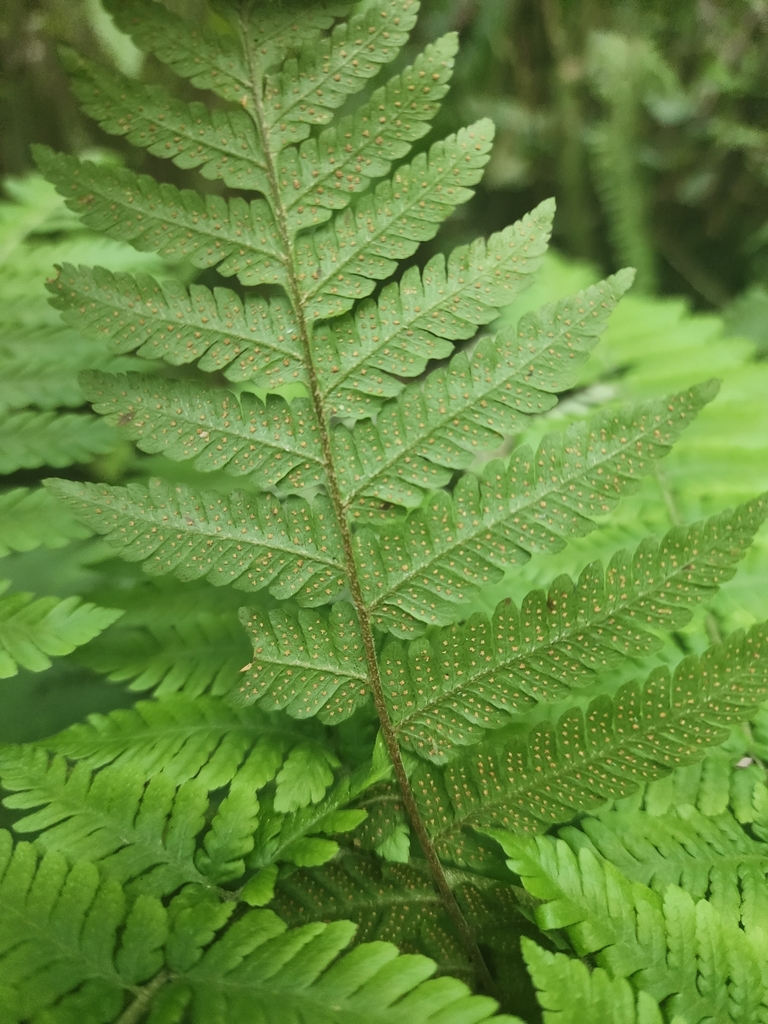
Round sori (clusters of spore cases) sit in rows on the underside of the segments, between the midvein and margin. They have a small, kidney-shaped indusium (cover) that is easily lost, or none at all.
Look-alikes
Southern Shield Fern and other maiden ferns are smaller and only once-pinnate with lobed pinnae, and lack the red-scaly rhizome. Broad Halberd Fern has coarse, broad, few-lobed fronds. The native Giant Sword Fern and Boston Fern have narrow, once-divided fronds with simple leaflets. True tree ferns such as the West Indian tree fern have tall trunks and grow in Puerto Rico, not Florida.
Quick Facts
| Scientific Name | Ctenitis sloanei (Poepp. ex Spreng.) C.V. Morton |
| Family | Dryopteridaceae (wood fern family) |
| Plant Type | Large evergreen terrestrial fern |
| Mature Height | 2–4 ft |
| Mature Spread | 3–5 ft |
| Growth Rate | Slow to moderate |
| Sun Exposure | Partial to full shade |
| Water Needs | Moderate; needs steady moisture and humidity |
| Soil Type | Humus-rich soil over limestone; well-drained |
| Soil pH | Neutral to alkaline (about 6.5–8.0) |
| Bloom Time | None (fern; spores on frond undersides) |
| Flower Color | None |
| Fall Color | None; evergreen |
| Fruit | None; reproduces by spores |
| Deer Resistant | Yes |
| USDA Hardiness Zones | 10b–11 |
Native Range
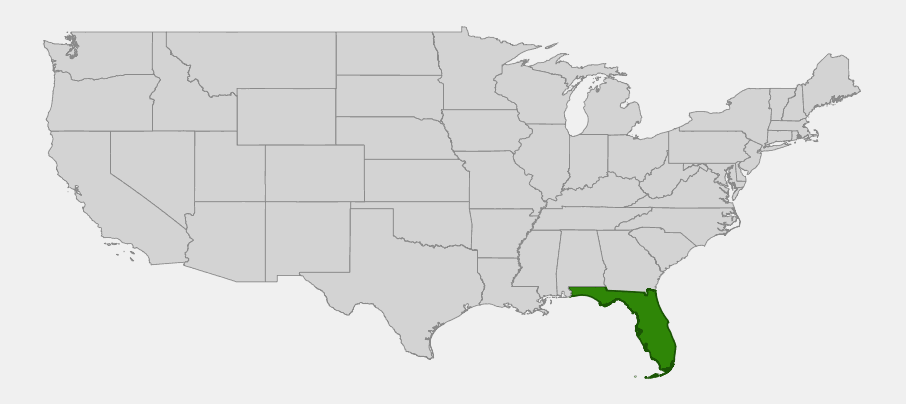
In the United States, the Florida tree fern is native only to southern peninsular Florida. The Atlas of Florida Plants maps it in five counties: Miami-Dade, Broward, Collier, Manatee and Polk, with most of the remaining plants in the tropical hardwood hammocks of Miami-Dade and Broward counties. Well-known sites include Fern Forest Nature Center in Coconut Creek and rockland hammocks south of Miami.
Outside the United States it is widespread in the tropics: it grows in Bermuda (where it is known from limestone caves and sinks), Cuba and the rest of the West Indies, southern Mexico, Central America and northwestern South America.
It is a plant of deep shade and high humidity: the floors of tropical hardwood hammocks, moist limestone outcrops, solution holes and sinkholes, where the rock keeps the air cool and damp. Florida populations have been reduced by habitat loss, drainage that lowers the water table, hurricane damage to the hammock canopy, rare hard freezes and past collecting.
📋 Regional plant lists featuring Florida Tree Fern: North & South Florida
Growing & Care Guide
Florida tree fern makes a dramatic specimen for a shady, frost-free South Florida garden or a conservatory, and nursery-propagated plants grown from spores are sometimes available from South Florida native plant nurseries and botanic garden plant sales. Because it is a state-listed Endangered plant in Florida, never dig plants, remove fronds or collect spores from wild populations; buy only nursery-propagated stock. It is not known to be toxic.
Light
Partial to full shade. Direct sun scorches the soft fronds; bright, filtered light under trees is ideal.
Soil & Water
Plant it in rich, humusy, well-drained soil, ideally over limestone or with some crushed limestone mixed in. Keep the soil evenly moist but never waterlogged, and water during the dry season. High humidity helps, so it does best in sheltered, wind-protected spots.
Planting Tips
Give it room, about 4 to 5 feet, in a shady bed under trees, near a pond or among limestone rocks. Mulch with leaf litter. Outside South Florida, grow it in a large container in a greenhouse or conservatory, kept above about 40°F.
Pruning & Maintenance
Remove old, brown fronds at the base. Protect plants from frost; cold below freezing damages the fronds, and a hard freeze can kill the crown. Watch for scale insects on plants grown indoors.
Propagation
Propagate from spores sown on sterile, moist medium under high humidity; growing ferns from spores is slow and best left to experienced growers. Mature plants occasionally produce side crowns that can be separated.
Landscape Uses
- Shade gardens in South Florida: bold, tropical texture under hammock trees
- Native hammock restoration: for nursery-propagated plants in appropriate sites
- Conservatories and large containers: dramatic specimen fern outside the tropics
- Educational and botanic gardens: one of Florida’s rarest and most striking ferns
Wildlife & Ecological Value
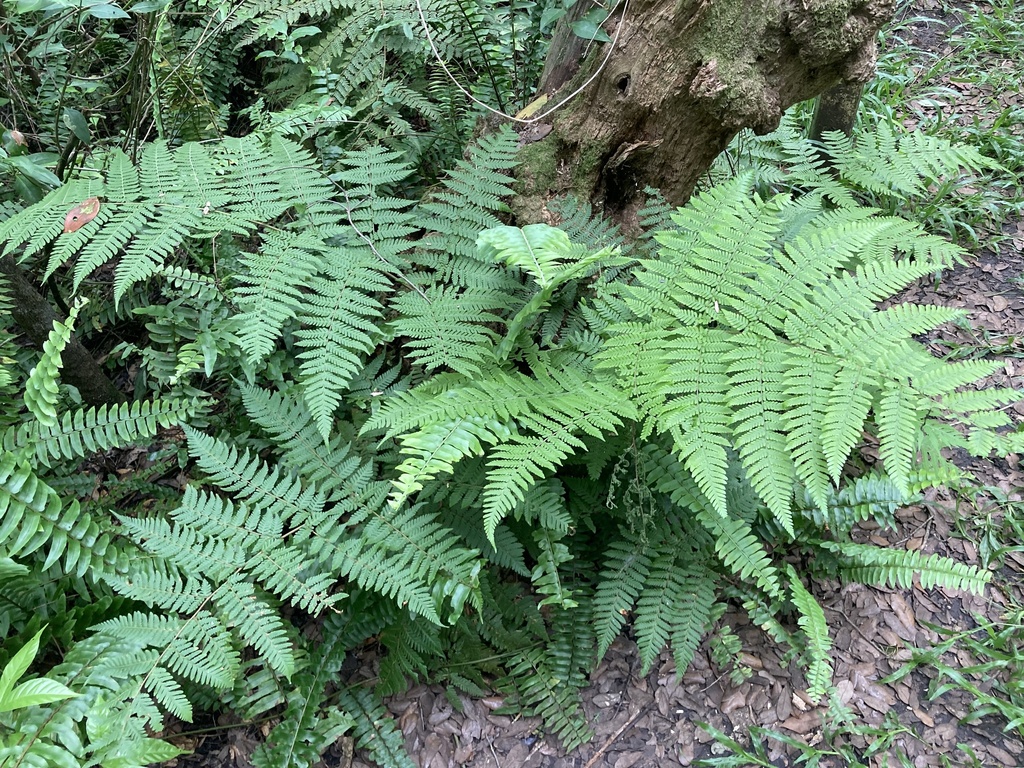
As a large ground fern, it adds structure and humidity to the hammock floor.
For Pollinators
Ferns reproduce by spores, not flowers, so it does not provide nectar or pollen.
For Birds
Its broad crowns create sheltered cover on the hammock floor for ground-foraging birds such as thrushes and wrens.
For Mammals
Small mammals, lizards and amphibians shelter beneath the fronds. It is not a significant food plant.
Ecosystem Role
It is part of the rich fern flora of South Florida’s tropical hammocks and limestone sinks, where its large fronds shade the ground, hold moisture and contribute leaf litter. Its rarity makes it an indicator of intact, humid hammock habitat.
Cultural & Historical Uses
The species name honors Sir Hans Sloane, the 17th- and 18th-century Irish-born physician and naturalist who collected plants in Jamaica and whose collections helped found the British Museum. The genus name Ctenitis comes from the Greek for “comb,” a reference to the comb-like hairs and scales of these ferns.
Botanists have placed this fern in several genera over the years, including Dryopteris (as Dryopteris ampla), before it was settled in Ctenitis by C.V. Morton in the 20th century.
In South Florida, it has long been a highlight for fern enthusiasts visiting hammocks such as Fern Forest Nature Center, and it is grown in botanic gardens like Fairchild Tropical Botanic Garden to help protect the species and show visitors one of the state’s most unusual native ferns.
Frequently Asked Questions
Is the Florida tree fern a true tree fern?
No. It is a large wood fern (family Dryopteridaceae). It is called a tree fern because old plants can develop a short, trunk-like rhizome, but true tree ferns belong to a different group.
Is Ctenitis sloanei endangered?
Yes, in Florida. It is listed as Endangered by the State of Florida. It is more widespread in the tropics outside the United States.
Where does the Florida tree fern grow?
In the U.S., only in a few tropical hardwood hammocks and limestone sinks in southern Florida. It also grows in Bermuda, the West Indies, Mexico, Central America and northern South America.
Can I grow Florida tree fern in my garden?
Yes, in frost-free South Florida (zones 10b–11) or in a conservatory, using nursery-propagated plants. Give it shade, humidity and rich, moist soil.
Why is it called red-hair comb fern?
Its rhizome and leaf stalks are covered with long, hair-like, reddish-brown scales.

Looking for a nursery that carries Florida Tree Fern?
Browse our native plant nursery directory: Florida

