
ʻĀkōlea (Boehmeria grandis)
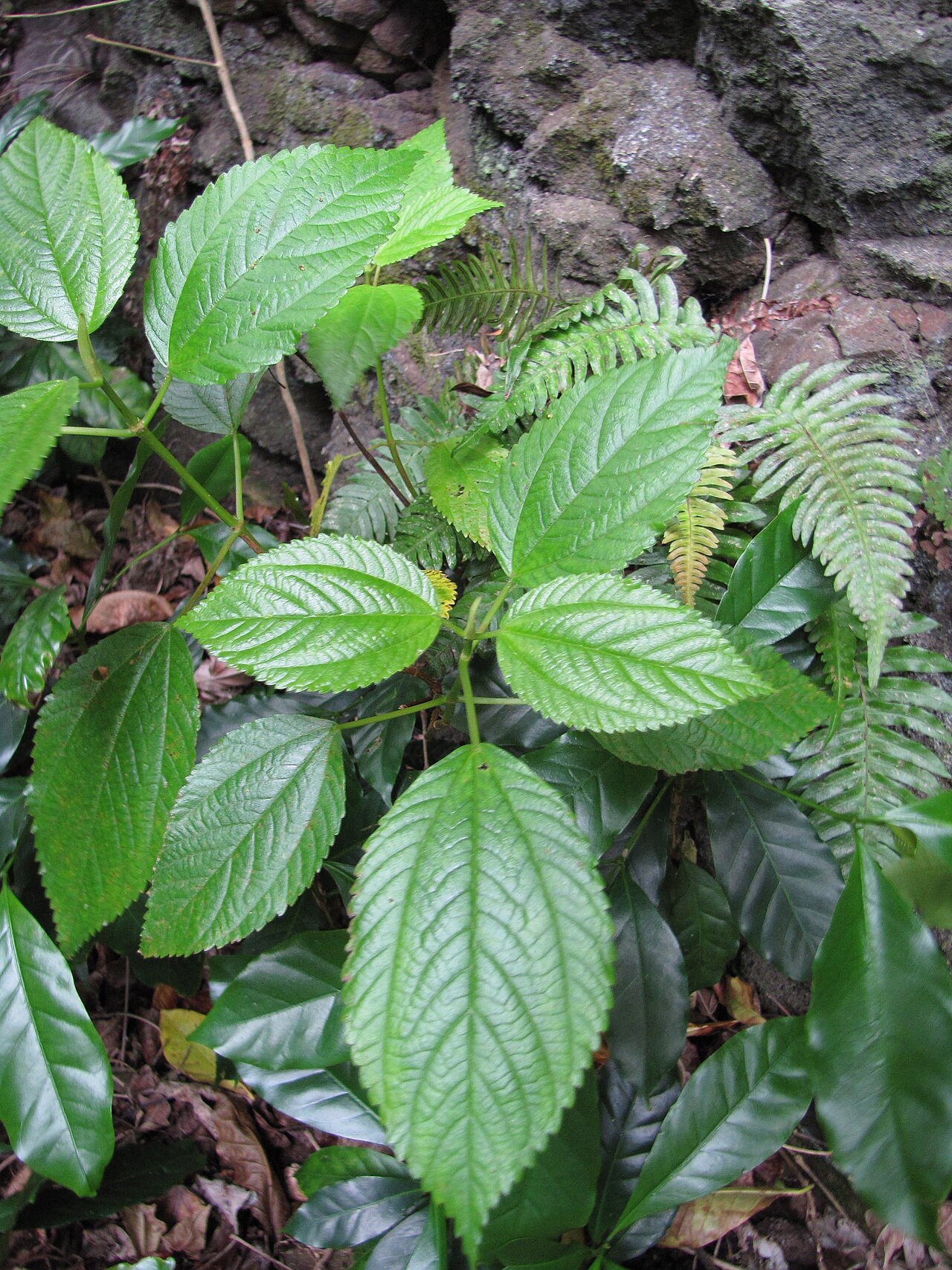
Boehmeria grandis, known in Hawaiian as ʻĀkōlea (also written ʻakolea) and in English as Hawaiʻi false nettle, is a shrub of the nettle family (Urticaceae) found only in the Hawaiian Islands. It grows in shady, moist to wet forests on the main islands, often along streams, in gulches and on valley floors, where its large, coarsely toothed, deeply veined leaves stand out in the understory.
Unlike true nettles, ʻākōlea has no stinging hairs. It is closely related to māmaki, and the two are often confused. ʻĀkōlea is one of only a handful of native host plants for the caterpillars of the pulelehua, or Kamehameha butterfly (Vanessa tameamea), Hawaiʻi’s state insect, which lays its eggs only on native plants of the nettle family.
ʻĀkōlea is not federally listed, though it is uncommon in many areas and is considered vulnerable. It is a good choice for shady, moist native gardens and pulelehua butterfly gardens, and it is sometimes available from Hawaiʻi native plant nurseries. Buy only nursery-propagated plants, and never collect plants or cuttings from the wild. This guide covers how to identify it, where it grows, how to grow it, and its role for native butterflies.
Identification
ʻĀkōlea is a soft-wooded understory shrub with big, rough-textured, toothed leaves. The easiest way to tell it from māmaki is the leaf arrangement: ʻākōlea leaves grow in opposite pairs, while māmaki leaves alternate along the stem.
Growth Habit
A shrub, usually about 3 to 10 feet tall, with several upright to spreading, soft-wooded stems. Young stems are green to reddish and often finely hairy. In deep, moist valleys it can become a larger, more open shrub or small tree.
Leaves
Leaves are opposite, broadly oval to egg-shaped with a pointed tip, roughly 3 to 9 inches long, with regular, coarse teeth along the edges. The veins are deeply sunken on the upper surface, giving the leaf a quilted texture, and are raised and often hairy beneath. The leaf stalks are long and are sometimes reddish.
Flowers
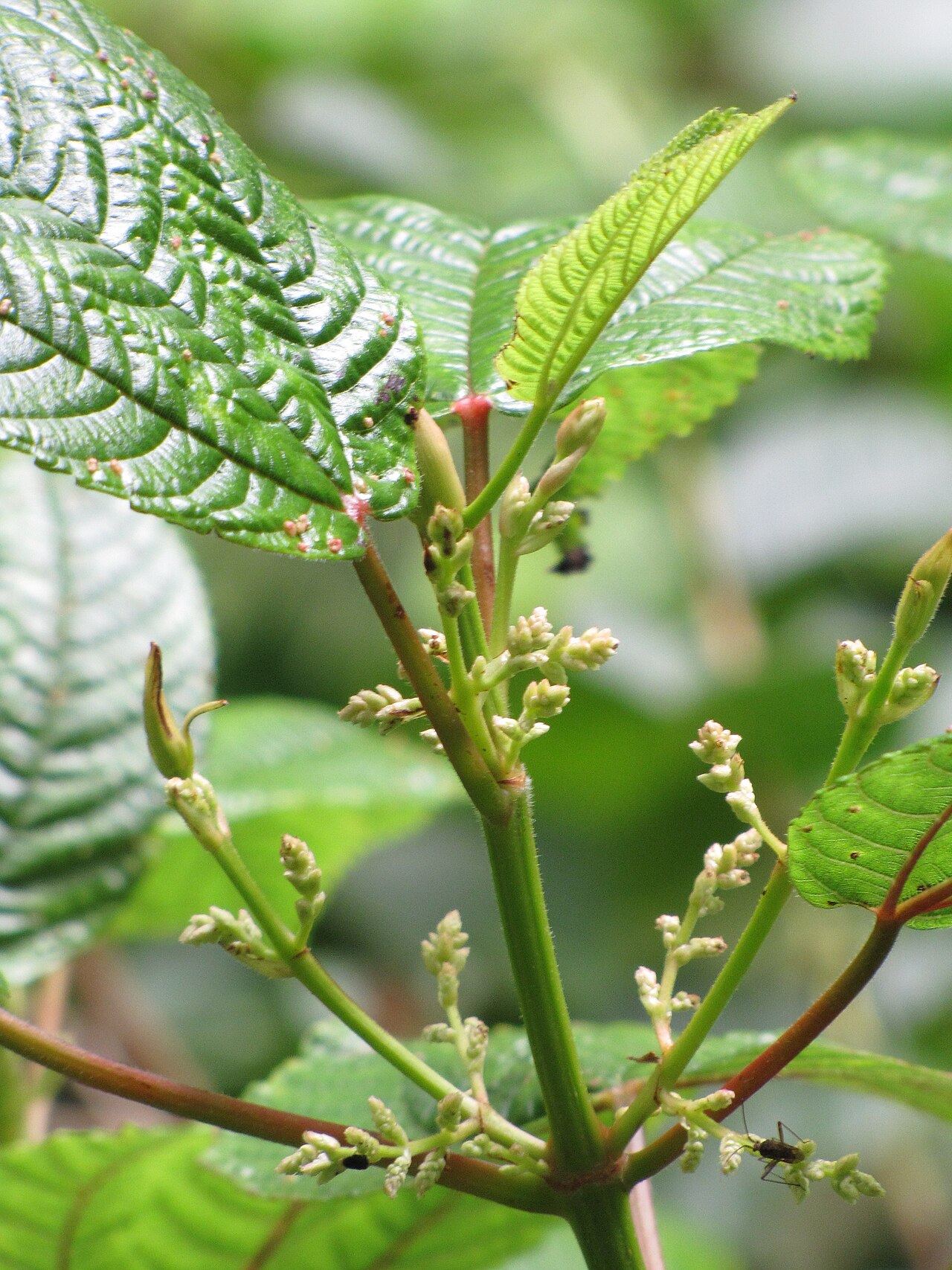
The flowers are tiny, greenish and wind-pollinated, without petals. They are crowded in small clusters spaced along slender, spike-like stalks that grow from the leaf axils. Male flowers have stamens that stick out of the flower and release pollen when they spring open.
Fruit & Look-alikes
The fruits are tiny, dry, one-seeded achenes held in the same clusters as the flowers. Māmaki (Pipturus albidus) looks similar, but it has alternate leaves that are usually whitish or silvery beneath, and it bears small, white, fleshy fruits. Olonā (Touchardia latifolia) and ʻōpuhe (Urera species) are other native relatives with larger, broader leaves.
Quick Facts
| Scientific Name | Boehmeria grandis (Hook. & Arn.) A. Heller |
| Family | Urticaceae (nettle family) |
| Plant Type | Evergreen shrub; Hawaiian endemic |
| Mature Height | 3–10 ft |
| Mature Spread | 3–8 ft |
| Growth Rate | Moderate to fast |
| Sun Exposure | Partial shade to shade |
| Water Needs | Moderate to high; consistently moist soil |
| Soil Type | Humus-rich, moist, well-drained soil |
| Soil pH | Slightly acidic to neutral |
| Bloom Time | Irregular; can flower at various times of year |
| Flower Color | Greenish; inconspicuous |
| Fall Color | None; evergreen |
| Fruit | Tiny dry achenes |
| Deer Resistant | No; browsed by feral goats, deer and pigs |
| USDA Hardiness Zones | 10–12 (outdoors in Hawaiʻi) |
Native Range
ʻĀkōlea is endemic to the Hawaiian Islands and grows nowhere else in the wild. USDA PLANTS lists it as native only in Hawaiʻi. It occurs on the main islands, including Kauaʻi, Oʻahu, Molokaʻi, Lānaʻi, Maui and Hawaiʻi Island, in mesic and wet forests from lowland valleys to middle elevations.
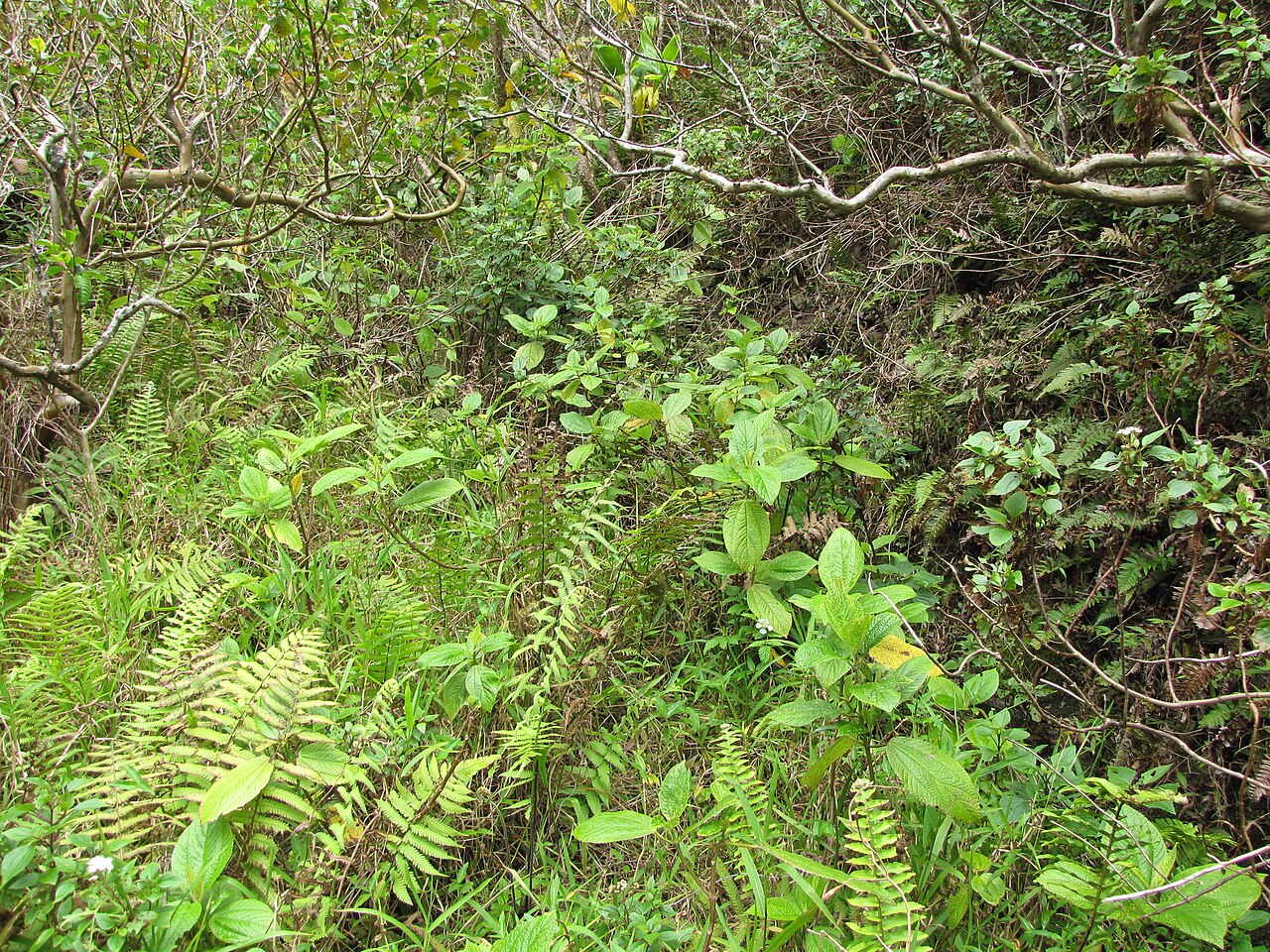
It favors shady, sheltered places with moist soil: stream banks, gulch bottoms, valley floors and the lower slopes of ridges in mesic to wet forest. On Oʻahu it has been recorded in places such as Makaua Gulch, and on Maui in valleys like ʻĪao and along the Honokōwai Ditch Trail.
Like many native understory shrubs, it has declined where feral pigs, goats and deer browse and trample the forest, and where invasive plants such as strawberry guava and ginger take over valley floors and stream banks. It persists best in protected, fenced watersheds and restored forest.
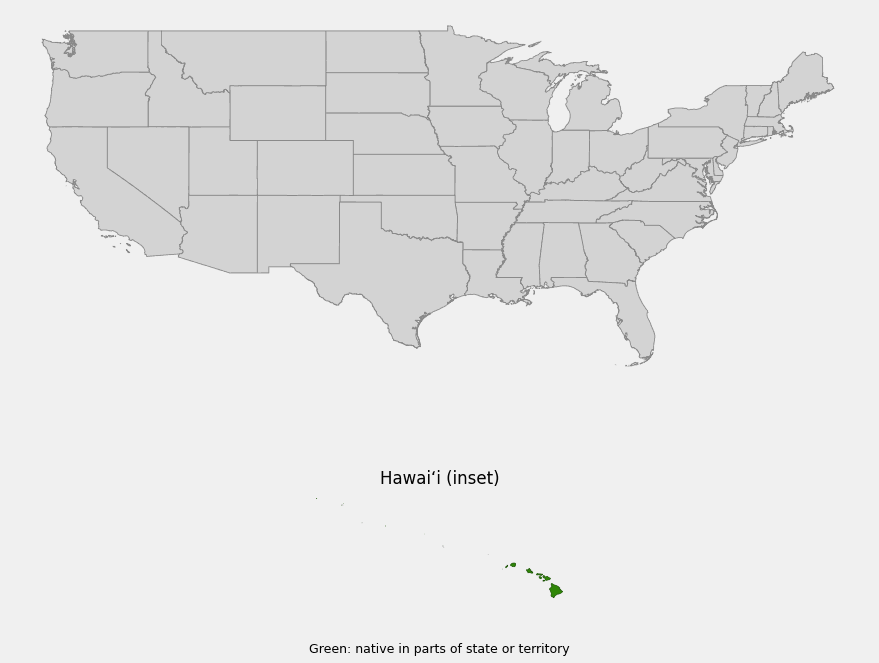
📋 Regional plant lists featuring ʻĀkōlea: Hawaii
Growing & Care Guide
ʻĀkōlea is a fairly easy native shrub for shady, moist gardens in Hawaiʻi, and it is worth growing as a host plant for the pulelehua butterfly. It is sometimes offered by Hawaiʻi native plant nurseries. Buy only nursery-propagated plants, and never collect plants or cuttings from the wild. Hawaiʻi restricts bringing plants in from other states, so gardeners in Hawaiʻi should buy it from local native plant nurseries. It grows outdoors only in frost-free climates (about USDA zones 10–12); elsewhere it would need a warm, humid greenhouse.
Light
Partial shade to fairly deep shade. Morning sun is fine, but hot afternoon sun yellows and scorches the leaves, especially in dry lowland gardens.
Soil & Water
Plant in humus-rich soil that stays moist but drains well, with plenty of mulch. Water regularly, especially in dry spells; it wilts quickly when dry. It does best in naturally moist, windward or upland gardens, or near a stream, pond or irrigated bed.
Planting Tips
Use it in a sheltered, shady bed under trees or on the shady side of a building, out of strong wind. Plant it near māmaki and other nettle-family natives to create a pulelehua butterfly garden. It also does well in large containers kept in the shade.
Pruning & Maintenance
Prune lightly to remove leggy or damaged stems and to keep it bushy; it resprouts readily. Expect some leaf chewing in a butterfly garden, since that is the point. Avoid insecticides on host plants, as they kill the caterpillars. Watch for scale insects, mealybugs and whiteflies, and wash them off with water or treat them with soap rather than systemic products.
Propagation
Nurseries grow it from stem cuttings, which root fairly easily in a moist, humid mix, and from the tiny seeds sown on the surface of a fine potting mix. Home gardeners should propagate only from their own nursery-bought plants.
Landscape Uses
- Pulelehua butterfly gardens: a native host plant for the Kamehameha butterfly
- Shade gardens: bold, quilted foliage for moist, shady beds
- Stream and valley restoration: understory shrub for mesic and wet forest plantings
- Native plant collections: an endemic relative of māmaki and olonā
Wildlife & Ecological Value
ʻĀkōlea matters most to wildlife as food for one of Hawaiʻi’s only two native butterflies.
For Pollinators
The flowers are wind-pollinated and do not attract pollinators. Its main value is as a host plant: caterpillars of the pulelehua, or Kamehameha butterfly, feed on the leaves of ʻākōlea, māmaki, olonā and ʻōpuhe and shelter in folded leaves that they tie together with silk.
For Birds
Native forest birds forage for insects among the leaves, and the shrubs provide cover in the understory of mesic and wet forests.
For Mammals
Hawaiʻi’s only native land mammal, the Hawaiian hoary bat, hunts insects over the forest. Introduced feral pigs, goats and deer browse and trample ʻākōlea and are among the main threats to native understory plants.
Ecosystem Role
As an understory shrub along streams and in gulches, it shades the soil and helps hold stream banks. Its role as a pulelehua host makes it an important part of native forest restoration.
Cultural & Historical Uses
In Hawaiian, ʻākōlea is used both for this shrub and for a native fern (Athyrium microphyllum), so it helps to give the scientific name. The genus Boehmeria honors the German botanist Georg Rudolf Böhmer. The species was first described by William Hooker and George Arnott from early 19th-century Hawaiian collections, and was later moved to Boehmeria by Amos Heller.
Its relatives in the nettle family are among the most useful Hawaiian plants. Olonā produced one of the strongest plant fibers known, prized for fishing lines and nets, and māmaki leaves are still brewed as tea. A cousin outside Hawaiʻi, ramie (Boehmeria nivea), is grown worldwide for its fiber.
The pulelehua, or Kamehameha butterfly, was named the state insect of Hawaiʻi in 2009. Because its caterpillars depend on native nettle-family plants such as ʻākōlea and māmaki, planting these shrubs is one of the most direct ways gardeners can help the butterfly.
Frequently Asked Questions
Does ʻākōlea sting like a nettle?
No. Although it belongs to the nettle family, ʻākōlea has no stinging hairs and is safe to handle.
How do I tell ʻākōlea from māmaki?
ʻĀkōlea has opposite leaves (in pairs) and dry, tiny fruits. Māmaki has alternate leaves that are often whitish beneath and small, white, fleshy fruits.
Is it a host plant for the Kamehameha butterfly?
Yes. It is one of the few native nettle-family plants on which pulelehua caterpillars feed, along with māmaki, olonā and ʻōpuhe.
Can I grow it in my garden?
Yes, in Hawaiʻi or other frost-free areas, in partial shade and moist, humus-rich soil. Buy only nursery-propagated plants from Hawaiʻi native plant nurseries, and never collect from the wild.
Is ʻākōlea endangered?
It is not federally listed under the Endangered Species Act, but it is uncommon in many areas and considered vulnerable because of habitat loss, feral animals and invasive plants.

Looking for a nursery that carries ʻĀkōlea?
Browse our native plant nursery directory: Hawaii

