
Allegheny Stonecrop (Hylotelephium telephioides)
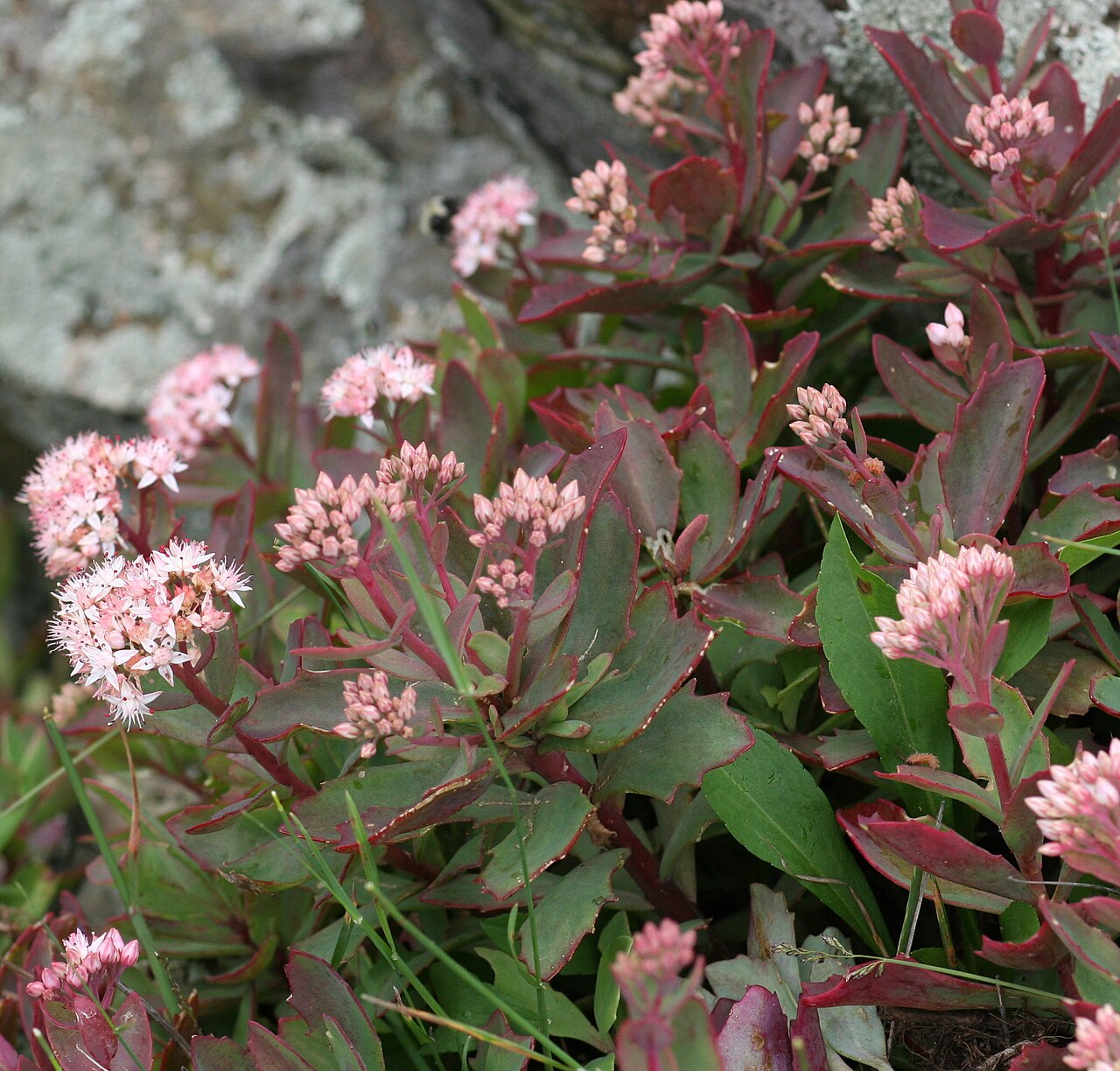
Hylotelephium telephioides, known as Allegheny Stonecrop or wild live-forever, is a native succulent of rocky cliffs, ledges and outcrops in the Appalachian Mountains and nearby regions. It grows in clumps of upright to arching stems lined with thick, flat, gray-green leaves, often flushed with red or purple, and in late summer it opens dense, rounded clusters of pale pink to whitish, star-shaped flowers.
It is the eastern North American relative of the familiar garden “tall sedums” such as ‘Autumn Joy’ (which belong to Asian and European species of Hylotelephium), and it was long known as Sedum telephioides. Like them, it is tough, drought tolerant and a magnet for late-season bees and butterflies, but it is a true native of eastern rock outcrops.
This guide covers how to identify Allegheny stonecrop, where it grows wild, how to grow it in a rock garden or dry, sunny bed, and why it matters to pollinators in late summer and fall. It also compares it with our other native woodland sedum, Wild Stonecrop.
Identification
Look on sunny or partly shaded cliffs and rock ledges for clumps of succulent stems 6 to 16 inches long, with alternate, flat, fleshy, blue-gray to green leaves, topped in August to October by dense, flat-topped to domed clusters of pale pink flowers.
Stems & Leaves
The stems are thick and succulent, often reddish, and grow upright or arch out from rock crevices. The leaves are alternate, flat and fleshy, oval to oblong or spoon-shaped, about 1 to 3 inches long, with smooth or shallowly toothed edges. They are gray-green to blue-green with a waxy bloom, and often blushed red or purple, especially in sun and in fall.
Flowers
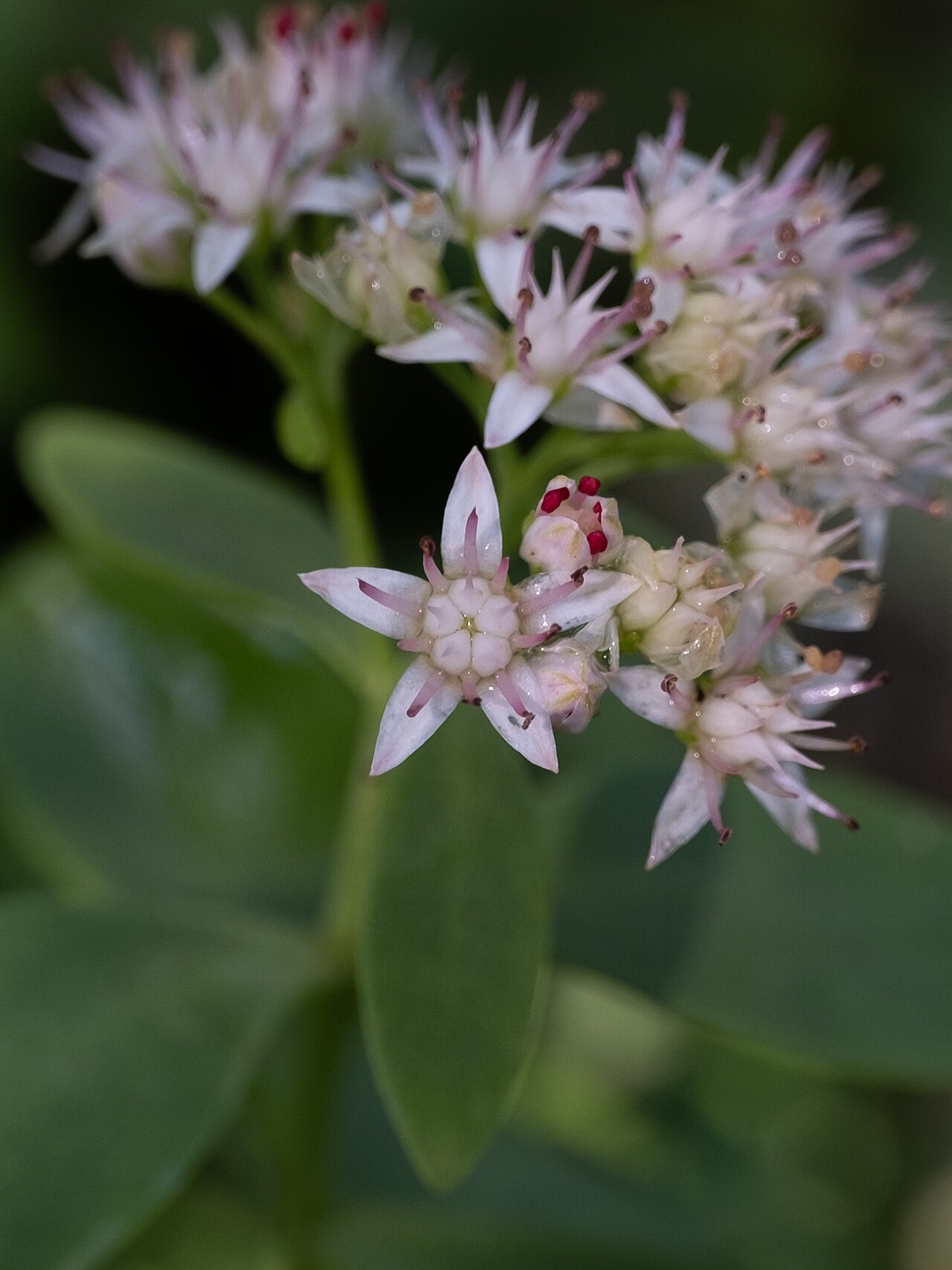
The flowers are small, about ⅓ inch across, with five pointed, pale pink to whitish petals that spread into a star, and ten stamens with pinkish anthers. They are packed into dense, rounded or flat-topped clusters (cymes) 1 to 3 inches across at the tips of the stems. Bloom is in late summer and fall, usually August into October.
Fruit & Roots
After flowering, each flower forms five small, upright, pod-like follicles that turn tan or reddish and hold tiny seeds. The plant grows from a thick, fleshy, tuberous root crown wedged into rock crevices, which helps it survive drought.
Look-alikes
Wild stonecrop (Sedum ternatum) is a low, creeping woodland sedum with small leaves in whorls of three and white flowers in spring. Orpine or live-forever (Hylotelephium telephium), a European species that has escaped from gardens in the East, is similar but larger, with purplish-red flowers and toothier leaves. Garden tall sedums (H. spectabile and hybrids such as ‘Autumn Joy’) are bigger and showier, with brighter pink or rosy flowers.
Quick Facts
| Scientific Name | Hylotelephium telephioides (Michx.) H. Ohba (syn. Sedum telephioides Michx.) |
| Family | Crassulaceae (stonecrop family) |
| Plant Type | Succulent herbaceous perennial |
| Mature Height | 6–16 in |
| Mature Spread | 8–18 in |
| Growth Rate | Slow to moderate |
| Sun Exposure | Full sun to part shade |
| Water Needs | Low; very drought tolerant |
| Soil Type | Thin, rocky, gravelly or sandy soil with sharp drainage |
| Soil pH | About 5.5–7.5 |
| Bloom Time | August–October |
| Flower Color | Pale pink to whitish |
| Fall Color | Leaves blush red to purple; seed heads tan-red |
| Fruit | Small upright follicles with tiny seeds |
| Deer Resistant | No; deer and rabbits eat sedums |
| USDA Hardiness Zones | 4–8 |
Native Range
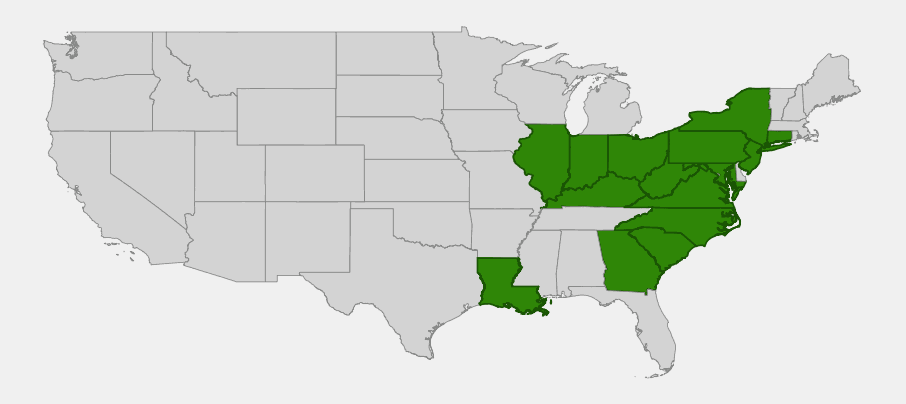
USDA PLANTS lists Allegheny stonecrop as native in 15 states: New York, New Jersey, Pennsylvania, Maryland, Virginia, West Virginia, North Carolina, South Carolina, Georgia, Kentucky, Ohio, Indiana, Illinois, Connecticut and Louisiana. Its stronghold is the Appalachian Mountains and Piedmont, from Pennsylvania and western Maryland through Virginia and West Virginia to western North Carolina, where it is a familiar plant of rocky summits and river cliffs.
Elsewhere it is scattered. It grows on sandstone and limestone cliffs in southern Illinois and Indiana and on rock outcrops in Kentucky and Ohio. The records from Connecticut, New Jersey, Georgia and Louisiana are outlying: herbarium specimens from Connecticut and New Jersey are mostly old, and current populations there are uncertain. In Ontario, where it has been reported, it is considered introduced.
Typical habitats are cliffs, rock ledges, talus, shale barrens, rocky summits and riverside bluffs, on acidic or calcareous rock, often in full sun or light shade where few other plants can grow. Good places to see it include Great Falls on the Potomac River and the rocky summits of Shenandoah National Park.
📋 Regional plant lists featuring Allegheny Stonecrop: New York, Pennsylvania & Northern New Jersey · Maryland, Virginia & West Virginia · North & South Carolina · Kentucky & Tennessee · Ohio & Indiana · Illinois, Iowa & Missouri
Growing & Care Guide
Allegheny stonecrop is an easy, long-lived native succulent for rock gardens, walls, green roofs and dry, sunny beds in the eastern United States. It is offered by some native plant nurseries and rock garden specialists. Buy nursery-propagated plants; do not dig plants from cliffs and outcrops, where it may be rare and where digging damages fragile rock-face communities.
Light
Full sun to part shade. It flowers best and stays most compact and colorful in sun; in more shade the stems become longer and lean toward the light.
Soil & Water
Sharp drainage is essential. Plant it in thin, rocky, gravelly or sandy soil, in a rock garden, between stones or in a wall. It tolerates drought very well once established and rots in heavy, wet soil, especially in winter. Do not fertilize; rich soil makes it floppy.
Planting Tips
Plant in spring or early fall. Tuck it into crevices or on slopes and mounds where water drains away quickly. It combines well with other plants of rocky places such as columbine, alumroot, little bluestem and native ferns.
Pruning & Maintenance
Leave the dried flower heads standing over winter for texture and seed, and cut them off in early spring before new growth. Protect plants from deer and rabbits if browsing is a problem.
Propagation
It is very easy to propagate from stem or leaf cuttings: let cuttings dry for a day, then set them on gritty soil and they will root quickly. Clumps can be divided in spring. It can also be grown from its tiny seeds, sown on the surface of a gritty mix.
Landscape Uses
- Rock gardens and walls: in crevices and on ledges, mimicking its cliff habitat
- Green roofs and containers: very drought tolerant with fleshy leaves
- Pollinator gardens: late-summer and fall nectar for bees and butterflies
- Native alternative to tall sedums: a native choice in place of garden hybrids such as ‘Autumn Joy’
Wildlife & Ecological Value
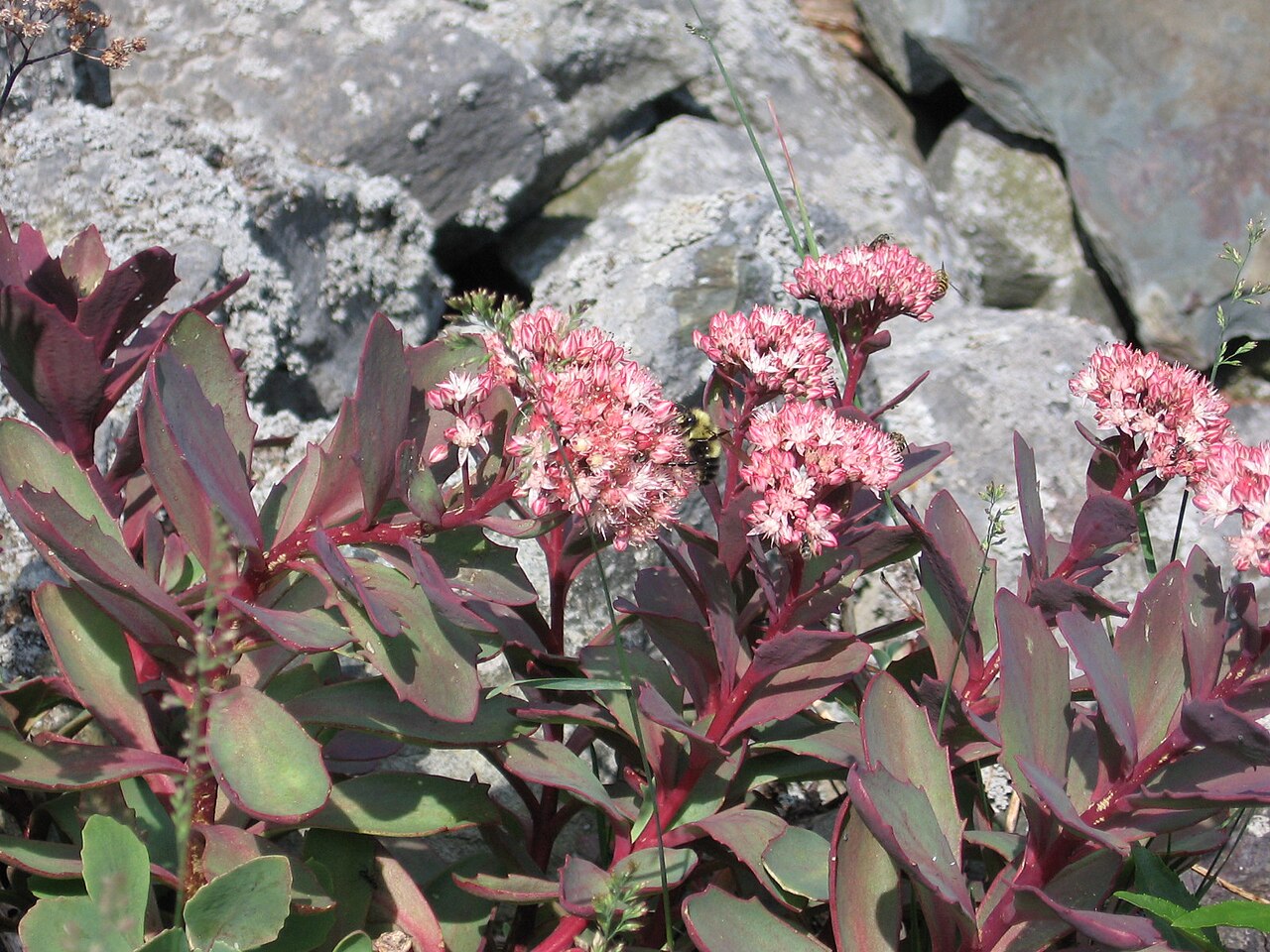
Blooming in late summer and fall, when many wildflowers have finished, Allegheny stonecrop is an important late-season food source on rocky outcrops.
For Pollinators
Its flowers attract many small native bees, honey bees, wasps, flies and butterflies, which can cover the flower heads on warm fall days.
For Birds
It is of little direct value to birds, but the insects it attracts feed insect-eating birds on rocky outcrops.
For Mammals
Deer, rabbits, woodchucks and other mammals browse the succulent leaves, which is one reason it often survives best on steep cliffs out of reach.
Ecosystem Role
As one of the few plants that can grow in rock crevices and thin soil on cliffs and shale barrens, it helps build soil and adds diversity to these specialized communities.
Cultural & Historical Uses
The French botanist André Michaux described this plant as Sedum telephioides in 1803, from his travels in the Appalachians. The species name means “like telephium,” comparing it to the European orpine. In the 1970s the Japanese botanist Hideaki Ohba moved it and its relatives into Hylotelephium, separating the tall, broad-leaved “live-forevers” from the smaller, creeping sedums.
The name “live-forever,” shared with the European orpine, comes from how hard these plants are to kill: cut stems stay alive for weeks and root easily.
Today it is valued by native plant gardeners as a native alternative to the tall sedums of Asian and European origin that are so common in American gardens, and by hikers who know it as one of the characteristic plants of Appalachian cliffs and summits.
Frequently Asked Questions
Is Allegheny stonecrop the same as Sedum telephioides?
Yes. It was long called Sedum telephioides. Many botanists now place it in Hylotelephium, the genus of tall, broad-leaved sedums, as Hylotelephium telephioides.
How is Allegheny stonecrop different from garden tall sedums like Autumn Joy?
Garden tall sedums come from Asian and European species and their hybrids, and they are larger, with brighter pink flowers. Allegheny stonecrop is a native eastern species that is smaller, with gray-green leaves and pale pink to whitish flowers, adapted to rock outcrops.
Where does Allegheny stonecrop grow?
On cliffs, rock ledges, shale barrens and rocky summits, mostly in the Appalachian Mountains and Piedmont from Pennsylvania and Maryland to North Carolina, with scattered populations west to Illinois and outlying records farther afield.
Is Allegheny stonecrop deer resistant?
No. Deer and rabbits eat sedums, so protect garden plants if browsing is heavy.
How do I propagate Allegheny stonecrop?
Take stem cuttings, let them dry for a day, then lay or insert them in gritty, well-drained soil. They root quickly. You can also divide clumps in spring.

Looking for a nursery that carries Allegheny Stonecrop?
Browse our native plant nursery directory: Connecticut & Georgia · Illinois & Indiana · Kentucky, Louisiana & Maryland · New Jersey, New York, North Carolina & Ohio · Pennsylvania, South Carolina & Virginia · West Virginia

