
Minnesota Dwarf Trout Lily (Erythronium propullans)
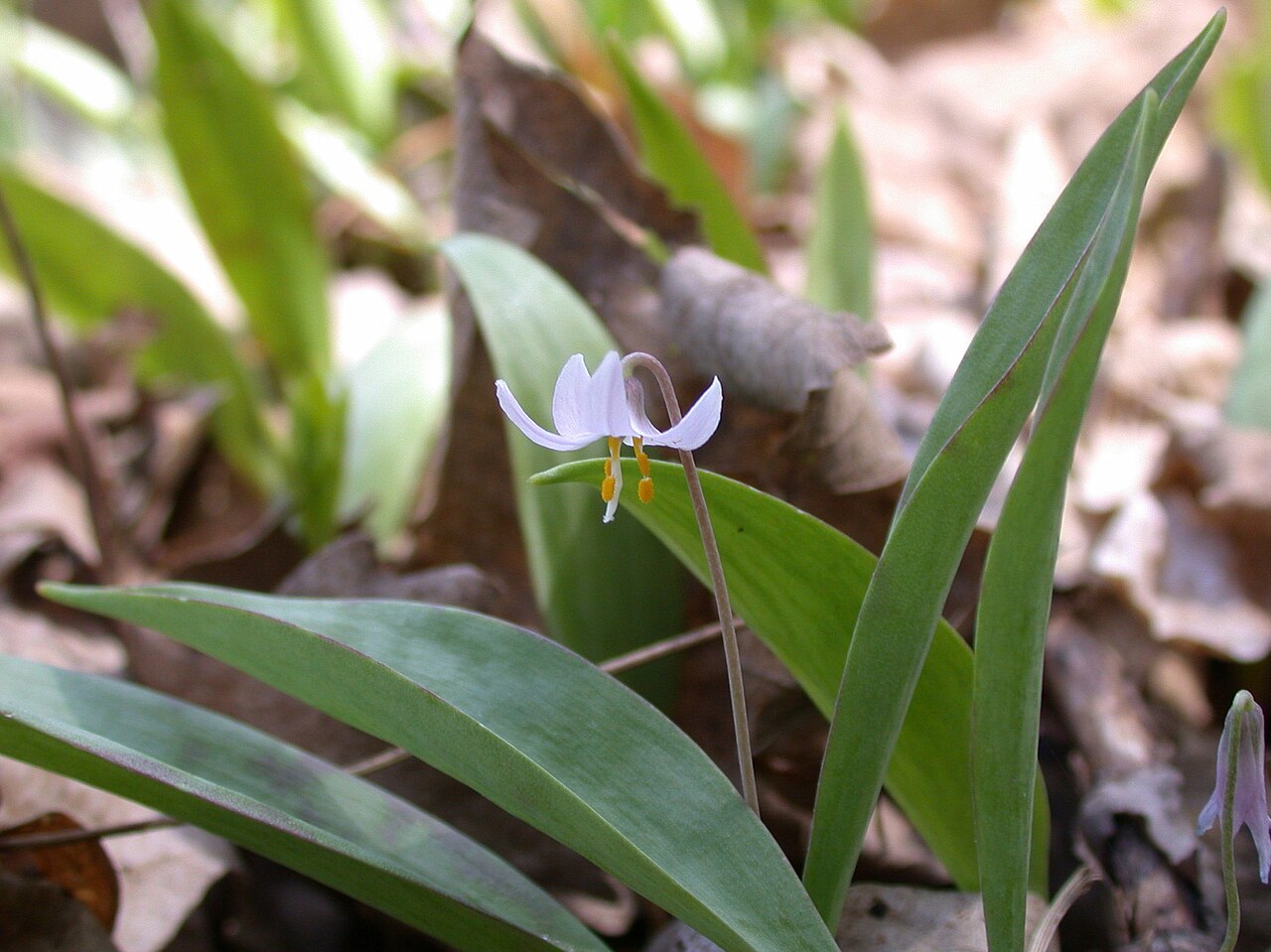
Erythronium propullans, the Minnesota Dwarf Trout Lily, grows nowhere in the world except a few small areas of southeastern Minnesota. It is a tiny spring wildflower: a pair of narrow leaves a few inches tall and, for a few days in late April or early May, a single nodding pink to white flower only about half an inch across.
It lives in moist hardwood forests of sugar maple, basswood and elm on the floodplain terraces and lower slopes along streams in the Cannon River and Zumbro River watersheds, mainly in Rice and Goodhue counties, part of the remnant “Big Woods” of Minnesota. Because its range is so small and much of the Big Woods was cleared for farming, it is listed as endangered under the U.S. Endangered Species Act (since 1986) and by the state of Minnesota.
This page is an identification and appreciation guide. Minnesota dwarf trout lily is not available for gardens and must never be dug or disturbed. Below you’ll learn how to tell it from the common trout lilies that grow beside it, why it is so rare, and where you can see it in bloom.
Identification
Minnesota dwarf trout lily grows alongside the much more common white trout lily, and the two are easy to confuse when not in flower. Its small size, pink-tinged flowers and offshoots are the best clues.
Corm & Offshoots
Each plant grows from a small, egg-shaped corm a few inches underground. The species name propullans means “sprouting forth” and refers to its unusual way of reproducing: a short underground runner (offshoot) grows out from the side of the flowering stem, below ground, and forms a new corm at its tip. Most colonies spread this way, and seed is rarely produced.
Leaves
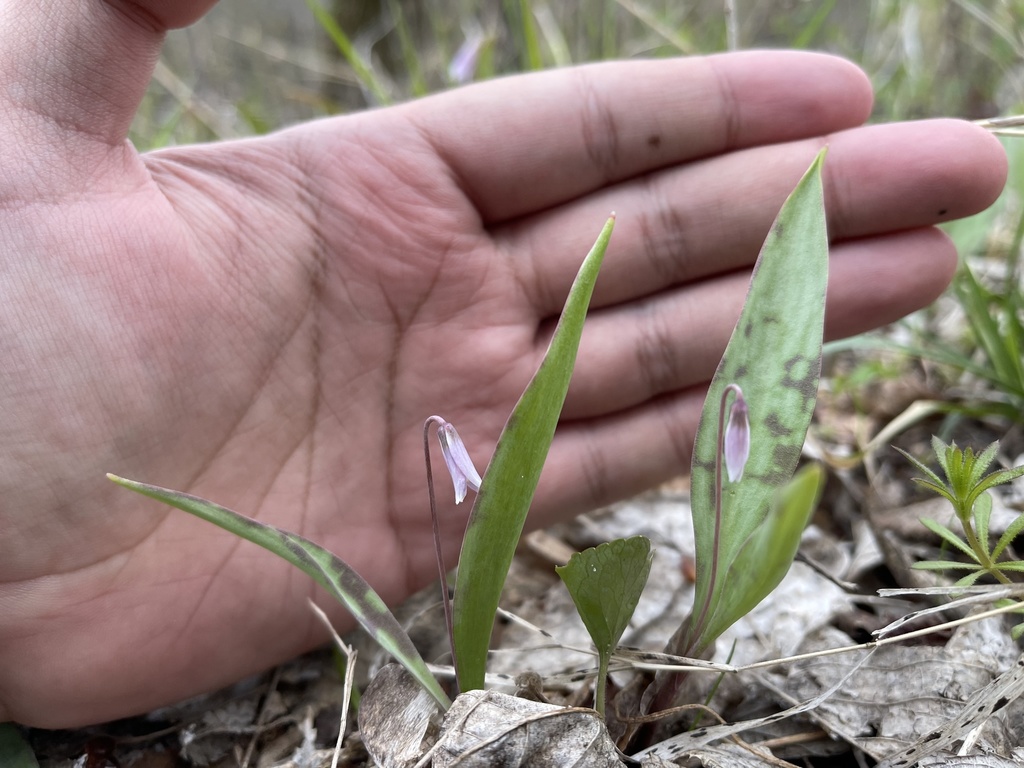
Non-flowering plants have one leaf; flowering plants have two. The leaves are narrow-elliptic, about 2 to 4 inches long and under an inch wide, green and often faintly mottled with brown. Leaves appear in early spring, and the plants die back to the ground by early summer when the forest canopy closes.
Flower
A single flower nods at the top of a stalk usually 2 to 5 inches tall. It is small, about ½ inch across, with six pink to white tepals (often pink on the outside and fading paler) that spread or bend back only slightly. The stamens are yellow. Flowers open for a few days in late April to early May.
Look-alikes
White Trout Lily grows in the same forests. It is larger, with flowers about 1 to 1½ inches across whose tepals curve strongly backward, and it does not produce the offshoot from the flowering stem. Yellow trout lily, with yellow flowers, grows further east and north. Without flowers, only an expert can reliably separate the species.
Quick Facts
| Scientific Name | Erythronium propullans A. Gray |
| Family | Liliaceae (lily family) |
| Plant Type | Spring ephemeral herbaceous perennial from a corm |
| Mature Height | 2–5 in |
| Mature Spread | A few inches; forms slowly spreading colonies |
| Growth Rate | Very slow |
| Sun Exposure | Spring sun, summer shade under deciduous trees |
| Water Needs | Moderate to high; moist forest soil |
| Soil Type | Rich, moist loam on floodplain terraces and slopes |
| Soil pH | About 6.0–7.5 |
| Bloom Time | Late April–early May |
| Flower Color | Pink to white |
| Fall Color | None; dormant by early summer |
| Fruit | Rarely produced; reproduces mainly by offshoots |
| Deer Resistant | Unknown; foliage may be grazed |
| USDA Hardiness Zones | 4 |
Native Range
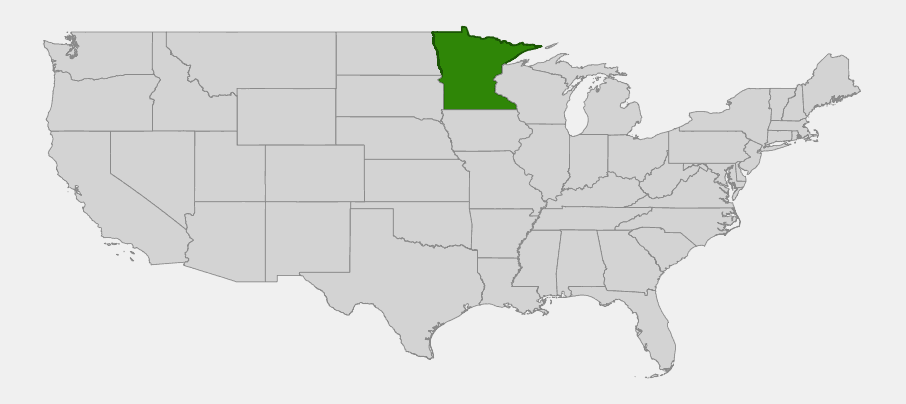
Minnesota dwarf trout lily is endemic to southeastern Minnesota. Nearly all known populations are in Rice and Goodhue counties, in the valleys of the Cannon River and its tributaries and in the Zumbro River watershed, with a few sites in adjacent counties. It is one of very few plant species found only in Minnesota.
It grows in mature, moist deciduous forests of sugar maple, basswood, American elm and northern red oak, typically on north- or east-facing slopes and on floodplain terraces just above streams, where the soil stays moist and spring floodwaters may deposit silt. These forests are remnants of the Big Woods, a large area of hardwood forest that once covered south-central Minnesota and was mostly cleared for farming in the 1800s.
Today populations are threatened by forest clearing and development, changes in drainage and stream flooding, invasive plants such as garlic mustard and buckthorn, heavy deer browsing, trampling, and by the species’ own low reproduction. Because colonies spread mainly by offshoots and rarely produce seed, they cannot easily move to new sites when their habitat changes.
📋 Regional plant lists featuring Minnesota Dwarf Trout Lily: Michigan, Wisconsin & Eastern Minnesota
Can You Grow It?
No. Minnesota dwarf trout lily is federally and state endangered, it is not sold by nurseries, and collecting it is illegal without permits. It grows extremely slowly and depends on its particular forest habitat. Never dig the plants or disturb the colonies. Even walking through a colony in spring can damage the fragile leaves and reduce the energy the corms store for the next year.
Light
In the wild it gets bright light in early spring before the trees leaf out, then deep summer shade while it is dormant. This timing is typical of spring ephemerals.
Soil & Water
It needs rich, moist, well-drained forest soil with a natural leaf litter layer, and many sites are on floodplain terraces that receive silt from occasional spring floods.
Planting Tips
If you want trout lilies in a Minnesota woodland garden, plant nursery-propagated white trout lily or yellow trout lily from a reputable native plant nursery, along with spring beauty, hepatica and Dutchman’s breeches.
Pruning & Maintenance
In protected sites, land managers help the species by removing invasive garlic mustard and buckthorn, managing deer numbers, and keeping visitors on trails.
Propagation
It reproduces mainly by underground offshoots, and seed is rarely produced. Conservation partners have studied its reproduction and protect colonies in place. Any propagation is done only under permit for recovery purposes.
Where to See It
- Nerstrand-Big Woods State Park: in Rice County, the best-known and most accessible place to see it, with trails through Big Woods forest that blooms with spring wildflowers
- Late April to early May: the short flowering window; check with the park for bloom reports
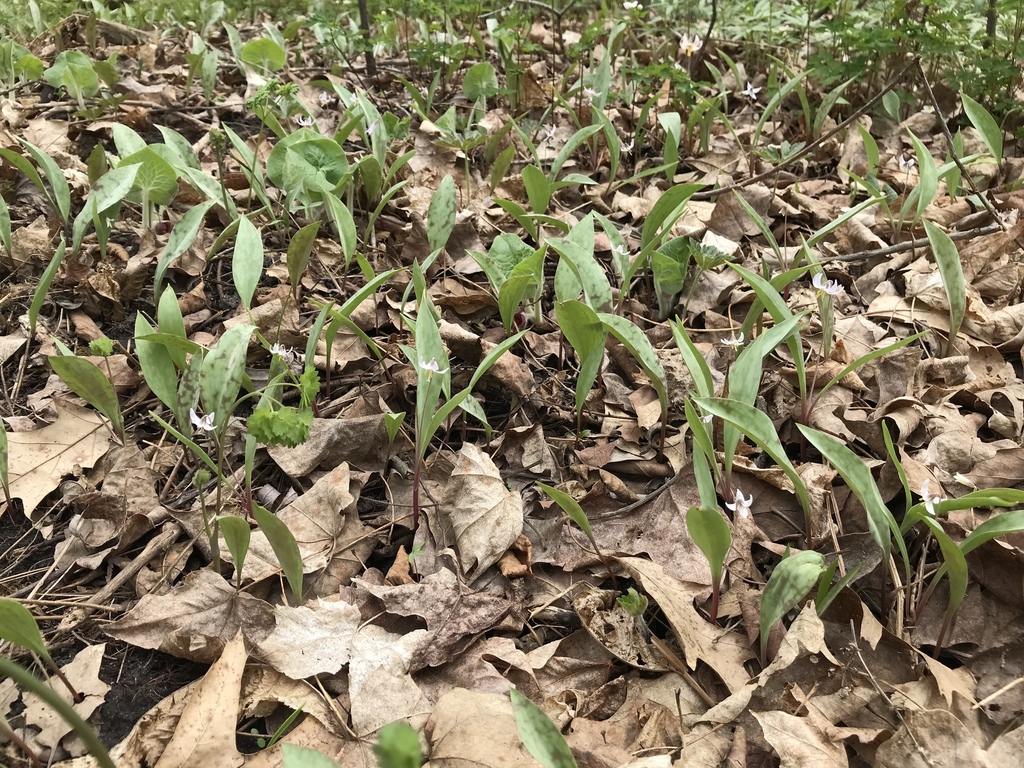
- Stay on the trail: the plants are tiny and easily trampled, and most of a colony consists of non-flowering single leaves
- Guided spring wildflower walks: offered by state parks and local nature groups in southeastern Minnesota
Wildlife & Ecological Value
Minnesota dwarf trout lily is part of the spring wildflower community that blooms on the floor of the Big Woods before the trees leaf out.
For Pollinators
Its small flowers are visited by early-spring bees and flies, but they rarely set seed. Genetic studies suggest that it is closely related to white trout lily and may have originated from it, and its reliance on offshoots instead of seed has left it with limited genetic variation.
For Birds
The Big Woods forests where it grows support many forest birds, including warblers, vireos, woodpeckers and barred owls, but the plant itself is not a significant food source for birds.
For Mammals
White-tailed deer and small mammals may eat the leaves and corms. High deer populations are a concern for many spring wildflowers in Minnesota forests.
Ecosystem Role
Like other spring ephemerals, it takes up nutrients in early spring when the soil is warming but trees are still bare, and returns them to the soil when its leaves decay. Its presence is an indicator of intact, high-quality Big Woods forest.
Cultural & Historical Uses
Asa Gray described Erythronium propullans in 1871 from specimens collected near Faribault, Minnesota. Its tiny size and similarity to white trout lily helped it go unnoticed.
It was listed as endangered under the U.S. Endangered Species Act in 1986, and the U.S. Fish and Wildlife Service has prepared a recovery plan for it. Minnesota lists it as endangered as well. Recovery work focuses on protecting the forests where it grows, many of which are now in state parks, scientific and natural areas, and on private land with conservation agreements.
Because it is found nowhere else, the Minnesota dwarf trout lily has become a symbol of Minnesota’s natural heritage and of the Big Woods. Nerstrand-Big Woods State Park features it as one of its signature plants, and spring visitors come to search for its tiny pink flowers among thousands of white trout lilies.
Frequently Asked Questions
Where is the Minnesota dwarf trout lily found?
Only in southeastern Minnesota, mainly in Rice and Goodhue counties along the Cannon and Zumbro rivers and their tributaries. It is one of very few plants found only in Minnesota.
Is the Minnesota dwarf trout lily endangered?
Yes. It is listed as endangered under the U.S. Endangered Species Act (since 1986) and by the state of Minnesota.
How is it different from white trout lily?
It is much smaller, with flowers only about ½ inch across that are often pink-tinged, and tepals that bend back only slightly. Flowering plants also send out an underground offshoot from the flowering stem, which white trout lily does not do.
Where can I see it?
Nerstrand-Big Woods State Park in Rice County is the best-known public place to see it, in late April or early May. Stay on the trails, since the tiny plants are easily trampled.
Can I plant Minnesota dwarf trout lily in my garden?
No. It is endangered, not sold by nurseries, and protected by law. Grow nursery-propagated white or yellow trout lily instead.

Looking for a nursery that carries Minnesota Dwarf Trout Lily?
Browse our native plant nursery directory: Minnesota

