
Southern Butterwort (Pinguicula primuliflora)
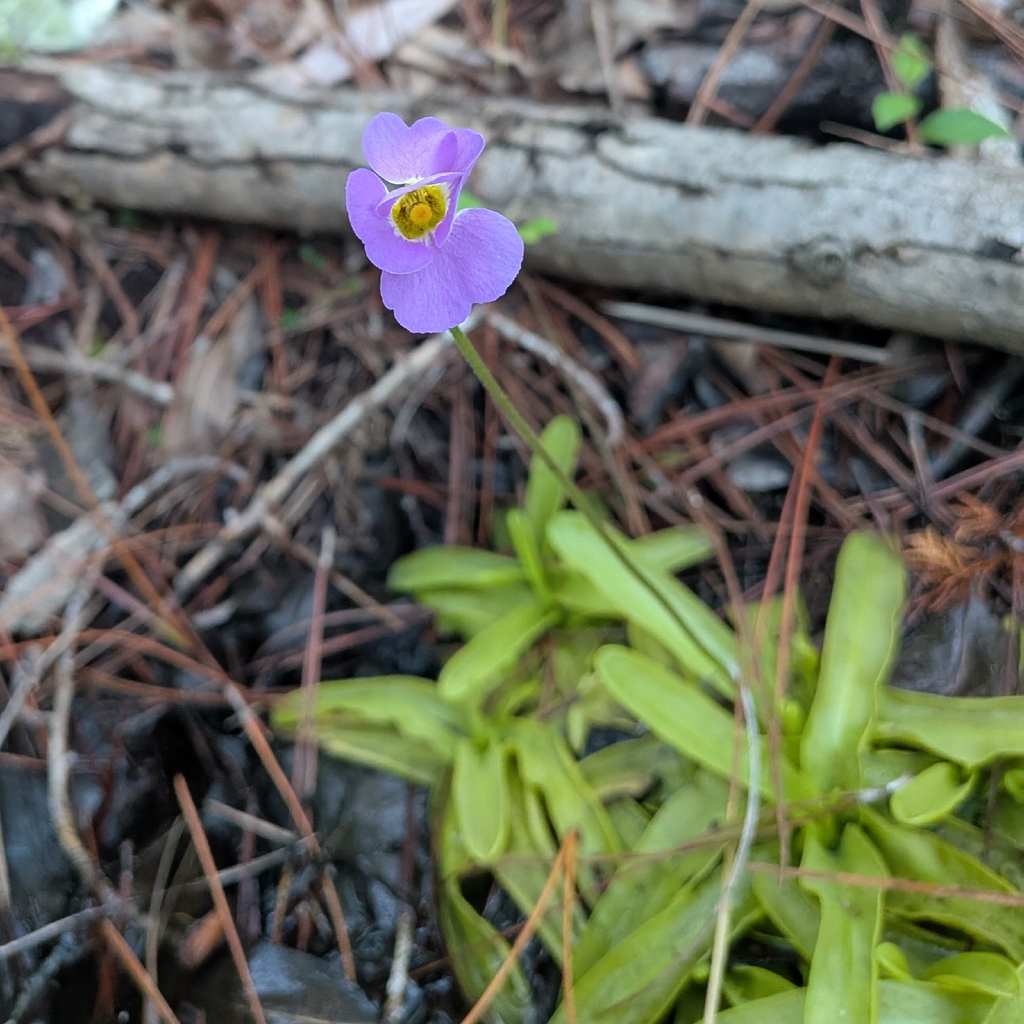
Pinguicula primuliflora, known as Southern Butterwort or primrose-flowered butterwort, is a small carnivorous wildflower of the Gulf Coastal Plain. It forms flat rosettes of pale, yellow-green leaves coated with sticky glands that trap and digest gnats and other tiny insects. In late winter and spring it sends up single, primrose-like flowers in lavender, pink or white, with a pale ring and a yellow throat.
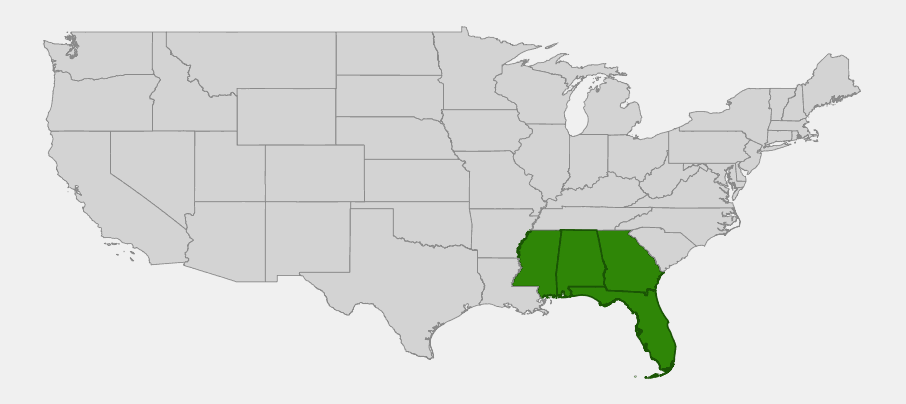
It is native only to the Florida Panhandle, southern Alabama, southern Mississippi and southern Georgia, where it grows in wet, sandy places, often right at the water’s edge along clear seepage streams. The Atlas of Florida Plants lists it as state-endangered in Florida. It is also one of the easiest butterworts to grow, and nursery-propagated plants are widely sold for windowsills and bog gardens.
This page covers how to recognize southern butterwort, how it catches insects, where it grows, how to grow it (from propagated plants only, never collected from the wild), and its relationship to the site’s other native butterworts.
Identification
Southern butterwort is easy to identify by its combination of shiny, sticky, pale green rosettes and large, flat-faced flowers with a ring of white around a yellow throat.
Size & Form
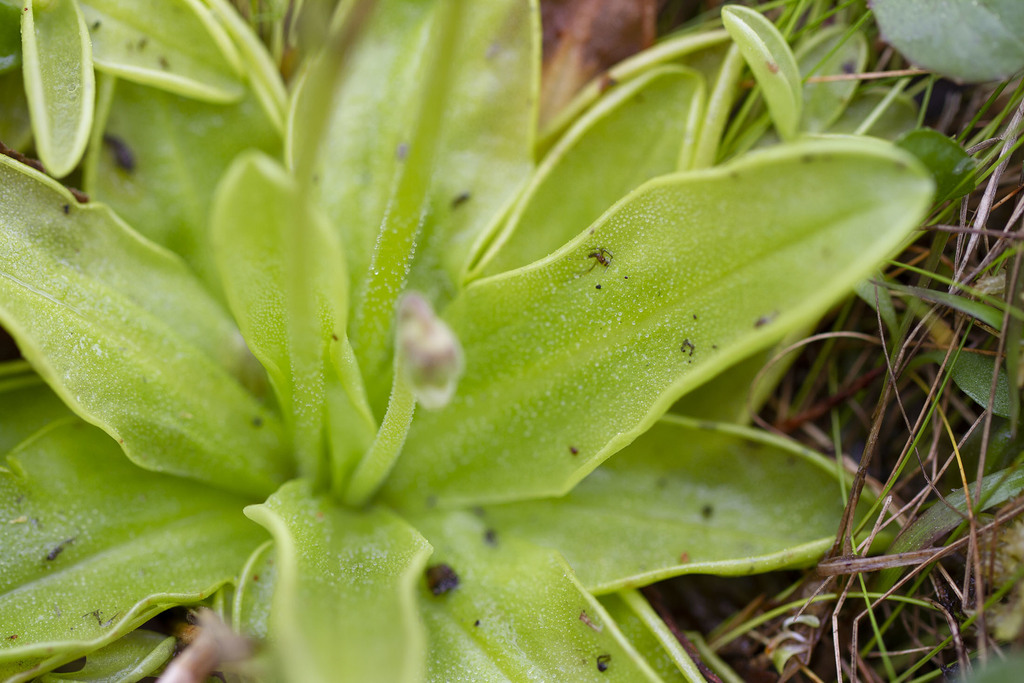
It is a perennial herb with a flat or slightly upright rosette about 2 to 6 inches across. Unlike butterworts of colder climates, it keeps its leaves all winter. It often forms clumps, because new plantlets sprout from the tips of old leaves that touch wet ground.
Leaves
The leaves are oblong to tongue-shaped, about 1 1/2 to 3 inches long, pale yellow-green to bright green, often with pinkish tints. The edges roll upward slightly. The upper surface feels greasy and is covered with two kinds of glands: stalked glands that hold sticky mucilage to catch insects, and flat glands that secrete enzymes to digest them.
Flowers
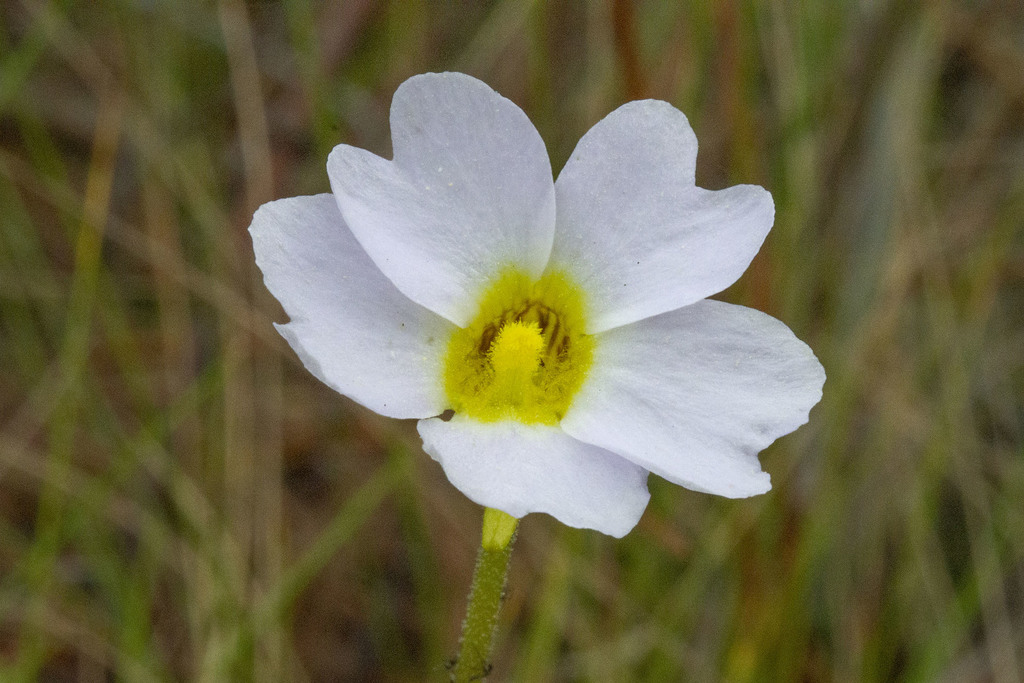
From about February to May, each rosette produces one to several flowers on slender, hairy stalks 3 to 6 inches tall. The flowers are about 1 to 1 1/2 inches across, with five notched, spreading lobes, usually lavender, pink or nearly white, with a white ring around a yellow, hairy throat and a short, blunt spur at the back.
Fruit
Each flower produces a small, rounded capsule filled with tiny seeds, but the plant spreads mostly by leaf-tip plantlets.
Similar Species
Several other butterworts grow in the same region. Yellow butterwort (Pinguicula lutea) has bright yellow flowers and grows in drier pine savannas. Small butterwort (Pinguicula pumila) is much smaller, with small pale flowers. Blueflower butterwort (Pinguicula caerulea) and Godfrey’s butterwort (Pinguicula ionantha) have violet flowers with darker veins; Godfrey’s butterwort is federally threatened. Southern butterwort is distinguished by its pale ring and yellow throat, its wet, often streamside habitat, and its leaf-tip plantlets. The northern common butterwort (Pinguicula vulgaris) has smaller, deep violet flowers and grows far to the north.
Quick Facts
| Scientific Name | Pinguicula primuliflora C.E. Wood & R.K. Godfrey |
| Family | Lentibulariaceae (bladderwort family) |
| Plant Type | Carnivorous perennial herb (evergreen rosette) |
| Mature Height | 2–6 in in flower |
| Mature Spread | 2–6 in per rosette; clumps wider |
| Growth Rate | Moderate |
| Sun Exposure | Part shade to sun (bright light) |
| Water Needs | High; constantly wet |
| Soil Type | Wet sand, peat or sphagnum; nutrient-poor |
| Soil pH | About 4.5–6.0 (acidic) |
| Bloom Time | February–May |
| Flower Color | Lavender, pink or white with a yellow throat |
| Fall Color | None; evergreen rosette |
| Fruit | Small capsule with tiny seeds |
| Deer Resistant | Yes, usually |
| USDA Hardiness Zones | 7–10 |
Native Range
USDA PLANTS lists southern butterwort as native in Alabama, Florida, Georgia and Mississippi. It is endemic to the eastern Gulf Coastal Plain: the western Florida Panhandle, southern Alabama, southern Mississippi and a few sites in southern Georgia. In Mississippi it reaches the coastal counties, including the Mississippi Sandhill Crane National Wildlife Refuge.
The Atlas of Florida Plants lists southern butterwort as endangered under Florida state law. Habitat loss, drainage, fire suppression and illegal collection have reduced many populations across its small range. Never dig plants from the wild; buy nursery-propagated plants, which are easy to find.
It grows in constantly wet, sandy or peaty soils: the banks of clear, spring-fed and seepage streams, seepage slopes and bogs, wet ditches and the edges of swamps, often in partial shade and sometimes partly submerged in shallow running water. It is more shade-tolerant than most southeastern butterworts.
📋 Regional plant lists featuring Southern Butterwort: Alabama, Georgia & Mississippi · North & South Florida
Growing & Care Guide
Southern butterwort is one of the easiest carnivorous plants to grow and is widely sold as tissue-cultured or nursery-propagated plants. Buy only propagated plants; because it is endangered in Florida and declining elsewhere, wild plants should never be collected. Grow it in a bog garden within its range or in a pot on a bright windowsill.
Light
Give it bright light: morning sun with afternoon shade outdoors, or a bright east or south window or grow lights indoors. It tolerates more shade than most butterworts but colors and flowers best in good light.
Soil & Water
Plant it in a nutrient-poor mix such as peat or long-fiber sphagnum with sand or perlite. Keep it constantly moist to wet, standing the pot in a tray of water. Use only rainwater, distilled or reverse-osmosis water, because minerals in tap water build up and damage the roots. Never fertilize the soil.
Planting Tips
In zones 8 to 10, grow it outdoors in a bog garden or along the edge of a small pond in partial shade. In colder areas, grow it in a pot and bring it indoors or into a cool greenhouse for winter; it stays green and does not need a dormancy. Indoors it catches fungus gnats very effectively.
Pruning & Maintenance
Remove old, dried leaves. You do not need to feed it insects; it catches its own. Repot every year or two into fresh mix, and divide crowded clumps.
Propagation
It is easy to propagate from leaf-tip plantlets, which can be pinned onto damp sphagnum and will root in a few weeks. Healthy leaves pulled from the base and laid on moist mix also form new plants. Divide clumps in spring. Seed is tiny and needs light and constant moisture to germinate.
Landscape Uses
- Bog gardens: a long-blooming native carnivorous plant for wet, acidic beds
- Windowsill and terrarium plant: an easy carnivorous houseplant that catches fungus gnats
- Pond and stream edges: suited to constantly wet, sandy margins within its range
- Education: a good plant for showing how carnivorous plants catch prey
- Conservation plantings: propagated plants can support restoration of Gulf Coast seepage bogs
Wildlife & Ecological Value
Southern butterwort is a predator of tiny insects, but its flowers depend on other insects for pollination.
For Pollinators
Small bees and flies visit the flowers, which have nectar in a short spur. The pale ring and yellow throat guide visitors to the center.
For Birds
It offers little to birds directly, but its wet seepage habitat supports many insects that birds eat.
For Mammals
Mammals rarely eat it. Its sticky leaves are unpalatable.
Ecosystem Role
By trapping gnats, springtails and other small insects, it gains nitrogen and phosphorus that are scarce in its wet, sandy soils. It is part of the rich community of carnivorous plants in Gulf Coast seepage bogs, which depend on fire and clean groundwater.
Cultural & Historical Uses
The name butterwort comes from the greasy, butter-like feel of the leaves; Pinguicula comes from the Latin pinguis, “fat.” In northern Europe, leaves of the common butterwort were once used to curdle milk.
Southern butterwort was described in the 1950s by Carroll Wood and Robert Godfrey, a leading botanist of the Florida Panhandle. The name primuliflora means “primrose-flowered,” for its flat, primrose-like blooms.
Its habit of making new plants from the tips of its leaves is unusual among North American butterworts and is a big reason it is so easy to propagate in nurseries, which means there is no need for anyone to collect wild plants.
Frequently Asked Questions
Is southern butterwort carnivorous?
Yes. Its leaves are covered with sticky glands that trap gnats, springtails and other tiny insects, and then digest them to get nutrients missing from its poor, wet soils.
Is southern butterwort endangered?
The Atlas of Florida Plants lists it as endangered under Florida state law, and it has declined across its small Gulf Coast range. Buy only nursery-propagated plants and never collect it from the wild.
How do I grow southern butterwort indoors?
Plant it in peat or sphagnum with sand or perlite, keep it constantly moist with rainwater or distilled water, and give it bright light. It stays green all year and needs no dormancy.
Will southern butterwort get rid of fungus gnats?
It catches many fungus gnats on its sticky leaves and is often grown for that reason, but it will not eliminate a large infestation by itself.
How do I propagate southern butterwort?
The easiest way is from the small plantlets that form at the tips of the leaves. Pin them onto moist sphagnum and they will root in a few weeks. Whole leaves pulled from the base also root on moist mix.

Looking for a nursery that carries Southern Butterwort?
Browse our native plant nursery directory: Alabama · Florida & Georgia · Mississippi

