
Yellow Butterwort (Pinguicula lutea)
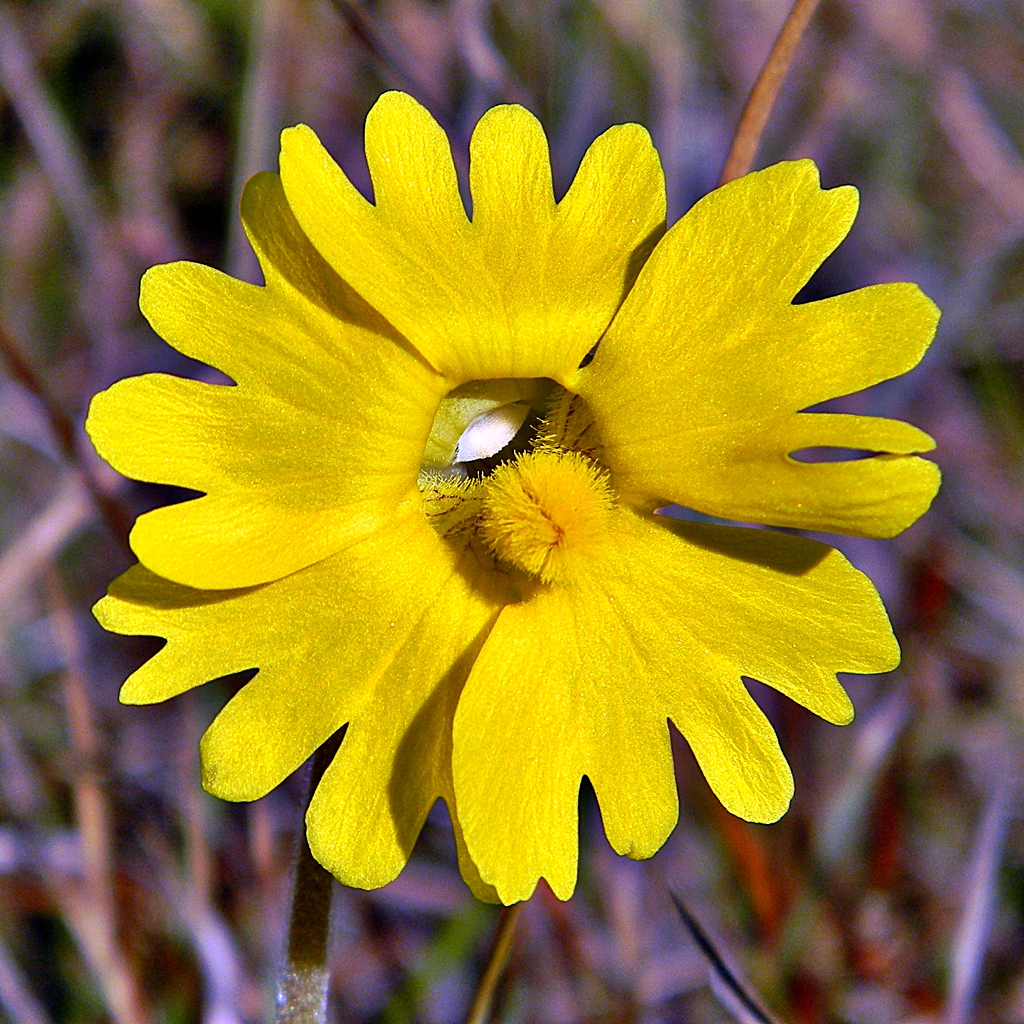
Pinguicula lutea, known as Yellow Butterwort, is a small carnivorous wildflower of the wet pine flatwoods and savannas of the southeastern Coastal Plain. It grows as a flat rosette of soft, yellow-green, greasy-feeling leaves, only a few inches across, that catch tiny insects on their sticky surface. In late winter and spring it sends up slender, hairy stalks, each topped by a single bright yellow flower about an inch or more across, one of the largest and showiest flowers of any butterwort in the region.
Butterworts belong to the bladderwort family (Lentibulariaceae), along with the aquatic bladderworts. The genus name Pinguicula comes from the Latin pinguis, “fat” or “greasy”, describing the buttery feel of the leaves, and lutea means “yellow”. In bloom it is one of the most conspicuous wildflowers of the flatwoods, scattered like small yellow stars among the wiregrass and pine needles.
Yellow butterwort ranges along the Coastal Plain from southeastern North Carolina to Florida and west to southeastern Louisiana. It is listed as threatened in Florida and is uncommon to rare in several other states as its fire-maintained habitats have been lost. Never collect it from the wild; nursery-propagated plants are available from carnivorous plant growers. This guide covers how to identify it, where it grows, how it catches prey, and how to grow it responsibly.
Identification
Yellow butterwort is easiest to spot in bloom, from about February to May, when its bright yellow flowers stand above the low, sticky rosettes. Out of flower, look for flat, star-shaped rosettes of pale, glossy, yellow-green leaves on damp, sandy ground.
Growth Habit
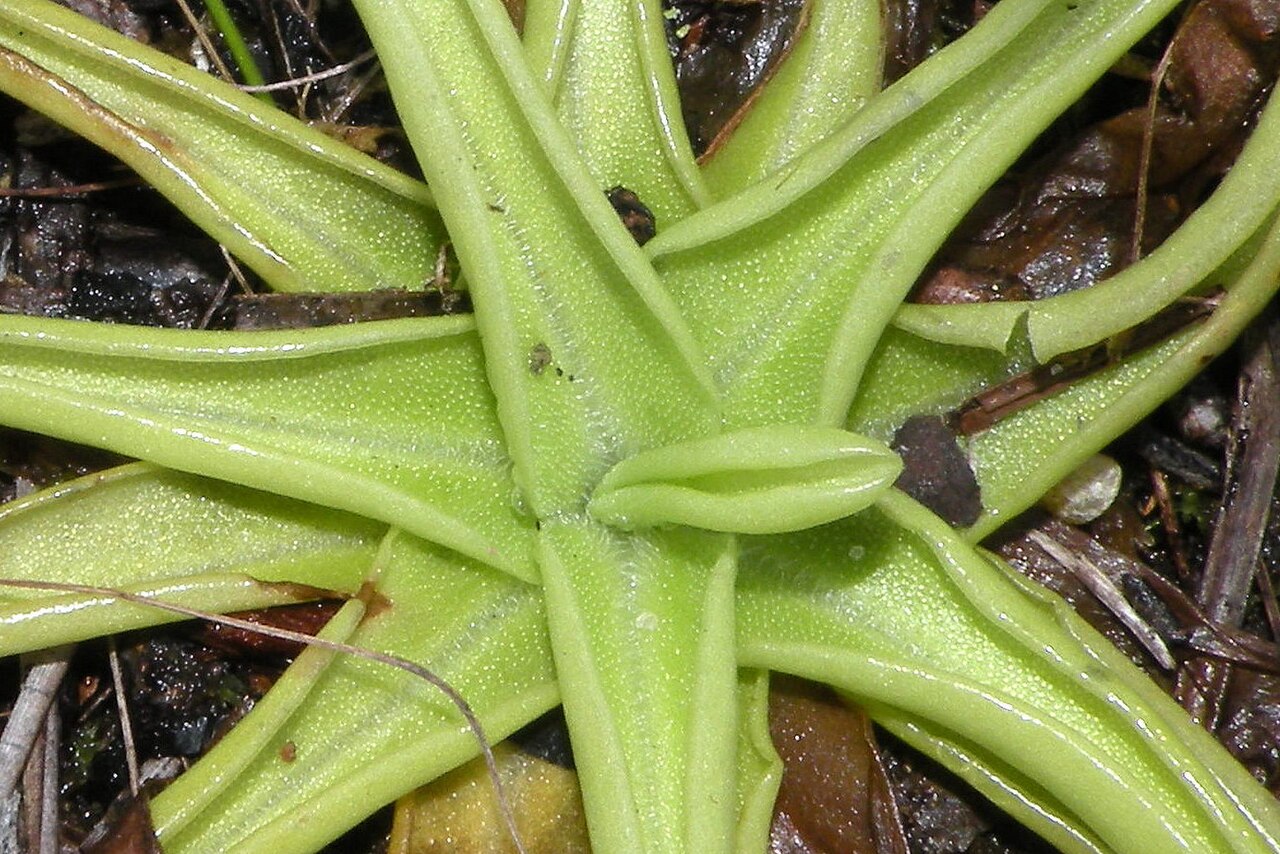
It is a small, stemless perennial that forms a flat basal rosette, usually 2 to 6 inches across, pressed close to the ground. Plants have a few fine roots and no stems apart from the flower stalks.
Leaves
The leaves are oblong to egg-shaped, about 1 to 2 1/2 inches long, soft and yellow-green, and covered with tiny glands that make the upper surface sticky and greasy. The edges roll upward and inward, especially when the leaf has caught prey.
Flowers
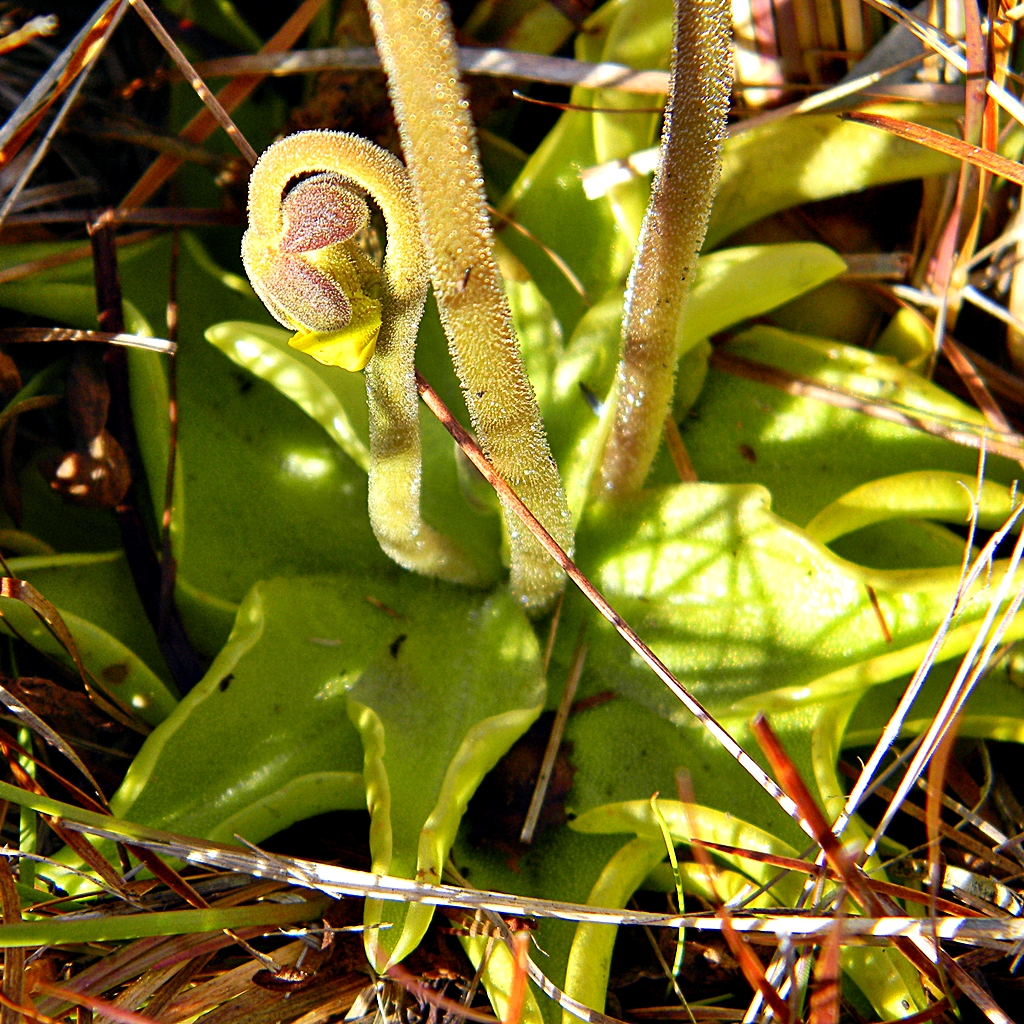
Each flower stalk is 4 to 12 inches or more tall and covered in sticky hairs, and carries one flower. The corolla is bright yellow, about 1 to 1 1/2 inches wide, with five spreading lobes that are notched or fringed at the tip, a hairy throat and a short spur at the back. Flowers appear from late winter into spring, mostly in March and April.
Fruit & Seeds
The flower is followed by a small, rounded capsule that splits to release many tiny seeds in late spring.
How It Catches Prey
Stalked glands on the leaves produce droplets of sticky mucilage that trap gnats, springtails and other small insects. Other glands then release digestive enzymes, and the leaf absorbs the nutrients, mainly nitrogen and phosphorus, that are scarce in its wet, sandy soils.
Look-alikes
Small butterwort (P. pumila) has much smaller, pale violet to white or occasionally yellow flowers. Blue butterwort (P. caerulea) and violet butterwort (P. ionantha) have violet or pale lavender flowers. A yellow-flowered butterwort over an inch across in the Southeast is almost always yellow butterwort.
Quick Facts
| Scientific Name | Pinguicula lutea Walter |
| Family | Lentibulariaceae (bladderwort family) |
| Plant Type | Carnivorous perennial herb (basal rosette) |
| Mature Height | 4–12 in in flower; rosette nearly flat |
| Mature Spread | 2–6 in |
| Growth Rate | Slow |
| Sun Exposure | Full sun to light shade |
| Water Needs | High; constantly damp but not flooded |
| Soil Type | Acidic, nutrient-poor wet sands and peaty sands |
| Soil pH | About 4.0–5.5 |
| Bloom Time | February–May (mostly March–April) |
| Flower Color | Bright yellow |
| Fall Color | None; evergreen rosette in mild climates |
| Fruit | Small capsule with many tiny seeds |
| Deer Resistant | Seldom browsed |
| USDA Hardiness Zones | 8–10 |
Native Range
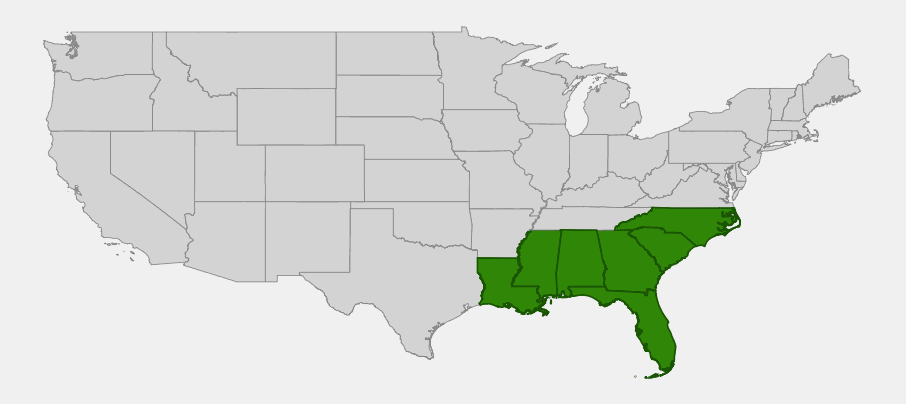
Yellow butterwort is native to the Coastal Plain of the southeastern United States. USDA PLANTS lists it in North Carolina, South Carolina, Georgia, Florida, Alabama, Mississippi and Louisiana. It is not found inland beyond the Coastal Plain.
It is most common in Florida, where it occurs through much of the peninsula and Panhandle, and in southern Georgia. Farther north it reaches the coastal plain of South Carolina and southeastern North Carolina, and to the west it occurs in coastal Alabama, southern Mississippi and the Florida Parishes of southeastern Louisiana, where it is very local.
It grows in wet pine flatwoods, longleaf pine savannas, the edges of bogs and seepage slopes, and damp roadside ditches on acidic sand, at low elevations. Like most Coastal Plain carnivorous plants, it depends on frequent fire to keep the ground open and sunny; where fire is suppressed, shrubs and grasses crowd it out.
📋 Regional plant lists featuring Yellow Butterwort: North & South Florida · Alabama, Georgia & Mississippi · North & South Carolina · Arkansas, Louisiana, Eastern Oklahoma & Eastern Texas
Growing & Care Guide
Yellow butterwort can be grown in a bog garden in the Deep South or in pots by carnivorous plant enthusiasts elsewhere. Buy only nursery-propagated plants (seed-grown or tissue-cultured) from reputable carnivorous plant growers. Never dig or collect it from the wild: it is state-listed in Florida, rare in much of its range, and wild-dug plants rarely survive.
Light
Give it bright light: full sun outdoors in a bog garden, or a bright windowsill or grow lights indoors. In too little light the rosette becomes pale and stretched and seldom flowers.
Soil & Water
Use a nutrient-poor, acidic mix such as peat and sand or peat and perlite, never potting soil or fertilizer. Keep it evenly damp with rainwater, distilled or reverse-osmosis water, since tap water minerals build up and harm it. A shallow tray of water works, but avoid long periods of standing water, which can rot the crown.
Planting Tips
In a bog garden, plant it at the sunny, slightly raised edges where the sand stays moist but not submerged, alongside pitcher plants and sundews. Do not feed it: it catches its own insects outdoors and can manage indoors with the gnats and small flies that come its way.
Pruning & Maintenance
Remove old, dead leaves to prevent mold. Keep competing grasses and mosses from overgrowing the rosettes, which mimics the role of fire in the wild. Plants may slow down in the heat of summer; reduce disturbance and keep the soil from drying out.
Propagation
Grow it from fresh seed sown on the surface of damp peat-sand mix, since the tiny seeds need light to germinate; a period of cool, moist conditions can help. Growers also propagate it by leaf pullings and tissue culture. Collect seed only from your own cultivated plants.
Landscape Uses
- Bog gardens: a low, flowering carnivore for the front of a sunny bog planting
- Container and windowsill culture: grown in pots by carnivorous plant enthusiasts
- Coastal Plain restoration: a characteristic flatwoods and savanna wildflower (nursery stock only)
- Educational gardens: an easy way to show how carnivorous plants catch prey
- Spring color: bright yellow flowers in late winter and early spring
Wildlife & Ecological Value
Yellow butterwort is a small but characteristic member of the fire-maintained flatwood and savanna communities of the Southeast, which are among the most species-rich plant communities in North America.
For Pollinators
Its bright yellow, spurred flowers bloom early in the year and are visited by small bees and other insects that crawl into the hairy throat. Butterworts keep their flowers on tall stalks, well above the sticky leaves, so pollinators are not caught.
For Birds
It has no direct value as bird food, but it belongs to the open, grassy longleaf pine savannas and flatwoods that are home to birds such as Bachman’s sparrow and the red-cockaded woodpecker.
For Mammals
It is too small and sticky to be a significant food plant for mammals.
Ecosystem Role
As a carnivorous plant it captures small insects, recycling their nutrients in soils that are naturally poor in nitrogen and phosphorus. Its presence is a sign of healthy, frequently burned wet flatwoods. Fire suppression, drainage, development and conversion to pine plantations have reduced its habitat, and illegal collection is a threat to small populations.
Cultural & Historical Uses
Thomas Walter described yellow butterwort in his Flora Caroliniana of 1788, one of the first floras of North American plants, based on plants from the South Carolina low country. It has been admired ever since as one of the showiest wildflowers of the southern pine barrens.
The name butterwort is old: in Europe, the greasy leaves of the common butterwort were said to have been used to curdle milk and were associated with butter and dairy folklore. The southeastern Coastal Plain is a world center of butterwort diversity, with several native species growing in the same flatwoods.
Yellow butterwort is protected in Florida, and collecting it from public lands or without the landowner’s permission is illegal there. Admire it in the wild, photograph it, and buy cultivated plants to grow at home.
Frequently Asked Questions
Is yellow butterwort carnivorous?
Yes. Its leaves are covered with sticky glands that trap small insects, which are then digested to provide nutrients that its poor, wet soils lack.
Where does yellow butterwort grow?
It grows in wet pine flatwoods, savannas, bog edges and damp ditches on the Coastal Plain from North Carolina to Florida and west to Louisiana.
When does yellow butterwort bloom?
It blooms from late winter into spring, mostly in March and April, with bright yellow flowers on tall, hairy stalks.
Can I dig up yellow butterwort from the wild?
No. It is protected in Florida and rare elsewhere, and wild plants rarely survive transplanting. Buy seed-grown or tissue-cultured plants from a carnivorous plant nursery.
How do I grow yellow butterwort?
Grow it in a damp, acidic peat-sand mix in bright light, water only with rainwater or distilled water, and never fertilize it.

Looking for a nursery that carries Yellow Butterwort?
Browse our native plant nursery directory: Alabama · Florida & Georgia · Louisiana & Mississippi · North Carolina · South Carolina

