
White Pitcher Plant (Sarracenia leucophylla)
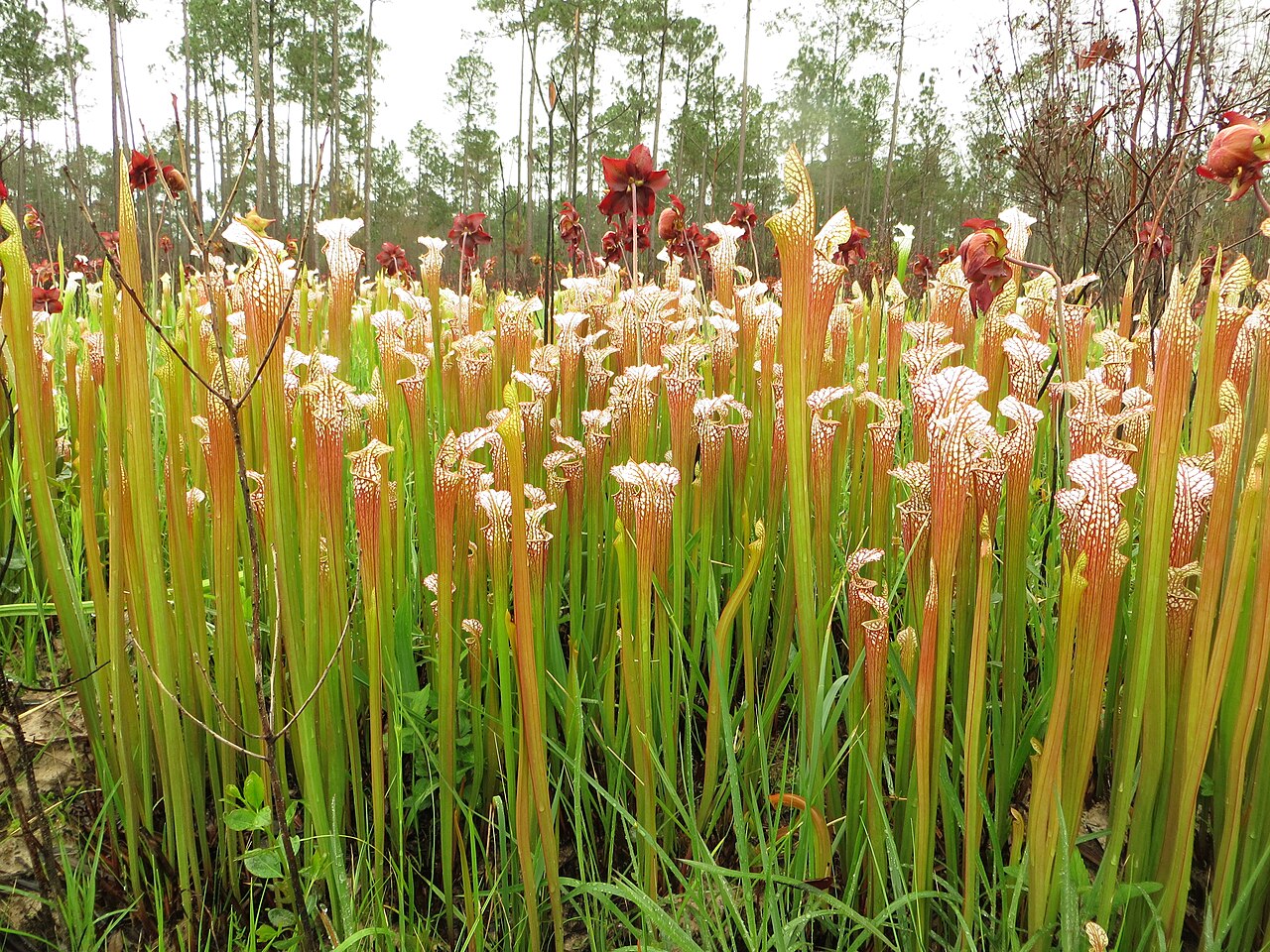
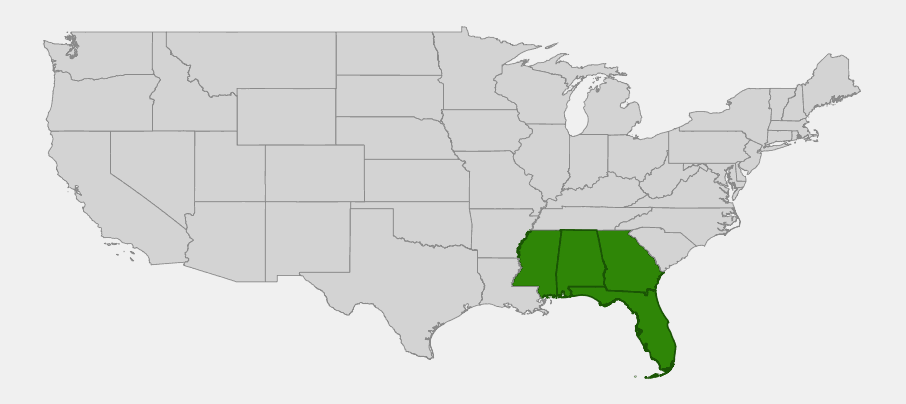
Sarracenia leucophylla, known as White Pitcher Plant (USDA: crimson pitcherplant; also white-top pitcher plant or purple trumpet-leaf), is one of the showiest carnivorous plants in North America. It is native to the wet pine savannas and seepage bogs of the Gulf Coast, mainly in the Florida Panhandle, southern Alabama, southern Mississippi and a small area of southwestern Georgia. It belongs to the pitcher plant family (Sarraceniaceae).
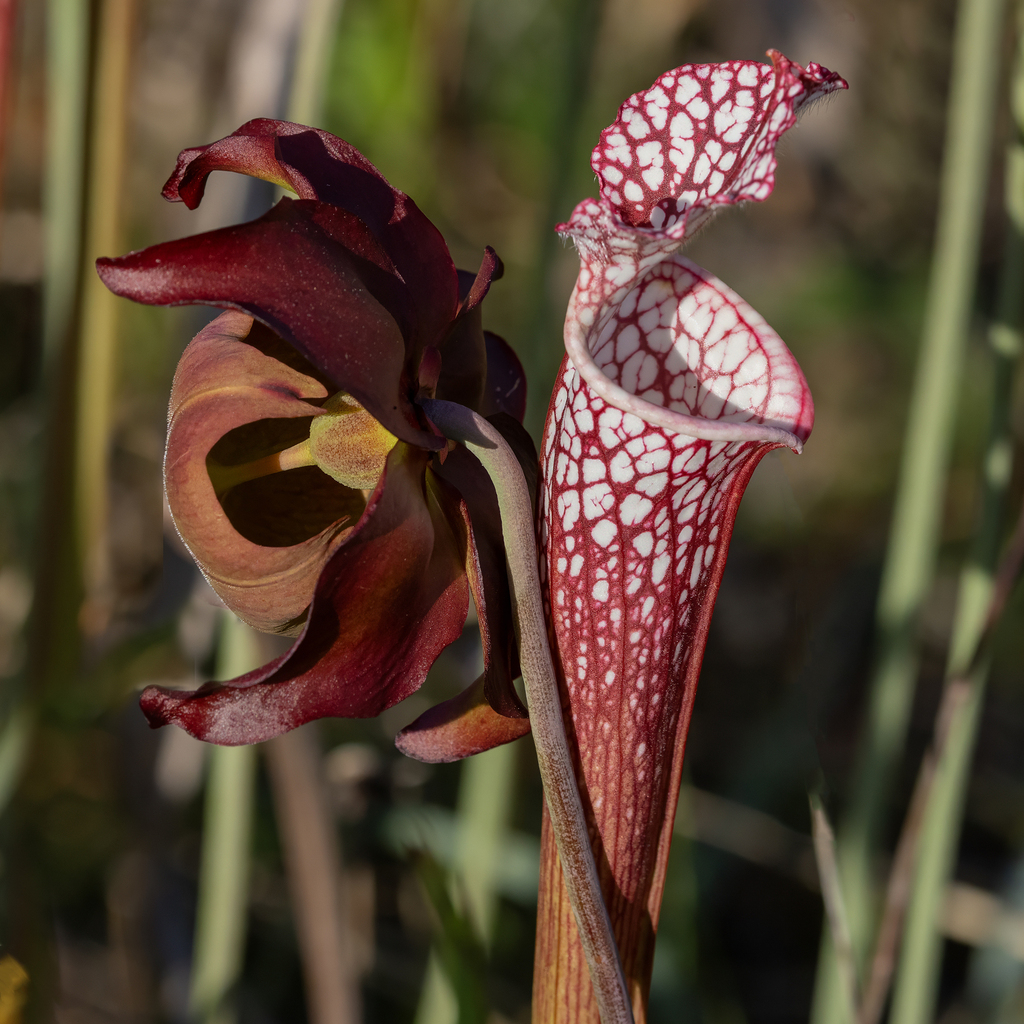
Its tall, upright, trumpet-shaped leaves, often 2 to 3 feet tall, are green below and white at the top, laced with a net of red or green veins and capped by an upright, wavy-edged hood. Insects are lured to the bright tops and nectar, then slip into the tube, where they are digested to supply the plant with nutrients missing from its boggy soil. In early spring it bears nodding maroon-red flowers, and it makes a second flush of larger, more colorful pitchers in late summer and fall.
Conservation note: white pitcher plant has lost much of its habitat to development, drainage, pine plantations and fire suppression, and wild plants are dug by poachers and cut for the floral trade. NatureServe ranks it G3 (vulnerable) and S1 (critically imperiled) in Georgia, and the IUCN lists it as Vulnerable. Never dig or cut plants from the wild. Buy only nursery-propagated plants from reputable carnivorous plant growers; it is easy to grow in a sunny bog garden or container.
Identification
Look for tall, upright trumpet-shaped pitchers that are green at the base and white at the top, with a network of red or green veins and an erect, wavy-edged hood, growing in clumps in sunny, wet pine savannas and bogs of the Gulf Coast.
Pitchers (Leaves)
The leaves are hollow, upright tubes 1 to 3 feet (30 to 90 cm) tall, sometimes taller, widening gradually to a broad mouth. The lower part is green; the top third is white with a network of red, purple or green veins, and is often translucent between the veins. The hood is upright, rounded and wavy-edged, white with colored veins, and does not cover the mouth. A narrow wing runs up the front of the tube. Spring pitchers are often smaller and may be followed by flat, sword-like leaves (phyllodia) in summer and a flush of large, brightly colored pitchers in late summer and fall.
Flowers
The flowers appear in early spring, about March to April, before or with the first pitchers. Each flower is nodding, 2 to 4 inches across, on a leafless stalk about as tall as the pitchers. It has five maroon to crimson-red petals that hang down around a large, umbrella-shaped style. The flowers have a sweet, fruity scent. Rare plants have yellow or greenish flowers.
Fruit & Seeds
The fruit is a rounded, five-chambered capsule that ripens in late summer or fall and releases many small, rough seeds. Seedlings grow slowly and take several years to reach flowering size.
How It Traps Insects
The white, veined top of the pitcher and sugary nectar around the mouth attract insects, especially flies, wasps, bees, moths and ants. The inside of the upper tube is waxy and slippery, and lower down it is lined with stiff, downward-pointing hairs. Insects that slip in cannot climb out and drown in liquid at the base, where digestive enzymes and bacteria break them down. The plant absorbs nitrogen and phosphorus from its prey.
Look-alikes
Yellow Pitcher Plant (S. flava) has yellow-green pitchers with a hood that leans over the mouth and yellow flowers. Pale Pitcher Plant (S. alata) grows west of Mobile Bay and has pale yellow-green pitchers and cream flowers. Parrot Pitcherplant (S. psittacina) has short, reclining pitchers. White pitcher plant hybridizes with all of these where they grow together, producing intermediate plants such as S. × moorei (with yellow pitcher plant) and S. × areolata (with pale pitcher plant). Only white pitcher plant has tall pitchers with a pure white, veined top and an erect hood.
Conservation & Collection
White pitcher plant is ranked G3 (vulnerable) by NatureServe, critically imperiled (S1) in Georgia, imperiled (S2) in Mississippi and vulnerable (S3) in Alabama and Florida. It is also listed as Vulnerable by the IUCN. Threats include drainage and development of wetlands, conversion to pine plantations, fire suppression that lets shrubs overgrow bogs, and poaching of plants and cut pitchers for the floral trade. Do not dig, cut or buy wild-collected plants or pitchers.
Quick Facts
| Scientific Name | Sarracenia leucophylla |
| Family | Sarraceniaceae (pitcher plant family) |
| Plant Type | Carnivorous herbaceous perennial |
| Mature Height | 1–3 ft (pitchers); flower stalks to about 2 ft |
| Mature Spread | 1–2 ft; clumps slowly widen |
| Growth Rate | Slow to moderate |
| Sun Exposure | Full sun |
| Water Needs | Wet; soil must stay constantly moist |
| Soil Type | Acidic, nutrient-poor sandy peat; seepage bogs and wet savannas |
| Soil pH | About 4.0–5.5 |
| Bloom Time | March–April |
| Flower Color | Maroon to crimson-red |
| Fall Color | Fall pitchers are the most colorful: white with red veins |
| Fruit | Rounded five-chambered capsule with many small seeds |
| Deer Resistant | Generally; seldom browsed |
| USDA Hardiness Zones | 7–9 (to zone 6 with winter protection) |
Native Range
White pitcher plant is endemic to the Gulf Coastal Plain of the southeastern United States. USDA PLANTS lists it in Alabama, Florida, Georgia, Mississippi and North Carolina, but the North Carolina plants are introduced populations planted outside the species’ natural range, and NatureServe treats it as exotic there, so North Carolina is not shown as native on the map. The natural range is centered on the western Florida Panhandle (mainly west of the Apalachicola River) and southern Alabama, with smaller populations in southern Mississippi and southwestern Georgia.
Some of the best remaining populations are in Escambia, Santa Rosa, Okaloosa and Walton counties in Florida and Baldwin and Mobile counties in Alabama, including protected sites such as Splinter Hill Bog Preserve in Alabama and the Garcon Point and Blackwater River areas in Florida. A small, dwarf form is known from Garcon Point in Santa Rosa County, Florida.
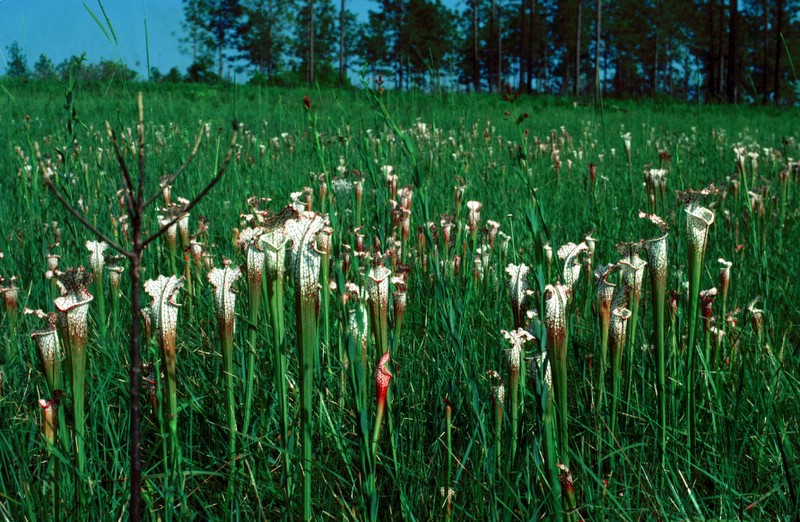
It grows in full sun in wet, open longleaf pine savannas and flatwoods, hillside seepage bogs, wet ditches and the edges of streams and swamps, in acidic, nutrient-poor sandy or peaty soil. These habitats depend on frequent fire, which clears out shrubs and trees that would otherwise shade out the pitcher plants.
📋 Regional plant lists featuring White Pitcher Plant: Alabama, Georgia & Mississippi · North & South Florida
Growing & Care Guide
White pitcher plant is easy to grow if you give it what it gets in the wild: full sun, constantly wet acidic soil, rainwater or distilled water, no fertilizer and a cool winter rest. Always start with nursery-propagated plants.
Light
Full sun, at least 6 hours of direct sun a day. In too much shade the pitchers turn floppy and green and lose their white color.
Soil & Water
Plant in nutrient-poor, acidic soil such as a mix of peat moss and coarse sand or perlite. Never use potting soil, compost or fertilizer. Keep the soil wet at all times, but in pots let water drain rather than stagnate; this species is less tolerant of standing water than some pitcher plants. Water only with rainwater, distilled water or reverse-osmosis water, since minerals in tap water build up and harm the roots.
Planting Tips
Grow it in a bog garden lined with a pond liner filled with peat and sand, or in a large plastic pot standing in a tray of water. Plant in spring. It looks best in a group with other pitcher plants, sundews and bog orchids. Outdoors it is hardy in zones 7 to 9 and in zone 6 with a heavy winter mulch of pine straw.
Pruning & Maintenance
In late winter, before new growth starts, cut off the old, brown pitchers at the base. Do not feed the plant meat or fertilizer; it catches its own insects. It needs a cool winter dormancy of about three months; do not grow it as a year-round houseplant. Divide large clumps every few years in late winter.
Propagation
Divide the rhizomes of established clumps in late winter or early spring. It can also be grown from seed, which needs about four to eight weeks of cold, moist stratification and is sown on the surface of wet peat in bright light. Seedlings take three to five years to flower. Buy plants only from nurseries that propagate their own stock, and never collect from the wild.
Landscape Uses
- Bog gardens: a dramatic centerpiece with tall white pitchers
- Container water gardens: grows well in pots standing in rainwater
- Pollinator and wildlife gardens: spring flowers are visited by bees
- Educational gardens: a fascinating example of a carnivorous plant
- Habitat restoration: part of restored wet pine savannas on the Gulf Coast
Wildlife & Ecological Value
White pitcher plant supports a small community of specialized animals, even as it captures many insects.
For Pollinators
The spring flowers are pollinated mainly by bumblebees, which push past the umbrella-shaped style to reach the pollen and nectar. The flowers open before the main flush of pitchers, which helps keep pollinators separate from the traps.
For Birds
Insect-eating birds such as wrens and warblers hunt the many insects drawn to the pitchers. The open savannas where it grows are home to birds such as Bachman’s sparrow and the red-cockaded woodpecker.
For Mammals
Mammals seldom eat pitcher plants. Small mammals and deer move through the open bogs and savannas, and fire-maintained savannas support a wide variety of wildlife.
Ecosystem Role
Several insects live only in pitcher plants, including pitcher plant moths (Exyra), whose caterpillars feed inside the pitchers, and flesh flies and mosquito larvae that live in the pitcher fluid and feed on trapped prey. Crab spiders and tree frogs often sit at the mouth to ambush visiting insects. White pitcher plant is an indicator of healthy, fire-maintained wet savanna, one of the most species-rich plant communities in North America.
Cultural & Historical Uses
The genus Sarracenia honors Michel Sarrazin, a French physician and naturalist in New France (Quebec) who sent specimens of North American pitcher plants to Europe around 1700. The species name leucophylla means “white leaf,” for the bright white tops of the pitchers.
White pitcher plant is widely grown by carnivorous plant enthusiasts, and nurseries offer many selected forms, including ‘Tarnok’, with double flowers, and white-topped forms from Hurricane Creek, Alabama. Its long-lasting, white-and-red pitchers are prized in floral arrangements, which led to heavy harvests of wild pitchers in the past. Today buyers should choose only cultivated material.
Related pitcher plants on this site include Yellow Pitcher Plant, Pale Pitcher Plant, Hooded Pitcher Plant, Parrot Pitcherplant and Purple Pitcher Plant.
Frequently Asked Questions
How does the white pitcher plant catch insects?
Insects are drawn to the white, veined pitcher tops and nectar, slip on the waxy inner surface and fall into the tube. Downward-pointing hairs keep them from climbing out, and they are digested in the fluid at the bottom.
Is white pitcher plant endangered?
It is ranked vulnerable (G3) by NatureServe and Vulnerable by the IUCN, and it is critically imperiled in Georgia. Habitat loss, fire suppression and poaching are the main threats. Never collect it from the wild.
Where can I see white pitcher plants in the wild?
Protected bogs and savannas in the Florida Panhandle and southern Alabama, such as Splinter Hill Bog Preserve in Baldwin County, Alabama, have large displays, especially in spring and fall.
Can I grow white pitcher plant at home?
Yes. Grow nursery-propagated plants in full sun in wet, acidic peat and sand, water only with rain or distilled water, never fertilize, and give the plant a cool winter rest.
Does it grow in North Carolina?
There are planted, introduced colonies in North Carolina, but its natural range is the Gulf Coast of Florida, Alabama, Mississippi and southwestern Georgia.

Looking for a nursery that carries White Pitcher Plant?
Browse our native plant nursery directory: Alabama · Florida & Georgia · Mississippi