
Pale Pitcher Plant (Sarracenia alata)
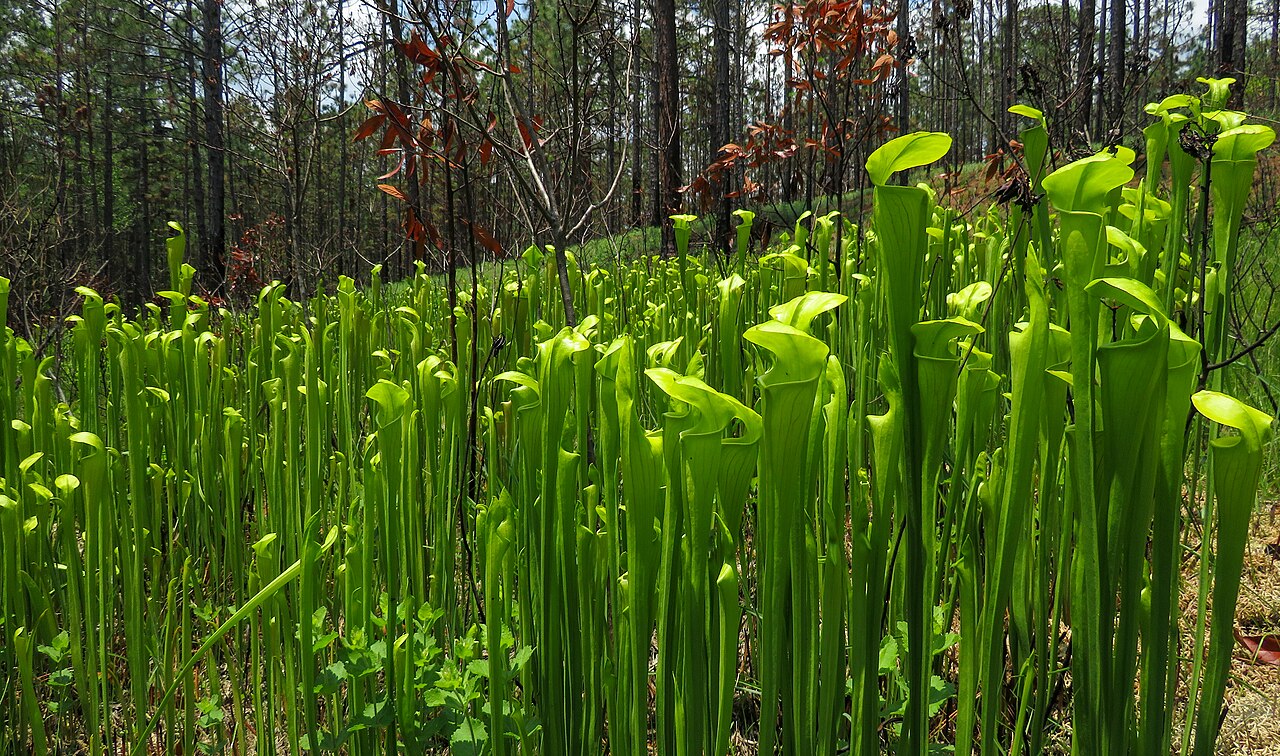
Sarracenia alata, known as Pale Pitcher Plant (USDA: yellow trumpets; also called pale trumpet), is a carnivorous perennial of the pitcher plant family (Sarraceniaceae) native to the Gulf Coastal Plain from southwestern Alabama and southern Mississippi to Louisiana and East Texas. It grows in sunny, wet, acidic seepage bogs and pine savannas, where its tall, slender, trumpet-shaped leaves rise in clumps up to about 2 1/2 feet tall.
Each pitcher is a modified leaf, rolled into a tube with a narrow wing down the front (the source of the name alata, “winged”) and an upright lid at the top. Insects are drawn by nectar and color around the mouth, lose their footing on a slippery zone inside and fall into the tube, where downward-pointing hairs stop them climbing out. The plant absorbs nutrients from their bodies, which lets it thrive in nutrient-poor bog soils. In early spring, nodding, creamy yellow flowers appear on tall stalks.
Pale pitcher plant is the westernmost of the eastern pitcher plants and the only Sarracenia native to Texas. Much of its habitat has been lost to drainage, development, pine plantations and fire suppression. Buy only nursery-propagated plants, and never dig pitcher plants from the wild. In a properly built bog garden, it is a rewarding plant for gardeners in the South.
Identification
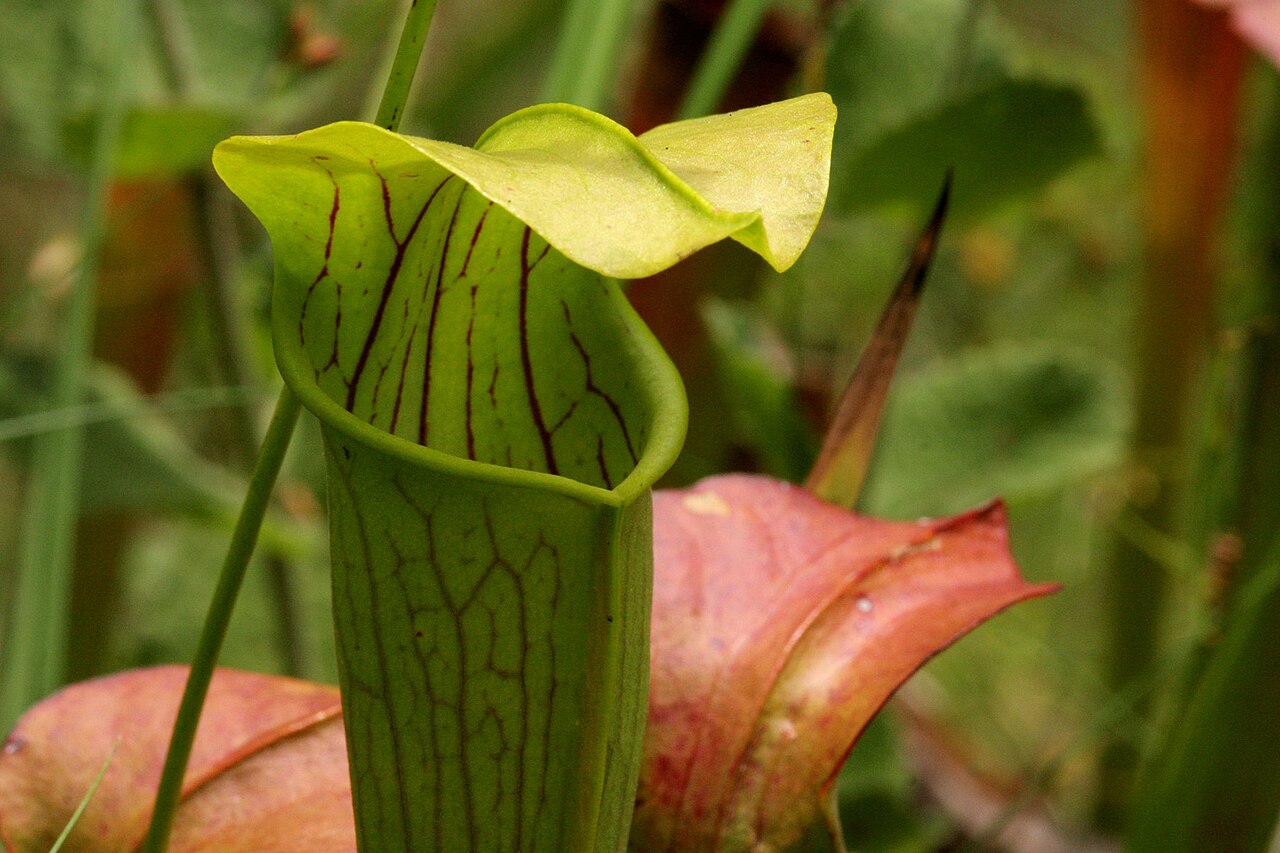
Pale pitcher plant is identified by its tall, erect, yellow-green pitchers with a narrow wing, a wide mouth, and an upright, rounded lid, often with fine red veins on the lid and throat, plus creamy yellow spring flowers.
Pitchers
The pitchers are erect, slender trumpets usually 1 to 2 1/2 feet tall, growing in clumps from a creeping rhizome. They are yellow-green, often with fine red or purple veins near the top, and some populations have pitchers flushed red or bronze. A narrow wing runs down the front of each pitcher. The lid is broad and held upright over the mouth, often with a slight point at the tip.
Phyllodes
In late summer and fall, plants may also produce flat, sword-shaped leaves (phyllodes) without a trap. In winter many pitchers brown and die back, and the plant rests until spring.
Flowers
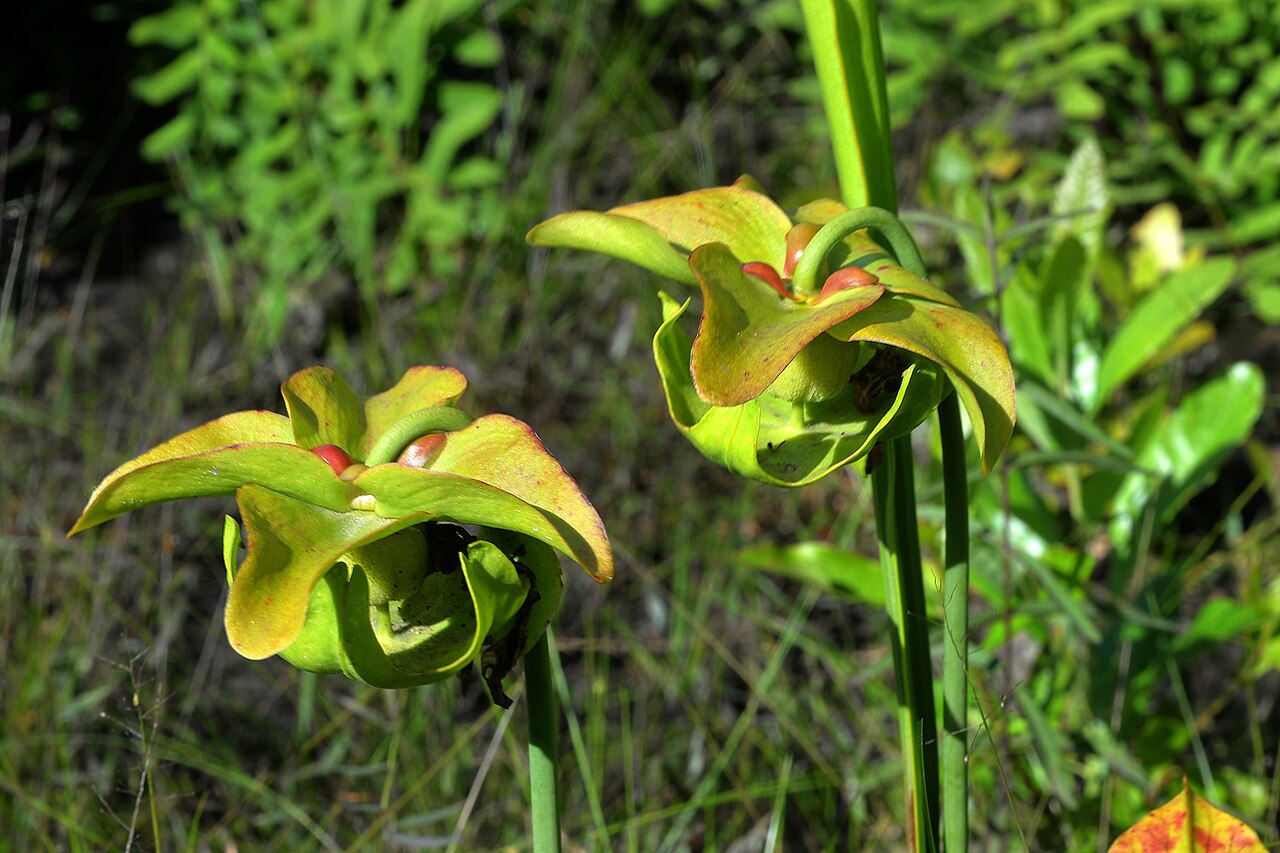
From March to May, each plant produces one or a few flowers on leafless stalks about as tall as the pitchers, often appearing before or with the new pitchers. The flowers are nodding, about 2 to 3 inches across, with five creamy yellow to pale greenish-yellow petals hanging below a large, umbrella-shaped style. They have a mild fragrance.
Fruit & Seeds
The flower develops into a rounded capsule that ripens in late summer and splits to release many small seeds. Seeds fall near the parent plant or are carried by water.
Look-alikes
Yellow Pitcher Plant (S. flava) grows farther east, from Alabama and the Florida Panhandle to Virginia; it has bright yellow flowers, a lid often with a red blotch at its base, and a lid that is broader and more arching. The two species do not grow together naturally. Hooded Pitcher Plant has a lid that curves over the mouth, and Parrot Pitcher Plant has low, reclining pitchers. Hybrids with other species are common in cultivation.
Quick Facts
| Scientific Name | Sarracenia alata |
| Family | Sarraceniaceae (pitcher plant family) |
| Plant Type | Carnivorous herbaceous perennial; winter-dormant |
| Mature Height | 1–2 1/2 ft |
| Mature Spread | 1–2 ft clumps |
| Growth Rate | Slow to moderate |
| Sun Exposure | Full sun |
| Water Needs | High; constantly moist to wet soil |
| Soil Type | Acidic peat and sand, sphagnum |
| Soil pH | About 4.0–5.5 (strongly acidic) |
| Bloom Time | March–May |
| Flower Color | Creamy yellow to pale greenish yellow |
| Fall Color | Pitchers brown in winter; some redden |
| Fruit | Small capsule with many seeds |
| Deer Resistant | Yes; rarely browsed |
| USDA Hardiness Zones | 7–9 |
Native Range
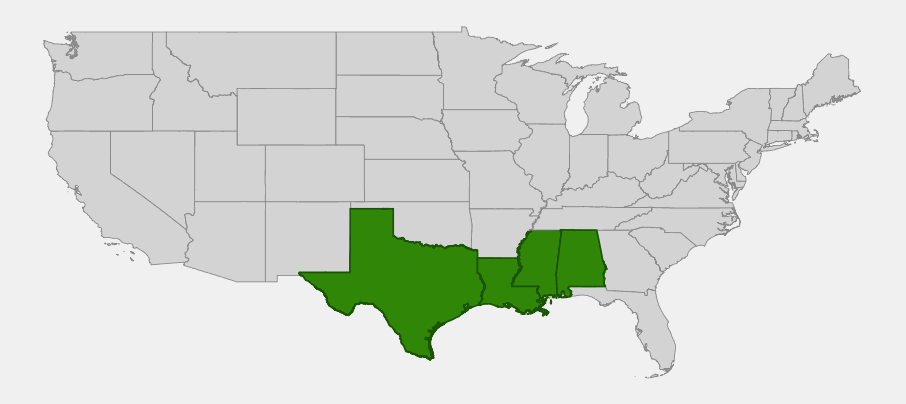
Pale pitcher plant is native only to the Gulf Coastal Plain of the southern United States. USDA PLANTS records it from four states: Alabama, Mississippi, Louisiana and Texas. It does not occur in Canada or Mexico.
Its range is split into two parts. The eastern part lies in southwestern Alabama and southern Mississippi and adjacent Louisiana, east of the Mississippi River. The western part lies in western Louisiana and southeastern Texas, where it grows in the Big Thicket and the pine forests of the Texas Piney Woods. Botanists have found genetic and chemical differences between the eastern and western populations. In Texas it is limited to East Texas; it does not grow in South or West Texas.
Typical habitats are hillside seepage bogs, wet longleaf pine savannas and flatwoods, and the edges of baygalls and acid seeps, always in sunny, wet, acidic, nutrient-poor soil. These habitats depend on frequent fire, which clears out shrubs and trees that would otherwise shade the pitcher plants.
📋 Regional plant lists featuring Pale Pitcher Plant: Alabama, Georgia & Mississippi · Arkansas, Louisiana, Eastern Oklahoma & Eastern Texas
Growing & Care Guide
Pale pitcher plant can be grown in a bog garden or large container by gardeners willing to meet its needs: full sun, acidic wet soil, mineral-free water and a cool winter rest. Buy only nursery-propagated plants from reputable carnivorous plant growers. Never collect plants from the wild; wild populations are declining, and dug plants rarely survive.
Light
Give it full sun, at least six hours a day and preferably more. In shade, pitchers become weak, floppy and pale, and the plant declines.
Soil & Water
Use a mix of about equal parts sphagnum peat moss and lime-free sand or perlite, with no fertilizer or compost. Keep the soil constantly moist to wet, for example by setting containers in a tray of water in summer. Water only with rainwater, distilled water or reverse-osmosis water; tap water and well water usually contain minerals that build up and kill the roots.
Planting Tips
Plant in spring in a lined bog garden or a large, undrained container. Set the rhizome just below the surface. It combines well with sundews, native orchids and other pitcher plants in a sunny bog garden. Do not feed it meat or fertilize the soil; it catches its own insects outdoors.
Pruning & Maintenance
In late winter, cut off old brown pitchers at the base before new growth starts. It needs a winter dormancy with cooler temperatures and shorter days; outdoors in zones 7 to 9 it gets this naturally. Mulch containers lightly in hard freezes. Divide crowded clumps every few years in early spring.
Propagation
Divide the rhizomes in late winter or early spring, keeping a growing point on each piece. Seeds need about four to eight weeks of cold, moist stratification and are sown on the surface of wet peat; seedlings take several years to reach blooming size.
Landscape Uses
- Bog gardens: a tall, sculptural centerpiece for sunny bogs
- Container bogs: large tubs of peat and sand kept wet with rainwater
- Conservation plantings: with nursery-propagated stock in restored seepage bogs
- Nature education: shows insect trapping in action
- Southern native gardens: pairs with sundews, orchids and grasses
Wildlife & Ecological Value
Pale pitcher plant is both a predator and a host. Its pitchers trap many insects but also shelter a small community of specialized animals.
For Pollinators
The spring flowers are pollinated mainly by bumble bees and other large bees, which push into the hanging flower and brush past the umbrella-shaped style. The flowers bloom before most pitchers are fully open, which reduces the chance of trapping pollinators.
For Birds
Pitcher plants have little direct food value for birds, but they grow in longleaf pine savannas and bogs used by birds such as Bachman’s sparrows, brown-headed nuthatches and red-cockaded woodpeckers. Some birds pick insects from the pitchers.
For Mammals
Mammals rarely eat pitcher plants. Feral hogs, however, damage bogs by rooting, and trampling harms the plants.
Ecosystem Role
The pitchers catch ants, wasps, bees, flies, moths and beetles. Several insects live only in or on Sarracenia, including pitcher plant moths, whose caterpillars feed inside the pitchers, and flesh flies and mosquitoes whose larvae live in the pitcher fluid. Its presence is a sign of healthy, fire-maintained seepage bogs.
Cultural & Historical Uses
The genus Sarracenia honors Michel Sarrazin (1659–1734), a French physician and naturalist in New France who sent North American pitcher plants to Europe. Pale pitcher plant was described by the American botanist Alphonso Wood in the nineteenth century; plants from Texas and Louisiana were later named Sarracenia sledgei, a name now treated as a synonym.
Pitcher plants have long fascinated naturalists. Early botanists debated whether the pitchers were simply water reservoirs or true insect traps, and later research showed that Sarracenia attract prey with nectar and color, trap it with slippery surfaces, and absorb nutrients from it. Pale pitcher plant has been a subject of research on pitcher plant chemistry and on the insect communities that live in the pitchers.
Pale pitcher plant bogs are featured attractions in places such as Big Thicket National Preserve in Texas and in protected savannas and bogs in Mississippi and Alabama, where prescribed burns are used to keep the habitat open. Many carnivorous plant growers propagate it from seed and tissue culture, so gardeners never need to take plants from the wild.
Frequently Asked Questions
Is pale pitcher plant dangerous to people or pets?
No. It traps only insects and other small invertebrates, and it is harmless to touch.
Can I dig a pitcher plant from a bog?
No. Wild populations are declining, digging damages the bog, and wild plants rarely survive. Buy nursery-propagated plants from a reputable grower.
Does it need to be fed?
Outdoors, no; it catches its own insects. Never fertilize the soil or feed it meat. Indoors or in a greenhouse, an occasional insect is enough.
Why do I need rainwater or distilled water?
Tap and well water usually contain dissolved minerals that build up in the soil and damage the roots of pitcher plants. Use rainwater, distilled or reverse-osmosis water.
Does pale pitcher plant go dormant in winter?
Yes. It slows down in fall and needs a cool winter rest. Old pitchers turn brown; cut them off in late winter before new growth starts.

Looking for a nursery that carries Pale Pitcher Plant?
Browse our native plant nursery directory: Alabama · Louisiana & Mississippi · Texas