
Schweinitz’s Sunflower (Helianthus schweinitzii)
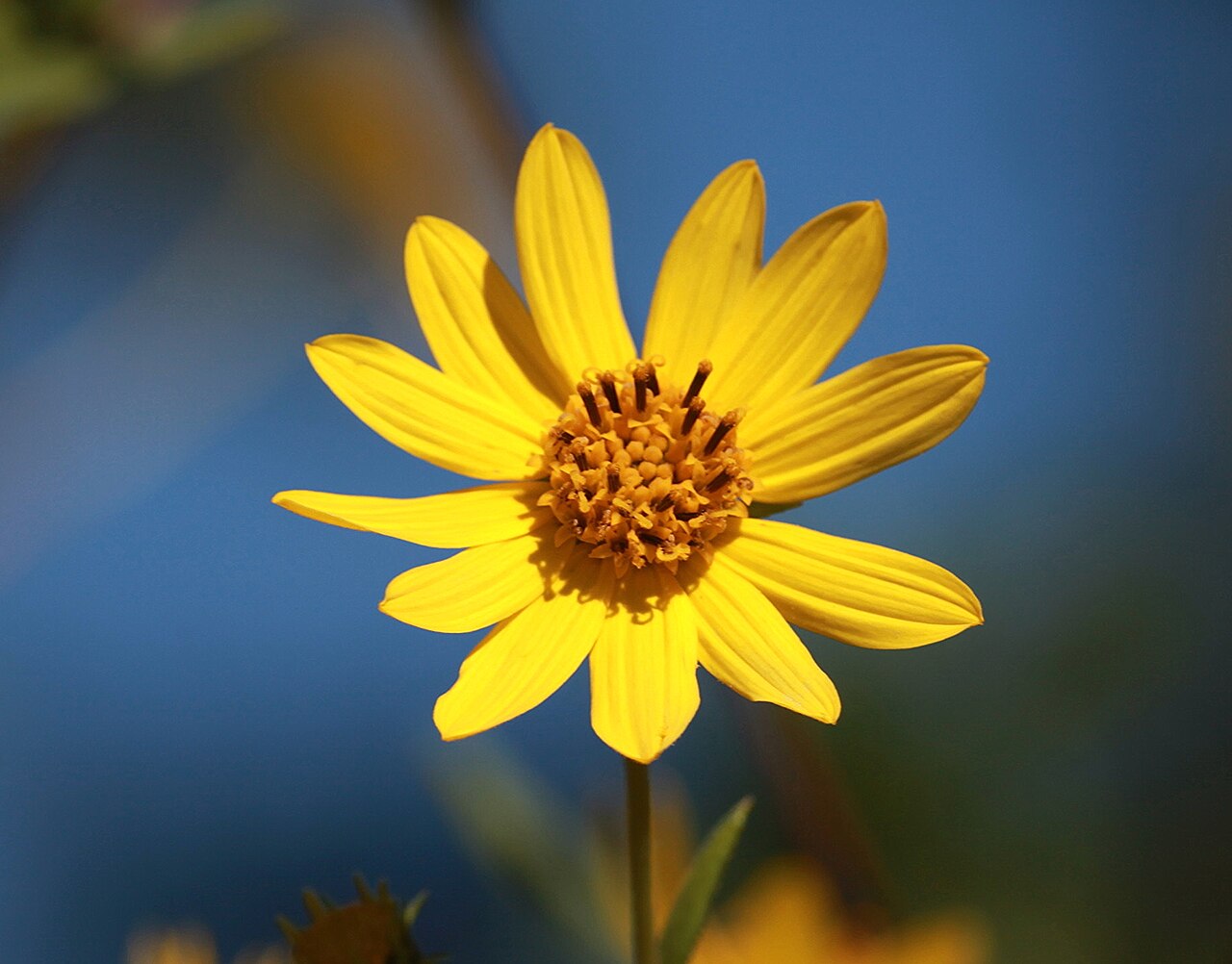
Helianthus schweinitzii, known as Schweinitz’s Sunflower, is one of the rarest sunflowers in North America. This tall perennial grows only in the Piedmont of North Carolina and South Carolina, where its purple stems and small, bright yellow flower heads light up roadsides and old fields in September and October. The U.S. Fish and Wildlife Service listed it as a federally endangered species in 1991.
It is a plant of the Piedmont prairies and open oak woodlands that once covered parts of the Carolinas, kept open by fire and grazing animals. As these habitats disappeared under farms, forests and development, the sunflower survived mainly along mowed roadsides, railroad and power-line rights-of-way and a few protected prairie remnants. Today a little over 90 populations are known, many with only a few dozen plants.
This page covers how to identify Schweinitz’s sunflower, where it grows, why it is endangered, how it is being protected, and what gardeners can do to help. If you want to grow it, buy only nursery-propagated plants from legal sources, and never dig plants or collect seed from wild populations.
Identification
Schweinitz’s sunflower can be confused with several common sunflowers that bloom at the same time. Look for the combination of purple, hairy stems, narrow leaves that are rough above and fuzzy below, and carrot-like tuberous roots.
Size & Form
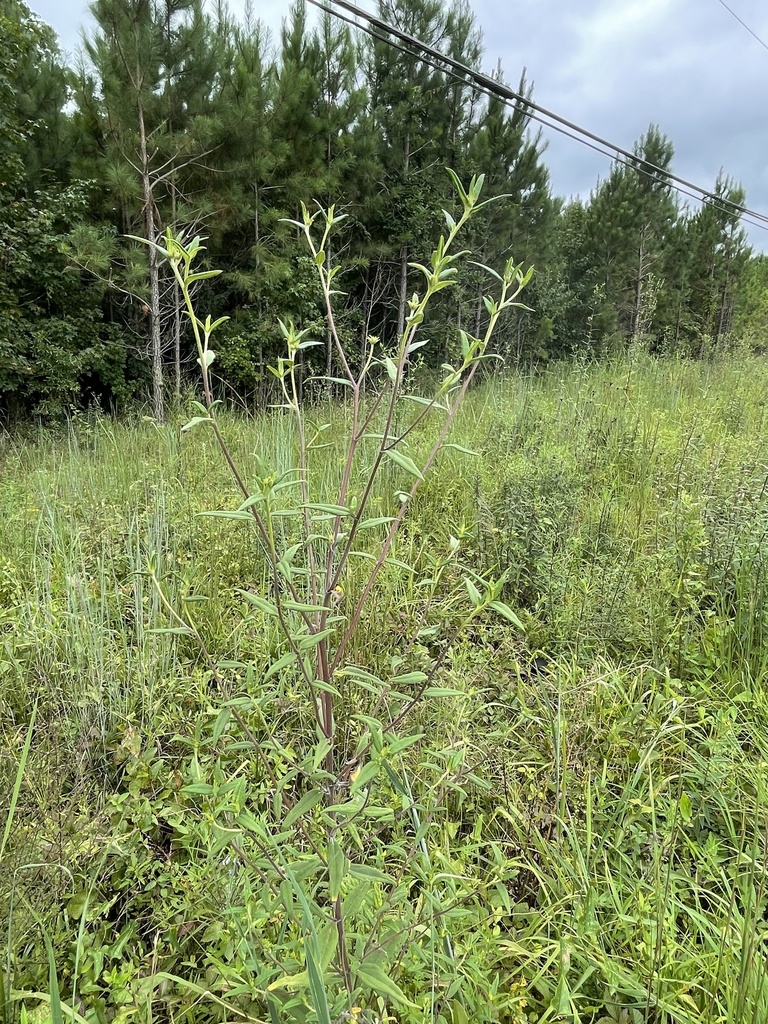
It is a perennial usually 3 to 7 feet tall, occasionally taller, with one or a few stems that branch only near the top. It grows from a cluster of thick, carrot-like tuberous roots rather than from the long, creeping rhizomes of many sunflowers, so it forms small clumps rather than large patches.
Stems
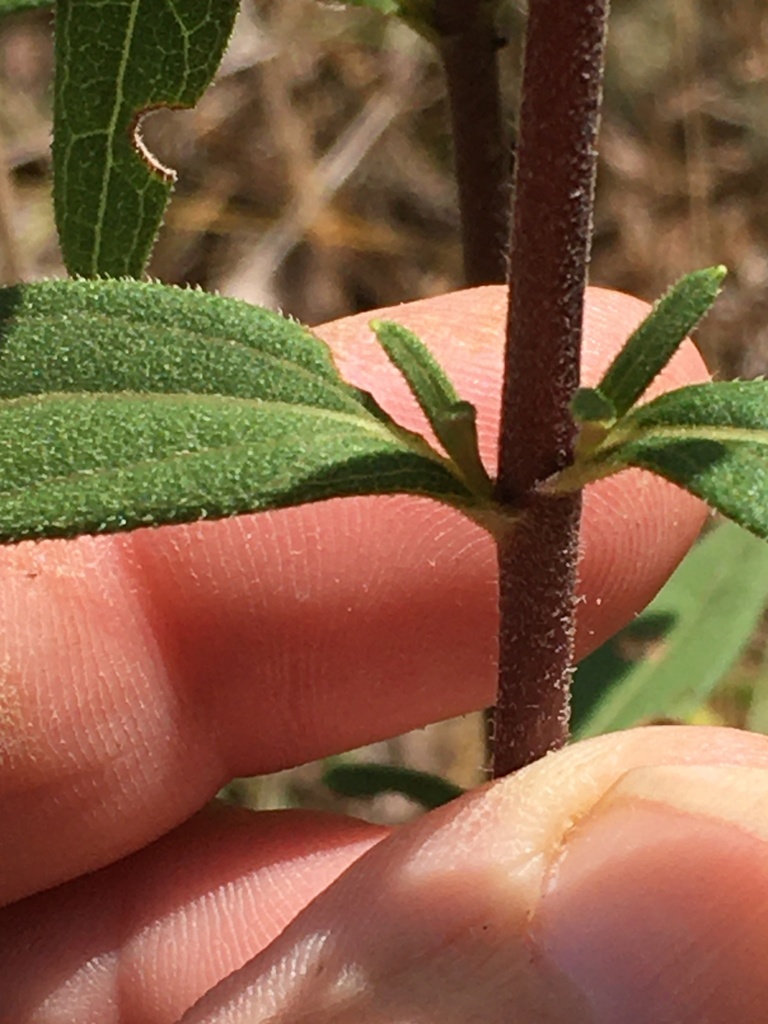
The stems are usually purple, sometimes green, and covered in short, stiff or soft hairs.
Leaves
The leaves are narrow and lance-shaped, about 2 to 7 inches long and less than an inch wide, stalkless or nearly so, with smooth or slightly toothed edges that often roll under. They are opposite on the lower stem and usually alternate above. The upper surface feels rough like sandpaper, and the underside is covered in soft, whitish hairs. The leaves are thick and somewhat stiff, and their tips often droop.
Flowers
The flower heads appear from about late August through October, peaking in late September and early October. Each plant usually has several heads about 1 1/2 to 2 1/2 inches across, on long stalks at the top of the stem. Each head has roughly 8 to 15 bright yellow rays surrounding a yellow center disk. The seeds (achenes) are small and dark.
Similar Species
Giant Sunflower (Helianthus giganteus) is similar in height and leaf shape but has creeping rhizomes, grows in moist sites and has leaves that lack the dense, white hairs beneath. Woodland Sunflower has broader leaves and smooth stems. Small-headed sunflower (H. microcephalus) has smooth stems and much smaller heads. Telling Schweinitz’s sunflower from hybrids and other sunflowers can require an expert; report possible populations to the North Carolina or South Carolina natural heritage programs.
Quick Facts
| Scientific Name | Helianthus schweinitzii Torr. & A. Gray |
| Family | Asteraceae (aster family) |
| Plant Type | Herbaceous perennial |
| Mature Height | 3–7 ft (occasionally taller) |
| Mature Spread | 1–2 ft clumps |
| Growth Rate | Moderate |
| Sun Exposure | Full sun to light shade |
| Water Needs | Low to medium; drought tolerant |
| Soil Type | Thin, rocky or clay soils, often derived from mafic (high-magnesium or calcium) rock |
| Soil pH | About 5.5–7.0 |
| Bloom Time | Late August–October |
| Flower Color | Yellow |
| Fall Color | None notable |
| Fruit | Small, dark achenes |
| Deer Resistant | Moderate; deer may browse |
| USDA Hardiness Zones | 7–8 |
Native Range
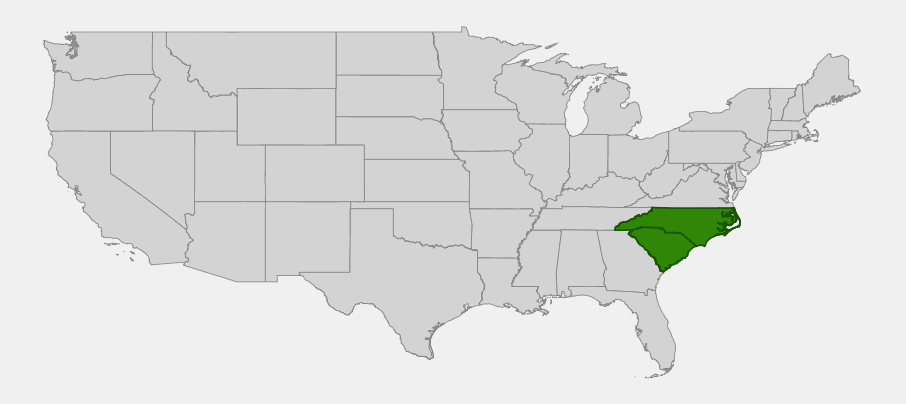
Schweinitz’s sunflower is endemic to the Piedmont of North Carolina and South Carolina, and USDA PLANTS lists it only for these two states. Almost all populations grow in a limited area of the southern Piedmont, roughly within 100 miles of Charlotte, North Carolina, in the Carolina Slate Belt and nearby areas with shallow, clay or rocky soils. Most known populations are in North Carolina.
Its natural habitat is open, sunny places on thin soils: Piedmont prairies, savannas, and open oak and hickory woodlands that were historically kept open by frequent fires and by grazing bison and elk. Many of these sites had soils derived from mafic rocks such as diabase and gabbro. Without fire, the habitat grows up into dense forest, and the sunflower is shaded out.
Today most populations grow along roadsides, railroad tracks, power-line and pipeline rights-of-way, and field edges, where regular mowing keeps the ground open. Others are protected in preserves and prairie restoration sites managed by state agencies and conservation groups.
📋 Regional plant lists featuring Schweinitz’s Sunflower: North & South Carolina
Growing & Care Guide
Schweinitz’s sunflower is a federally endangered plant, so growing it comes with responsibilities. A few native plant nurseries and botanical gardens in the Carolinas have propagated it from legally obtained stock. Buy only nursery-propagated plants from reputable sources, and never dig plants or collect seed or tubers from wild populations. Under the Endangered Species Act, selling endangered plants across state lines requires a federal permit, and removing them from federal land or in violation of state law is prohibited. Planting it far outside its native range does not help the species; its best use is in native gardens and restorations within the Carolina Piedmont.
Light
Grow it in full sun or very light shade. It needs open, sunny conditions and declines when shaded by trees or tall shrubs.
Soil & Water
It prefers thin, well-drained clay or rocky soils of low to moderate fertility. Rich garden soil and fertilizer make it floppy and invite competition. Once established it tolerates drought well; water only during its first season and in extended dry spells.
Planting Tips
Plant in spring or fall in a sunny meadow or prairie-style planting with native grasses such as little bluestem and Indiangrass. Space plants about 2 feet apart. Because the stems are tall and the plant blooms late, place it toward the back of a border or among grasses that help support it.
Pruning & Maintenance
Leave the stems standing until seeds ripen and drop in late fall, then cut them back in late winter. In meadows, mow or burn (where permitted and safe) in late winter or early spring, which mimics the natural disturbance it depends on. Avoid mowing between late spring and the end of flowering in October. Remove encroaching woody plants and aggressive exotic grasses.
Propagation
It can be propagated from seed, which benefits from cold, moist stratification for about 30 to 60 days before spring sowing, and by dividing the tuberous roots of nursery plants in early spring. Seed should come only from cultivated plants, never from wild populations, unless collected under permit for conservation programs.
Landscape Uses
- Carolina Piedmont meadows: a late-blooming native sunflower for sunny, dry meadow and prairie plantings
- Conservation gardens: growing legally propagated plants raises awareness of a rare Piedmont endemic
- Prairie restoration: planted by agencies and conservation groups in managed Piedmont prairie sites
- Pollinator plantings: fall nectar and pollen for bees and butterflies
- Back of the border: tall, upright stems with bright fall flowers in dry, sunny beds
Wildlife & Ecological Value
Like other native sunflowers, Schweinitz’s sunflower supports many insects and seed-eating birds, especially in fall.
For Pollinators
The fall flowers are visited by many bees, including bumble bees, sunflower specialist bees and other native bees, as well as butterflies, skippers, wasps and beetles. They provide important food for pollinators preparing for winter.
For Birds
Goldfinches, sparrows and other seed-eating birds eat the small seeds in fall and winter.
For Mammals
Deer and rabbits may browse the leaves and stems. The tuberous roots may be eaten by small mammals.
Ecosystem Role
It is a characteristic species of Piedmont prairies and open woodlands, one of the most endangered plant communities in the Southeast. Its survival depends on regular disturbance from fire, mowing or grazing that keeps the habitat open. Managing roadsides and rights-of-way with well-timed mowing and without broad herbicide spraying helps protect it.
Cultural & Historical Uses
The species is named for Lewis David von Schweinitz (1780–1834), a Moravian clergyman and botanist in Salem, North Carolina, who first collected it in the early 1800s and is also known as a pioneer of American mycology. John Torrey and Asa Gray described it in 1842. For many years it was confused with other sunflowers, and its true range and identity were only clarified by later studies.
The U.S. Fish and Wildlife Service listed Schweinitz’s sunflower as endangered on May 7, 1991. Its main threats are development, highway widening, herbicide use and poorly timed mowing along roadsides, and fire suppression, which lets woody plants take over its habitat. State transportation departments, utilities, conservation groups and the natural heritage programs of both states work together to protect populations, mark them along roadsides and adjust mowing schedules.
Its tuberous roots resemble those of its edible relative Jerusalem Artichoke, but Schweinitz’s sunflower is endangered and should never be dug or harvested. The plant is not known to be toxic. Recent genetic studies have found unusually low genetic diversity in the species, which makes protecting every remaining population, and the different populations’ local genetics, especially important.
Frequently Asked Questions
Is Schweinitz’s sunflower endangered?
Yes. It was listed as federally endangered by the U.S. Fish and Wildlife Service in 1991. A little over 90 populations are known, all in the Piedmont of North Carolina and South Carolina, many of them small.
Where does Schweinitz’s sunflower grow?
Only in the Piedmont of North and South Carolina, mostly within about 100 miles of Charlotte. It grows in open, sunny places with thin soils, especially roadsides, power-line rights-of-way and remnant Piedmont prairies.
Can I grow Schweinitz’s sunflower in my garden?
It can be grown from legally propagated nursery stock in sunny, dry gardens in the Carolina Piedmont. Buy only nursery-propagated plants, and never dig plants or collect seeds from the wild.
How do I identify Schweinitz’s sunflower?
Look for a tall sunflower with purple, hairy stems, narrow leaves that are rough above and covered in white hairs below, small yellow flower heads in September and October, and thick, tuberous roots instead of long creeping rhizomes.
Why does Schweinitz’s sunflower grow along roadsides?
It needs open, sunny habitat that was once maintained by fire and grazing. Regular mowing along roads and rights-of-way now does a similar job, which is why most surviving populations are found there.

Looking for a nursery that carries Schweinitz’s Sunflower?
Browse our native plant nursery directory: North Carolina · South Carolina

