American Mountainash (Sorbus americana)
Sorbus americana, commonly known as American Mountainash or American Mountain-ash, is a native deciduous tree of remarkable beauty and ecological importance throughout eastern North America. Despite its common name, it is not a true ash (genus Fraxinus), but rather a member of the rose family (Rosaceae), more closely related to apples and serviceberries. This sturdy small-to-medium tree is celebrated for its spectacular clusters of bright orange-red berries that blaze against the autumn landscape, providing vital food for wildlife heading into winter.
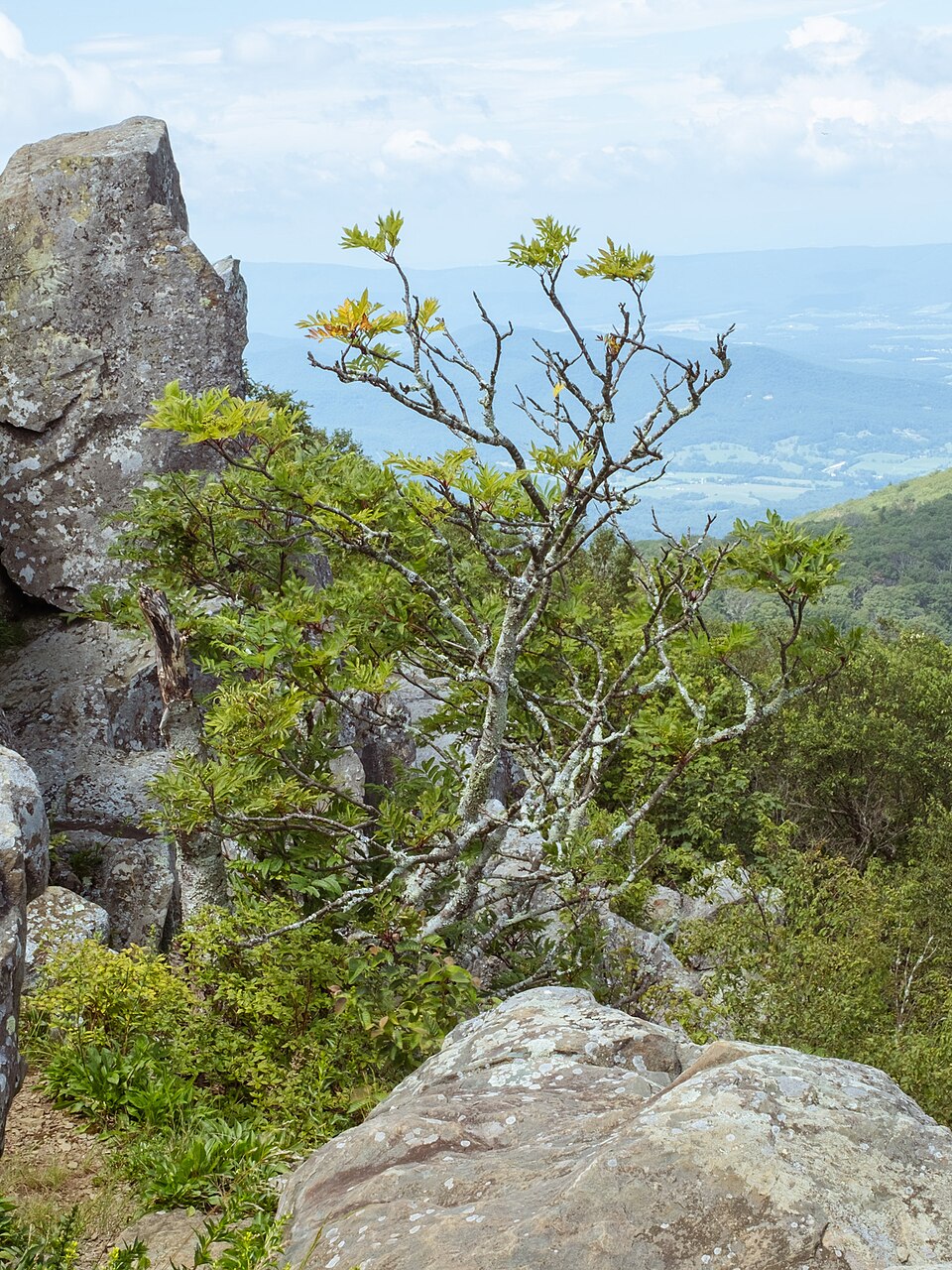
Growing naturally from the boreal forests of Labrador and Manitoba south through New England and the Appalachian Mountains, American Mountainash thrives in cool, moist conditions. It is a defining species of high-elevation forests in the Northeast, often found growing alongside paper birch, balsam fir, and yellow birch where cold temperatures and deep snows characterize the growing season. At lower elevations it favors north-facing slopes, stream margins, and other moist, cool sites that mimic boreal conditions. Its tolerance for harsh growing environments — including shallow soils and full northern exposures — makes it a valuable species for challenging planting situations in New England gardens.
Beyond its ornamental value, American Mountainash is a cornerstone wildlife plant. The heavy fruit clusters persist well into winter and beyond, providing critical food for birds including American Robins, Cedar Waxwings, Bohemian Waxwings, Pine Grosbeaks, and thrushes. For anyone creating a native habitat garden in northern New England, American Mountainash is an invaluable multi-season performer — offering white flower clusters in late spring, elegant compound leaves through summer, brilliant fruit displays in fall and winter, and a graceful form that brings four-season interest to the landscape.
Identification
American Mountainash is a small to medium-sized deciduous tree, typically reaching 15 to 30 feet (4.5–9 m) in height, though occasionally taller in ideal conditions. It may grow as a single-trunked tree or a multi-stemmed large shrub. The overall form is rounded to oval, and the tree is notably elegant in all seasons. Young trees have smooth gray bark that becomes slightly rougher and scaly with age but never deeply furrowed.
Bark & Twigs
The bark of American Mountainash is thin, smooth, and silvery-gray to grayish-brown in color, remaining relatively smooth even on older specimens. The inner bark has a distinctive bitter, astringent smell. Young twigs are reddish-brown to gray, stout, and covered in small, round lenticels (breathing pores). The winter buds are pointed, dark reddish-purple, often slightly sticky and woolly-hairy at the tip — a useful identification feature in winter. The buds give off a faint bitter-almond scent when crushed.
Leaves
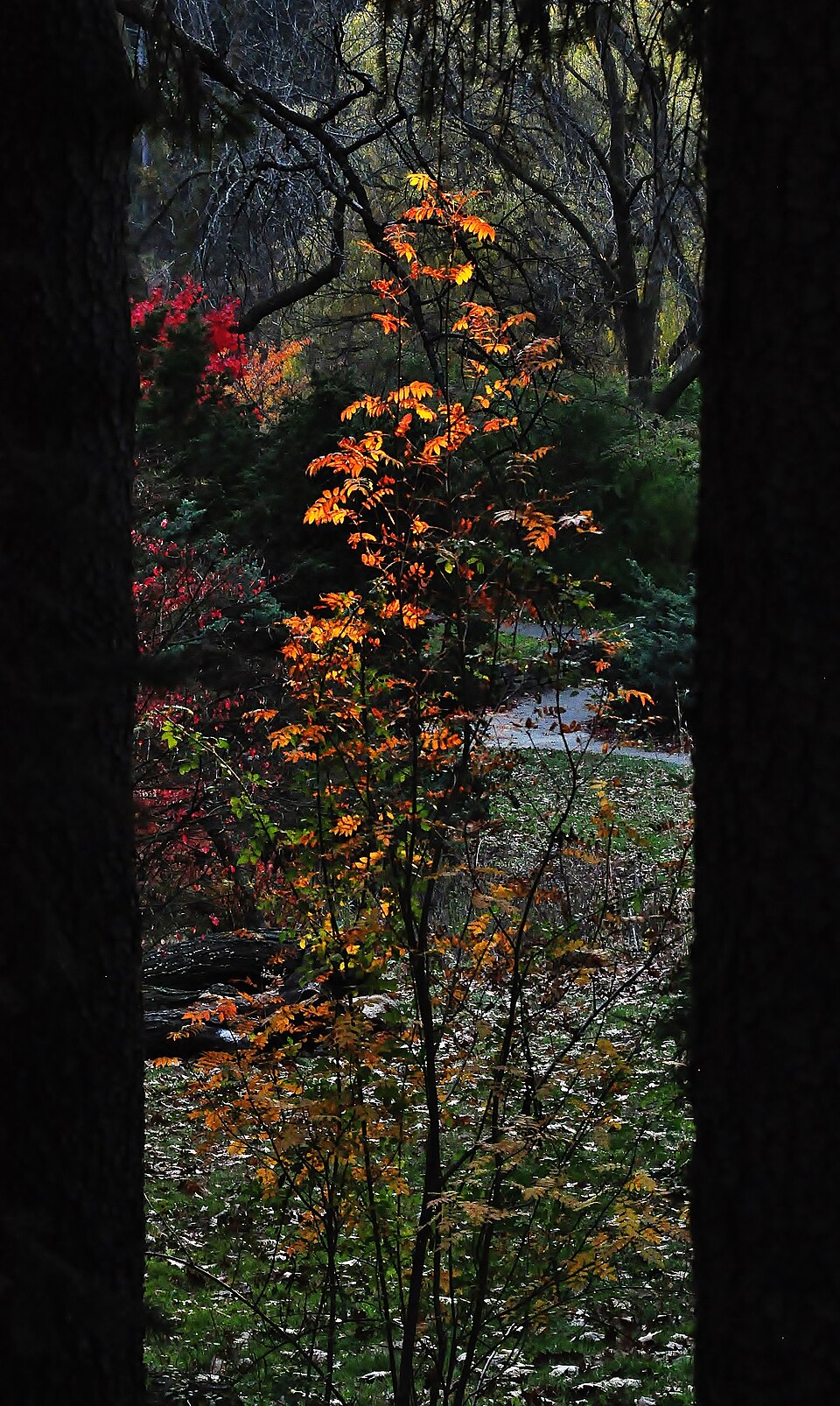
The leaves are pinnately compound — a distinguishing feature setting it apart from true ashes, which have opposite compound leaves, while Mountainash leaves are alternate. Each leaf consists of 13 to 17 leaflets (occasionally 11), each leaflet 1½ to 3 inches long, lance-shaped, sharply toothed along the entire margin, and dark green above with paler undersides. The leaflets are finely hairy on both surfaces when young. In autumn, the foliage turns yellow to orange-red, complementing the already showy fruit display. The compound leaves are 6 to 9 inches long overall and create a feathery, graceful texture in the landscape.
Flowers & Fruit
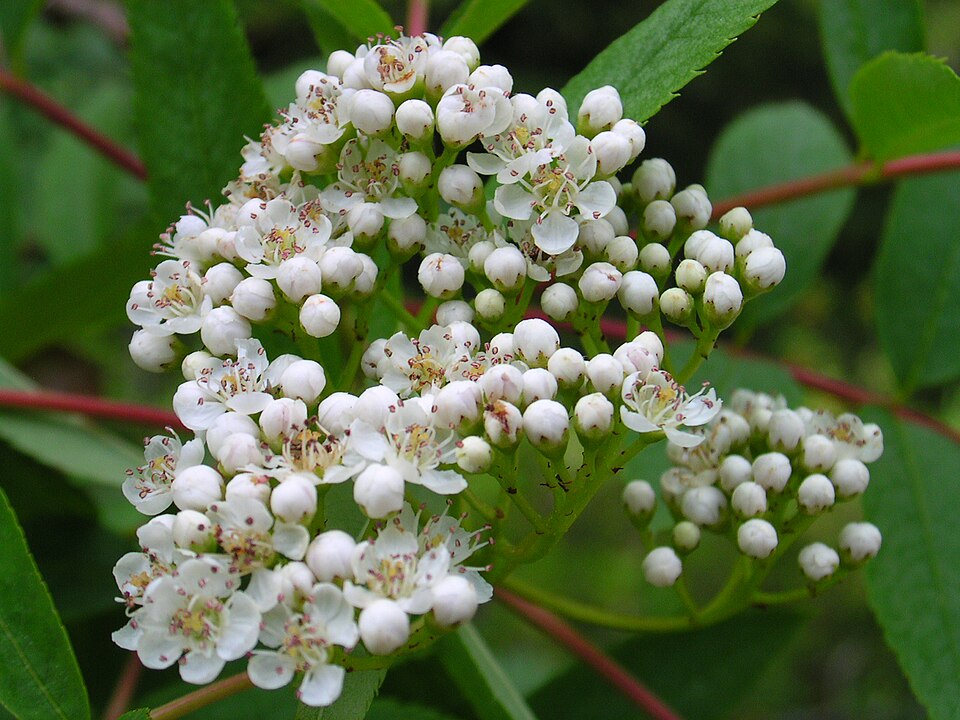
The flowers appear in late spring — typically May through June in New England — in flat-topped clusters (compound corymbs) 3 to 5 inches across. Individual flowers are small, about ¼ inch wide, with five creamy white petals and 15 to 20 prominent stamens, giving the clusters a frothy, lace-like appearance. The flowers have a somewhat unpleasant smell that attracts flies and small bees as pollinators.
The fruit is the plant’s most spectacular feature: small, round pomes (apple relatives) just ¼ to ⅜ inch in diameter that ripen from green to brilliant orange-red by late August and persist through winter — sometimes well into the following spring if not consumed by wildlife. The berries are technically edible (high in vitamin C) but are extremely tart and bitter when raw; they can be cooked into jellies or fermented. The fruit clusters can weigh the branches down dramatically in a heavy crop year, creating a spectacular visual display.
Quick Facts
| Scientific Name | Sorbus americana |
| Family | Rosaceae (Rose Family) |
| Plant Type | Deciduous Tree / Large Shrub |
| Mature Height | 30 ft |
| Sun Exposure | Full Sun |
| Water Needs | Moderate |
| Bloom Time | May – June |
| Flower Color | Creamy white |
| Fruit | Bright orange-red pome clusters |
| Fall Color | Yellow to orange-red |
| Wildlife Value | Excellent — fruits good in wildlife landscape |
| USDA Hardiness Zones | 2–6 |
Native Range
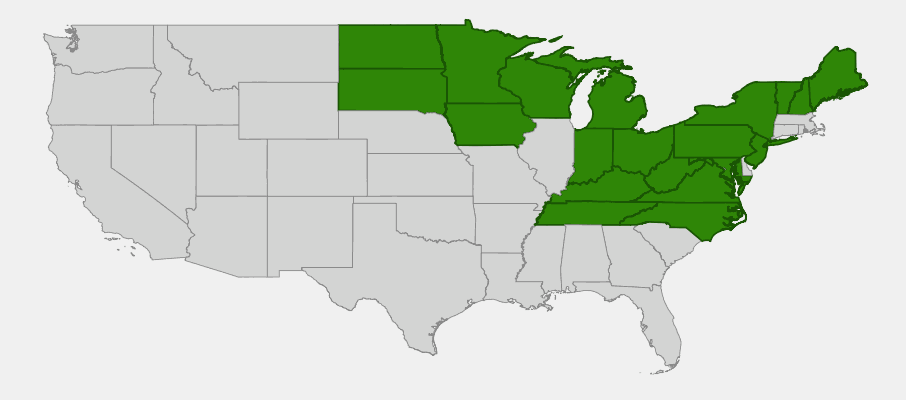
American Mountainash is native to a broad swath of eastern North America, from Newfoundland and Labrador in the east, across the boreal and mixed forests of Quebec and Ontario to Manitoba in the west, and south through New England and New York. It follows the Appalachian Mountain chain south through Pennsylvania, West Virginia, Virginia, North Carolina, and Tennessee, where it is largely confined to high-elevation forests above 4,000 feet. In the Great Lakes region it extends through Ohio, Indiana, Michigan, Wisconsin, and Minnesota.
The species is strongly associated with cool, moist forest environments. In New England it grows from sea level to the highest peaks, becoming a prominent component of the spruce-fir forests above 3,000 feet elevation. It is a characteristic tree of the boreal-hardwood transition zone, often forming dense thickets on rocky hillsides and talus slopes. At high elevations in the White Mountains, Green Mountains, and Adirondacks, it is one of the most common understory trees in the subalpine zone.
The plant’s requirement for cool temperatures limits its range to northern latitudes and high elevations. It performs poorly in the heat and humidity of the Deep South and struggles in areas with hot summers. This makes it a quintessentially northern species — one that defines the cold-temperate forests of New England — and an excellent choice for gardeners who want to celebrate the native character of their region.
📋 Regional plant lists featuring American Mountainash: New England
Growing & Care Guide
American Mountainash is ideally suited for cool, northern gardens where it can thrive without stress from summer heat. When planted in the right conditions, it is a rewarding, relatively low-maintenance tree that will provide decades of ornamental and ecological value.
Light
American Mountainash performs best in full sun, where it develops the most robust form and the heaviest fruit production. It will tolerate light shade, but flowering and fruiting are reduced in shadier conditions. In the warmest parts of its range (zones 5–6), afternoon shade can help reduce heat stress and extend the life of the tree. In cooler northern locations and at higher elevations, full sun is ideal year-round.
Soil & Water
American Mountainash prefers moist, well-drained soil with a slightly acidic pH (5.0–6.5). It thrives in the cool, organic-rich soils of forest edges and mountain slopes. While it requires consistent moisture — especially during hot, dry spells — it does not tolerate waterlogged conditions. Sandy loam or loamy soil with good drainage and generous organic matter content produces the best growth. Mulching with 2–3 inches of wood chips or leaf litter helps maintain soil moisture and cool root temperatures.
Planting Tips
Plant American Mountainash in fall or early spring, giving roots time to establish before the heat of summer. Select a site with good air circulation to help prevent fire blight and other fungal diseases to which the species can be susceptible. Avoid planting in low-lying frost pockets, as late spring frosts can damage flowers. Space trees 15–20 feet apart for a grove effect, or use as a specimen tree with adequate room for its mature canopy spread. Container-grown nursery stock transplants well.
Pruning & Maintenance
Prune American Mountainash in late winter or early spring while dormant. Remove dead, damaged, or crossing branches to maintain good air circulation, which helps prevent fire blight infection — the most common disease problem. If fire blight strikes (look for “shepherd’s crook” dieback on branch tips), cut the affected branch 6–12 inches below the visible infection margin, sterilizing pruning tools between cuts with diluted bleach or 70% alcohol. American Mountainash is generally a low-maintenance tree that does not require regular shearing or heavy pruning.
Landscape Uses
American Mountainash excels in multiple landscape roles:
- Specimen tree — striking four-season interest, especially fall fruit display
- Wildlife garden anchor — heavy fruit crops attract dozens of bird species
- Native hedgerow — multi-stemmed forms make effective informal screens
- Woodland edge planting — thrives at forest margins and openings
- Slope stabilization — deep roots help stabilize rocky hillsides
- High-elevation gardens — one of the best native trees for subalpine conditions
- Cold-climate gardens — among the hardiest native ornamentals (Zone 2)
Wildlife & Ecological Value
American Mountainash is rightly called one of New England’s most important wildlife trees. Its heavy fruit crops and persistent berries provide critical food resources at a time of year — late autumn through winter — when wild foods are scarce. The ecological value extends through every season, from its spring flowers to its winter fruit.
For Birds
The orange-red fruit clusters are consumed by an extraordinary array of birds. American Robins, Cedar Waxwings, and Bohemian Waxwings often descend on American Mountainash in large, excited flocks during autumn migration, stripping trees clean within hours. Pine Grosbeaks — beautiful winter finches of the boreal forest — are particularly associated with American Mountainash, and their irregular irruptions into southern New England are often correlated with poor mountain ash fruit crops in Canada. Other regular visitors include Hermit Thrushes, Varied Thrushes, Swainson’s Thrushes, White-throated Sparrows, Purple Finches, and Evening Grosbeaks. The spring flowers attract insects that also attract insectivorous birds.
For Mammals
Black Bears consume the fruit, leaves, and inner bark of American Mountainash. Moose browse the foliage and twigs heavily, particularly in winter. White-tailed Deer browse the foliage and young shoots. Red foxes and raccoons eat fallen fruit. American Porcupines are known to girdle the bark in winter — a behavior that can kill individual trees but is part of the natural forest dynamic.
For Pollinators
The creamy white flower clusters attract a variety of small native bees, sweat bees, flies, and beetles in late May and June. While the flowers have an unpleasant odor to human noses — a characteristic that attracts flies and beetles as pollinators — they are genuinely valuable to a range of early-season pollinators and beneficial insects. The tree provides nectar and pollen at a time when many spring ephemerals have already finished blooming.
Ecosystem Role
American Mountainash plays an important structural role in boreal and high-elevation forests. Its fruit production provides a crucial caloric subsidy for migrating birds preparing for long journeys south. By attracting fruit-eating birds, it contributes to seed dispersal for many other plant species — birds resting in its branches may deposit seeds of other plants. The tree also hosts numerous moth and butterfly larvae, adding further value for birds raising nestlings. As a pioneer species on disturbed sites and rocky slopes, it contributes to forest succession and slope stabilization.
Cultural & Historical Uses
American Mountainash holds an important place in the ethnobotany of Indigenous peoples throughout northeastern North America. The Abenaki, Mi’kmaq, Ojibwe, and other nations used various parts of the plant medicinally. A tea made from the inner bark was used to treat diarrhea, urinary problems, and as a general tonic. The berries, while too bitter to eat raw, were cooked into sauces, jellies, and preserves, and sometimes fermented. The bark was used as an astringent in poultices for skin conditions.
Early European settlers quickly adopted knowledge of the tree from Indigenous peoples. The berries were used to make a tart jelly still enjoyed in rural New England and Canada — mountain ash jelly has a distinctive flavor, high pectin content, and beautiful amber-orange color. The berries were also pressed into a juice used as a source of vitamin C during long northern winters. In Scandinavian-American communities in the Great Lakes region, American Mountainash traditions merged with those of its European cousin Sorbus aucuparia (rowan tree), which holds deep cultural significance in Scandinavian and Celtic folklore as a protective tree against evil spirits.
The wood of American Mountainash is hard and fine-grained but rarely large enough for significant timber use. It has been used locally for tool handles, small woodworking projects, and firewood. The tree was widely planted as an ornamental around farmsteads and homesteads throughout New England and the Great Lakes states during the 19th and early 20th centuries, valued for its showy berries and attractiveness to wildlife. Today it is increasingly recognized as a premier native ornamental tree for northern gardens and wildlife habitat plantings.
The species name americana simply means “of America,” distinguishing it from the closely related European mountain ash (Sorbus aucuparia). In scientific literature and horticulture, it is sometimes confused with the closely related Showy Mountainash (Sorbus decora), which overlaps in range and has larger, showier fruit clusters.
Frequently Asked Questions
Is American Mountainash a true ash tree?
No. Despite the common name, American Mountainash is not related to true ashes (genus Fraxinus, family Oleaceae). It belongs to the rose family (Rosaceae) and is closely related to apples, pears, and serviceberries. The name “mountain ash” comes from the superficial resemblance of its pinnate compound leaves to those of true ash trees.
Are the berries of American Mountainash edible?
The berries are technically edible but very tart and bitter when raw. They contain high levels of parasorbic acid when fresh, which can cause digestive upset. After frost or cooking, this compound breaks down. The berries are traditionally used to make jelly, wine, and preserves. They are an excellent wildlife food and should be left on the tree whenever possible for birds and other animals.
Why is my American Mountainash getting a fire blight infection?
Fire blight (caused by the bacterium Erwinia amylovora) is the most serious disease problem for American Mountainash, as it is for all members of the rose family. It spreads rapidly during warm, humid spring weather when trees are in bloom. To manage it, prune out affected branches 6–12 inches below the visible infection during dry weather, sterilize tools between cuts, and avoid excessive nitrogen fertilization, which promotes the succulent growth that is most susceptible. Good air circulation around the tree is an important preventive measure.
How long does American Mountainash live?
American Mountainash is a relatively short-lived tree by forest standards, typically living 50 to 100 years in the landscape. It tends to be shorter-lived in warmer, more southern parts of its range. With good care — proper site selection, fire blight management, and adequate moisture — trees in northern New England can be long-lived and vigorous. The species compensates for its relatively short lifespan with prolific fruit production and the ability to regenerate from root sprouts.
What is the difference between American Mountainash and Showy Mountainash?
Showy Mountainash (Sorbus decora) is closely related and sometimes difficult to distinguish. It generally has larger, more brilliant red fruit clusters (hence “showy”), fewer leaflets per leaf (11–15 vs. 13–17), and slightly more rounded leaflets. Its range extends further north into the boreal zone. Both are excellent wildlife trees native to New England, and both are excellent choices for the landscape. Some botanists treat them as subspecies of the same species.

Looking for a nursery that carries American Mountainash?
Browse our native plant nursery directory: Maine · New Hampshire · Vermont · Connecticut