
ʻApeʻape (Gunnera petaloidea)
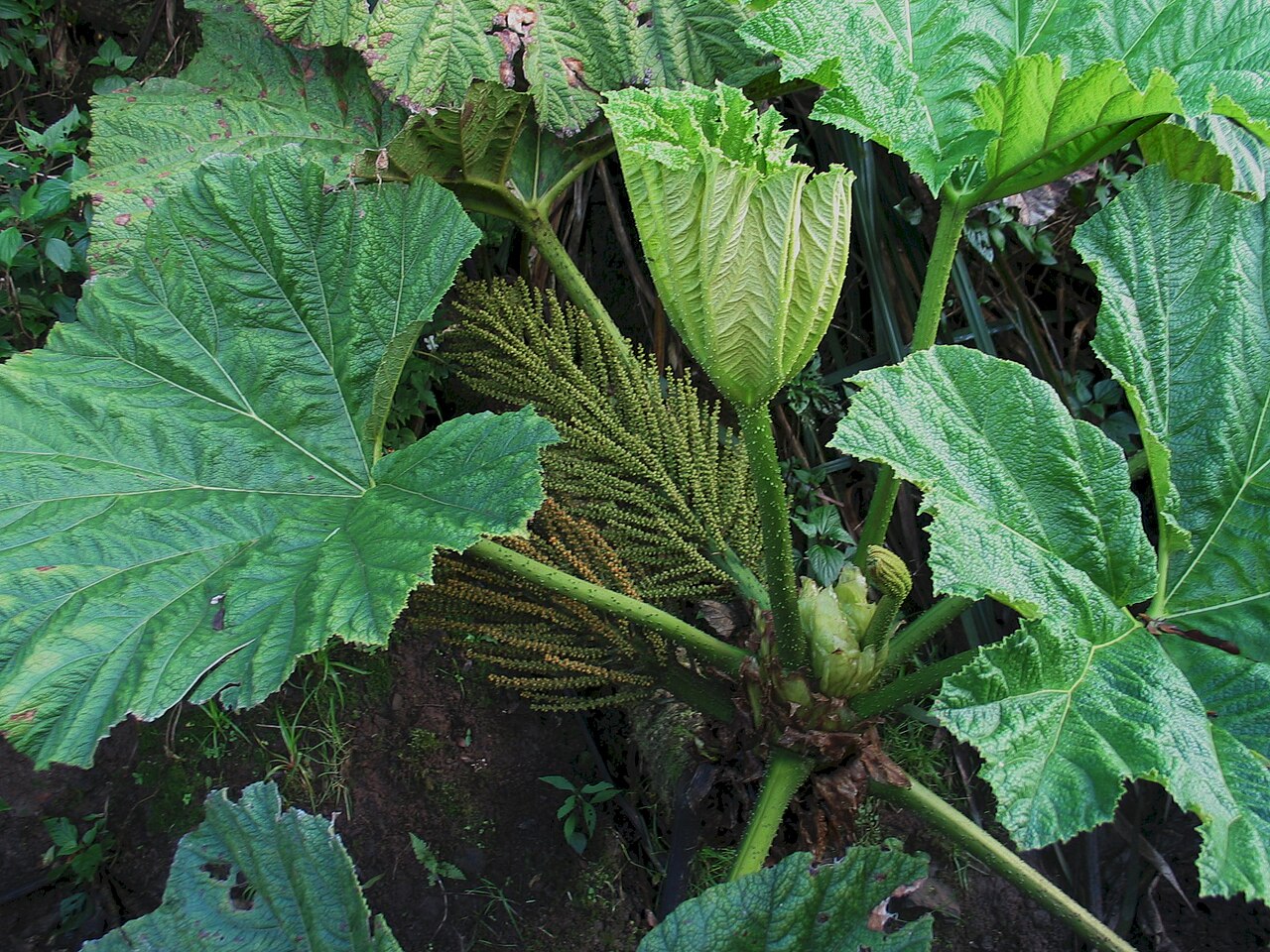
Gunnera petaloidea, known in Hawaiian as ʻapeʻape or ʻape, and listed by USDA as haha, is a giant-leaved herb found only in the Hawaiian Islands. It grows on rain-soaked mountain slopes, stream banks and cliff faces, where its round, deeply wrinkled leaves, often 2 to 3 feet long and held on thick, fleshy stalks, make it one of the most dramatic plants of the native wet forest.
ʻApeʻape belongs to Gunnera, a genus of about 60 species found around the Pacific and Southern Hemisphere. Its best-known relative is the giant rhubarb of South America (Gunnera manicata), a famous ornamental in cool, wet gardens. Like all gunneras, ʻapeʻape houses nitrogen-fixing cyanobacteria (Nostoc) in special glands at the base of its leaf stalks, which helps it thrive in nutrient-poor, constantly wet soils.
The species is endemic to Hawaiʻi and is not federally listed, but it is confined to cool, very wet upland habitats and is vulnerable to feral pigs and invasive weeds. It is not an easy garden plant outside its natural climate. This guide covers how to recognize it, where it grows, what it takes to grow it, and its place in Hawaiian forests.
Identification
No other native Hawaiian herb has leaves as large as ʻapeʻape, so it is easy to recognize. The name ʻape is also used in Hawaiian for elephant-ear plants (Alocasia and relatives), which have smooth, arrow-shaped leaves and are not related.
Growth Habit
ʻApeʻape is a large perennial herb, usually 3 to 6 feet tall but sometimes much taller in sheltered gulches. It grows from a thick, green, branching rhizome, 4 to 5 inches across, that can creep along the ground or stand partly upright. Over time a single plant forms a clonal colony that can cover a slope many yards long.
Leaves
The leaves are round to kidney-shaped, roughly 16 to 40 inches long and 8 to 35 inches wide, with shallow lobes, toothed margins and a deeply puckered, wrinkled surface. They are carried on stout, fleshy stalks up to about 3 feet long and 3 to 4 inches thick, which are dotted with soft, prickle-like bumps. Unlike the related Kauaʻi species G. kauaiensis, the leaf stalk attaches at the edge of the blade rather than in the middle.
Flowers
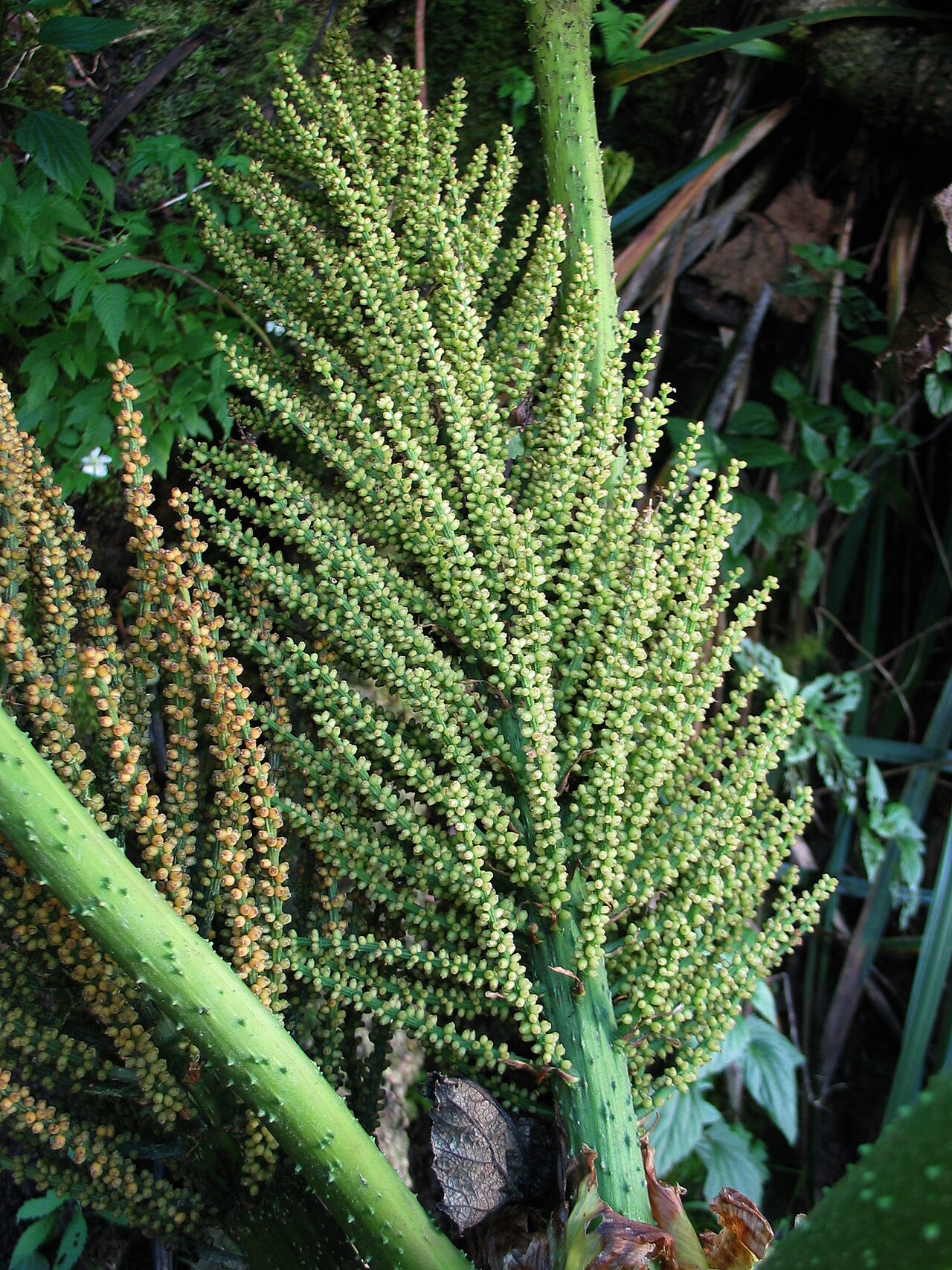
Flowers appear mainly in summer on a tall, branched, cone-shaped stalk about 2 to 3 feet high that rises from the center of the plant among the leaf bases. Each side branch is 4 to 9 inches long and densely packed with tiny greenish to reddish flowers with paired petals and paired stamens. The developing flower stalk is wrapped in pale bracts that unfurl like a fern fiddlehead.
Fruit
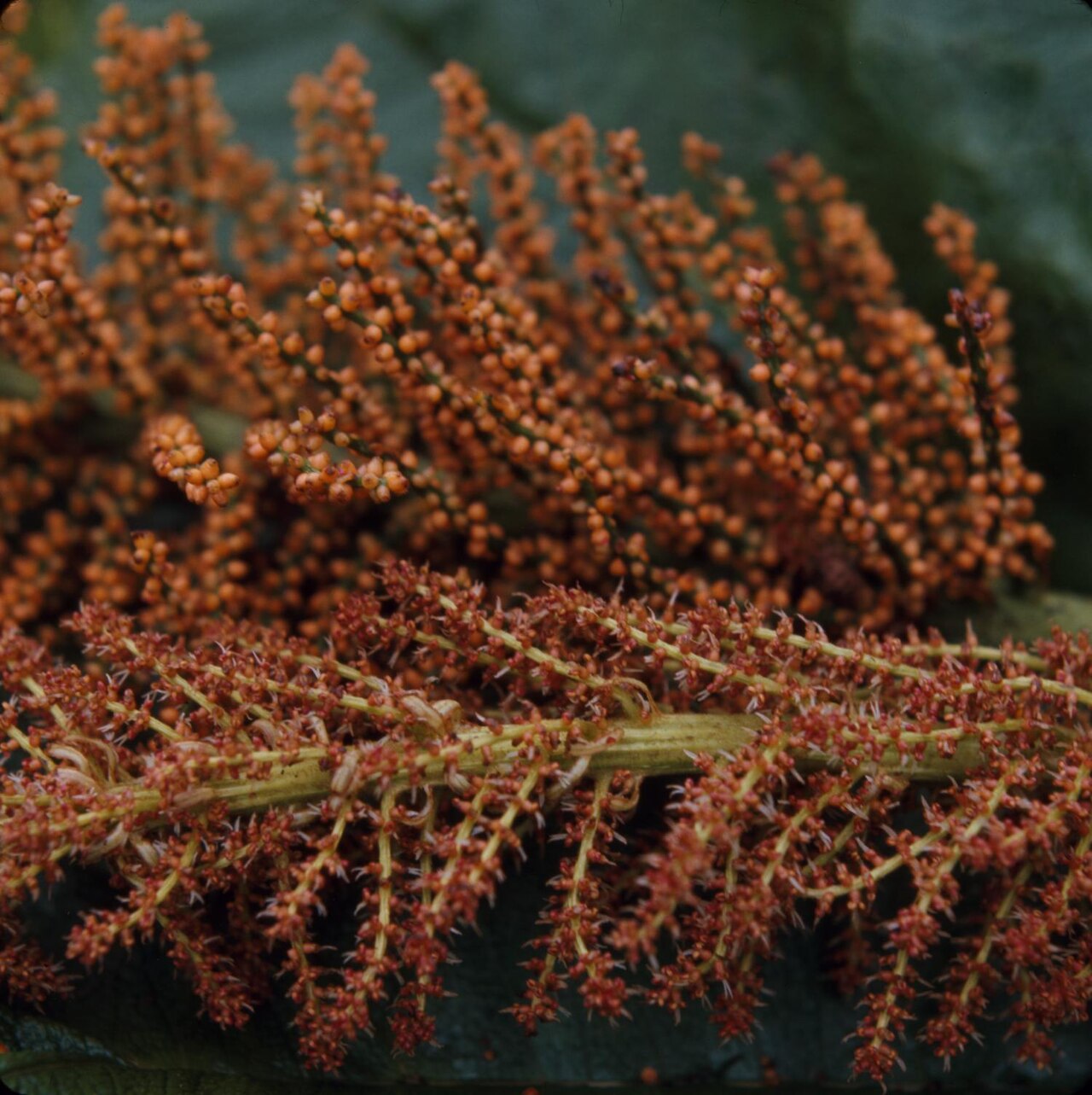
After flowering, the spikes turn reddish-orange to red with many small, fleshy, one-seeded fruits. The fruits are attractive to birds, which help spread the seeds to new wet sites.
Similar Species
Gunnera kauaiensis of Kauaʻi has peltate leaves, with the stalk attached near the middle of the blade. The ornamental giant rhubarb (G. manicata) and Chilean rhubarb (G. tinctoria) are not native; G. tinctoria has become invasive in some cool, wet places outside its range, so plant only the native species in Hawaiʻi.
Quick Facts
| Scientific Name | Gunnera petaloidea Gaudich. |
| Family | Gunneraceae (gunnera family) |
| Plant Type | Giant-leaved perennial herb; endemic to Hawaiʻi |
| Mature Height | 3–6 ft; sometimes taller in sheltered sites |
| Mature Spread | 4–8 ft per plant; colonies can be much larger |
| Growth Rate | Moderate in cool, wet conditions |
| Sun Exposure | Part shade to full sun with constant moisture |
| Water Needs | Very high; soil must stay wet |
| Soil Type | Wet, organic-rich soil; tolerates rocky, seepy slopes |
| Soil pH | About 4.5–6.5 |
| Bloom Time | Mainly summer |
| Flower Color | Greenish to reddish; tiny, on a tall branched stalk |
| Fall Color | None (evergreen in Hawaiʻi) |
| Fruit | Small, fleshy, reddish-orange to red |
| Deer Resistant | Not applicable; damaged by feral pigs |
| USDA Hardiness Zones | 10–11 (cool, wet upland conditions) |
Native Range
ʻApeʻape is endemic to the Hawaiian Islands. USDA PLANTS records it only from Hawaiʻi, and it has been reported from Kauaʻi, Oʻahu, Molokaʻi, Maui and Hawaiʻi Island. Some botanists treat the Kauaʻi plants with peltate leaves as a separate species, Gunnera kauaiensis. On Oʻahu it is known mainly from the cool, cloud-covered summit area of Mount Kaʻala in the Waiʻanae Range.
It grows on wet, often steep slopes, along streams, in gulches and on cliff faces in montane wet forest, at elevations from about 2,300 to 6,000 feet (700 to 1,830 m) and most often around 3,000 to 4,300 feet. These sites are cool, cloudy and receive heavy rainfall, and the plants often grow where water seeps from the rock.
ʻApeʻape is not federally listed. Feral pigs, which root up rhizomes and open the ground for weeds, and invasive plants such as kāhili ginger and strawberry guava are the main threats. Fenced and protected areas such as Waikamoi Preserve on Maui and the Mount Kaʻala Natural Area Reserve on Oʻahu still have healthy stands.
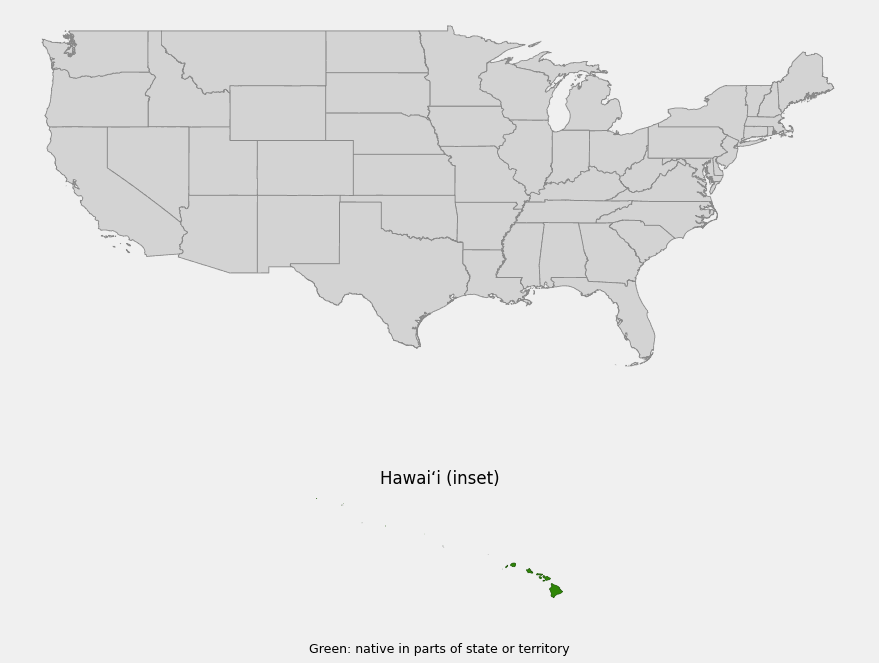
📋 Regional plant lists featuring ʻApeʻape: Hawaii
Growing & Care Guide
ʻApeʻape is a spectacular plant, but it is honestly difficult to grow outside its natural climate. It needs cool temperatures, high humidity and soil that never dries out, conditions found in Hawaiʻi mainly above about 2,500 feet on windward slopes. In warm, dry lowland gardens it usually declines. Buy only nursery-propagated plants from a Hawaiʻi native plant nursery and never dig plants from the wild; Hawaiʻi also restricts bringing plants in from other states, so source plants locally.
Light
Part shade suits most gardens, with morning sun and protection from hot afternoon sun. In cloudy, wet upland sites it can take full sun. The huge leaves scorch and wilt quickly in strong sun if the roots are not constantly moist.
Soil & Water
Plant in deep, wet soil rich in organic matter, such as the edge of a pond, a stream bank, a seep or a boggy bed. The soil should stay moist to wet at all times; ʻapeʻape is one of the few garden plants that thrives in waterlogged soil, provided the water is moving or fresh rather than stagnant. Mulch heavily and water daily in dry spells.
Planting Tips
Give it room: a single plant can spread 4 to 8 feet, and colonies grow larger over time. Choose a sheltered spot out of strong wind, which shreds the big leaves. It is best suited to upland and windward gardens in Hawaiʻi and to cool, humid, frost-free climates elsewhere (roughly USDA zones 10 to 11); it will not tolerate hot, dry air. Protect young plants from slugs and, in rural areas, fence out pigs.
Pruning & Maintenance
Remove dead or tattered leaves at the base. Spent flower stalks can be cut off if you do not want seed. Apart from keeping it wet, fed with compost and free of weeds, it needs little care once settled.
Propagation
The easiest method is division: cut a section of rhizome with a growing bud and a few roots, and plant it in a wet, shaded spot until new leaves appear. Seed can also be sown fresh on the surface of a constantly moist, sterile mix in bright shade; germination is slow and seedlings need high humidity. Use only nursery stock or material collected with permission.
Landscape Uses
- Upland water gardens: a bold, native foliage plant for pond and stream edges
- Bog and seep gardens: thrives where the soil is wet all the time
- Forest restoration: helps hold soil on wet, steep slopes and stream banks
- Specimen foliage plant: huge, wrinkled leaves for dramatic shade gardens
- Educational gardens: illustrates island evolution and plant–cyanobacteria symbiosis
Wildlife & Ecological Value
ʻApeʻape is a distinctive part of Hawaiʻi’s wet upland forests, sheltering invertebrates under its huge leaves and feeding birds with its fruits.
For Pollinators
The tiny flowers are mostly wind-pollinated, as in other gunneras, and produce abundant pollen that small insects also visit. The flower stalks are not showy to pollinators.
For Birds
The small, fleshy fruits are eaten by birds, which disperse the seeds to new wet sites. The dense, sheltered colonies are good foraging places for insect-eating forest birds.
For Mammals
Hawaiʻi’s only native land mammal, the Hawaiian hoary bat, forages over the forests where ʻapeʻape grows. Feral pigs dig up and eat the rhizomes and are a major threat to the plant.
Ecosystem Role
Through its partnership with nitrogen-fixing cyanobacteria, ʻapeʻape adds nitrogen to the nutrient-poor, leached soils of wet forest slopes. Its thick rhizomes and large leaves help stabilize steep, saturated slopes and stream banks, and the moist shelter beneath its leaves supports native snails, insects and ferns.
Cultural & Historical Uses
The genus Gunnera is named for the Norwegian bishop and botanist Johan Ernst Gunnerus. Gunnera petaloidea was described by the French botanist Charles Gaudichaud-Beaupré, who visited Hawaiʻi in 1819 on the Freycinet expedition. The species name refers to the petal-like structures of its tiny flowers.
The Hawaiian name ʻape (or ʻapeʻape) is shared with elephant-ear plants, reflecting the similarly huge leaves. Early naturalists and visitors to Hawaiʻi’s upland forests often remarked on the giant leaves of ʻapeʻape along trails and gulches.
Today ʻapeʻape is a favorite of hikers on trails such as the Mount Kaʻala boardwalk on Oʻahu and in Waikamoi Preserve on Maui. Its close relatives in South America and New Zealand show how gunneras spread across the Pacific, and botanists study its partnership with cyanobacteria as a rare example of such a relationship in flowering plants.
Frequently Asked Questions
What is the Hawaiian name for Gunnera petaloidea?
It is called ʻapeʻape or ʻape in Hawaiian. USDA lists the common name haha, a name more often used for Cyanea lobelioids. ʻApe is also the name for elephant-ear plants.
Is ʻapeʻape endangered?
No, it is not federally listed. It is endemic to Hawaiʻi and limited to cool, very wet upland habitats, where it is threatened by feral pigs and invasive weeds.
Can I grow ʻapeʻape in my garden?
Only in cool, wet, humid conditions, such as upland or windward gardens in Hawaiʻi above about 2,500 feet, or beside a pond or stream. It struggles in hot, dry lowland gardens. Buy nursery-propagated plants from a Hawaiʻi native plant nursery.
Is ʻapeʻape related to the giant rhubarb in gardens?
Yes. Giant rhubarb (Gunnera manicata) and Chilean rhubarb (G. tinctoria) are in the same genus. They are not native to Hawaiʻi, and Chilean rhubarb is invasive in some places, so choose the native ʻapeʻape for Hawaiian gardens.
How big are ʻapeʻape leaves?
The leaves are typically about 16 to 40 inches long and up to about 3 feet wide, on fleshy stalks up to about 3 feet long, making them some of the largest leaves of any native Hawaiian herb.

Looking for a nursery that carries ʻApeʻape?
Browse our native plant nursery directory: Hawaii

