
Bay Cedar (Suriana maritima)
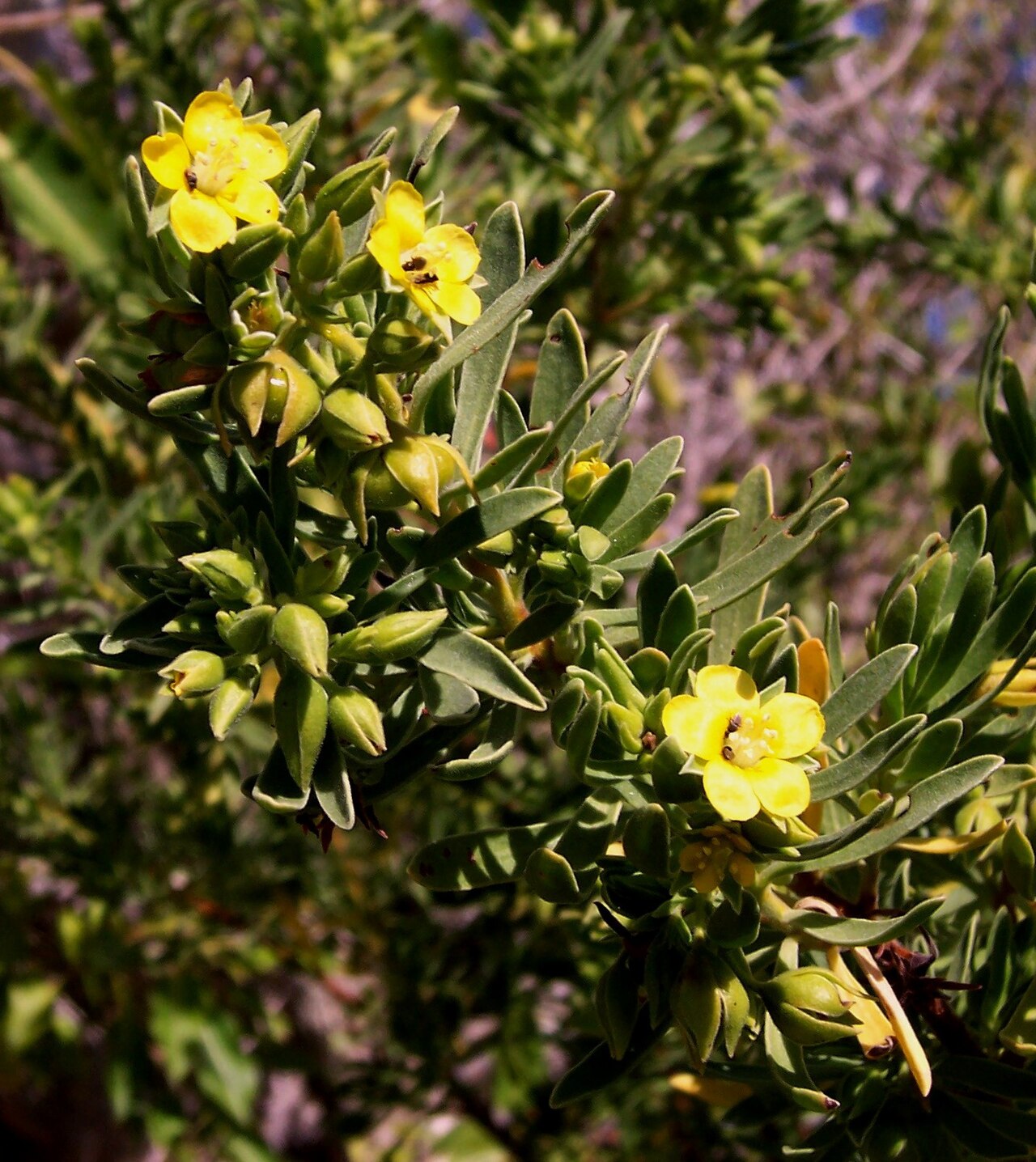
Suriana maritima, Bay Cedar or baycedar, is a tough evergreen shrub of tropical beaches and coastal rock. It is neither a bay nor a cedar; the name comes from the resinous smell of the crushed foliage and the soft, needle-like look of the crowded leaves. It is the only species in its genus and almost the only one in its family, Surianaceae, and it grows on warm coasts around the world.
The plant is built for the beach. Leaves are narrow, thick and spoon-shaped, covered in fine hairs, packed in rosettes at the tips of stiff branches. Small bright yellow flowers appear year-round, and the fruit is a cluster of dry, buoyant one-seeded segments that float on seawater. Plants grow as low, wind-pruned mounds on exposed dunes and as 10 to 20 foot small trees in sheltered coastal thickets.
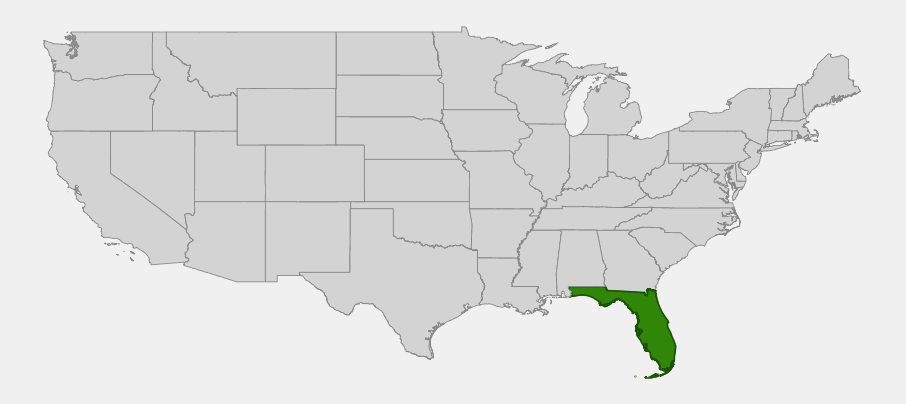
In the continental United States bay cedar grows only in Florida, mostly from Cape Canaveral and Sarasota south through the Keys, and USDA PLANTS also lists it as native in Puerto Rico and the U.S. Virgin Islands. It is the larval host plant for two scrub-hairstreak butterflies and one of the best shrubs available for a south Florida beachfront, where almost nothing else will grow.
Identification
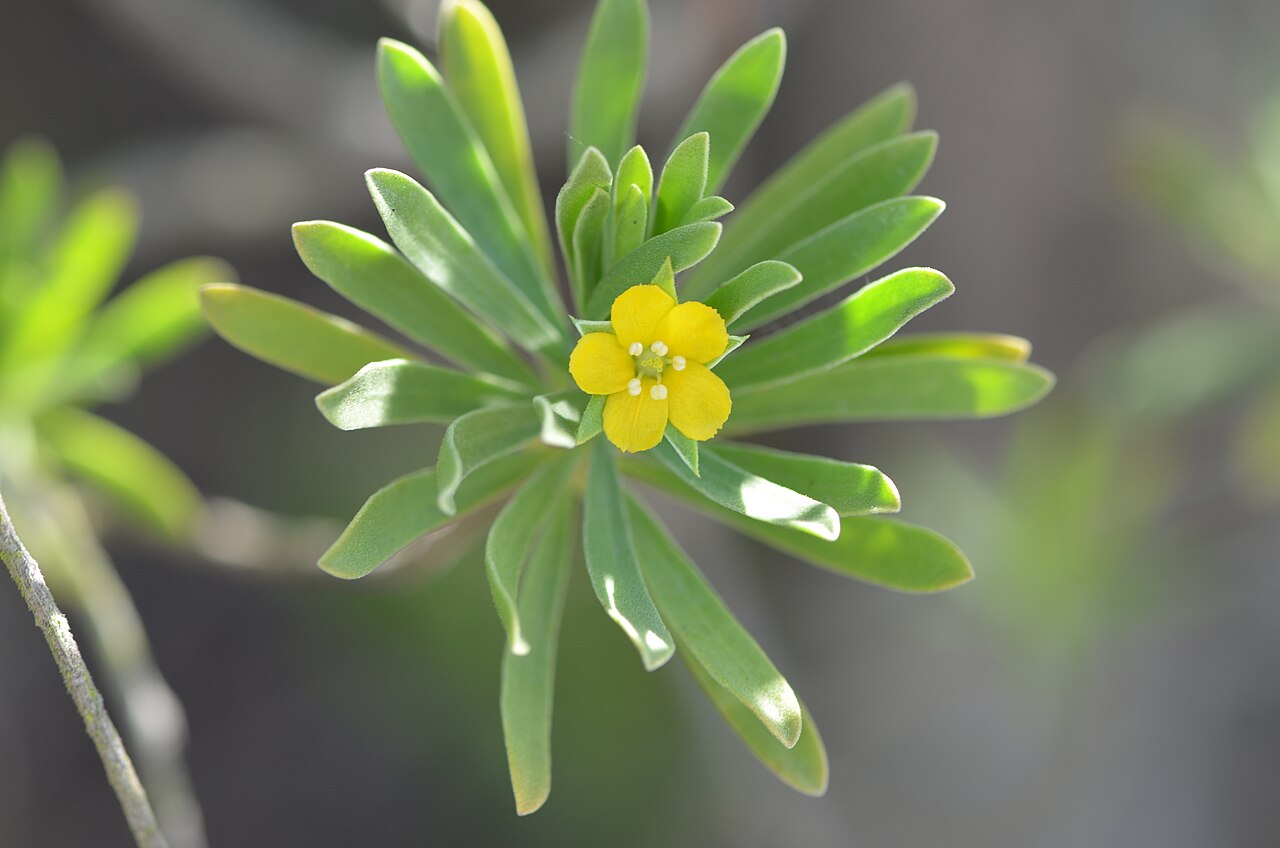
On a Florida beach there are only a handful of silvery-green shrubs to choose between. Bay cedar is the one with narrow, soft, spoon-shaped leaves arranged in dense spiral rosettes and with small yellow five-petaled flowers tucked among them.
Habit & Stems
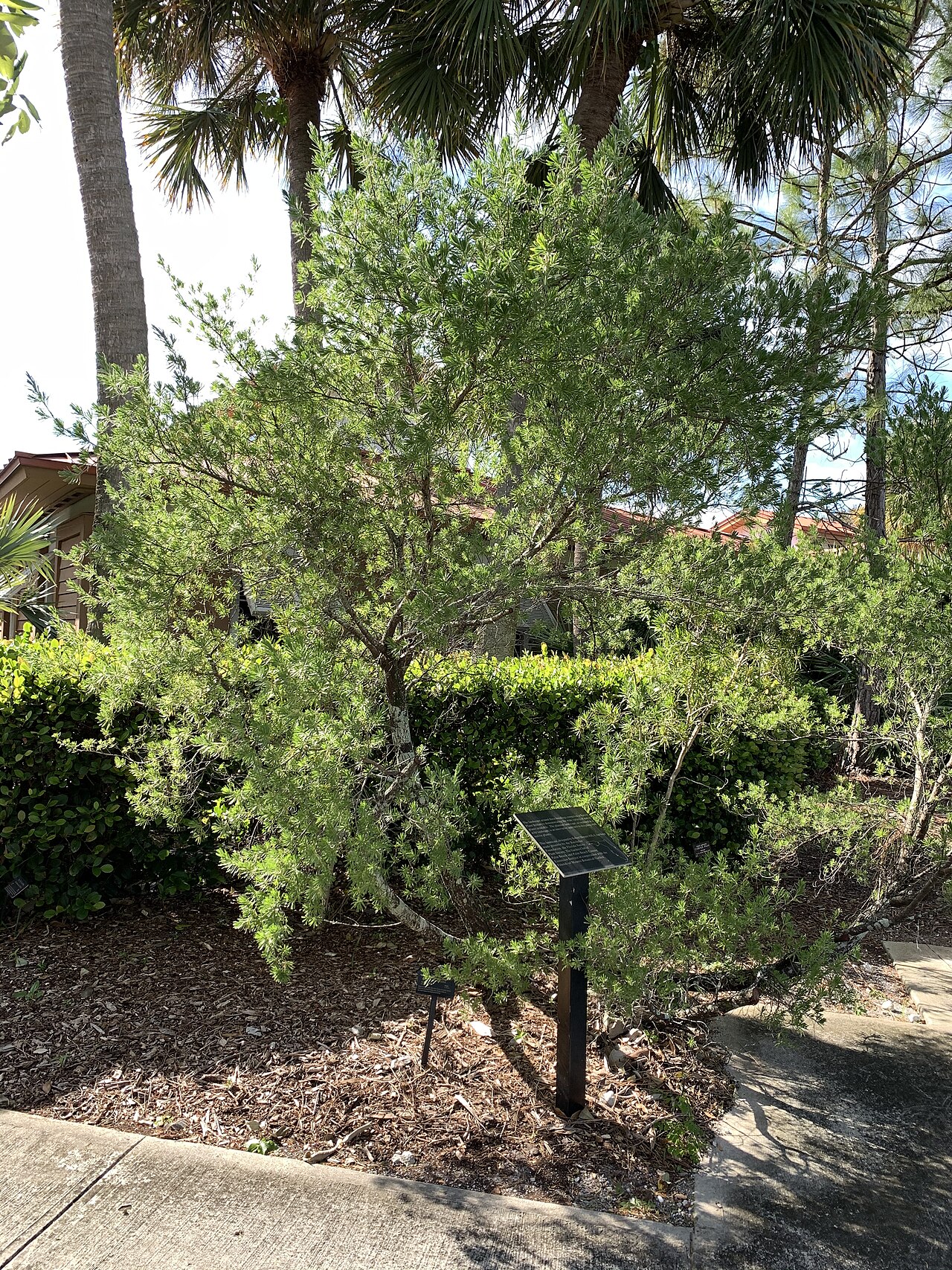
Bay cedar varies with exposure. On an open dune in constant wind it grows as a dense, rounded, wind-sheared mound 3 to 6 feet tall and as wide or wider. In sheltered coastal thickets and in cultivation it becomes an upright shrub or small multi-trunked tree 10 to 20 feet tall, and old specimens develop attractive gnarled, peeling, reddish-brown to gray trunks. The branches are stiff, upcurved and finely hairy when young, and they fork repeatedly near the tips, which gives the plant its congested, tufted look.
Leaves
Leaves are alternate but so crowded they appear whorled, forming tight rosettes at the end of every branch. Each leaf is narrowly spoon-shaped, about 1/2 to 1½ inches long and a quarter inch wide, thickened and slightly succulent, with the blade tapering gradually into the stem. Both surfaces are covered in short soft hairs that give the foliage a gray-green, slightly velvety look, and the margins are smooth and often rolled under. Crushed leaves smell faintly resinous. The plant is evergreen, with old leaves yellowing and dropping from the lower part of the branch as new ones form at the tip.
Flowers
Flowers are borne in small clusters of two to several in the leaf axils near the branch tips, often almost hidden among the leaves. Each is about half an inch across with five bright yellow, rounded, slightly cupped petals, five green hairy sepals that are longer and narrower than the petals, and ten stamens around a cluster of five separate pistils. Flowering is essentially continuous in south Florida with peaks in the warm months. The flowers have no noticeable scent.
Fruit & Seeds
Each flower can produce up to five separate dry, one-seeded segments that sit inside the persistent hairy sepals, green at first and ripening brown to blackish. They are roughly an eighth of an inch across, corky and buoyant, and they separate and float away on seawater. Ocean drift is how bay cedar colonizes beaches across the tropics, and the same buoyancy means the fruits often wash up in strand lines well away from the parent plant.
Quick Facts
| Scientific Name | Suriana maritima |
| Family | Surianaceae (bay cedar family; formerly placed in Simaroubaceae) |
| Plant Type | Evergreen shrub or small tree |
| Mature Height | 3–6 ft on exposed dunes; 10–20 ft in sheltered sites and cultivation |
| Mature Spread | 4–12 ft; wind-sheared plants are wider than tall |
| Growth Rate | Slow to moderate |
| Sun Exposure | Full sun |
| Water Needs | Very low once established; highly drought tolerant |
| Soil Type | Beach sand, shell, coral rock and limestone; needs sharp drainage |
| Soil pH | Neutral to strongly alkaline, about 7.0–8.5 |
| Bloom Time | Year-round in south Florida, heaviest spring through fall |
| Flower Color | Bright yellow |
| Fall Color | None; gray-green evergreen foliage all year |
| Fruit | Cluster of up to five dry, buoyant, one-seeded segments inside hairy sepals |
| Deer Resistant | Yes; the hairy, resinous foliage is rarely browsed |
| USDA Hardiness Zones | 10–11 |
Native Range
Bay cedar is pantropical, growing on beaches and coastal rock from the Caribbean and tropical America through Africa, southern Asia, Australia and the Pacific islands. Its wide distribution is a direct result of its floating fruit: it is one of the standard species of the tropical “drift flora,” arriving on new coasts the same way coconut and sea grape do. In U.S. territory, USDA PLANTS lists it as native in the lower 48, Puerto Rico and the U.S. Virgin Islands.
In the continental United States it occurs only in Florida, on the coast. The Atlas of Florida Plants maps it from roughly Brevard County south on the Atlantic side and from the Sarasota area south on the Gulf side, through the Keys and the Dry Tortugas. It is one of the most consistent shrubs of the Keys shoreline, where it grows on coral rock, on the back of beaches, and along the landward edge of mangroves.
Its habitat is the outer edge of the coastal strand: beach dunes, berm crests, coastal rock barrens, limestone and coral shorelines, and the sandy margins of tropical hammocks. It is very salt tolerant, takes direct salt spray, and withstands brief inundation by storm surge, but like most beach shrubs it needs soil that drains instantly and will not tolerate long-term saturation or shade.
📋 Regional plant lists featuring Bay Cedar: North & South Florida
Growing & Care Guide
Bay cedar is among the easiest shrubs to grow on a south Florida beachfront and among the hardest to grow anywhere else. Give it sun, sand and neglect. The fastest ways to kill it are irrigation, rich soil and shade.
Light
Full sun. Bay cedar grows in the most exposed positions on the coast and has no shade tolerance to speak of. In part shade it thins out, stretches, and loses the dense rosette structure that makes it attractive.
Soil & Water
Plant it in sand, shell, crushed coral or limestone fill. Drainage is the single requirement: roots sitting in wet soil rot quickly. Do not amend the hole with compost or topsoil. Water new plants about once a week for the first two or three months to get roots moving, then stop. Established plants need no supplemental water in Florida except in extraordinary drought, and they are better off dry than wet. Keep irrigation heads pointed away from them. Fertilizer is unnecessary and encourages soft growth that breaks in wind.
Planting Tips
Plant from containers at the start of the rainy season. Set the root ball slightly high and backfill with the native sand. Space plants 4 to 6 feet apart for a mass or informal hedge, or give a single specimen 10 feet if you plan to grow it as a small tree. Bay cedar is not a true pioneer of bare open sand like sea oats; it does best just behind the first dune crest or on rock. Young plants transplant better than large ones, which resent root disturbance.
Pruning & Maintenance
Very little is needed. For a hedge, tip-prune lightly several times a year rather than shearing hard; bay cedar takes shearing but looks far better with a light hand. To grow it as a small tree, remove the lower branches gradually over several years to show off the gnarled trunk. Remove storm-damaged wood at any time. Do not cut back into bare old wood, which resprouts slowly if at all. Salt spray and wind do most of the shaping for free.
Propagation
Seed is the usual method. Collect the brown, ripe fruit segments, clean off the sepals, and sow in coarse sand in a warm, bright place; germination is slow and uneven, often taking a month or more, and soaking the seed can help. Semi-hardwood cuttings taken from firm new growth in warm weather will root under mist in a sharp-draining medium, though rooting percentages are modest. Several licensed Florida native nurseries carry container-grown bay cedar, which is the simplest option for most gardeners.
Landscape Uses
- Beachfront landscaping: a durable evergreen shrub for the front line of salt spray and wind
- Coastal hedges and screens: tip-pruned into informal hedges that take salt, wind and drought
- Dune and coastal restoration: planted behind the foredune to stabilize sand and rebuild strand vegetation
- Butterfly gardens: larval host plant for martial scrub-hairstreak and mallow scrub-hairstreak
- Specimen small tree: limbed up over time to show the gnarled, peeling trunk in a sunny coastal courtyard
Wildlife & Ecological Value
Bay cedar is a working part of the coastal strand food web, and its most important role is as a caterpillar host rather than as a nectar or fruit plant.
For Pollinators
The small yellow flowers are open and accessible and are worked by native bees, small wasps, flies and butterflies, and they are available in essentially every month. More significant is its role as a larval host: the Butterflies and Moths of North America database records bay cedar as a host plant for the martial scrub-hairstreak (Strymon martialis) and the mallow scrub-hairstreak (Strymon istapa). The martial scrub-hairstreak is a south Florida and Keys specialty, and bay cedar plantings are one of the practical ways to support it.
For Birds
The dry fruits are not an important bird food, but the dense branching provides shelter and nesting sites on an exposed shoreline. On Caribbean and Florida Keys islands, bay cedar thickets are used for nesting by seabirds and for cover by migrating songbirds making landfall after a crossing.
For Mammals
The hairy, resinous leaves are unappealing to deer and rabbits, so browsing is rarely a problem. The shrubs mainly serve mammals as cover and as a trap for the organic litter that supports beach invertebrates.
Ecosystem Role
Bay cedar is a sand and soil stabilizer on the back dune and on coral rock. Its branches catch wind-blown sand and drifted litter, and its roots hold loose substrate against wave wash and storm scour. Because its fruits float, it is one of the first woody colonizers of new beaches and islands throughout the tropics. Within Florida it contributes to the structural layer of the coastal strand that protects the hammocks and uplands behind it.
Cultural & Historical Uses
Linnaeus named Suriana maritima in 1753, honoring Joseph Donat Surian, a French physician and botanist who collected in the West Indies in the 1680s. The plant is the only species in its genus, and for a long time it was filed in the quassia family, Simaroubaceae. Molecular work eventually moved it into its own small family, Surianaceae, whose few other members are mostly Australian; bay cedar is the only one with a pantropical distribution, a direct consequence of its seawater-dispersed fruit.
The common names are both misleading. It is not related to the bays (Persea, Laurus) or to the cedars, and the foliage smells more resinous than aromatic. Across the Caribbean the wood is hard and has been used for small tools and firewood, and leaf preparations appear in regional folk medicine, but it has never had major economic use. Its practical value has always been as a coastal windbreak and sand binder.
In Florida, bay cedar has moved steadily into the landscape trade over the last few decades as coastal communities looked for salt-tolerant, drought-tolerant native shrubs to replace Australian pine and Brazilian pepper. It is now standard in dune restoration specifications in Miami-Dade, Monroe and the Treasure Coast, and it is widely available from licensed native nurseries. Gardeners who try it inland, away from salt and sand, usually find out quickly that it is a specialist.
Frequently Asked Questions
Is bay cedar related to cedars?
No. Despite the name, it is not a conifer and not related to true cedars or to bay trees. It belongs to Surianaceae, a small family of mostly Australian shrubs, and it is the only species in the genus Suriana. The name refers to the resinous smell and the fine, needle-like look of the crowded leaves.
How salt tolerant is bay cedar?
Very. It grows in direct salt spray on open beaches, tolerates salty soil, and survives brief flooding by storm surge. Its fruits float in seawater for long periods. What it will not tolerate is soil that stays saturated, or deep shade.
Can bay cedar be used as a hedge?
Yes, and it makes a good one on the coast. Tip-prune lightly several times a year rather than shearing hard, and space plants 4 to 6 feet apart. It tolerates salt, wind and drought better than almost any other hedge plant available in south Florida.
What butterflies use bay cedar?
It is a documented larval host plant for the martial scrub-hairstreak and the mallow scrub-hairstreak. The martial scrub-hairstreak is largely restricted to south Florida and the Keys, so planting bay cedar within its range is genuinely useful habitat work.
Why is my inland bay cedar struggling?
Almost certainly too much water, too rich a soil, or shade. Bay cedar is adapted to nutrient-poor, fast-draining, fully sunlit coastal sand and rock. In irrigated landscape beds with amended soil it grows soft, then declines. If you cannot give it dry, sunny, sharply drained conditions, choose a different shrub.

Looking for a nursery that carries Bay Cedar?
Browse our native plant nursery directory: Florida