
Beach Knotweed (Polygonum paronychia)
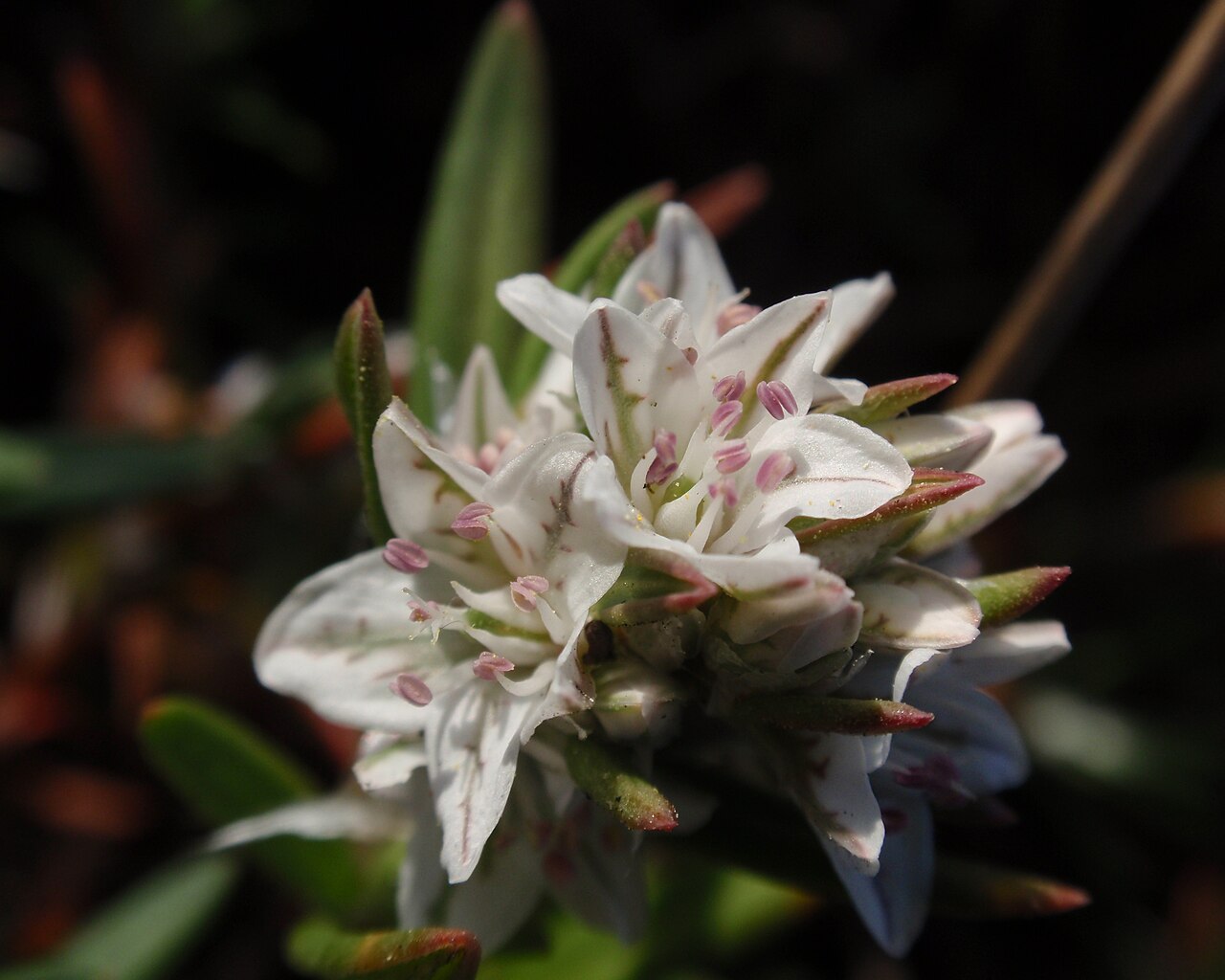
Polygonum paronychia, known as Beach Knotweed, dune knotweed or black knotweed, is a low, woody-based perennial of the Pacific coast. It grows on sand dunes, beaches, coastal bluffs and dune scrub from British Columbia south through Washington and Oregon to California, and it is one of the characteristic plants of the open, shifting sand just behind the beach.
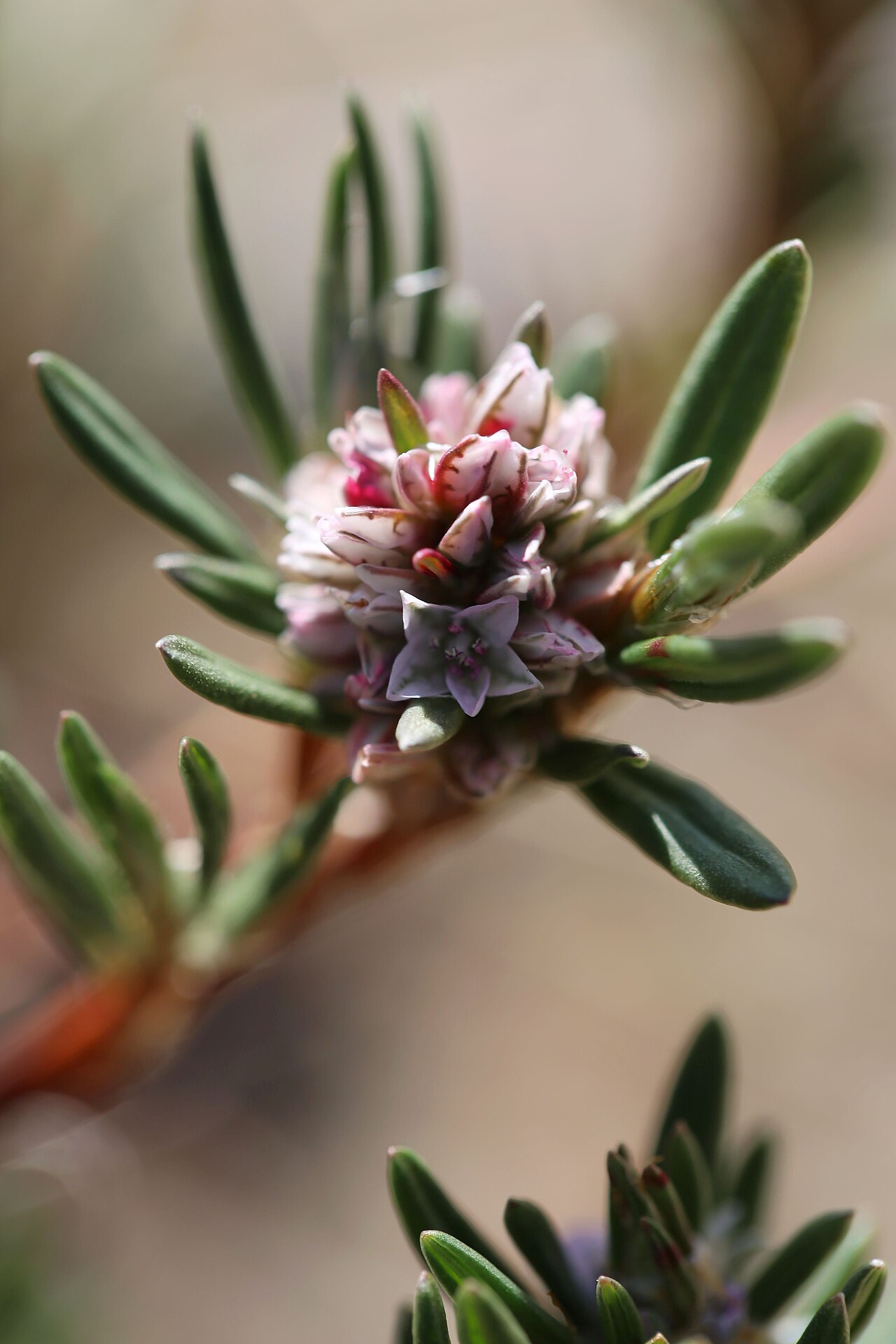
Beach knotweed forms sprawling mats or low mounds of wiry, reddish-brown stems that are woody at the base and densely clothed in narrow, leathery leaves with rolled-under edges. From spring through late summer, small white to pink flowers cluster at the stem tips. The silvery, papery sheaths at each leaf joint, typical of the knotweed family, give the stems a shaggy look as they age.
For coastal gardeners it is a tough, salt-tolerant ground cover for sand and wind, and a good companion for other native dune plants in a restoration planting. It is not a weedy knotweed: unlike the invasive Asian knotweeds, it is a small, slow native shrublet of a fragile habitat. This guide covers how to identify it, where it grows, how to grow it and how it fits into the dune ecosystem.
Identification
Beach knotweed is easiest to recognize by its combination of habitat and form: a low, woody, mat-forming plant on coastal sand, with small, narrow leaves, papery stem sheaths and white flowers at the branch tips.
Growth Habit
Plants are prostrate to loosely ascending, with stems spreading up to about 3 feet from a stout, woody base and taproot. Most plants stay under a foot tall, forming open mats or low, rounded mounds. Stems that are buried by drifting sand can keep growing up through it, and older plants become tangled and twiggy.
Leaves
The leaves are crowded along the stems, narrowly lance-shaped to linear, usually about 1/2 to 1 1/2 inches long, thick and somewhat leathery. Their edges roll under, and the midrib is prominent below. The foliage is dark green to gray-green, often flushing red or bronze in sun, wind and drought.
Stem Sheaths
As in other members of the buckwheat family, each leaf joint is wrapped in a membranous sheath called an ocrea. In beach knotweed these sheaths are conspicuous, silvery to brownish and soon split into ragged fibers, so older stems look shaggy. The dark, persistent old sheaths and stems are probably the origin of the name black knotweed.
Flowers & Fruit
Small flowers, about 1/4 inch long, are crowded in short, leafy clusters at the ends of the branches. The five petal-like tepals are white to pale pink, often with greenish or pink midveins, and the anthers are pink to purple. Flowering runs mainly from spring through summer and into early fall. Each flower produces a single small, dark brown to black, three-sided seed (an achene) that is shiny and smooth.
Look-alikes
Common knotweed (Polygonum aviculare), a weedy annual, can grow on beaches too, but it is thin-stemmed, not woody, with flat leaves and tiny greenish flowers. Coast buckwheats (Eriogonum, such as E. latifolium) share the dunes but have broad, woolly leaves at the base and flowers in umbrella-like heads, without the sheathing stem joints. Pink sand verbena and other sand verbenas have broad, sticky leaves and rounded flower heads.
Quick Facts
| Scientific Name | Polygonum paronychia Cham. & Schltdl. |
| Family | Polygonaceae (buckwheat or knotweed family) |
| Plant Type | Mat-forming, woody-based perennial (subshrub) |
| Mature Height | 4–12 in (occasionally to about 2 ft) |
| Mature Spread | 1–3 ft |
| Growth Rate | Slow to moderate |
| Sun Exposure | Full sun |
| Water Needs | Low; dry sand once established |
| Soil Type | Sand, sandy loam; fast-draining |
| Soil pH | Neutral to slightly alkaline (about 6.5–8) |
| Bloom Time | Spring to late summer (March–September) |
| Flower Color | White to pale pink |
| Fall Color | Foliage often reddish or bronze in exposed sites |
| Fruit | Small, shiny, dark three-sided achene |
| Deer Resistant | Seldom browsed |
| USDA Hardiness Zones | About 8–10 (mild coastal climates) |
Native Range
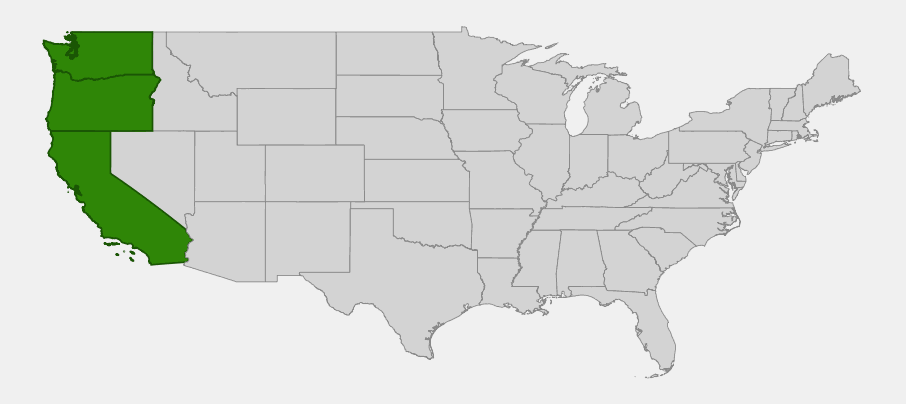
Beach knotweed is native to the Pacific coast of North America. USDA PLANTS lists it in California, Oregon and Washington and in British Columbia in Canada. USDA also shows a record for Nevada, but the species is a strictly coastal dune plant, and the major regional floras describe its range as the coast from British Columbia to California, so the Nevada record is not treated as part of its native range here.
It is found along almost the whole length of the California coast north of the Los Angeles area, and up the outer coasts of Oregon and Washington to Vancouver Island and the British Columbia coast. It is most common on the extensive dune systems of northern and central California and the Oregon coast, and becomes less frequent northward. It does not occur inland: it is a plant of the immediate coast and its sea spray, fog and wind.
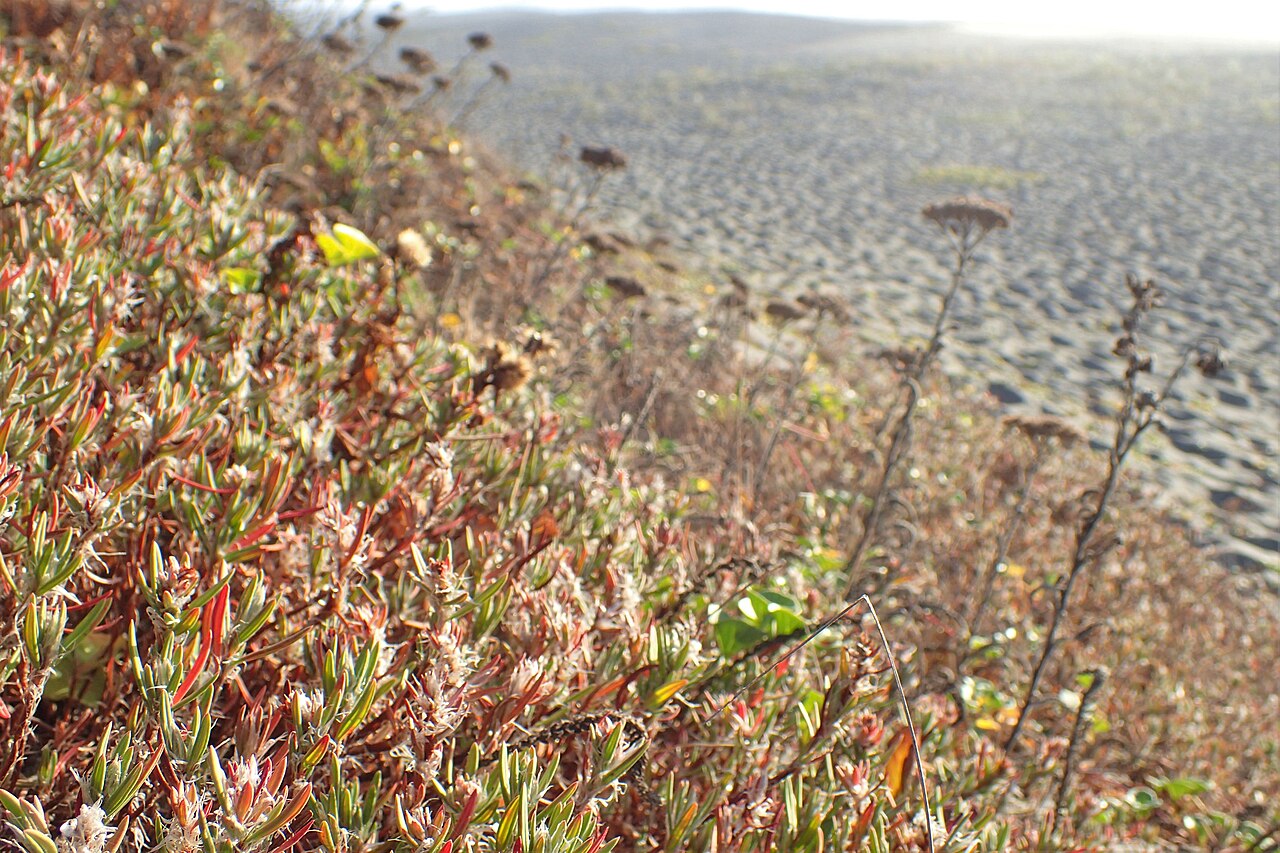
Typical habitats are foredunes and back dunes, stabilized dune scrub, sandy coastal bluffs and terraces, and sand over rocky headlands, from sea level to a few hundred feet. It often grows with other low dune perennials in the open sand between shrubs, and it is one of the native plants that has lost ground where European beachgrass and iceplant have taken over dunes.
📋 Regional plant lists featuring Beach Knotweed: Western Oregon & Western Washington · California & Nevada
Growing & Care Guide
Beach knotweed is a specialist plant for coastal gardens and dune restoration. It is not common in nurseries, but California native plant nurseries near the coast sometimes offer it. Give it what it gets on the dunes: full sun, deep sand, wind and very little water.
Light
Plant it in full sun. It grows on open dunes with no shade at all, and in shade it becomes thin and sprawling. Coastal fog and overcast are fine; it is adapted to cool, gray summers.
Soil & Water
Sand or very sandy soil is ideal, and any soil must drain fast. It tolerates salt spray and salty, nutrient-poor sand, and does not need fertilizer. Water young plants occasionally through their first dry season until the taproot is established; after that, coastal plants usually need no summer water. Heavy, wet clay or regular irrigation will rot it.
Planting Tips
Plant in fall or winter, at the start of the rainy season, from small containers so the taproot is not disturbed. Space plants 2 to 3 feet apart and let them knit together with other low dune plants. It is a natural choice for sandy coastal yards, dune-front properties and restoration projects, where it helps hold loose sand. Never dig plants from beaches or dunes; buy them from a native plant nursery or grow them from responsibly collected seed.
Pruning & Maintenance
Very little care is needed. Plants look their best left alone; old stems and sheaths are part of their character. If a plant becomes very straggly, you can cut back a few of the longest stems in late winter. Pull weeds by hand around young plants, and keep iceplant, European beachgrass and other invasive dune plants out of the planting.
Propagation
Beach knotweed can be grown from seed sown in fall in a sandy mix, kept outdoors over winter. Germination can be uneven. Some propagators also take cuttings of young, non-flowering stems in spring and root them in a sandy mix. Collect seed only where permitted, and take only a small share from any one population.
Landscape Uses
- Coastal gardens: a salt- and wind-tolerant ground cover for sand
- Dune restoration: helps stabilize loose sand with other native dune plants
- Rock and gravel gardens near the coast: low, twiggy mats with long-season flowers
- Habitat gardens: small flowers for bees and flies over a long season
- Low-water plantings: needs no summer water once established on the coast
Wildlife & Ecological Value
Beach knotweed is a modest plant, but on bare sand every low perennial matters. It holds sand, shelters small animals and flowers for months.
For Pollinators
The small white flowers produce nectar and pollen over a long season, from spring through late summer. They are visited by small native bees, flies, wasps and other insects, which are among the main pollinators of dune plants.
For Birds
The small seeds can be eaten by seed-eating birds that forage in coastal dunes, and the mats provide low cover in an otherwise open landscape.
For Mammals
It is seldom browsed by deer. Small mammals and insects can shelter under the twiggy mats, and the plants help create stable, vegetated patches in the dunes.
Ecosystem Role
Beach knotweed is part of the native foredune and dune-mat community of the Pacific coast, along with sand verbenas, silver beachweed and beach evening primrose. These low plants trap blowing sand and allow dunes to stay open and shifting, which many dune specialists depend on. On many dunes this native community has been replaced by European beachgrass and iceplant, and dune restoration projects often replant beach knotweed among other natives.
Cultural & Historical Uses
The genus name Polygonum comes from the Greek for “many knees,” a reference to the swollen joints of the stems. The species name paronychia refers to Paronychia, a genus of small plants known as nailworts whose papery, silvery stipules resemble the sheaths of this knotweed.
The plant was described in 1828 by Adelbert von Chamisso and Diederich von Schlechtendal, from collections Chamisso made at San Francisco during the Russian Rurik expedition around the world. Chamisso was also the first to describe several other California plants, including the California poppy.
Beach knotweed is one of several native Polygonum species on PlantNative. Its relatives include the alpine American bistort and the aquatic water smartweed. None of them is related to the invasive Japanese knotweed, which belongs to a different genus.
Frequently Asked Questions
Is beach knotweed invasive?
No. It is a slow-growing native plant of Pacific coast dunes. The invasive knotweeds that cause problems along rivers and roadsides are Asian species in the genus Reynoutria (formerly Fallopia), which are not closely related to this small dune plant.
Where does beach knotweed grow?
On sand dunes, beaches, dune scrub and sandy coastal bluffs along the Pacific coast, from British Columbia through Washington and Oregon to California.
Can I grow beach knotweed in my garden?
Yes, if you live near the coast and have sandy, fast-draining soil and full sun. It is not suited to inland gardens with heavy soil or summer irrigation.
Why is it called black knotweed?
The old stems and their persistent, papery sheaths turn dark with age, so older plants can look blackish at the base. Its small seeds are also dark and shiny.
When does beach knotweed bloom?
It blooms mainly from spring through late summer, with small white to pink flowers in clusters at the tips of the stems.

Looking for a nursery that carries Beach Knotweed?
Browse our native plant nursery directory: California · Oregon · Washington

