Beargrass (Nolina microcarpa)
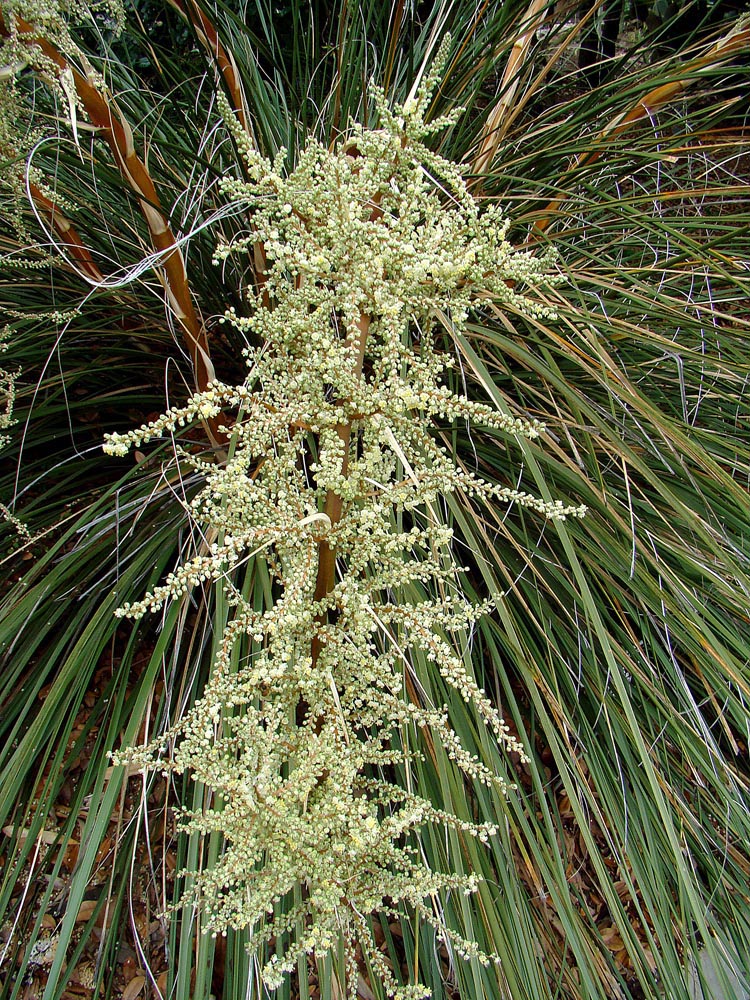
Nolina microcarpa, commonly known as Beargrass or Sacahuista, is one of the most distinctive and architecturally stunning native plants of the Chihuahuan and Sonoran desert grasslands and oak woodlands. Despite its grass-like appearance, Beargrass is not a true grass but a member of the Asparagaceae family — a relative of agaves, yuccas, and sotols. From a dense basal rosette of long, narrow, slightly fibrous leaves, Beargrass sends up tall flower stalks reaching 5 feet or more, covered in dense plumes of creamy-white blossoms that are a spectacular sight in late spring and early summer.
Native to the high desert grasslands and oak woodlands of Arizona, New Mexico, and Texas, Beargrass typically grows at elevations between 3,000 and 7,500 feet, where it forms large, handsome clumps that persist for decades. The leaves are long — up to 3 feet — narrow, tough, and slightly serrated along the margins, providing excellent cover and nesting material for wildlife. Beargrass is remarkably drought tolerant once established, thriving in rocky, well-drained soils with minimal rainfall, making it an outstanding choice for water-wise southwestern gardens.
One of Beargrass’s most ecologically important roles is as a keystone food plant for native pollinators and a critical food and cover resource for Pronghorn, Black Bear (who relish the flower stalks), and numerous grassland birds and small mammals. Its handsome, fountain-like clumps provide excellent year-round structure in the landscape, and its towering white flower plumes create a dramatic late-spring display that is one of the signature spectacles of Arizona’s mountain grasslands and oak woodlands.
Identification
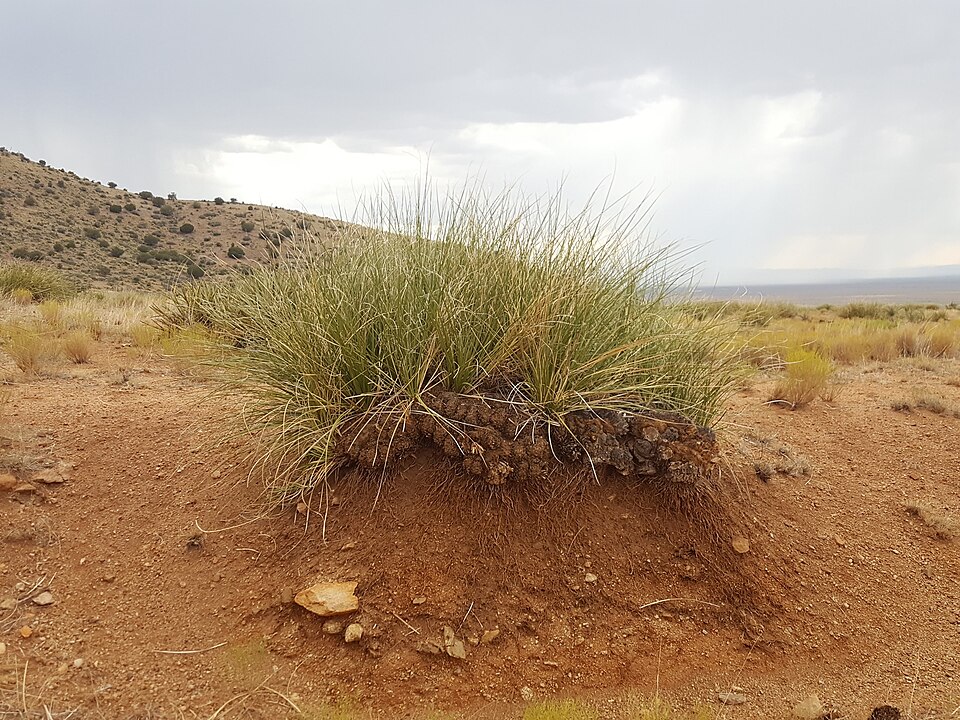
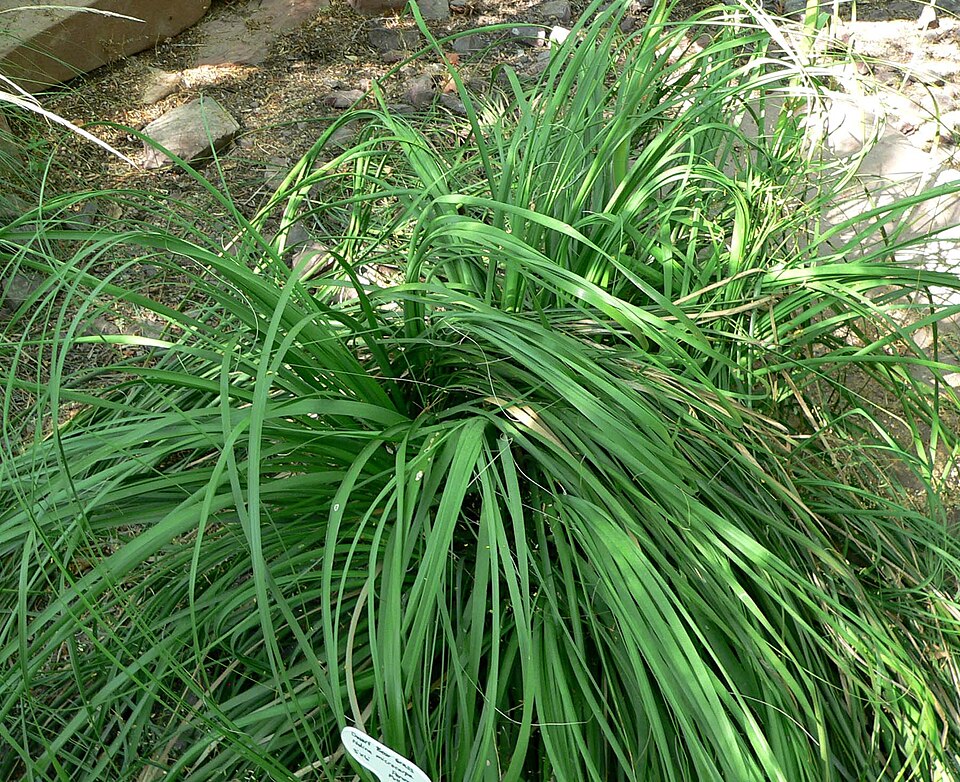
Beargrass is immediately recognizable by its large, fountain-like clumps of narrow, evergreen, somewhat fibrous leaves. The overall form resembles an ornamental grass but on a much larger scale, with individual leaves reaching 2 to 3 feet long and the overall clump expanding to 3 to 5 feet in diameter over many years. The genus name Nolina honors Charles Pierre Nolin, an 18th-century French nurseryman, while microcarpa refers to the small fruits characteristic of this species.
Leaves
The leaves are the most prominent feature — long, narrow, slightly arching, and somewhat fibrous in texture, with tiny, rough teeth along the margins that can catch on skin and clothing. Each leaf is 18 to 36 inches long and only ¼ to ½ inch wide, dark to medium green on the upper surface and slightly paler below. The leaves are evergreen but may become tattered and brown-tipped during harsh winters or extreme drought. They arise from a very short, woody trunk (caudex) at ground level, creating the distinctive basal rosette form. Dead leaves persist and accumulate at the base of the clump, creating a dense, protective thatch around the living crown that shelters small animals and insects.
Flowers & Fruit
From late spring through early summer, mature plants (typically at least 5 to 10 years old) send up one or more tall flower stalks, rising 4 to 6 feet above the foliage. The stalk is branched near the top and densely covered with hundreds of tiny, creamy-white to pale yellow flowers arranged in panicles. Individual flowers are only about ¼ inch across but are produced in such abundance that the inflorescence creates a dramatic, feathery white plume effect. Not all plants bloom every year — Beargrass typically flowers on an irregular cycle, with mass flowering events sometimes occurring across large areas in response to specific weather patterns. The fruits are small, papery, 3-winged capsules about ¼ inch across, containing small, tan seeds that mature in summer and are distributed by wind and small animals.
Root System
Beargrass develops an extensive, deep fibrous root system that allows it to access moisture and anchor the plant on steep, rocky slopes. The central woody caudex — a short, thickened stem at the base of the leaf cluster — can persist for many decades, and old plants sometimes show multiple offshoot rosettes developing around the original crown. This clumping habit allows the plant to slowly expand and colonize surrounding areas over time without becoming aggressively invasive.
Quick Facts
| Scientific Name | Nolina microcarpa |
| Family | Asparagaceae (Agave family / formerly Nolinaceae) |
| Plant Type | Evergreen Perennial / Ornamental Grass-like Shrub |
| Mature Height | 5 ft |
| Sun Exposure | Full Sun to Part Shade |
| Water Needs | Low (Drought Tolerant) |
| Bloom Time | May – June |
| Flower Color | Creamy white to pale yellow |
| USDA Hardiness Zones | 7–11 |
Native Range
Beargrass (Nolina microcarpa) is native to the high desert grasslands, desert scrub, and oak woodland communities of southern Arizona, southern New Mexico, and western Texas, with its range extending south through the Sierra Madre Occidental of Sonora and Chihuahua, Mexico. In the United States, it is one of the characteristic plants of the Madrean oak woodland zone — the transitional plant community between the low Sonoran and Chihuahuan desert scrub and the high-elevation pine-oak forests of the sky island mountain ranges.
Within its range, Beargrass occupies gravelly slopes, rocky canyon sides, and open grasslands between 3,000 and 7,500 feet elevation. It is particularly common on south- and west-facing rocky slopes with thin, well-drained, calcium-rich soils, but it also colonizes disturbed areas, roadsides, and canyon washes where drainage is good. Beargrass often occurs in loose association with Emory Oak, Manzanita, Sotol, various cacti, and desert grasses, creating the visually distinctive landscape of Arizona’s grassland-woodland interface.
Fire plays an important role in maintaining Beargrass populations on the landscape. The persistent dry leaf thatch surrounding each clump readily ignites in grassland fires, burning the above-ground foliage and flower stalks — but the deep fibrous root system and protected growing points within the caudex allow Beargrass to resprout vigorously from the base within a season or two. Historically, periodic grassland fires maintained open conditions that favored Beargrass and prevented shrub encroachment. Fire suppression during the 20th century contributed to woody plant encroachment in many historic Beargrass grasslands.
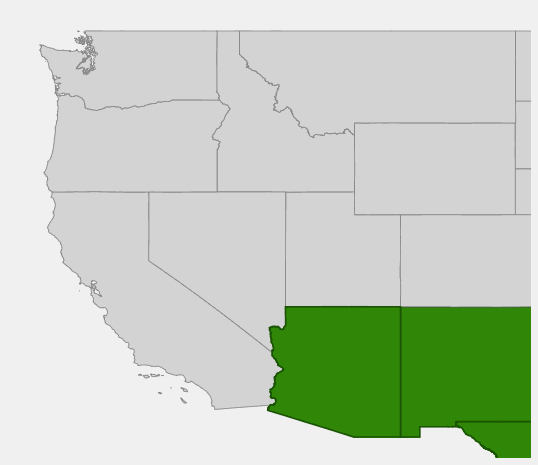
📋 Regional plant lists featuring Beargrass: Arizona
Growing & Care Guide
Beargrass is an excellent landscape plant for water-wise gardens in the Southwest. Its bold, architectural form, year-round evergreen foliage, and dramatic spring flower display make it a standout in any native planting. Once established, it requires almost no supplemental water and thrives on neglect — making it one of the lowest-maintenance ornamental plants available for Arizona and New Mexico landscapes.
Light
Beargrass performs best in full sun, where it develops the densest, most symmetrical clumps and flowers most reliably. It tolerates partial shade — and in fact naturally grows at the woodland edge where it receives some afternoon shade — but flowering may be reduced in shadier conditions and the plant may develop a more open, sprawling form. In the hottest desert areas below 3,000 feet, some afternoon shade can help maintain a more attractive appearance during peak summer heat.
Soil & Water
Well-drained soil is essential — Beargrass absolutely will not tolerate wet feet or clay soils that hold moisture. Rocky, gravelly, sandy, or loamy well-drained soils are ideal. Plant on slopes or in raised beds to ensure excellent drainage. Beargrass is one of the most drought-tolerant native plants available; established plants often thrive on natural rainfall alone in areas with as little as 10 to 14 inches of annual precipitation. During the first year after planting, water every 2 to 3 weeks in summer to support root establishment. In subsequent years, deep watering 2 to 4 times in summer is usually sufficient, tapering to no supplemental irrigation for established plants except during extreme, prolonged droughts.
Planting Tips
Plant in spring or fall, avoiding the hottest summer months. Beargrass resents disturbance to its root system, so choose the permanent planting location carefully — transplanting established plants is very difficult. Allow ample space; clumps eventually reach 3 to 5 feet in diameter. Do not plant too deeply — the crown should be at or slightly above grade. A 2- to 3-inch layer of gravel mulch around the base (not touching the crown) is ideal, mimicking natural rocky soil conditions and improving drainage. Beargrass is slow to establish from seed but readily available as container plants from native plant nurseries specializing in Southwest natives.
Pruning & Maintenance
Beargrass requires minimal maintenance. Remove dead or badly tattered leaves from the base of the clump annually if desired — but the dead leaf thatch provides important cover for wildlife and insulates the crown from cold. Flower stalks can be cut at the base after seeds have matured if you prefer a tidier appearance, or left standing for winter wildlife interest. Never try to “renovate” Beargrass by cutting back into the live crown — the plant responds very poorly to this treatment. Every few years, you may divide outer offset rosettes and transplant them to new locations, though this should be done carefully to minimize root disturbance.
Landscape Uses
Beargrass is exceptionally effective as a landscape specimen:
- Accent plant — the bold, fountain-like form is a stunning focal point in any native planting
- Mass planting — groups of 3 to 5 plants create a dramatic grassland aesthetic
- Slope stabilization — excellent for erosion control on rocky slopes
- Xeriscape & rock gardens — perfect companion for agaves, yuccas, and native cacti
- Wildfire-resistant landscaping — widely used in fire-wise planting schemes
- Wildlife habitat — outstanding cover, nesting material, and food source
- Pollinator gardens — the flower plumes support native bees and butterflies
Wildlife & Ecological Value
Beargrass is a keystone native plant in Arizona’s high desert and oak woodland ecosystems, providing food, shelter, and critical habitat structure for an impressive array of wildlife species.
For Birds
The large, dense clumps of Beargrass foliage provide excellent cover and nesting habitat for ground-nesting birds including Gambel’s Quail, which frequently tucks its nest beneath Beargrass clumps for protection from predators and weather. The seeds are eaten by sparrows, finches, and towhees. The fibrous leaves are collected by many bird species as nesting material, and the flower stalks attract hummingbirds (especially Black-chinned and Broad-tailed Hummingbirds) during the bloom period.
For Mammals
Black Bear is one of the most enthusiastic consumers of Beargrass flowers and young flower stalks — the starchy, sugar-rich inflorescence stalks are an important food source in late spring when other foods may be scarce. Pronghorn browse the leaves during dry periods when grass is scarce. Javelina (Collared Peccary) frequently root around Beargrass clumps in search of the carbohydrate-rich base of the plant. The dense leaf thatch provides shelter for kangaroo rats, pocket mice, and other small mammals that use it as cover from predators and extreme temperatures.
For Pollinators
The creamy-white flower plumes of Beargrass are extraordinary pollinator resources when they bloom in late spring and early summer. Native bees — including Bumblebees, Sweat Bees, and specialist bees in the genera Halictus and Agapostemon — are the primary pollinators. The flowers also attract large numbers of beetles (including Longhorn Beetles) and flies, as well as Painted Lady and Checkered White butterflies. The concentrated bloom event, with many plants flowering simultaneously, creates a period of superabundant nectar and pollen that supports large numbers of pollinators across the landscape.
Ecosystem Role
In the high desert grassland and oak woodland ecosystems of the Southwest, Beargrass clumps serve as important structural elements in the landscape — focal points of biodiversity that concentrate insects, small mammals, and ground-nesting birds in the otherwise relatively open grassland matrix. The persistent dead leaf thatch creates a unique microhabitat — dark, insulated, and protected — that harbors specialized invertebrates, spiders, and small lizards. Beargrass’s deep fibrous roots help stabilize rocky slopes against erosion, and its drought-resistant foliage maintains green biomass through dry periods when other plants go dormant, providing year-round shelter for wildlife.
Cultural & Historical Uses
Beargrass holds considerable cultural importance for the Indigenous peoples of the Southwest, who have used it for both utilitarian and ceremonial purposes for thousands of years. The long, fibrous leaves of Beargrass are among the most valued basketry and weaving materials among the Tohono O’odham, Akimel O’odham, Yavapai, and White Mountain Apache, as well as numerous groups in northern Mexico. The leaves are gathered in summer and fall, processed by splitting and sometimes dyeing, and woven into baskets, mats, and other items of daily and ceremonial use. The strong, flexible fibers are particularly prized for coiled basketry, where they are used as the wrapping material around a grass or fiber core.
The flower stalks and young leaf bases of Beargrass are edible and have been used as food by Indigenous peoples throughout the plant’s range. The young, not-yet-open flower stalks were roasted in pit ovens or over coals and eaten as a vegetable — a practice shared with the treatment of agave hearts. The roasted stalk is starchy and mildly sweet, similar in flavor and texture to hearts of palm. The tough outer fibers of the leaves were also used to make cordage for binding, lashing, and weaving.
In Mexican folk medicine, a tea made from Beargrass root has been used to treat urinary problems and as a general tonic. The plant is known in Spanish as “sacahuista” — a word derived from an Indigenous language of northern Mexico referring to the grassland habitat where the plant grows. In the US Southwest, Beargrass has been used in floral arrangements and dried plant displays since at least the early 20th century, and the dried flower stalks and seed clusters are a distinctive element of southwestern craft and decorative traditions.
Today, Beargrass is an important species in the native plant landscaping industry across the Southwest. It is widely used in restoration plantings in degraded grassland and oak woodland sites, highway revegetation projects, and water-wise residential landscapes. Conservation botanists have expressed concern about over-collection of wild plants for the basketry trade in some areas, and work with Indigenous communities on sustainable harvesting practices to ensure the long-term viability of wild populations.
Frequently Asked Questions
Is Beargrass actually a grass?
No! Despite its name and grass-like appearance, Beargrass (Nolina microcarpa) is not a true grass at all. It is a member of the Asparagaceae family — closely related to agaves, yuccas, and sotols. True grasses belong to the family Poaceae and have a very different flower structure. The “grass” in its common name simply refers to its long, narrow, grass-like leaves.
How long does Beargrass take to bloom?
Beargrass typically takes 5 to 10 years to bloom for the first time in a landscape setting. After that, plants may bloom every 2 to 3 years rather than annually — blooming tends to be triggered by specific combinations of temperature, moisture, and plant maturity. Don’t worry if your plant doesn’t bloom every year; it is perfectly healthy and will eventually put on its spectacular flower display.
Does Beargrass need supplemental water?
Once established (after 1 to 2 years), Beargrass is extremely drought tolerant and thrives in areas with 10 to 20 inches of annual rainfall without any supplemental irrigation. During the first growing season, water every 2 to 3 weeks. After that, tapering to monthly deep watering in summer is sufficient. In very hot, low-desert locations below 2,500 feet, some supplemental water in summer may improve appearance.
Is Beargrass deer resistant?
Beargrass has some deer resistance — the tough, fibrous, slightly rough-edged leaves are not a preferred browse plant. However, deer will occasionally nibble the leaves when other food is scarce, and Pronghorn in areas where they occur will browse it more readily. The plant recovers quickly from browsing due to its deep root system and persistent growing points.
Can Beargrass be grown in a container?
Beargrass can be grown in a large container for 2 to 3 years, but it is ultimately a large plant that needs to be established in the ground to reach its full potential. Choose a very large (15+ gallon), well-drained container, use a gritty cactus/succulent potting mix, and water very sparingly. Eventually, transplant to a permanent in-ground location.

Looking for a nursery that carries Beargrass?
Browse our native plant nursery directory: Arizona