Bird’s Eyes (Gilia tricolor)
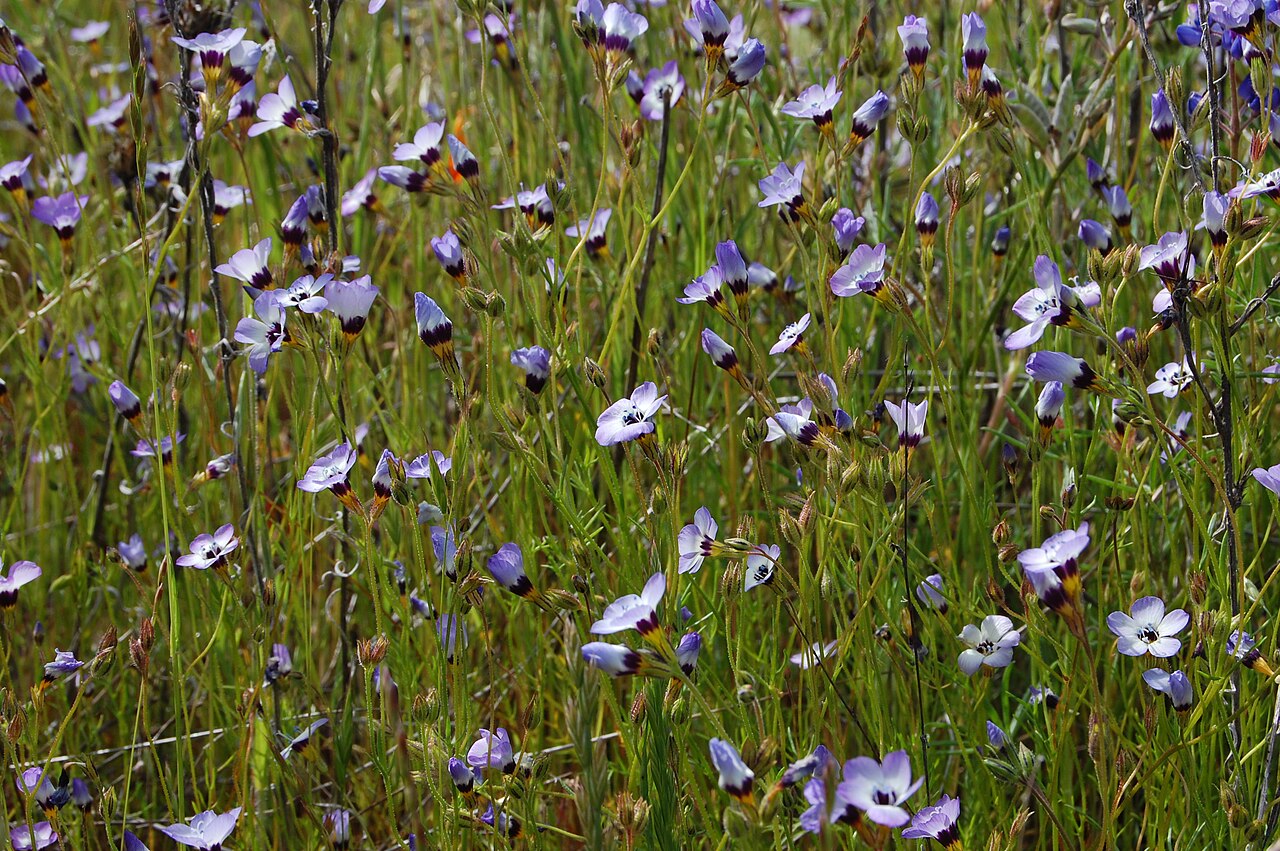
Gilia tricolor, commonly called bird’s eyes (also tricolor gilia or bird’s-eye gilia), is a small annual wildflower endemic to California, meaning it grows nowhere else in the world as a native plant. It belongs to the phlox family (Polemoniaceae) and is native to the Central Valley, the foothills of the Sierra Nevada, and the Coast Ranges, where it is one of the more delicately patterned of the state’s spring annual wildflowers.
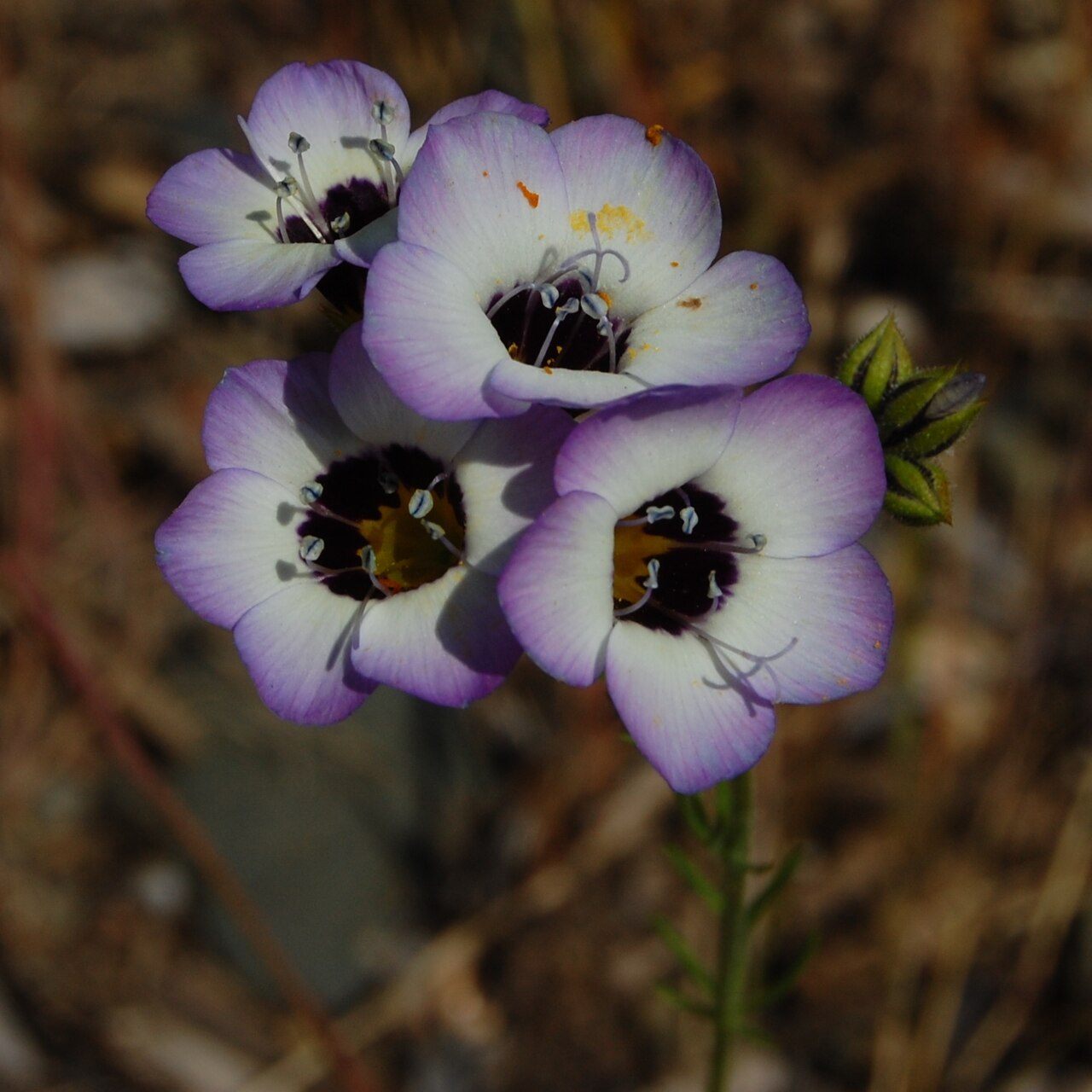
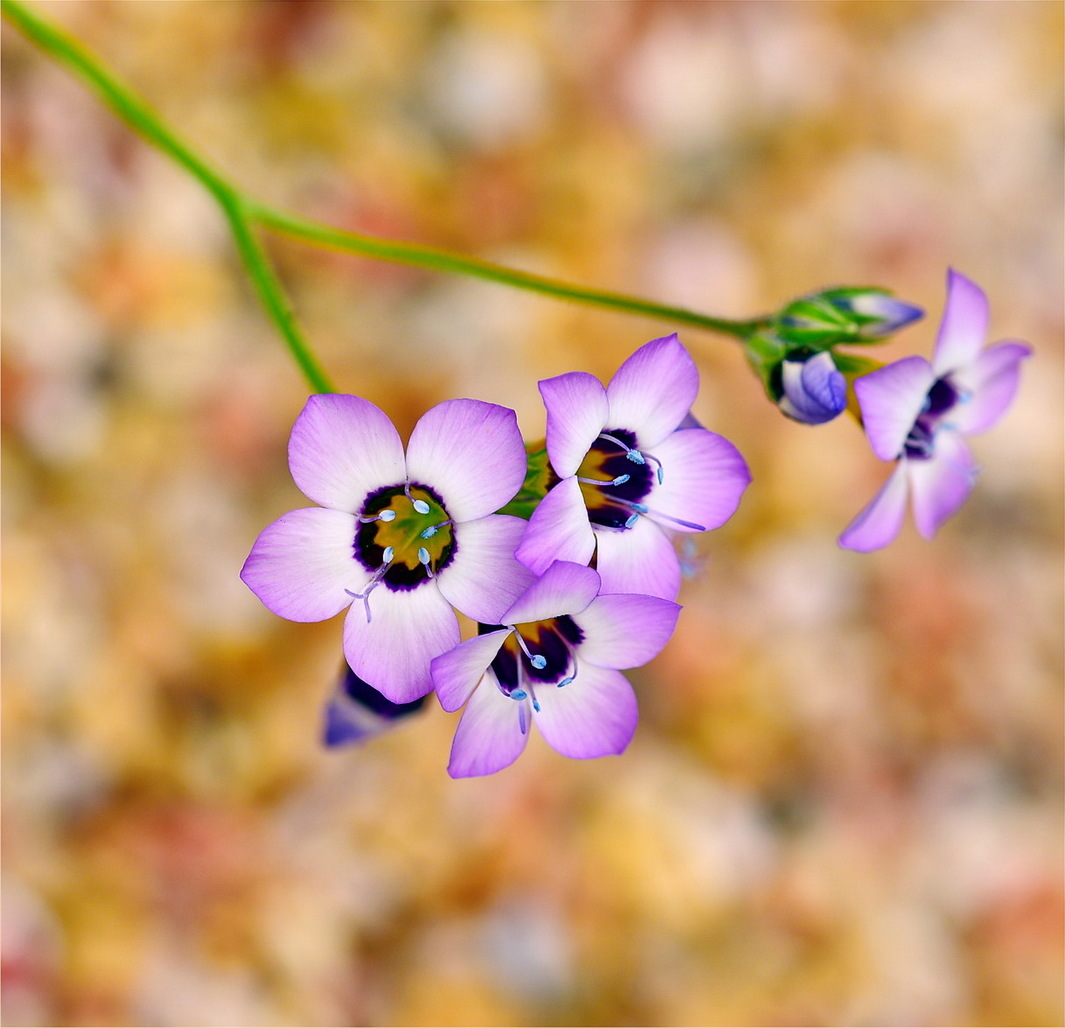
The common name “bird’s eyes” and the scientific name tricolor both describe the flower’s striking three-zone color pattern: pale lavender to violet outer lobes, a sharp white or cream ring just inside them, and a dark purple-black throat flecked with gold or orange, from which pale blue pollen and stamens emerge. The contrast is sharp enough to be visible from a distance, and up close the flower looks almost painted.
Bird’s eyes is a compact, easy annual for California gardens, growing quickly from fall-sown seed to a modest 6- to 20-inch mound of finely divided, ferny foliage topped with dozens of these small but vividly patterned flowers over a long spring bloom period. It is especially attractive massed in a dry meadow planting, where the fine texture of the foliage and the small scale of the flowers read best in quantity.
Identification
Bird’s eyes is a slender, branching annual with fine, almost fern-like foliage and a loose, open growth habit.
Leaves
The leaves are alternate, finely divided into narrow, thread-like lobes (pinnately dissected), giving the whole plant a delicate, airy texture quite different from the broader-leaved lupines and poppies it often grows among. Foliage is a soft green, sometimes with a faint grayish cast, and has a somewhat skunky odor when crushed, typical of many gilias.
Flowers
Flowers are funnel-shaped, about ½ to ¾ inch across, held in loose, open clusters at the branch tips. Each flower has five spreading lobes that are pale lavender to violet-blue at the outer edge, transitioning sharply to a white or cream band, then to a dark purple-to-black throat marked with vivid yellow-orange spots. The stamens carry distinctive pale blue pollen, visible even without magnification, adding one more unusual color note to an already striking bloom. Flowering runs from March through June, with the heaviest display in April.
Fruit & Seeds
Each flower matures into a small, three-chambered capsule holding numerous tiny seeds. The capsules dry and split open in late spring and early summer as the rest of the plant dies back for the season.
Quick Facts
| Scientific Name | Gilia tricolor |
| Family | Polemoniaceae (Phlox) |
| Plant Type | Annual wildflower |
| Mature Height | 6–20 in |
| Mature Spread | 6–12 in |
| Growth Rate | Fast (annual life cycle) |
| Sun Exposure | Full sun |
| Water Needs | Low; relies on winter-spring rainfall |
| Soil Type | Adaptable; tolerates clay, loam and sandy soils |
| Soil pH | 6.0–7.5 |
| Bloom Time | March – June |
| Flower Color | Lavender-violet, white band, dark purple throat |
| Fall Color | None (annual, dies back after seed set) |
| Fruit | Small three-chambered capsule, numerous tiny seeds |
| Deer Resistant | Yes (aromatic foliage) |
| USDA Hardiness Zones | Grown as a cool-season annual; zones 8–10 |
Native Range
Bird’s eyes is endemic to California — it occurs nowhere else as a native plant — and grows through the Central Valley, the Sierra Nevada foothills, and the Coast Ranges from the Bay Area south into central California. Populations occasionally reported from Massachusetts and Texas are introduced, not native, and should not be read as evidence of a wider native range.
It grows in open, grassy plains, valley floors, and gentle slopes, typically below about 2,000 feet, often on clay or heavy soils that hold winter moisture. It is a classic companion of other California spring annuals, carpeting open ground alongside lupines, poppies and tidy tips in good rain years.
Because bird’s eyes is a true California endemic with no documented native range outside the state, gardeners elsewhere should treat it strictly as an adapted wildflower-mix annual rather than a regional native.
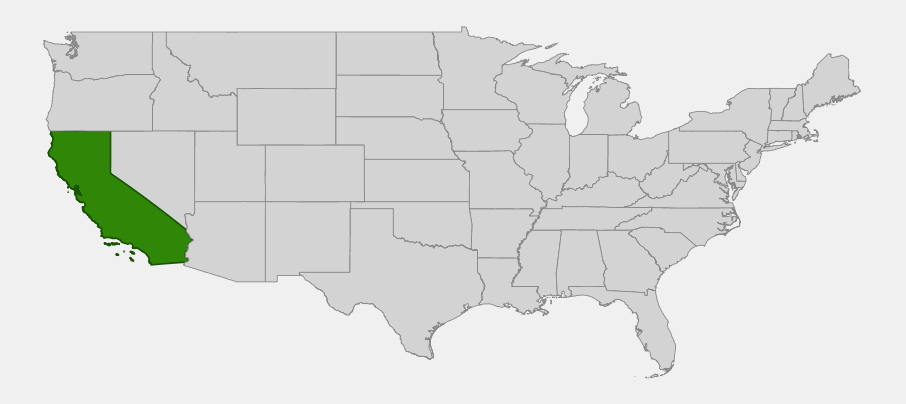
📋 Regional plant lists featuring Bird’s Eyes: California & Nevada
Growing & Care Guide
Bird’s eyes is a low-maintenance, fast-growing annual, well suited to the same dry-meadow conditions as California poppy and many native annual lupines.
Light
Full sun produces the most compact plants and the heaviest flowering. In part shade, bird’s eyes will still bloom but tends to stretch and flop.
Soil & Water
This species tolerates a wide range of soils, including clay, and needs no special amendment. Water to germinate fall-sown seed and to support seedlings through winter; by late spring, as the plant finishes blooming and sets seed, it needs little to no supplemental water. Overwatering or overly rich soil can lead to leggy growth with fewer flowers.
Planting Tips
Sow seed directly in fall or very early spring, barely covering it, since many gilias germinate best with some light exposure. Bird’s eyes is best planted in drifts or scattered through a wildflower meadow rather than as isolated specimens, since the fine foliage and small flowers read best in mass. It combines naturally with California poppy, lupines, and tidy tips, all of which share its bloom season and water needs.
Pruning & Maintenance
No pruning is needed. Leave spent flowering stems in place to let seed capsules mature and reseed the area if you want the planting to return on its own. Once the plant dries out in late spring, cut back or compost it, or simply let it break down in place.
Propagation
Propagation is by seed, collected from dry capsules before they fully split open. Seed stores well in a cool, dry place for fall sowing, and an established planting will typically self-sow if some capsules are left to mature and drop.
Landscape Uses
- Dry wildflower meadows mixed with poppies, lupines and tidy tips
- Pollinator gardens for small native bees and flies
- Rock gardens and gravel beds with sharp drainage
- Cut flowers for small, detailed arrangements
- Border edges and container plantings where its fine texture and small scale read well up close
Wildlife & Ecological Value
Bird’s eyes contributes a modest but reliable nectar source to California’s spring wildflower displays, particularly for smaller pollinators that favor its compact, funnel-shaped blooms.
For Pollinators
Small native bees, syrphid (hover) flies, and other small insects visit the flowers for nectar and the distinctive pale blue pollen, which is thought to help guide pollinators to the flower’s center. The dark throat pattern likely functions as a visual nectar guide, directing insects toward the reward at the base of the flower.
Birds
Seed-eating birds take some of the tiny seed from mature capsules in late spring, though bird’s eyes is a minor food source compared with larger-seeded grassland annuals.
Mammals
The aromatic, finely divided foliage is not a preferred browse for deer or rabbits, making bird’s eyes a reliably low-conflict choice in gardens where browsing pressure is a concern.
Ecosystem Role
As a fast-cycling annual, bird’s eyes fills space and supplies nectar in the gap between early and late-season bloomers in California grasslands, adding to the overall diversity and extended flowering sequence of the state’s spring wildflower displays.
Cultural & Historical Uses
Bird’s eyes does not have a well-documented history of food, medicinal, or craft use by Indigenous peoples, and no historical record supports treating it as an edible or medicinal plant. Its significance has always been primarily ornamental and ecological, as one of the many small annual wildflowers that together create California’s celebrated spring bloom.
In more recent decades, it has become a popular and inexpensive component of California native wildflower seed mixes, prized by gardeners and restoration practitioners for its fast growth, distinctive coloring, and long bloom period relative to its small size.
Frequently Asked Questions
Is bird’s eyes native anywhere outside California?
No — it is a true California endemic. Occasional plants found in places like Massachusetts or Texas are introduced populations, not part of its native range.
Why does bird’s eyes have blue pollen?
The pale blue color of the pollen is a natural pigment trait of the species; it is thought to help make the pollen more visible to pollinating insects against the dark purple throat of the flower.
Can bird’s eyes be eaten?
There is no reliable documentation of bird’s eyes being used as a food plant, and it should not be treated as edible.
How long does bird’s eyes bloom?
Individual plants bloom over several weeks within their single growing season, typically March through June, with the heaviest flowering in April.
Is bird’s eyes deer resistant?
Yes, its aromatic, finely divided foliage is generally avoided by deer and rabbits.

Looking for a nursery that carries Bird’s Eyes?
Browse our native plant nursery directory: California