
Blow Wives (Achyrachaena mollis)
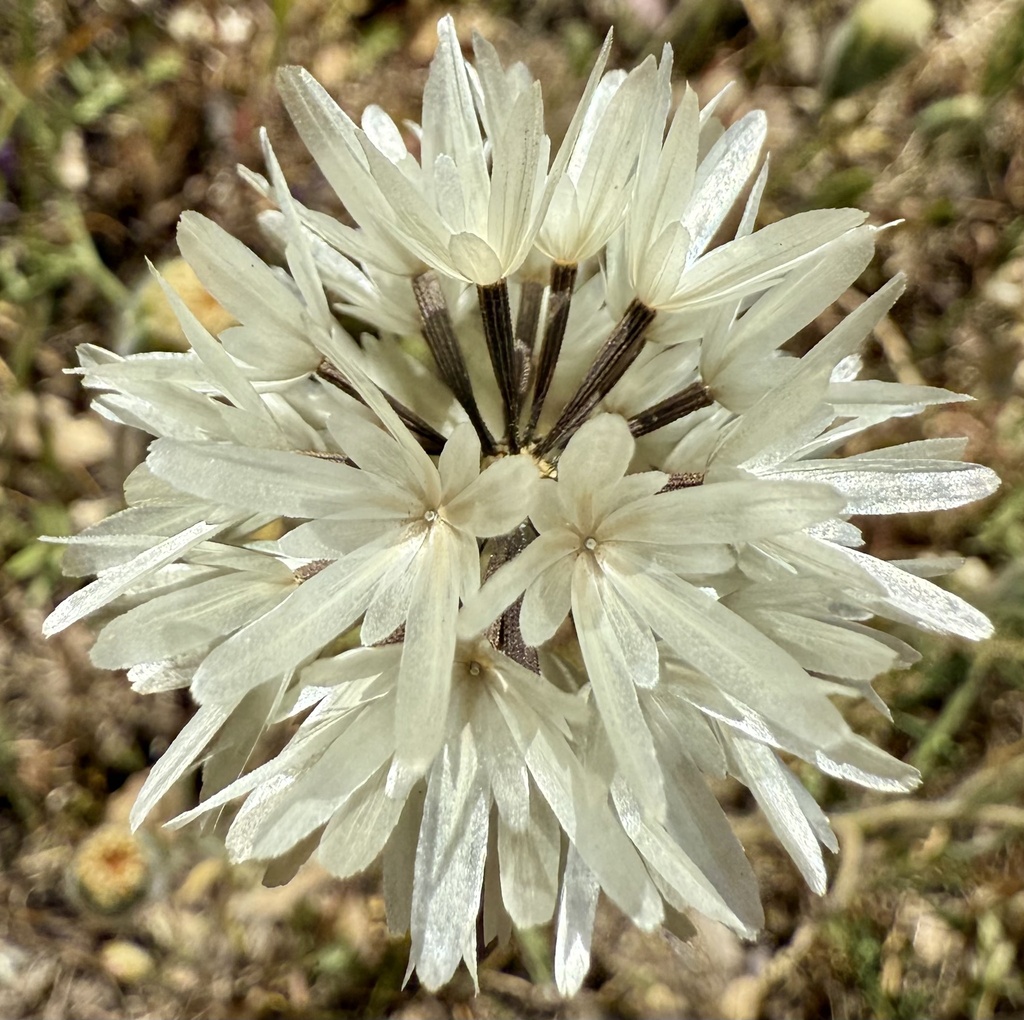
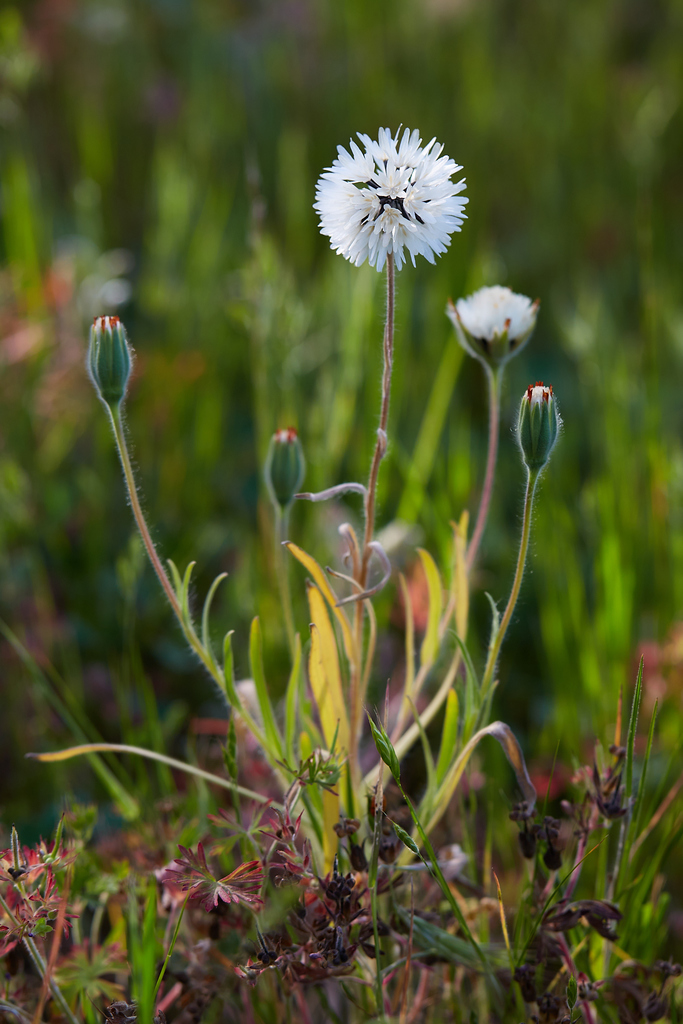
Achyrachaena mollis, known as Blow Wives, is a native spring annual in the aster family (Asteraceae) of California and southern Oregon. It is the only species in its genus. The plant itself is modest: a slender, hairy, upright stem 4 to 20 inches tall with narrow leaves and narrow, mostly closed flower heads with tiny yellow-to-red rays.
Its moment comes after flowering. As the seeds ripen, each head opens into a round, silvery-white ball, 1 to 1 1/2 inches across, made of the papery, star-like scales (pappus) attached to each seed. These glistening seed heads are far showier than the flowers and catch the light in grasslands in late spring.
Blow wives grows in grasslands, open woodland and vernally moist flats, often on clay soils, from the Central Valley and Coast Ranges to the Sierra foothills and southwestern Oregon. Its dried seed heads are also prized in flower arrangements.
Identification
Look for a slender, hairy spring annual in grasslands with narrow, closed flower heads, followed by round, silvery-white seed heads that look like little papery stars.
Growth Habit
Blow wives is an annual that germinates with fall and winter rains and flowers in spring. It grows as a single, usually unbranched or few-branched stem 4 to 20 inches tall (rarely to 2 feet). The stems are softly hairy and sometimes slightly glandular.
Leaves
The leaves are narrow, 1 to 6 inches long, linear to lance-shaped, with smooth or slightly toothed edges. Lower leaves are opposite and upper leaves alternate, and all are softly hairy.
Flower Heads
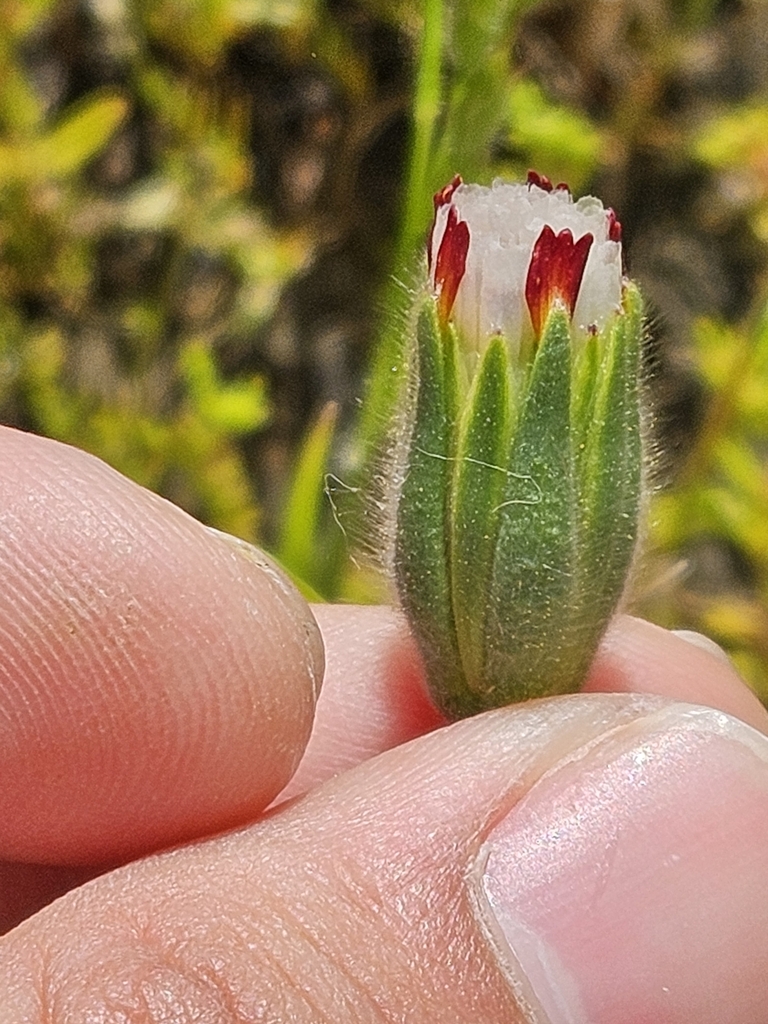
The flower heads are narrow and cylindrical, about 1/2 to 1 inch long, wrapped in green, hairy bracts. The small ray flowers are yellow at first and turn red to reddish brown, barely protruding from the bracts; the heads stay mostly closed while flowering. Bloom time is about March to May.
Seed Heads
After flowering, the bracts fall back and the head opens into a spherical cluster of seeds. Each seed of the disk flowers is topped with about 10 broad, papery, silvery-white scales that spread into a star, so the whole head looks like a glistening white globe. The ray seeds lack this pappus and drop near the plant. Seed heads appear from about April to June.
Look-alikes
In flower, it can be mistaken for other small yellow composites, such as goldfields (Lasthenia) or tidy tips (Layia platyglossa), but those have open, showy ray flowers. Once the silvery seed heads form, it looks like no other plant. Western salsify and dandelions have fluffy, bristly seed heads, not papery stars.
Quick Facts
| Scientific Name | Achyrachaena mollis Schauer |
| Family | Asteraceae (aster family) |
| Plant Type | Spring annual wildflower |
| Mature Height | 4–20 in |
| Mature Spread | 2–6 in |
| Growth Rate | Fast (completes its life cycle in one season) |
| Sun Exposure | Full sun |
| Water Needs | Moist in winter and spring; dry in summer |
| Soil Type | Clay, clay loam or loam; tolerates heavy and seasonally wet soils |
| Soil pH | Slightly acidic to slightly alkaline (about 6.0–8.0) |
| Bloom Time | March–May; seed heads April–June |
| Flower Color | Yellow rays turning red; silvery-white seed heads |
| Fall Color | None (annual) |
| Fruit | Seeds with papery, silvery-white pappus scales |
| Deer Resistant | Moderate |
| USDA Hardiness Zones | Annual (Mediterranean climates of zones 7–10) |
Native Range
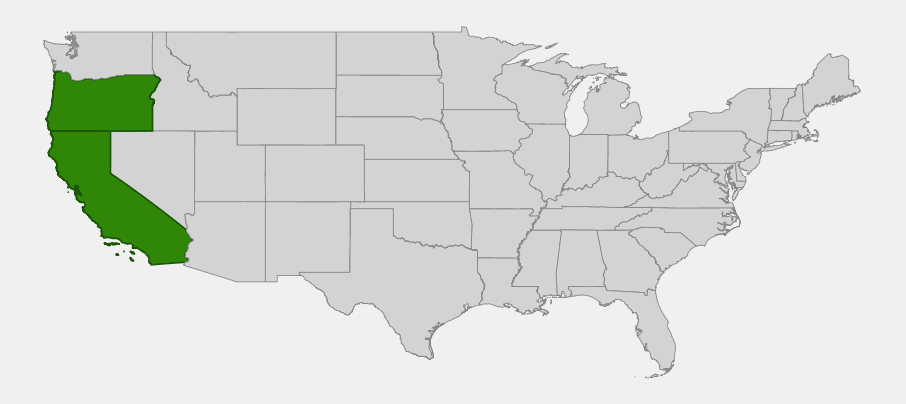
USDA PLANTS lists blow wives as native in California and Oregon. In California it is widespread in the Central Valley, the Coast Ranges from the North Coast to the Santa Barbara area, the San Francisco Bay Area and the Sierra Nevada foothills, with scattered populations in southern California and on the Channel Islands. It also reaches northern Baja California.
In Oregon it grows in the southwestern part of the state, west of the Cascades, in grasslands and oak savannas of the interior valleys.
It grows in valley and foothill grasslands, open oak woodland, vernally moist flats and the edges of vernal pools and swales, often on heavy clay or serpentine-derived soils, from near sea level to about 4,000 feet.
📋 Regional plant lists featuring Blow Wives: Western Oregon & Western Washington · California & Nevada
Growing & Care Guide
Blow wives is an easy annual for unwatered wildflower meadows and grassland gardens in California and southwestern Oregon, grown from seed sown in fall.
Light
Full sun. It becomes spindly and flowers poorly in shade.
Soil & Water
It does well in clay and loam soils, including heavy soils that are wet in winter and bake dry in summer. Winter rains are enough to grow it; no summer water is needed after it sets seed.
Planting Tips
Scatter seed in fall on bare or lightly raked soil, ideally with other grassland annuals such as goldfields, tidy tips and California poppy, and native bunchgrasses. Thin seedlings little if at all; plants look best in drifts.
Pruning & Maintenance
No pruning is needed. Let some seed heads mature and scatter so the plants return next year. Control vigorous non-native annual grasses that can crowd out seedlings.
Propagation
Grow it from seed only. Collect the papery seed heads when they are fully open and dry in late spring, and sow the seed the following fall where it is to grow.
Landscape Uses
- Wildflower meadows: silvery seed heads after the spring flowers fade
- Grassland and vernal pool restoration: a native annual for clay soils
- Dried flowers: seed heads are used in dried arrangements
- Children's gardens: the “blow” seed heads are fun to discover
Wildlife & Ecological Value
Blow wives is a small but characteristic part of the spring wildflower community of California grasslands.
For Pollinators
Small native bees and flies visit the tiny flowers, though the mostly closed heads attract fewer pollinators than showier wildflowers. Many flowers likely self-pollinate.
For Birds
Seed-eating birds such as finches and sparrows eat the seeds in late spring and summer.
For Mammals
Small rodents eat the seeds. The papery pappus helps seeds blow across open ground, where some are cached or eaten by rodents.
Ecosystem Role
As part of the native annual flora of grasslands and vernal pool edges, it helps support the insects and seed eaters of these habitats, which have declined sharply in California due to farming, development and invasive grasses.
Cultural & Historical Uses
The genus name Achyrachaena comes from Greek words for “chaff” and “achene” (a dry, one-seeded fruit), referring to the papery, chaff-like scales on the seeds. The species name mollis means “soft,” for the soft-hairy stems and leaves. The genus contains only this one species.
The common name blow wives is said to come from the way the seed scales can be blown off the round heads like a dandelion.
Botanists place blow wives in the tarweed group of the aster family (subtribe Madiinae), alongside tarweeds, tidy tips and madias, a group that has diversified spectacularly in California.
Frequently Asked Questions
Why is it called blow wives?
Its round, papery seed heads can be blown apart like a dandelion’s, scattering the seeds with their star-shaped scales.
Is blow wives a flower or a seed head?
Both, but the seed head is the showy part. The flowers are narrow and mostly closed, with tiny red-tipped rays. After they fade, the heads open into silvery-white balls.
When does blow wives bloom?
It flowers from about March to May, and the silvery seed heads appear from April to June.
Where does blow wives grow?
In grasslands, open oak woodland and moist flats in California and southwestern Oregon, often on clay soils.
Can I grow blow wives?
Yes. Sow seed in fall in a sunny spot, especially in clay soil, and let winter rain do the rest. It needs no summer water.

Looking for a nursery that carries Blow Wives?
Browse our native plant nursery directory: California · Oregon