Bluejack Oak (Quercus incana)
Quercus incana, known as Bluejack Oak and sometimes as upland willow oak, sandjack oak, or cinnamon oak, is a small, tough tree of the Southeastern coastal plain and sandhills. It rarely grows large — most mature trees top out around 30 to 50 feet — but what it lacks in size it makes up for in resilience, thriving on some of the driest, sandiest, most nutrient-starved soils in the Southeast where larger oaks struggle to establish.
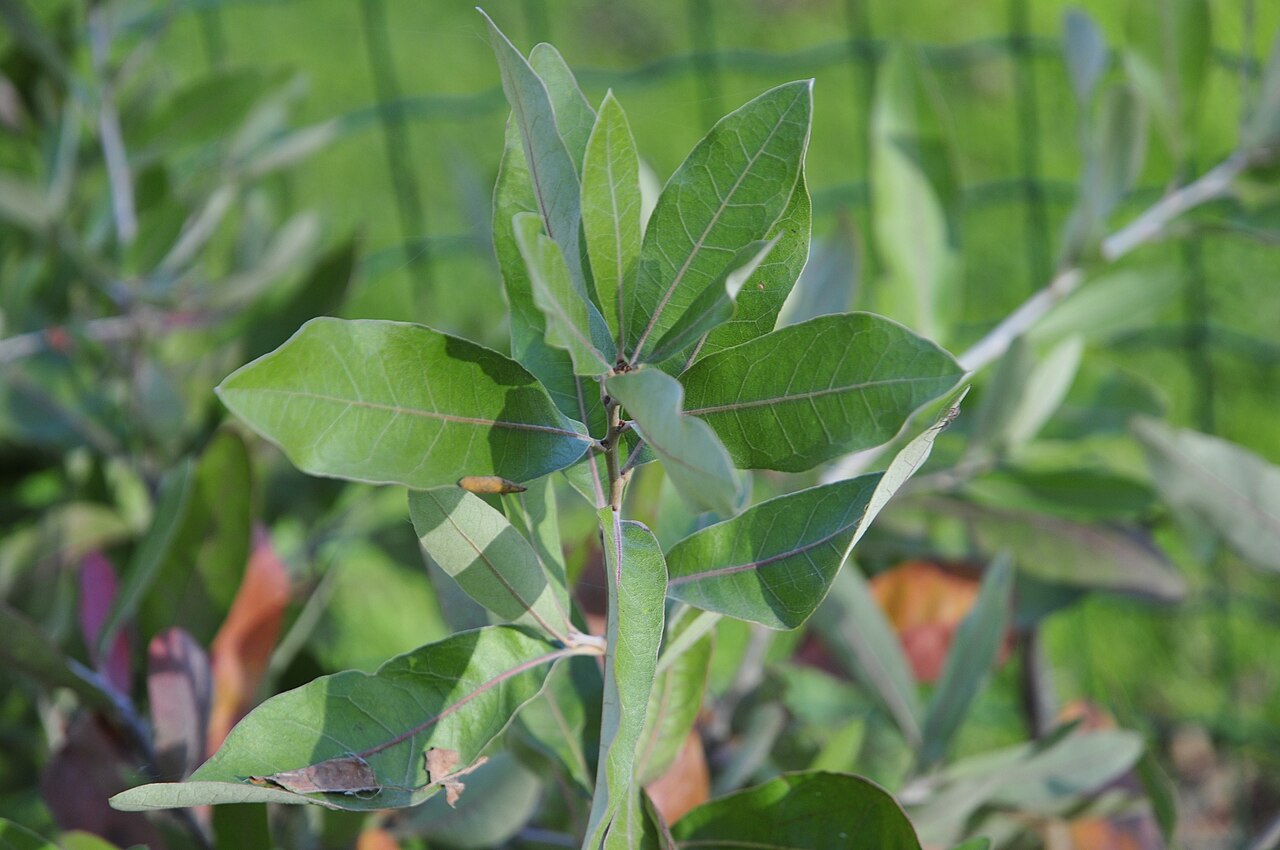
The name “bluejack” comes from the distinctive bluish, ashy-gray cast of the leaf undersides, a soft woolly pubescence that sets this species apart from the similarly narrow-leaved willow oak. Bluejack Oak is a defining member of longleaf pine sandhill communities, growing in the gaps between widely spaced pines alongside Turkey Oak and wiregrass on soils so excessively drained that moisture rarely lingers more than a day after rain.
For gardeners and land managers working on deep, dry, sandy ground in the Southeast — the kind of soil that frustrates most ornamental trees — Bluejack Oak is an honest, low-input choice that supports the same fire-adapted longleaf pine ecosystem wildlife depends on, from gopher tortoises to a long list of specialist insects.
Identification
Bluejack Oak forms a small, often crooked tree with a short trunk and an open, irregular crown of twisting branches — a growth form shaped by decades of resprouting after fire and drought stress rather than growing as a single clean trunk toward full height.
Bark & Stems
Mature bark is dark brown to nearly black, broken into small, blocky, platy scales. Young twigs are slender and often finely hairy when new. The short trunk and crooked, open branching distinguish it at a glance from straighter-growing oaks of richer soils.
Leaves
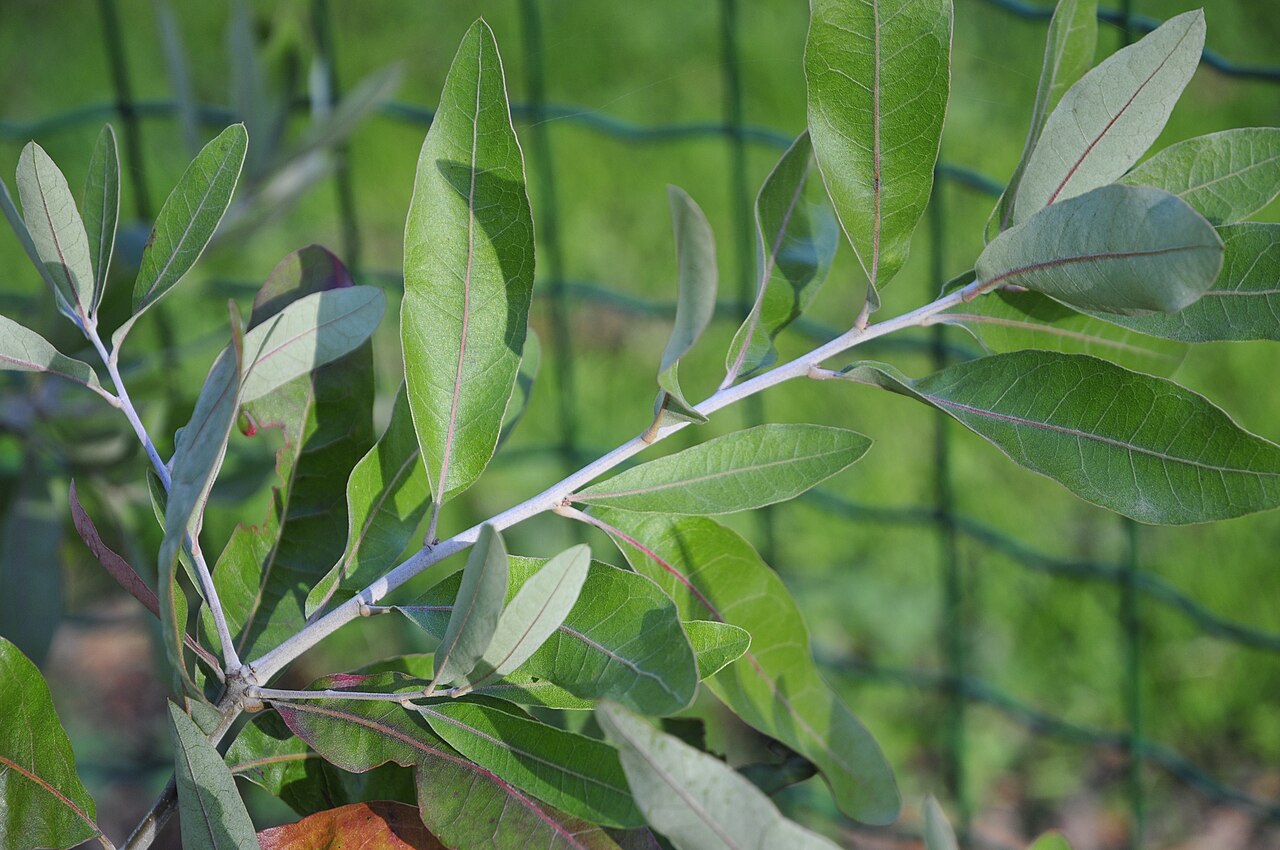
Leaves are simple, alternate, and narrowly oval to elliptical, generally 2 to 4 inches long and up to 1.5 inches wide, usually untoothed and unlobed, though occasional leaves show a shallow tip bristle typical of the red oak group. The upper surface is glossy dark green; the underside is finely woolly-haired and distinctly blue-gray to ashy, the feature that gives the tree its common name. This bluish cast is most visible when leaves turn in the wind or are viewed from below.
Flowers
Like other oaks, Bluejack Oak is monoecious. Slender yellow-green male catkins appear with the new leaves in spring, while small, inconspicuous female flowers form at the base of new growth and develop into acorns over two growing seasons.
Fruit & Seeds
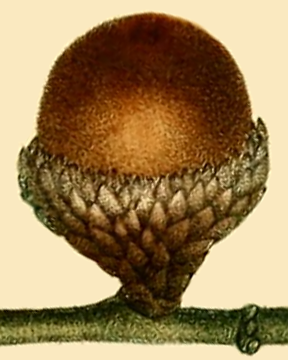
Acorns are small, up to about ⅔ inch long, with a shallow, scaly cap covering roughly a quarter of the nut. Like Bear Oak and other members of the red oak group, they carry notable tannin content and mature over two years. Bluejack Oak also spreads clonally by underground runners, often forming small thickets of genetically identical stems around an established tree.
Quick Facts
| Scientific Name | Quercus incana W. Bartram |
| Family | Fagaceae (Beech) |
| Plant Type | Deciduous Tree |
| Mature Height | 30–50 ft, exceptional trees to 50 ft+ |
| Mature Spread | 25–40 ft, open irregular crown |
| Growth Rate | Slow |
| Sun Exposure | Full Sun |
| Water Needs | Low |
| Soil Type | Deep, excessively drained sand; sandhills, dunes |
| Soil pH | 4.5–6.5 (acidic) |
| Bloom Time | March – April |
| Flower Color | Yellow-green (inconspicuous catkins) |
| Fall Color | Muted yellow-brown |
| Fruit | Small acorns to ⅔ in, 2-year maturation |
| Deer Resistant | No (acorns and browse used by deer) |
| USDA Hardiness Zones | 7–9 |
Native Range
Bluejack Oak ranges across the Atlantic and Gulf coastal plains, from a rare, scattered presence in southeastern Virginia south through North Carolina, South Carolina, Georgia, and Florida, then west along the Gulf through Alabama, Mississippi, and Louisiana into eastern Texas, with inland extensions into Arkansas and a rare, localized presence in southeastern Oklahoma.
This species is a true sandhill and deep-sand specialist. It is a signature understory and midstory component of longleaf pine (Pinus palustris) sandhill ecosystems, sharing the open, fire-maintained canopy with Turkey Oak (Quercus laevis) and wiregrass (Aristida stricta). In the Big Thicket of Texas it codominates sandy ridges with Post Oak (Quercus stellata) and various pines. Bluejack Oak characteristically grows on the driest parts of the landscape — deep sand ridges and dune-like rises — rather than the finer, moister soils downslope.
Like the longleaf pine ecosystems it belongs to, Bluejack Oak depends on recurring fire to stay healthy. Where fire has been suppressed for decades, hardwood thickets and denser pines can crowd out the open, sun-exposed sandhill structure this species and its community of specialist wildlife require.
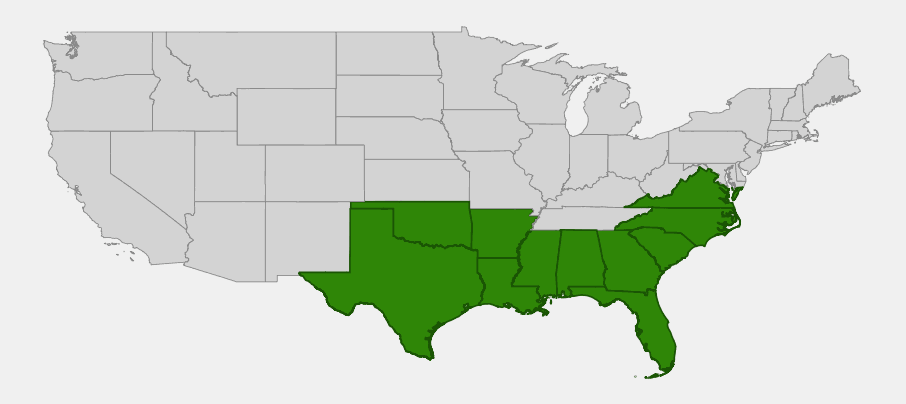
📋 Regional plant lists featuring Bluejack Oak: Maryland, Virginia & West Virginia · North Carolina & South Carolina · Georgia, Alabama & Mississippi · Arkansas, Louisiana, Eastern Oklahoma & Eastern Texas
Growing & Care Guide
Bluejack Oak is built for one thing above all: deep, dry, infertile sand. Gardeners trying to establish ornamental trees on sandhill or dune soils, where most species fail from drought and nutrient stress, will find this a genuinely practical native choice.
Light
Full sun is essential. Bluejack Oak grows naturally in the open, widely spaced canopy of longleaf pine sandhills and does not perform well with heavy shade from denser trees or buildings.
Soil & Water
This species demands sharply drained, sandy soil and is highly drought tolerant once established — it is naturally found on some of the driest upland sites in the Southeast, where water drains away within hours of rain. Avoid heavy, poorly drained, or regularly irrigated soils, which favor root disease and faster-growing competitors over this slow, tough species.
Planting Tips
Use young container stock, since Bluejack Oak, like most oaks, invests heavily in its root system early and transplants poorly once established. Plant in fall or late winter. Do not amend the planting hole with rich compost or organic matter — native sandhill soil is exactly what this tree expects, and overly fertile conditions work against it.
Pruning & Maintenance
Minimal pruning is needed beyond removing dead or crossing branches during dormancy. The crooked, open branching habit is natural and should not be corrected toward a more symmetrical form. Established trees require no fertilizer and little to no supplemental irrigation.
Propagation
Propagate from fresh fall-collected acorns, sown promptly since red oak group acorns do not store well; cold, moist stratification over winter helps if spring sowing is preferred. Plants can also spread naturally via root sprouts from an established tree’s clonal root system.
Landscape Uses
Bluejack Oak is a specialist choice suited to specific, difficult conditions:
- Sandhill and longleaf pine restoration plantings
- Deep, dry, sandy sites where few other trees survive without irrigation
- Coastal and dune-adjacent landscapes in the Southeast
- Wildlife plantings supporting sandhill-associated species
- Low-input naturalized groves once established
Wildlife & Ecological Value
Bluejack Oak is a structural and food-web anchor of the longleaf pine sandhill community, one of the most biodiverse, fire-dependent ecosystems in North America.
For Pollinators
While the wind-pollinated catkins offer no nectar, the open, sun-flooded sandhill habitat Bluejack Oak helps define supports a rich community of ground-nesting native bees and other pollinators that depend on bare sand and sparse groundcover.
For Birds
Acorns provide fall and winter food for Wild Turkeys, Northern Bobwhite, and numerous songbirds that forage through sandhill woodlands, while the crooked branches offer perching and nesting structure in an otherwise open canopy.
For Mammals
Acorns are an important food source for Sherman’s Fox Squirrel, a sandhill specialist that depends on the mix of longleaf pine and scrub oaks like Bluejack Oak for both food and den sites. White-tailed deer browse foliage and acorns as well.
Ecosystem Role
As one of the key hardwood components of longleaf pine sandhills, Bluejack Oak contributes mast and structural diversity to an ecosystem otherwise dominated by widely spaced pines and herbaceous groundcover. Its tolerance of extreme drought and nutrient-poor sand allows it to persist exactly where it’s needed most ecologically — on marginal ground that would otherwise support very little woody cover at all.
Cultural & Historical Uses
Bluejack Oak has never been a commercially significant timber species; its typically short, crooked trunk and small size made it far less useful to the lumber industry than larger oaks of richer bottomland soils. Historically, where trees reached usable size, the dense, hard wood was cut locally for fuel and fence posts, work recorded in early 20th-century studies of Southeastern oak woods.
The species was first described by the American botanist and explorer William Bartram, whose travels through the Southeast in the late 18th century documented the region’s then little-known sandhill flora. Longleaf pine sandhill ecosystems, including the Bluejack Oak that helps define them, have shaped land use across the Southeastern coastal plain for centuries, from historic turpentine operations in longleaf forests to the fire management practices still used to maintain these habitats today.
Frequently Asked Questions
Why is it called Bluejack Oak?
The name refers to the distinctive bluish, ashy-gray, woolly underside of the leaves, which contrasts with the glossy dark green upper surface — a feature visible whenever the leaves turn in a breeze.
Can Bluejack Oak grow in regular garden soil?
It can survive in average soil but performs best, and is most useful as a landscape choice, on deep, dry, sandy sites where other trees fail. In rich or regularly irrigated soil it has no particular advantage over faster-growing native trees.
Is Bluejack Oak the same as Willow Oak?
No. Both have narrow, untoothed leaves, but Willow Oak (Quercus phellos) grows in moist bottomlands and lacks the bluish, woolly leaf underside that defines Bluejack Oak, a dry-sandhill specialist.
Does Bluejack Oak need fire to survive?
It is highly fire-adapted and benefits from the periodic fires that maintain open longleaf pine sandhill habitat, resprouting readily after top-kill. It can survive without fire, but the open, sunny conditions it needs tend to disappear as unburned sites grow up in denser vegetation.
How fast does Bluejack Oak grow?
Growth is slow, reflecting the harsh, excessively drained, nutrient-poor sand it is adapted to. Gardeners should expect a long-lived but gradually developing tree rather than quick shade or screening.

Looking for a nursery that carries Bluejack Oak?
Browse our native plant nursery directory: Virginia, South Carolina & Texas · North Carolina & Oklahoma · Georgia & Florida · Louisiana & Mississippi · Alabama & Arkansas