
Box Huckleberry (Gaylussacia brachycera)
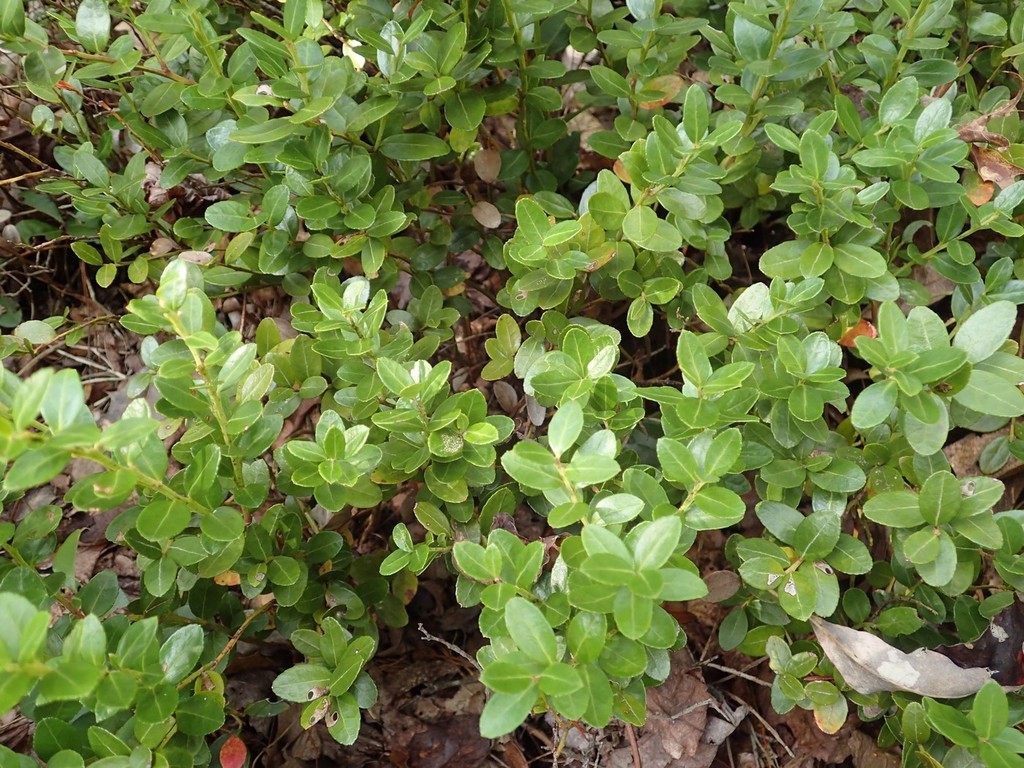
Gaylussacia brachycera, known as Box Huckleberry or box-leaved whortleberry, is a rare, low, evergreen shrub in the heath family (Ericaceae), related to blueberries and the other huckleberries. It grows only 6 to 12 inches tall and spreads by underground stems into dense, glossy carpets. Its small, finely toothed leaves look like those of boxwood, which gives it its name. It has white to pink, urn-shaped flowers in spring and edible blue berries in summer.
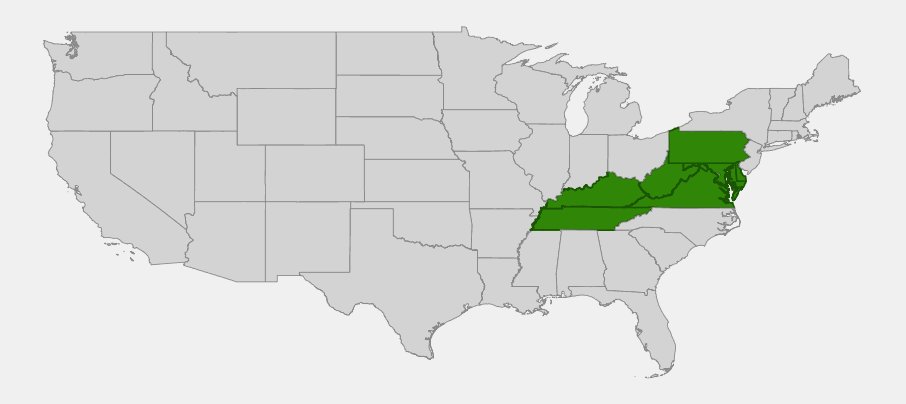
Box huckleberry is a relict of the central Appalachians and the Mid-Atlantic, found in scattered colonies from central Pennsylvania south to Tennessee and Kentucky, with outlying sites in Delaware and Maryland. It is self-sterile, so it rarely sets seed in the wild, and each colony is usually a single clone that has spread slowly by its roots for a very long time. One Pennsylvania colony is believed to be several thousand years old and may be among the oldest living plants in eastern North America.
Because the colonies are few and slow-growing, box huckleberry is rare and protected in several states. Never dig it from the wild. Nursery plants propagated from cuttings are sometimes available, and they make an outstanding evergreen groundcover for dry, acidic, partly shaded gardens.
Identification
Look for a low, evergreen carpet of small, shiny, oval leaves with finely toothed edges on dry, acidic, wooded slopes. Unlike other huckleberries, the leaves have no resin dots.
Growth Habit
Box huckleberry is a dwarf shrub with upright stems usually 6 to 12 inches tall, rising from long, creeping underground stems (rhizomes). It forms dense, uniform mats that can cover a large area. Colonies spread outward only a few inches a year.
Leaves
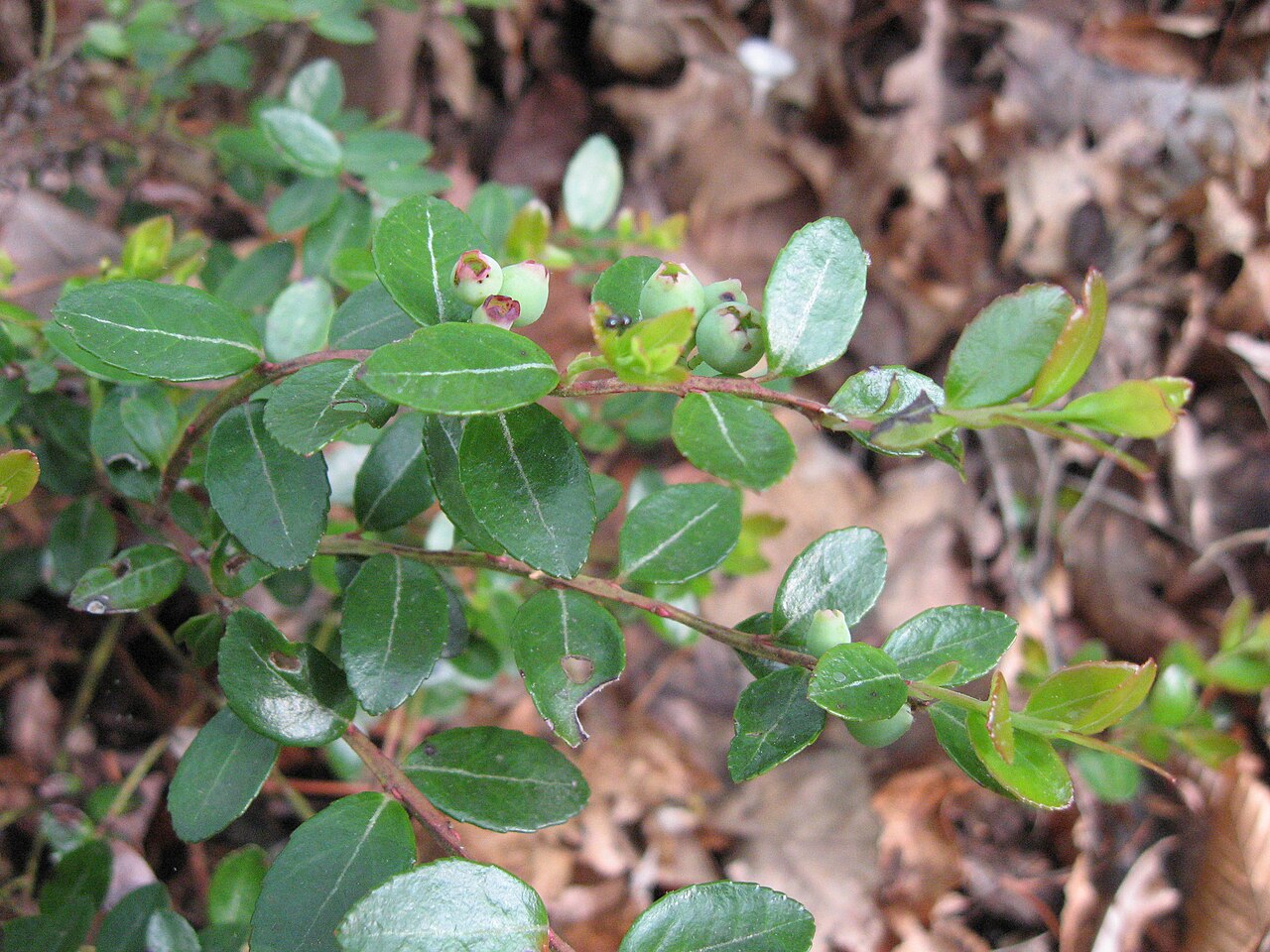
The leaves are alternate, evergreen, leathery and glossy, about 1/2 to 1 inch long, oval to elliptic, with finely toothed (crenate-serrate) edges and a short stalk. They are dark green in summer and often turn bronze to reddish in winter. They lack the yellow resin dots found on the leaves of other Gaylussacia species.
Flowers
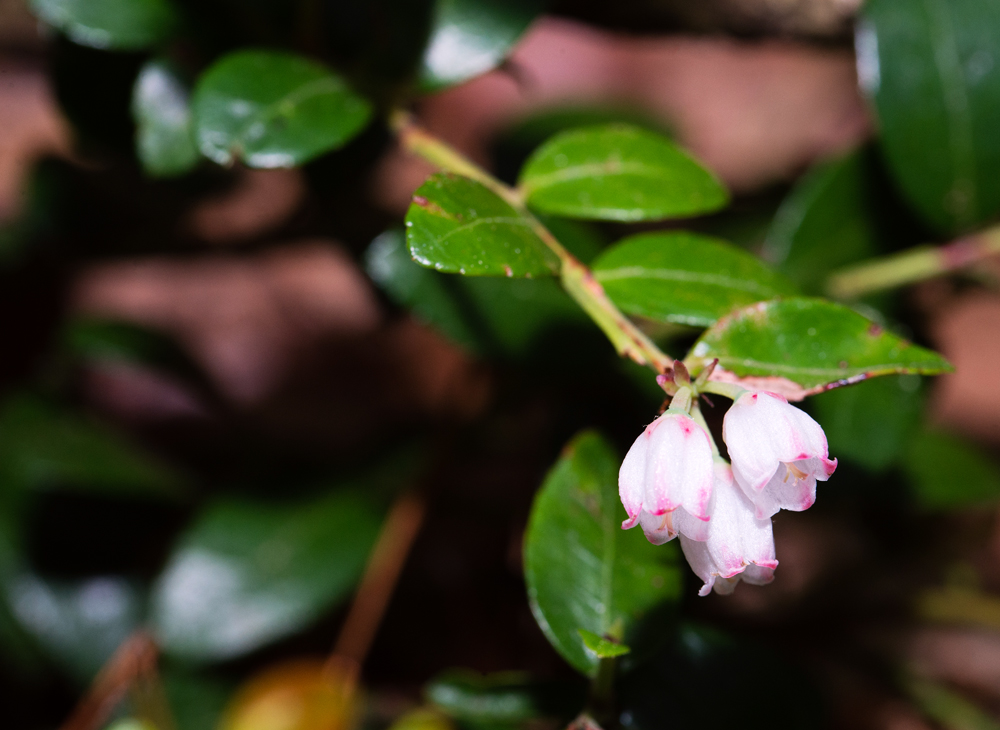
Short clusters (racemes) of a few small, nodding, urn-shaped flowers grow from the leaf axils in May and June. Each flower is about 1/4 inch long, white or pinkish, often with pink stripes.
Fruit & Seeds
Where plants from different clones grow close enough to cross-pollinate, they produce round, blue berries about 1/4 to 1/3 inch across, ripening in July and August. Each berry contains ten small, hard seeds, as in other huckleberries. Most colonies produce few or no berries because they are a single, self-sterile clone.
Look-alikes
Wintergreen (Gaultheria procumbens) is a similar low evergreen of the same woods, but its leaves are larger and wintergreen-scented when crushed and it has red berries. Trailing arbutus has larger, hairy leaves and creeping stems. Black huckleberry and lowbush blueberries are deciduous and taller, with resin dots or untoothed leaves. Boxwood is not native and grows much taller.
Quick Facts
| Scientific Name | Gaylussacia brachycera |
| Family | Ericaceae (heath family) |
| Plant Type | Evergreen dwarf shrub; groundcover |
| Mature Height | 6–12 in |
| Mature Spread | Spreads slowly by rhizomes |
| Growth Rate | Slow |
| Sun Exposure | Part shade to full sun |
| Water Needs | Low to medium; prefers dry, well-drained soil |
| Soil Type | Sandy or rocky, humus-rich, well-drained soil |
| Soil pH | Acidic (about 4.5–5.5) |
| Bloom Time | May–June |
| Flower Color | White to pink |
| Fall Color | Bronze to reddish in winter |
| Fruit | Blue berries, July–August (only with cross-pollination) |
| Deer Resistant | Moderately |
| USDA Hardiness Zones | 5–8 |
Native Range
Box huckleberry is endemic to the east-central United States. USDA PLANTS lists it as native in Pennsylvania, Delaware, Maryland, Virginia, West Virginia, Kentucky and Tennessee. About 100 stations have been documented, most in the Appalachian Mountains and plateaus from central Pennsylvania to eastern Kentucky and Tennessee. The Delaware and Maryland colonies are outlying sites on the Atlantic Coastal Plain, and a single colony was found in the Piedmont of Durham County, North Carolina, in 2003.
The species was first collected by André Michaux in the 1790s near Winchester, Virginia, probably in what is now West Virginia. Its best-known colonies are in Perry County, Pennsylvania, near New Bloomfield, including the colony at Losh Run that was once estimated to be 13,000 years old. More recent work suggests a maximum age of about 8,000 years, which would still make it one of the oldest living woody plants east of the Rocky Mountains. A smaller colony nearby is protected in the Hoverter and Sholl Box Huckleberry Natural Area. Other colonies grow in the Daniel Boone National Forest in Kentucky and the Big South Fork area of Tennessee.
It grows in dry, acidic, sandy or rocky soils in oak and pine woods, on slopes and ridges and along bluffs, often on north-facing slopes and in partial shade. Its scattered, isolated colonies suggest that it was once more widespread and survived the Ice Age only in scattered refuges.
📋 Regional plant lists featuring Box Huckleberry: New York, Pennsylvania & Northern New Jersey · Delaware, Southern New Jersey & Long Island · Maryland, Virginia & West Virginia · Kentucky & Tennessee
Growing & Care Guide
Box huckleberry is a choice, slow-growing evergreen groundcover for acidic soil. Buy only nursery-propagated plants, such as those grown from cuttings and sold under names like ‘Berried Treasure’; never dig plants from wild colonies, which are rare and protected in several states.
Light
Part shade is ideal, such as light shade under oaks and pines. It tolerates full sun in cooler areas if the soil does not dry out completely, and grows more slowly in deep shade.
Soil & Water
It needs well-drained, acidic soil, ideally sandy or rocky and rich in leaf litter, like its native oak-pine woods. Water regularly the first year; once established it is fairly drought-tolerant. Avoid heavy, wet, clay or alkaline soil.
Planting Tips
Plant in spring or early fall, about 12 to 18 inches apart, and mulch with pine needles or shredded leaves. Because a single clone cannot pollinate itself, plant two or more different clones (genetically different plants) if you want berries.
Pruning & Maintenance
Little care is needed. Keep it weeded while it fills in, since it spreads slowly. Do not fertilize heavily or lime the soil. Mulch helps keep the shallow roots cool.
Propagation
It is propagated by cuttings and division of rhizomes, and by tissue culture in commercial nurseries. Seed is rarely available because most colonies do not set fruit. Rooted cuttings can take a few years to form a good-sized plant.
Landscape Uses
- Evergreen groundcover: a slow, dense carpet for dry shade
- Rock gardens: fits rocky, acidic slopes and banks
- Woodland gardens: under oaks, pines and mountain laurel
- Edible landscaping: small blue berries when cross-pollinated
- Conservation: growing nursery clones helps preserve a rare species
Wildlife & Ecological Value
Box huckleberry is a rare part of the dry, acidic oak and pine woods of the central Appalachians.
For Pollinators
The urn-shaped flowers are visited by bumblebees and other native bees, which are needed to carry pollen between different clones.
For Birds
When berries form, birds such as thrushes, catbirds and grouse eat them, as they do other huckleberries.
For Mammals
Small mammals and black bears eat the berries, which local people once called “bear-huckleberry.” The evergreen mats provide cover for small animals.
Ecosystem Role
Its dense, evergreen mats help hold thin, rocky soils on slopes. Because colonies are clonal and rarely reproduce from seed, each colony is a living record of its site, possibly spanning thousands of years, and is vulnerable to clearing, development and digging.
Cultural & Historical Uses
The genus Gaylussacia honors the French chemist Joseph Louis Gay-Lussac. The species name brachycera means “short-horned,” referring to the short projections on the anthers.
After André Michaux’s collection, box huckleberry was lost to science until 1845, when Spencer Fullerton Baird found the colony near New Bloomfield, Pennsylvania. Baird sent specimens to Asa Gray, who named the species, and their friendship helped lead to Baird’s career at the Smithsonian Institution. In 1919 Frederick Coville showed that the New Bloomfield colony was one connected clone and that the species was self-sterile.
Local people knew many colonies long before botanists did, and picked the berries under names such as “juniper-berry,” “ground-huckleberry” and “bear-huckleberry.” In New Bloomfield, the box huckleberry has become part of the town’s New Year’s celebration.
Frequently Asked Questions
Why is box huckleberry so rare?
It is self-sterile and rarely sets seed, so it spreads only slowly by its roots. Its few colonies are isolated remnants of a wider ancient range.
How old is the oldest box huckleberry colony?
A colony at Losh Run in Perry County, Pennsylvania, was once estimated at 13,000 years old. More recent estimates suggest it is at most about 8,000 years old.
Are box huckleberry berries edible?
Yes. The blue berries are edible, but most colonies produce few or none because they are a single, self-sterile clone.
Can I grow box huckleberry?
Yes, from nursery-propagated plants, in acidic, well-drained soil in part shade. Never dig plants from the wild.
Where can I see box huckleberry?
At the Hoverter and Sholl Box Huckleberry Natural Area in Perry County, Pennsylvania, and in parts of the Daniel Boone National Forest in Kentucky and the Big South Fork area of Tennessee.

Looking for a nursery that carries Box Huckleberry?
Browse our native plant nursery directory: Delaware · Kentucky & Maryland · Pennsylvania, Tennessee & Virginia · West Virginia

