
Cabbage Bark (Andira inermis)
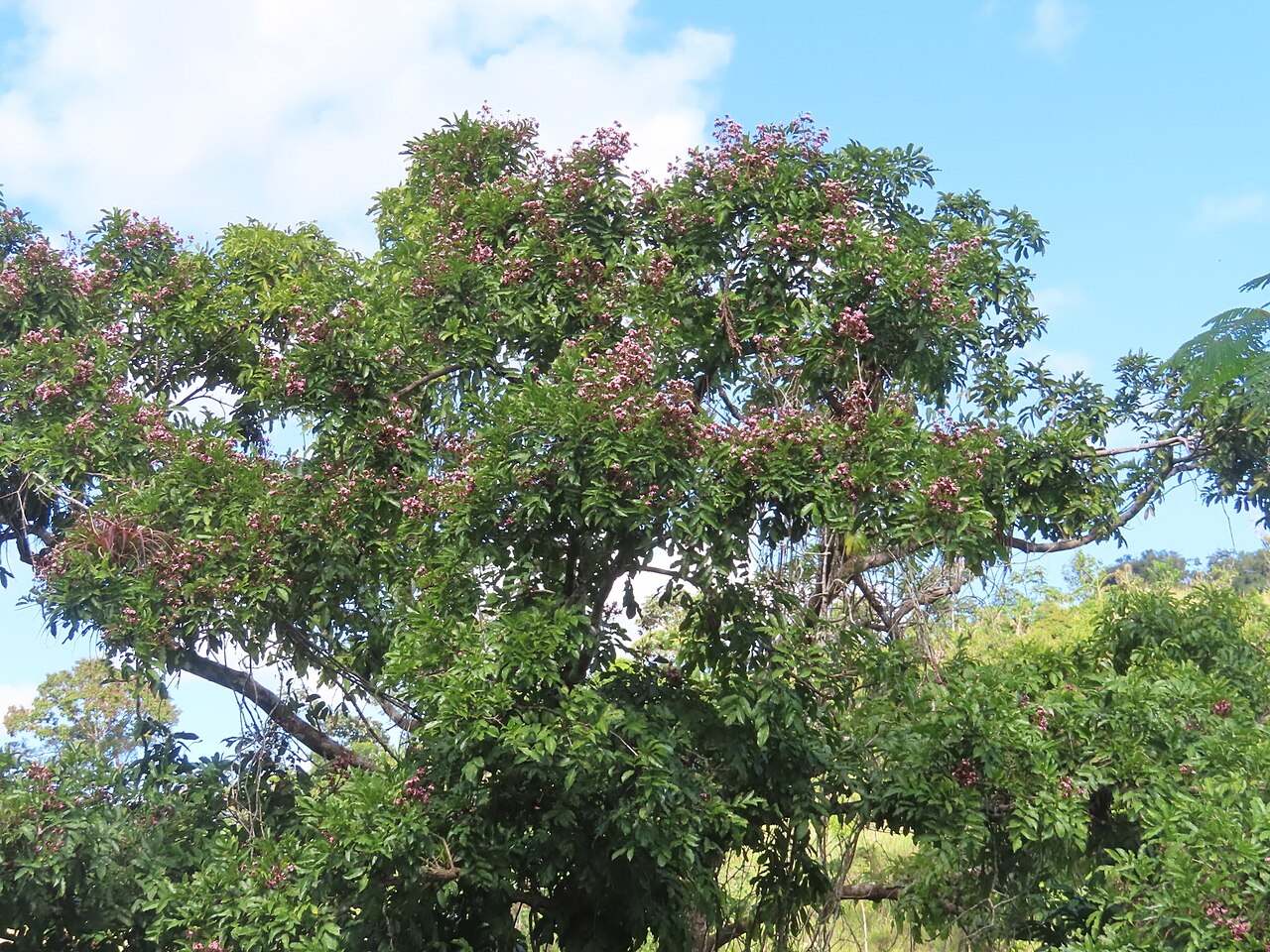
Andira inermis, known in Puerto Rico as moca and in English as cabbage bark (USDA PLANTS: cabbagebark tree), is a handsome evergreen member of the pea family with a dense, rounded crown, glossy pinnate leaves and, for a few weeks each year, masses of fragrant pink to lilac flowers that turn the whole tree into a bee magnet. In open ground it becomes a broad shade tree; in forest it can grow very tall, and references give heights up to about 100 feet.
The English name comes from the bark, which gives off an unpleasant, cabbage-like smell when cut or bruised. You will also see it sold or described as angelin, cabbage angelin, partridge wood and worm bark, and older Caribbean works call it Andira jamaicensis or Geoffroea inermis. USDA PLANTS lists it as native in Puerto Rico, the U.S. Virgin Islands and Florida, although Florida botanists do not accept it as a Florida native — see the range section.
For Puerto Rican gardeners, moca is one of the best native flowering shade trees for moist lowland sites: it tolerates heavy and periodically wet soils, fixes its own nitrogen, feeds bees when it blooms and fruit bats when it fruits, and has been planted for generations along streets and in pastures across the island.
Identification
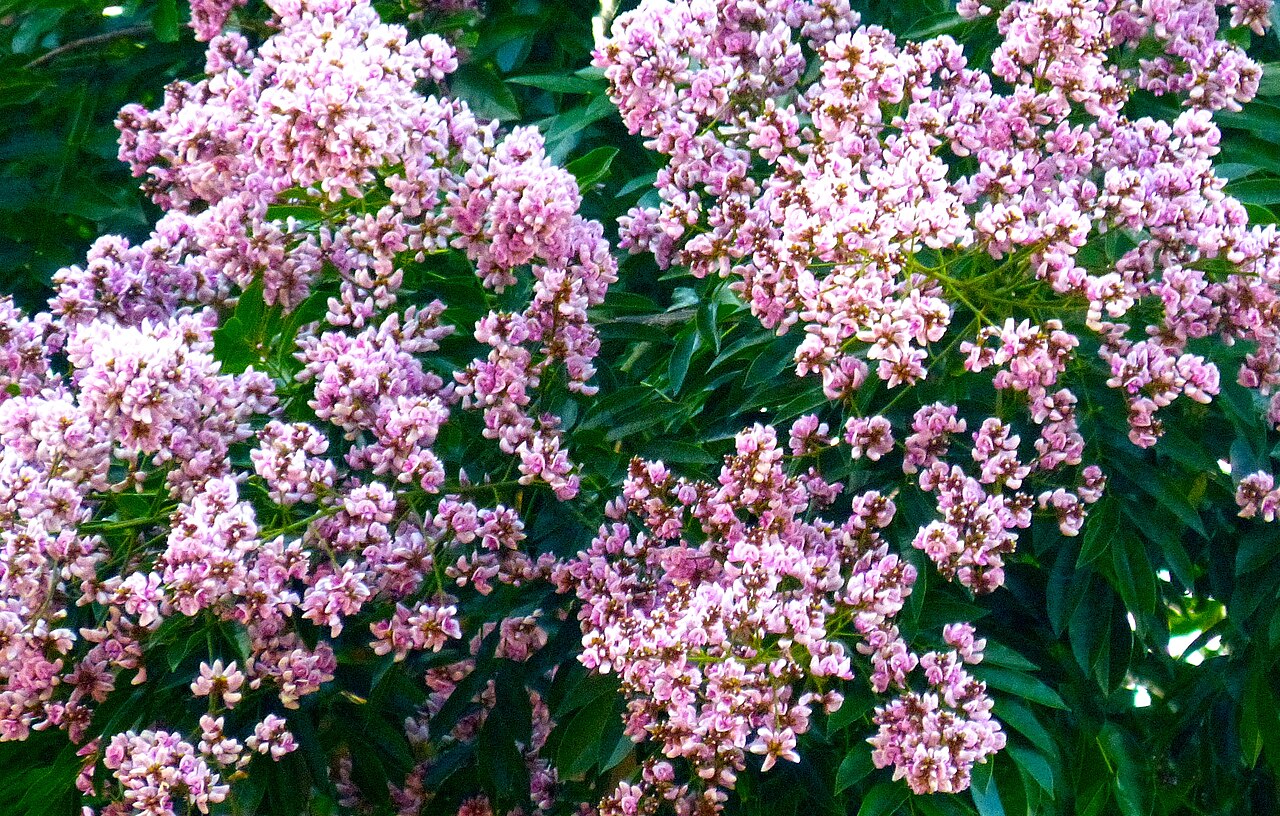
Cabbage bark is most easily recognized by its combination of pinnately compound leaves with opposite, glossy leaflets, large terminal clusters of small pink-purple pea flowers, and rounded, single-seeded green fruits that hang in bunches like small plums. Crushed bark has a distinctly unpleasant cabbage odor.
Form & Bark
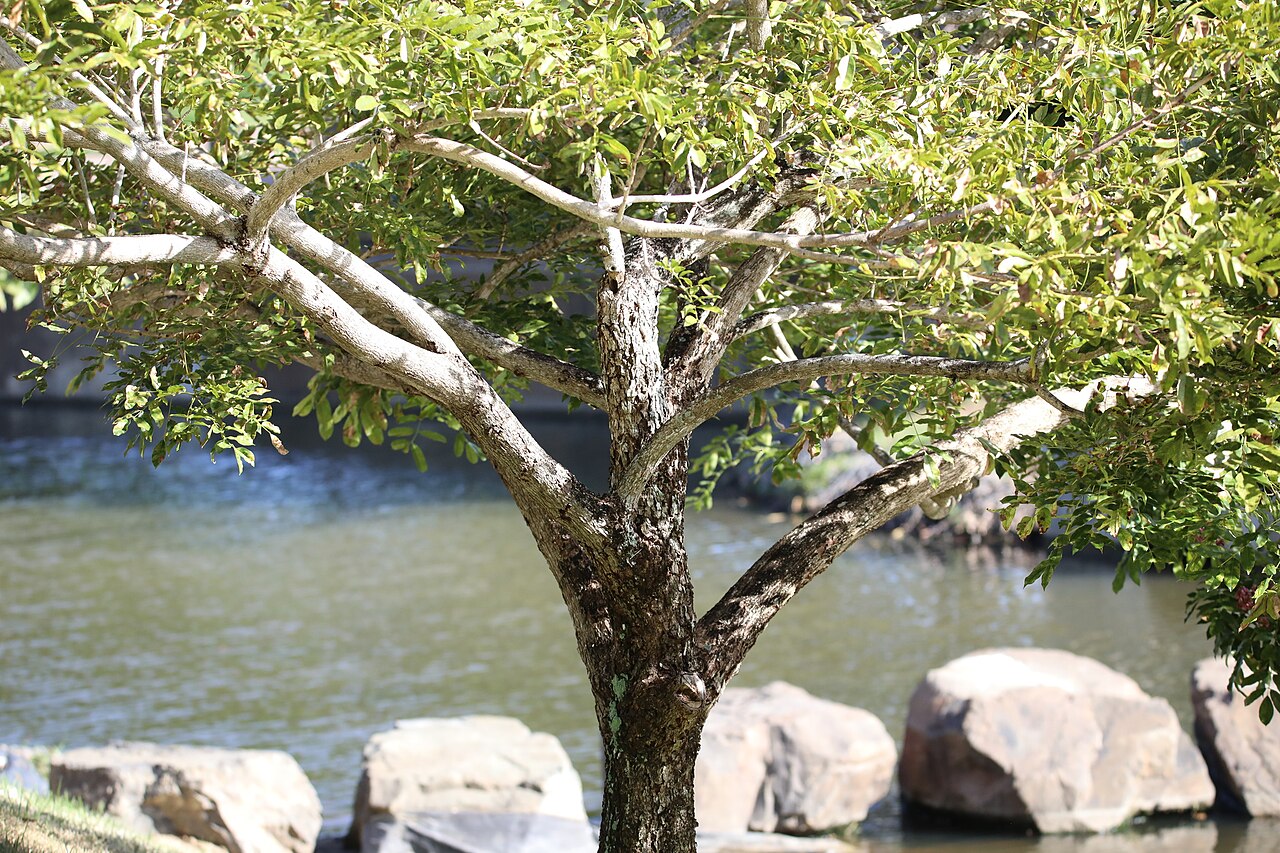
An evergreen tree, commonly 30 to 60 feet tall in cultivation and much taller in forest, with a dense, rounded to spreading crown and a straight trunk without buttresses. The bark is gray to brownish-gray, smooth to finely scaly on young trees and becoming rougher with age; when cut it smells strongly of cabbage, the source of the common name.
Leaves
Leaves are alternate and pinnately compound, roughly 8 to 16 inches long, with about 7 to 15 leaflets arranged in opposite pairs plus one at the tip. Each leaflet is oblong to elliptic, a few inches long, glossy dark green above and paler beneath. New flushes of growth are often bronze or tan before they harden off green.
Flowers
The flowers are small, fragrant, pea-shaped, pink to rosy purple, and carried in large, much-branched clusters (panicles) at the ends of the branches. Bloom is mostly in late winter and spring, though trees may flower at other times of year; a tree in full flower is covered with color and is loud with bees.
Fruit & Seeds
The fruit is unusual for a legume: instead of a splitting pod it is a fleshy, egg-shaped to rounded, single-seeded drupe-like pod, about 1 to 2 inches long, green and turning darker when ripe. Fruits hang in clusters and are carried off by fruit-eating bats. The seed and bark contain toxic compounds and should not be eaten.
Similar Species
Out of flower it can be confused with other trees that have pinnate leaves, such as the introduced neem or the native bloodwood (Pterocarpus officinalis), which shares its liking for wet ground. The opposite leaflets, cabbage-scented bark and plum-like fruit separate moca from both.
Quick Facts
| Scientific Name | Andira inermis (W. Wright) Kunth ex DC. |
| Family | Fabaceae (pea or legume family) |
| Plant Type | Evergreen tree; nitrogen-fixing legume |
| Mature Height | 30–60 ft in cultivation; to about 100 ft in forest |
| Mature Spread | 30–40 ft; dense, rounded crown |
| Growth Rate | Moderate |
| Sun Exposure | Full sun to partial shade |
| Water Needs | Moderate to high; tolerates periodic flooding and some drought once established |
| Soil Type | Adaptable; loams and heavy clay soils, including poorly drained ground |
| Soil pH | Acidic to slightly alkaline |
| Bloom Time | Mainly late winter to spring; occasionally at other times |
| Flower Color | Pink to rosy purple |
| Fall Color | None; evergreen |
| Fruit | Fleshy, plum-like single-seeded pod, 1–2 in; toxic to people |
| Deer Resistant | Not applicable in Puerto Rico; no native deer on the island |
| USDA Hardiness Zones | 10–13; frost-sensitive |
| Other Common Names | Moca (Puerto Rico); cabbagebark tree (USDA PLANTS); angelin, cabbage angelin, partridge wood, worm bark |
Native Range
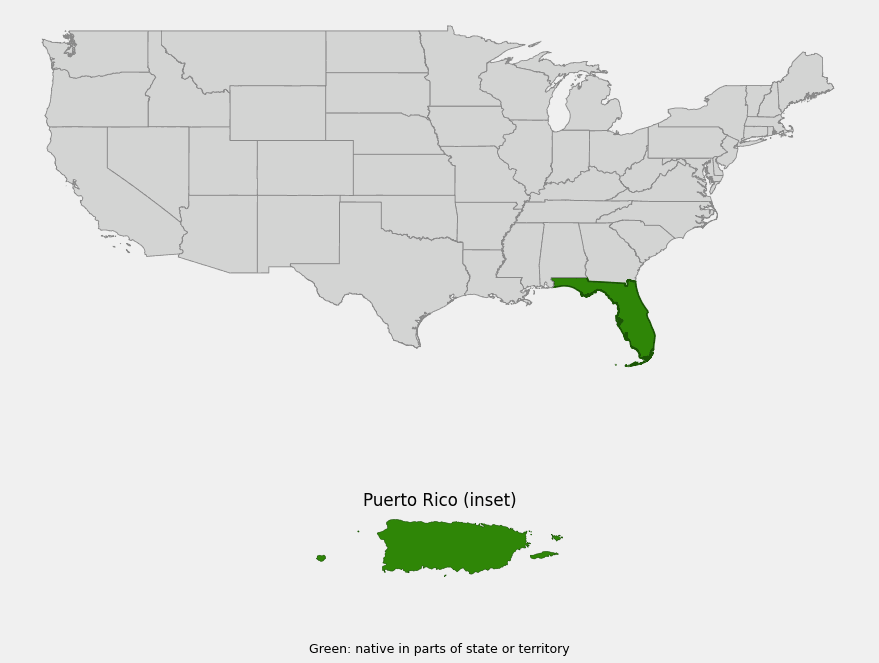
USDA PLANTS lists Andira inermis as native in Puerto Rico, the U.S. Virgin Islands and Florida. Beyond U.S. territory the species ranges widely through the West Indies, southern Mexico, Central America and northern South America, and it is also found in West Africa. In Puerto Rico it is common in the moist lowlands and lower hills, especially along streams, in moist forest and secondary woodland, and in pastures and along roadsides where it has long been left or planted for shade.
Where the sources disagree. The Atlas of Florida Plants, maintained by the Institute for Systematic Botany, does not include Andira inermis in Florida’s native flora, and the institute treats the trees found in the state as non-native escapes from cultivation. USDA PLANTS, on the other hand, lists it as native in Florida. Because Florida’s own flora project does not accept it as native, this page is not included in PlantNative’s Florida regional lists, and Florida gardeners should not treat cabbage bark as a Florida native plant. The map above shades Florida because USDA PLANTS is the mapping source.
Some references also describe the species as introduced in parts of the Caribbean. For Puerto Rico, USDA PLANTS lists it as native, and moca has been part of the island’s lowland forests and rural landscape for as long as the flora has been recorded.
📋 Regional plant lists featuring Cabbage Bark: Puerto Rico
Growing & Care Guide
Moca is an easy, long-lived tree for warm, frost-free gardens. It is one of relatively few native flowering trees that is happy on heavy, wet clay, and once established it shrugs off dry spells too.
Light
Plant in full sun for the best flowering and the densest crown. Young trees tolerate partial shade and will grow up through secondary woodland, but shaded trees flower sparsely. In the open the tree develops a broad, symmetrical crown that makes good shade.
Soil & Water
Cabbage bark grows in a wide range of soils, from sandy loam to heavy clay, and tolerates poorly drained ground and occasional flooding, which reflects its natural home along streams and in wet lowland forest. Water new trees regularly through their first year. Established trees need little care in Puerto Rico’s wetter regions and tolerate moderate drought, though they look best with reasonable soil moisture.
Planting Tips
Plant at the start of the rainy season. Allow 30 to 40 feet from buildings and other large trees, and keep it away from septic fields and paving; like many large shade trees it develops a substantial root system. Avoid planting where children or livestock might eat the fallen fruit, since the seeds are toxic.
Pruning & Maintenance
Train young trees to a single leader with well-spaced scaffold branches. Mature trees need little pruning beyond removing dead or storm-damaged limbs after hurricane season. As a nitrogen-fixing legume it rarely needs fertilizer. Expect a seasonal drop of fruit beneath the crown; bats carry off much of the crop.
Propagation
Grow from fresh seed. Collect ripe fruits, remove the flesh (wear gloves) and sow promptly, as the large seeds lose viability if they dry out. Germination is usually good. Seedlings grow steadily and transplant well from containers while young.
Landscape Uses
- Shade and street trees: a dense, evergreen native canopy for parks, plazas, wide streets and rural roadsides
- Riparian and wet-site restoration: tolerates periodic flooding and heavy soils along streams and in low ground
- Pasture and finca plantings: a nitrogen-fixing shade tree for livestock and farm boundaries
- Pollinator gardens: spring flowering brings in large numbers of native and honey bees
- Bat-friendly plantings: fruit is a food source for native fruit bats
Wildlife & Ecological Value
Cabbage bark is a tree that pays its way for wildlife twice a year: once in bloom, when it feeds bees, and again in fruit, when it feeds bats.
For Pollinators
The fragrant pink flowers are visited by many kinds of bees. Studies of the species in Costa Rica recorded dozens of bee species at the flowers, and in Puerto Rico flowering trees are worked heavily by native bees, carpenter bees and honey bees. Butterflies and other insects also visit.
For Birds
Birds use the dense evergreen crown for cover, roosting and nesting, and insect-eating birds forage among the flowers for the insects they attract. The fruits are too large and hard for most birds; the tree’s main seed dispersers are bats.
For Mammals
Bats are the only native land mammals in Puerto Rico, and fruit-eating bats are the principal dispersers of Andira seeds: they carry the plum-like fruits away from the parent tree, eat the flesh, and drop the seeds at their feeding roosts. Trees in fruit are an important seasonal food for them.
Ecosystem Role
As a nitrogen-fixing legume, cabbage bark enriches the soil beneath it, and its tolerance of wet, heavy ground makes it a natural part of riparian and lowland forest. Mature trees left in pastures act as stepping stones for bats and birds moving between forest patches and seed new trees in their shade.
Cultural & Historical Uses
The bark gave the tree both its English name and its historic medicinal use. In the Caribbean and Central America, preparations of the bark were used as a vermifuge to expel intestinal worms, hence the name “worm bark”. The same compounds that made it effective also made it dangerous: overdoses were known to cause serious poisoning, and the bark and seeds should be regarded as toxic.
The wood is hard, heavy and strong, with a coarse texture and a distinctive pattern of light and dark streaks that gave rise to the trade name “partridge wood”. It has been used for construction, posts, furniture, cabinetwork and turnery. In Puerto Rico moca has traditionally been valued as much as a shade tree for pastures, coffee farms and roadsides as for its timber.
Botanically, the species was first described in the eighteenth century as Geoffroea inermis from Jamaica, and Caribbean references have also used Andira jamaicensis. The epithet inermis means “unarmed”, referring to the absence of the spines found in some related trees.
Frequently Asked Questions
Is cabbage bark native to Puerto Rico?
Yes, according to USDA PLANTS, which lists Andira inermis as native in Puerto Rico and the U.S. Virgin Islands. Known locally as moca, it is common in moist lowland forest, along streams and in pastures across the island.
Is cabbage bark native to Florida?
The sources disagree. USDA PLANTS lists it as native in Florida, but the Atlas of Florida Plants does not include it in the state’s native flora and Florida botanists treat it as an escape from cultivation. PlantNative therefore does not list it as a Florida native.
Why is it called cabbage bark?
Freshly cut or bruised bark gives off a strong, unpleasant smell reminiscent of cooked cabbage. The name refers to that odor, not to anything edible about the tree.
Is cabbage bark poisonous?
The bark and seeds contain toxic compounds. The bark was formerly used as a worm medicine, but overdoses caused poisoning. Do not eat any part of the tree, and avoid planting it where children or livestock might eat fallen fruit.
Will it grow in wet or clay soil?
Yes. Cabbage bark naturally grows along streams and in moist lowland forest, and it tolerates heavy clay, poorly drained soil and occasional flooding. It also handles moderate drought once established, making it one of the more adaptable native shade trees for Puerto Rico.

Looking for a nursery that carries Cabbage Bark?
Our nursery directory does not yet include Puerto Rico. Browse the native plant nursery directory by state: Alabama–Arkansas · California · Colorado–Hawaii · Idaho–Kansas · Kentucky–Montana · Nebraska–Oklahoma · Oregon · Pennsylvania–Virginia · Washington · West Virginia–Wyoming