California Pipevine (Aristolochia californica)
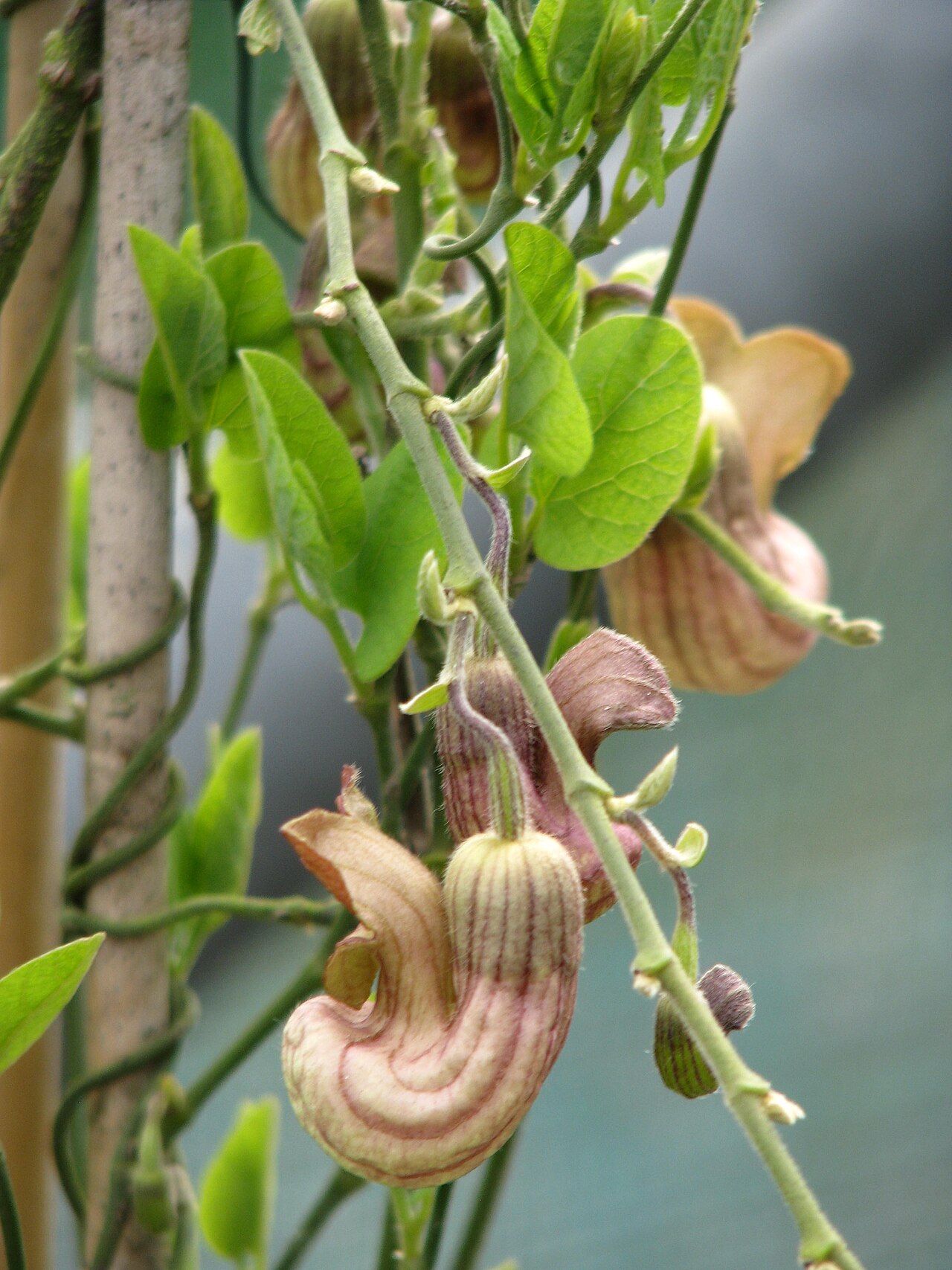
California Pipevine (Aristolochia californica), also called California Dutchman’s pipe, is a deciduous, twining woody vine found only in northern California. It belongs to the Aristolochiaceae, the birthwort family, and is best known for two things: its bizarre, curving, pipe-shaped flowers that bloom on bare winter stems, and its essential role as the sole host plant of the California pipevine swallowtail butterfly (Battus philenor hirsuta), which cannot reproduce anywhere this vine does not grow.
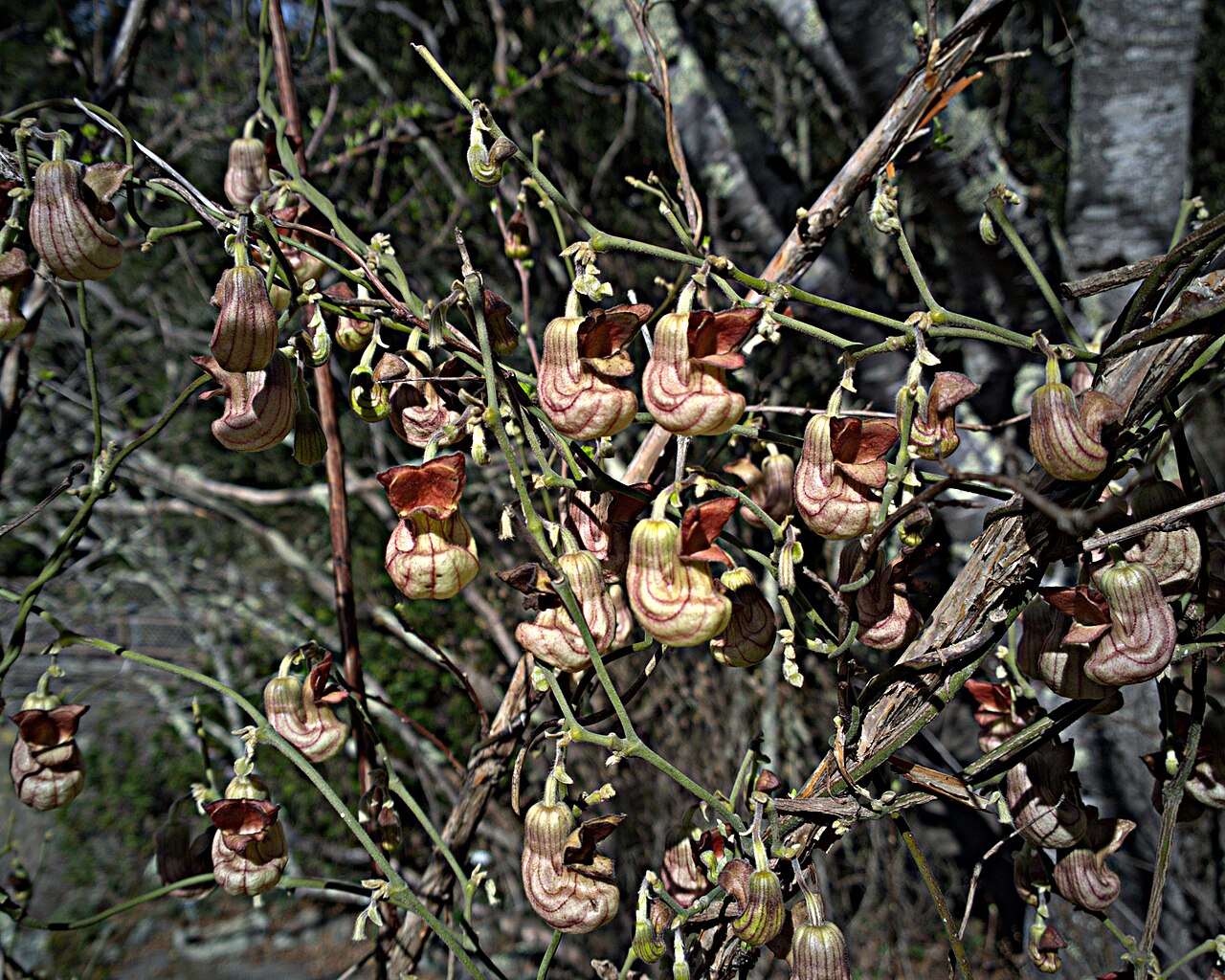
California pipevine spends late fall and winter as a tangle of bare, woody, twining stems, then surprises in January through April with dozens of strange, mottled, purple-and-cream flowers shaped like old-fashioned smoking pipes — before a single leaf appears. Once bloom finishes, soft, heart-shaped green leaves unfurl along the vine, and by early summer the plant is a leafy green curtain that can climb 10 feet or more into streamside trees and shrubs.
For a northern California native garden, especially one near the coast or in the Bay Area, Sacramento Valley, or Sierra foothills, California pipevine is one of the most ecologically valuable vines you can plant: every part of it is toxic to people and most animals, but it is the one plant the pipevine swallowtail absolutely needs. Give it a trellis, arbor, or shrub to climb and reliable moisture, and it rewards you with unusual winter flowers and, often, an entire generation of swallowtail butterflies raised in your own garden.
Identification
California pipevine is a deciduous, twining vine that grows from thick woody rhizomes. Individual stems commonly reach 5 to 20 feet in length, occasionally more with support, and the twining trunk thickens with age, taking on a gnarled, woody character at the base.
Stems
Young stems are green and flexible, twining counterclockwise around supports; with age the base becomes woody, thick, and somewhat gnarled. In winter the vine is entirely leafless, showing only its bare, twisting stems — a stage when the unusual flowers appear.
Leaves
Leaves are simple, heart-shaped (cordate), 2 to 5 inches long, soft-textured, and bright to grayish green. They emerge after flowering finishes in spring and persist through summer before the vine goes dormant again in fall, giving the plant a distinctly seasonal rhythm of bare winter stems, then spring bloom, then summer leaf cover.
Flowers & Fruit
The flowers are the plant’s signature feature: large, curving, pipe- or U-shaped blooms 1 to 1.5 inches long, green to pale brown on the outside with bold purple veining, opening to a yellow-to-red-streaked throat. They bloom from January through April, usually before leaves emerge, and have a faint musty odor that attracts tiny carrion-feeding flies and fungus gnats, the plant’s main pollinators — insects that crawl into the convoluted flower, pick up pollen while working to escape, and (mostly) fly off unharmed. After pollination, the flowers develop into winged, capsular green fruits that eventually dry and split to release flat, papery seeds.
Quick Facts
| Scientific Name | Aristolochia californica |
| Family | Aristolochiaceae (Birthwort) |
| Plant Type | Deciduous twining woody vine |
| Mature Height | 5–20 ft of climbing stem (occasionally more) |
| Mature Spread | Spreads as wide as its support allows |
| Growth Rate | Moderate |
| Sun Exposure | Part Shade to Full Sun (best with some shade inland) |
| Water Needs | Moderate; appreciates some summer water in gardens |
| Soil Type | Moist, well-drained loam |
| Soil pH | Slightly acidic to neutral |
| Bloom Time | January – April |
| Flower Color | Green to pale brown with purple veining, yellow throat |
| Fall Color | None; leaves drop green to yellow-green as the vine goes dormant |
| Fruit | Winged green capsules, drying brown and splitting to release seed |
| Deer Resistant | Yes (toxic aristolochic acids deter browsing) |
| USDA Hardiness Zones | 7–9 |
Native Range
California pipevine is endemic to northern California, meaning it is found naturally nowhere else in the world. Its native range runs through the Sacramento Valley, the northern Sierra Nevada foothills, the San Francisco Bay Area, the northern inner California Coast Ranges, and the southeastern Klamath Mountains, generally below about 2,300 feet in elevation.
Within this range, California pipevine grows along riparian streambanks, in chaparral, in oak woodland, and in mixed evergreen forest — almost always where it can find a tree, shrub, or other structure to twine into and reach toward dappled light. It is not native to southern California or outside the state, and gardeners there who want to support pipevine swallowtails should still plant the California-native species rather than non-native pipevines, which can be toxic to the caterpillars in some cases.
Because California pipevine is a California endemic, PlantNative’s regional plant lists — which are organized around multi-state regions — do not currently include a California-specific list, so no regional list link appears on this page; this is a gap in geographic coverage, not an indication that the species is uncommon or unimportant within California.
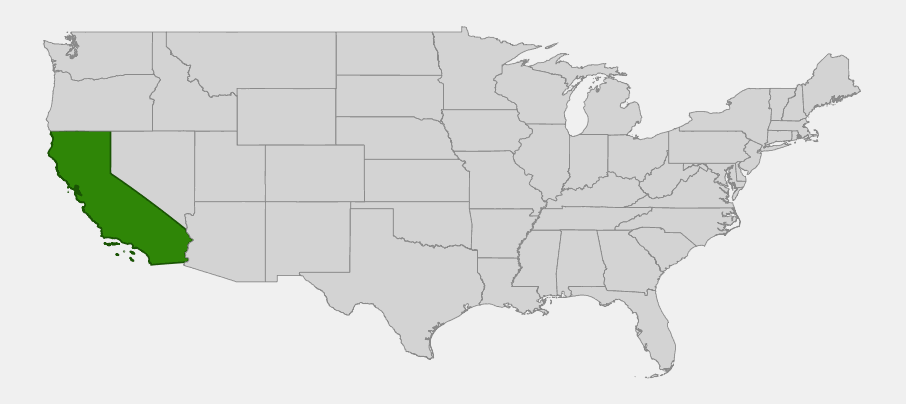
📋 Regional plant lists: California pipevine is endemic to California, and PlantNative does not yet publish a California-specific regional list; check the full native plant directory for other California natives.
Growing & Care Guide
California pipevine is easy to grow within its native range and nearby similar climates, as long as it is given something to climb and reasonably consistent moisture, especially while young.
Light
Plant California pipevine in part shade to full sun. Along the coast and in the Bay Area it tolerates considerable sun; in hotter inland valleys, afternoon shade or dappled light under a larger tree helps keep the roots and lower vine cooler and reduces stress during the dry season.
Soil & Water
Give California pipevine moist, well-drained soil similar to the streambank and woodland settings where it grows wild. Water regularly during the first one to two years to establish a deep root system, and continue occasional deep watering through summer in garden settings, even though established plants in the wild largely rely on winter rain and deep roots. Avoid soil that stays waterlogged.
Planting Tips
Because it is a twining vine, give California pipevine a trellis, arbor, fence, or sturdy shrub to climb from the start. Plant in fall or winter so the roots can establish before the vine’s main spring growth flush. It can take a couple of years to settle in and begin flowering reliably, so be patient with young plants.
Pruning & Maintenance
Prune in late summer or fall, after the vine has gone dormant and dropped its leaves, to control size and direct new growth onto its support. Avoid pruning in late winter or early spring, which would remove the flower buds or developing pipevine swallowtail eggs and caterpillars. The vine resprouts readily from its woody base if cut back hard.
Propagation
California pipevine is most commonly propagated from seed or by dividing rhizomes from established plants; seed germination can be slow. It is increasingly available from California native plant nurseries, reflecting its popularity as a pipevine swallowtail host plant.
Landscape Uses
California pipevine fills several valuable roles in a northern California native garden:
- Butterfly gardens — the only host plant for pipevine swallowtail caterpillars
- Arbor and trellis cover with unusual winter flowers and summer leaf cover
- Riparian and streambank restoration plantings
- Woodland garden vine climbing into oaks or other established trees
- Conversation-piece specimen for its strange, pipe-shaped winter flowers
Wildlife & Ecological Value
California pipevine’s single most important ecological role is as the sole larval host plant of the California pipevine swallowtail butterfly, but it supports a wider web of wildlife as well.
For Pollinators
The pipe-shaped flowers are pollinated chiefly by tiny carrion- and fungus-feeding flies, including fungus gnats, which are lured in by the flowers’ faint musty scent and often become temporarily trapped inside the convoluted tube while picking up and depositing pollen before escaping.
For the Pipevine Swallowtail
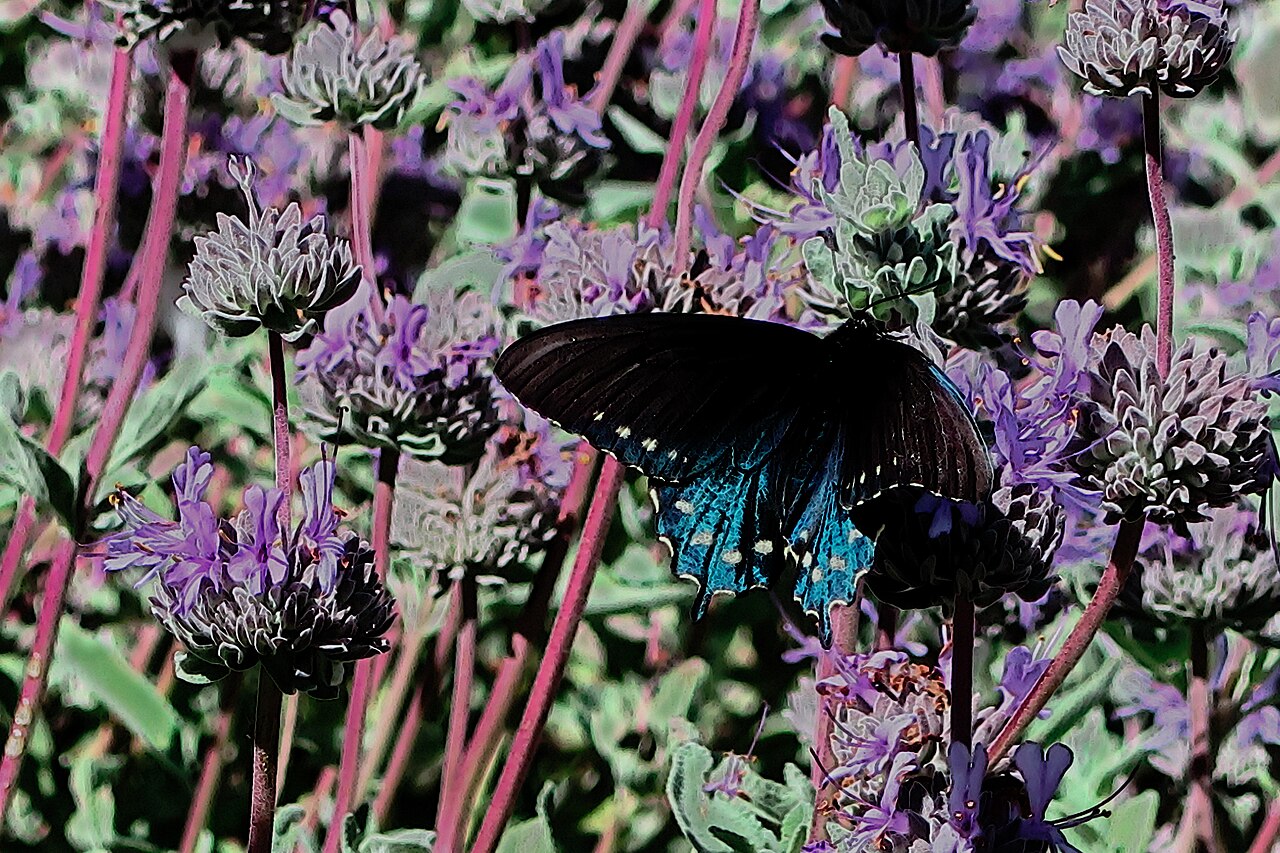
The red-spotted black caterpillars of the California pipevine swallowtail (Battus philenor hirsuta) feed exclusively on California pipevine leaves. As they feed, the caterpillars sequester the plant’s toxic aristolochic acids into their own tissues, making both caterpillars and the resulting adult butterflies distasteful and even toxic to predators — a defense they carry with them for life. Because this subspecies depends entirely on this one plant species, the presence or absence of California pipevine directly controls where pipevine swallowtails can breed.
For Birds & Other Wildlife
Because the vine is toxic, it is not a food source for birds or mammals, but the dense tangle of stems and leaves provides some shelter and nesting cover within riparian and woodland habitat, and the butterflies it supports are, in turn, an important part of the local food web and pollinator community.
Ecosystem Role
As a structural climbing vine in riparian corridors and oak woodland, California pipevine adds vertical habitat complexity to streamside vegetation. Its tight ecological relationship with the pipevine swallowtail makes it something of a keystone species for that butterfly: restoring California pipevine to a garden or restoration site is one of the most direct ways to support local pipevine swallowtail populations.
Cultural & Historical Uses
California pipevine has a documented history of use in California Indigenous and early settler herbal practice, where preparations of the plant were historically used as a folk remedy for various ailments, including as a treatment referenced in some historical herbal sources for snakebite — a use reflected in one of its common names, California snakeroot. These are historical records of past practice, not guidance for present-day use.
Modern toxicology has shown that the plant’s defining chemistry, aristolochic acid, is a potent carcinogen and kidney toxin (nephrotoxin), and it has been linked to serious kidney disease and urinary tract cancers when concentrated plant preparations containing aristolochic acid are consumed. For this reason, aristolochic acid-containing plants have been the subject of health warnings and bans on herbal products in many countries, and California pipevine should never be ingested in any form, historical use notwithstanding.
Today, California pipevine’s cultural significance is primarily horticultural and ecological: California native plant gardeners and restoration groups plant it specifically to support the pipevine swallowtail, and its odd, pipe-shaped flowers have made it a favorite curiosity and conversation piece in native plant gardens throughout its range.
Frequently Asked Questions
Is California pipevine poisonous?
Yes. The entire plant contains aristolochic acid, a compound known to be carcinogenic and toxic to the kidneys. It should never be eaten or used as an herbal remedy, despite a history of folk medicinal use; keep it away from areas where it might be ingested by people or pets.
Why plant California pipevine if it’s toxic?
Because it is the only plant the California pipevine swallowtail caterpillar can eat. Planting it, even though it is not edible or medicinal for people, is one of the most effective ways to support this native butterfly, which cannot reproduce without it.
Does California pipevine need a trellis?
Yes, in most garden settings. It is a twining vine that climbs by wrapping its stems around a support, so give it a trellis, arbor, fence, or large shrub or tree to grow into from the time it is planted.
When does California pipevine bloom?
It blooms in winter to early spring, January through April, typically before its leaves emerge — a very different bloom season from most garden vines, which makes the leafless, flower-covered stems especially striking.
Can I grow California pipevine outside its native range?
It is best suited to northern California’s climate and similar winter-wet, summer-dry regions. Gardeners outside this area who want to support pipevine swallowtails should still seek out true California pipevine rather than substituting non-native Aristolochia species, some of which can be harmful to the caterpillars.

Looking for a nursery that carries California Pipevine?
Browse our native plant nursery directory: California