
Chiltepin (Capsicum annuum var. glabriusculum)
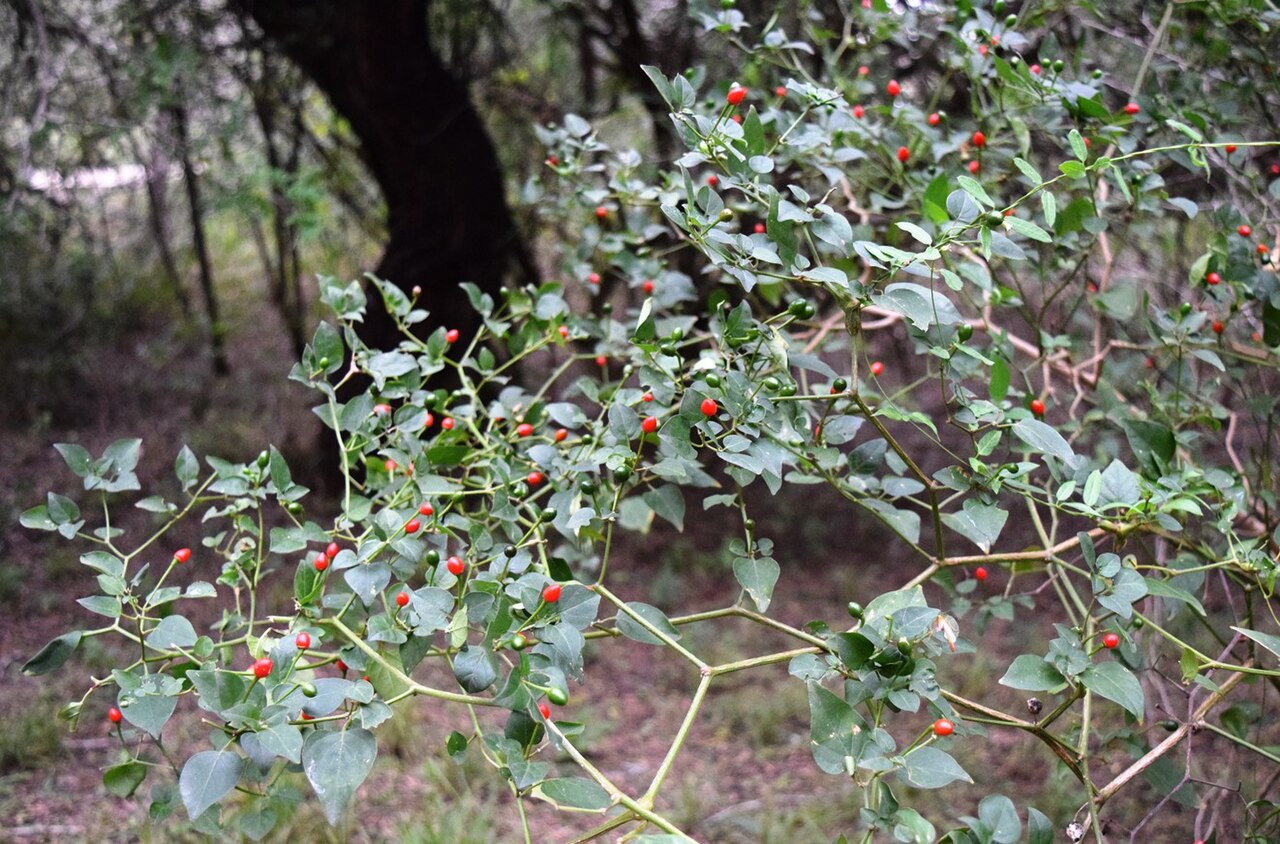
Capsicum annuum var. glabriusculum, known as Chiltepin, chile pequín, bird pepper or chiltepín, is the wild chile pepper of North America and the living ancestor of almost every pepper in the grocery store. Bell peppers, jalapeños, cayennes and poblanos were all domesticated in Mexico from this sprawling little shrub. In the United States it grows wild in three places only: the brush country and limestone hills of central and southern Texas, a handful of shaded canyons in southern Arizona, and the coastal hammocks of central and south Florida.
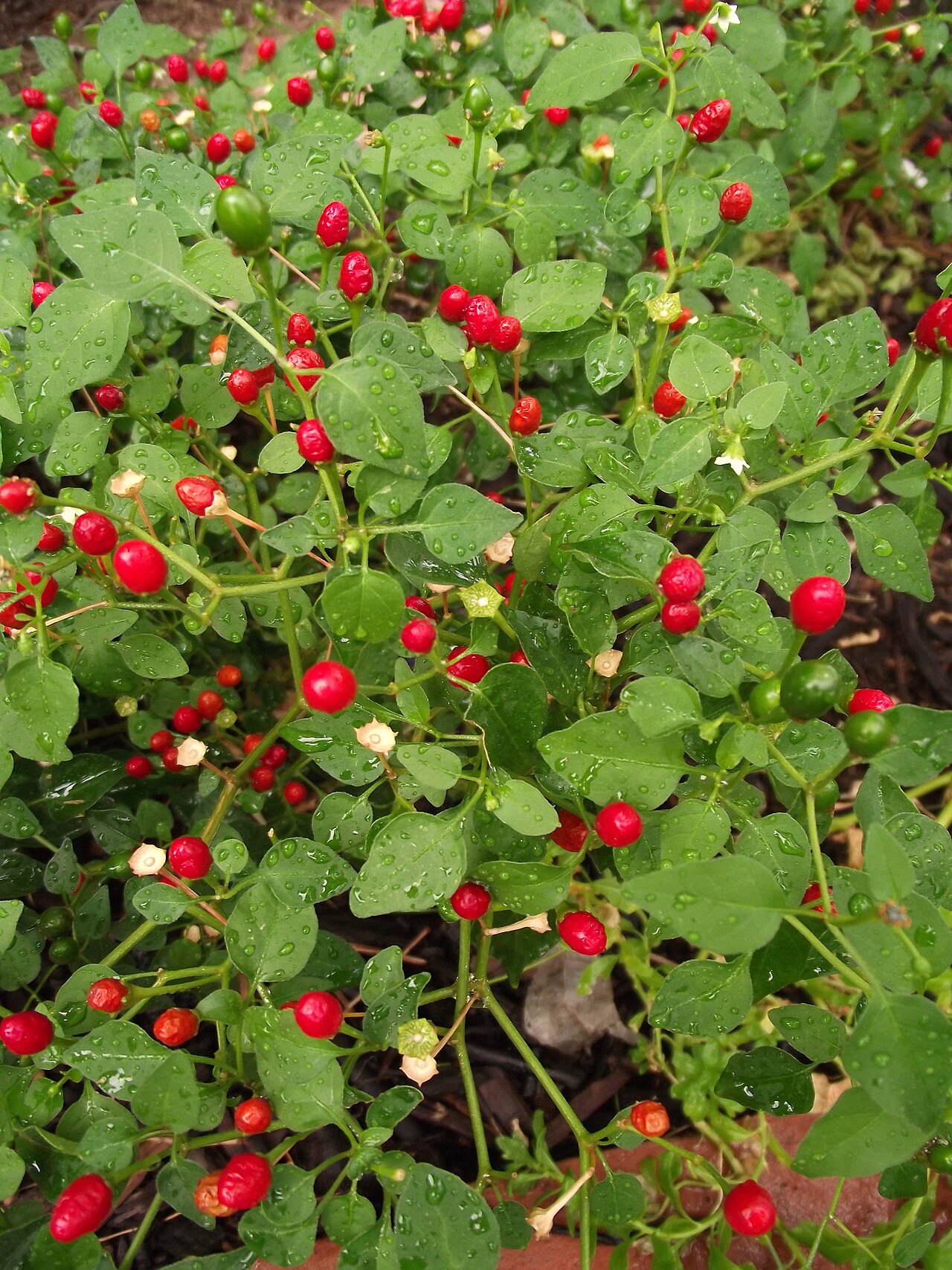
The plant itself is modest: a loose, twiggy subshrub 2 to 4 feet tall with smooth oval leaves, small white star-shaped flowers and a steady crop of upright, pea-sized chiles that ripen from green to glossy red. The fruit is the reason people know it. A single chiltepin packs a quick, sharp burn, commonly rated somewhere between 50,000 and 100,000 Scoville heat units, which makes it many times hotter than a jalapeño. Texas named the chiltepin its official state native pepper in 1997, and in Sonora the dried wild fruit is a prized and expensive market staple.
For gardeners it is one of the easiest and most rewarding natives in the warm South and Southwest: drought-tolerant once established, happy in the dappled shade under a tree, deer-resistant, and covered in red fruit that mockingbirds and thrashers strip from the branches. A safety note before you start: the fruit is very hot. Wash your hands after picking or handling the chiles, keep your fingers away from your eyes, and wear gloves when you crush or chop them.
Identification
Chiltepin grows as a much-branched, woody-based subshrub, usually 2 to 4 feet tall and about as wide. In the wild it typically leans up through the branches of a larger “nurse” shrub or tree; in frost-free spots in deep South Texas and Florida old plants can scramble to 6 feet or more. Frost kills the stems back in the northern part of its range, and plants resprout from the woody root crown when the soil warms. Its upright, single, round fruits separate it from most cultivated chiles, which have larger, hanging fruit.
Bark & Stems
Young stems are green, slender and angled at the nodes, with a slight zigzag where each leaf and flower emerges. They are smooth to sparsely hairy, as the name glabriusculum (“somewhat smooth”) suggests. With age the base of the plant becomes woody and tan-gray, and stems branch in a characteristic forked pattern that gives the plant an open, airy outline.
Leaves
The leaves are alternate, simple and entire, ovate to lance-ovate, roughly 1 to 3 inches long, with a pointed tip and a narrow stalk. They are thin, medium to dark green and smooth or nearly so. Crushed leaves have the faintly green, peppery smell of a garden pepper plant. In a hard freeze the foliage blackens and drops; in mild winters it stays green.
Flowers
Flowers appear singly or in pairs at the leaf nodes from early summer into fall in Texas and Arizona, and almost all year in south Florida. Each one is small, about ¼ to ⅜ inch across, with five pointed, spreading white to greenish-white petals and a cluster of purplish-blue anthers in the center. They are easy to overlook, but bees visit them steadily, and flowers, green fruit and ripe fruit are often on the same branch at once.
Fruit & Seeds
The fruit is a small berry about ¼ inch (5–8 mm) long, round to egg-shaped, held upright above the foliage. It ripens from green to bright red (occasionally orange) and drops easily from its cap, a trait that helps birds pick it. Each chile holds a dozen or so flat, pale seeds. The heat comes from capsaicin, concentrated in the pale tissue that holds the seeds. It is intense but fades fairly quickly. That quick, sharp burn is the flavor chiltepin fans prize.
Quick Facts
| Scientific Name | Capsicum annuum var. glabriusculum (syn. C. annuum var. aviculare, var. minimum) |
| Family | Solanaceae (Nightshade / Potato) |
| Plant Type | Short-lived perennial subshrub (woody-based, evergreen where frost-free) |
| Mature Height | 2–4 ft typical; to 6 ft or more in frost-free, shaded thickets |
| Mature Spread | 2–4 ft |
| Growth Rate | Moderate to fast once warm weather arrives |
| Sun Exposure | Part shade to full sun (afternoon shade preferred in hot inland gardens) |
| Water Needs | Low to moderate: average to dry, well-drained soil |
| Soil Type | Sandy, loamy, rocky or limestone soils; clay if well drained |
| Soil pH | Adaptable, roughly 6.0–8.0 |
| Bloom Time | June – September in Texas and Arizona; nearly year-round in South Florida |
| Flower Color | White to greenish-white |
| Fall Color | None; evergreen until frost |
| Fruit | Pea-sized round to egg-shaped chiles, green ripening to bright red; extremely pungent |
| Deer Resistant | Moderate (capsaicin deters most mammals) |
| USDA Hardiness Zones | 8–11 (frost kills the top in zones 8–9; roots often resprout) |
Native Range
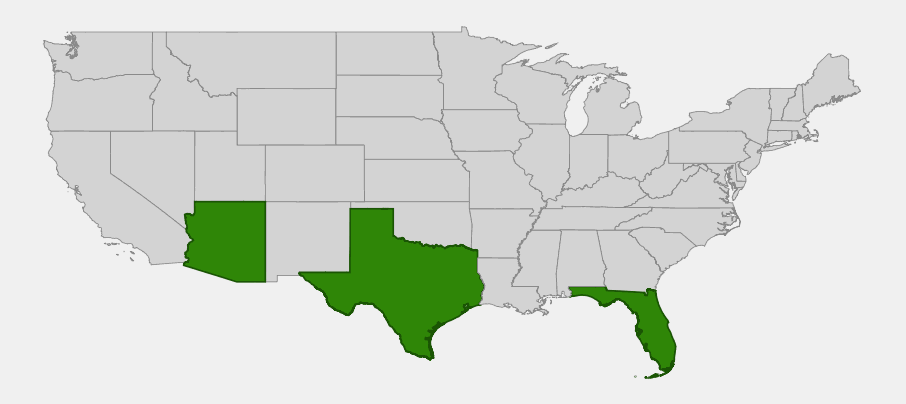
Chiltepin’s native range centers on Mexico and runs south through Central America. It reaches its northern limit in the United States, where it is native in Texas, Arizona and Florida. In Texas it is most common across the Rio Grande Valley, the South Texas brush country, the Coastal Bend and the Edwards Plateau around San Antonio and Austin, where it grows under live oaks, hackberries and mesquite. Scattered records extend toward the Big Bend and up the coast.
In Arizona chiltepin is rare and local. It grows in a few canyons of the Santa Cruz River watershed near the Mexican border, where it shelters beneath desert hackberry and velvet mesquite. The best-known population is protected in the Wild Chile Botanical Area of the Coronado National Forest near Tumacácori. Set aside in 1999, it is one of the few reserves in the country created to conserve a wild relative of a major crop. In Florida, bird pepper grows mainly in coastal hammocks, shell middens and thicket edges in the central and southern peninsula and the Keys. The Atlas of Florida Plants treats it as native there.
Herbarium and database records of chiltepin from states farther north and east, such as the Carolinas or the Northeast, almost certainly reflect escapes from cultivation rather than wild native populations. This page treats Texas, Arizona and Florida as the native U.S. range. Across that range the plant’s habitat is surprisingly consistent: dappled shade under a larger woody plant, where birds perch, drop seeds and leave a little extra fertility behind.
📋 Regional plant lists featuring Chiltepin: South & West Texas · Arizona & New Mexico
Growing & Care Guide
Chiltepin is far easier to keep alive than a garden pepper. It needs no staking, no rich soil and very little water once it settles in. The two things that trip people up are getting seed to germinate and siting the plant in blazing, reflected sun. Treat it as a woodland-edge shrub rather than a vegetable and it will often outlive the gardener’s interest in it, seeding itself around the yard by way of the birds.
Light
In the wild, chiltepin almost always grows in the filtered shade of a nurse plant, and it does best in gardens with the same arrangement: morning sun and afternoon shade, or bright dappled light under a live oak, mesquite or hackberry. It tolerates full sun near the coast and in Florida, where it is often grown in the open, but in the Arizona desert and the hotter parts of Texas full afternoon sun scorches the leaves and cuts fruit set. In deep shade it gets lanky and fruits sparsely.
Soil & Water
Any well-drained soil works, including the thin limestone soils of the Hill Country, sandy coastal soils and decomposed granite. Heavy clay is fine as long as water does not stand around the crown. Water weekly through the first summer. After that, established plants survive on rainfall across most of Texas and Florida, and in Arizona a deep soak every week or two during the hot, dry foresummer keeps them fruiting. Overwatering and rich, constantly wet soil cause root rot faster than drought causes damage. Mulch lightly with leaf litter rather than piling it against the stems.
Planting Tips
Plant in spring after the last frost, once nights stay above about 55°F. Nursery plants establish quickly. Seed is slow and erratic. Wild seed has evolved to pass through a bird’s gut, so germination is often improved by soaking the seed overnight or nicking the coat, and it needs warm soil (75–85°F) and patience: three to six weeks is normal. Space plants 2 to 3 feet apart, or tuck single plants at the drip line of a tree or large shrub where they will get afternoon shade. In zones 8 and colder parts of 9, choose a sheltered spot near a south-facing wall or under evergreen canopy so the roots survive hard freezes.
Pruning & Maintenance
Little is needed. Where frost kills the top, cut the dead stems back to a few inches in late winter and the plant resprouts from the base as the soil warms. In frost-free areas, trim leggy branches lightly in late winter to keep the shape compact. Chiltepin has few serious pests; aphids and whiteflies sometimes appear on stressed plants and are usually handled by lady beetles and lacewings. Watch for root rot in poorly drained beds. Wear gloves when pruning plants heavy with fruit, and wash your hands afterward.
Propagation
Grow chiltepin from seed taken from fully red fruit. Wear gloves to split the chiles, rinse the seeds and dry them. Fresh seed sown in warm conditions gives the best results; seed that has been through a bird or soaked for 24 hours often comes up faster. Softwood cuttings 4 to 6 inches long root readily in a warm, humid spot in summer. Volunteer seedlings under bird perches, along fences and beneath trees are common in established gardens and transplant easily while small.
Landscape Uses
- Bird gardens: one of the best small native fruiting plants for mockingbirds, thrashers and cardinals.
- Understory planting: fills the dry, partly shaded ground beneath live oaks, mesquites and Texas persimmon where few plants thrive.
- Edible native garden: a perennial source of fresh and dried chiles for salsa, pickles and seasoning.
- Containers: grows well in a large pot that can be moved under cover in hard freezes.
- Habitat restoration: suitable for thornscrub, Hill Country woodland-edge and Florida hammock-edge restorations within its native range.
Wildlife & Ecological Value
For Pollinators
The small white flowers produce pollen and a little nectar over a long season, and they are worked mostly by small native bees, including sweat bees, along with honeybees. Because chiltepin blooms through the hottest months, it fills a summer gap in many dry gardens. The leaves host relatively few caterpillars, but that is typical of the nightshade family.
For Birds
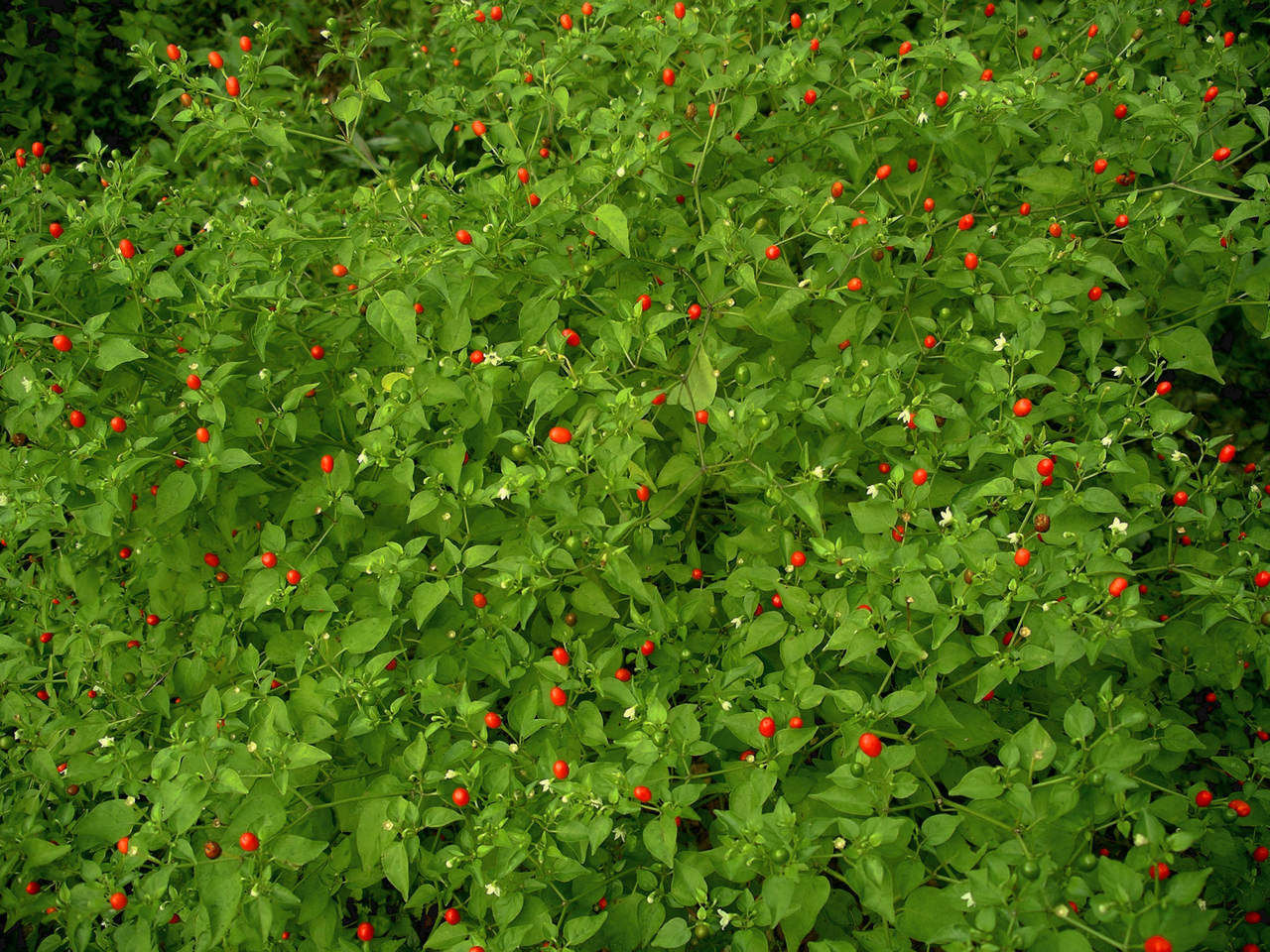
Chiltepin is a classic example of a plant shaped by birds. Birds lack the pain receptor that responds to capsaicin, so they eat the chiles without feeling the heat. Northern mockingbirds, curve-billed thrashers, northern cardinals and other fruit-eating birds take the ripe fruit, while mammals that would crush and destroy the seeds are put off by the burn. Research in Arizona’s chiltepin canyons showed that seeds passed by birds germinate well and land under the shrubs where birds perch. That is why wild chiltepin turns up under hackberry and mesquite, and why plants appear on their own along garden fences.
For Mammals
Most mammals avoid the fruit. Deer occasionally browse the foliage, especially young growth in dry spells, so chiltepin is best described as moderately deer resistant. Rodents that crack seeds generally leave the chiles alone, which is the evolutionary purpose of the heat. Pets should be kept from eating the fruit.
Ecosystem Role
Chiltepin depends on nurse plants and bird dispersal, and it adds fruit to the brushy understory layer that birds use for food and cover. As the wild relative of domesticated peppers, it also carries genetic diversity for disease resistance and stress tolerance. That value helped justify protecting Arizona’s Wild Chile Botanical Area.
Cultural & Historical Uses
People have harvested wild chiltepin for thousands of years, and the domesticated chile pepper was developed from it in Mexico. Archaeological evidence there shows chiles in use and under cultivation well over 6,000 years ago. In northern Mexico and the borderlands the fruit is still gathered from wild plants each fall. Sonoran families pick it by hand in the canyons, dry it in the sun and sell it in markets, where it is among the most expensive chiles by weight.
Chiltepin is traditionally crushed between the fingers over beans, soups, eggs and menudo, steeped in vinegar as a table sauce, or pickled green. The Tohono O’odham and other peoples of the Sonoran Desert gathered and traded it, and many families in South Texas keep a “mother” plant in the yard for a fresh supply. In 1997 the Texas Legislature designated the chiltepin the official native pepper of Texas. The jalapeño holds the separate title of state pepper.
Because the chiles are so potent, handling them takes care. Capsaicin oils stay on skin for hours and can burn the eyes, nose and any cuts. Wear gloves when crushing or cutting them, wash your hands thoroughly with soap afterward, keep your hands away from your eyes and face, and store the chiles out of reach of children and pets.
Frequently Asked Questions
How hot is a chiltepin?
Very hot. Chiltepins are commonly rated at roughly 50,000–100,000 Scoville heat units, several times hotter than a typical jalapeño, although heat varies from plant to plant. The burn is sharp and fast rather than lingering. Wash your hands after touching the chiles and keep them away from your eyes.
Is chiltepin the same as chile pequín?
Botanically, yes. Both names are used for wild Capsicum annuum var. glabriusculum. Some growers use “chiltepin” for the round-fruited wild form and “pequín” for selections with slightly elongated fruit, but they are the same variety, and nursery labels mix the two names freely.
Will chiltepin survive the winter?
In zones 10–11 it stays evergreen. In zones 8–9 a frost usually kills the top, but established plants generally resprout from the woody base in spring, especially when mulched or growing under evergreen cover. Colder than that, grow it in a pot and bring it inside for the winter.
Can I grow chiltepin in full sun?
Near the coast and in Florida, yes. In the hottest inland areas of Texas and Arizona it grows and fruits better with afternoon shade, which mirrors the nurse-plant shade it grows under in the wild. Too much shade makes it leggy, so aim for bright, filtered light.
Why are birds eating chiles that are too hot for me?
Birds do not feel capsaicin, so to them the fruit is just food. The heat is aimed at mammals, which would chew up the seeds. Birds swallow the seeds whole and spread them, which is why chiltepin seedlings pop up under trees and along fences where birds perch.
