
Cinnamon Bark (Canella winterana)
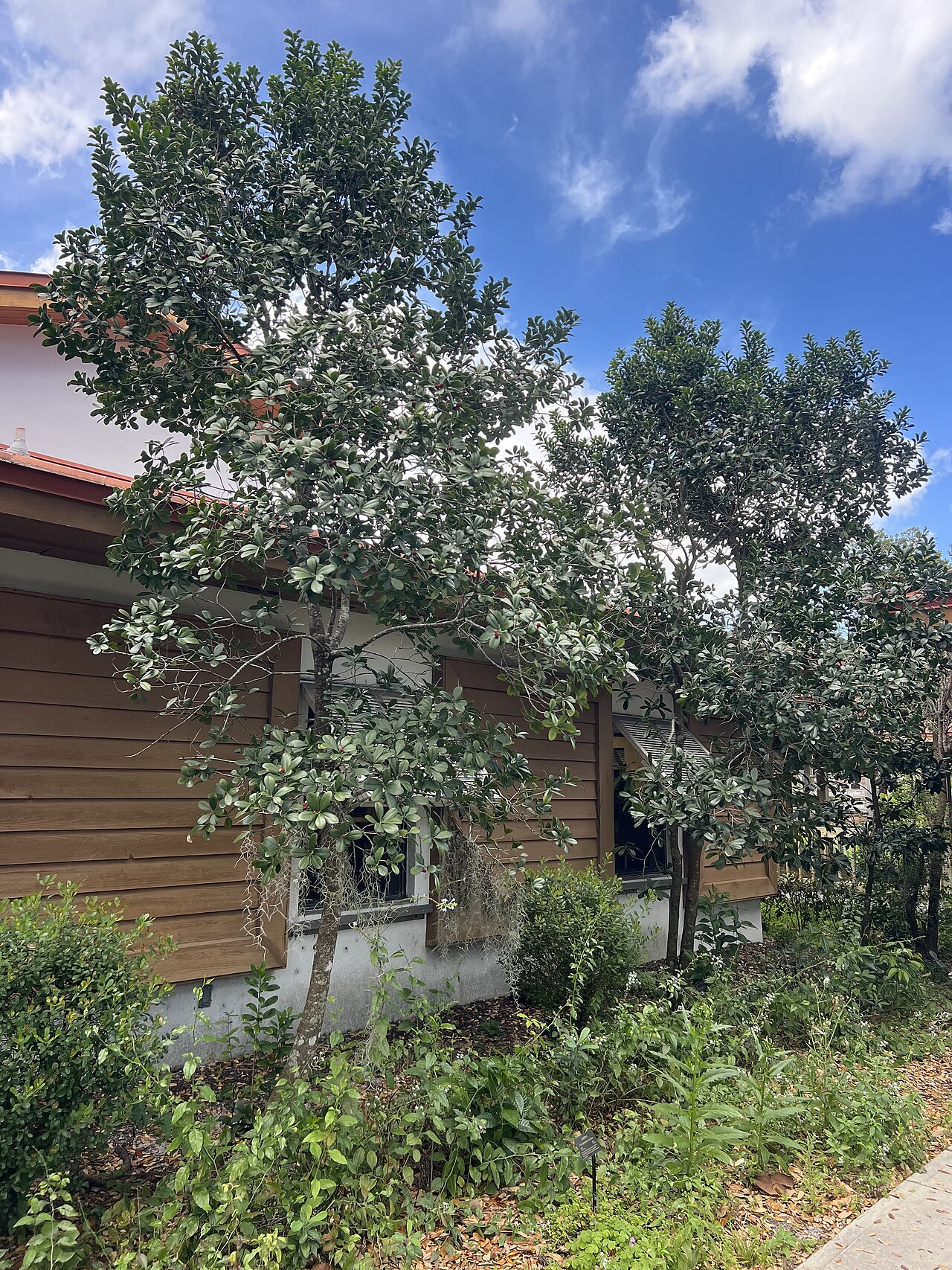
Canella winterana, known as Cinnamon Bark (also called wild cinnamon or pepper cinnamon), is an aromatic evergreen tree native to Florida’s southernmost coastal hammocks and the only Florida representative of the ancient Canellaceae family. Despite the common name, it is not related to true culinary cinnamon, which comes from several species in the unrelated genus Cinnamomum — the resemblance is in scent and historical use, not in botanical relationship.
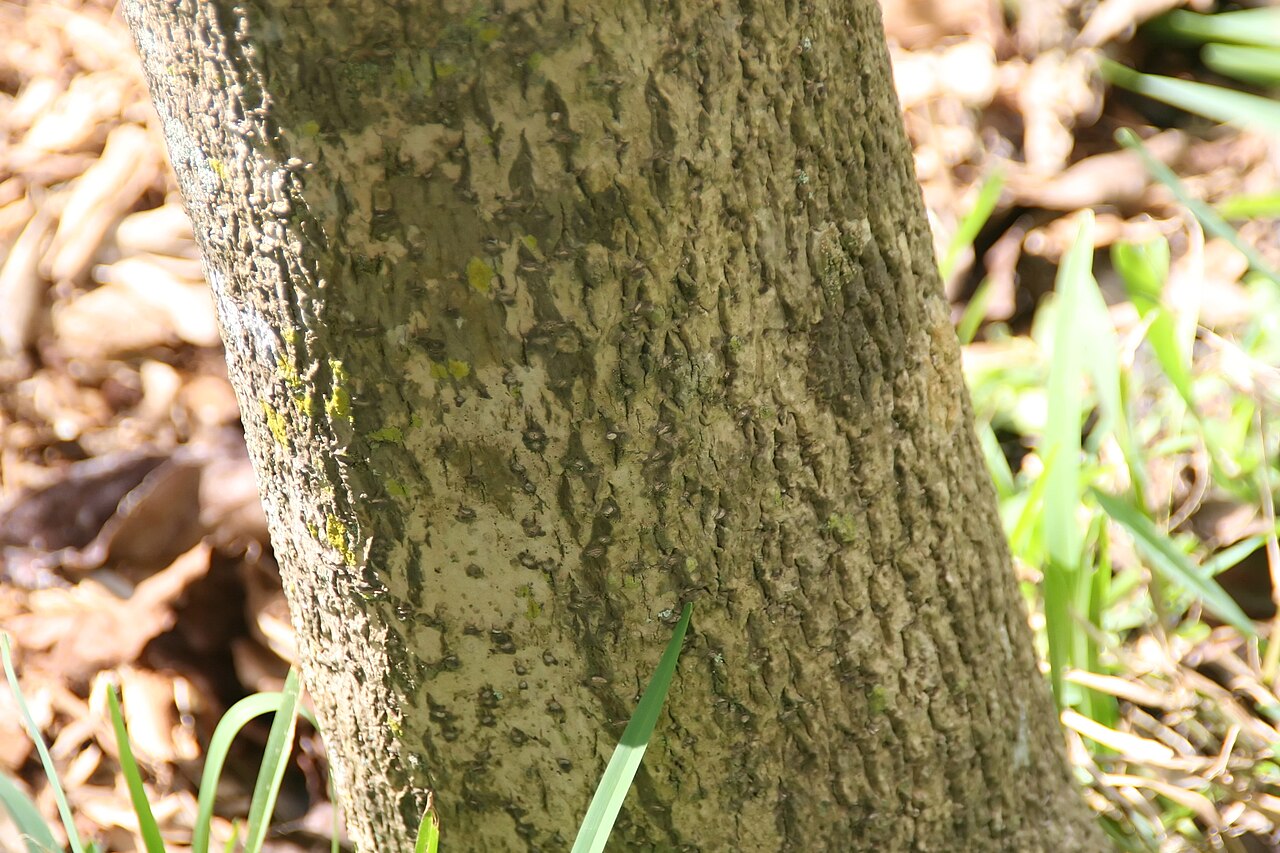
Cinnamon bark typically grows as a dense, rounded shrub or small tree, 15 to 20 feet tall or more, with glossy, bright green, leathery leaves and a distinctive spicy fragrance released by crushed leaves, flowers, and fruit alike. Small, five-petaled red flowers appear nearly year-round, peaking in spring and summer, followed by round green berries that ripen to a striking crimson red and are a favorite of the state’s rarest native butterfly, the Schaus’ swallowtail. Bark is grayish-white, becoming scaly with age, and the fragrant inner bark gives the species its common name.
Cinnamon bark is listed as endangered by the State of Florida, though it remains locally common within the Florida Keys, where much of the state’s best remaining habitat for the species persists. It is a valued, low-maintenance native for South Florida landscapes, prized for its glossy year-round foliage, persistent fruit and flowers, salt tolerance, and fragrance, and is increasingly available from nurseries specializing in Florida native plants.
Identification
Cinnamon bark is best identified by its glossy, bright green, obovate leaves, grayish-white scaly bark, clusters of small red flowers, and round berries that ripen from green to crimson red — combined with the distinctly spicy, cinnamon-like fragrance released when any part of the plant is crushed.
Bark & Stems
Bark is grayish-white and relatively smooth on young stems, becoming scaly as the plant matures; the straight trunk can reach about 10 inches in diameter on older specimens. The aromatic inner bark, historically used as a cinnamon substitute, is the source of the common name — though the outer bark is toxic and should not be ingested.
Leaves
Leaves are simple, obovate, alternately arranged, 3 to 5 inches long, bright green with a shiny upper surface and paler underside, and entire-margined (without teeth). Crushed leaves release a fiery, cinnamon-like fragrance and taste, a reliable identification clue in the field.
Flowers
Small flowers with five bright red petals are borne in dense clusters (corymbs), emerging from purplish buds cupped in green sepals; the fused red stamens with prominent yellow anthers add to the flower’s distinctive look despite its small size. Blooming occurs nearly year-round in South Florida’s climate, peaking in spring and summer, and the flowers are notably attractive to butterflies, especially the endangered Schaus’ swallowtail.
Fruit & Seeds
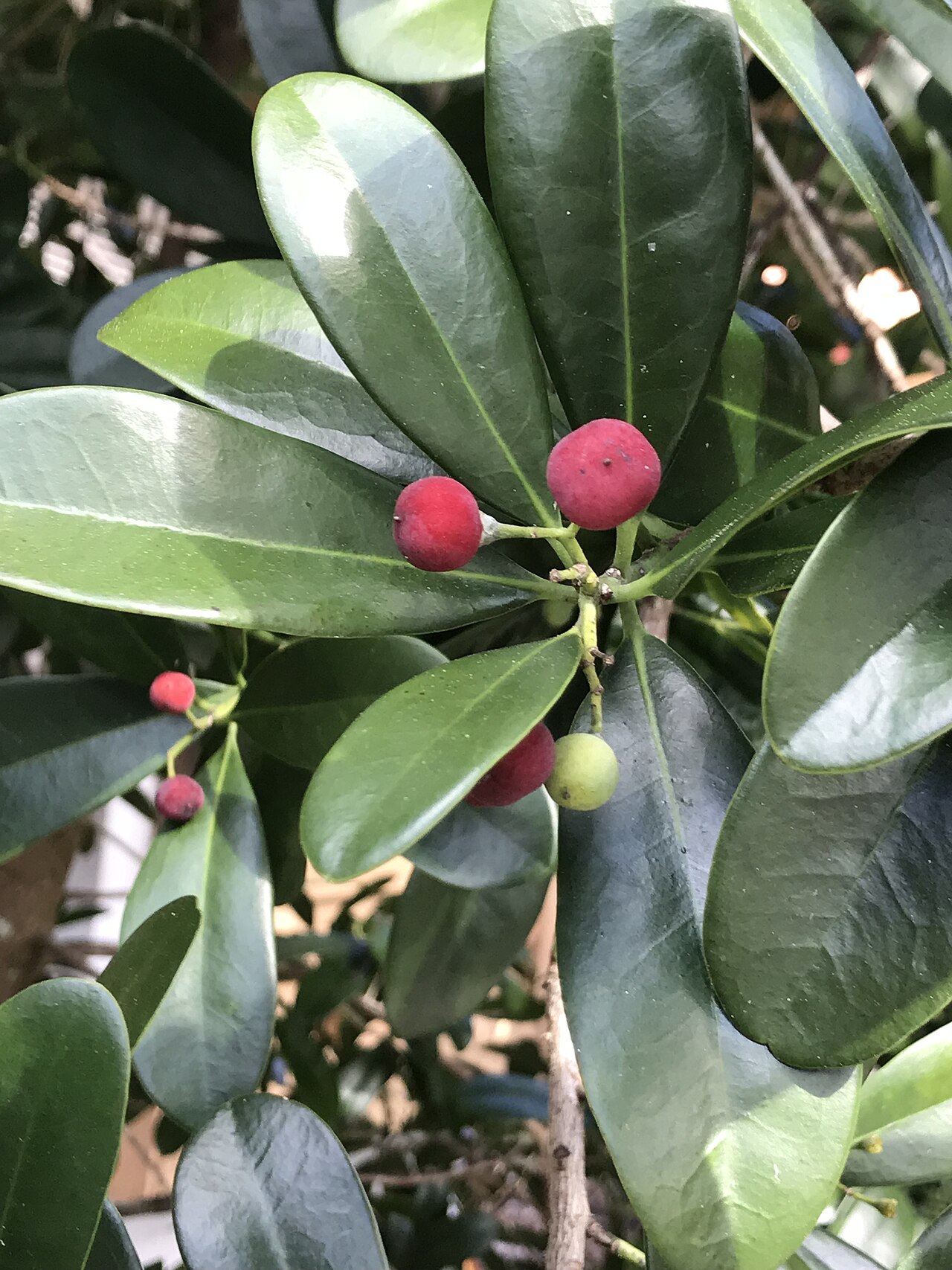
The fruit is a round berry that ripens from green to a glossy, fleshy crimson red, containing black seeds, and persists on the plant for extended periods, adding to its year-round ornamental appeal. Both the fruit and the flowers share the plant’s characteristic spicy fragrance.
Quick Facts
| Scientific Name | Canella winterana |
| Family | Canellaceae (Cinnamon bark) |
| Plant Type | Evergreen shrub or small tree |
| Mature Height | 15–20+ ft |
| Mature Spread | 10–15 ft |
| Growth Rate | Slow |
| Sun Exposure | Full Sun to Light Shade |
| Water Needs | Low to moderate once established |
| Soil Type | Moist to dry, well-drained sandy, loamy or calcareous soils |
| Soil pH | Adaptable; tolerates alkaline conditions |
| Bloom Time | Nearly year-round; peak spring–summer |
| Flower Color | Bright red |
| Fall Color | Evergreen; no fall color |
| Fruit | Round berries ripening green to crimson red |
| Deer Resistant | Yes, generally |
| USDA Hardiness Zones | 10A – 11 |
Native Range
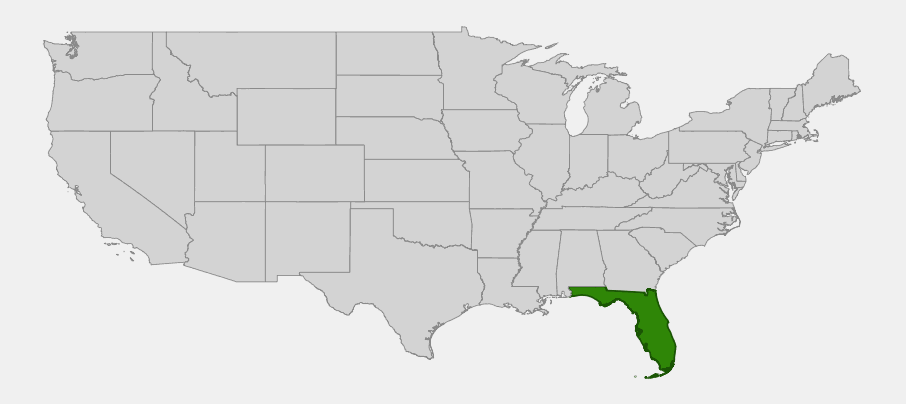
In the United States, cinnamon bark is native only to extreme South Florida, in Monroe, Miami-Dade and Collier counties, found on both the mainland and throughout the Florida Keys. Although it is a state-listed endangered species reflecting its naturally narrow range, it remains locally common within the Keys, where coastal hammock habitat for the species is best preserved.
The species grows in coastal and rockland hammocks, tolerating a range of moisture conditions from moist to fairly dry, well-drained sandy, loamy, or calcareous soils, and showing good salt tolerance for a hammock-interior species. It typically grows in full sun to light shade as a shrub or small tree within the hammock community.
Outside the United States, cinnamon bark is distributed through the West Indies, including Cuba and Guadeloupe, as well as coastal Mexico and the Bay Islands of Honduras, where it occupies similar coastal hammock and scrub habitats.
📋 Regional plant lists featuring Cinnamon Bark: none yet — no plantnative.org regional list currently covers South Florida; see our full native plant directory for other Florida-native species.
Growing & Care Guide
Cinnamon bark is a rewarding, low-maintenance native for South Florida landscapes, offering glossy year-round foliage, fragrant flowers and fruit, and a naturally neat, rounded form that needs little upkeep once established.
Light
It grows well in full sun to light shade, developing a denser, more compact crown in brighter conditions and a slightly more open form in shadier hammock-like settings.
Soil & Water
Cinnamon bark tolerates a wide range of well-drained soils, from moist to fairly dry, including the sandy, loamy, and calcareous soils common throughout South Florida. It is salt tolerant and, once established, is considered reasonably drought tolerant as well, needing only occasional supplemental water during extended dry spells.
Planting Tips
Choose a well-drained site; like many hammock natives, cinnamon bark does not tolerate standing water. As a slow-growing species, young plants benefit from consistent watering during their first year or two to establish a strong root system.
Pruning & Maintenance
Cinnamon bark is generally pest- and maintenance-free, requiring little more than occasional removal of dead wood. Its naturally dense, rounded growth habit means it rarely needs shaping, though it also tolerates light pruning well if a more formal hedge form is desired.
Landscape Uses
Dense, glossy, fragrant foliage along with persistent flowers and fruit make cinnamon bark a versatile choice in South Florida gardens:
- Specimen plant for year-round color, fragrance and wildlife interest
- Hedge or buffer planting thanks to its dense evergreen form
- Butterfly and wildlife gardens, especially valuable for the rare Schaus’ swallowtail
- Coastal landscapes where salt tolerance is needed
Wildlife & Ecological Value
Cinnamon bark is an especially valuable wildlife plant in South Florida, supporting pollinators, birds, and one of the state’s rarest and most celebrated native butterflies.
For Birds
Birds feed on the persistent crimson fruit and find cover within the plant’s dense evergreen foliage, making cinnamon bark a useful addition to wildlife-friendly South Florida landscapes.
For Mammals
Small mammals native to coastal hammock habitat occasionally take advantage of fallen fruit, though birds and insects are the primary wildlife beneficiaries of this species.
For Pollinators
The nearly year-round red flowers are a significant nectar source for butterflies, most notably the federally endangered Schaus’ swallowtail, a rare Florida Keys butterfly that depends on South Florida hammock plants including cinnamon bark.
Ecosystem Role
As a long-blooming, fruit-bearing hammock species, cinnamon bark provides a near-continuous food resource within South Florida’s coastal and rockland hammocks, helping support pollinator and bird activity through much of the year. Its relative local abundance in the Keys, even as a state-listed endangered species, makes it an important nectar and fruit source within those remaining hammock fragments.
Cultural & Historical Uses
Cinnamon bark’s fragrant inner bark was historically used in parts of its range as a substitute for true cinnamon and as a pungent spice in its own right, a practice reflected in both its common name and the Spanish and French common names used elsewhere in its Caribbean range. The outer bark, however, is toxic and should never be ingested; historical spice use referred specifically to the aromatic inner bark prepared by those with direct traditional knowledge of the plant, not a general foraging recommendation.
Beyond its historical use as a flavoring, cinnamon bark has long been noted by botanists as a distinctive and ancient lineage, being the only Florida representative of the primitive plant family Canellaceae — a group whose other members are found mainly in the tropics of Africa and Madagascar as well as the Americas, underscoring the species’ deep evolutionary history.
In recent decades, South Florida native-plant nurseries and conservation groups have promoted cinnamon bark as an attractive, low-maintenance landscape plant with strong wildlife value, helping make nursery-propagated stock increasingly available to home gardeners who want to support pollinators, including the rare Schaus’ swallowtail, in their own yards.
Frequently Asked Questions
Is cinnamon bark related to the cinnamon spice I use in the kitchen?
No. Despite the common name and its spicy, cinnamon-like fragrance, Canella winterana is not related to true culinary cinnamon, which comes from species in the genus Cinnamomum. The resemblance is in scent and historical use, not botanical relationship.
Is cinnamon bark safe to eat or use as a spice?
No. While the aromatic inner bark has a documented history of traditional spice use in parts of its range, the outer bark is toxic, and this page does not recommend ingesting any part of the plant. Treat it as an ornamental and wildlife plant, not a food or medicinal source.
Is cinnamon bark endangered?
The State of Florida lists cinnamon bark as an endangered species, reflecting its naturally narrow range confined to Florida’s three southernmost counties, though it remains locally common within the Florida Keys specifically.
What wildlife does cinnamon bark support?
Its nearly year-round red flowers are an important nectar source for butterflies, especially the rare, federally endangered Schaus’ swallowtail, while birds eat its persistent red fruit and shelter in its dense foliage.
How big does cinnamon bark get, and how fast does it grow?
It is a slow-growing species that typically reaches 15 to 20 feet or more at maturity, forming a dense, rounded, long-lived crown over many years rather than quickly.

Looking for a nursery that carries Cinnamon Bark?
Browse our native plant nursery directory: Florida
For other South Florida hammock associates, see our pages on Gumbo Limbo and Lignum Vitae.

