
Coast Cholla (Cylindropuntia prolifera)
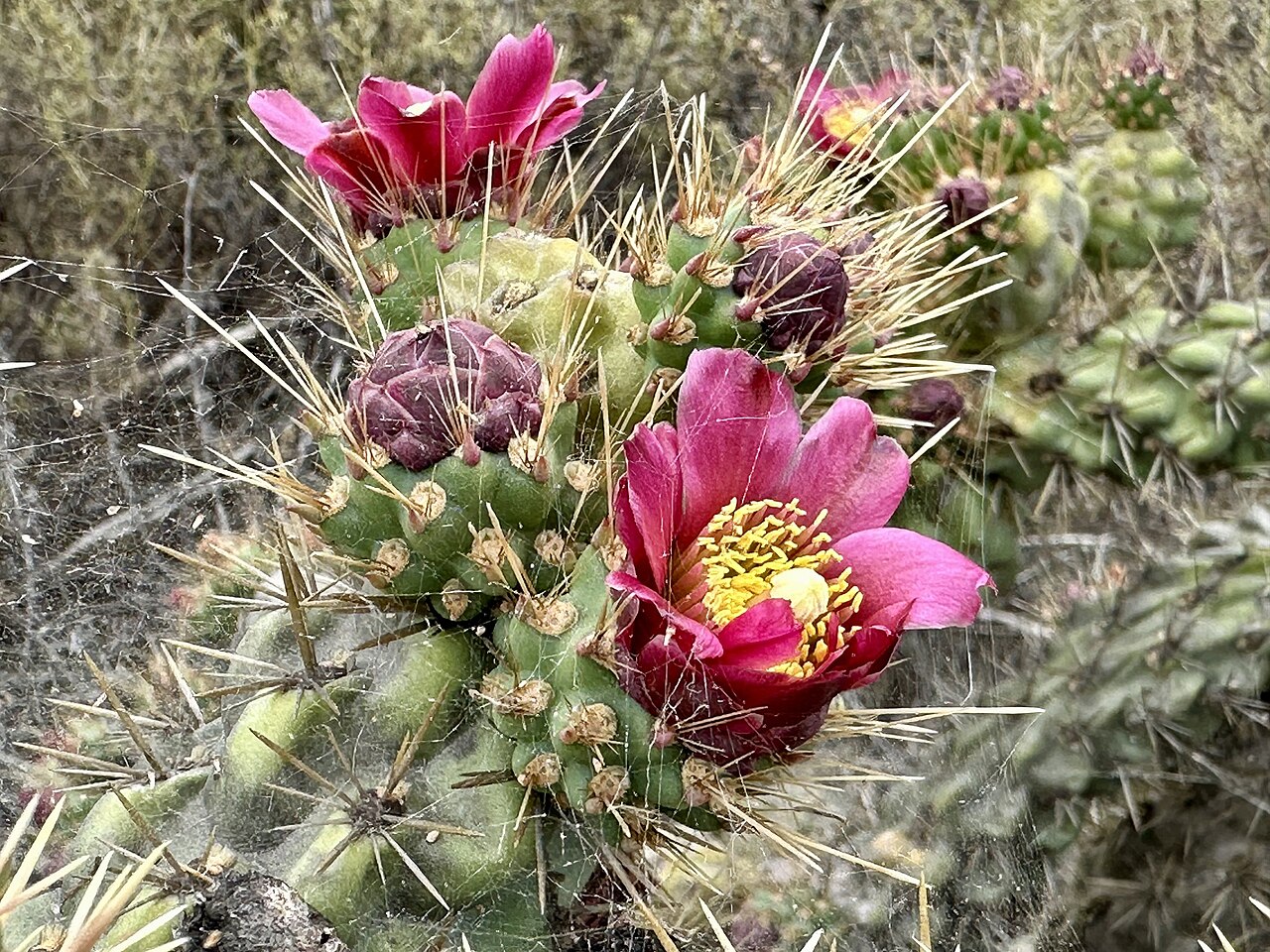
Cylindropuntia prolifera (formerly Opuntia prolifera), known as Coast Cholla (also coastal cholla or jumping cholla), is a shrubby cactus of the coastal bluffs, mesas and hillsides of southern California and Baja California. It forms dense, spiny thickets of branching, jointed stems, and in spring it opens rose-magenta flowers among its knobby, yellow-spined segments.
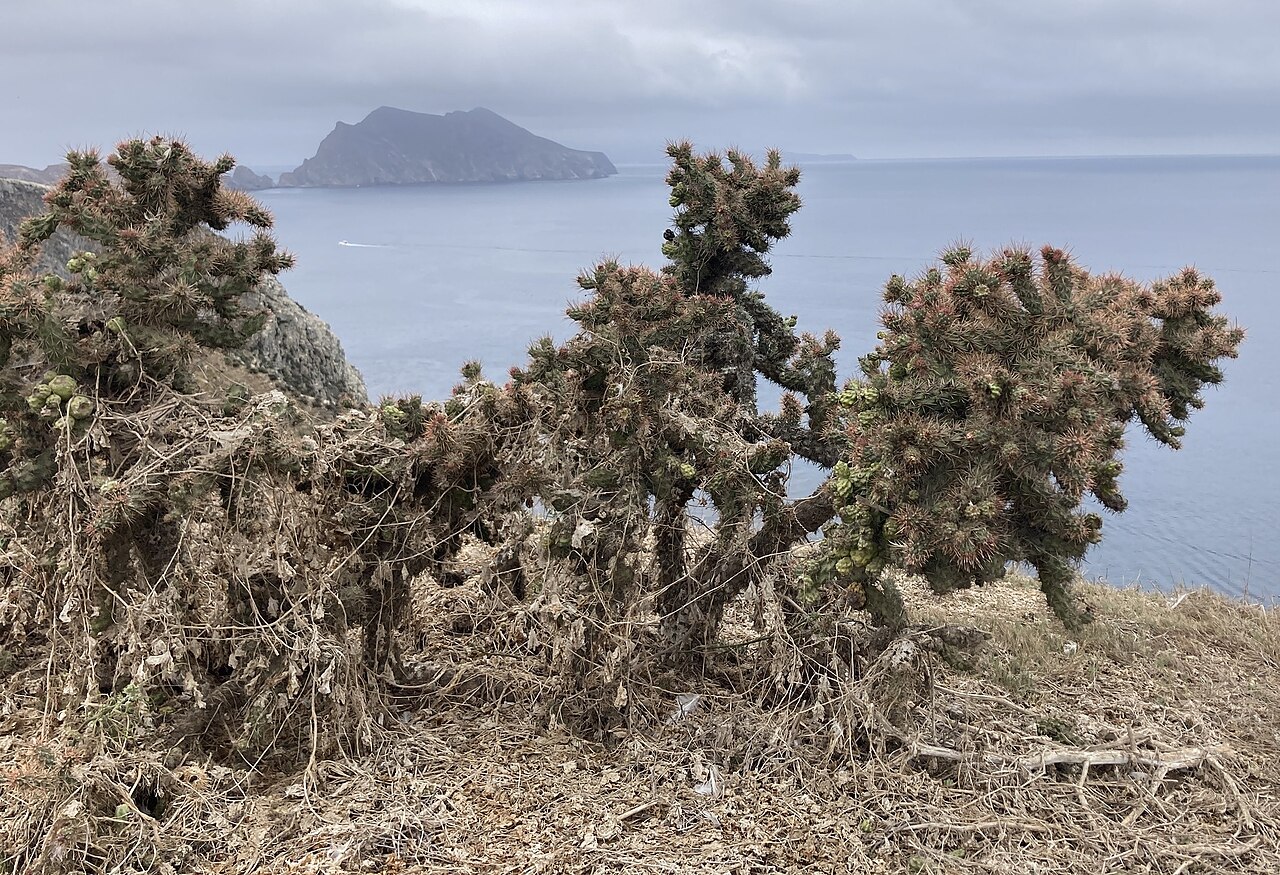
It usually grows 3 to 6 feet tall and spreads into clumps many feet wide. Its stem joints break off at a touch, which is how it spreads: fallen joints root where they land. Its green fruits often sprout new fruits from their tops, forming short chains, the source of the name prolifera. The fruits seldom contain good seed, so most new plants grow from fallen joints and fruits.
Coast cholla is a key plant of coastal sage scrub and an important nesting plant for the coastal cactus wren. It suits large, dry, frost-free coastal gardens, habitat plantings and barrier hedges, but its barbed spines are painful and hard to remove. Plant it well away from paths, play areas and places pets roam.
Identification
Look for a branching, shrubby cholla 3 to 6 feet tall on coastal bluffs and hillsides near the ocean, with short, plump, bumpy stem joints covered in yellowish to reddish-brown spines, magenta flowers in spring, and green, mostly spineless fruits that often grow in chains.
Stems & Habit
Coast cholla is a much-branched, shrubby cactus usually 3 to 6 feet (1 to 2 m) tall, sometimes taller, often forming dense thickets. The stems are made of cylindrical joints 2 to 6 inches long and about 1 to 2 inches thick, covered with prominent, rounded bumps (tubercles). The terminal joints detach very easily.
Spines
Each tubercle bears a cluster of 6 to 12 stiff spines up to about 1 inch long. Young spines are yellowish to reddish-brown and are covered by thin, papery sheaths; they age to gray. Small barbed bristles (glochids) are also present. The spines have backward-pointing barbs, so they hook into skin and clothing.
Flowers
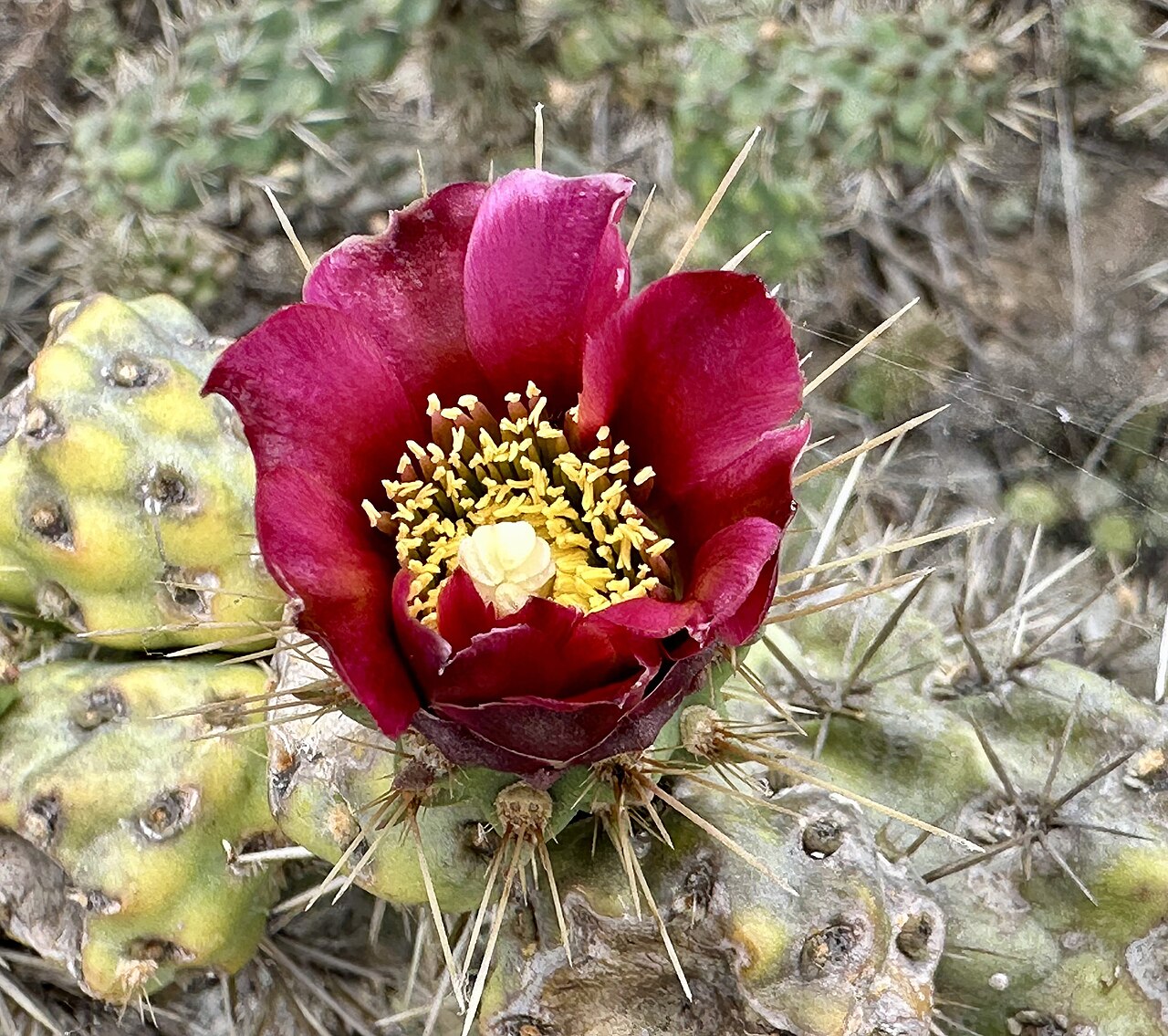
The flowers are about 1 to 1 1/2 inches (2.5 to 4 cm) across and rose-magenta to purplish red, with a cluster of yellow-green stamens and a pale stigma. They open at the tips of the joints, mainly from April to June.
Fruit
The fruits are green, egg-shaped to pear-shaped, about 1 to 1 1/2 inches long, with few or no spines. They often stay on the plant and produce new flowers or fruits from their tops, forming short chains. They usually contain few or no viable seeds.
Look-alikes
Other chollas of southern California, such as Teddy Bear Cholla and California Cholla (C. californica), differ in habitat and details: teddy bear cholla is a desert plant with dense, silvery-golden spines, and California cholla is a low, open plant with yellowish to bronze flowers. Coastal Prickly Pear grows in the same habitat but has flat pads instead of cylindrical joints.
Quick Facts
| Scientific Name | Cylindropuntia prolifera (syn. Opuntia prolifera) |
| Family | Cactaceae (cactus family) |
| Plant Type | Shrubby, jointed cholla cactus |
| Mature Height | 3–6 ft |
| Mature Spread | 3–10 ft; forms thickets |
| Growth Rate | Moderate |
| Sun Exposure | Full sun |
| Water Needs | Very low; drought tolerant |
| Soil Type | Well-drained sandy, rocky or clay-loam coastal soils |
| Soil pH | About 6.5–8.0 |
| Bloom Time | April–June |
| Flower Color | Rose-magenta to purplish red |
| Fall Color | None; evergreen stems |
| Fruit | Green, mostly spineless fruits, often in chains |
| Deer Resistant | Yes |
| USDA Hardiness Zones | 9–11 |
Native Range
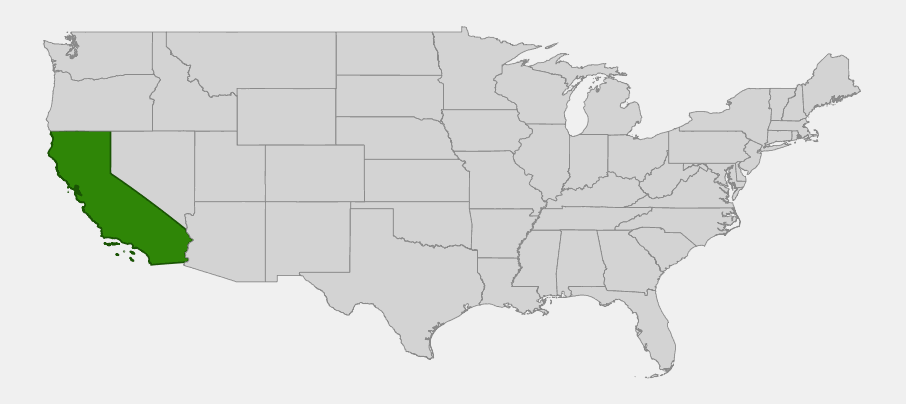
Coast cholla is native to coastal southern California and Baja California, Mexico. USDA PLANTS lists it as native only in California within the United States.
In California it grows mainly near the coast, from Los Angeles County south through Orange and San Diego counties, and on several of the Channel Islands. It continues south along the Pacific coast of Baja California. It is a plant of the maritime zone, where marine fog moderates summer heat and winters are mild and nearly frost-free.
It grows on coastal bluffs, mesas, terraces, canyon slopes and hillsides in coastal sage scrub and maritime succulent scrub, usually on dry, sunny slopes within a few miles of the ocean. Much of its habitat has been lost to development, and the remaining stands are valuable wildlife habitat.
📋 Regional plant lists featuring Coast Cholla: California & Nevada
Growing & Care Guide
Coast cholla is very easy to grow in mild, dry coastal gardens. It needs no water once established and roots readily from cuttings. The challenge is handling it safely and siting it where its spines will not be a hazard.
Light
Full sun. In shade it becomes weak and sprawling.
Soil & Water
Any well-drained soil works, from sand to rocky clay-loam. Water a new cutting lightly every few weeks until it roots; after that, rainfall is enough near the coast. Summer water in heavy soil can cause rot. It tolerates salt spray and wind.
Planting Tips
Plant in spring or fall. Use thick leather gloves, tongs or folded newspaper to handle it. Set it at least several feet from paths, patios and play areas, because joints drop and spread. It is hardy only in mild, nearly frost-free climates, roughly zones 9 to 11.
Pruning & Maintenance
Little care is needed. Remove fallen joints with tongs if you do not want the patch to spread. To remove spines from skin, use a comb to lift off whole joints, then tweezers; glue or tape can help remove fine glochids.
Propagation
Root a fallen or cut joint by letting the cut end dry and callus for a week, then setting it upright in dry, sandy soil. Most joints root within weeks. Seed is rarely viable. Take cuttings only from garden plants or with permission; never strip wild stands.
Landscape Uses
- Coastal habitat gardens: structure and nesting cover for cactus wrens
- Barrier plantings: a spiny, nearly impenetrable hedge
- Coastal sage scrub restoration: a key native cactus for restoration
- Dry, frost-free succulent gardens: sculptural form with no irrigation
- Fire-wise slopes: succulent stems burn less readily than dry shrubs
Wildlife & Ecological Value
Coast cholla is far more than a spiny nuisance: it is one of the most important wildlife plants of coastal sage scrub.
For Pollinators
The magenta flowers are visited by native bees, including specialist cactus bees, and by beetles that feed on the pollen.
For Birds
The coastal cactus wren, a declining bird of southern California that is a state Species of Special Concern, depends on dense patches of coast cholla and prickly pear for nesting. Its football-shaped nests are tucked among the spiny stems, where predators cannot reach them. Other birds, such as California towhees and California thrashers, also shelter in the thickets.
For Mammals
Woodrats (packrats) use the joints to armor their stick nests, and the thickets shelter small mammals and lizards. Few mammals eat the plant.
Ecosystem Role
By spreading from fallen joints, coast cholla forms thickets that provide protected nesting and resting sites in otherwise open scrub. Conserving and restoring stands of coast cholla and prickly pear is a central part of efforts to protect the coastal cactus wren.
Cultural & Historical Uses
The species name prolifera means “producing offshoots,” referring to the way its fruits sprout new fruits and its joints break off and grow into new plants. The genus name Cylindropuntia means “cylindrical Opuntia,” because chollas were once grouped with the flat-padded prickly pears in Opuntia.
Like other chollas, it is sometimes called “jumping cholla” because its joints detach so easily that they seem to jump onto passersby. In reality, the barbed spines hook onto skin or clothing at the slightest touch, and the joint comes away with them.
Because coast cholla rarely makes good seed, many stands may be clones built up from fallen joints over long periods. On this site, related species include California Cholla, Teddy Bear Cholla and Coastal Prickly Pear.
Frequently Asked Questions
Where does coast cholla grow?
It grows along the coast of southern California, mainly from Los Angeles County to San Diego County and on several Channel Islands, and south into Baja California, on bluffs and hillsides in coastal sage scrub.
Does coast cholla really jump?
No, but the joints detach so easily that they seem to. The barbed spines catch on skin and clothing at the slightest touch. Remove them with a comb and tweezers.
How do I grow coast cholla?
Let a fallen joint dry for about a week, then set it in dry, well-drained soil in full sun. It roots quickly and needs no water once established near the coast. It is not frost hardy.
Why is coast cholla important for wildlife?
Its dense, spiny thickets are prime nesting habitat for the coastal cactus wren, a declining southern California bird, and shelter many other birds, woodrats and lizards.
Does coast cholla produce seeds?
Rarely. Its fruits often lack good seed, and it spreads mainly by fallen joints and fruits that root where they land.

Looking for a nursery that carries Coast Cholla?
Browse our native plant nursery directory: California