
Pale Indian Plantain (Arnoglossum atriplicifolium)
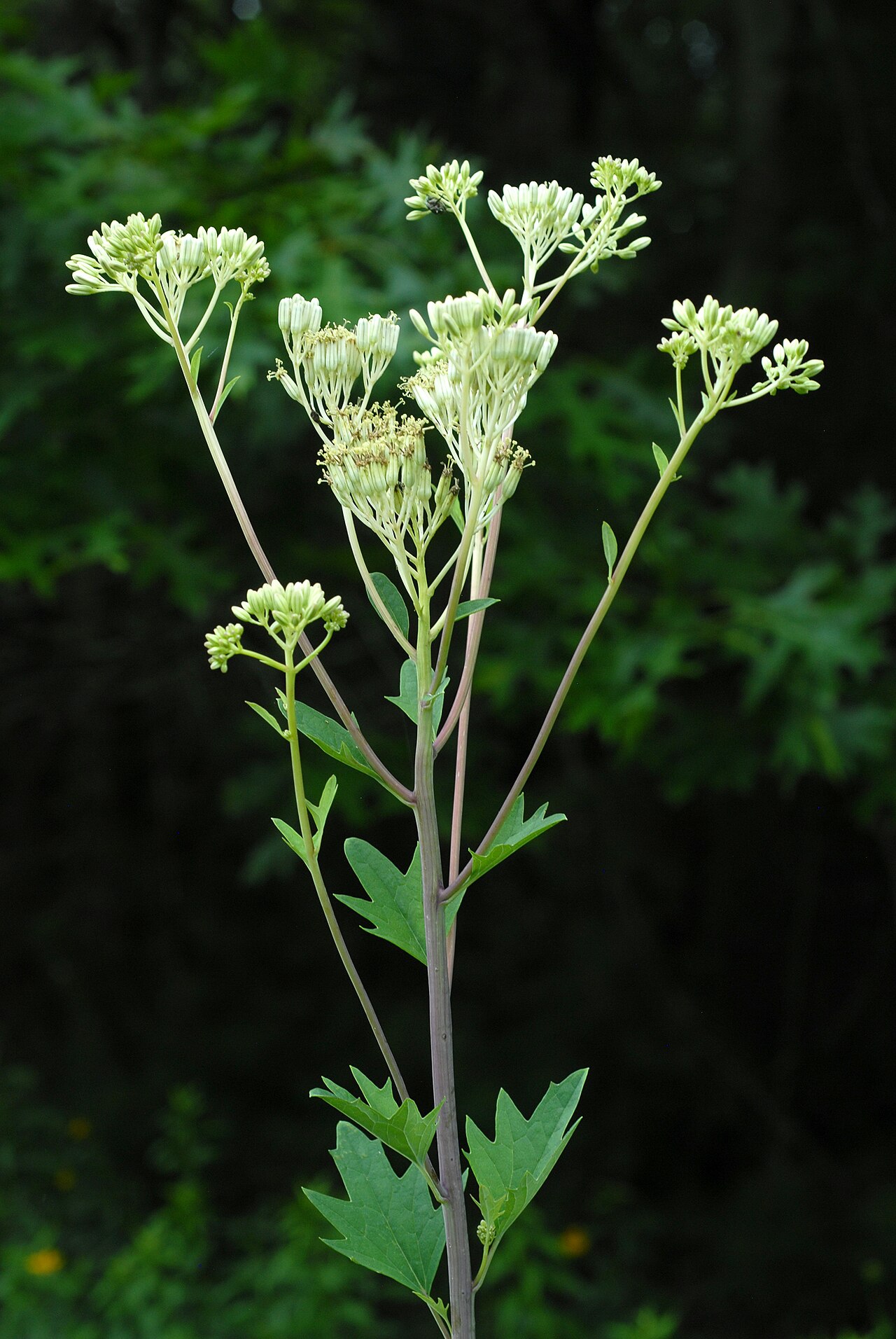
Arnoglossum atriplicifolium, known as Pale Indian Plantain, is a tall, striking perennial in the aster family (Asteraceae). It grows 3 to 8 feet tall on smooth, waxy, often purplish stems and carries large, coarsely lobed leaves that are pale and whitish beneath. In mid to late summer, it is topped by broad, flat clusters of small, creamy white flower heads. It was long known as Cacalia atriplicifolia, a name still used in older books.
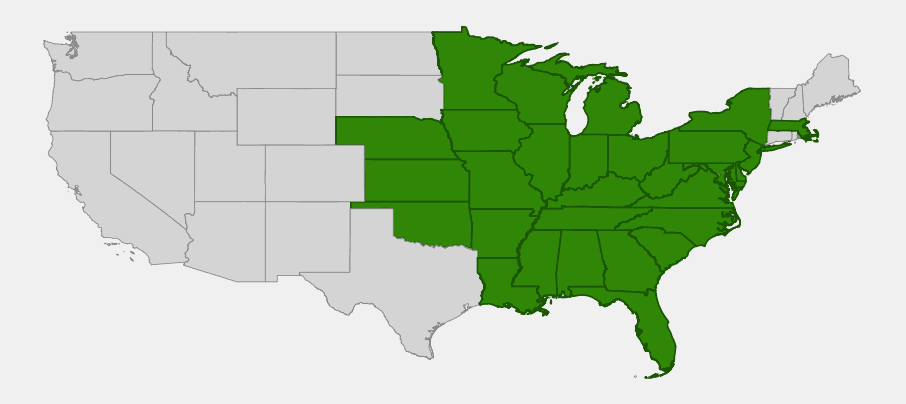
Despite its common name, it is not related to true plantains (Plantago). It grows in open woods, woodland edges, thickets, savannas, prairie edges and river floodplains across much of the eastern and central United States, from New York and southern Michigan to Minnesota and Nebraska and south to Florida and Louisiana.
In gardens, pale Indian plantain is an architectural plant for the back of a border, a woodland edge or a large prairie planting. Its bold, blue-green foliage and airy white flower clusters contrast well with coarse prairie plants, and its flowers draw a wide range of small bees, wasps, flies and beetles.
Identification
Look for a very tall, smooth plant with a whitish, waxy bloom on the stem, big fan-shaped leaves with pointed lobes and pale undersides, and flat-topped clusters of narrow, creamy white flower heads.
Growth Habit
It grows as one or a few unbranched stems from a short, thick rootstock, branching only in the flower cluster. Stems are round, smooth and covered with a whitish, waxy bloom that rubs off. They are often purplish or reddish, especially near the base. Mature plants are usually 3 to 8 feet tall.
Leaves
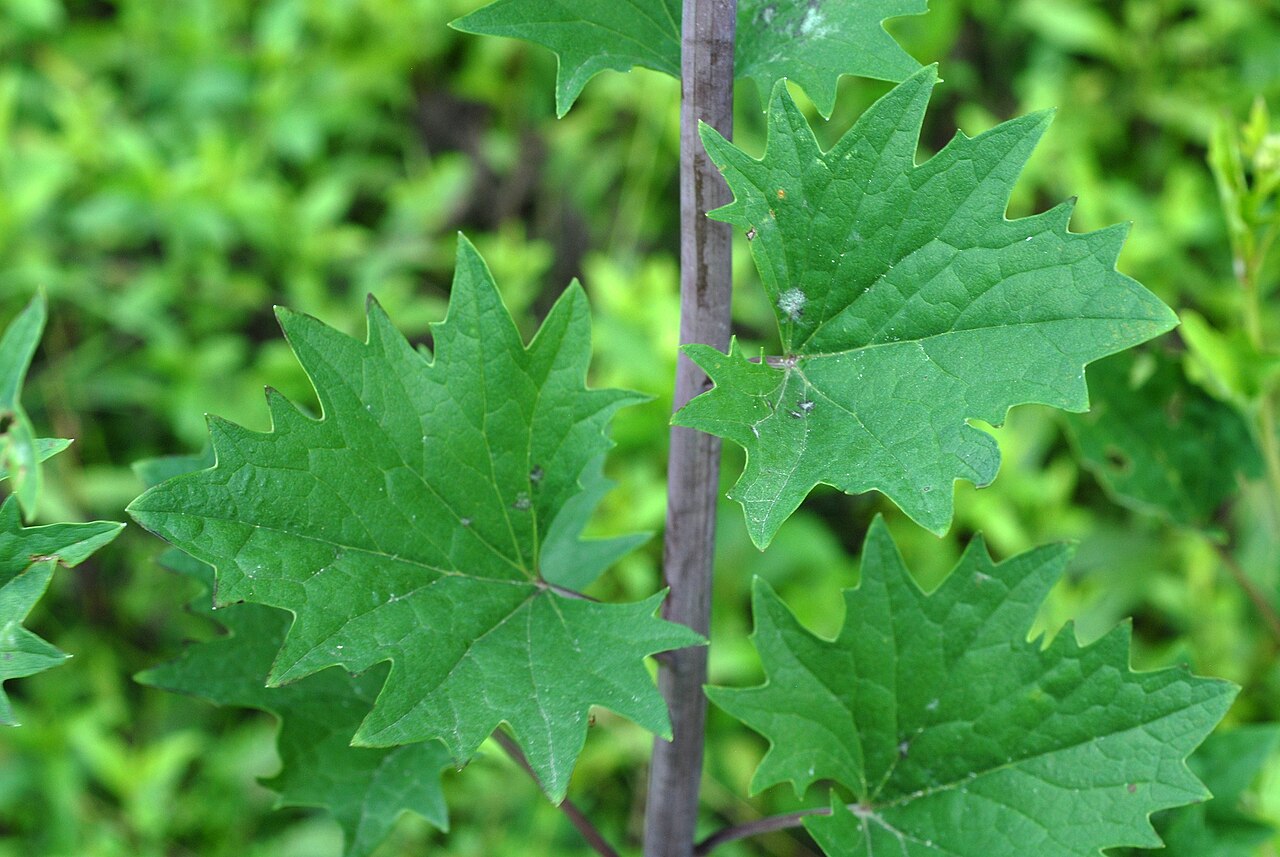
The lower leaves are large, up to about 8 inches long and wide, broadly triangular to fan- or kidney-shaped, with several large, pointed lobes and coarse teeth, on long stalks. Upper leaves become smaller and less lobed. The upper surface is medium to blue-green and the underside is pale and whitish with a waxy coating, which gives the plant its common name. The species name atriplicifolium means “with leaves like Atriplex” (orache or saltbush).
Flowers
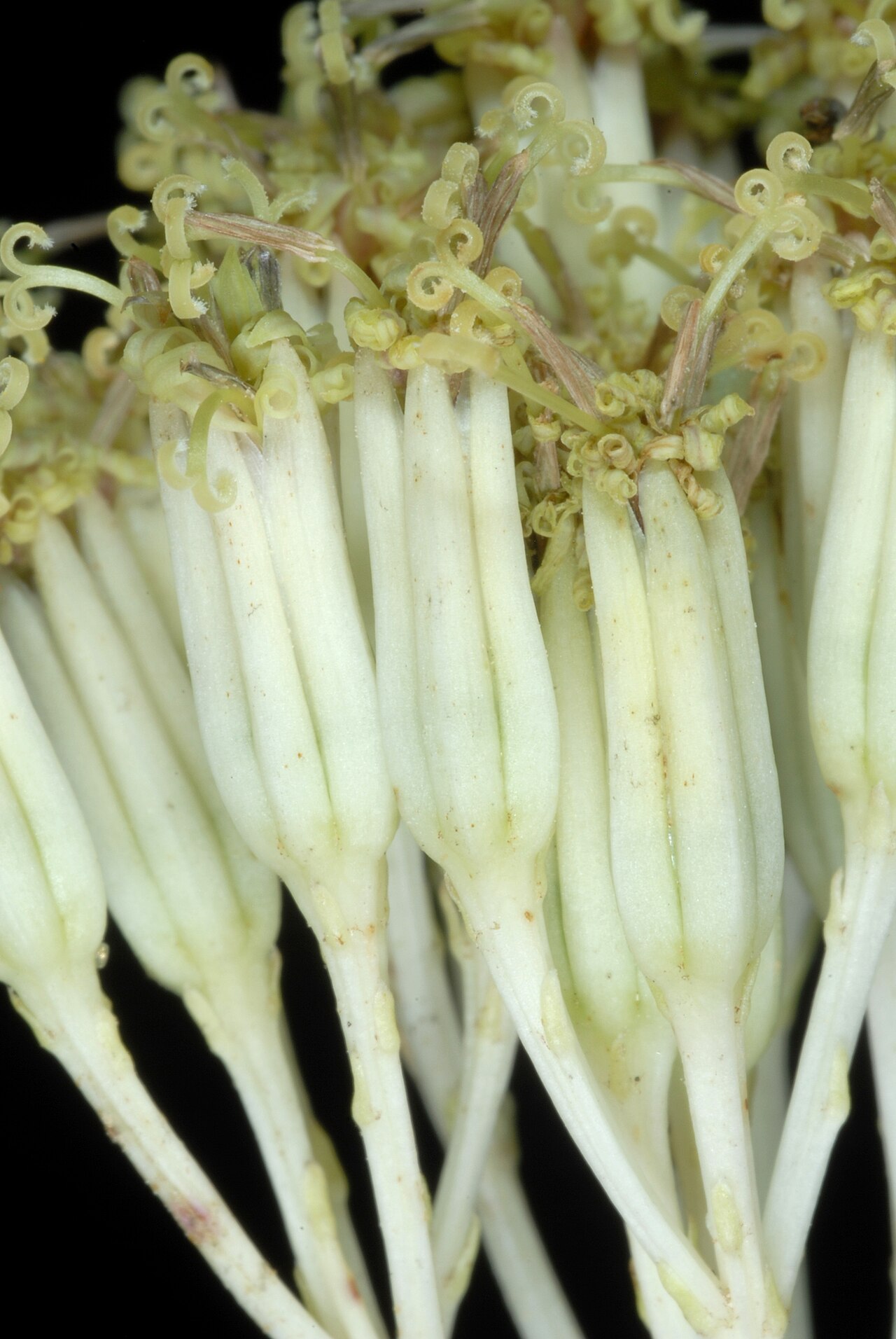
The flowers are in flat-topped or slightly rounded clusters (corymbs) up to about a foot across at the top of the stem. Each narrow flower head is about 1/3 to 1/2 inch long and has five tubular, creamy white to greenish-white florets surrounded by five pale bracts. There are no ray petals. Flowering is from about July to September.
Fruit & Seeds
The seeds (achenes) are small, dark and ribbed, each topped with a tuft of soft white bristles that carries it on the wind in fall.
Look-alikes
Great Indian plantain (Arnoglossum reniforme) has a grooved, green stem without a waxy bloom and green leaf undersides. Groovestem Indian plantain (Arnoglossum plantagineum) is a prairie species with thick, oval, unlobed leaves with parallel veins. Young plants can resemble cup plant or other coarse prairie forbs, but no other common eastern plant combines the waxy, lobed leaves with white, rayless flower heads.
Quick Facts
| Scientific Name | Arnoglossum atriplicifolium (syn. Cacalia atriplicifolia) |
| Family | Asteraceae (aster family) |
| Plant Type | Tall herbaceous perennial wildflower |
| Mature Height | 3–8 ft |
| Mature Spread | 1–3 ft |
| Growth Rate | Moderate |
| Sun Exposure | Full sun to part shade |
| Water Needs | Medium; tolerates both moist and fairly dry soil |
| Soil Type | Loam, sandy loam or clay loam |
| Soil pH | Slightly acidic to neutral (about 5.5–7.5) |
| Bloom Time | Midsummer to early fall (July–September) |
| Flower Color | Creamy white to greenish white |
| Fall Color | None notable |
| Fruit | Small achenes with white bristles, wind-dispersed |
| Deer Resistant | Moderately; bitter foliage is seldom browsed |
| USDA Hardiness Zones | 4–8 |
Native Range
Pale Indian plantain is native to the eastern and central United States. USDA PLANTS records it from 29 states, from New York, New Jersey and Massachusetts west through Pennsylvania, Ohio, Michigan, Wisconsin and Minnesota to Iowa, Nebraska and Kansas, and south to Oklahoma, Louisiana, Mississippi, Alabama, Georgia and northern Florida.
It is most common in the Ohio and Mississippi River valleys, the Ozarks, the Appalachians and the Piedmont. It becomes scarce toward the edges of its range, including southeastern Minnesota, eastern Nebraska and Kansas, and the Northeast, where records are few. The Massachusetts record lies at the far northeastern edge of its range. It is not known from Canada.
Typical habitats are open, dry to moist woods, woodland edges and openings, oak savannas and barrens, thickets, prairie margins, river floodplains and road banks. It often grows on rocky or limestone slopes and in the partial shade of open woods, where it competes with tall prairie and woodland-edge plants.
📋 Regional plant lists featuring Pale Indian Plantain: New York, Pennsylvania & Northern New Jersey · Ohio & Indiana · Michigan, Wisconsin & Eastern Minnesota · Kentucky & Tennessee · Nebraska, Kansas & Eastern Colorado · Connecticut, Massachusetts & Rhode Island · New Hampshire, Maine & Vermont · Maryland, Virginia & West Virginia · Delaware, Southern New Jersey & Long Island · Illinois, Iowa & Missouri · Alabama, Georgia & Mississippi · North & South Florida · North & South Carolina · Arkansas, Louisiana, Eastern Oklahoma & Eastern Texas
Growing & Care Guide
Pale Indian plantain is easy to grow in average garden soil in sun or light shade. It is sold by many native plant nurseries and seed companies in the Midwest and East.
Light
Full sun to part shade. It flowers best with at least half a day of sun, but tolerates the dappled light of a woodland edge. In deep shade it becomes floppy and blooms poorly.
Soil & Water
It grows in loam, sandy loam, clay loam and rocky soil, and tolerates both moist and fairly dry sites once established. Water young plants during dry spells in their first season; afterwards the thick roots carry it through normal summer droughts. Very rich, wet soil can make the tall stems lean.
Planting Tips
Plant container plants in spring or fall, 2 to 3 feet apart. Its height and bold leaves suit the back of a border, the edge of a woodland, a rain garden margin or a large prairie or meadow planting. Pair it with goldenrods, asters, sunflowers and Joe-Pye weeds for a late-summer display.
Pruning & Maintenance
Little care is needed. Leave the stems standing over winter for seed-eating birds and overwintering insects, and cut them down in spring. Taller plants in rich soil may need neighbors to lean on. It self-sows modestly.
Propagation
Grow from seed. Sow outdoors in fall, or give seed about 60 days of cold, moist stratification before spring sowing. Seedlings take two or three years to reach full flowering size. Established clumps are hard to divide because of the thick roots.
Landscape Uses
- Back of the border: a bold, tall accent with blue-green foliage
- Woodland edges: tolerates partial shade along trees and shrubs
- Prairie and meadow plantings: vertical structure and late-summer flowers
- Pollinator gardens: abundant small flowers for bees, wasps, flies and beetles
- Cut flowers: flat white clusters add texture to arrangements
Wildlife & Ecological Value
Pale Indian plantain is a valuable late-summer resource for many small pollinators and insects.
For Pollinators
The many small flower heads are visited by a wide variety of insects, including small native bees, honey bees, wasps, flies and beetles. Butterflies visit occasionally.
For Birds
Small seed-eating birds occasionally eat the seeds in fall. The tall stems and nearby vegetation also give birds perches and insect food.
For Mammals
The bitter foliage is usually avoided by deer and rabbits, so it tends to persist in browsed woodland edges.
Ecosystem Role
Its leaves and stems feed the caterpillars of several native moths. Standing dead stems provide overwintering sites for insects, and its waxy leaves are a distinctive part of the woodland-edge and savanna plant community.
Cultural & Historical Uses
The genus name Arnoglossum comes from Greek words meaning “lamb’s tongue,” an old name for plantain, referring to the leaves of some species. The common name “Indian plantain” was used by early settlers for several of these plants because of their broad leaves and reported Indigenous medicinal uses.
According to ethnobotanical records, the Cherokee and other Indigenous peoples used pale Indian plantain as a poultice for cuts, bruises and cancers, and to draw out poisons. It should not be used as a home remedy; some related plants contain pyrrolizidine alkaloids that can damage the liver.
For most of the twentieth century the species was known as Cacalia atriplicifolia. Botanists later moved the North American species to Arnoglossum, a name first published by the early American naturalist Constantine Rafinesque.
Frequently Asked Questions
Is pale Indian plantain a true plantain?
No. It is in the aster family. The common name refers to its broad leaves and old medicinal uses, not a relation to Plantago.
How tall does pale Indian plantain grow?
Usually 3 to 8 feet tall, depending on soil and moisture.
Does pale Indian plantain grow in shade?
It tolerates part shade, such as a woodland edge, but blooms best with at least half a day of sun.
Is it deer resistant?
Fairly. The bitter, waxy foliage is seldom eaten by deer or rabbits.
What is the old name for pale Indian plantain?
It was long called Cacalia atriplicifolia, and you will still see that name in older field guides.

Looking for a nursery that carries Pale Indian Plantain?
Browse our native plant nursery directory: Alabama & Arkansas · Delaware, Florida & Georgia · Illinois, Indiana, Iowa & Kansas · Kentucky, Louisiana, Maryland, Massachusetts, Michigan, Minnesota, Mississippi & Missouri · Nebraska, New Jersey, New York, North Carolina, Ohio & Oklahoma · Pennsylvania, South Carolina, Tennessee & Virginia · West Virginia & Wisconsin