
Coyote Melon (Cucurbita palmata)
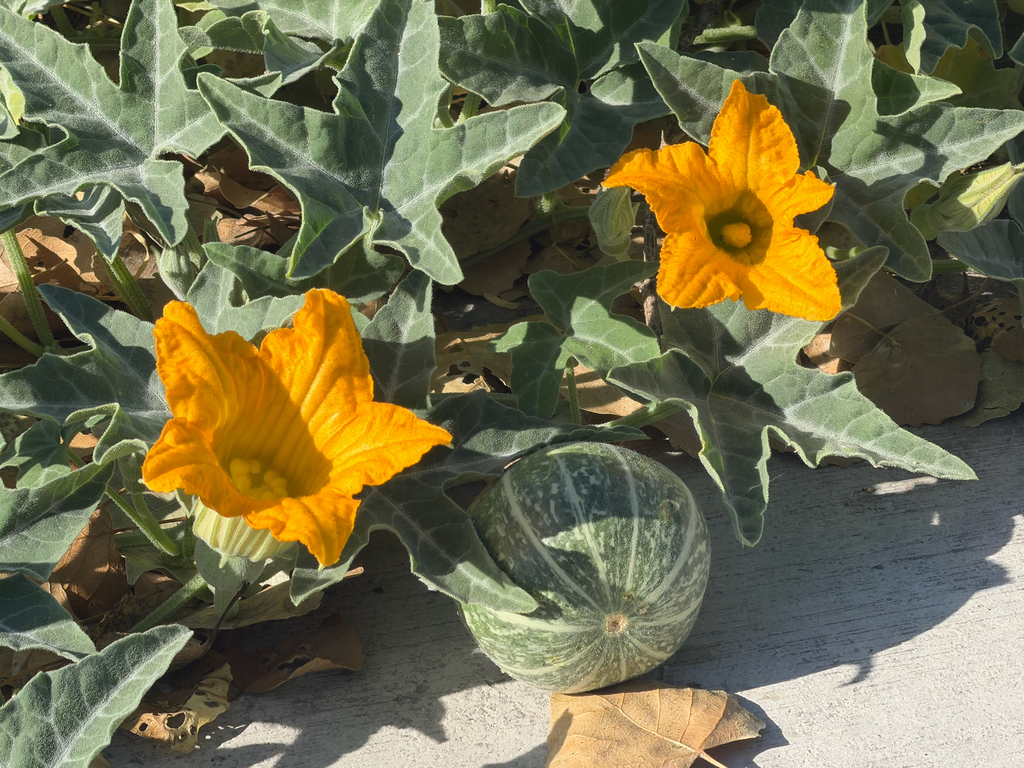
Cucurbita palmata, known as Coyote Melon or coyote gourd (the USDA name), is a wild squash of the Mojave and Sonoran Deserts. It is a trailing perennial vine that grows from a large, deep, tuberous root and spreads its rough, gray-green stems across sandy washes, flats and roadsides. Its leaves are deeply cut into five narrow, pointed lobes with pale, silvery veins, giving each leaf the look of a star.
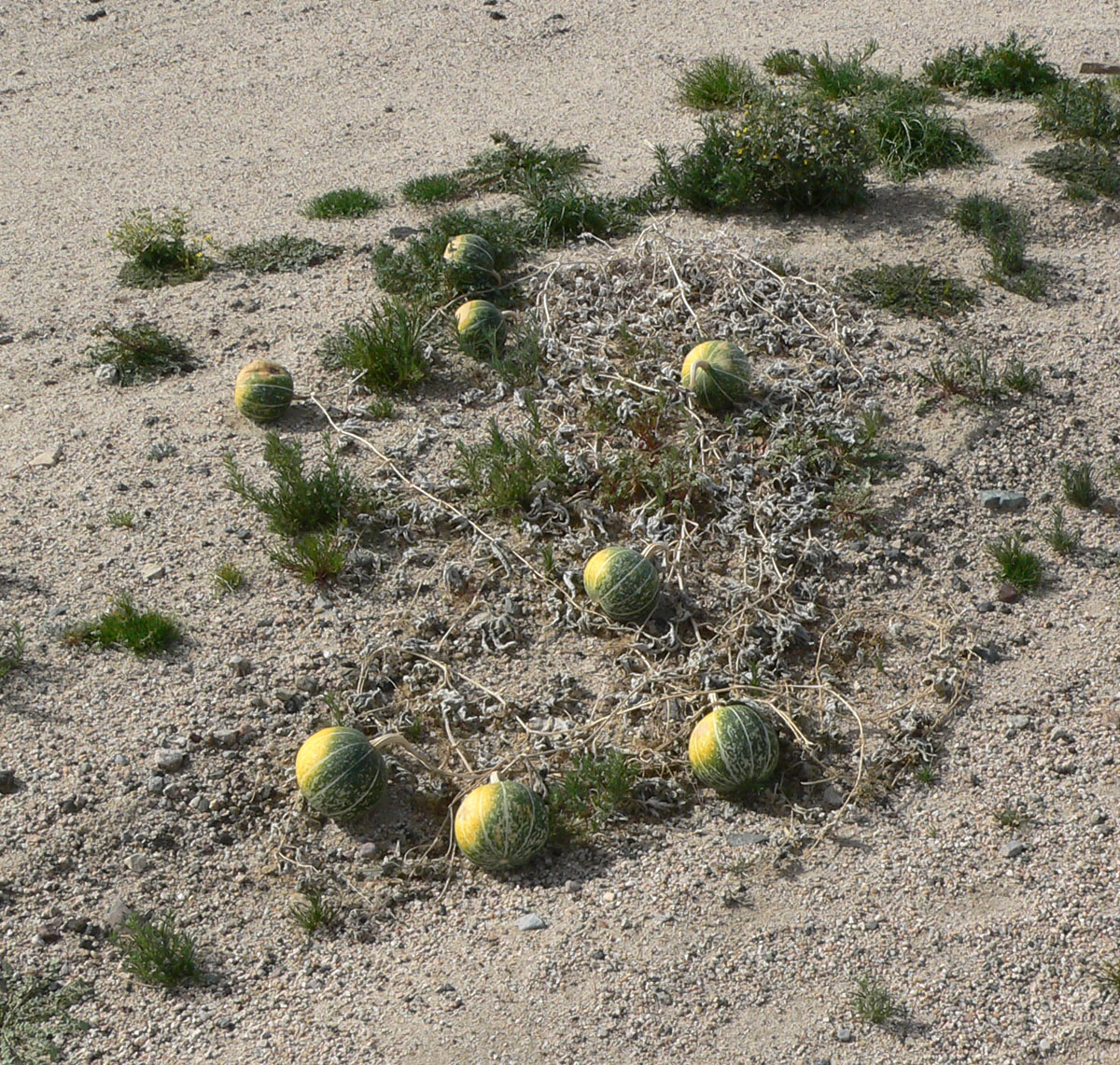
From spring to fall, coyote melon produces large, bright yellow, trumpet-shaped flowers 2 to 3 inches across, just like those of a garden squash. The fruits that follow are round, about 3 to 4 inches across, green mottled and striped with white, ripening to yellow and drying to a hard, light gourd. In late summer, a single vine may be scattered with dozens of these little “melons”.
Safety note: despite its name, coyote melon is not edible. The fruits are intensely bitter and contain cucurbitacins, compounds that can cause severe vomiting and diarrhea if eaten. This guide covers how to identify coyote melon, where it grows, how to grow it in a desert garden, its value to native squash bees, and its long history of use by desert peoples.
Identification
Coyote melon is easy to recognize in the desert: a sprawling, ground-hugging vine with star-shaped, pale-veined leaves, big yellow squash flowers and round, striped fruits.
Roots & Growth Habit
The plant grows from a large, carrot-like or tuberous perennial root that stores water and lets it survive long droughts and die back in winter. Each year it sends out trailing stems up to about 6 feet long or more, which spread flat over the ground. The stems and leaves are rough with stiff hairs. Branched tendrils help the vine anchor itself, but it rarely climbs.
Leaves
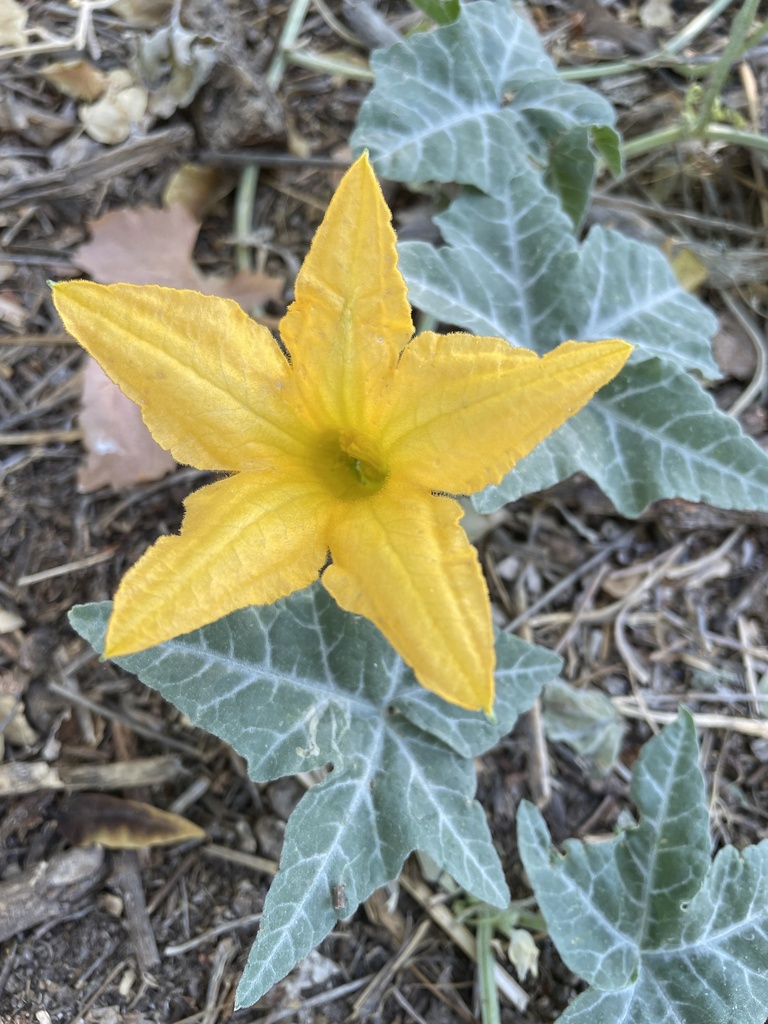
The leaves are the best field mark. They are gray-green, rough and stiff, roughly 2 to 5 inches across, and deeply divided into five long, narrow, triangular lobes that spread like the fingers of a hand, which is what palmata means. The main veins are marked with silvery white.
Flowers
Male and female flowers are separate but on the same plant. Both are bright yellow, trumpet- or bell-shaped and about 2 to 3 inches across, with five pointed lobes. They open early in the morning and close by midday. Flowering can start in spring and continue into fall when there is moisture, with a peak after summer rains.
Fruit
The fruit is a small, round to slightly flattened gourd about 3 to 4 inches across. It is green with pale mottling and white stripes when young, and turns yellow and then tan as it dries. The dry fruit has a hard rind and a light, papery inside full of flat, cream-colored seeds.
Look-alikes
Buffalo gourd (Cucurbita foetidissima) is a related wild gourd with large, triangular to heart-shaped, unlobed leaves and a strong, unpleasant smell. Coyote melon’s deeply five-lobed, star-shaped leaves with white veins set it apart. Closely related desert gourds, such as fingerleaf gourd (Cucurbita digitata), have even narrower, finger-like leaf lobes; these wild gourds can hybridize where they meet.
Quick Facts
| Scientific Name | Cucurbita palmata S. Watson |
| Family | Cucurbitaceae (squash and gourd family) |
| Plant Type | Trailing perennial vine from a tuberous root |
| Mature Height | Under 1 ft (ground-hugging) |
| Mature Spread | 6–10 ft or more |
| Growth Rate | Fast in warm weather |
| Sun Exposure | Full sun |
| Water Needs | Very low; drought-dormant |
| Soil Type | Sandy or gravelly, well-drained soils; washes, flats and roadsides |
| Soil pH | About 7.0–8.5 |
| Bloom Time | March–October, mainly after rains |
| Flower Color | Bright yellow |
| Fall Color | None; vines die back in winter |
| Fruit | Round, green-and-white striped gourd 3–4 in, drying yellow to tan (inedible, bitter) |
| Deer Resistant | Yes; the bitter foliage is rarely eaten |
| USDA Hardiness Zones | 8–11 |
Native Range
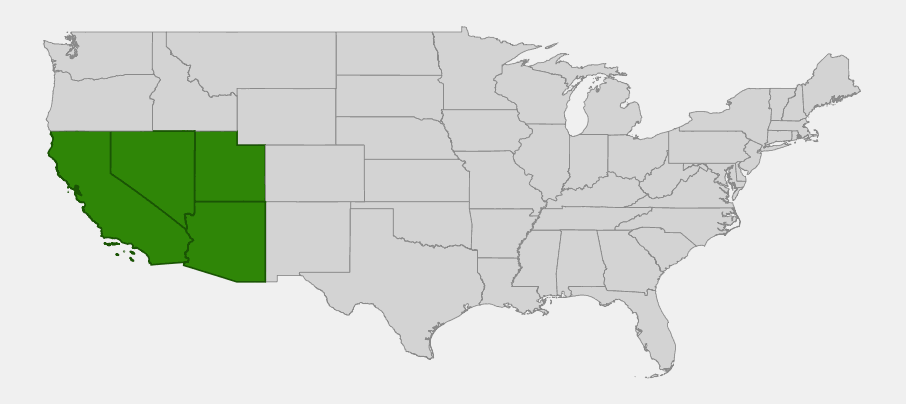
Coyote melon is a plant of the hot deserts of the Southwest. USDA PLANTS lists it as native to Arizona, California, Nevada and Utah, and it also grows in northeastern Baja California, Mexico.
In California it is widespread in the Mojave and Colorado Deserts, including Joshua Tree National Park, Anza-Borrego Desert State Park, the Mojave National Preserve and Death Valley. In Nevada it grows in the southern part of the state around Las Vegas and the Amargosa Valley. In Arizona it grows mainly in the western deserts along the lower Colorado River and east into the Sonoran Desert, and it reaches southwestern Utah at the northeastern edge of its range.
It favors sandy and gravelly washes, desert flats, sandy plains, and disturbed ground such as roadsides and old fields, usually at low elevations. It is related to a small group of desert gourds, including Cucurbita digitata and Cucurbita cordata, that are the only wild squashes adapted to true desert conditions.
📋 Regional plant lists featuring Coyote Melon: Utah & Western Colorado · Arizona & New Mexico · California & Nevada
Growing & Care Guide
Coyote melon is a fun, unusual vine for desert gardens, wildlife gardens and children’s gardens in the low desert, where it is grown for its silvery leaves, big yellow flowers and curious gourds. It is rarely sold as a plant but is easy to grow from seed. Give it plenty of space, sun and sand.
Light
Grow coyote melon in full sun. It is a plant of open desert and will flower poorly in shade.
Soil & Water
Plant it in deep, sandy or gravelly, fast-draining soil. Once the tuberous root is established it needs very little water; occasional deep watering in summer keeps it growing and flowering, while frequent shallow watering or heavy soil can rot the root. In winter it dies back and should be kept on the dry side.
Planting Tips
Sow seed directly where it is to grow, in late spring or early summer when the soil is warm, or just before the summer rains. Allow at least 6 to 10 feet of space for the vines to spread across the ground. It is useful for covering a sunny bank or a dry, sandy corner, and it can sprawl over rocks and low walls.
Pruning & Maintenance
No pruning is needed. Let the vines die back on their own in fall, then clear the dry stems if you wish. Leave the root undisturbed; it will resprout the following year. Collect dried gourds for crafts if you like, but keep them away from children and pets who might chew them.
Propagation
Grow it from seed. Collect seeds from dry, ripe gourds, wash and dry them, and sow them about 1 inch deep in warm soil. Seedlings grow quickly and may flower in their first summer. The root becomes larger and more drought-tolerant every year.
Safety Note
All parts of the plant, especially the fruit, are extremely bitter and contain cucurbitacins. Eating even a small amount of the fruit can cause severe vomiting, cramps and diarrhea. Do not eat any part of coyote melon, and teach children that the wild “melons” are not food. The seeds, after careful processing, were traditionally eaten by desert peoples, but this is not recommended without expert guidance.
Landscape Uses
- Desert wildlife gardens: big yellow flowers for native squash bees and other pollinators
- Sandy banks and dry corners: a fast, ground-hugging cover of silvery, star-shaped leaves
- Children’s and educational gardens: a wild relative of garden squash, with gourds to study (not to eat)
- Craft gourds: the dry fruits have been used as rattles and decorations
- Desert restoration: a native perennial vine of sandy washes and flats
Wildlife & Ecological Value
Like other wild squashes, coyote melon has a close relationship with native bees, and its seeds and fruits feed desert animals.
For Pollinators
The large yellow flowers open early in the morning and are visited by native bees, including squash bees, which are specialists that collect pollen almost entirely from plants in the squash family. Bumble bees, carpenter bees and other bees also visit the flowers for nectar and pollen. Wild gourds like coyote melon are thought to be the original hosts of squash bees, long before squash was domesticated.
For Insects
Squash bugs and cucumber beetles that feed on squash-family plants may also be found on the vines. These native insects are part of the desert food web and are eaten by birds, lizards and spiders.
For Birds & Mammals
When the dry gourds crack open, rodents and some birds eat the seeds. The bitter leaves are rarely browsed.
Ecosystem Role
As a deep-rooted perennial vine of sandy washes and flats, coyote melon adds cover to open desert ground in summer and provides a seasonal source of pollen, nectar and seeds. Its relationship with squash bees makes it an important plant for native bee diversity in the desert.
Cultural & Historical Uses
The genus name Cucurbita is the Latin word for a gourd, and the species name palmata describes the palm-like, five-lobed leaves. The American botanist Sereno Watson described the species in 1876. Coyote melon belongs to a small group of wild desert gourds, the closest relatives of which hybridize readily with it.
Native peoples of the desert made use of coyote melon despite its bitterness. The fruit was used as soap, the seeds were roasted and ground into a meal after careful processing, and the dry gourds were used as rattles in traditional dances and ceremonies.
The name coyote melon is shared, in Spanish and English, with several wild gourds of the Southwest, reflecting the folk idea that these bitter “melons” were fit only for coyotes. Today the plant is also of interest as a wild relative of cultivated squash, adapted to some of the hottest and driest places in North America.
Frequently Asked Questions
Can you eat coyote melon?
No. The fruit is intensely bitter and contains cucurbitacins, which can cause severe vomiting and diarrhea. Do not eat any part of the plant.
How is coyote melon different from buffalo gourd?
Coyote melon has deeply cut, star-shaped leaves with white veins. Buffalo gourd has large, triangular to heart-shaped leaves that are not deeply lobed and a strong, unpleasant smell.
Where does coyote melon grow?
It grows in the Mojave and Sonoran Deserts of southeastern California, southern Nevada, western Arizona and southwestern Utah, and in northeastern Baja California, usually in sandy washes, flats and roadsides.
Is coyote melon a perennial?
Yes. It grows from a large tuberous root that survives for many years. The vines die back in winter and regrow when it warms up.
What pollinates coyote melon?
Native bees, especially squash bees, which specialize on squash-family flowers. Other bees, such as bumble bees and carpenter bees, also visit the flowers.

Looking for a nursery that carries Coyote Melon?
Browse our native plant nursery directory: Arizona · California · Nevada · Utah

