
Desert Willow (Chilopsis linearis)
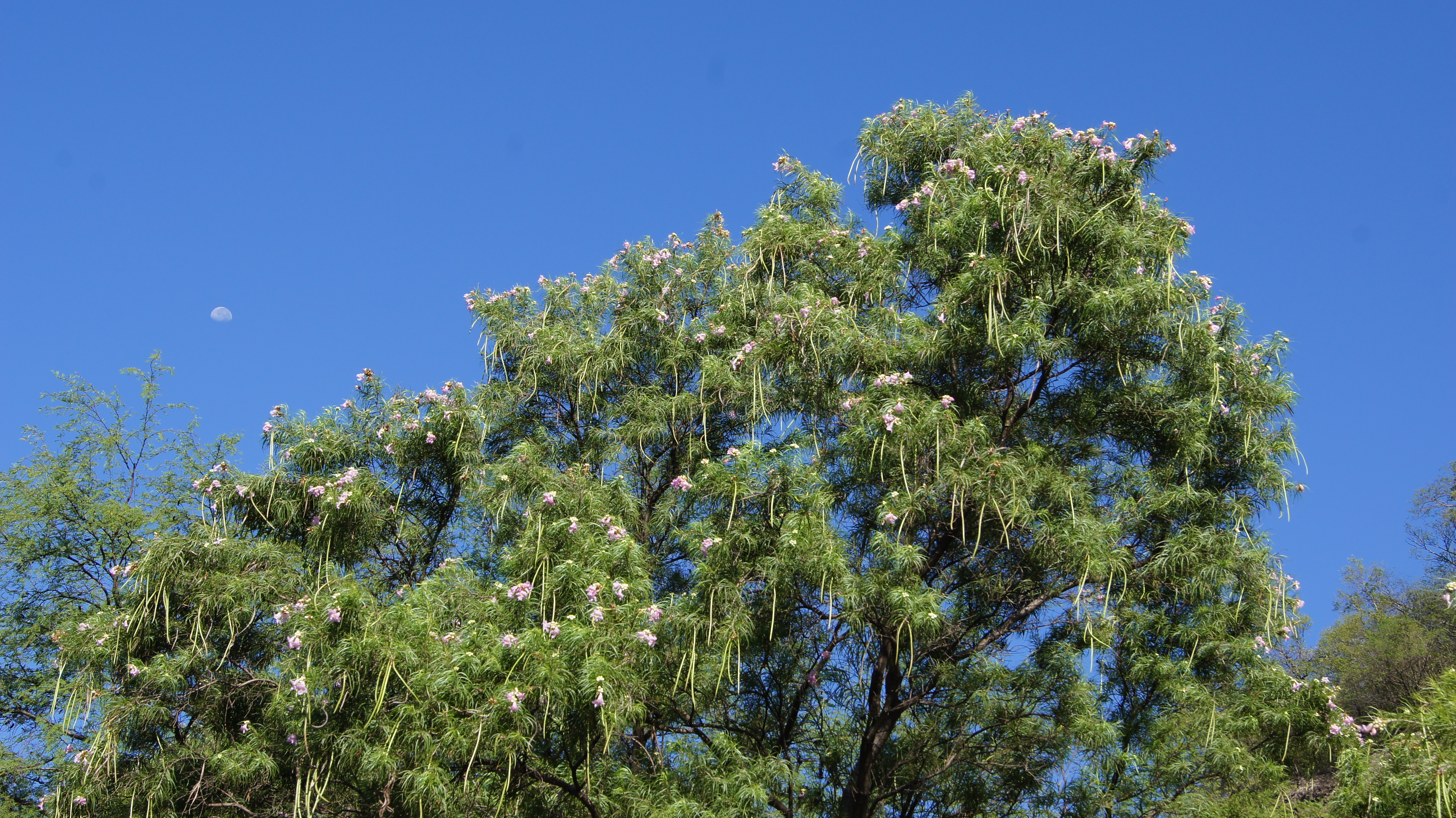
Chilopsis linearis, commonly known as Desert Willow, is one of the most ornamentally spectacular and ecologically valuable native trees of the American Southwest. Despite its common name and willowy appearance, Desert Willow is not a true willow (family Salicaceae) but rather a member of the Bignoniaceae (trumpet creeper) family — more closely related to Catalpa and Trumpet Vine than to cottonwoods or true willows. This deciduous small tree or large shrub grows 15 to 25 feet tall, adorned throughout summer with cascading clusters of large, fragrant, trumpet-shaped flowers in shades of pink, lavender, purple, rose, and white, making it one of the premier native flowering trees of desert landscapes.
Desert Willow is remarkably drought tolerant, making it ideally suited to Utah’s desert canyon country and the arid landscapes of the Colorado Plateau and Chihuahuan Desert. In the wild, it grows in sandy washes, arroyos, desert stream beds, and rocky canyon drainages — places where water drains quickly after rainfall and the soil is coarse and well-drained. Its deep root system can find water unavailable to shallower-rooted plants, allowing it to thrive in conditions that would stress most trees. Once established in the landscape, Desert Willow requires very little supplemental irrigation and blooms reliably from late spring through early fall.
The hummingbird attraction factor alone would justify planting Desert Willow — the large tubular flowers are perfectly shaped for hummingbird feeding, and the long bloom season (often 3–4 months) provides sustained nectar resources throughout the warm season. In Utah and across the Southwest, Anna’s and Black-chinned Hummingbirds are particularly frequent visitors, often maintaining territories around a productive Desert Willow. The tree also provides important nesting habitat, its weeping foliage offering excellent shelter in exposed desert settings.
Identification
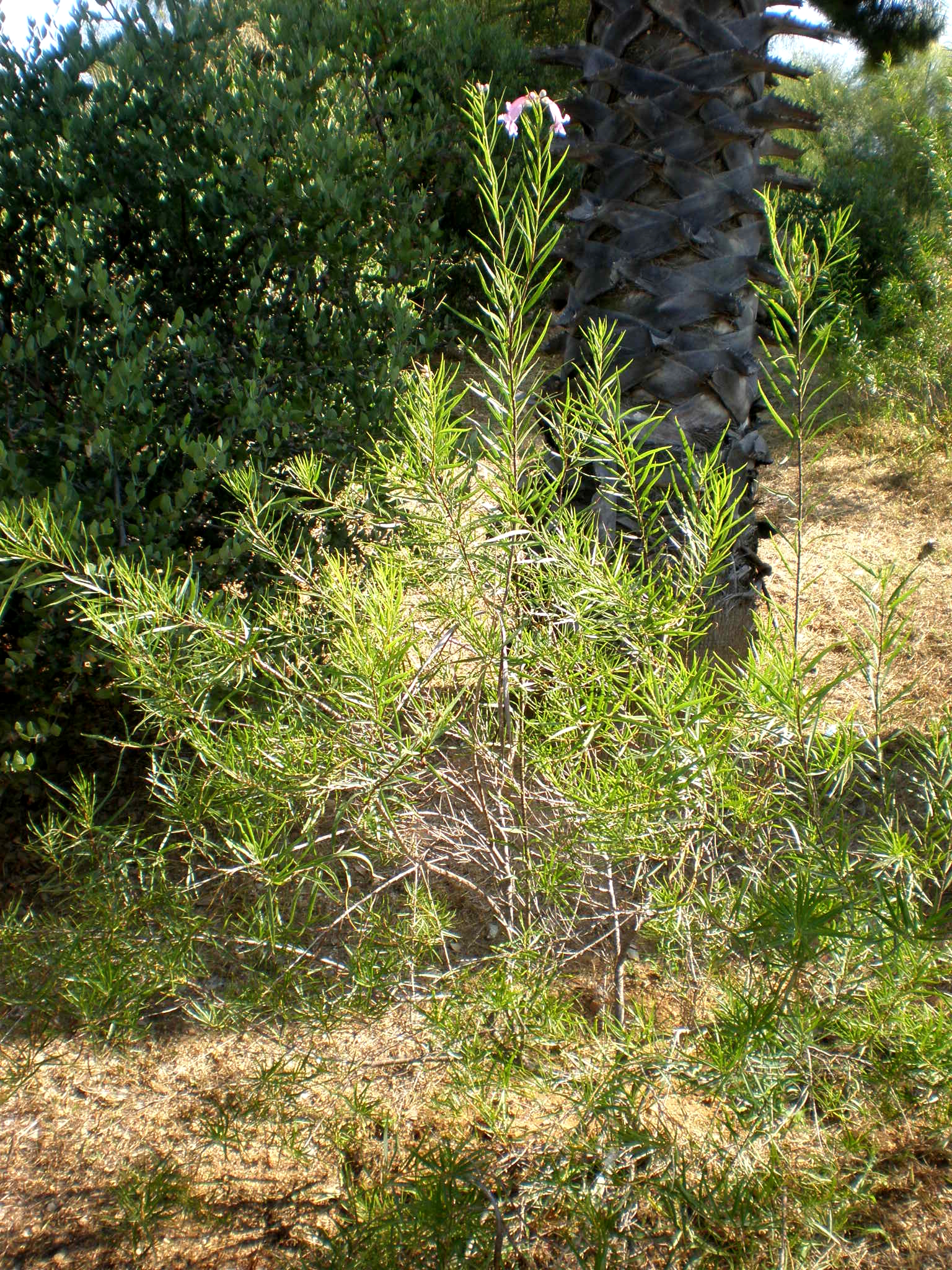
Desert Willow is a deciduous small tree or large multistemmed shrub, typically 15–25 feet tall with an equal or slightly smaller spread. In cultivation, it often forms a graceful, arching tree with a single trunk or multiple stems; in the wild, it tends toward multi-stemmed thicket growth in washes. The overall form is open and somewhat irregular — willowy and elegant rather than formal. The tree is deciduous but in warm years or mild climates may hold leaves well into winter. Bare trees in winter reveal attractively twisted, furrowed gray-brown bark and persistent dried seed pods.
Leaves
The leaves are long, narrow, and lance-shaped — typically 4 to 12 inches long but only ¼ to ½ inch wide — explaining the specific epithet linearis (meaning “linear”). This narrow leaf form is a classic drought adaptation: less surface area means less water loss through transpiration. Leaves are light green to grayish-green, slightly sticky and fragrant when crushed, and arranged alternately or sometimes in whorls. They emerge late in spring and may drop early in response to summer drought stress, then re-flush when monsoon rains arrive.
Flowers
The flowers are Desert Willow’s most spectacular feature. They are large trumpet-shaped blooms, 1 to 2 inches long, with five petals fused into a tube that flares open into two lips — the upper lip with two lobes and the lower with three. The interior of the flower has prominent purple or pink striping and a yellow throat. Flower color varies naturally from pale pink to deep rose, lavender, purple, and nearly white. Flowers are produced in clusters (racemes) at branch tips, often in great profusion from May through September (and sometimes into October in mild years). The fragrance is noticeable but subtle — a light, sweet scent.
Fruit
After flowering, Desert Willow produces distinctive long, narrow seed pods that closely resemble those of its relative Catalpa. The pods are 8 to 12 inches long and only ¼ inch wide, hanging in clusters from the branch tips. They mature and split open in fall, releasing numerous small papery-winged seeds. The persistent dry pods remain on the tree through winter, adding visual interest and serving as additional identification markers for the bare tree in winter.
Quick Facts
| Scientific Name | Chilopsis linearis |
| Family | Bignoniaceae (Trumpet Creeper) |
| Plant Type | Deciduous Small Tree / Large Shrub |
| Mature Height | 20 ft |
| Sun Exposure | Full Sun |
| Water Needs | Low (Drought Tolerant) |
| Bloom Time | May – September (and into October) |
| Flower Color | Pink, lavender, purple, rose, or white (varies) |
| Fruit | Long narrow seed pods, 8–12 in |
| Wildlife Value | Hummingbirds, native bees, songbirds (nesting) |
| USDA Hardiness Zones | 7–11 |
Native Range
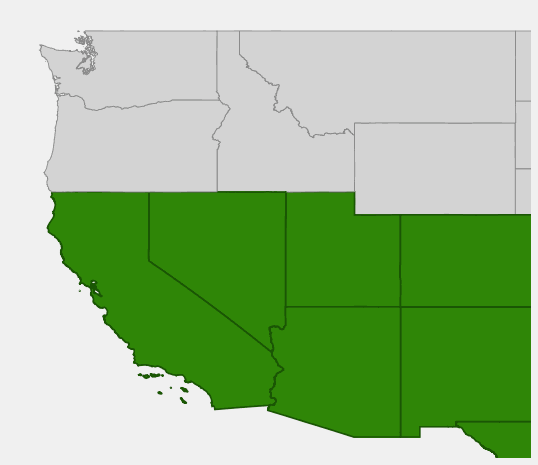
Chilopsis linearis is native to the arid Southwest, ranging from southern Utah and southwestern Colorado through Nevada, California, Arizona, New Mexico, Oklahoma, and Texas into northern Mexico (Baja California, Sonora, Chihuahua, Coahuila, and Nuevo León). The species is primarily a desert and semi-desert plant, following the Chihuahuan, Sonoran, and Mojave Desert systems as well as the drainage systems of the Colorado Plateau. It is often described as an indicator species for ephemeral desert wash and arroyo habitats.
In Utah, Desert Willow is found in Washington County and other southern Utah counties in the warm canyon country bordering the Mojave Desert. It reaches its northern range limit in Utah and southern Nevada, where it occupies protected south-facing canyon drainages that accumulate just enough heat and moisture to support it. The tree extends across much of Arizona, with particularly dense populations in the Sonoran Desert washes and along the Gila River and its tributaries. In Texas, it is common throughout the Trans-Pecos region and in the desert hills of the Big Bend country.
Desert Willow is a quintessential indicator of desert arroyo habitats — if you see a Desert Willow, you are standing in or near an arroyo, wash, or other low spot that collects and concentrates runoff. This makes it a reliable plant for identifying where subsurface water may be available and where ecological diversity will be highest in an otherwise harsh desert landscape. In these wash habitats, it often grows in association with Fremont Cottonwood, Velvet Ash, Arizona Walnut, and Seepwillow.
📋 Regional plant lists featuring Desert Willow: Utah
Growing & Care Guide
Desert Willow is one of the most rewarding native trees for Southwest landscapes — drought tolerant, long-blooming, hummingbird-attracting, and heat-loving. It asks very little once established and gives back generously in beauty and wildlife value.
Light
Desert Willow demands full sun — at least 6–8 hours of direct sunlight per day. It is a desert plant evolved for intense solar radiation, and in shaded positions it becomes sparse, weak-stemmed, and produces few flowers. Plant it in the hottest, sunniest spot in your garden. Against a south-facing wall or on a south-facing slope is ideal. It does not tolerate dense shade.
Soil & Water
Desert Willow is supremely drought tolerant once established (typically after 1–2 years). It evolved in coarse, rocky, well-drained desert wash soils, and thrives in those conditions. Amend heavy clay soils with sand and gravel to improve drainage — standing water or consistently wet feet will cause root rot and decline. Once established, water deeply once every 2–4 weeks in summer; in areas receiving summer monsoon rains (10+ inches), established Desert Willows may need no supplemental irrigation at all. In the first year, water weekly to encourage deep rooting.
Planting Tips
Plant in spring after frost danger has passed or in early fall (at least 6 weeks before first frost). Choose the permanent location carefully, as Desert Willow resents being moved once established. Dig the planting hole 2–3 times wider than the container, backfill with native soil (no amendments needed in typical desert soils), water thoroughly, and mulch the root zone with gravel or bark. Stake if necessary for the first season in windy locations.
Pruning & Maintenance
Desert Willow benefits from light annual pruning in late winter (February–March) to shape the canopy, remove crossing branches, and encourage vigorous new growth (which carries the most flowers). To develop a tree form, select 1–3 main stems and remove lower branches gradually over the first few years. The tree blooms on new growth, so hard pruning stimulates flowering. In cold climates (Zone 7), tip die-back is normal in winter and should be pruned back to live wood in spring. Desert Willow is largely pest and disease free.
Landscape Uses
- Hummingbird garden centerpiece — the premier tree for attracting hummingbirds
- Specimen tree — graceful, elegant form for focal point planting
- Xeriscape and water-wise gardens — extremely low irrigation needs
- Desert wash restoration — stabilizes sandy arroyo banks
- Street tree in hot, dry climates — heat and drought tolerant
- Patio tree — provides filtered shade without aggressive roots
- Privacy screen when planted in groups of 3–5
Wildlife & Ecological Value
Desert Willow’s ecological contributions extend well beyond its iconic hummingbird relationship. The tree supports a diverse array of wildlife through all seasons.
For Birds
The tubular flowers are specifically adapted for hummingbird pollination — Anna’s, Black-chinned, Broad-tailed, and Rufous Hummingbirds are all regular visitors where ranges overlap. The long bloom season (May–September) makes Desert Willow a sustained nectar source through the hottest months. Beyond hummingbirds, the dense weeping foliage provides excellent nesting sites for Say’s Phoebes, Lucy’s Warblers, Verdins, and other desert songbirds. The persistent seed pods provide food for sparrows and small finches through winter.
For Mammals
White-tailed and mule deer occasionally browse Desert Willow foliage, though the somewhat sticky, aromatic leaves are less preferred than many other plants. Ringtails and other small mammals use the dense branching structure for shelter and refuge. In its native wash habitats, Desert Willow thickets provide cover for peccaries (javelinas), Desert Cottontails, and Black-tailed Jackrabbits in the Sonoran Desert portion of its range.
For Pollinators
In addition to hummingbirds, Desert Willow flowers attract large native bees including Carpenter Bees, Bumble Bees, and larger Leafcutter Bees. The flower architecture — with a strong lower lip “landing platform” and nectar guide stripes — suits both hummingbirds and larger bees. The flowering season is unusually long for a desert tree, providing sustained pollinator resources through the monsoon season when many native plants are also in bloom.
Ecosystem Role
Desert Willow is an arroyo stabilizer and colonizer. Its deep root system actively stabilizes sandy desert wash banks against flash-flood erosion. In post-disturbance situations (flood scouring, grading), Desert Willow is often one of the first woody plants to re-establish. The shade its canopy provides along wash edges significantly reduces soil temperatures and moisture loss, creating microhabitats where more moisture-sensitive plants can survive.
Cultural & Historical Uses
Desert Willow has been used by Indigenous peoples of the Southwest — including the O’odham, Apache, Navajo, and various Pueblo peoples — for thousands of years. The flexible young branches were used for basket weaving, arrow shafts, and constructing the framework of temporary shelters and wattle structures. The wood, though soft, was used for firewood, as it burns hot and clean. The inner bark was occasionally used for cordage when other materials were unavailable.
Medicinally, Desert Willow had significant traditional uses. A tea brewed from the flowers and leaves was used to treat fungal infections, particularly as an antifungal wash. Modern scientific research has validated this traditional use — Chilopsis linearis contains several compounds with confirmed antifungal properties, particularly active against Candida species. The flowers themselves were eaten fresh or dried, and the aromatic leaves were used in steam baths and as a fragrant strewing herb.
In modern horticulture, Desert Willow has become increasingly popular as a landscape tree throughout the Southwest, and numerous cultivated varieties have been selected for specific flower colors (deep purple ‘Bubba,’ near-white ‘Warren Jones,’ burgundy ‘Burgundy,’ pink ‘Pink Star’) and growth habits. The natural hybrid between Desert Willow and Catalpa — known as × Chitalpa tashkentensis — has also become popular in cultivation, combining Desert Willow’s drought tolerance with Catalpa’s cold hardiness. Today, Desert Willow is one of the most widely planted native trees in Arizona, New Mexico, and southern Utah landscapes.
Frequently Asked Questions
Is Desert Willow a true willow?
No. Despite its common name and willowy leaf form, Desert Willow is not related to true willows (genus Salix). It belongs to the Bignoniaceae (trumpet creeper) family, making it a relative of Catalpa, Trumpet Vine, and Jacaranda. The “willow” name comes from its long, narrow leaves and its preference for streamside and wash habitats.
How long does Desert Willow bloom?
Desert Willow has one of the longest bloom seasons of any Southwest native tree — typically 3 to 5 months, from May through September or October. Blooming is often most intense following summer monsoon rains. In mild years, some flowers may persist into November. This extended season makes it exceptionally valuable for hummingbirds and pollinators.
Can Desert Willow survive Utah winters?
In southern Utah (Washington County), yes — Desert Willow is well-suited and naturalized. In central or northern Utah, it becomes more marginal. It is cold hardy to about 0°F (USDA Zone 7), with tip die-back occurring at colder temperatures. In Zone 6 areas, the tree may die back to the ground but resprout from roots in spring. Choose a south-facing, protected location in marginal zones.
Does Desert Willow have invasive roots?
No — Desert Willow has a moderate, well-behaved root system. It does not produce runners or suckers like some other trees, and its roots are not considered a threat to foundations, pipes, or hardscape. It’s safe to plant in reasonably close proximity to structures.
How much water does Desert Willow need?
Very little once established. In the first year, water weekly; in year 2, every 2–3 weeks during summer; by year 3 and beyond, established trees in areas receiving summer monsoon rains (10+ inches) may need no supplemental irrigation. In drier climates or formal landscape settings, deep monthly watering is sufficient for mature trees.

Looking for a nursery that carries Desert Willow?
Browse our native plant nursery directory: Utah