
Fantex Ash (Fraxinus velutina)
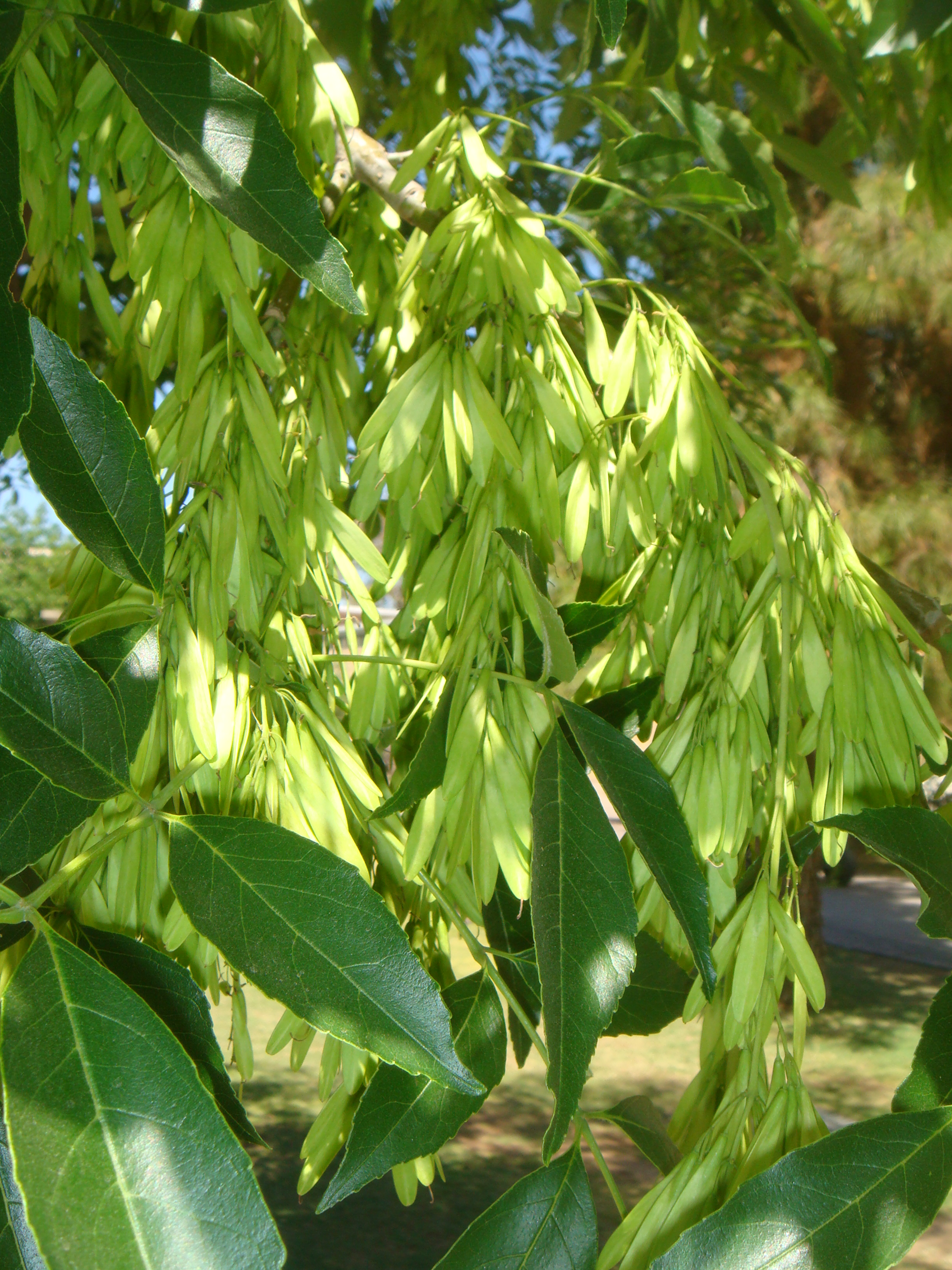
Fraxinus velutina, commonly known as Velvet Ash or Arizona Ash, and sold commercially as Fantex Ash, is one of the most important native shade trees of the desert Southwest. Among the few deciduous trees native to the hot, arid regions of Utah, Arizona, New Mexico, and Texas, Velvet Ash provides something that precious few trees can in the desert landscape: a genuinely lush, densely canopied, large shade tree that thrives on relatively modest water compared to non-native alternatives. Its velvety-textured leaflets — which give the species its scientific and common names — distinguish it from other ashes and confirm its identity at a glance.
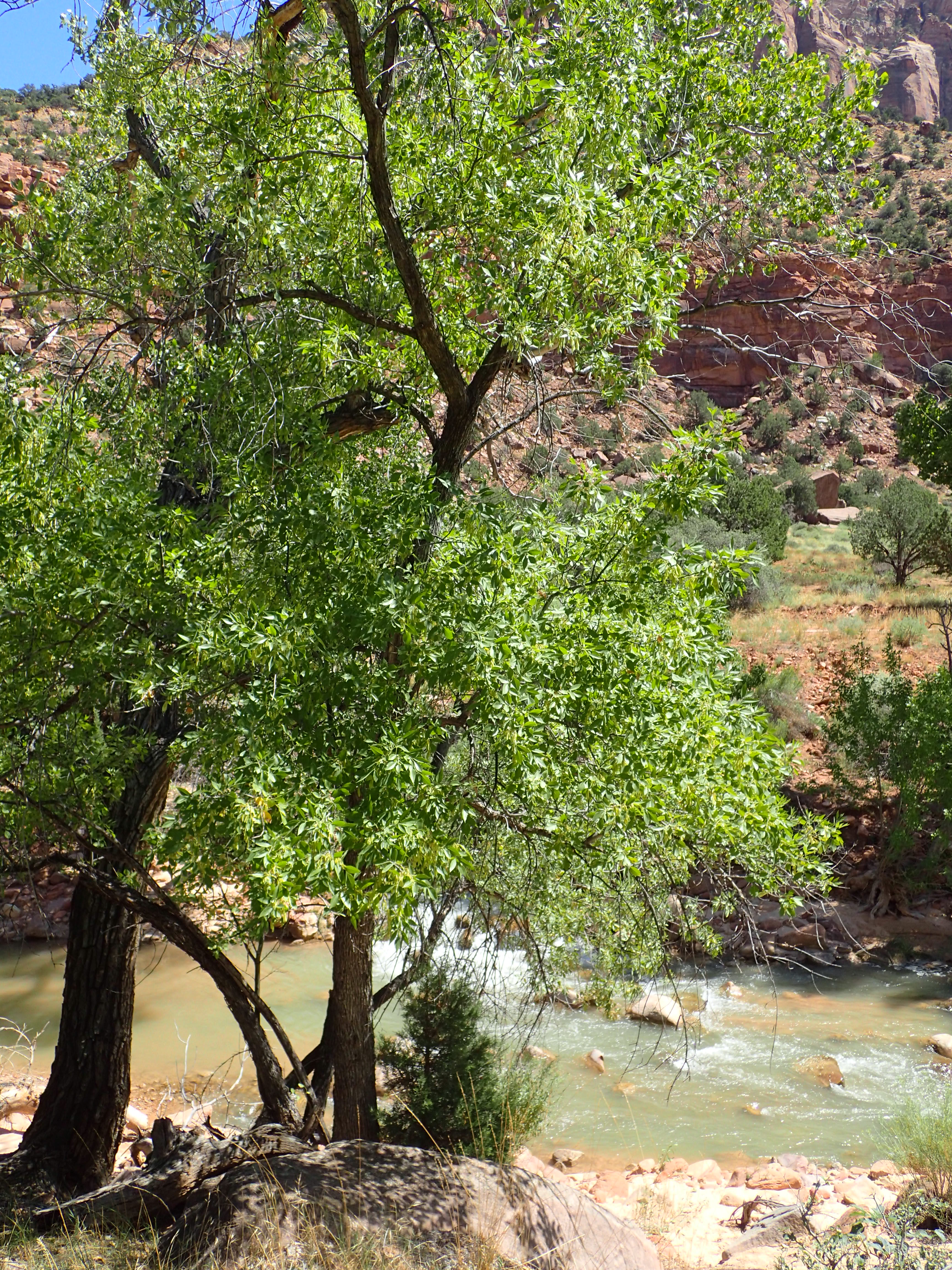
In its natural habitat, Velvet Ash grows along desert streams, canyon bottoms, and intermittent watercourses from below 2,000 feet to over 6,500 feet elevation. It is a classic riparian species — a tree that anchors streamside ecosystems, shading the water, stabilizing banks with its deep roots, and providing food and habitat for desert wildlife. When a desert hiker follows a dry wash and sees cottonwoods and ash trees ahead, it is an almost certain sign that water is near — either on the surface or just below the sandy streambed.
The cultivar name “Fantex” refers to a selected variety with superior form, heat tolerance, and landscape performance developed for urban and suburban use in the Southwest. Fantex Ash holds its dense canopy reliably throughout the growing season, resists wind damage well, and adapts to the challenging conditions of desert cities better than most tree species. It is the preferred form for street trees, park plantings, and residential shade in Phoenix, Tucson, Las Vegas, St. George, and other desert communities.
Identification
Velvet Ash is a medium to large deciduous tree reaching 20 to 50 feet tall (and occasionally taller) with a trunk diameter up to 2 feet or more in old specimens. The crown is rounded to broadly oval, spreading to 30 or more feet in width, providing excellent shade. The tree has a clean, elegant appearance in the landscape that belies its tough desert origins. One key identification feature is the dense, soft pubescence (fine hairs) covering the leaf rachis and leaflet undersides — this velvety texture is unique among Southwestern ashes.
Bark
Young twigs are grayish-brown and hairy (pubescent), becoming hairless with age. The bark on young trunks is smooth and gray; on older trunks it becomes furrowed into a distinctive interlacing pattern of flat-topped ridges and narrow furrows, grayish-brown in color. The overall texture is rougher than White Ash but less deeply furrowed than many other ash species. The wood is strong, dense, and flexible — prized for tool handles and athletic equipment wherever ashes grow.
Leaves
The leaves are pinnately compound, 4–9 inches long, with 3–9 leaflets arranged in opposite pairs along a central rachis (leaf stalk) with a terminal leaflet. Individual leaflets are oval to lance-shaped, 1–2 inches long, with toothed margins and a pointed tip. The upper surface is dark green and slightly glossy; the undersurface is paler and notably hairy (velvety) when young, sometimes persisting through the season. Fall color is typically bright yellow, sometimes with orange tints — a welcome splash of autumn color in desert landscapes that often lack fall foliage interest.
Flowers & Fruit
Velvet Ash is dioecious — individual trees are either male (pollen-producing) or female (seed-producing). The tiny flowers appear before or with the emerging leaves in early spring, forming inconspicuous clusters (panicles). Being wind-pollinated, they lack showy petals. Female trees produce abundant winged fruits (samaras) — paddle-shaped, single-winged seeds about 1 inch long that ripen in early fall and disperse on the wind. The seedfall can be prolific under female trees. The Fantex cultivar is typically male-selected to avoid the seed litter of female trees in urban settings.
Quick Facts
| Scientific Name | Fraxinus velutina |
| Family | Oleaceae (Olive) |
| Plant Type | Deciduous Tree |
| Mature Height | 40 ft |
| Sun Exposure | Full Sun |
| Water Needs | Moderate |
| Bloom Time | March – April (before or with new leaves) |
| Flower Color | Inconspicuous greenish (wind-pollinated) |
| USDA Hardiness Zones | 7–11 |
Native Range
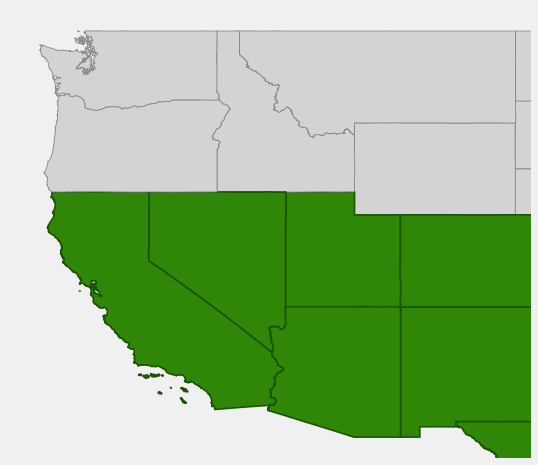
Velvet Ash is native to the southwestern United States and northern Mexico. Its U.S. range extends from southern California east through Nevada, Utah, and Colorado to New Mexico, Arizona, and Texas. The tree is most abundant along desert watercourses in the Sonoran and Chihuahuan desert zones, where it grows in association with cottonwoods, willows, and sycamores along permanent and seasonal streams. In Arizona, it is one of the most common native riparian trees, reaching its best development along rocky canyon streams in the Sonoran Desert zone.
In Utah, Velvet Ash is found primarily in the southern and southwestern parts of the state — along the Virgin River and its tributaries, in Zion Canyon, and in the canyon country of Washington and Kane counties. It grows from approximately 2,500 to 6,000 feet elevation in Utah, typically along canyon watercourses or in moist canyon-bottom locations. Zion Canyon supports particularly fine specimens of Velvet Ash, where the trees grow alongside Fremont Cottonwood, Box Elder, and Canyon Grape along the North Fork of the Virgin River.
In Mexico, Velvet Ash extends through Sonora, Chihuahua, Baja California, Nuevo León, and several other northern states. The total range encompasses diverse desert and semi-arid habitats, reflecting the tree’s considerable adaptability to varying moisture regimes. It is notably more drought-tolerant than most other ash species, which typically require moister, more temperate conditions.
📋 Regional plant lists featuring Fantex Ash: Utah
Growing & Care Guide
Velvet Ash (Fantex Ash) is one of the best-performing native shade trees for desert landscapes. Its combination of large size, dense canopy, decent drought tolerance (by shade tree standards), and adaptability to desert urban conditions makes it a top choice for homeowners and municipalities throughout the Southwest.
Light
Full sun is required for best growth and dense canopy development. Velvet Ash grows vigorously in full desert sun and heat, making it suitable for the hottest, most exposed sites where other shade trees might struggle. Unlike many shade trees, it does not scorch in reflected heat from walls and pavement when properly irrigated, making it useful for the challenging heat-island conditions of desert cities.
Soil & Water
Velvet Ash adapts to a wide range of soils, including clay, loam, sand, and even moderately alkaline desert soils, though it performs best in deep, well-drained soils. It requires moderate, consistent watering — more than a true xeric desert plant, but significantly less than non-native shade trees like Silver Maple or ornamental pears. In desert climates, deep watering every 1–2 weeks during summer is typically sufficient for established trees. A deep soaker or drip system that delivers water to the full root zone is far more effective than shallow, frequent watering. As the tree matures, it becomes progressively more drought-tolerant.
Planting Tips
Plant in fall or early spring for best establishment. Dig the planting hole 2–3 times wider than the rootball and the same depth. Backfill with native soil (no amendments needed in desert soils). Stake young trees loosely for the first year only — remove stakes after one growing season to encourage trunk strength development. Stake too long and the trunk will remain weak. Water deeply immediately after planting and maintain regular irrigation throughout the first two growing seasons.
Pruning & Maintenance
Prune during the dormant season (winter) to shape the canopy and remove crossing or poorly positioned branches. Unlike ash trees in the East, Velvet Ash has not been affected by the invasive Emerald Ash Borer (Agrilus planipennis), which has devastated Eastern ash populations — though monitoring for this pest is advisable as its range expands westward. Velvet Ash is generally resistant to most major pest and disease problems in its native range. Rake and remove fallen leaves promptly to reduce disease pressure in humid microclimates.
Landscape Uses
- Residential shade tree — provides large, dense summer shade
- Street tree — tolerates heat, reflected light, and urban soils
- Park and parking lot shade — excellent canopy spread
- Riparian restoration — native to desert washes
- Windbreak — dense canopy provides effective wind protection
- Wildlife corridor — connects riparian habitats
Wildlife & Ecological Value
Velvet Ash is an important wildlife tree in desert riparian ecosystems, providing food, shelter, and structural diversity in habitat types that are among the most productive (and most threatened) in the Southwest.
For Birds
The dense canopy and large size of mature Velvet Ash trees make them important nesting and roosting sites for desert birds. Yellow Warblers, Hooded Orioles, Lucy’s Warblers, Bell’s Vireos, and many other riparian species nest in ash canopies. The winged seeds (samaras) are eaten by Evening Grosbeaks, Pine Siskins, American Goldfinches, and other finches. Insectivorous birds hunt the abundant insects found in the leaf litter and bark. In fall and winter, the tree structure provides perches and thermal cover for overwintering bird species.
For Mammals
White-tailed Deer and Mule Deer browse the foliage and young branches of Velvet Ash. Bark and branch-tip browsing by deer can significantly affect the shape of young trees. Beavers may cut Velvet Ash where their ranges overlap along desert streams. Small mammals — squirrels, mice — use the seed crop. The large, leafy canopy and complex root structure of mature trees along desert streams provides hiding and foraging habitat for a wide range of desert mammals.
For Pollinators
Although ash flowers are wind-pollinated and lack nectar rewards, the early spring bloom of Velvet Ash provides pollen to bees that are active when few other pollen sources are available. Native solitary bees collect ash pollen for brood provisioning in early spring. The dense canopy also creates shaded, humid microhabitats beneath the tree that support soil-nesting bee populations and other invertebrates.
Ecosystem Role
Desert riparian forests dominated by Cottonwood, Willow, and Ash are among the most biologically productive and species-rich habitats in the entire American Southwest — supporting more bird species per acre than virtually any other habitat type in the region. Velvet Ash is a key structural species in these communities. Its leaf litter decomposes rapidly in desert stream environments, cycling nutrients important to aquatic macroinvertebrate communities. The tree’s extensive root systems stabilize streambanks against erosion and help maintain the meandering character of natural desert streams.
Cultural & Historical Uses
Ash trees have been important to human cultures worldwide for millennia, and Velvet Ash is no exception in the Southwest. The Tohono O’odham and various Apache groups used the strong, flexible wood of Arizona Ash for tool handles, bows, and other implements requiring combination of strength and flexibility. Ash wood splits cleanly along the grain and responds well to bending when steamed — properties that made it a preferred wood for basket-weaving hoops, snowshoe frames, and agricultural tools among Indigenous peoples across North America.
The sap of ash trees was used by some groups as a sweetener, though not in the same concentrated form as maple syrup. The bark was used medicinally — a decoction was applied to skin conditions and used as a general tonic in some traditions. Spanish and Anglo settlers who traveled through the desert Southwest relied on cottonwood and ash groves along desert streams as landmarks, camping spots, and sources of building material and firewood. Many historic desert trails were essentially routes connecting one ash-and-cottonwood-lined wash to the next.
In the modern landscape, Velvet Ash has become increasingly recognized as a superior alternative to the non-native shade trees that dominated desert landscaping for much of the 20th century. Arizona Ash was a popular landscaping choice for decades, but the wild species is prone to branch breakage and relatively short-lived (30–40 years) in landscape settings. The Fantex selection, chosen for superior structure and longevity, offers the benefits of the native species with improved performance. As water conservation becomes ever more critical in desert cities, native shade trees like Fantex Ash that can thrive with significantly less irrigation than imported species are growing in popularity.
Frequently Asked Questions
What is the difference between Velvet Ash, Arizona Ash, and Fantex Ash?
These are all the same species: Fraxinus velutina. “Velvet Ash” refers to the velvety leaf texture. “Arizona Ash” is a common regional name. “Fantex Ash” is a named cultivar selected for superior landscape performance — it is typically male (no seed litter), has better structure and heat tolerance than average wild-collected plants, and is the form most often sold by nurseries for landscape use.
How fast does Fantex Ash grow?
In favorable desert conditions with regular irrigation, Velvet Ash can grow 2–3 feet per year when young, making it one of the faster-growing native shade trees for the Southwest. Growth slows as the tree matures. A properly sited Fantex Ash can reach 25 feet of height and 20 feet of spread within 10 years of planting in a desert climate with adequate irrigation.
Is Velvet Ash affected by Emerald Ash Borer?
As of this writing, Emerald Ash Borer (Agrilus planipennis) has not significantly affected Velvet Ash in its native Southwest range, though the pest continues to expand westward. Monitor your trees for the characteristic D-shaped exit holes and serpentine galleries in the inner bark, which are diagnostic for this pest. Early detection and reporting to your local agricultural extension service can help slow the spread.
Does Fantex Ash produce seeds?
The Fantex cultivar is typically male-selected, which means it produces pollen but no winged seeds (samaras). This is a significant advantage in landscape settings, where the prolific seedfall of female ash trees can be messy and create unwanted seedlings. However, verify this characteristic with your nursery, as naming conventions for ash cultivars can be inconsistent.
How much water does Fantex Ash need?
Established Fantex Ash in desert climates needs moderate, deep watering — approximately every 1–2 weeks in summer, extending to every 3–4 weeks as the tree matures. It is more drought-tolerant than most non-native shade trees but requires more water than true desert shrubs. A deep drip system positioned at the tree’s drip line (beneath the outer canopy) is the most efficient irrigation approach for large ash trees.

Looking for a nursery that carries Fantex Ash?
Browse our native plant nursery directory: Utah