
Florida Clover Ash (Tetrazygia bicolor)
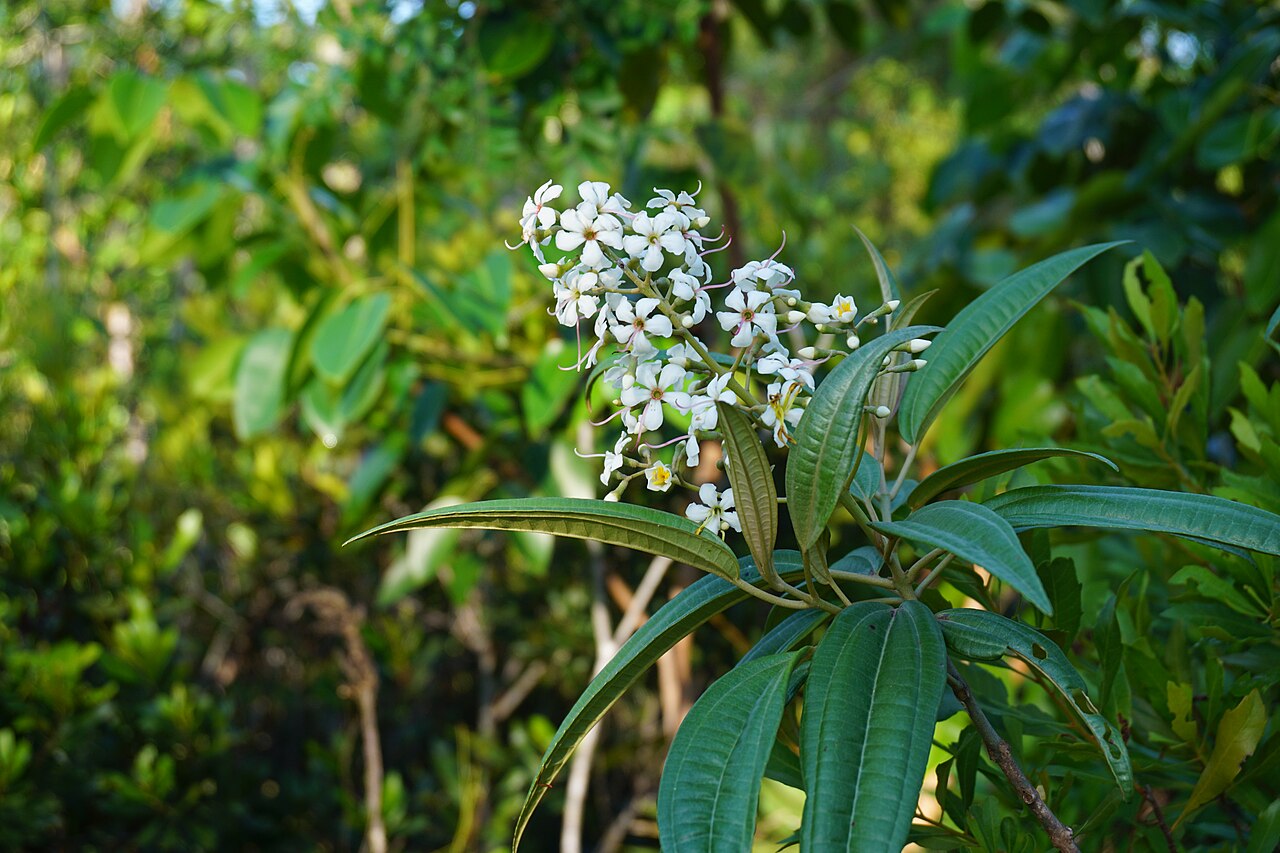
Tetrazygia bicolor, Florida Clover Ash, also called Florida tetrazygia or West Indian lilac, is an evergreen shrub or small tree of the pine rocklands of South Florida and the Caribbean. The Atlas of Florida Plants now places it in Miconia as Miconia bicolor, but USDA PLANTS and most nurseries still use Tetrazygia bicolor, the name used here.
It is one of Florida’s showiest native shrubs: long, glossy, three-veined leaves, dark green above and pale beneath (the “bicolor” of the name), clusters of white flowers with bright yellow anthers in spring and summer, and purple-black berries that birds love. It belongs to the melastome family (Melastomataceae), the same family as Florida’s meadow beauties (Rhexia).
In the wild it is listed as Threatened by the State of Florida (FDACS Regulated Plant Index), because most of the pine rockland it depends on has been cleared. It is grown by many South Florida native nurseries; buy nursery-propagated plants and never collect from the wild.
Identification
Florida clover ash is easy to identify by its leaves. The parallel veins that run the length of each leaf are typical of the melastome family.
Leaves
The leaves are opposite, lance-shaped, 3 to 8 inches long and leathery. Each has three (sometimes five) prominent veins running from the base to the tip, with fine cross-veins between them. They are glossy dark green above and pale, whitish-green below. The edges often curl down slightly.
Habit
It grows as an upright, multi-stemmed shrub, usually 6 to 15 feet tall and 4 to 8 feet wide, and occasionally as a small tree to about 20 feet. In pine rocklands it is often shorter and more open after fire.
Flowers
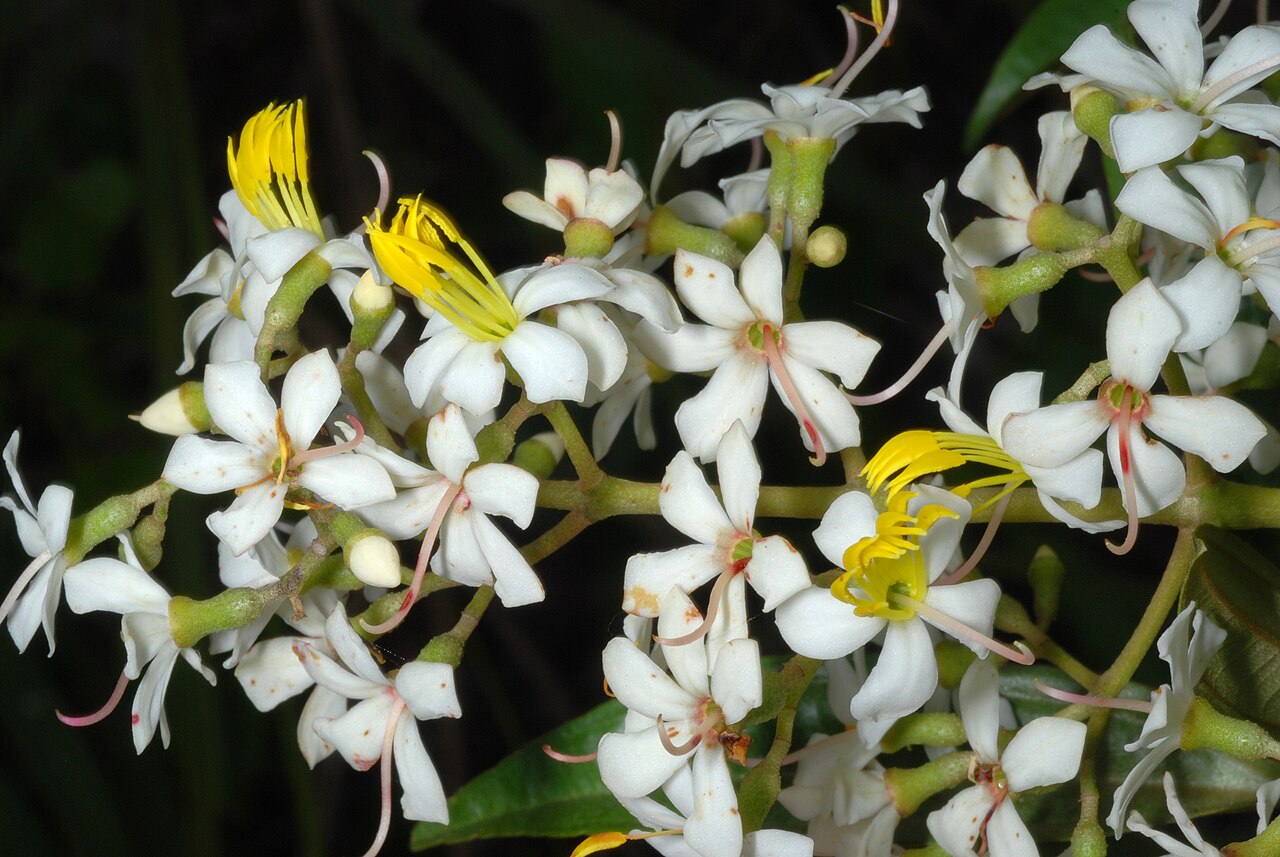
The flowers are borne in branched clusters (panicles) at the ends of the branches, mainly in spring and early summer, with scattered flowering at other times. Each flower is about ¾ inch across with four or five white petals and a prominent bunch of curved, bright yellow anthers.
Fruit
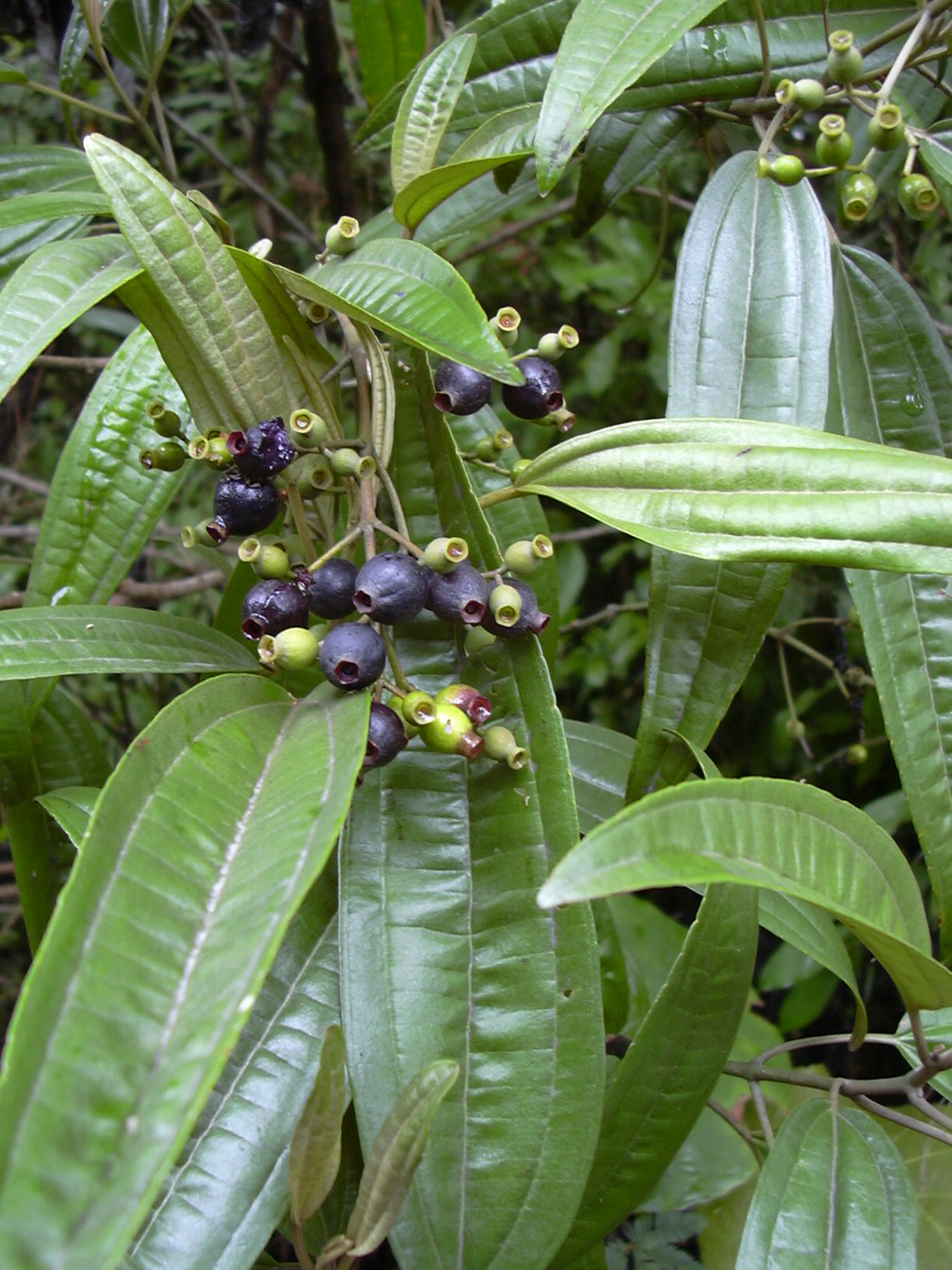
The fruit is a round berry about ¼ to ⅜ inch across, ripening from green to purple-black in summer and fall. Each berry contains many tiny seeds.
Quick Facts
| Scientific Name | Tetrazygia bicolor (Atlas of Florida Plants: Miconia bicolor) |
| Family | Melastomataceae (melastome family) |
| Plant Type | Evergreen shrub or small tree |
| Mature Height | 6–15 ft (rarely to 20 ft) |
| Mature Spread | 4–8 ft |
| Growth Rate | Moderate |
| Sun Exposure | Full sun to part shade |
| Water Needs | Low to moderate; drought tolerant once established |
| Soil Type | Well-drained limestone, sand or rocky soil |
| Soil pH | Slightly acidic to alkaline, about 6.0–8.0 |
| Bloom Time | Spring–summer, mainly April–July |
| Flower Color | White with yellow anthers |
| Fall Color | Evergreen |
| Fruit | Purple-black berries, summer–fall |
| Deer Resistant | Unknown |
| USDA Hardiness Zones | 10–11 |
Native Range
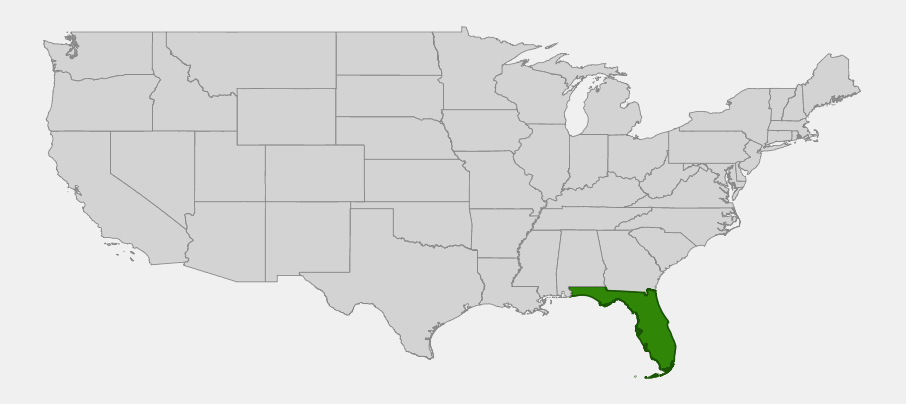
In the United States, Florida clover ash grows only in South Florida. USDA PLANTS records it only from Florida, where it grows at the southern tip of the peninsula, chiefly in Miami-Dade County. Its stronghold is the Miami Rock Ridge, including the pine rocklands of Long Pine Key in Everglades National Park. Outside Florida it is native to the Bahamas and the Greater Antilles, including Cuba.
Its main habitat is pine rockland: open forest of South Florida slash pine over a thin layer of soil on limestone, maintained by frequent fire. It also grows along the edges of rockland hammocks. It is listed as Threatened by the State of Florida (FDACS Regulated Plant Index).
Pine rocklands once covered much of the Miami Rock Ridge; nearly all of the area outside Everglades National Park has been lost to development, and the remnants depend on prescribed fire. Plants are widely grown by South Florida native nurseries, so there is no reason to disturb wild plants. Buy nursery-propagated plants and never collect from the wild.
📋 Regional plant lists featuring Florida Clover Ash: North & South Florida
Growing & Care Guide
Florida clover ash is an excellent native shrub for South Florida gardens, with good-looking leaves all year, white flowers and fruit for birds. It is sensitive to frost and is best suited to zones 10 and 11.
Light
It does best in full sun to light shade. In deep shade it becomes leggy and flowers less.
Soil & Water
Plant it in well-drained soil. It grows naturally on limestone and does well in South Florida’s alkaline, rocky soils, but it also adapts to sandy soil. Water regularly until established; after that it is fairly drought tolerant. It does not tolerate salt spray or flooding.
Planting Tips
Use it as a specimen, in mixed native hedges or as an understory shrub beneath pines. Space plants about 4 to 6 feet apart for a screen. Choose a spot protected from cold winds in the colder parts of zone 10. Buy only nursery-propagated plants; it is a state Threatened species and wild plants must not be collected.
Pruning & Maintenance
It needs little pruning. Tip-prune young plants to encourage branching, and remove crossing or damaged stems after flowering. Frost can damage the foliage; wait until spring to prune out any cold damage.
Propagation
Grow it from seed cleaned from ripe berries and sown fresh on the surface of a moist mix; the seeds are tiny. It can also be propagated from semi-hardwood cuttings.
Landscape Uses
- South Florida native landscapes: attractive foliage and flowers for zones 10–11
- Bird gardens: berries eaten by many songbirds
- Pine rockland restoration: a characteristic shrub of the Miami Rock Ridge
- Butterfly and pollinator gardens: spring and summer flowers for bees and butterflies
Wildlife & Ecological Value
In pine rocklands, Florida clover ash feeds both insects and birds, and its dense foliage provides shelter.
For Pollinators
The flowers are visited by bees, including native bees that collect pollen from the large anthers, and by butterflies.
For Birds
The purple-black berries are eaten by many birds, including northern mockingbirds, gray catbirds, northern cardinals and other songbirds, which spread the seeds.
For Mammals
Small mammals may eat fallen fruit. It is of limited importance to larger mammals.
Ecosystem Role
Florida clover ash is part of the rich shrub layer of pine rocklands, one of the most threatened ecosystems in the United States. It resprouts after fire, and frequent burns keep it from being shaded out by hardwoods.
Cultural & Historical Uses
The species name bicolor refers to the two-colored leaves. Recent genetic studies merged Tetrazygia and several related genera into the large tropical American genus Miconia, which is why the Atlas of Florida Plants uses Miconia bicolor.
That change caused some concern among gardeners, because another Miconia, Miconia calvescens, is one of the world’s worst invasive plants in Hawaii and Tahiti. Florida clover ash is a different species and is native to South Florida.
It has been planted outside its native range, including in Hawaii, where it is grown as an ornamental. Within South Florida it is valued as one of the best native substitutes for exotic flowering shrubs.
Frequently Asked Questions
Is Florida clover ash endangered?
It is listed as Threatened by the State of Florida (FDACS Regulated Plant Index) because most of its pine rockland habitat has been destroyed. Buy nursery-propagated plants and never collect from the wild.
Is it Tetrazygia bicolor or Miconia bicolor?
Both names refer to the same plant. USDA PLANTS and most nurseries use Tetrazygia bicolor; the Atlas of Florida Plants uses the newer name Miconia bicolor.
Can I grow Florida clover ash in Central Florida?
It is frost-sensitive and is best suited to zones 10 and 11. In warmer parts of Central Florida it can be grown in protected spots, but frost will damage it.
Does Florida clover ash attract birds?
Yes. Its purple-black berries are eaten by many songbirds, including mockingbirds, catbirds and cardinals.
How big does Florida clover ash get?
Usually 6 to 15 feet tall and 4 to 8 feet wide, occasionally up to about 20 feet.

Looking for a nursery that carries Florida Clover Ash?
Browse our native plant nursery directory: Florida