
Climbing Fetterbush (Pieris phillyreifolia)
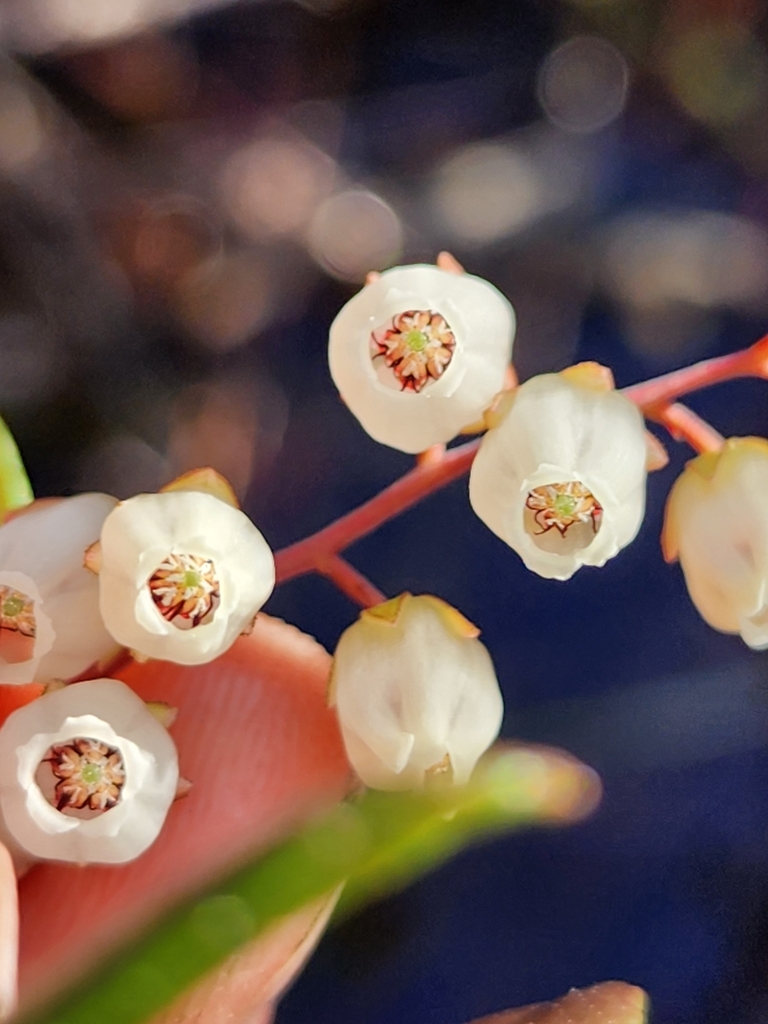
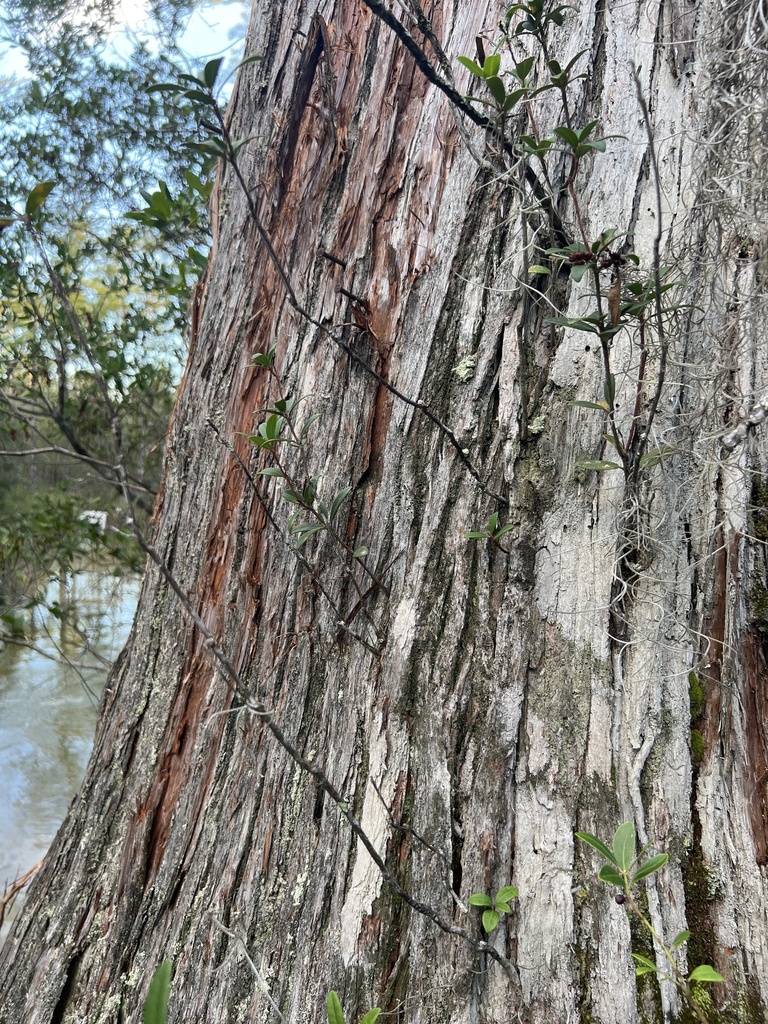
Pieris phillyreifolia, the Climbing Fetterbush (also called vine-wicky), is one of the most unusual shrubs of the southeastern Coastal Plain. In cypress swamps it climbs trees in a way no other North American shrub does: its stems grow up the trunks of pond cypress and Atlantic white cedar underneath the fibrous bark, poking out every so often as short, leafy branches. Away from trees, the same species grows as a low, colonial evergreen shrub. The Atlas of Florida Plants spells the name Pieris phyllyreifolia; USDA PLANTS uses phillyreifolia.
It belongs to the heath family (Ericaceae) and is a close relative of the Asian pieris widely planted in gardens and of the mountain fetterbush (Pieris floribunda) of the southern Appalachians. In late winter and early spring it bears small clusters of white, urn-shaped flowers, often among the first flowers of the year in its swamps.
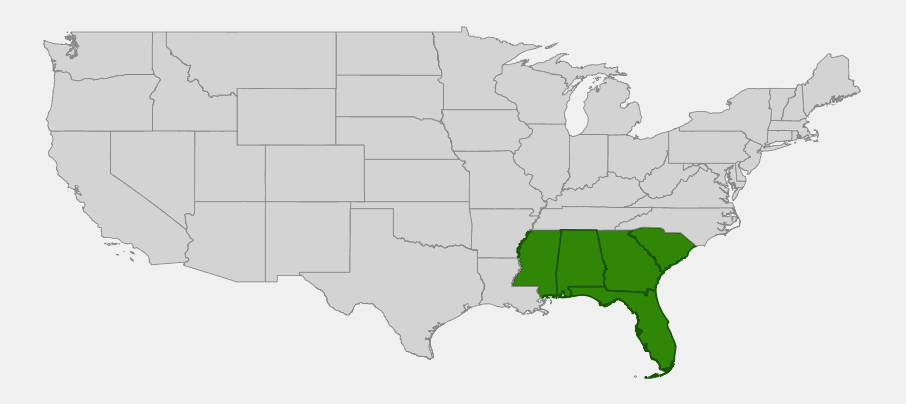
Climbing fetterbush is native to Florida, Georgia, Alabama, Mississippi and South Carolina. It is not commonly sold, but specialist native nurseries offer the shrubby form, which makes a handsome, low evergreen groundcover for moist, acidic sites.
Identification
Several heath-family shrubs in the Southeast are called fetterbush. Climbing fetterbush is the only one that climbs trees under the bark, and its small, leathery leaves and short clusters of white bells help identify the shrubby form.
Growth Habit
The plant spreads by slender rhizomes. On pond cypress, and less often Atlantic white cedar or other trees with loose, fibrous bark, the rhizome-like stems run upward in the crevices beneath the outer bark, sometimes high into the canopy, and the main stem is hidden except near the base. Short, leafy branches emerge through the bark at intervals. In open bogs, flatwoods and pond margins without suitable trees, it forms low, dense colonies 1 to 3 feet tall.
Leaves
The leaves are evergreen, alternate, thick and leathery, narrowly elliptic to oblong, about 1 to 2½ inches long, with edges that are slightly rolled under and often finely toothed toward the tip. They are dark, glossy green above and paler below.
Flowers
From about December to May, mostly in late winter and early spring, it produces short clusters (racemes) of 3 to 10 or more white, urn-shaped flowers from the leaf axils. Each flower is about ¼ inch long, hanging from a reddish stalk, with a small opening at the tip and reddish anthers visible inside.
Fruit
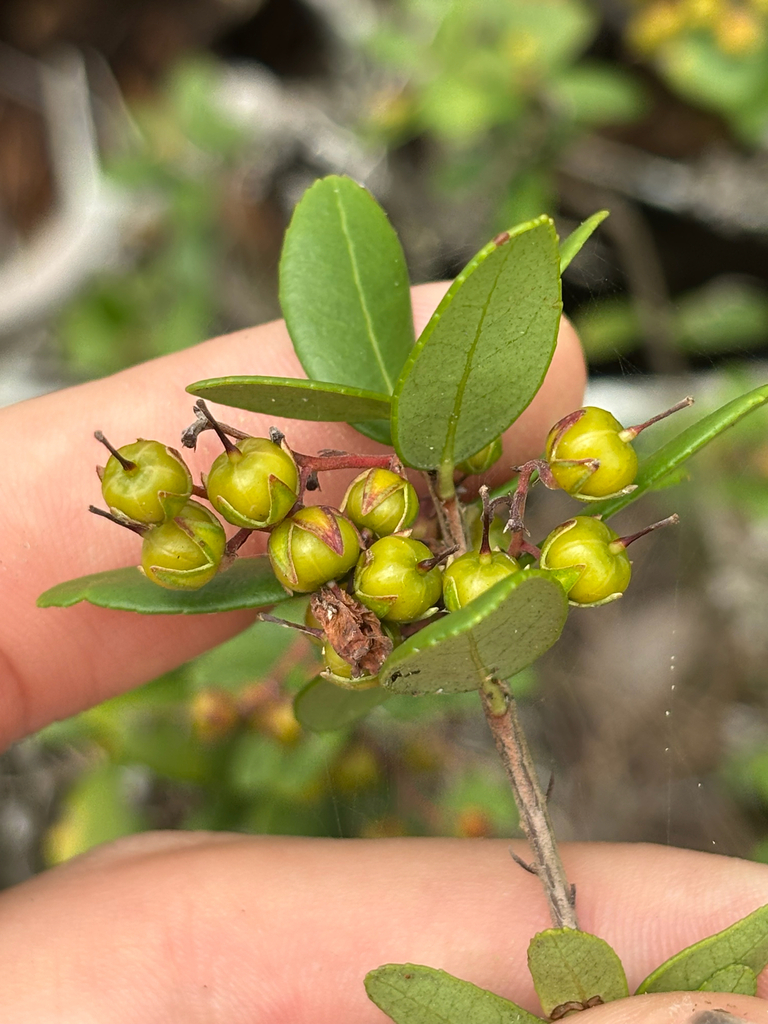
The fruits are small, round, dry capsules that start green and turn brown, splitting into five parts to release many tiny seeds.
Similar Species
Fetterbush (Lyonia lucida) is a much larger, upright shrub with pink flowers and leaves with a distinct vein along the margin. Coastal doghobble and swamp doghobble (Leucothoe) have longer, more pointed leaves and longer flower clusters. Neither climbs trees.
Quick Facts
| Scientific Name | Pieris phillyreifolia (Atlas spelling P. phyllyreifolia; syn. Ampelothamnus phillyreifolius) |
| Family | Ericaceae (heath family) |
| Plant Type | Evergreen shrub or bark-climbing vine |
| Mature Height | 1–3 ft as a shrub; climbs much higher on cypress trunks |
| Mature Spread | Spreads slowly by rhizomes into colonies |
| Growth Rate | Slow |
| Sun Exposure | Part shade to full sun |
| Water Needs | High; moist to wet, acidic soil |
| Soil Type | Acidic peat, muck or sand |
| Soil pH | About 4.0–5.5 |
| Bloom Time | December–May (mainly late winter to early spring) |
| Flower Color | White |
| Fall Color | None (evergreen) |
| Fruit | Small dry, five-parted capsules |
| Deer Resistant | Unknown |
| USDA Hardiness Zones | 7–9 |
Native Range
Climbing fetterbush is native to the outer Coastal Plain of the Southeast. USDA PLANTS and the Lady Bird Johnson Wildflower Center record it from Florida, Georgia, Alabama, Mississippi and South Carolina. In Florida it is found mainly in the Panhandle and northern Florida, where it is fairly frequent in cypress domes and swamps, and it becomes scarcer toward the edges of its range.
Its habitats are cypress domes, cypress-gum ponds and swamps, Atlantic white cedar swamps, bay swamps, wet flatwoods, bogs and the shores of acidic ponds and lakes. These places are flooded part of the year, very acidic and low in nutrients.
It is not state-listed in Florida. Its survival depends on keeping cypress swamps and their surrounding flatwoods intact, since logging of cypress and drainage of wetlands remove both the host trees it climbs and the saturated soils it needs.
📋 Regional plant lists featuring Climbing Fetterbush: North & South Florida · Alabama, Georgia & Mississippi · North & South Carolina
Growing & Care Guide
In gardens, climbing fetterbush is grown as a low, evergreen shrub or groundcover rather than as a climber. It needs the same acidic, moist conditions as blueberries and other heaths, and it rewards patience with glossy leaves and early white flowers.
Light
Part shade is ideal, such as the edge of a woodland or under high pines. It tolerates full sun if the soil stays moist; in deep shade it flowers poorly.
Soil & Water
Plant it in acidic, organic or sandy soil that stays moist to wet. It is well suited to pond edges, rain gardens and low spots, and it does not tolerate alkaline soil or long dry spells. Mulch with pine straw or leaves and water during droughts, especially in the first two years.
Planting Tips
Use it as a groundcover in a bog or pond-edge planting, or at the base of a pond cypress or bald cypress where it may eventually try to climb. Pair it with other acid-loving natives such as sweetbay, titi, inkberry and blueberries. Buy plants from nurseries that propagate them, rather than digging from swamps.
Pruning & Maintenance
Little pruning is needed. Trim straggly stems after flowering if you want a neater mound. Avoid lime and general-purpose fertilizer; if feeding is needed, use a product for acid-loving plants.
Propagation
Propagate by dividing rooted sections of the rhizomes, by stem cuttings, or from the very fine seed sown on the surface of moist peat in cool conditions. Growth is slow either way.
Landscape Uses
- Bog and pond-edge gardens: a low evergreen for wet, acidic soils
- Woodland groundcover: glossy year-round foliage in part shade
- Early-season pollinator gardens: winter and early-spring flowers for bees
- Cypress swamp restoration: a characteristic shrub of cypress domes and cedar swamps
Wildlife & Ecological Value
Climbing fetterbush is a modest but distinctive member of the cypress swamp community, and its early flowers matter to insects active at the end of winter.
For Pollinators
The small bell-shaped flowers are visited by bees, especially small native bees and bumblebees active in late winter and early spring, when few other flowers are open.
For Birds
The dry capsules hold tiny seeds of little food value. The evergreen foliage on cypress trunks and in low thickets gives cover to small birds such as wrens and warblers in swamps.
For Mammals
It is of little food value to mammals. Like other Pieris, its foliage should be treated as toxic if eaten.
Ecosystem Role
By climbing beneath the bark of cypress and cedar, climbing fetterbush lives in a niche few other plants use, rooted in the soil but able to reach light high on the trunk. In shrubby form it is part of the dense evergreen understory of bogs and swamps that shades the water and shelters wildlife.
Cultural & Historical Uses
The species name phillyreifolia means “with leaves like Phillyrea,” a Mediterranean shrub in the olive family. The name has been spelled several ways over the years, which is why the Atlas of Florida Plants (phyllyreifolia) and USDA PLANTS (phillyreifolia) differ.
Some botanists, including John Kunkel Small, placed it in its own genus, Ampelothamnus (“vine shrub”), because of its odd climbing habit. Today it is included in Pieris, a small genus with species in eastern Asia, the Appalachians, Cuba and the southeastern Coastal Plain.
Its habit of growing under the bark of pond cypress has fascinated botanists for decades, and it remains one of the more remarkable sights for visitors to the cypress domes of north Florida and south Georgia. The common names vine-wicky and climbing fetterbush both refer to that climbing habit.
Frequently Asked Questions
How does climbing fetterbush climb?
Its stems grow upward underneath the loose, fibrous bark of trees such as pond cypress and Atlantic white cedar, emerging through the bark as short leafy branches. It does not use tendrils or twining stems.
Is climbing fetterbush the same as fetterbush?
No. “Fetterbush” is used for several heath-family shrubs. The plant usually called fetterbush in Florida is Lyonia lucida, a larger upright shrub with pink flowers. Climbing fetterbush is Pieris phillyreifolia.
Can I grow climbing fetterbush in my garden?
Yes, in moist to wet, acidic soil in part shade. In gardens it usually grows as a low evergreen groundcover 1 to 3 feet tall. It does not tolerate alkaline soil or drought.
When does climbing fetterbush bloom?
Mainly in late winter and early spring, with flowers recorded from December through May.
Is climbing fetterbush poisonous?
Many plants in the heath family, including other Pieris, contain grayanotoxins, so treat the leaves as toxic and keep them away from pets and livestock.

Looking for a nursery that carries Climbing Fetterbush?
Browse our native plant nursery directory: Alabama · Florida & Georgia · Mississippi · South Carolina