
Henderson’s Angelica (Angelica hendersonii)
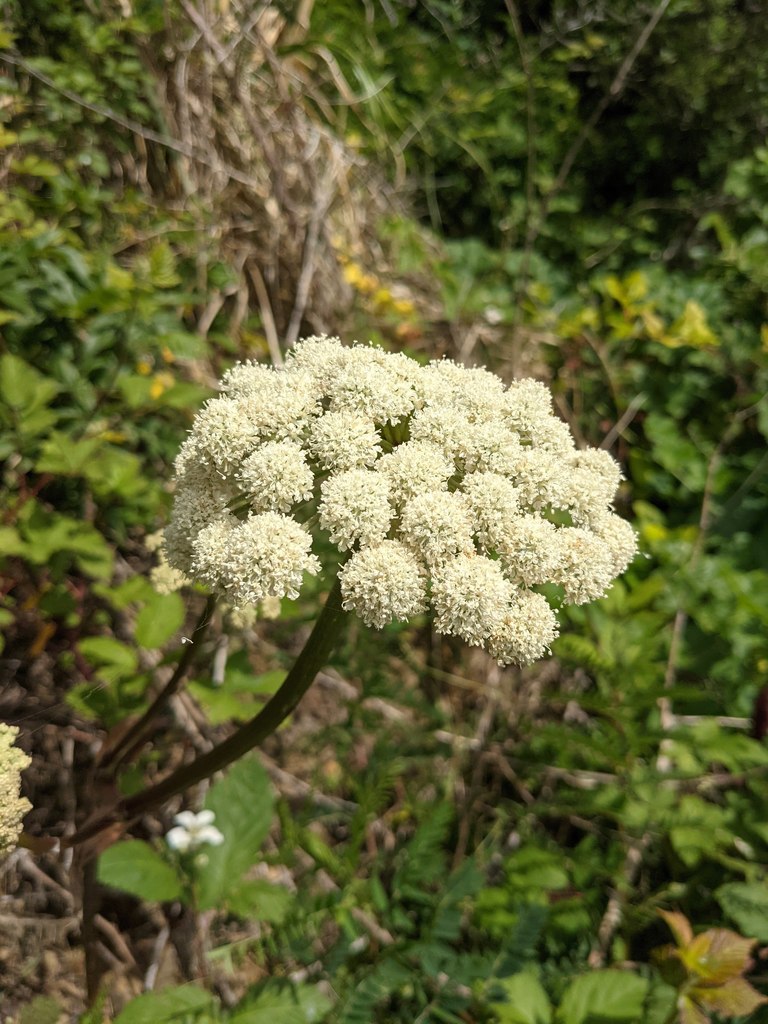
Angelica hendersonii, known as Henderson’s Angelica or coast angelica, is a stout perennial of the carrot family (Apiaceae) that grows on sea bluffs, coastal dunes and grassy headlands along the Pacific coast from Washington to central California. It forms a clump of thick, divided leaves that are green above and densely white-woolly beneath, and in summer sends up stout stems 1 to 4 feet tall topped by dense, rounded umbels of tiny white flowers.
It is one of the most striking wildflowers of the windswept outer coast, often growing among seaside daisies, beach strawberries and coyote brush. The woolly undersides of its leaves, the woolly flower stalks and its dense, ball-like umbels set it apart from other coastal members of the carrot family. It is named for Louis F. Henderson, a pioneering botanist of the Pacific Northwest.
Safety note: the carrot family includes some of the most poisonous plants in North America, such as poison hemlock and water hemlock, which can look similar to angelicas. Never eat any wild plant in this family unless an expert has confirmed its identity. Henderson’s angelica is a fine plant for coastal native gardens, but buy it from native plant nurseries and never dig it from bluffs, where digging causes erosion.
Identification
Look on coastal bluffs and dunes for a robust perennial with leaves divided into broad, toothed leaflets that are white-woolly beneath, and stout stems topped by dense, rounded umbels of white flowers.
Growth Habit
It is a perennial from a stout taproot, forming a low clump of leaves, with one to several stout, hollow, often woolly flowering stems usually 1 to 4 feet tall. On exposed bluffs plants are often compact; in sheltered spots they grow taller.
Leaves
The leaves are large and once or twice divided into broad, oval leaflets 1 1/2 to 3 inches long, with toothed edges. They are thick, green and mostly smooth above, and densely covered with white, felt-like hairs beneath, so the undersides look silvery white. The leaf stalks have broad, sheathing bases.
Flowers
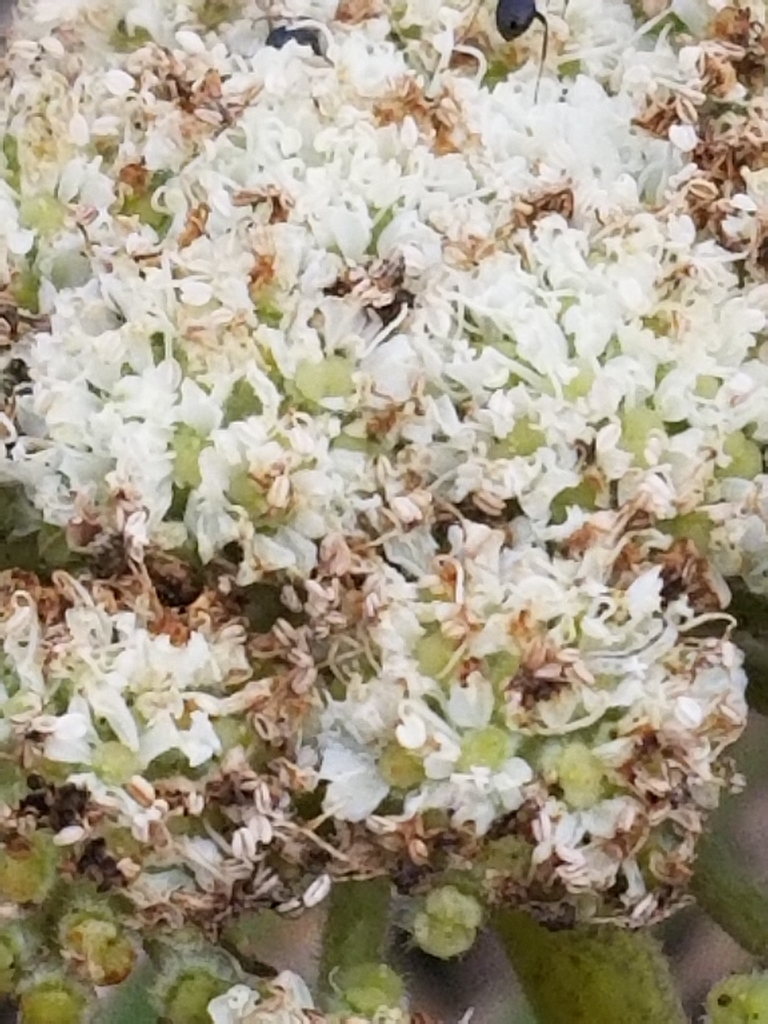
The flowers are tiny, white to cream, and packed into dense, rounded compound umbels 3 to 6 inches across, at the tops of the stems. The umbel rays and flower stalks are woolly. Bloom time is mostly May to August.
Fruit
The fruits are flattened, oval, about 1/4 inch long, and woolly, with thin wings along the edges, like those of other angelicas. They ripen in late summer and fall.
Dangerous Look-alikes
Poison hemlock (Conium maculatum), a non-native weed common in coastal California, has very finely divided, fern-like leaves, smooth stems with purple blotches and a musty smell; it is deadly if eaten. Water hemlock (Cicuta species, including spotted water hemlock) grows in wet places and is among the most toxic plants in North America; its leaflet veins run to the notches between teeth. Never taste or eat a wild member of the carrot family.
Other Look-alikes
Cow parsnip (Heracleum maximum) grows in similar places but has huge, maple-like leaves and flat-topped umbels; its sap can cause skin burns in sunlight. Seacoast angelica (Angelica lucida) has smooth, shiny leaves without woolly undersides. Purple-stemmed angelica (A. atropurpurea) is an eastern species of wet meadows with tall purple stems.
Quick Facts
| Scientific Name | Angelica hendersonii |
| Family | Apiaceae (carrot family) |
| Plant Type | Herbaceous perennial |
| Mature Height | 1–4 ft |
| Mature Spread | 1–3 ft |
| Growth Rate | Moderate |
| Sun Exposure | Full sun |
| Water Needs | Low to moderate; coastal fog |
| Soil Type | Sandy or rocky, well-drained |
| Soil pH | Slightly acidic to slightly alkaline (about 6.0–8.0) |
| Bloom Time | May–August |
| Flower Color | White to cream |
| Fall Color | None |
| Fruit | Flattened, woolly, winged fruits |
| Deer Resistant | Moderately |
| USDA Hardiness Zones | 8–10 |
Native Range
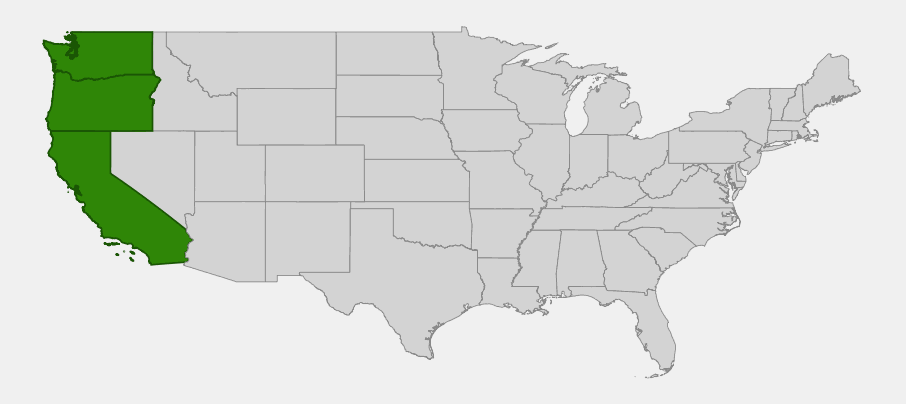
Henderson’s angelica is native to the Pacific coast of the United States. USDA PLANTS lists it as native in California, Oregon and Washington. It grows in a narrow strip along the outer coast from southwestern Washington south through coastal Oregon and northern California to the Central Coast of California.
It is common on the headlands and bluffs of the Oregon coast, such as Cape Arago and the Yachats area, and in California at Redwood National Park, the Sonoma and Mendocino coasts, Point Reyes National Seashore and the San Mateo County coast. It does not grow inland or east of the Coast Ranges.
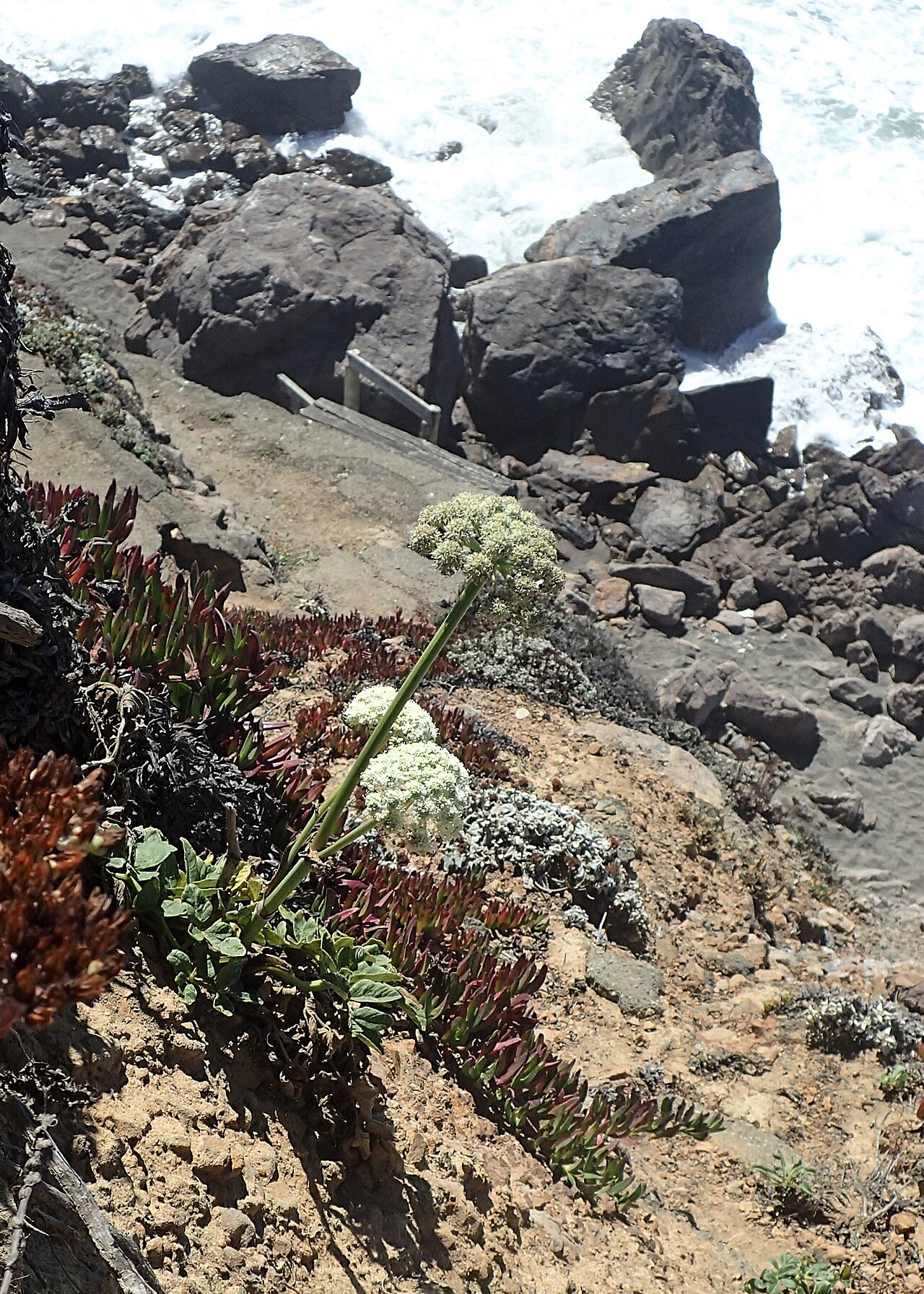
Habitats include coastal bluffs and sea cliffs, stabilized dunes, coastal prairie and grassy headlands, and openings in coastal scrub, almost always within reach of salt spray and summer fog, from sea level to a few hundred feet.
📋 Regional plant lists featuring Henderson’s Angelica: Western Oregon & Western Washington · California & Nevada
Growing & Care Guide
Henderson’s angelica is a bold, architectural perennial for coastal gardens in its native range. It thrives in sun, wind, fog and sandy soil, and dislikes hot, dry inland summers.
Light
Full sun on the coast. Inland, give it light afternoon shade, but expect it to struggle in hot climates.
Soil & Water
Plant in well-drained sandy, gravelly or rocky soil. Water regularly through the first year; once established on the coast it needs little summer water, as fog provides moisture. Avoid heavy, waterlogged soil.
Planting Tips
Plant container-grown plants in fall or winter, 2 to 3 feet apart. Because of its deep taproot, plant it where it can stay; it does not transplant well once established. It looks best with low coastal plants such as seaside daisy, sea thrift and beach strawberry.
Pruning & Maintenance
Cut flower stalks back after seed has dropped, or leave some for birds and for winter structure. Remove old leaves in winter. Wear gloves when handling carrot-family plants, as some people are sensitive to their sap.
Propagation
Grow from fresh seed sown in fall outdoors or in deep pots; seeds usually need a period of cold, moist conditions to germinate. Plants may take two or three years to bloom.
Landscape Uses
- Coastal gardens: a bold, salt-tolerant perennial for bluff-top and seaside gardens
- Bluff restoration: helps hold sandy and rocky soil on coastal slopes
- Pollinator gardens: large umbels attract many flies, bees, wasps and beetles
- Butterfly gardens: a host plant for swallowtail caterpillars
- Architectural accent: dramatic white-woolly leaves and globe-shaped umbels
Wildlife & Ecological Value
Henderson’s angelica is an important summer nectar plant on the windswept outer coast, where flowers are scarce in exposed places.
For Pollinators
The open umbels attract a wide range of short-tongued pollinators, including flies, small bees, wasps and beetles. Like other angelicas and members of the carrot family, it is a likely host plant for the caterpillars of the anise swallowtail.
For Birds
Seed-eating birds such as finches and sparrows feed on the ripe fruits, and insect-eating birds forage for insects on the umbels.
For Mammals
Deer and rabbits occasionally browse the leaves. Small mammals take shelter in the dense clumps on bluffs.
Ecosystem Role
Its deep taproot helps stabilize sandy and rocky soils on exposed bluffs and dunes, and its flowers support a rich community of insects in coastal prairie and scrub.
Cultural & Historical Uses
The species name honors Louis F. Henderson (1853–1942), a botanist and teacher who collected plants extensively in Oregon, Washington and Idaho in the late nineteenth and early twentieth centuries. Several Northwest plants bear his name.
The genus name Angelica comes from medieval European beliefs that the related garden angelica (A. archangelica) had angelic healing powers. Garden angelica stems are still candied and used to flavor liqueurs, and Indigenous peoples of the West used some native angelicas in medicine and ceremony.
Because deadly look-alikes such as poison hemlock and water hemlock grow in the same regions, no part of Henderson’s angelica should be eaten or used as a remedy. Its value today is as a handsome coastal wildflower and as part of the native plant communities of the Pacific coast.
Frequently Asked Questions
Is Henderson’s angelica edible?
It is not recommended. Members of the carrot family are easily confused with deadly poison hemlock and water hemlock, so never eat a wild angelica unless an expert has confirmed it.
How do I recognize Henderson’s angelica?
Look for broad, toothed leaflets that are green above and white-woolly beneath, woolly flower stalks and dense, rounded umbels of white flowers on coastal bluffs and dunes.
Where does Henderson’s angelica grow?
Along the Pacific coast from southwestern Washington through Oregon to the Central Coast of California, on bluffs, dunes and coastal prairie.
Can I grow Henderson’s angelica inland?
It prefers cool, foggy coastal climates. Inland it needs afternoon shade and regular water, and it may not thrive in hot summers.
Does Henderson’s angelica attract butterflies?
Its flowers attract many insects, and like other plants in the carrot family it can serve as a host for swallowtail caterpillars.

Looking for a nursery that carries Henderson’s Angelica?
Browse our native plant nursery directory: California · Oregon · Washington

