
Bristly Fiddleneck (Amsinckia tessellata)
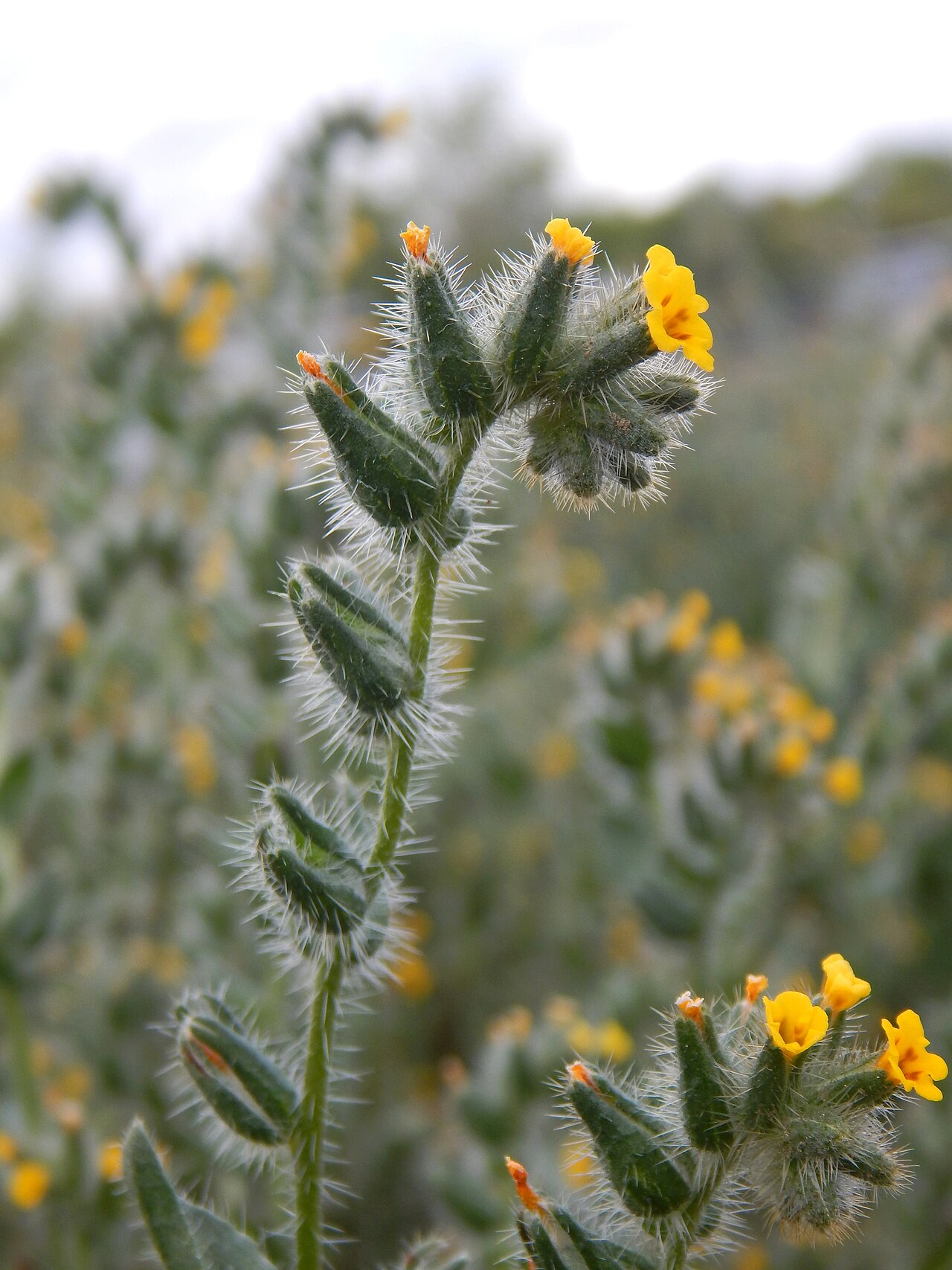
Amsinckia tessellata, known as Bristly Fiddleneck, checker fiddleneck or desert fiddleneck, is a spring annual of the borage family (Boraginaceae) native to the deserts, sagebrush steppe and dry grasslands of the western United States, British Columbia and northwestern Mexico. It grows 8 to 24 inches tall, and its stems and leaves bristle with stiff, sharp white hairs. Small orange-yellow, tubular flowers open along curled stem tips that unroll like the scroll of a fiddle, giving the plant its name.
After wet winters it can cover desert flats, hillsides and roadsides, coloring them yellow-orange together with poppies, goldfields and phacelias. It is a valuable early nectar source for bees and butterflies, and it is often abundant after fire or other disturbance.
Safety note: bristly fiddleneck contains pyrrolizidine alkaloids, which can cause serious liver damage in cattle, horses and pigs that eat it in hay or grain, and its seeds can contaminate grain crops. Its stiff bristles irritate skin, so wear gloves when handling it. Do not eat any part of the plant, and do not let livestock graze heavy stands.
Identification
Look for a bristly, gray-green spring annual with narrow leaves and coiled tips of small orange-yellow trumpet flowers, usually in dry, open ground.
Growth Habit
It is an annual with one to several erect or spreading stems, 8 to 24 inches tall (occasionally to 30 inches), from a basal rosette. All parts are covered with stiff, spreading white bristles, many with swollen, blister-like bases, mixed with shorter hairs.
Leaves
The basal leaves are narrow to lance-shaped, 1 to 6 inches long. Stem leaves are alternate and smaller. Leaves are gray-green and bristly, and the bases of the hairs often look like small white bumps.
Flowers
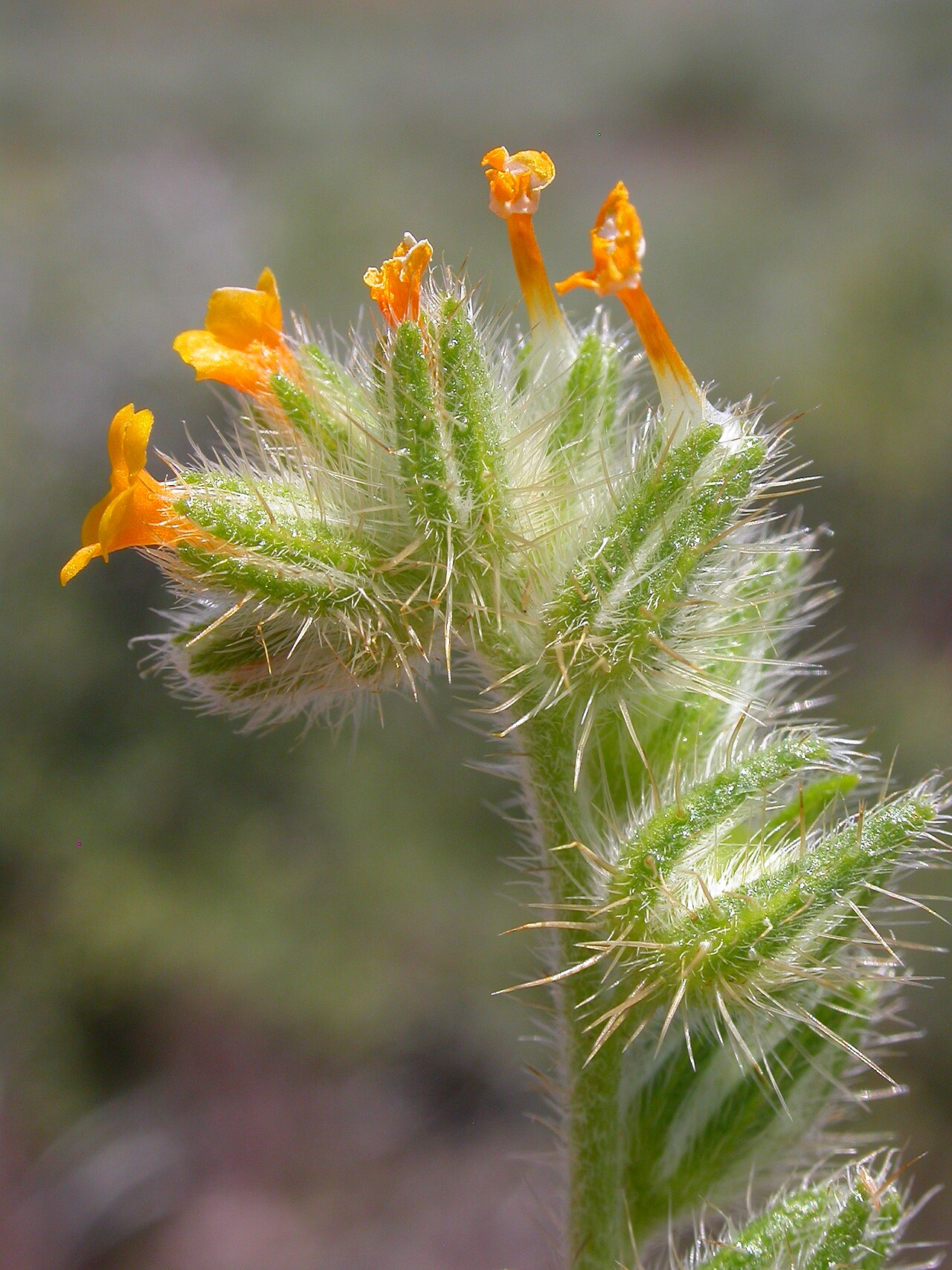
The flowers are borne along coiled, one-sided clusters (scorpioid cymes) that uncurl as the flowers open. Each flower is a small, narrow tube about 1/4 to 1/2 inch long, opening to five lobes, yellow to orange. A useful field mark is the calyx: in bristly fiddleneck, some of the five sepals are usually fused, so the calyx appears to have only two to four unequal lobes. Bloom time is February to June, depending on elevation and rainfall.
Fruit
Each flower produces up to four small nutlets. In this species, the nutlets are covered with a pattern of small, raised, checkered bumps, which inspired the name tessellata (“checkered” or “tiled”).
Look-alikes
Common fiddleneck (Amsinckia menziesii, including A. intermedia) is very similar but has five separate calyx lobes and nutlets with a smoother, ridged surface. Other fiddlenecks are separated by similar technical details of the calyx and nutlets. Popcorn flowers (Plagiobothrys) and cryptanthas have coiled clusters of small white flowers.
Quick Facts
| Scientific Name | Amsinckia tessellata |
| Family | Boraginaceae (borage family) |
| Plant Type | Annual wildflower |
| Mature Height | 8–24 in |
| Mature Spread | 6–12 in |
| Growth Rate | Fast |
| Sun Exposure | Full sun |
| Water Needs | Low; winter-spring rain only |
| Soil Type | Sandy, gravelly or loamy; dry, open ground |
| Soil pH | Neutral to alkaline (about 6.5–8.5) |
| Bloom Time | February–June |
| Flower Color | Yellow to orange |
| Fall Color | None (annual) |
| Fruit | Four small, checkered-bumpy nutlets |
| Deer Resistant | Yes; bristly and toxic, rarely browsed |
| USDA Hardiness Zones | Annual; grows in about zones 5–10 |
Native Range
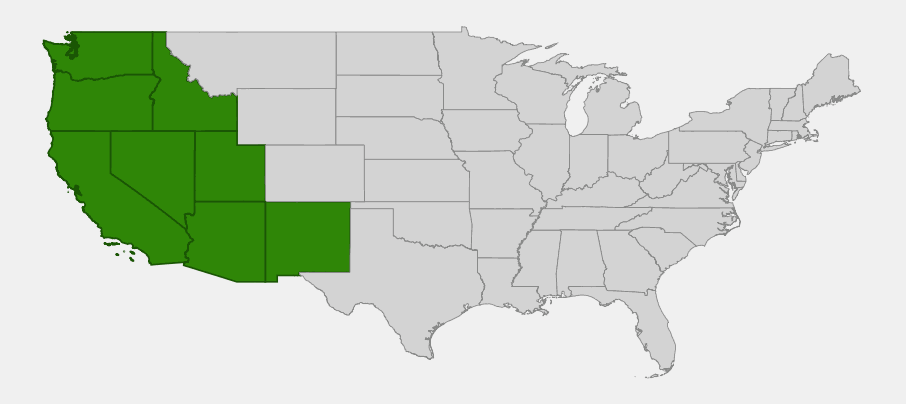
Bristly fiddleneck is native to the arid West. USDA PLANTS lists it as native in Arizona, California, Idaho, Nevada, New Mexico, Oregon, Utah and Washington, and in British Columbia. A Missouri record listed by USDA represents an introduction outside its natural range and is not included here. It also grows in Baja California and Sonora, Mexico.
It is most common in the Mojave and Sonoran Deserts of California, Arizona and Nevada, in the Great Basin, and in the Columbia Basin of eastern Washington and Oregon and southern Idaho. In California it also grows in the Central Valley, the inner Coast Ranges and Southern California. In the Pacific Northwest it is found mainly east of the Cascades.
It grows in open desert scrub, sagebrush and saltbush flats, grasslands, Joshua tree and pinyon-juniper woodlands, washes, rocky slopes, old fields, burns and roadsides, from below sea level in desert valleys to about 7,000 feet.
📋 Regional plant lists featuring Bristly Fiddleneck: Idaho, Eastern Oregon & Eastern Washington · Utah & Western Colorado · Arizona & New Mexico · California & Nevada · Western Oregon & Western Washington
Growing & Care Guide
Bristly fiddleneck is rarely planted on purpose. It is easy to grow from seed in dry, sunny places, but because of its toxicity to livestock and its prickly hairs, it is best suited to wild areas, desert restoration and pollinator plantings far from pastures and hay fields.
Light
Full sun.
Soil & Water
Any well-drained, dry soil, including sand, gravel and disturbed ground. It relies on winter and early spring rain. No summer water is needed; the plant dies after setting seed.
Planting Tips
Scatter seed in fall on bare, lightly raked soil. Seedlings appear after winter rains. Do not sow it near livestock pastures, hay fields or grain crops.
Pruning & Maintenance
No pruning is needed. To limit spread, pull plants before the nutlets ripen, wearing gloves and long sleeves to avoid skin irritation from the bristles.
Propagation
It grows only from seed and often self-sows heavily in disturbed soil. Buy seed only if it is needed for a native restoration project.
Landscape Uses
- Desert restoration: a fast-growing native annual on bare and burned ground
- Pollinator habitat: early spring nectar for bees and butterflies
- Wild areas: part of natural spring wildflower displays
- Erosion control: quick cover on disturbed soil after rain
- Wildflower viewing: look for it in desert superblooms in wet years
Wildlife & Ecological Value
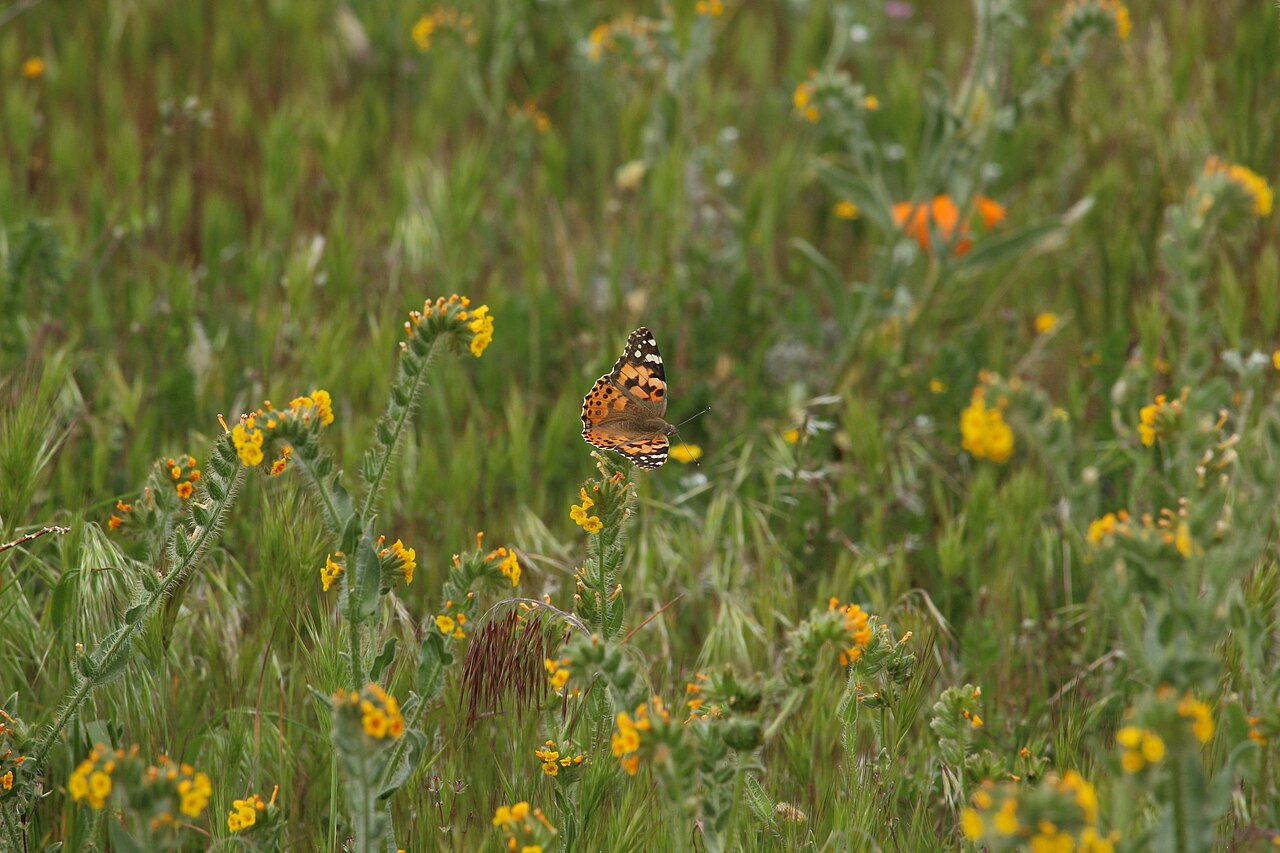
Bristly fiddleneck is an important early-season food plant in western deserts and grasslands, especially in wet years when it blooms by the millions.
For Pollinators
The flowers provide nectar and pollen for native bees, bee flies and butterflies. Migrating painted lady butterflies often feed on fiddlenecks in spring, and their caterpillars feed on plants in the borage family, among others.
For Birds
Seed-eating birds such as sparrows, finches and quail eat the nutlets.
For Mammals
Rodents, including kangaroo rats and pocket mice, collect the seeds. Large grazing animals generally avoid the bristly, toxic plants.
Ecosystem Role
As a pioneer annual, it quickly covers bare soil after rains, fire or disturbance, holding soil and supporting insects until perennial plants return. Its seed bank allows it to persist through long droughts.
Cultural & Historical Uses
The genus Amsinckia is named for Wilhelm Amsinck, a nineteenth-century patron of the Hamburg Botanical Garden. The name fiddleneck describes the coiled flower clusters, which look like the scroll of a violin.
Fiddlenecks have long been known to cause poisoning in livestock. Their pyrrolizidine alkaloids damage the liver over time, and farmers in the West have recorded losses of horses, cattle and pigs fed contaminated hay or grain. The plants also accumulate nitrates. These are good reasons to keep it away from farm animals.
Today bristly fiddleneck is best known as one of the signature flowers of desert superblooms, when wet winters bring carpets of yellow-orange fiddlenecks, goldfields and poppies to places like Joshua Tree National Park and the Antelope Valley. It has no safe food or medicinal use.
Frequently Asked Questions
Is bristly fiddleneck poisonous?
Yes. It contains pyrrolizidine alkaloids that can cause liver damage in cattle, horses and pigs, especially when eaten in hay or grain. It should not be eaten by people or pets.
Why is it called fiddleneck?
Its flowers open along coiled stem tips that unroll gradually, resembling the scroll at the top of a violin.
How do I tell bristly fiddleneck from common fiddleneck?
Bristly fiddleneck usually has a calyx with only two to four lobes because some sepals are fused, and its nutlets have a checkered, bumpy surface. Common fiddleneck has five separate calyx lobes.
Can bristly fiddleneck hurt my skin?
Its stiff bristles can irritate skin, so wear gloves and long sleeves when handling it.
Is bristly fiddleneck native?
Yes. It is native to the deserts and dry grasslands of the western United States, British Columbia and northwestern Mexico.

Looking for a nursery that carries Bristly Fiddleneck?
Browse our native plant nursery directory: Arizona · California · Idaho · Nevada & New Mexico · Oregon · Utah · Washington

