
Hoary Rosmarymint (Poliomintha incana)
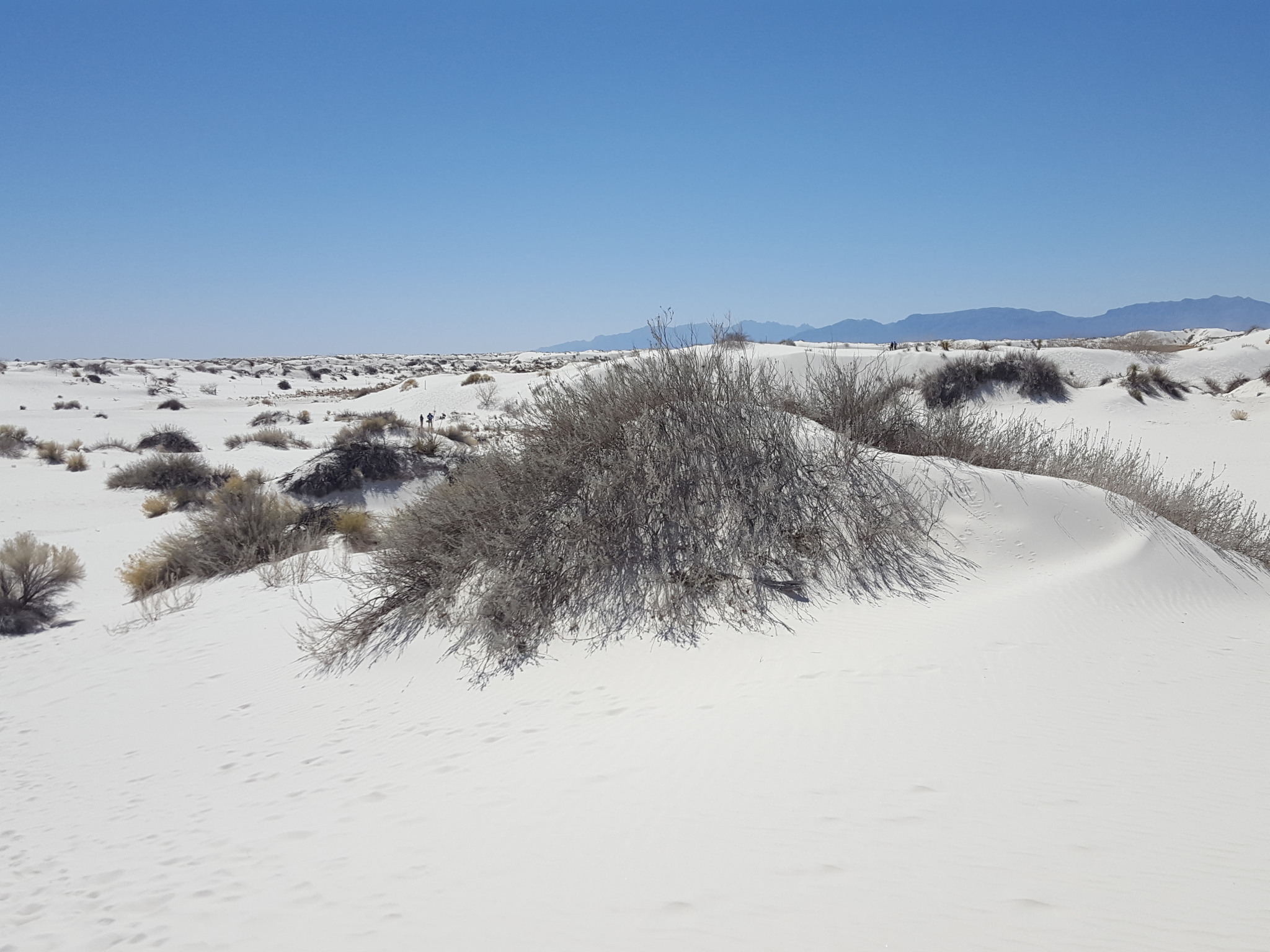
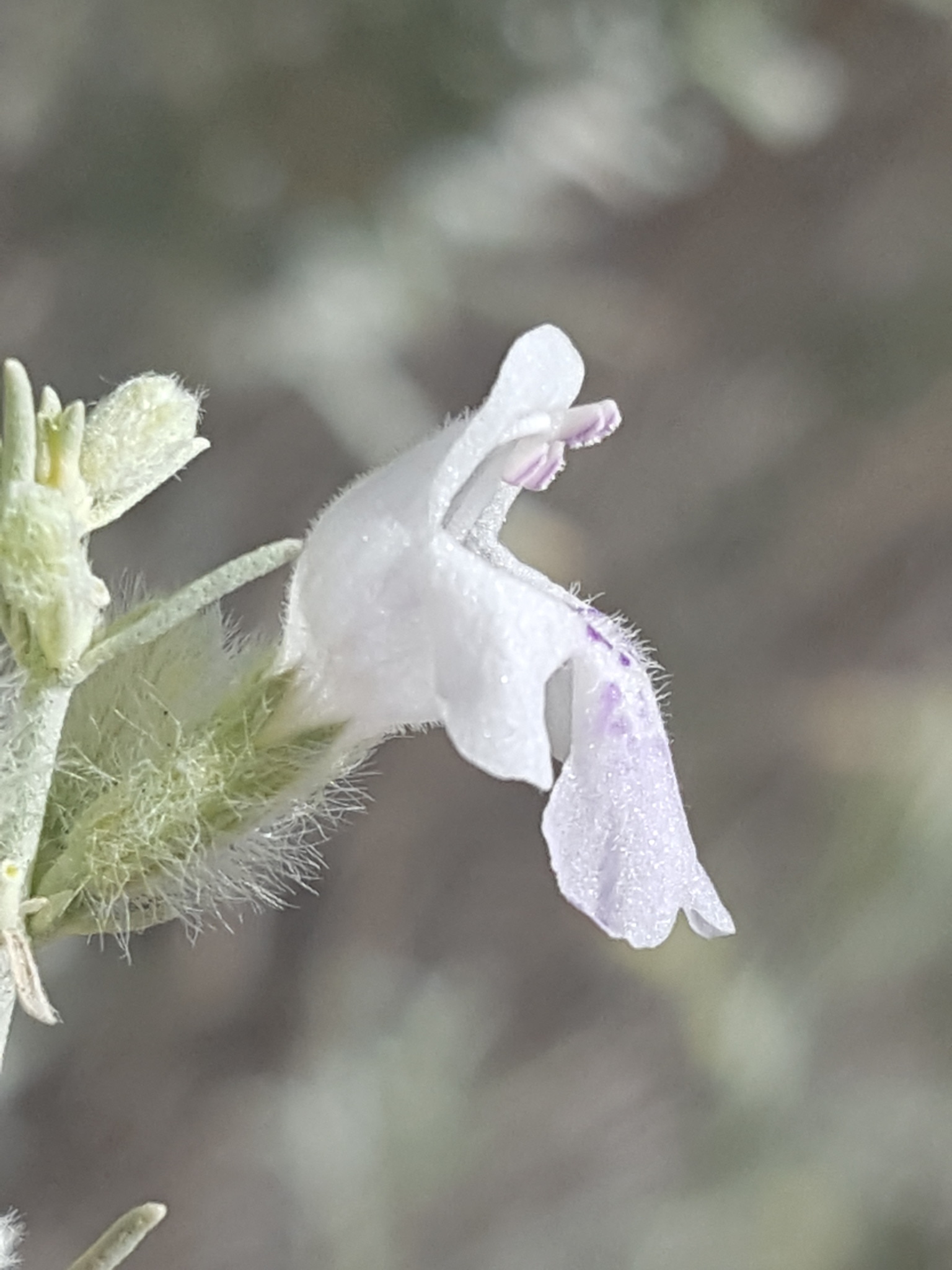
Poliomintha incana, commonly known as Hoary Rosmarymint, is a compact, highly aromatic native shrub of the American Southwest that combines the visual appeal of Rosemary with the ecological value and drought tolerance of a true desert native. A member of the Lamiaceae (mint) family, Hoary Rosmarymint grows 2 to 4 feet tall and wide, forming a dense, rounded mound of narrow, needle-like leaves coated in fine white hairs that give the plant its characteristic silvery-white, “hoary” (frosted) appearance. In spring and early summer — and often again after monsoon rains — the plant is covered with clusters of small, two-lipped lavender-blue flowers that attract native bees and other pollinators in impressive numbers.
The fragrance of Hoary Rosmarymint is one of its most celebrated features. The leaves contain abundant aromatic oils and emit a strong, pleasant minty-herbal scent when brushed or rubbed — described variously as reminiscent of Rosemary, Oregano, or a combination of mint and sage. This fragrance is continuous throughout the growing season and intensifies with warmth and sun, making Hoary Rosmarymint a sensory experience as well as a visual one. Plant it along pathways, near entries, or in containers where the fragrance will be noticed and enjoyed.
From a horticultural standpoint, Hoary Rosmarymint is an ideal plant for the low-water Southwest garden. It is highly drought tolerant once established, cold hardy to approximately -10°F (USDA Zone 5–6), and requires minimal maintenance beyond occasional shaping. Its compact form, silvery foliage, and extended bloom season make it an excellent border plant, rockery specimen, and low informal hedge. Despite its relative obscurity compared to more widely grown aromatic herbs, Hoary Rosmarymint deserves far wider use in sustainable Southwest landscaping.
Identification
Hoary Rosmarymint is a compact evergreen to semi-evergreen shrub typically reaching 2 to 4 feet tall and equally wide, with a dense, mounding, rounded form. The stems are woody at the base and herbaceous near the tips, branching abundantly to create a bushy, well-filled appearance. The overall effect is strikingly similar to Rosemary (Rosmarinus officinalis) in form and fragrance, hence the common name.
Leaves
The leaves are the plant’s most distinctive feature — small, narrow, and needle-like, just ½ to 1 inch long and only 1–2 mm wide, arranged oppositely or in small clusters along the stems. Both surfaces are densely covered with tiny white hairs (trichomes) that give the foliage a distinctive silvery-white, almost woolly appearance — the “hoary” quality referenced in the common name. The hairs serve a functional purpose: they reflect intense desert sunlight and reduce leaf temperature, a classic drought-adaptation strategy. The foliage is fragrant when touched, releasing a strong minty-herbal scent.
Flowers
The flowers are small (about ¼ inch long) but produced in great abundance. They are tubular, two-lipped (labiate) in the classic mint-family pattern, with the upper lip two-lobed and the lower lip three-lobed, colored pale lavender to lilac-blue. Flowers are arranged in whorls in the leaf axils, densely clustered along the upper stems in a pattern that creates a spiky, bottlebrush-like floral display. The primary bloom is in spring (April–June), with reliable secondary bloom after summer rains (August–September). The flowers are rich in nectar and actively visited by native bees, honeybees, and small butterflies.
Fruit
After flowering, Hoary Rosmarymint produces tiny, hard, four-part nutlets (the typical fruit of Lamiaceae) enclosed within the persistent calyx. The nutlets are very small and not ornamentally significant, but they are consumed by some sparrows and other seed-eating birds that forage in dense native plantings.
Quick Facts
| Scientific Name | Poliomintha incana |
| Family | Lamiaceae (Mint) |
| Plant Type | Evergreen to Semi-evergreen Shrub |
| Mature Height | 4 ft (typically 2–4 ft) |
| Sun Exposure | Full Sun |
| Water Needs | Low (Drought Tolerant) |
| Bloom Time | April – June; again August – September |
| Flower Color | Lavender to lilac-blue |
| Fragrance | Excellent — strong minty-herbal (Rosemary-like) |
| USDA Hardiness Zones | 5–9 |
Native Range
Poliomintha incana is native to the arid and semi-arid regions of the American Southwest, with its range centered on the Colorado Plateau and surrounding desert regions. The species is found in Utah (primarily in the southern canyon country), Colorado (especially the canyon country of Mesa Verde and adjacent areas), Arizona (northern and central), New Mexico (throughout the state), Texas (Trans-Pecos region), and Nevada (southern). It extends into northern Mexico — Baja California Norte, Sonora, Chihuahua, and Coahuila — following the Chihuahuan Desert complex southward.
Within its range, Hoary Rosmarymint occupies dry, open habitats at moderate elevations — typically between 3,500 and 7,000 feet. It is most commonly found on sandy or gravelly slopes, desert scrub communities, pinyon-juniper woodland margins, and dry canyon walls. It grows on calcareous (limestone-based) soils as well as sandstone-derived soils, and is particularly characteristic of the sandy, calcareous flats and hills of the Chihuahuan Desert transition zone in New Mexico and Texas.
In Utah’s canyon country, Hoary Rosmarymint is an indicator plant for the warm-desert transition zone — found in the canyons and mesas of Washington, Kane, and San Juan Counties where the climate grades from Great Basin cool desert to warm Mojave and Colorado Plateau conditions. It grows in association with Shadscale, Four-wing Saltbush, Blackbrush, Utah Juniper, and various cacti in these communities, forming a distinctive aromatic scrubland that is particularly appealing when in bloom.
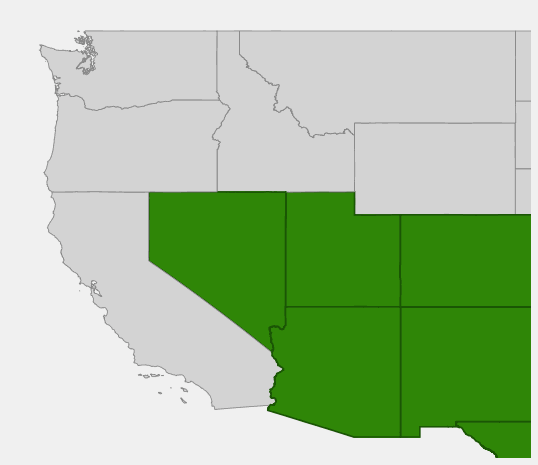
📋 Regional plant lists featuring Hoary Rosmarymint: Utah
Growing & Care Guide
Hoary Rosmarymint is one of the most rewarding and underused native shrubs for the low-water Southwest garden. Its care needs are minimal once established — it is essentially a care-free plant that thrives on neglect in the right conditions.
Light
Hoary Rosmarymint demands full sun — it is a desert-adapted plant that needs at least 6–8 hours of direct sunlight daily for best growth, bloom, and fragrance. In partial shade, it becomes leggy, produces fewer flowers, and loses the dense, mounding form that makes it attractive. Full sun also maximizes the intensity of the aromatic oils in the foliage. Plant it in the sunniest spot available.
Soil & Water
Perfect drainage is critical. Hoary Rosmarymint thrives in sandy, gravelly, or rocky soils with excellent drainage — it will struggle and may die in heavy clay or poorly drained soil. In heavy soils, amend generously with gravel and coarse sand before planting, or create a raised bed. Once established (after the first season), this plant is highly drought tolerant — it is native to regions receiving 8–14 inches of annual precipitation and needs minimal supplemental irrigation. In the first growing season, water every 1–2 weeks to establish the root system; after that, monthly deep watering or natural rainfall is generally sufficient.
Planting Tips
Plant in spring or fall, avoiding the hottest summer months. Slightly elevated planting (4–6 inches above grade) improves drainage around the crown, which is particularly important in clay soils. Do not amend the planting hole with organic material — this can retain too much moisture. Mulch with gravel (not bark) to reflect heat, maintain moisture, and keep the crown dry. Container plants transplant well. Space plants 3–4 feet apart for a mass planting or informal hedge effect.
Pruning & Maintenance
Prune lightly in early spring to remove winter-damaged tips and encourage dense, bushy new growth. Avoid heavy pruning into old wood — while the plant can recover, it prefers light shearing of the current season’s growth. Deadheading is not necessary but may encourage longer bloom. Hoary Rosmarymint is largely pest and disease free. The plant is naturally resistant to browsing by deer and rabbits due to its strongly aromatic foliage.
Landscape Uses
- Fragrance garden — one of the most aromatic native shrubs available
- Low border or edging — compact, well-shaped, seasonal color
- Dry slope planting — excellent for rocky, well-drained slopes
- Rock garden — perfect companion for native cacti and succulents
- Pollinator garden — lavender flowers attract native bees through spring and fall
- Sensory garden — the fragrant foliage is year-round, even without flowers
- Informal low hedge — can be lightly sheared for a more formal appearance
Wildlife & Ecological Value
Despite its compact size, Hoary Rosmarymint makes a disproportionately large contribution to the pollinator community and the broader desert ecosystem during its bloom periods.
For Pollinators
The spring and fall flower shows attract an impressive array of native bees. Small native bees — sweat bees, small carpenter bees, and halictid bees — work the flower clusters intensively. Larger bees including Bumble Bees, Digger Bees, and Leafcutter Bees are also regular visitors. In regions where it overlaps with hummingbird migration routes, the lavender flowers also attract foraging hummingbirds. The double bloom pattern (spring and late-summer/fall) is particularly valuable because it provides nectar during two critical periods — early season when bees are establishing and late season when they are building winter resources.
For Birds
While not a primary food plant for birds, Hoary Rosmarymint contributes indirectly by supporting the high-density native bee communities that in turn provide insect food for foraging songbirds. Several sparrow species, including Black-throated Sparrows and Brewer’s Sparrows, are regular foragers in desert shrubland communities that include Hoary Rosmarymint, gleaning seeds from the plants and insects from the surrounding soil.
Ecosystem Role
In the desert scrub and pinyon-juniper communities where it naturally occurs, Hoary Rosmarymint is one of several aromatic mint-family shrubs that contribute to the characteristic fragrance of the Southwest desert. Its dense, low-growing form provides ground-level cover and microhabitat for small invertebrates, lizards, and small mammals. The aromatic oils it produces may play a role in allelopathy (chemical inhibition of competing plants), helping to maintain the open, spaced structure characteristic of desert scrubland communities.
Cultural & Historical Uses
Hoary Rosmarymint has been used by Indigenous peoples of the Southwest, including the Diné (Navajo) and various Pueblo groups, as a medicinal and culinary herb. The strongly aromatic leaves, containing minty and rosemary-like volatile oils, were used in a variety of traditional medicinal preparations. Infusions of the leaves were taken for respiratory ailments, headaches, and as a general tonic. The plant was also used as a flavoring agent in foods — added to stews and meat dishes in a manner similar to the use of Rosemary or Oregano in Mediterranean cooking.
The fragrant leaves were used as a smudging herb for purification ceremonies and as an aromatic for personal cleanliness and insect repellent purposes. The densely hairy leaves and stems have natural insect-repellent properties related to the volatile oils they contain — similar to the well-documented repellent properties of other Lamiaceae members like Lavender and Mint. In traditional communities where it grew wild, Hoary Rosmarymint was gathered from the wild rather than cultivated, and knowledge of its locations in the local landscape was considered valuable.
Today, Hoary Rosmarymint is increasingly recognized by horticulturalists and landscape designers as an outstanding native substitute for cultivated Rosemary and other aromatic Mediterranean herbs in Southwest landscapes. It offers essentially identical ornamental value and fragrance, with the added benefits of being native to the region, supporting local pollinators, and being perfectly adapted to regional climate and soils without the risk of invasiveness. It is available from a growing number of specialty native plant nurseries in the Southwest.
Frequently Asked Questions
Is Hoary Rosmarymint related to Rosemary?
Both are in the Lamiaceae (mint) family, but they are in different genera and are not closely related despite their similar appearance and fragrance. True Rosemary (Salvia rosmarinus, formerly Rosmarinus officinalis) is a Mediterranean native, while Hoary Rosmarymint (Poliomintha incana) is native to the American Southwest. They share the needle-like leaves, aromatic oils, and blue-lavender flowers typical of many dry-climate Lamiaceae members, but evolved independently in very different parts of the world.
Can I use Hoary Rosmarymint as a culinary herb?
The leaves are aromatic and have been used as a culinary herb by Indigenous peoples of the Southwest, with a flavor reminiscent of rosemary and oregano. While not commercially marketed as a culinary herb, it can be used as a flavoring in cooking. Use it similarly to rosemary — in moderation, as the flavor is strong — to season meats, vegetables, and grain dishes.
Is Hoary Rosmarymint deer resistant?
Generally yes. The strong aromatic oils in the foliage make it much less palatable to deer and rabbits than non-aromatic plants. In areas with very high deer pressure, young plants may be nibbled, but established plants are usually left alone. It is considered one of the more deer-resistant aromatic shrubs available for Southwest gardens.
Why aren’t my plants blooming?
Most commonly, insufficient sun is the cause. Hoary Rosmarymint needs full sun (6–8+ hours) for good bloom. Poor drainage leading to waterlogged soil is the second most common cause of poor performance. Ensure the plant is in the sunniest, best-drained location in your garden.
How cold hardy is Hoary Rosmarymint?
It is hardy to approximately USDA Zone 5–6 (-10°F to 0°F), making it suitable for most of Utah’s canyon country, Colorado’s plateau regions, and similar climates. In Zone 5, the top growth may die back in severe winters, but established plants typically resprout from the woody base in spring.

Looking for a nursery that carries Hoary Rosmarymint?
Browse our native plant nursery directory: Utah