
Honeycup (Zenobia pulverulenta)
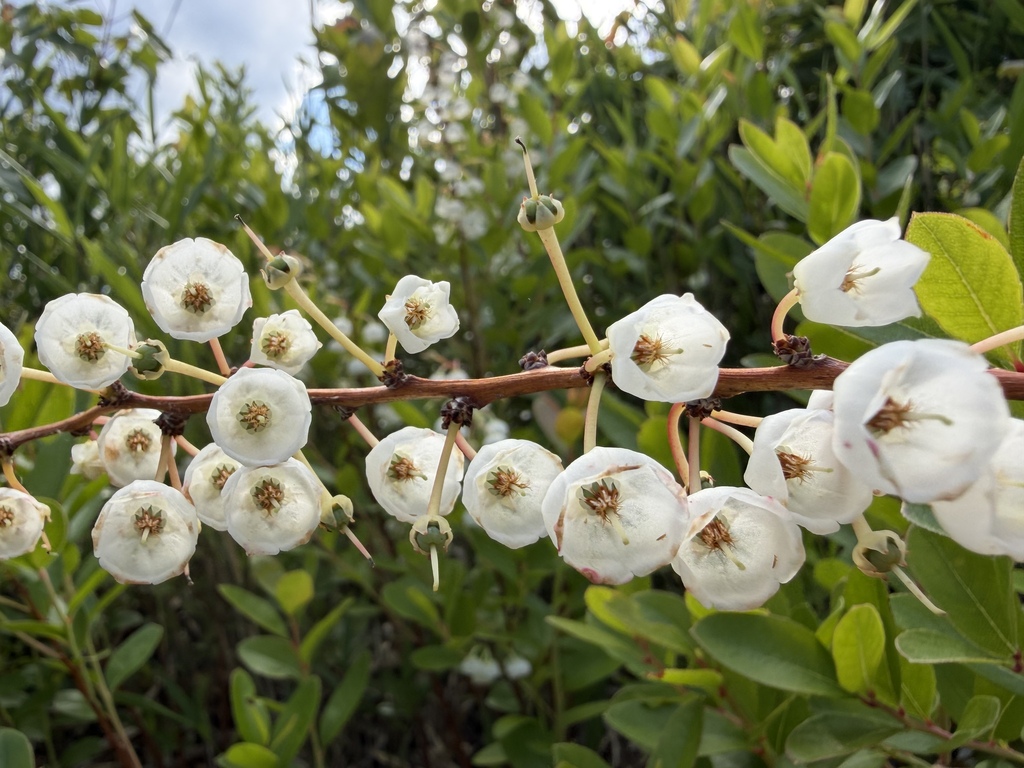
Zenobia pulverulenta, known as Honeycup, dusty zenobia or simply zenobia, is a native shrub of the Atlantic Coastal Plain and one of the most beautiful members of the heath family. In late spring it hangs rows of white, bell-shaped flowers, larger than blueberry flowers and with a sweet, honey- or anise-like scent, along arching branches. Many plants also have striking blue-white, powdery leaves.
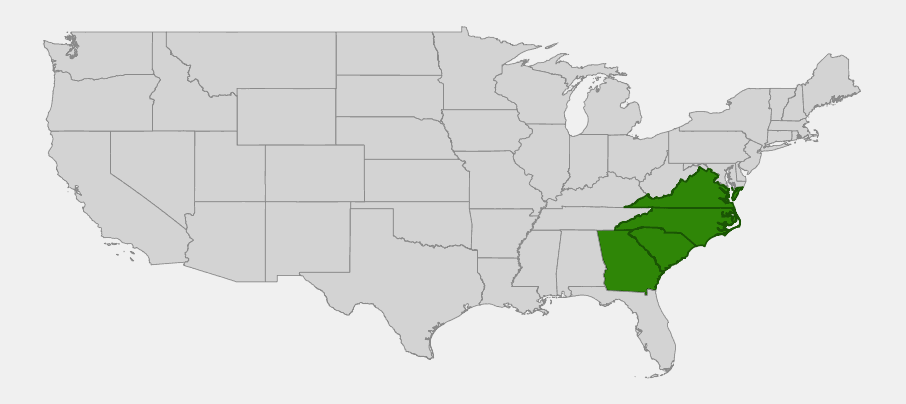
Honeycup is the only species in its genus. It grows in pocosins, bay forests, wet pine flatwoods and the edges of swamps from southeastern Virginia through the Carolinas to a few sites in Georgia. It is common in North and South Carolina but rare at the edges of its range, and NatureServe ranks it as critically imperiled in both Virginia and Georgia.
Gardeners prize it as a native alternative to Japanese andromeda (Pieris) and as a companion to blueberries and azaleas. This page covers how to identify it, where it grows, how to grow popular selections such as ‘Woodlander’s Blue’, its value to pollinators and what is known about its toxicity.
Identification
Honeycup looks a little like a highbush blueberry until it blooms. Look for blue-white or green leaves and, in late spring, rows of white bells larger than blueberry flowers.
Size & Form
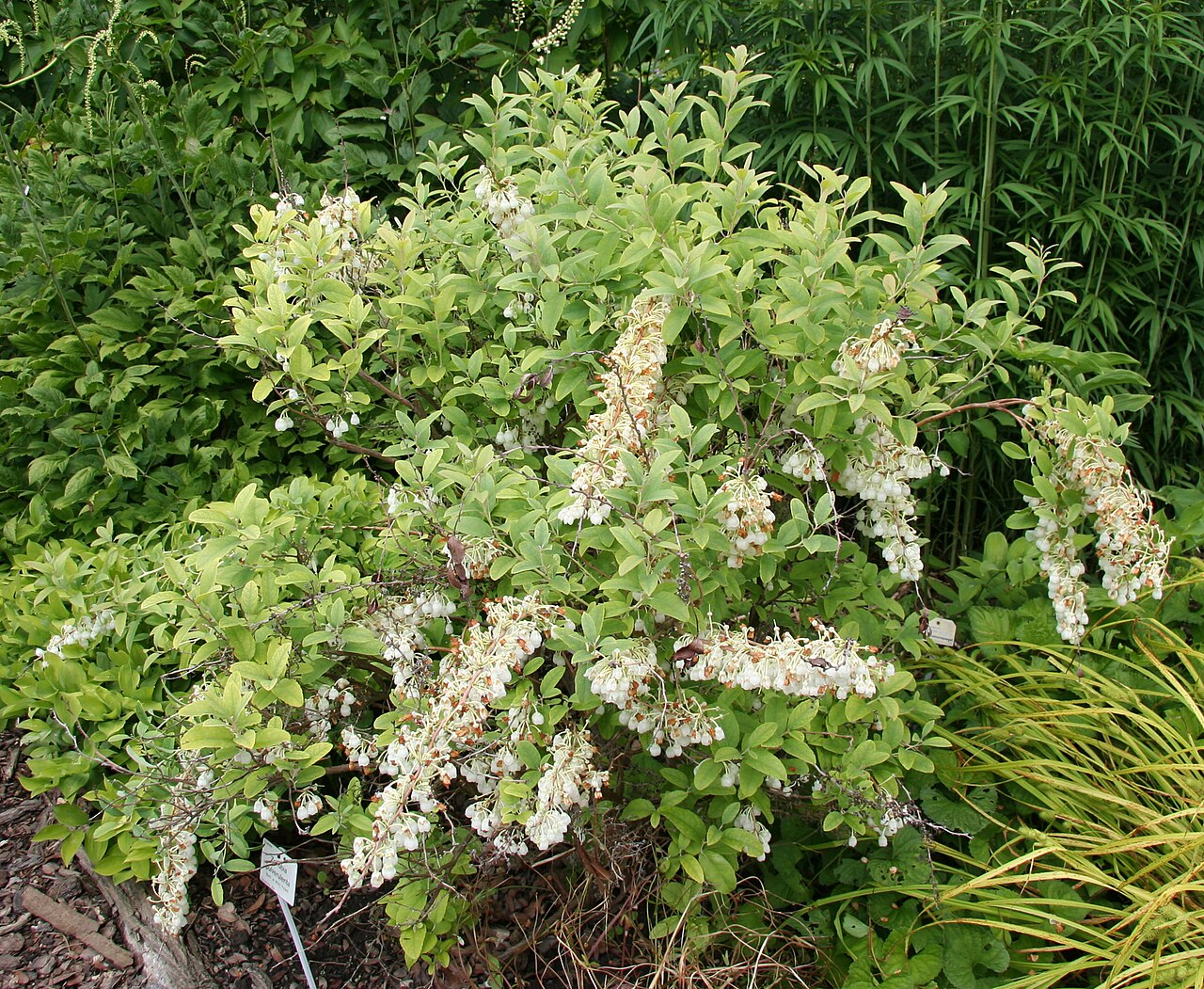
It is a loose, multi-stemmed shrub usually 2 to 6 feet tall, occasionally to about 10 feet, spreading slowly by underground stems into colonies. Branches are slender and arching. It is deciduous to semi-evergreen, holding some leaves into winter in the South.
Leaves
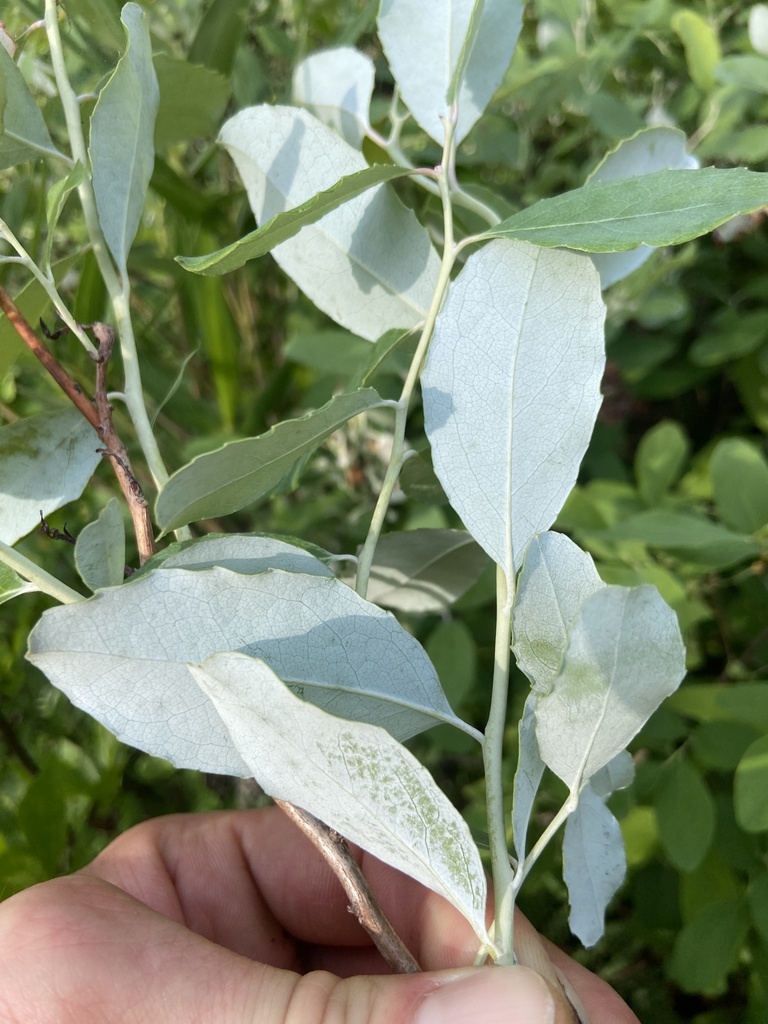
The leaves are alternate, oval to elliptic, about 1 to 3 inches long, with smooth or finely toothed edges. In many plants they are coated with a blue-white, powdery wax, especially on new growth and the undersides; others are plain green. Leaves turn yellow, orange and red in fall.
Flowers
In April to June, clusters of white, bell-shaped flowers about 3/8 inch long hang from the previous year’s leafless shoots, forming rows along the branches. Each bell is broader and more open than a blueberry flower, with short, flared lobes. The flowers are fragrant, with a scent often compared to honey or anise.
Fruit
The fruit is a small, dry, five-parted capsule that splits to release tiny seeds. It is not a berry and is not edible.
Similar Species
Highbush blueberry (Vaccinium corymbosum) has smaller, narrower, often pinkish flowers and juicy blue berries. Fetterbush (Lyonia lucida) is evergreen, with shiny leaves edged by a vein and pink to white urn-shaped flowers. Maleberry (Lyonia ligustrina) has tiny, round flowers in branched clusters. The introduced Japanese andromeda (Pieris japonica) is evergreen, with flowers in dense hanging panicles.
Quick Facts
| Scientific Name | Zenobia pulverulenta (W. Bartram ex Willd.) Pollard |
| Family | Ericaceae (heath family) |
| Plant Type | Deciduous to semi-evergreen shrub |
| Mature Height | 2–6 ft (occasionally to 10 ft) |
| Mature Spread | 3–6 ft, spreading slowly |
| Growth Rate | Slow to moderate |
| Sun Exposure | Full sun to part shade |
| Water Needs | Medium to high; moist to wet acidic soil |
| Soil Type | Sandy or peaty, acidic, organic soil |
| Soil pH | About 4.5–6.0 |
| Bloom Time | April–June |
| Flower Color | White |
| Fall Color | Yellow, orange and red |
| Fruit | Small dry capsule |
| Deer Resistant | Moderately |
| USDA Hardiness Zones | 5–9 |
Native Range
USDA PLANTS lists honeycup as native in Georgia, North Carolina, South Carolina and Virginia. It is a Coastal Plain shrub, most common in the pocosins, bay forests and sandhill seepage areas of eastern North Carolina and South Carolina, including the Sandhills region around the Carolinas’ border.
At the edges of its range it is rare. NatureServe ranks it as critically imperiled (S1) in both Virginia, where it reaches the southeastern corner of the state, and Georgia, where it is known from very few sites in the eastern part of the state. Plants in these states are outlying populations of a mainly Carolina species.
It grows in wet, acidic, sandy or peaty soils: pocosins (evergreen shrub bogs), bay forests, the margins of Carolina bays and swamps, wet pine flatwoods and savannas, and seepage areas along sandhill streams. Like many pocosin shrubs, it resprouts from its roots after fire.
📋 Regional plant lists featuring Honeycup: Alabama, Georgia & Mississippi · Maryland, Virginia & West Virginia · North & South Carolina
Growing & Care Guide
Honeycup is offered by native plant and specialty nurseries. The best-known selection is ‘Woodlander’s Blue’, chosen for its strongly blue-white foliage; newer selections such as ‘Raspberry Ripple’ are also offered. Wild plants vary from blue to green, so choose a named selection if you want the silver-blue foliage. Grow it like a blueberry: in acidic, moist, organic soil.
Light
It grows in full sun to part shade. More sun produces more flowers and better fall color, as long as the soil stays moist; in hot climates, afternoon shade helps.
Soil & Water
Plant it in acidic soil (pH about 4.5 to 6) rich in organic matter. It tolerates wet soil and occasional standing water and does well in rain gardens and along ponds, but it also grows in ordinary moist garden soil if it does not dry out. Mulch with pine straw or shredded leaves and water during dry spells.
Planting Tips
Plant in spring or fall, 3 to 4 feet apart in groups. It combines well with blueberries, inkberry, summersweet, azaleas and ferns. In alkaline or clay soils, grow it in a raised bed amended with peat-free acidic compost and pine bark.
Pruning & Maintenance
It blooms on the previous year’s wood, so prune right after flowering. Remove a few of the oldest stems every few years to keep it vigorous, or cut the whole plant back after flowering to renew it. It has few pests.
Propagation
Take softwood cuttings in early summer and root them with bottom heat, or dig rooted suckers in early spring. Seed is tiny; sow it on the surface of moist, acidic mix.
Landscape Uses
- Native shrub borders: fragrant white bells in late spring and good fall color
- Rain gardens and pond edges: tolerates wet, acidic soils
- Foliage contrast: blue-white selections such as ‘Woodlander’s Blue’ brighten shady beds
- Pollinator gardens: early bee flowers in late spring
- Native alternative: a native substitute for Japanese andromeda (Pieris)
Wildlife & Ecological Value
Honeycup is part of the dense, fire-adapted shrub layer of Carolina pocosins, which provide cover for many animals.
For Pollinators
Bumblebees and other bees visit the fragrant bell flowers for nectar and pollen. Like blueberry flowers, the bells are best worked by bees that can reach inside or shake the pollen loose.
For Birds
Its fruit is dry and of little food value, but the dense thickets give nesting cover and shelter to songbirds of pocosins and wet woods.
For Mammals
Black bears, deer and small mammals use pocosin thickets for cover. Deer browse it lightly.
Ecosystem Role
After fire it resprouts quickly from its roots, helping pocosin vegetation recover. Like other heath-family shrubs, it relies on root fungi (ericoid mycorrhizae) to take up nutrients from poor, acidic soils.
Cultural & Historical Uses
The plant was first collected by the naturalist William Bartram, who traveled the Southeast in the 1770s. The genus is named for Zenobia, the third-century queen of Palmyra, and the species name pulverulenta means “powdered,” for the waxy bloom on its leaves.
Honeycup has long been grown in European botanical gardens and was for many years more appreciated there than at home. Interest in American gardens has grown with the native plant movement and with selections from nurseries such as Woodlanders in South Carolina.
Safety note: honeycup is not edible. Several plants in the heath family, such as mountain laurel, rhododendrons and Pieris, contain toxic grayanotoxins, but there is no confirmed information on the toxicity of honeycup itself. Treat it as potentially harmful: do not eat any part of it, and keep children and pets from chewing it.
Frequently Asked Questions
What is honeycup?
Honeycup (Zenobia pulverulenta) is a native shrub of the southeastern Coastal Plain in the heath family. It has fragrant white bell flowers in late spring and often blue-white, powdery leaves. It is the only species in its genus.
Where is honeycup native?
It is native to the Coastal Plain of North and South Carolina, with rare outlying populations in southeastern Virginia and eastern Georgia. It grows in pocosins, bay forests and wet pine flatwoods.
How do I grow Zenobia ‘Woodlander’s Blue’?
Plant it in acidic, moist, organic soil in full sun to part shade, like a blueberry. Keep it mulched and watered in dry spells, and prune right after it flowers.
Is honeycup poisonous?
There is no confirmed toxicity information for honeycup, but several of its relatives in the heath family are toxic. It is not edible, so do not eat it and keep pets and children from chewing it.
Is honeycup evergreen?
It is deciduous to semi-evergreen. In the warmer parts of its range it keeps some leaves through winter, but in colder gardens it drops its leaves after turning yellow, orange and red in fall.

Looking for a nursery that carries Honeycup?
Browse our native plant nursery directory: Georgia · North Carolina · South Carolina & Virginia

