
Largeflower False Rosemary (Conradina grandiflora)
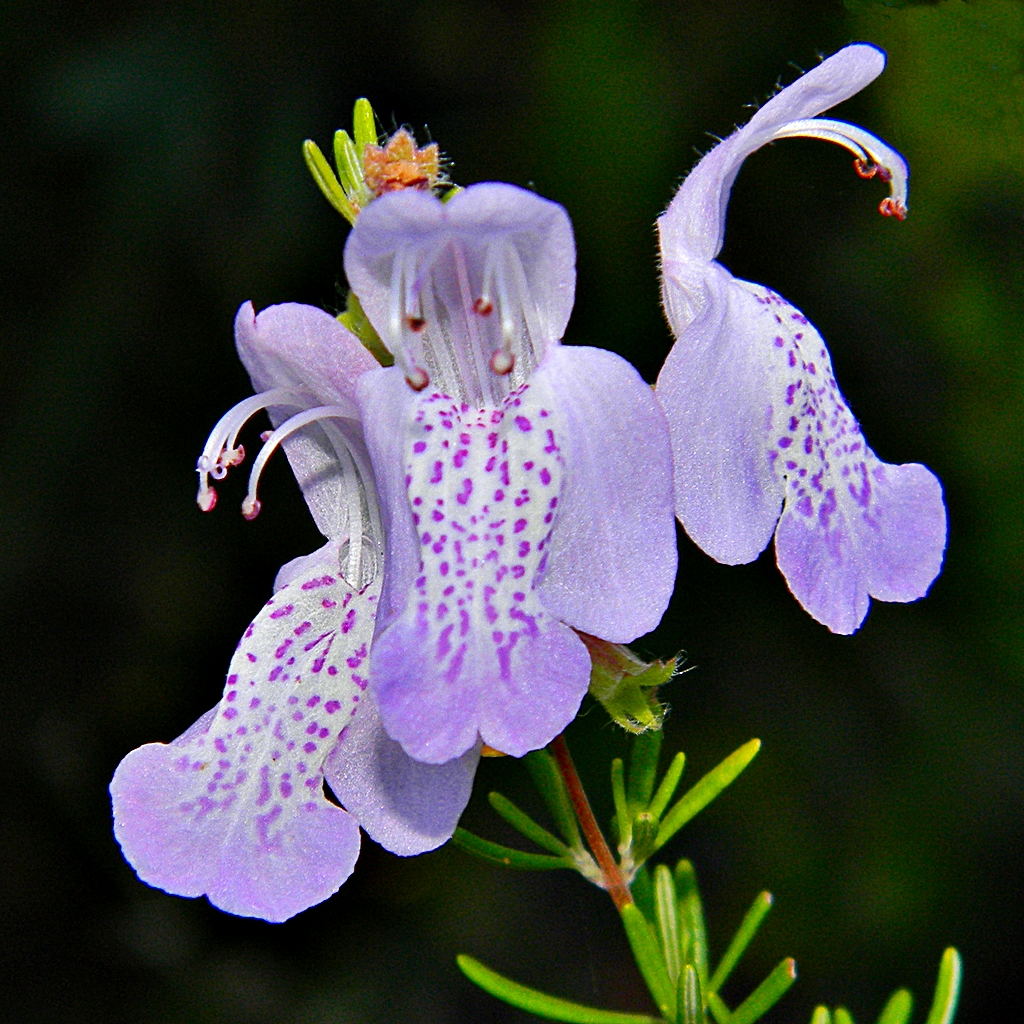
Conradina grandiflora, known as Largeflower False Rosemary or large-flowered rosemary, is a small aromatic shrub of the coastal scrub of eastern Florida. It is a member of the mint family (Lamiaceae). Its narrow, needle-like, gray-green leaves smell strongly of mint and rosemary when crushed, and for much of the year it bears showy, two-lipped, lavender flowers spotted with purple. As its name says, its flowers are the largest in the genus Conradina.
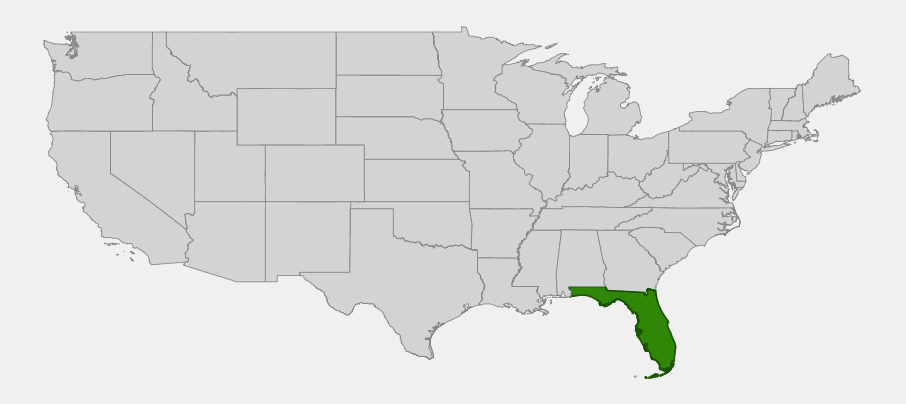
Largeflower false rosemary is endemic to Florida per the Atlas of Florida Plants: it grows nowhere else in the world. Its range is a narrow strip of ancient sand dunes along the Atlantic Coastal Ridge, from the central east coast south to southeast Florida, where it grows in sand pine scrub, oak scrub and scrubby flatwoods. It is listed as Threatened by the state of Florida (FDACS Regulated Plant Index), mainly because most of its coastal scrub habitat has been cleared for development.
Nursery-propagated plants are sometimes available from native plant nurseries in Florida, and they make a fragrant, drought-tolerant addition to sandy, sunny gardens on the east coast. Always buy nursery-propagated plants, and never dig or collect plants from the wild. This guide covers how to identify it, where it grows, how to grow it, and its role in the Florida scrub. For the related species of the Panhandle and the Gulf Coast, see False Rosemary (Conradina canescens).
Identification
Several species of Conradina grow in the Southeast, most of them rare and with small ranges. Within its east coast range, largeflower false rosemary is the only one, and its large flowers and strong scent set it apart from other scrub shrubs.
Habit & Stems
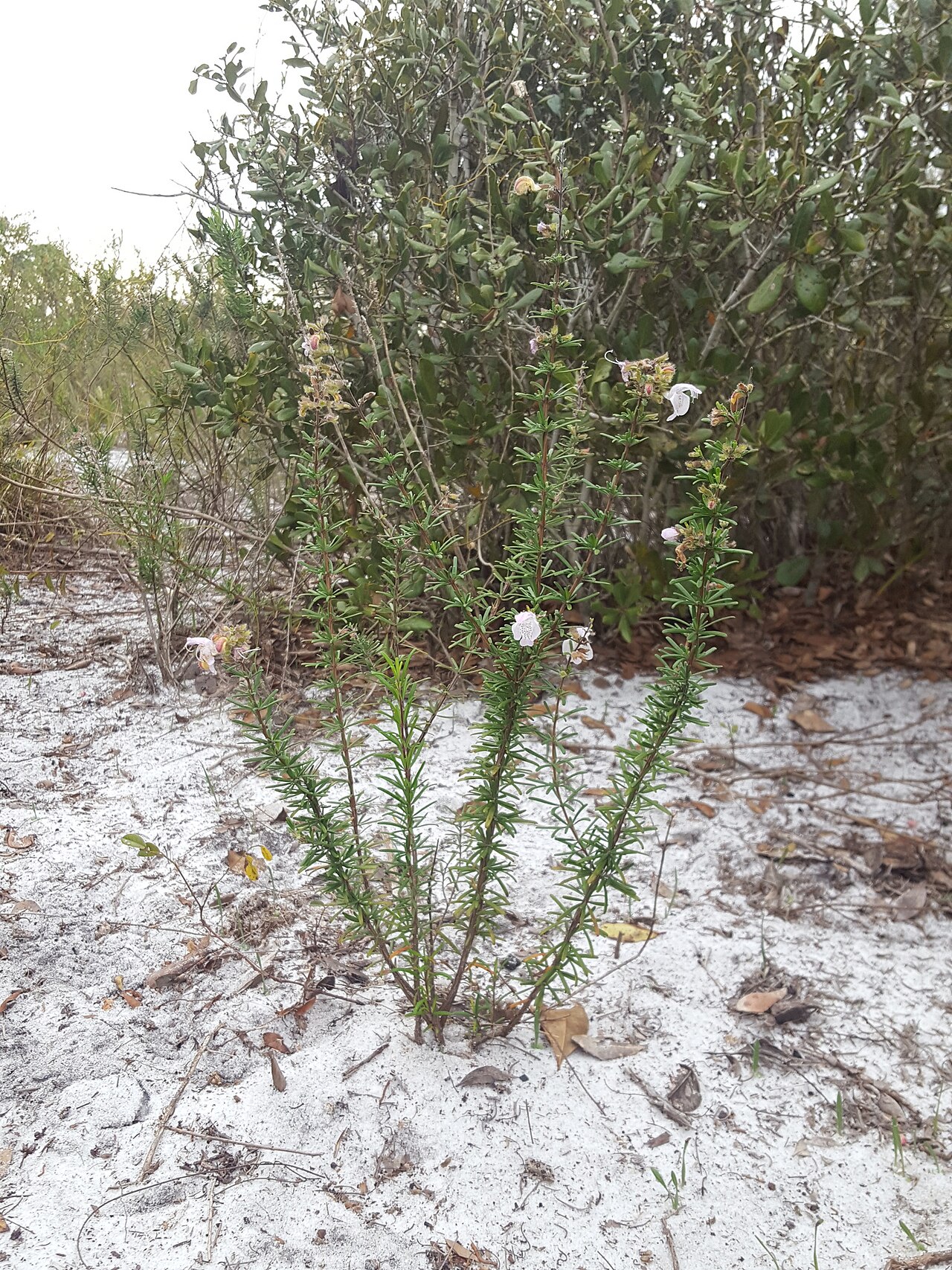
It is a small, evergreen, much-branched shrub, usually 1½ to 3 feet tall and occasionally taller, with an upright to rounded form. Young stems are slender, square in cross section like those of most mints, and covered with short, fine hairs. Older stems become woody, with grayish bark.
Leaves
The leaves are opposite and needle-like, about ½ to 1 inch long, with edges that roll under so tightly that the leaf looks almost round. They are gray-green, hairy on the upper surface and densely woolly underneath, and often grow in small clusters at the nodes. When crushed they release a strong, minty-rosemary fragrance. The resemblance to culinary rosemary gives the genus its common name, but the two are not closely related within the mint family.
Flowers
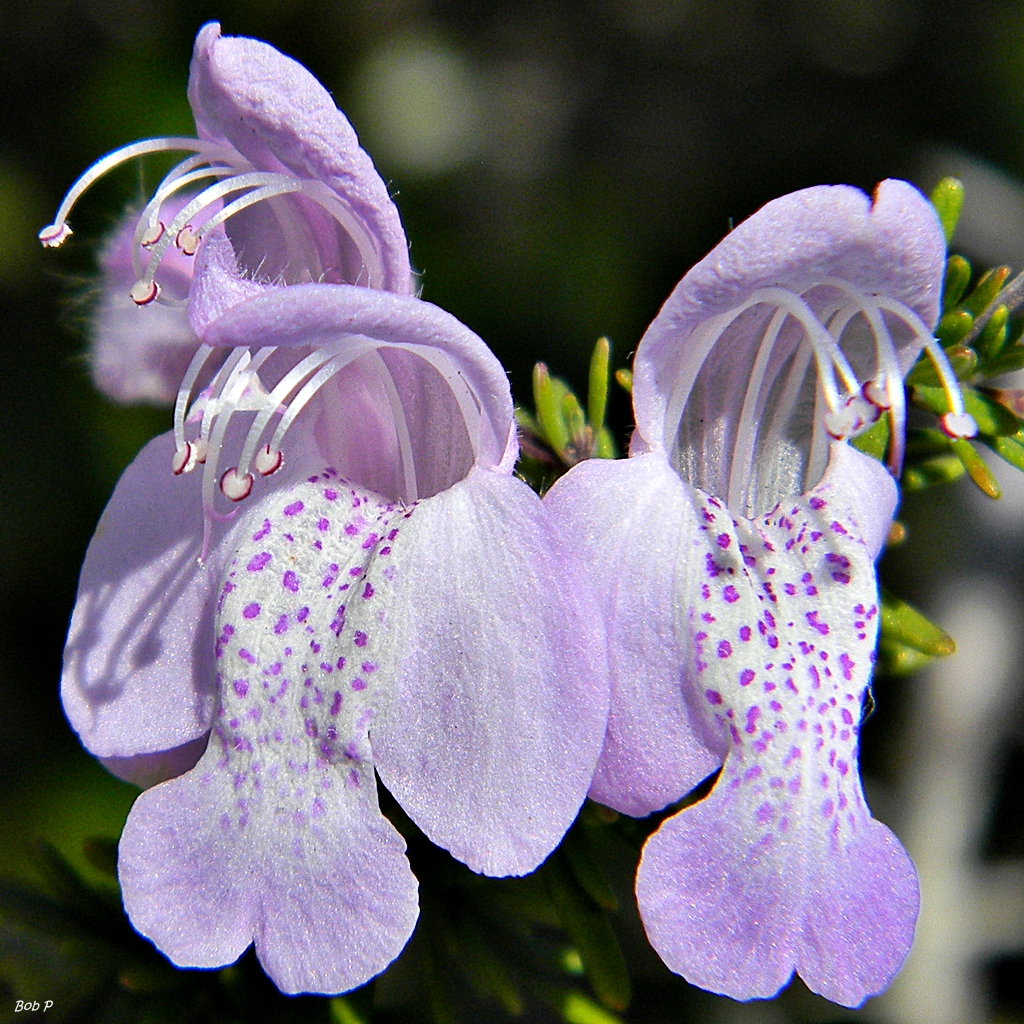
The flowers grow in small clusters at the leaf nodes near the tips of the branches. Each is two-lipped, about ¾ to 1 inch long, with a tube that bends sharply upward near the middle, a hooded upper lip and a broad, three-lobed lower lip. The color is pale lavender to light purple, and the lower lip is marked with darker purple spots and a white throat. The stamens arch under the upper lip. In Florida it can flower at almost any time of year; the Lady Bird Johnson Wildflower Center lists January to July, and many plants bloom again in fall.
Fruit & Seeds
Each flower can produce up to four small, smooth nutlets that ripen inside the persistent calyx. They fall near the parent plant, and seedlings establish best in bare sand that has been opened up by fire or other disturbance.
Quick Facts
| Scientific Name | Conradina grandiflora |
| Family | Lamiaceae (mint family) |
| Plant Type | Small evergreen aromatic shrub |
| Mature Height | 1½–3 ft (occasionally to 5 ft) |
| Mature Spread | 2–3 ft |
| Growth Rate | Moderate |
| Sun Exposure | Full sun |
| Water Needs | Low; needs dry, sharply drained sand |
| Soil Type | Deep, well-drained, nutrient-poor white or yellow sand |
| Soil pH | About 4.5–6.5 (acidic) |
| Bloom Time | Mostly January–July, with scattered and fall flowering |
| Flower Color | Lavender with purple spots and a white throat |
| Fall Color | None; evergreen |
| Fruit | Small nutlets in the persistent calyx |
| Deer Resistant | Yes; strongly aromatic foliage is seldom browsed |
| USDA Hardiness Zones | 9–10 |
Native Range
Largeflower false rosemary is endemic to Florida per the Atlas of Florida Plants. USDA PLANTS and the Lady Bird Johnson Wildflower Center record it only from Florida, where it is restricted to the Atlantic Coastal Ridge, the band of old coastal dunes that runs parallel to the east coast a short distance inland. Its range extends from the central east coast southward through the Treasure Coast to the scrubs of Palm Beach County and southeast Florida.
It grows in sand pine scrub, oak scrub and scrubby flatwoods on deep, well-drained, nutrient-poor sands, usually in sunny openings and on the edges of trails and sand roads. Many remaining populations are in protected areas such as Jonathan Dickinson State Park and Juno Dunes Natural Area, as well as small scrub preserves surrounded by development.
It is listed as Threatened by the state of Florida (FDACS Regulated Plant Index). The main threats are the clearing of coastal scrub for housing and commerce, and fire suppression, which lets the scrub grow tall and dense and shades out this sun-loving shrub. Plants on public lands and private property are protected by state law, so never dig or collect them; grow only nursery-propagated plants.
📋 Regional plant lists featuring Largeflower False Rosemary: North & South Florida
Growing & Care Guide
Largeflower false rosemary is listed as Threatened by the state of Florida and is endemic to Florida, so buy only nursery-propagated plants from a reputable native nursery and never dig or collect plants from the wild. In the right site, which means full sun and deep, dry sand, it is an easy, long-lived, fragrant shrub. In ordinary garden soil with regular irrigation it usually declines quickly.
Light
Plant it in full sun. In the wild it grows in the openings of the scrub and disappears where shrubs and trees close in. Even partial shade leads to sparse growth and few flowers.
Soil & Water
It needs deep, sharply drained, nutrient-poor sand. It is best suited to gardens on the old dune ridges of eastern Florida or to raised beds of clean sand. Water new plants for the first few weeks, then stop; established plants rarely need irrigation and can rot if watered frequently or if planted in rich, moist soil. Do not fertilize, and do not mulch heavily around the base.
Planting Tips
Plant small container-grown plants in fall or winter, when temperatures are cooler and there is less risk of root rot. Place them with other scrub plants such as Florida rosemary, scrub oaks and saw palmetto, and leave some bare sand around them, as in the natural scrub. Avoid planting near lawns or irrigated beds.
Pruning & Maintenance
Light pruning after a flush of flowers keeps plants compact and encourages new growth. Avoid heavy cutting into old wood. Plants are often short-lived in gardens (several years), so let a few seedlings or replacement plants establish over time.
Propagation
Propagate from softwood or semi-hardwood cuttings, which root fairly readily in a sandy, well-drained mix under mist or high humidity. It can also be grown from seed, though seed is produced sparingly. Use only nursery stock or cuttings from garden plants; collecting from wild plants of this state-listed species is not permitted without a permit and landowner permission.
Landscape Uses
- Scrub and xeric gardens: a fragrant, flowering shrub for sunny, sandy sites on the east coast
- Pollinator gardens: a long blooming season that attracts bees and other insects
- Scrub restoration: for restoring openings in coastal scrub within its native range, using propagated stock
- Fragrance gardens: the foliage releases a minty-rosemary scent when brushed
- Conservation plantings: growing propagated plants helps raise awareness of Florida’s endangered scrub
Wildlife & Ecological Value
Largeflower false rosemary is part of the coastal scrub, one of Florida’s most threatened ecosystems, which is home to many endemic plants and animals.
For Pollinators
The large, spotted flowers are visited by many insects, especially bees, including native bumblebees, carpenter bees and smaller solitary bees, as well as bee flies and butterflies. The spots on the lower lip act as nectar guides, and the arching stamens deposit pollen on the backs of visiting insects. Its long blooming season makes it a valuable nectar source in scrub, where flowers can be scarce.
For Birds
It has little direct food value for birds, but it provides low cover in a habitat that is important to the Florida scrub-jay, a federally threatened bird found only in Florida, and to other scrub birds.
For Mammals
The aromatic foliage is rarely browsed. Small mammals such as the Florida mouse may shelter beneath the shrubs in the sand.
Ecosystem Role
Like many scrub plants, it depends on periodic disturbance, mainly fire, to keep the scrub open. It also grows along the edges of sandy trails, where some disturbance keeps the canopy open. Without fire or management, the scrub becomes overgrown and populations dwindle.
Cultural & Historical Uses
The genus Conradina was named by the botanist Asa Gray in honor of Solomon White Conrad, a 19th-century Philadelphia botanist and professor. John Kunkel Small, who explored Florida extensively in the early 1900s and documented many of its endemic plants, described Conradina grandiflora in 1903.
The leaves of Conradina species have a strong mint-rosemary scent and have been used informally as a seasoning or tea, but such uses are not well documented for this species, and wild plants should never be harvested. Grow the plant for its fragrance and flowers.
Today largeflower false rosemary has become a symbol of the scrub preserves of Palm Beach and Martin counties, where local conservation programs have protected small fragments of scrub habitat. Many visitors to places such as Juno Dunes first notice it by its scent on warm days.
Frequently Asked Questions
Is largeflower false rosemary related to culinary rosemary?
Both belong to the mint family, and they have similar needle-like, aromatic leaves, but they are in different genera. Culinary rosemary (Salvia rosmarinus) is native to the Mediterranean region.
Is largeflower false rosemary endangered?
It is listed as Threatened by the state of Florida (FDACS Regulated Plant Index) and is endemic to Florida per the Atlas of Florida Plants. Buy nursery-propagated plants and never dig or collect plants from the wild.
Can I grow it in my garden?
Yes, if you have full sun and deep, dry sand, ideally in eastern or central Florida. It does poorly in rich, irrigated soil. Start with nursery-propagated plants.
How is it different from false rosemary (Conradina canescens)?
Conradina canescens grows in the Florida Panhandle and nearby Alabama, and it has smaller flowers and more grayish leaves. Largeflower false rosemary grows only on the Atlantic coast of Florida and has the largest flowers in the genus.
When does it bloom?
It can flower almost any month in southern Florida, with the heaviest bloom usually in spring and a second flush in fall.

Looking for a nursery that carries Largeflower False Rosemary?
Browse our native plant nursery directory: Florida